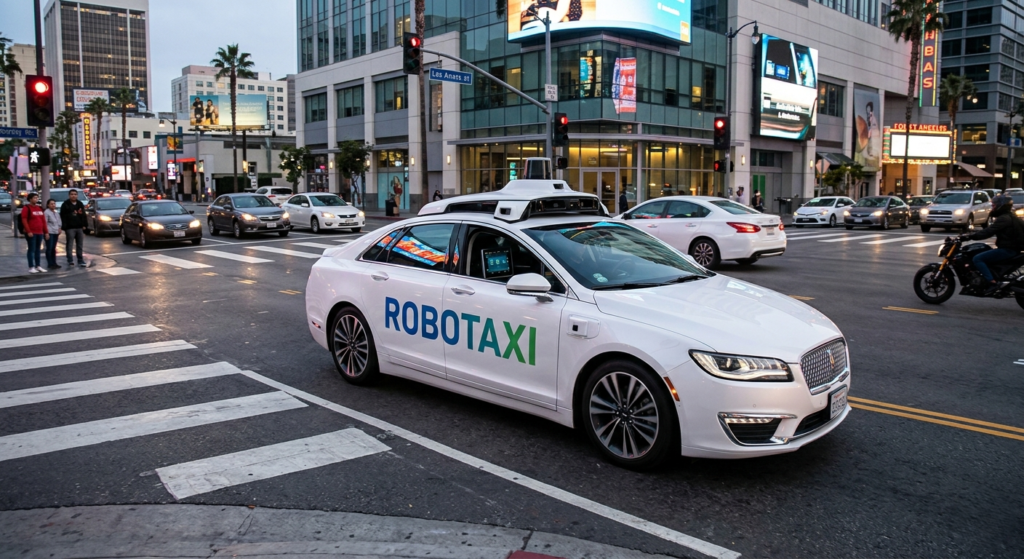
The global transportation sector is currently standing at the precipice of its most significant transformation since the invention of the internal combustion engine. The announcement of a massive strategic rollout involving a fleet of specialized robotaxis across 28 global cities starting in 2026 marks the end of the experimental era for self-driving technology and the beginning of the commercial execution phase.
At the center of this movement is the concept of Level 4 autonomous driving. Unlike the driver-assist systems found in many modern consumer vehicles, Level 4 represents high automation where the vehicle is capable of performing all driving functions under specific conditions—typically within a defined geographic area—without any expectation of human intervention.
By merging the world’s most advanced AI compute capabilities with a massive, pre-existing ride-hailing network, this partnership is not just launching a service; it is deploying a global infrastructure for physical artificial intelligence. For stakeholders ranging from urban planners to tech investors, understanding the mechanics of this 2026-2028 roadmap is essential for navigating the next decade of the mobility economy.
1. Defining the Five Focus Keywords
To understand the search landscape surrounding this technological shift, we must identify the core terms that drive discovery and industry discourse.(Level 4 autonomous driving)
- Primary Keyword: Level 4 autonomous driving
- Keyword 2: Robotaxi commercial rollout
- Keyword 3: NVIDIA DRIVE Hyperion platform
- Keyword 4: AI reasoning models for transport
- Keyword 5: Autonomous vehicle urban infrastructure
The focus on Level 4 autonomous driving as the primary keyword is strategic. It distinguishes this professional, fleet-based rollout from the lower-level “Autopilot” or “Full Self-Driving” consumer packages that still require human supervision.
2. The Technological Core: How Level 4 Autonomous Driving Scales
The transition from a prototype car to a fleet operating across 28 cities requires more than just better cameras. It requires a fundamental shift in how machines “think” about the road. The strategy relies on three distinct technological pillars.
The Hardware Nervous System: NVIDIA DRIVE Hyperion
Scaling a robotaxi service across different vehicle types—from compact electric cars to larger shuttles—requires a standardized architecture. The DRIVE Hyperion platform acts as the vehicle’s nervous system. It is a “data center on wheels” that processes massive amounts of information from Lidar, Radar, and ultrasonic sensors in real-time.
By using a standardized hardware stack, partners like BYD, Geely, and Lucid can manufacture vehicles that are “born autonomous.” This removes the need for expensive, aftermarket retrofitting, which has been a major bottleneck for competitors in the past.
The Cognitive Leap: The Alpamayo AI Reasoning Model
The biggest challenge for Level 4 autonomous driving has always been the “long tail” of edge cases—rare events like a police officer using hand signals to direct traffic or a mattress falling off a truck. Traditional AI often struggles with these because it relies on pattern matching.
The Alpamayo model introduces “chain-of-thought” reasoning. Instead of just seeing an object and reacting, the AI analyzes the context. If it sees a ball bounce into the street, it “reasons” that a child might be following it and slows down before the child is even visible. This predictive capability is what allows the system to operate safely without a human fallback driver.
Cloud-Based Learning via Cosmos
Every mile driven by a vehicle in London or San Francisco is uploaded to a centralized cloud platform. This data is then used to retrain the AI models, which are beamed back down to the entire global fleet. This “fleet learning” ensures that if one car learns how to navigate a specific type of construction zone, every car in the 28-city network learns it simultaneously.
3. The 2026–2028 Rollout Framework
The expansion of Level 4 autonomous driving will not be a “big bang” event. It is structured as a methodical, risk-mitigated deployment designed to build public trust and satisfy local regulators.
Phase 1: High-Definition Mapping and Localization (2026)
Before a single passenger is picked up, specialized mapping vehicles will traverse the initial launch cities. These vehicles create centimeter-accurate maps that include every curb, traffic light, and permanent sign. This provides the robotaxi with a “digital twin” of the city to compare against its real-time sensor data.
Phase 2: The “Safety Pilot” Commercial Launch
Initial rides in 2026 will likely feature a safety driver behind the wheel. However, the goal of this phase is not for the human to drive, but to validate the AI’s decisions in complex urban environments like Los Angeles and the San Francisco Bay Area.
Phase 3: Driverless Optimization and Global Scaling (2027-2028)
By 2027, the “driver” is removed. The service transitions to true Level 4 autonomous driving. This is where the economic benefits begin to manifest, as the cost per mile drops significantly when the expense of a human operator is eliminated.
4. Comparing the Giants: A Competitive Landscape
The race for autonomous supremacy features different philosophies. Understanding where this alliance sits relative to its competitors is vital for a clear market view.
| Feature | Uber-Nvidia Alliance | Alphabet (Waymo) | Tesla (FSD) |
| Automation Level | Level 4 autonomous driving | Level 4 | Level 2/3 (Supervised) |
| Primary Sensor | Lidar + Radar + Vision | Heavy Lidar reliance | Vision-only (Cameras) |
| Business Model | Asset-light Marketplace | Owned and Operated Fleet | Consumer Vehicle Sales |
| Compute Power | NVIDIA Thor/Atlan Chips | Custom Google TPU | Tesla Dojo/HW4 |
| City Strategy | 28 Cities (Global Rollout) | Targeted US Hubs | General Global Release |
Why the Marketplace Model Wins
Waymo is a “closed loop”—they own the cars, the tech, and the app. While this allows for high quality control, it is incredibly capital-intensive to scale. In contrast, the Uber-Nvidia strategy is a marketplace. They provide the “brains” (Nvidia) and the “customers” (Uber), while third-party manufacturers provide the “bodies” (the cars). This allows for a much faster global expansion of Level 4 autonomous driving capabilities.
5. Economic Impacts and the “Cost-Per-Mile” Revolution
The primary driver behind the push for Level 4 autonomous driving is economics. Currently, the largest cost in a ride-hailing transaction is the human driver, typically accounting for 60% to 80% of the total fare.
The Death of Ownership?
As robotaxis scale, the cost of a ride is projected to drop below the cost of owning a private vehicle. When a ride across town costs less than a gallon of gas plus insurance and parking, the value proposition for the “personal car” begins to vanish for urban dwellers.
Real Estate Transformation
If cities are filled with autonomous fleets that never need to park, what happens to parking garages? We are looking at a future where prime urban real estate currently dedicated to stationary cars can be repurposed for housing, parks, or retail. This transition is a core reason why city planners are so focused on Level 4 autonomous driving integration.
6. Overcoming the “Black Box” Problem: Safety and Ethics
One of the greatest hurdles for Level 4 autonomous driving is public perception. When a human makes a mistake, we understand why. When an AI makes a mistake, it can feel like a “black box” failure.
The Explainable AI (XAI) Initiative
To combat this, the new Alpamayo-based systems are moving toward “Explainable AI.” This means the system keeps a continuous log of why it made a specific decision.
- “I slowed down because the pedestrian’s body language suggested an intent to cross.”
- “I took the left lane because the right lane was obstructed by a double-parked delivery vehicle 200 meters ahead.”
Safety Redundancy
True Level 4 autonomous driving requires “fail-operational” hardware. If a camera fails, the Lidar takes over. If the primary computer glitches, a secondary, independent “safety checker” chip brings the car to a safe stop. This layer of redundancy is what separates a professional robotaxi from a standard consumer car.
7. How to Prepare Your City or Business for Autonomous Fleets
The arrival of Level 4 autonomous driving across 28 cities is a call to action for local governments and business owners.
For Local Governments:
- V2X Infrastructure: Invest in Vehicle-to-Everything (V2X) technology. Traffic lights that “talk” to cars can significantly improve flow and safety.
- Curb Management: Cities need to designate specific “Autonomous Loading Zones.” This prevents robotaxis from stopping in active traffic lanes to pick up passengers.
- Data Sharing Agreements: Establish frameworks where autonomous fleets share traffic and road-condition data with the city to help with maintenance and emergency response.
For Fleet Operators:
- Electrification Integration: Most Level 4 autonomous driving fleets will be electric. Operators must secure high-capacity charging hubs strategically located near high-demand areas.
- Maintenance Specialization: These vehicles are sophisticated sensors on wheels. Traditional mechanics will need to be replaced or retrained as “AV Technicians” capable of calibrating Lidar and cooling high-performance compute stacks.
8. The Global Map: Why These 28 Cities?
The selection of the 28 launch cities for 2026–2028 was not random. They were chosen based on three critical factors:
- Regulatory Maturity: Cities like Phoenix, San Francisco, and Dubai have already established legal frameworks for testing driverless cars.
- Climate Consistency: Initial rollouts of Level 4 autonomous driving often favor “Sun Belt” cities where snow and heavy rain don’t interfere with sensors. However, the 2028 goal includes cities like London and Toronto, indicating confidence in the latest sensor cleaning and “all-weather” AI capabilities.
- Density and Demand: Cities with high Uber usage and high traffic congestion provide the best economic data to prove the efficiency of autonomous pooling.
9. Challenges on the Horizon: The Path Isn’t Seamless
While the technology for Level 4 autonomous driving is nearly ready, several external factors could slow the rollout.
1. The Legal Liability Gap
If a driverless car is involved in an accident, who is at fault? Is it the software provider (Nvidia), the platform (Uber), or the vehicle manufacturer? Resolving these insurance and liability questions is a prerequisite for a 28-city expansion.
2. Cybersecurity Risks
As vehicles become more connected, they become potential targets for hackers. Ensuring the “hardened” security of the DRIVE platform is just as important as the driving logic itself. The 2026 rollout includes encrypted “over-the-air” update protocols to mitigate these risks.
3. Job Displacement
The transition to Level 4 autonomous driving will inevitably impact the millions of people who currently earn a living through ride-hailing and delivery. A successful rollout must include a social plan for “just transition,” retraining drivers for roles in fleet management, remote assistance, and urban logistics.
10. Practical Tips: Riding in a Level 4 Vehicle for the First Time
When the service goes live in your city in 2026 or 2027, the experience will be vastly different from a traditional Uber.
- The Interface: You will likely use your smartphone to unlock the door. Inside, there is no steering wheel or pedals in the passenger compartment.
- In-Ride Controls: Large screens will show you exactly what the car “sees”—highlighting pedestrians, other cars, and your planned route. This “transparency view” is designed to build trust.
- Passenger Etiquette: Without a driver to enforce rules, these vehicles will be equipped with internal sensors to detect smoking, spills, or damage, automatically charging the passenger for cleaning or repairs.
11. Conclusion: The Dawn of the Physical AI Era
The 2026-2028 roadmap for Level 4 autonomous driving represents the culmination of decades of research in robotics and machine learning. By leveraging the NVIDIA DRIVE Hyperion platform and the Alpamayo reasoning model, the partners are attempting to solve the final 1% of the self-driving puzzle.
This rollout isn’t just about getting from point A to point B without a driver. It is about a fundamental reorganization of urban life. It promises safer streets, more efficient cities, and a democratization of mobility for those who cannot drive themselves—the elderly, the visually impaired, and the young.
As we move toward 2026, the question is no longer “if” autonomous cars will arrive, but how quickly we can adapt our cities and our lives to welcome them. The 28-city strategy is the first major step into this new world, and it is a journey that will redefine the 21st century.
The landscape of urban transportation is undergoing its most significant shift since the transition from horse-drawn carriages to the internal combustion engine. On March 16, 2026, a landmark announcement sent shockwaves through the automotive and tech industries: a massive strategic rollout of a global robotaxi fleet across 28 major cities. This initiative represents the definitive commercialization of Level 4 autonomous driving technology, moving beyond the “experimental” phase and into a high-scale industrial reality.(Future of urban mobility and robotaxis)
By integrating world-class AI compute from the semiconductor giant with the world’s largest ride-hailing network, this partnership signals what many are calling the “ChatGPT moment” for physical AI. For businesses, investors, and daily commuters, understanding the mechanics, the risks, and the timeline of this 2026–2028 roadmap is essential to navigating the next decade of the mobility economy.
1. Defining the Core: What is Level 4 Autonomous Driving?
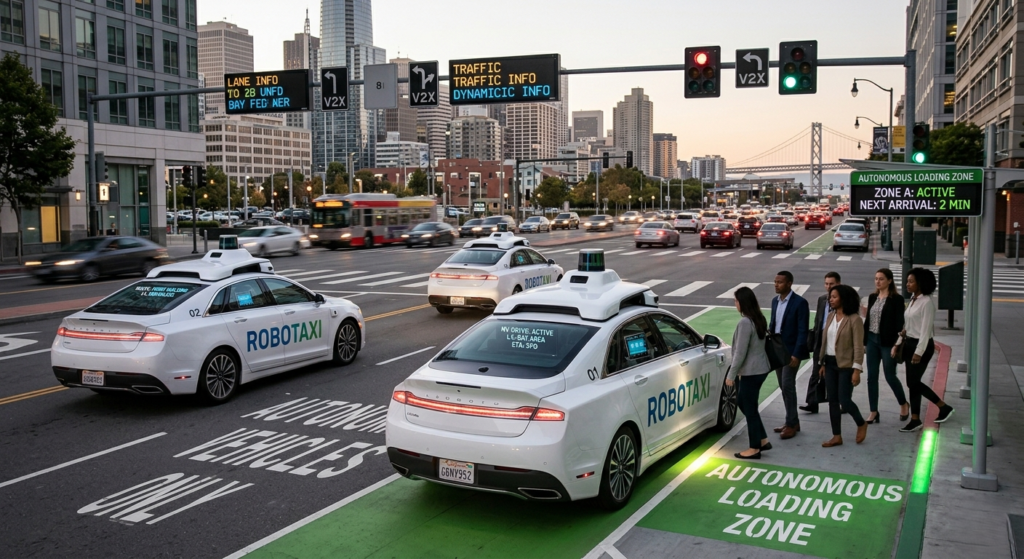
To appreciate the scale of this rollout, we must first define the technical threshold being crossed. The Society of Automotive Engineers (SAE) defines levels of automation from 0 to 5.
While many consumer cars today feature Level 2 (Partial Automation) or Level 3 (Conditional Automation), the 28-city rollout is strictly focused on Level 4 autonomous driving.
The Key Distinctions of Level 4
- High Automation: The vehicle is capable of performing all driving functions under specific conditions—typically within a defined geographic area known as a “geofence.”
- No Human Fallback: Unlike Level 2/3 systems, the passenger in a Level 4 vehicle is never expected to take over the wheel. If the system encounters a situation it cannot handle, it is programmed to execute a “minimal risk condition,” such as pulling over safely to the curb.
- Geographic Specialization: While a Level 5 car can drive anywhere in any weather, Level 4 is optimized for specific urban environments where the AI has been “trained” on every intersection and local traffic quirk.
2. The Technological Architecture: How the Fleet Operates
This global deployment is powered by a sophisticated “full-stack” approach that combines hardware, specialized AI reasoning, and cloud-based simulation.
The Hardware Nervous System: NVIDIA DRIVE Hyperion
The foundation of the fleet is the DRIVE Hyperion platform. Think of this as a standardized, production-ready “data center on wheels.” Instead of custom-building every car, this platform allows manufacturers like BYD, Geely, and Lucid to build vehicles that are “autonomous-ready” from the factory floor.
- Sensor Fusion: Hyperion integrates 12 external cameras, 3 Lidar sensors, 9 Radars, and 12 ultrasonics.
- Redundancy: The system includes dual AI computers. If one fails, the second immediately takes over, ensuring the vehicle never loses its “eyes” or “brain” while in motion.
The Cognitive Engine: The Alpamayo AI Reasoning Model
The most significant breakthrough in the 2026 announcement is the Alpamayo AI model. Traditional autonomous systems rely on “pattern matching”—they see a stop sign and they stop. However, real-world driving is full of “long-tail” scenarios that patterns can’t predict.
Alpamayo introduces Reasoning-Based AI. This allows the vehicle to navigate chaos using logic similar to a human driver.
- Contextual Awareness: If a ball bounces into the street, Alpamayo “reasons” that a child might be following it and slows down before the child is visible.
- Nuanced Interpretation: It can distinguish between a pedestrian waiting for a bus and one intending to step into a crosswalk based on body language and orientation.
The Simulation Loop: NVIDIA Omniverse
Before a robotaxi ever touches the streets of London or Tokyo, it has driven millions of miles in a digital twin of those cities. Using the Omniverse platform, engineers can simulate “black swan” events—like a localized flash flood or a multi-car pileup—to ensure the Level 4 autonomous driving software knows exactly how to react safely.
3. Comparing the Market Leaders: The Competitive Landscape
The race for autonomous supremacy is no longer just about who has the best tech; it’s about who has the best strategy for scale.
| Feature | Uber-Nvidia Alliance | Waymo (Alphabet) | Tesla (FSD) |
| Core Technology | DRIVE Hyperion + Alpamayo | Custom Google TPU + DeepMind | Vision-Only + Dojo Supercomputer |
| Automation Level | Level 4 autonomous driving | Level 4 | Level 2/3 (Supervised) |
| Business Model | Asset-Light Marketplace | Owned and Operated Fleet | Consumer Sales / Network |
| Scaling Strategy | Multi-manufacturer partners | Vertical integration | Shadow testing on consumer cars |
| Launch Scope | 28 Cities by 2028 | ~10 US Cities | Global (pending regulation) |
Analysis: While Waymo is currently the leader in terms of “miles driven,” the Uber-Nvidia partnership’s “Asset-Light” model is designed for rapid global expansion. By not owning the cars, Uber avoids the massive capital expenditures that have slowed down vertically integrated competitors.
4. The 2026–2028 Rollout Framework: Phase by Phase
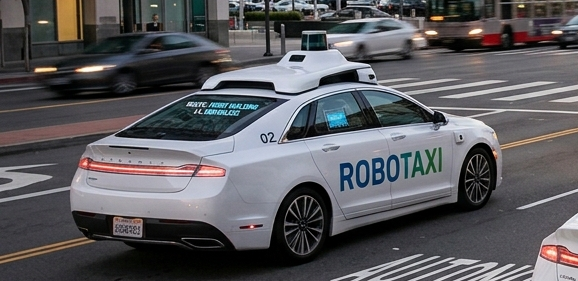
Launching Level 4 autonomous driving across four continents requires a methodical, risk-mitigated approach. Each of the 28 cities will follow a strict three-phase deployment cycle.
Phase 1: High-Definition Mapping (Late 2026)
Specialized “mapping fleets” equipped with high-precision Lidar will traverse every inch of the launch city. This creates a “digital twin” map accurate to within five centimeters. This map serves as a ground truth for the robotaxis, allowing them to know exactly where the curb is even if their cameras are obscured by heavy rain or fog.
Phase 2: Operator-Led Validation (Early 2027)
The first commercial rides in cities like Los Angeles and San Francisco will begin in the first half of 2027. During this phase, a “safety pilot” remains in the driver’s seat. Their job isn’t to drive, but to monitor the AI’s “reasoning” and provide feedback to the engineering teams.
Phase 3: Driverless “Level 4” Deployment (2028)
By 2028, the “safety pilot” is removed. The vehicles transition to true Level 4 autonomous driving. This is the stage where the economic model shifts, as the cost per mile drops significantly when the need for a human driver is eliminated.
5. Economic Impacts: The “Cost-Per-Mile” Revolution
The ultimate goal of the robotaxi movement is to make transportation so cheap and efficient that private car ownership becomes obsolete for the average urban dweller.
The End of the “Human Driver” Cost
Currently, the human driver represents roughly 60% to 80% of the cost of an Uber ride. By removing the driver, the price of a cross-town trip could eventually drop to the cost of a bus ticket. This democratization of mobility is a key driver for Level 4 autonomous driving adoption.
Impact on Urban Real Estate
As cities move toward autonomous fleets that never need to park, the demand for parking garages will plummet. In major hubs like New York or London, this could free up millions of square feet of prime real estate for affordable housing, green spaces, or commercial development.
6. Strategic Insights for Stakeholders
For Tech Investors
- Watch the Hardware Partners: The success of this rollout depends on the manufacturing capacity of partners like BYD and Geely. Monitor their “robotaxi-ready” production numbers.
- Regulatory Milestones: The 28-city goal is ambitious. Keep a close eye on municipal votes in key European and Asian markets, as regulatory pushback is the primary “non-technical” risk.
For City Planners and Municipalities
- Infrastructure Ready: Cities must begin designating “Autonomous Loading Zones” (ALZs). Unlike human drivers who might double-park, robotaxis require clear, designated areas to safely pick up and drop off passengers without obstructing traffic.
- V2X Integration: To maximize the safety of Level 4 autonomous driving, cities should invest in Vehicle-to-Everything (V2X) infrastructure. This allows traffic lights to communicate directly with the vehicle’s computer, reducing lag and preventing accidents.
7. Overcoming the “Long Tail”: Safety and Public Trust
The biggest hurdle for Level 4 autonomous driving isn’t the technology—it’s the “trust gap.” High-profile incidents in the early 2020s created a skeptical public. The 2026 rollout addresses this through two primary methods:
1. Explainable AI (XAI)
The Alpamayo model is designed to be “explainable.” In the event of an unusual maneuver, the system can provide a log of its reasoning: “I veered slightly to the left because a child’s bicycle was detected partially obstructing the bike lane, and the adjacent lane was clear.” This transparency is vital for post-incident analysis and regulatory reporting.
2. Multi-Modal Redundancy
Unlike some competitors who use only cameras, the Uber-Nvidia fleet uses a “belt and suspenders” approach. Lidar provides 3D depth, Radar tracks velocity through weather, and Cameras provide color and semantic meaning. If one sensor type fails, the others provide enough overlapping data to ensure safe operation.
8. Detailed City Analysis: Why the Initial 28?
The selection of the 28 launch cities was based on a proprietary “Autonomy Readiness Index.” While the full list is vast, three key regions illustrate the strategy:
The American Hubs (LA, San Francisco, Phoenix)
These cities offer wide roads, consistent weather, and established regulatory frameworks. They serve as the proving grounds where the AI will be “hardened” before moving to more complex environments.
The European Expansion (London, Paris, Berlin)
Europe presents a unique challenge: narrow, ancient streets and high pedestrian density. The rollout here focuses on smaller, more nimble vehicles built by European OEMs, utilizing the same Level 4 autonomous driving software but adapted for “Old World” urban geometry.
The Asian Powerhouses (Tokyo, Seoul, Abu Dhabi)
These cities are leading the way in “Smart City” infrastructure. In Abu Dhabi, for instance, the government is already integrating V2X sensors into every traffic light, creating a near-perfect environment for autonomous fleets to operate at peak efficiency.
9. Framework: The “Asset-Light” Success Model
Uber’s pivot from building its own self-driving cars to being the “operating system” for others is a classic Platform Framework move.
- Supply Side: Manufacturers (BYD, Lucid, etc.) provide the hardware.
- Intellectual Side: Nvidia provides the compute and the Alpamayo AI “brain.”
- Demand Side: Uber provides the millions of existing riders.
This triangular partnership ensures that no single company bears the full risk of the $100 billion autonomous vehicle industry.
10. Frequently Asked Questions (FAQ)
What happens if a robotaxi loses internet connection?
True Level 4 autonomous driving does not rely on a constant cloud connection for safety. All critical driving decisions are made “at the edge” by the onboard Nvidia DRIVE computer. The internet is used only for routing updates and entertainment.
Is it safe to ride in a car with no steering wheel?
Yes. These vehicles are engineered with “fail-operational” systems. Every critical component—steering, braking, and computing—has a backup. If the primary system fails, the backup takes over to bring the car to a safe stop.
How will these vehicles handle bad weather?
While early versions struggle with heavy snow, the 2028 target fleet uses advanced sensor-cleaning technology (built-in jets and wipers for Lidar/Cameras) and AI trained in “adversarial weather simulation” to navigate rain and fog safely.
11. Conclusion: A New Era of Physical AI
The 2026–2028 deployment of Level 4 autonomous driving across 28 cities is more than just a business milestone; it is the dawn of a new era. We are witnessing the transition of AI from digital screens into the physical world.(Level 4 autonomous driving)
By combining the computational power of Nvidia with the massive operational scale of Uber, this partnership has created the first viable roadmap for a driverless future. As the first fleets hit the streets of Los Angeles next year, the world will be watching to see if this “multi-player” ecosystem can finally deliver on the decades-old promise of safe, affordable, and fully autonomous transportation.
The road ahead is complex, but for the first time, the destination is clearly in sight.(Level 4 autonomous driving)