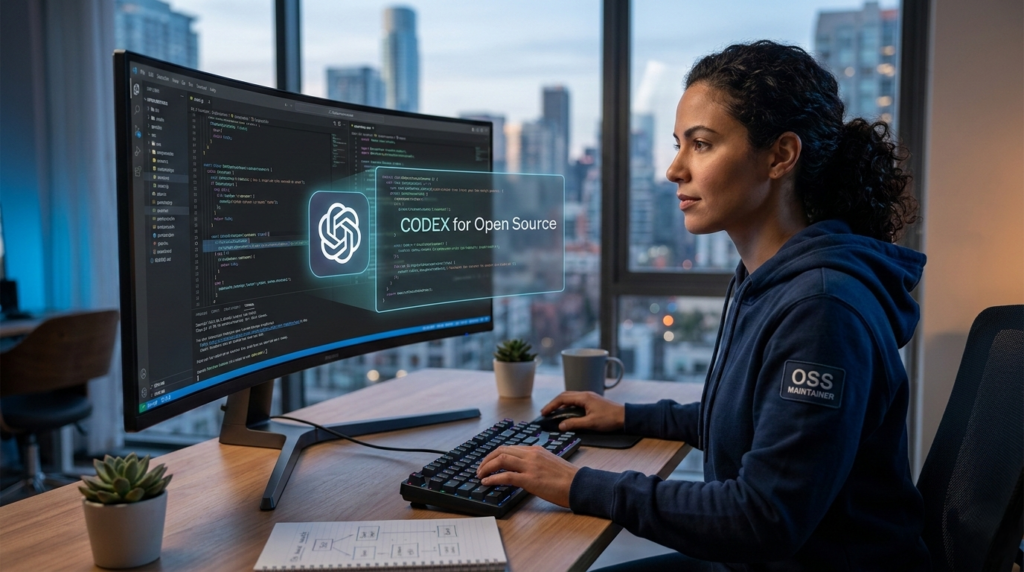
The backbone of the modern digital world isn’t built in corporate boardrooms; it’s built in the repositories of open-source software (OSS). However, the burden on maintainers—the unsung heroes who triage endless issues, review complex pull requests, and ensure security—has reached a breaking point. Recognizing this, OpenAI has launched a dedicated initiative: the OpenAI Codex for Open Source program.
This program isn’t just a charitable gesture; it is a strategic injection of high-level AI capabilities into the developer ecosystem. By providing maintainers with access to cutting-edge models and API credits, OpenAI aims to automate the “boring stuff,” allowing developers to focus on innovation. In this guide, we’ll dive deep into how the OpenAI Codex for Open Source program works, what you stand to gain, and how to position your project for a successful application.
What is the OpenAI Codex for Open Source Program?
The OpenAI Codex for Open Source program is a specialized support initiative designed specifically for the maintainers of critical open-source projects. Codex, the model family that powers tools like GitHub Copilot, is uniquely tuned for programming tasks. Through this program, OpenAI provides selected developers with the tools necessary to streamline maintenance workflows, improve code quality, and bolster project security.
Managing an active repository is a marathon, not a sprint. The “maintenance tax”—the time spent on non-coding tasks like documentation and issue management—often leads to maintainer burnout. The OpenAI Codex for Open Source initiative seeks to mitigate this by integrating AI-driven automation into the very heart of the OSS lifecycle.
Key Benefits for Selected Maintainers
If your application is accepted into the OpenAI Codex for Open Source program, the rewards are substantial. OpenAI offers a tiered support package tailored to the needs of professional developers:
- 6 Months of ChatGPT Pro: Gain access to the highest tier of ChatGPT, which includes the latest versions of Codex. This is invaluable for day-to-day coding assistance, drafting documentation, and explaining complex logic.
- API Credits for Automation: This is perhaps the most significant benefit. Selected projects receive API credits to build or use tools that automate release workflows, pull request reviews, and issue triaging.
- Codex Security Access: For projects that form the critical infrastructure of the internet, OpenAI offers conditional access to specialized security features to identify vulnerabilities before they are exploited.
- Priority Access to New Models: Participants often get a first look at the latest advancements in AI-assisted coding, keeping their projects at the cutting edge of technology.
Comparison: Standard API vs. OpenAI Codex for Open Source
| Feature | Standard OpenAI API | OpenAI Codex for Open Source |
| Cost | Pay-as-you-go | Funded via Credits |
| Target Audience | General Developers | Core OSS Maintainers |
| Focus | Multi-purpose | Maintenance & Security |
| Support Period | N/A | 6 Months (Pro features) |
Eligibility: Who Can Apply?
OpenAI is looking for projects that serve as pillars of the developer community. While there is no “magic number” of GitHub stars required, the OpenAI Codex for Open Source program prioritizes projects based on:
- Meaningful Usage: Does your project have a consistent base of users?
- Broad Adoption: Is your code a dependency for other major libraries or applications?
- Active Maintenance: Can you show a history of regular commits, PR reviews, and community engagement?
- Ecosystem Importance: Even if a project is niche, if it solves a critical problem for a specific community (e.g., scientific computing or accessibility), it may still qualify for the OpenAI Codex for Open Source grant.
How to Apply: A Step-by-Step Strategy
The application for the OpenAI Codex for Open Source program is straightforward but requires thoughtful input. Here is how to maximize your chances:
1. Document Your Role
You must be a “Primary” or “Core” maintainer. If you are a casual contributor, your application likely won’t be considered. Be prepared to link your GitHub profile, which must be set to public.
2. Highlight Your Project’s Impact
When the form asks “Why does this repository qualify?”, don’t just list your star count. Mention monthly download stats, provide examples of major companies or projects that depend on your code, and explain the “maintenance load” you are currently facing.
3. Define Your AI Workflow
OpenAI wants to see that you have a plan. How will you use those API credits? Common use cases for the OpenAI Codex for Open Source program include:
- Building a bot to automatically label incoming issues.
- Summarizing long PR discussions for easier decision-making.
- Generating unit tests for new contributions.
- Scanning for sensitive data or common security flaws in code submissions.
Actionable Insights: Leveraging Codex for Your Workflow
Once you are in the OpenAI Codex for Open Source program, the goal is to maximize the utility of the tools provided. Here are three actionable ways to use Codex in your repository:
Automated PR Summarization
Use the API credits to create a GitHub Action that triggers whenever a PR is opened. Codex can read the diff and write a concise summary of the changes, saving the maintainer minutes of manual review time per PR.
Intelligent Issue Triaging
Train a simple classifier using Codex to distinguish between “Feature Requests,” “Bug Reports,” and “Support Questions.” This ensures that critical bugs are seen first, which is a core goal of the OpenAI Codex for Open Source initiative.
Legacy Code Refactoring
Many OSS projects suffer from “technical debt” in older modules. Use your ChatGPT Pro access to refactor legacy functions into modern, more efficient code patterns, complete with updated documentation.
The Future of AI and Open Source
The OpenAI Codex for Open Source program represents a shift in how we think about software sustainability. For years, the industry has worried about the “Tragedy of the Commons” in open source—where everyone uses the code, but few contribute to its upkeep. By providing AI “assistants” to maintainers, OpenAI is effectively lowering the cost of being a good steward of code.
As models like Codex continue to evolve, we can expect even deeper integrations. Imagine a future where the OpenAI Codex for Open Source program allows for “self-healing” repositories that can automatically suggest patches for reported bugs. We aren’t quite there yet, but this program is a significant step in that direction.
Final Thoughts for Maintainers
If you are a maintainer feeling the weight of a thousand open issues, the OpenAI Codex for Open Source program is a lifeline worth taking. It provides the computational power and the premium tools needed to turn a chaotic repository into a well-oiled machine.
The application process is competitive and reviewed on a rolling basis, so there is no benefit to waiting. Head over to the official OpenAI form, gather your repository metrics, and make a case for why your project deserves the boost that only Codex can provide.