ଡ୍ରୋନ୍-ବିରୋଧୀ ରାଡାର୍ ସମ୍ବନ୍ଧୀୟ FCC ନିୟମ: ଡ୍ରୋନ୍ ଚିହ୍ନଟ ଏବଂ ଯୋଗାଯୋଗ କ୍ଷେତ୍ରରେ ନଭେମ୍ବର ୧୯ ତାରିଖର ଭୋଟ୍ କ’ଣ ପରିବର୍ତ୍ତନ ଆଣିବ?
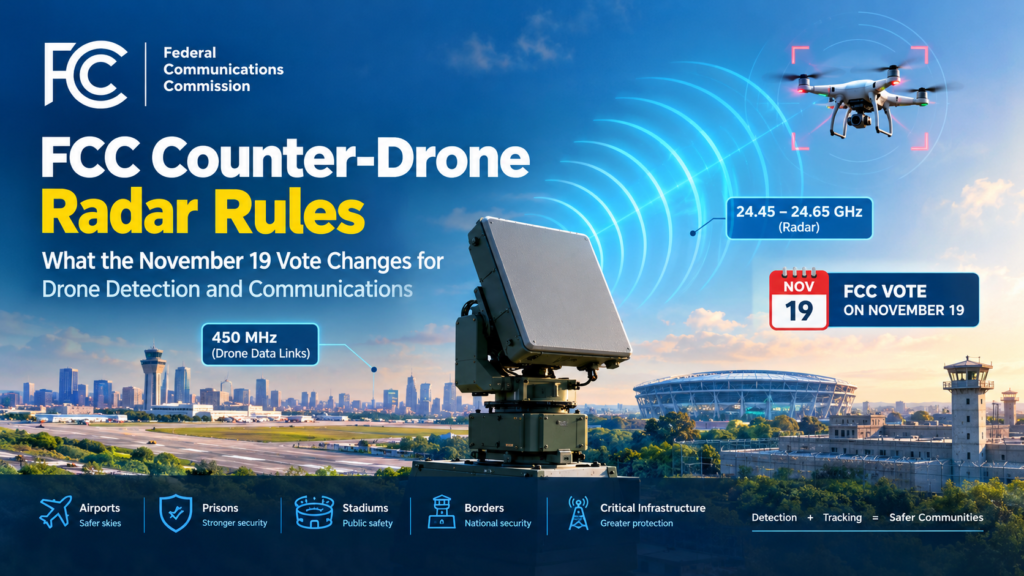
The short answer: On November 19, the Federal Communications Commission (FCC) is scheduled to vote on orders that would let ground-based counter-drone radar operate in the 24.45–24.65 GHz band and open the 450 MHz band to safety-related drone data links. If adopted, counter-drone radar would move from case-by-case waivers to a standing rulebook, but nothing in the proposals gives anyone new authority to jam, spoof, or bring down a drone.
A drone drifting toward a runway, a prison yard, or a packed stadium is a problem that modern sensors can spot in seconds. The harder problem has been regulatory. The radar that finds the drone has spent years in a spectrum gray zone, and the data links that keep legitimate drones flying have been boxed in by rules written for a different era of aviation. This analysis explains what the FCC announced on October 28 and 29, what each change actually does, who gains, and what remains unresolved.
Key Takeaways
- The FCC will vote on November 19 on rules for drone data links in the 450 MHz band and for ground-based counter-drone radar in the 24.45–24.65 GHz band.
- Today, counter-drone radar in that band has operated on waivers, so a formal rule would give manufacturers and agencies a predictable licensing path.
- The FCC already voted on October 29 to open 50 MHz of the 800 MHz Cellular band to drone operations.
- Radar detects and tracks drones. It does not stop them, and the legal limits on interference, including Section 333 of the Communications Act, remain in place.
- Airports, prisons, stadiums, borders, and critical infrastructure operators are the intended beneficiaries of the detection rules.
- Press coverage reports that major U.S. carriers have shown support and that the vote is expected to pass, but the draft text should be read before anyone plans around it.
What Did the FCC Announce on October 28 and 29?
Question: What did the FCC announce about drone rules this week?
Direct answer: FCC Chairman Brendan Carr announced on Wednesday, October 28, that the Commission will consider an omnibus decision at its November 19 open meeting covering drone communications, drone detection, and in-flight connectivity. A day later, on October 29, the Commission separately voted to remove a long-standing restriction on drone use of the 800 MHz Cellular band.
The Four Areas of Action
According to the FCC’s own release and reporting from Commercial UAV News and Unmanned Airspace, the November 19 package would act in four main areas:
- Drone communications: open the 450 MHz band to safety-related data links between the ground and both crewed and uncrewed aircraft, replacing site-by-site rules with a nationwide licensing approach.
- Drone detection: allow ground-based radar to use the 24.45–24.65 GHz band to detect and track unauthorized or dangerous drones near airports, borders, prisons, stadiums, and critical infrastructure.
- In-flight connectivity: update the 800 MHz air-ground band so providers can deliver broadband to aircraft more efficiently while protecting public-safety communications and other nearby users.
- Satellite connectivity: expand low-Earth-orbit satellite connectivity for mobile users, including drones, across the 28.35–28.6 GHz band.
The FCC frames the effort as part of a broader drone dominance agenda tied to the administration’s national drone strategy. For readers tracking the FCC drone communications rules specifically, the 450 MHz and 800 MHz items matter most. For readers tracking security, the 24 GHz band is the headline.
The Separate October 29 Vote
DroneLife reports that the FCC adopted a Report and Order, FCC 26-72, with Chairman Carr and Commissioners Anna Gomez and Olivia Trusty voting in favor. The order lets drones use 50 MHz of cellular spectrum for command, control, communications, and payload operations. This item is already adopted, which separates it from the November 19 proposals that are still pending.
What Is Counter-Drone Radar and Why Does It Need Spectrum?
Definition: Counter-drone radar is a ground-based sensor that transmits radio energy, listens for the echoes that bounce off aircraft, and uses those echoes to detect, track, and classify drones in a protected area.
Expansion: Because radar is an active transmitter, it needs a legal slice of the radio spectrum, exactly like a cellular tower or a Wi-Fi router. Without a clear allocation, every deployment depends on an exception. That is the core issue behind the current FCC counter-drone radar rules. Security teams can buy excellent sensors, but the regulatory footing under them has been uneven.
How Does Radar Compare With Other Detection Methods?
Counter-drone programs typically layer several sensor types. A guide released by Joint Interagency Task Force 401 describes radar, electro-optical and infrared cameras, acoustic sensors, and radio-frequency detection as the main families of non-intrusive detection technology.
- Radio-frequency detection listens for a drone’s control or video signals. It can identify models and sometimes pilots, but it struggles with drones that fly autonomously and stay radio-silent.
- Electro-optical and infrared cameras confirm what a target actually is, but they work best when another sensor tells them where to look.
- Acoustic sensors can help at short range but are sensitive to ambient noise.
- Counter-drone radar does not depend on the drone emitting anything, which makes it valuable for wide-area surveillance and for cueing cameras.
That last point explains why spectrum policy for radar carries so much weight. If radar is the sensor that works against a quiet, autonomous drone, then the rules that govern it shape how well a defended site can actually see.
Why the 24.45–24.65 GHz Band Is the Center of the Debate
Question: Why does the 24 GHz band matter for drone detection?
Direct answer: The 24.45–24.65 GHz range is the slice the FCC proposes to open to ground-based radar for tracking unauthorized drones. It matters because the proposal would turn a waiver-dependent activity into a rule-based one, within a band that already has other users who must be protected.
Who Already Uses the Band?
DroneXL reports that the band’s primary users are aircraft radionavigation systems, including detect-and-avoid radar, along with inter-satellite links. Those incumbents shape every technical choice. Unmanned Airspace reports that the proposed rules would require counter-drone radar systems to protect other users with priority access to the band. In practice, that means power limits, siting conditions, and coordination expectations are likely to be where the real engineering debate happens.
What Was the Echodyne Petition and the Waiver Era?
DroneXL traces the request for drone-detection radar rules back to a 2018 petition from the radar maker Echodyne. Until now, according to the same report, drone-detection radar has operated in the band on waivers. The company’s radar is also part of a $490 million Air Force counter-drone program, which illustrates the gap: the technology is already trusted for serious government work while its commercial rulebook has lagged.
Why Does a Formal Rule Beat a Waiver?
A waiver is temporary, narrow, and requested one party at a time. A rule is standing, general, and available to every qualified applicant. For a stadium operator or a prison system buying detection radar, a rule reduces the legal uncertainty that can stall procurement. For manufacturers, it creates a defined market to build for.
How Would the 450 MHz Changes Affect Drone Communications?
Definition: The 450 MHz band is a block of spectrum currently governed by general aviation air-ground rules. The FCC proposes to repurpose it for safety-related data links, including control links for unmanned aircraft.
What Did the Old Rules Allow?
Current rules limit service in the band to voice communications for general aviation aircraft flying at high altitudes. The FCC’s own language in its January 2025 proposal, WT Docket 24-629, says this effectively prohibits data communications and wide-area, low-altitude service. For drones, which fly low and depend on data, that is a poor match.
What Would the New Rules Add?
The FCC would replace the site-based approach with a more flexible nationwide licensing system. DroneXL reports that the proposal also adds a primary aeronautical allocation for control and non-payload communications, often shortened to CNPC. That is the link that flies the aircraft rather than the link that carries the camera feed. A protected, primary-status control link is exactly what beyond-visual-line-of-sight operations need to be taken seriously by regulators and insurers.
What Did the FCC Already Decide About the 800 MHz Cellular Band?
Question: What changed on October 29?
Direct answer: The FCC removed a decades-old restriction on airborne use of the 800 MHz Cellular band, allowing drones to use roughly 50 MHz of licensed cellular spectrum for command, control, communications, and payload operations.
The practical effect is that drone operators can work with existing licensed cellular holders rather than waiting for a brand-new band to be carved out. This is a quiet but meaningful change in how the FCC drone communications rules fit together: existing licensed spectrum becomes a drone resource, which is faster than building something from scratch.
Comparison: The FCC’s Drone Spectrum Actions at a Glance
| Action | Band | Status as of October 30, 2026 | What it enables | Main beneficiaries |
|---|---|---|---|---|
| Drone use of cellular spectrum | 800 MHz Cellular (50 MHz) | Adopted October 29 (FCC 26-72) | Command, control, communications, and payload links | Drone operators, cellular licensees |
| Drone data links | 450 MHz band | Scheduled for November 19 vote | Safety-related data links, nationwide licensing, CNPC allocation | Drone operators, advanced air mobility developers |
| Drone-detection radar | 24.45–24.65 GHz | Scheduled for November 19 vote | Ground-based radar to detect and track unauthorized drones | Airports, prisons, stadiums, border and infrastructure security |
| In-flight broadband | 800 MHz air-ground | Scheduled for November 19 vote | More efficient broadband for aircraft with public-safety protections | Airlines, aircraft connectivity providers |
| Satellite connectivity | 28.35–28.6 GHz | Under consideration November 19 | Low-Earth-orbit satellite links for mobile users, including drones | Satellite operators, drone operators |
The table shows a clear pattern. Two of the five items serve drone operators, one serves security teams, and two broaden aircraft and satellite connectivity. The counter-drone radar item is the only one aimed squarely at defense and public safety.
What Do the Counter-Drone Radar Rules Not Allow?
Question: Does the FCC proposal let anyone shoot down or jam a drone?
Direct answer: No. The proposal concerns detection and tracking. DroneXL makes the same point directly: a rule that lets a radar see a drone gives no one the power to jam it or bring it down.
Why Does Section 333 Still Matter?
Section 333 of the Communications Act of 1934 prohibits willful or malicious interference with licensed radio communications. The FCC’s April 2026 public notice, DA 26-314, asked how that provision limits counter-drone systems that interfere with signals, and noted that current Part 5 rules confine counter-drone use largely to research and development. Reporting on that notice observed that the FCC cannot resolve a statutory limit on its own. Radar does not interfere with a drone’s link, so the radar proposal sidesteps this problem. Mitigation tools that jam or spoof do not.
Who Can Actually Mitigate a Drone?
Legal analysts who advise buyers describe counter-drone as an authority problem more than a product problem. Aviation law, spectrum law, criminal statutes, and agency-only authorities overlap. Anyone buying equipment should assume mitigation is restricted unless explicitly authorized and should verify that authority in writing before procurement. The FCC counter-drone radar rules improve the detection side of the picture. They do not rewrite the law on interdiction.
How Did We Get Here? A Short Timeline
- December 2025: The FCC added foreign-produced drones and critical drone components to its Covered List.
- January 7, 2026: An FCC update exempted drones and components that meet a Buy American standard from the Covered List.
- April 1, 2026: The Wireless Telecommunications Bureau and the Office of Engineering and Technology released public notice DA 26-314, seeking comment on spectrum access, experimental licensing, and counter-drone barriers. Comments were due May 1 and reply comments May 18.
- October 28, 2026: Chairman Carr announced the November 19 agenda items.
- October 29, 2026: The FCC adopted the 800 MHz Cellular band order, FCC 26-72, and the draft text for the November items was due to be posted.
- November 19, 2026: Scheduled FCC open meeting vote on the 450 MHz, 24 GHz, 800 MHz air-ground, and satellite items.
The April notice also listed the 450 MHz band, the 24 GHz range for radar following the Echodyne petition, and 800 MHz cellular among the bands under review. In other words, the October actions are the follow-through on a proceeding that began months earlier.
Who Is Affected by the New Counter-Drone Radar Rules?
Drone Operators and Manufacturers
Operators gain more licensed spectrum options for control and payload links, and manufacturers gain a clearer picture of which bands to design around. The 450 MHz band and the 800 MHz Cellular band offer very different propagation and capacity characteristics, so product teams will likely evaluate both.
Radar Makers and Counter-UAS Integrators
Companies that build or integrate drone-detection radar are the most direct winners. A standing rule can shorten sales cycles, simplify certification, and make it easier for customers to deploy without bespoke waivers.
Airports, Prisons, Stadiums, and Critical Infrastructure
These are the sites the FCC explicitly named. Site owners and security directors should watch the final technical conditions, because power limits and coordination duties will determine how many radar units a facility can deploy and where.
Carriers, Satellite Operators, and Incumbent Spectrum Users
Commercial UAV News reports that the major U.S. carriers have shown support for the vote. Incumbents in the 24 GHz band, including aircraft radionavigation and inter-satellite users, will be watching the interference protections most closely.
What Should You Watch Before and After the Vote?
Question: What details will decide whether these rules work in practice?
Direct answer: The final technical conditions, especially power limits, coordination requirements, and licensing mechanics, will decide how useful the rules are.
- Final order text: The public announcement describes the intent. The adopted order will define the engineering.
- Protection of incumbents: Conditions for protecting primary users in the 24 GHz band could be strict or light, and the difference changes deployment economics.
- Licensing structure at 450 MHz: A nationwide licensing system can be designed many ways, from a few large licenses to many small ones.
- Follow-on action on mitigation: The detection rules do not solve interdiction. Watch for further FCC and congressional action on the Section 333 question.
- Equipment authorization: Detection radar hardware still has to comply with FCC equipment rules before it can be marketed.
A caution on sourcing: this analysis draws on the FCC’s announcement and on trade and legal reporting, not on the final adopted text. Treat specific figures as accurate to those reports and confirm against the order once it is published.
Why Does This Matter for India’s Drone and Deep-Tech Community?
Question: These are U.S. rules. Why should readers in India care?
Direct answer: The FCC does not govern Indian airspace or spectrum, but its decisions shape global product design, standards discussions, and supply chains. India’s own framework, including the Drone Rules, 2021 and its spectrum allocation process, operates separately.
For students, freshers, and young professionals, the signal is about skills. Radar signal processing, RF engineering, spectrum policy, and drone systems integration are all areas where a regulatory shift in a large market creates demand. Engineers who understand how counter-drone radar is licensed, and why detection and mitigation are legally distinct, will be better prepared for roles in defense tech, aviation, and critical infrastructure security. Indian startups that export drone or sensor products should also note that U.S. spectrum rules influence what buyers in that market will expect.
Frequently Asked Questions
What is the primary purpose of the FCC counter-drone radar rules?
The proposal would let ground-based radar use the 24.45–24.65 GHz band to detect and track unauthorized or dangerous drones near airports, borders, prisons, stadiums, and critical infrastructure.
When will the FCC vote on the counter-drone radar rules?
The vote is scheduled for the FCC’s November 19, 2026 open meeting.
Do the new rules allow jamming drones?
No. The proposals address detection and communications. Interference with licensed radio communications remains restricted under Section 333 of the Communications Act.
What is different about the 450 MHz band?
The 450 MHz band is currently limited to voice service for high-altitude general aviation. The FCC proposes to open it to safety-related data links, including for drones, under a nationwide licensing approach.
Has anything already been adopted?
Yes. On October 29, the FCC adopted rules allowing drones to use 50 MHz of the 800 MHz Cellular band under Report and Order FCC 26-72.
Bottom Line
The November 19 vote is less about a single technology than about making drone infrastructure legible to regulators. Counter-drone radar gets a path from waiver to rule, drone operators get new spectrum for control and payload links, and the legal line between seeing a drone and stopping one stays exactly where it was. That last point is worth remembering as the counter-drone radar conversation moves from spectrum to authority.
FCCର ଡ୍ରୋନ୍-ବିରୋଧୀ ରାଡାର ନିୟମାବଳୀ: ଡ୍ରୋନ୍ ଚିହ୍ନଟ ଏବଂ ଯୋଗାଯୋଗ କ୍ଷେତ୍ରରେ ନଭେମ୍ବର ୧୯ ତାରିଖର ଭୋଟ୍ କ’ଣ ପରିବର୍ତ୍ତନ ଆଣିବ?
ସଂକ୍ଷିପ୍ତ ଉତ୍ତର: ନଭେମ୍ବର ୧୯ ତାରିଖରେ, ଫେଡେରାଲ୍ କମ୍ୟୁନିକେସନ୍ କମିଶନ (FCC) କିଛି ନିର୍ଦ୍ଦେଶାବଳୀ ଉପରେ ଭୋଟ୍ ଦେବାକୁ ଯାଉଛି। ଏହା ଦ୍ୱାରା ଭୂମି-ଆଧାରିତ ଡ୍ରୋନ୍-ବିରୋଧୀ ରାଡାରଗୁଡ଼ିକ ୨୪.୪୫–୨୪.୬୫ GHz ବ୍ୟାଣ୍ଡରେ କାର୍ଯ୍ୟ କରିପାରିବେ ଏବଂ ୪୫୦ MHz ବ୍ୟାଣ୍ଡକୁ ସୁରକ୍ଷା-ସମ୍ବନ୍ଧୀୟ ଡ୍ରୋନ୍ ଡାଟା ଲିଙ୍କ୍ (ତଥ୍ୟ ଆଦାନପ୍ରଦାନ ବ୍ୟବସ୍ଥା) ପାଇଁ ଉନ୍ମୁକ୍ତ କରାଯିବ। ଯଦି ଏହା ଗୃହୀତ ହୁଏ, ତେବେ ଡ୍ରୋନ୍-ବିରୋଧୀ ରାଡାର ପାଇଁ ବର୍ତ୍ତମାନର ‘ସ୍ୱତନ୍ତ୍ର ଅନୁମତି’ (case-by-case waivers) ବ୍ୟବସ୍ଥା ବଦଳରେ ଏକ ସ୍ଥାୟୀ ନିୟମାବଳୀ ଲାଗୁ ହେବ। ତେବେ, ଏହି ପ୍ରସ୍ତାବରେ କାହାକୁ ମଧ୍ୟ ଡ୍ରୋନ୍କୁ ଜାମ୍ (jam) କରିବା, ଭ୍ରମିତ (spoof) କରିବା କିମ୍ବା ତଳକୁ ଖସାଇ ଆଣିବାର (bring down) କୌଣସି ନୂତନ ଅଧିକାର ଦିଆଯାଇନାହିଁ।
ଯଦି କୌଣସି ଡ୍ରୋନ୍ ବିମାନବନ୍ଦରର ରନ୍ୱେ, କାରାଗାର ପରିସର କିମ୍ବା ଲୋକାରଣ୍ୟ ଷ୍ଟାଡିୟମ୍ ଆଡ଼କୁ ମାଡ଼ିଆସେ, ତେବେ ଆଧୁନିକ ସେନ୍ସରଗୁଡ଼ିକ ମାତ୍ର କିଛି ସେକେଣ୍ଡ ମଧ୍ୟରେ ଏହାକୁ ଚିହ୍ନଟ କରିପାରିବେ। କିନ୍ତୁ ଏଥିରେ ସବୁଠାରୁ କଷ୍ଟକର ସମସ୍ୟାଟି ହେଉଛି ନିୟମାବଳୀ ସମ୍ବନ୍ଧୀୟ। ଡ୍ରୋନ୍ ଚିହ୍ନଟ କରୁଥିବା ରାଡାରଗୁଡ଼ିକ ଦୀର୍ଘ ଦିନ ଧରି ଏକ ଅସ୍ପଷ୍ଟ ନିୟମାବଳୀ ପରିସର (spectrum gray zone) ମଧ୍ୟରେ ରହିଆସିଛନ୍ତି। ସେହିପରି, ବୈଧ ଡ୍ରୋନ୍ଗୁଡ଼ିକର ପରିଚାଳନା ପାଇଁ ଆବଶ୍ୟକ ଡାଟା ଲିଙ୍କ୍ଗୁଡ଼ିକ ମଧ୍ୟ ଏପରି କିଛି ପୁରୁଣା ନିୟମ ଦ୍ୱାରା ସୀମିତ ହୋଇ ରହିଛନ୍ତି, ଯାହା ବିମାନ ଚଳାଚଳର ଏକ ଭିନ୍ନ ଯୁଗ ପାଇଁ ପ୍ରସ୍ତୁତ କରାଯାଇଥିଲା। ଏହି ବିଶ୍ଳେଷଣରେ ଆଲୋଚନା କରାଯାଇଛି ଯେ, ଅକ୍ଟୋବର ୨୮ ଏବଂ ୨୯ ତାରିଖରେ FCC କ’ଣ ଘୋଷଣା କରିଛି, ଏହି ପରିବର୍ତ୍ତନଗୁଡ଼ିକର ପ୍ରକୃତ ଅର୍ଥ କ’ଣ, ଏଥିରୁ କିଏ ଲାଭବାନ ହେବେ ଏବଂ କେଉଁ ବିଷୟଗୁଡ଼ିକ ଏପର୍ଯ୍ୟନ୍ତ ଅସମାହିତ ରହିଯାଇଛି।
ମୁଖ୍ୟ ବିଷୟବସ୍ତୁ
FCC ନଭେମ୍ବର ଗଣମାଧ୍ୟମ ରିପୋର୍ଟ ଅନୁଯାୟୀ, ଆମେରିକାର ପ୍ରମୁଖ ଟେଲିକମ୍ କମ୍ପାନୀଗୁଡ଼ିକ ଏହାକୁ ସମର୍ଥନ ଜଣାଇଛନ୍ତି ଏବଂ ଏହି ପ୍ରସ୍ତାବଟି ପାରିତ ହେବାର ସମ୍ଭାବନା ରହିଛି। ତେବେ, ଏହାକୁ ଆଧାର କରି କୌଣସି ଯୋଜନା ପ୍ରସ୍ତୁତ କରିବା ପୂର୍ବରୁ, ପ୍ରସ୍ତାବିତ ଖସଡ଼ାଟିକୁ ଭଲ ଭାବରେ ପଢ଼ିନେବା ଉଚିତ୍।
ଅକ୍ଟୋବର ୨୮ ଏବଂ ୨୯ ତାରିଖରେ FCC କ’ଣ ଘୋଷଣା କଲା?
ପ୍ରଶ୍ନ: ଏହି ସପ୍ତାହରେ ଡ୍ରୋନ୍ ନିୟମାବଳୀ ସମ୍ବନ୍ଧରେ FCC କ’ଣ ଘୋଷଣା କରିଛି?
ସିଧାସଳଖ ଉତ୍ତର: FCC ଅଧ୍ୟକ୍ଷ ବ୍ରେଣ୍ଡନ୍ କାର୍ (Brendan Carr) ବୁଧବାର, ଅକ୍ଟୋବର ୨୮ ତାରିଖରେ ଘୋଷଣା କରିଛନ୍ତି ଯେ, ନଭେମ୍ବର ୧୯ ତାରିଖରେ ହେବାକୁ ଥିବା ଏହାର ମୁକ୍ତ ବୈଠକରେ କମିଶନ ଏକ ବ୍ୟାପକ ନିଷ୍ପତ୍ତି ଉପରେ ବିଚାର କରିବେ। ଏହି ନିଷ୍ପତ୍ତିରେ ଡ୍ରୋନ୍ ଯୋଗାଯୋଗ, ଡ୍ରୋନ୍ ଚିହ୍ନଟ ଏବଂ ଉଡ଼ାଣ ସମୟରେ ସଂଯୋଗ (in-flight connectivity) ଭଳି ବିଷୟଗୁଡ଼ିକ ଅନ୍ତର୍ଭୁକ୍ତ ରହିବ। ଏହାର ଗୋଟିଏ ଦିନ ପରେ, ଅକ୍ଟୋବର ୨୯ ତାରିଖରେ, କମିଶନ ଏକ ସ୍ୱତନ୍ତ୍ର ଭୋଟ୍ ମାଧ୍ୟମରେ ୮୦୦ MHz ସେଲ୍ୟୁଲାର୍ ବ୍ୟାଣ୍ଡ୍ର ବ୍ୟବହାର ଉପରେ ଥିବା ଦୀର୍ଘଦିନର କଟକଣାକୁ ହଟାଇ ଦେଇଛନ୍ତି।
କାର୍ଯ୍ୟାନୁଷ୍ଠାନର ଚାରୋଟି କ୍ଷେତ୍ର
FCC ଦ୍ୱାରା ଜାରି ବିଜ୍ଞପ୍ତି ଏବଂ ‘କମର୍ସିଆଲ୍ UAV ନ୍ୟୁଜ୍’ (Commercial UAV News) ତଥା ‘ଅନମ୍ୟାଣ୍ଡ୍ ଏୟାରସ୍ପେସ୍’ (Unmanned Airspace) ର ରିପୋର୍ଟ ଅନୁଯାୟୀ, ନଭେମ୍ବର ୧୯ ତାରିଖର ଏହି ପ୍ୟାକେଜ୍ ମୁଖ୍ୟତଃ ଚାରୋଟି କ୍ଷେତ୍ରରେ କାର୍ଯ୍ୟ କରିବ:
ଡ୍ରୋନ୍ ଯୋଗାଯୋଗ: ଭୂମି ଏବଂ ଉଭୟ ଚାଳକଯୁକ୍ତ (crewed) ତଥା ଚାଳକବିହୀନ (uncrewed) ବିମାନ ମଧ୍ୟରେ ସୁରକ୍ଷା ସମ୍ବନ୍ଧୀୟ ତଥ୍ୟ ଆଦାନପ୍ରଦାନ ପାଇଁ ୪୫୦ MHz ବ୍ୟାଣ୍ଡ୍କୁ ଉପଲବ୍ଧ କରାଯିବ। ଏଥିପାଇଁ ପୂର୍ବରୁ ଥିବା ସ୍ଥାନ-ଭିତ୍ତିକ (site-by-site) ନିୟମ ବଦଳରେ ସମଗ୍ର ଦେଶ ପାଇଁ ଏକକ ଲାଇସେନ୍ସ ବ୍ୟବସ୍ଥା ଲାଗୁ କରାଯିବ।
ଡ୍ରୋନ୍ ଚିହ୍ନଟ: ବିମାନବନ୍ଦର, ସୀମାନ୍ତ, କାରାଗାର, ଷ୍ଟାଡିୟମ୍ ଏବଂ ଗୁରୁତ୍ୱପୂର୍ଣ୍ଣ ଭିତ୍ତିଭୂମି ନିକଟରେ ଅନଧିକୃତ କିମ୍ବା ବିପଜ୍ଜନକ ଡ୍ରୋନ୍କୁ ଚିହ୍ନଟ ଓ ଟ୍ରାକ୍ କରିବା ପାଇଁ, ଭୂମି-ଆଧାରିତ ରାଡାର୍ ( ଅକ୍ଟୋବର ୨୯ ତାରିଖର ସ୍ୱତନ୍ତ୍ର ଭୋଟ୍
‘ଡ୍ରୋନ୍ଲାଇଫ୍’ (DroneLife) ଅନୁଯାୟୀ, FCC ଏକ ‘ରିପୋର୍ଟ ଆଣ୍ଡ ଅର୍ଡର’ (Report and Order) – FCC 26-72 ଗ୍ରହଣ କରିଛି। ଏହାର ସପକ୍ଷରେ ଅଧ୍ୟକ୍ଷ କାର୍ (Carr) ଏବଂ କମିଶନର ଆନ୍ନା ଗୋମେଜ୍ (Anna Gomez) ଓ ଅଲିଭିଆ ଟ୍ରଷ୍ଟି (Olivia Trusty) ଭୋଟ୍ ଦେଇଛନ୍ତି। ଏହି ନିର୍ଦ୍ଦେଶନାମା ଅନୁଯାୟୀ, ଡ୍ରୋନ୍ଗୁଡ଼ିକ ନିୟନ୍ତ୍ରଣ (command), ପରିଚାଳନା (control), ଯୋଗାଯୋଗ (communications) ଏବଂ ପେଲୋଡ୍ (payload – ଡ୍ରୋନ୍ରେ ବହନ କରାଯାଉଥିବା ସାମଗ୍ରୀ) କାର୍ଯ୍ୟ ପାଇଁ ୫୦ MHz ସେଲ୍ୟୁଲାର୍ ସ୍ପେକ୍ଟ୍ରମ୍ ବ୍ୟବହାର କରିପାରିବେ। ଏହି ପ୍ରସ୍ତାବଟି ପୂର୍ବରୁ ହିଁ ଗୃହୀତ ହୋଇସାରିଛି, ଯାହା ଏହାକୁ ନଭେମ୍ବର ୧୯ ତାରିଖର ସେହି ପ୍ରସ୍ତାବଗୁଡ଼ିକଠାରୁ ଅଲଗା କରିଦିଏ ଯାହା ବର୍ତ୍ତମାନ ମଧ୍ୟ ବିଚାରାଧୀନ ରହିଛି।
‘କାଉଣ୍ଟର୍-ଡ୍ରୋନ୍ ରାଡାର୍’ (Counter-Drone Radar) କ’ଣ ଏବଂ ଏଥିପାଇଁ ସ୍ପେକ୍ଟ୍ରମ୍ କାହିଁକି ଆବଶ୍ୟକ?
ସଂଜ୍ଞା: ‘କାଉଣ୍ଟର୍-ଡ୍ରୋନ୍ ରାଡାର୍’ ହେଉଛି ଭୂମି-ଆଧାରିତ ଏକ ସେନ୍ସର (sensor), ଯାହା ରେଡିଓ ଶକ୍ତି ନିର୍ଗତ କରେ। ଏହା ବିମାନ କିମ୍ବା ଡ୍ରୋନ୍ରେ ବାଜି ଫେରିଆସୁଥିବା ତରଙ୍ଗ (echoes) କୁ ଗ୍ରହଣ କରେ ଏବଂ ସେହି ତରଙ୍ଗଗୁଡ଼ିକର ସାହାଯ୍ୟରେ ସୁରକ୍ଷିତ ଅଞ୍ଚଳରେ ଥିବା ଡ୍ରୋନ୍ଗୁଡ଼ିକୁ ଚିହ୍ନଟ କରିବା, ସେଗୁଡ଼ିକର ଗତିପଥ ଅନୁସରଣ କରିବା (track) ଏବଂ ସେଗୁଡ଼ିକ କେଉଁ ପ୍ରକାରର ତାହା ବର୍ଗୀକରଣ କରିବା ପାଇଁ ବ୍ୟବହୃତ ହୁଏ।
ବିସ୍ତୃତ ବ୍ୟାଖ୍ୟା: ରାଡାର୍ ଏକ ‘ସକ୍ରିୟ ଟ୍ରାନ୍ସମିଟର’ (active transmitter) ହୋଇଥିବାରୁ, ଏହାକୁ ରେଡିଓ ସ୍ପେକ୍ଟ୍ରମ୍ର ଏକ ନିର୍ଦ୍ଦିଷ୍ଟ ଅଂଶ ଆଇନଗତ ଭାବେ ଆବଣ୍ଟନ କରାଯିବା ଆବଶ୍ୟକ; ଠିକ୍ ଯେପରି ଏକ ସେଲ୍ୟୁଲାର୍ ଟାୱାର କିମ୍ବା ୱାଇ-ଫାଇ (Wi-Fi) ରାଉଟର ପାଇଁ ଆବଶ୍ୟକ ହୋଇଥାଏ। ଯଦି ସ୍ପେକ୍ଟ୍ରମ୍ର ସ୍ପଷ୍ଟ ଆବଣ୍ଟନ ନଥାଏ, ତେବେ ପ୍ରତ୍ୟେକ ଥର ଏହାକୁ ବ୍ୟବହାର କରିବା ପାଇଁ ଏକ ସ୍ୱତନ୍ତ୍ର ଅନୁମତି ବା ‘ଛାଡ଼’ (exception) ଉପରେ ନିର୍ଭର କରିବାକୁ ପଡ଼ିଥାଏ। FCC-ର ବର୍ତ୍ତମାନର ‘କାଉଣ୍ଟର୍-ଡ୍ରୋନ୍ ରାଡାର୍’ ନିୟମାବଳୀ କ୍ଷେତ୍ରରେ ଏହା ହିଁ ମୁଖ୍ୟ ସମସ୍ୟା। ସୁରକ୍ଷା ଦଳଗୁଡ଼ିକ ଉନ୍ନତ ଅନୁପ୍ରବେଶ ଚିହ୍ନଟ ପ୍ରଯୁକ୍ତିବିଦ୍ୟା (Intrusive detection technology)।
ରେଡିଓ-ଫ୍ରିକ୍ୱେନ୍ସି (Radio-frequency) ଚିହ୍ନଟ ପ୍ରଣାଳୀ ଡ୍ରୋନ୍ର ନିୟନ୍ତ୍ରଣ ସଙ୍କେତ କିମ୍ବା ଭିଡିଓ ସିଗନାଲ୍କୁ ଧରିବାକୁ ଚେଷ୍ଟା କରେ। ଏହା ମାଧ୍ୟମରେ ଡ୍ରୋନ୍ର ମଡେଲ୍ ଏବଂ କେତେକ କ୍ଷେତ୍ରରେ ଏହାର ପରିଚାଳକଙ୍କୁ ମଧ୍ୟ ଚିହ୍ନଟ କରାଯାଇପାରେ; କିନ୍ତୁ ଯେଉଁ ଡ୍ରୋନ୍ଗୁଡ଼ିକ ସ୍ୱୟଂଚାଳିତ ଭାବେ ଉଡ଼ନ୍ତି ଏବଂ କୌଣସି ରେଡିଓ ସଙ୍କେତ ପ୍ରସାରଣ କରନ୍ତି ନାହିଁ (radio-silent), ସେଗୁଡ଼ିକୁ ଚିହ୍ନଟ କରିବାରେ ଏହି ପ୍ରଣାଳୀ ଅସୁବିଧାର ସମ୍ମୁଖୀନ ହୁଏ।
ଇଲେକ୍ଟ୍ରୋ-ଅପ୍ଟିକାଲ୍ (Electro-optical) ଏବଂ ଇନଫ୍ରାରେଡ୍ (Infrared) କ୍ୟାମେରାଗୁଡ଼ିକ ଲକ୍ଷ୍ୟବସ୍ତୁଟି ପ୍ରକୃତରେ କ’ଣ, ତାହା ନିଶ୍ଚିତ କରିବାରେ ସାହାଯ୍ୟ କରନ୍ତି। ତେବେ, ଅନ୍ୟ କୌଣସି ସେନ୍ସର (sensor) ଦ୍ୱାରା ଲକ୍ଷ୍ୟବସ୍ତୁଟି କେଉଁଠାରେ ଅଛି ସେ ବିଷୟରେ ସୂଚନା ମିଳିଲେ, ଏହି କ୍ୟାମେରାଗୁଡ଼ିକ ଅଧିକ ପ୍ରଭାବଶାଳୀ ଭାବେ କାମ କରିପାରନ୍ତି।
ଆକୌଷ୍ଟିକ୍ (Acoustic) ବା ଶବ୍ଦ-ଆଧାରିତ ସେନ୍ସରଗୁଡ଼ିକ ଅଳ୍ପ ଦୂରତା ମଧ୍ୟରେ ସାହାଯ୍ୟ କରିପାରନ୍ତି, କିନ୍ତୁ ପରିବେଶର ଅନ୍ୟାନ୍ୟ ଶବ୍ଦ (ambient noise) ଯୋଗୁଁ ଏଗୁଡ଼ିକ ପ୍ରଭାବିତ ହୋଇପାରନ୍ତି।
ଡ୍ରୋନ୍-ବିରୋଧୀ ରେଡାର୍ (Counter-drone radar) କାର୍ଯ୍ୟ କରିବା ପାଇଁ ଡ୍ରୋନ୍ରୁ କୌଣସି ସଙ୍କେତ ନିର୍ଗତ ହେବା ଉପରେ ନିର୍ଭର କରେ ନାହିଁ। ଏହି କାରଣରୁ, ବ୍ୟାପକ ଅଞ୍ଚଳ ଉପରେ ନଜର ରଖିବା (surveillance) ଏବଂ କ୍ୟାମେରାଗୁଡ଼ିକୁ ଲକ୍ଷ୍ୟସ୍ଥଳ ଆଡ଼କୁ ନିର୍ଦ୍ଦେଶ ଦେବା ପାଇଁ ଏହା ଅତ୍ୟନ୍ତ ଉପଯୋଗୀ ଅଟେ।
ଏହି ଶେଷ ବିନ୍ଦୁଟି ବୁଝାଇଦିଏ ଯେ ରେଡାର୍ ସମ୍ବନ୍ଧୀୟ ‘ସ୍ପେକ୍ଟ୍ରମ୍ ନୀତି’ (spectrum policy) କାହିଁକି ଏତେ ଗୁରୁତ୍ୱପୂର୍ଣ୍ଣ। ଯଦି ଏକ ନିରବ ଏବଂ ସ୍ୱୟଂଚାଳିତ ଡ୍ରୋନ୍କୁ ଚିହ୍ନଟ କରିବା ପାଇଁ ରେଡାର୍ ହିଁ ମୁଖ୍ୟ ସେନ୍ସର ହୋଇଥାଏ, ତେବେ ଏହାକୁ ପରିଚାଳନା କରୁଥିବା ନିୟମାବଳୀ ହିଁ ସ୍ଥିର କରିବ ଯେ ଏକ ସୁରକ୍ଷିତ ସ୍ଥାନ କେତେ ଭଲ ଭାବେ ବାହ୍ୟ ଡ୍ରୋନ୍କୁ ଦେଖିପାରିବ।
୨୪.୪୫–୨୪.୬୫ GHz ବ୍ୟାଣ୍ଡ୍ (Band) କାହିଁକି ବିତର୍କର କେନ୍ଦ୍ରବିନ୍ଦୁ ପାଲଟିଛି?
ପ୍ରଶ୍ନ: ଡ୍ରୋନ୍ ଚିହ୍ନଟ କ୍ଷ କମ୍ପାନୀର ରାଡାର୍ (radar) ବାୟୁସେନାର ୪୯୦ ନିୟୁତ ଡଲାର୍ ମୂଲ୍ୟର ‘ଡ୍ରୋନ୍-ବିରୋଧୀ’ (counter-drone) କାର୍ଯ୍ୟକ୍ରମର ଏକ ଅଂଶ ଅଟେ। ଏହା ଏକ ବଡ଼ ଅନ୍ତରକୁ ଦର୍ଶାଏ: ଗୁରୁତ୍ୱପୂର୍ଣ୍ଣ ସରକାରୀ କାର୍ଯ୍ୟ ପାଇଁ ଏହି ପ୍ରଯୁକ୍ତିବିଦ୍ୟା ଉପରେ ଭରସା କରାଯାଉଥିବା ବେଳେ, ଏହାର ବ୍ୟବସାୟିକ ବ୍ୟବହାର ସମ୍ବନ୍ଧୀୟ ନିୟମାବଳୀ ବହୁ ପଛରେ ରହିଯାଇଛି।
ଏକ ନିର୍ଦ୍ଦିଷ୍ଟ ନିୟମ, ଏକ ‘ଛାଡ଼’ (waiver) ଠାରୁ କାହିଁକି ଅଧିକ ଉପଯୋଗୀ?
ଏକ ‘ଛାଡ଼’ (waiver) ହେଉଛି ଅସ୍ଥାୟୀ, ସୀମିତ ଏବଂ ଏହା କେବଳ ଗୋଟିଏ ପକ୍ଷର ଅନୁରୋଧ କ୍ରମେ ପ୍ରଦାନ କରାଯାଇଥାଏ। ଅନ୍ୟ ପକ୍ଷରେ, ଏକ ‘ନିୟମ’ ସ୍ଥାୟୀ ଓ ସାଧାରଣ ହୋଇଥାଏ ଏବଂ ଯୋଗ୍ୟତା ଥିବା ଯେକୌଣସି ଆବେଦନକାରୀ ଏହାର ଲାଭ ଉଠାଇପାରିବେ। ଷ୍ଟାଡିୟମ୍ ପରିଚାଳକ କିମ୍ବା କାରାଗାର କର୍ତ୍ତୃପକ୍ଷ ଯେଉଁମାନେ ଡ୍ରୋନ୍ ଚିହ୍ନଟକାରୀ ରାଡାର୍ କିଣିବାକୁ ଚାହାଁନ୍ତି, ସେମାନଙ୍କ ପାଇଁ ଏକ ସ୍ପଷ୍ଟ ନିୟମ ଆଇନଗତ ଅନିଶ୍ଚିତତାକୁ କମାଇଥାଏ, ଯାହା ଅନ୍ୟଥା କ୍ରୟ ପ୍ରକ୍ରିୟାରେ ବାଧା ସୃଷ୍ଟି କରିପାରେ। ଉତ୍ପାଦନକାରୀଙ୍କ ପାଇଁ, ଏହା ଏକ ସୁନିର୍ଦ୍ଦିଷ୍ଟ ବଜାର ସୃଷ୍ଟି କରେ ଯେଉଁଠାରେ ସେମାନେ ନିଜର ଉତ୍ପାଦ ପ୍ରସ୍ତୁତ କରିପାରିବେ।
୪୫୦ MHz (ମେଗାହର୍ଜ) ବ୍ୟାଣ୍ଡରେ ହେଉଥିବା ପରିବର୍ତ୍ତନଗୁଡ଼ିକ ଡ୍ରୋନ୍ ଯୋଗାଯୋଗ ଉପରେ କିପରି ପ୍ରଭାବ ପକାଇବ?
ସଂଜ୍ଞା: ୪୫୦ MHz ବ୍ୟାଣ୍ଡ ହେଉଛି ସ୍ପେକ୍ଟ୍ରମ୍ର ଏକ ଅଂଶ, ଯାହା ବର୍ତ୍ତମାନ ସାଧାରଣ ବିମାନ ଚଳାଚଳ (general aviation) ସମ୍ବନ୍ଧୀୟ ନିୟମାବଳୀ ଦ୍ୱାରା ପରିଚାଳିତ ହୁଏ। FCC (ଫେଡେରାଲ୍ କମ୍ୟୁନିକେସନ୍ସ କମିଶନ) ଏହାକୁ ସୁରକ୍ଷା-ସମ୍ବନ୍ଧୀୟ ତଥ୍ୟ ଆଦାନପ୍ରଦାନ (data links) ପାଇଁ ବ୍ୟବହାର କରିବାକୁ ପ୍ରସ୍ତାବ ଦେଇଛି, ଯେଉଁଥିରେ ମାନବବିହୀନ ବିମାନ (ଡ୍ରୋନ୍) ପାଇଁ ନିୟନ୍ତ୍ରଣ ଲିଙ୍କ୍ (control links) ମଧ୍ୟ ଅନ୍ତର୍ଭୁକ୍ତ।
ପୁରୁଣା ନିୟମଗୁଡ଼ିକ କ’ଣ ଅନୁମତି ଦେଉଥିଲା?
ବର୍ତ୍ତମାନର ନିୟମ ଅନୁଯାୟୀ, ଏହି ବ୍ୟାଣ୍ଡରେ କେବଳ ଉଚ୍ଚ ଉଚ୍ଚତାରେ ଉଡ଼ୁଥିବା ସାଧାରଣ ବିମାନଗୁଡ଼ିକ ପାଇଁ ‘ଭଏସ୍’ (voice) ବା କଣ୍ଠସ୍ୱର ଆଧାରିତ ଯୋଗାଯୋଗର ଅନୁମତି ରହିଛି ସିଧାସଳଖ ଉତ୍ତର: FCC (ଫେଡେରାଲ୍ କମ୍ୟୁନିକେସନ୍ସ କମିଶନ) 800 MHz ସେଲୁଲାର୍ ବ୍ୟାଣ୍ଡକୁ ଆକାଶମାର୍ଗରେ ବ୍ୟବହାର କରିବା ଉପରେ ଥିବା ଦଶନ୍ଧି ପୁରୁଣା କଟକଣାକୁ ହଟାଇ ଦେଇଛି। ଏହା ଫଳରେ ଡ୍ରୋନ୍ ପରିଚାଳନାକାରୀମାନେ ନିୟନ୍ତ୍ରଣ (command), ପରିଚାଳନା (control), ଯୋଗାଯୋଗ (communications) ଏବଂ ପେଲୋଡ୍ (payload) କାର୍ଯ୍ୟ ପାଇଁ ପ୍ରାୟ 50 MHz ଲାଇସେନ୍ସପ୍ରାପ୍ତ ସେଲୁଲାର୍ ସ୍ପେକ୍ଟ୍ରମ୍ ବ୍ୟବହାର କରିପାରିବେ।
ଏହାର ବ୍ୟାବହାରିକ ପ୍ରଭାବ ହେଉଛି ଯେ, ଡ୍ରୋନ୍ ପରିଚାଳନାକାରୀମାନଙ୍କୁ ଏକ ସମ୍ପୂର୍ଣ୍ଣ ନୂତନ ବ୍ୟାଣ୍ଡ୍ ପ୍ରସ୍ତୁତ ହେବା ପର୍ଯ୍ୟନ୍ତ ଅପେକ୍ଷା କରିବାକୁ ପଡ଼ିବ ନାହିଁ; ବରଂ ସେମାନେ ବର୍ତ୍ତମାନ ଉପଲବ୍ଧ ଥିବା ଲାଇସେନ୍ସପ୍ରାପ୍ତ ସେଲୁଲାର୍ ନେଟୱାର୍କ ମାଲିକମାନଙ୍କ ସହ ମିଶି କାମ କରିପାରିବେ। FCC ର ଡ୍ରୋନ୍ ଯୋଗାଯୋଗ ନିୟମାବଳୀରେ ଏହା ଏକ ନିରବ କିନ୍ତୁ ଗୁରୁତ୍ୱପୂର୍ଣ୍ଣ ପରିବର୍ତ୍ତନ ଅଟେ: ବର୍ତ୍ତମାନର ଲାଇସେନ୍ସପ୍ରାପ୍ତ ସ୍ପେକ୍ଟ୍ରମ୍ ବର୍ତ୍ତମାନ ଡ୍ରୋନ୍ ପାଇଁ ଏକ ସମ୍ବଳରେ ପରିଣତ ହେବ, ଯାହା ଶୂନ୍ୟରୁ ନୂତନ ଭାବେ କିଛି ବିକଶିତ କରିବା ଅପେକ୍ଷା ଅଧିକ ଦ୍ରୁତ ପ୍ରକ୍ରିୟା ଅଟେ।
ତୁଳନା: FCC ର ଡ୍ରୋନ୍ ସ୍ପେକ୍ଟ୍ରମ୍ ସମ୍ବନ୍ଧୀୟ ପଦକ୍ଷେପଗୁଡ଼ିକର ଏକ ସଂକ୍ଷିପ୍ତ ବିବରଣୀ
ପଦକ୍ଷେପ | ବ୍ୟାଣ୍ଡ୍ | 30 ଅକ୍ଟୋବର, 2026 ସୁଦ୍ଧା ସ୍ଥିତି | ଏହା କ’ଣ ସୁବିଧା ପ୍ରଦାନ କରେ | ମୁଖ୍ୟ ହିତାଧିକାରୀ
ସେଲୁଲାର୍ ସ୍ପେକ୍ଟ୍ରମର ଡ୍ରୋନ୍ ବ୍ୟବହାର | 800 MHz ସେଲୁଲାର୍ (50 MHz) | 29 ଅକ୍ଟୋବରରେ ଗୃହୀତ (FCC 26-72) | ନିୟନ୍ତ୍ରଣ, ପରିଚାଳନା, ଯୋଗାଯୋଗ ଏବଂ ପେଲୋଡ୍ ଲିଙ୍କ୍ | ଡ୍ରୋନ୍ ପରିଚାଳନାକାରୀ, ସେଲୁଲାର୍ ଲାଇସେନ୍ସଧାରୀ
ଡ୍ରୋନ୍ ଡାଟା ଲିଙ୍କ୍ | 450 MHz ବ୍ୟାଣ୍ଡ୍ | 19 ନଭେମ୍ବରରେ ଭୋଟ୍ ପାଇଁ ନିର୍ଦ୍ଧାରିତ | ସୁରକ୍ଷା ସମ୍ବନ୍ଧୀୟ ଡାଟା ଲିଙ୍କ୍, ସର୍ବଭାରତୀୟ ଲାଇସେନ୍ସ, CNPC ଆବଣ୍ଟନ | ଡ୍ରୋନ୍ ପରିଚାଳନାକାରୀ, ଉନ୍ନତ ବାୟୁ ଗତିଶୀଳତା (Advanced Air Mobility) ବିକାଶକାରୀ
ଡ୍ରୋନ୍ ଚିହ୍ନଟକାରୀ ରାଡାର୍ | 24.45–24.65 GHz Hz | ନଭେମ୍ବର ୧୯ ତାରିଖରେ ଭୋଟ୍ ପାଇଁ ଧାର୍ଯ୍ୟ | ଅନୁମତିହୀନ ଡ୍ରୋନ୍କୁ ଚିହ୍ନଟ ଏବଂ ଅନୁସରଣ କରିବା ପାଇଁ ଭୂମି-ଆଧାରିତ ରାଡାର | ବିମାନବନ୍ଦର, କାରାଗାର, ଷ୍ଟାଡିୟମ୍, ସୀମା ଏବଂ ଭିତ୍ତିଭୂମି ସୁରକ୍ଷା |
ବିମାନ ମଧ୍ୟରେ ବ୍ରଡବ୍ୟାଣ୍ଡ (In-flight broadband) | ୮୦୦ MHz ଏୟାର-ଗ୍ରାଉଣ୍ଡ (ବାୟୁ-ଭୂମି) | ନଭେମ୍ବର ୧୯ ତାରିଖରେ ଭୋଟ୍ ପାଇଁ ଧାର୍ଯ୍ୟ | ସର୍ବସାଧାରଣ ସୁରକ୍ଷା ବ୍ୟବସ୍ଥା ସହିତ ବିମାନ ପାଇଁ ଅଧିକ ଦକ୍ଷ ବ୍ରଡବ୍ୟାଣ୍ଡ | ବିମାନ ସଂସ୍ଥା, ବିମାନ ସଂଯୋଗ ପ୍ରଦାନକାରୀ |
ସାଟେଲାଇଟ୍ (ଉପଗ୍ରହ) ସଂଯୋଗ | ୨୮.୩୫–୨୮.୬ GHz | ନଭେମ୍ବର ୧୯ ତାରିଖରେ ବିଚାରାଧୀନ | ଡ୍ରୋନ୍ ସମେତ ମୋବାଇଲ୍ ବ୍ୟବହାରକାରୀଙ୍କ ପାଇଁ ‘ଲୋ-ଅର୍ଥ-ଅର୍ବିଟ୍’ (ପୃଥିବୀର ନିକଟତର କକ୍ଷପଥ) ସାଟେଲାଇଟ୍ ସଂଯୋଗ | ସାଟେଲାଇଟ୍ ଅପରେଟର, ଡ୍ରୋନ୍ ଅପରେଟର |
ଏହି ତାଲିକା ଏକ ସ୍ପଷ୍ଟ ଧାରା ଦର୍ଶାଉଛି। ପାଞ୍ଚଟି ବିଷୟ ମଧ୍ୟରୁ ଦୁଇଟି ଡ୍ରୋନ୍ ଅପରେଟରଙ୍କ ପାଇଁ, ଗୋଟିଏ ସୁରକ୍ଷା ଦଳ ପାଇଁ ଏବଂ ଅନ୍ୟ ଦୁଇଟି ବିମାନ ଓ ସାଟେଲାଇଟ୍ ସଂଯୋଗକୁ ବ୍ୟାପକ କରିବା ପାଇଁ ଉଦ୍ଦିଷ୍ଟ। ‘କାଉଣ୍ଟର-ଡ୍ରୋନ୍’ (ଡ୍ରୋନ୍-ବିରୋଧୀ) ରାଡାର ସମ୍ବନ୍ଧୀୟ ବିଷୟଟି ହେଉଛି ଏକମାତ୍ର ପ୍ରସ୍ତାବ ଯାହା ସିଧାସଳଖ ପ୍ରତିରକ୍ଷା ଏବଂ ସର୍ବସାଧାରଣ ସୁରକ୍ଷା ଉପରେ ଧ୍ୟାନ କେନ୍ଦ୍ରିତ କରେ।
‘କାଉଣ୍ଟର-ଡ୍ରୋନ୍’ ରାଡାର ନିୟମାବଳୀ କେଉଁ କାର୍ଯ୍ୟଗୁଡ଼ିକୁ ଅନୁମତି ଦିଏ ନାହିଁ?
ପ୍ରଶ୍ନ: FCC (ଫେଡେରାଲ୍ କମ୍ୟୁନିକେସନ୍ସ କମିଶନ) ର ପ୍ରସ୍ତାବ କ’ଣ କାହାକୁ ଡ୍ରୋନ୍ ଖସାଇବା କିମ୍ବା ଏହାର ସିଗନାଲ୍ ଜାମ୍ (ଅବରୋଧ) କରିବାକୁ ଅନୁମତି ଦିଏ?
ସିଧାସଳଖ ଉତ୍ତର: ନା। ଏହି ପ୍ରସ୍ତାବ କେବଳ ଡ୍ରୋନ୍ ଚିହ୍ନଟ ଏବଂ ଅନୁସରଣ ସହିତ ଜଡ଼ିତ। ‘DroneXL’ ମଧ୍ୟ ଏହି କଥାକୁ ସ୍ପଷ୍ଟ ଭାବରେ କହିଛି: ଯେଉଁ ନିୟମ ଅଧୀନରେ ଏକ ରାଡାର ଡ୍ରୋନ୍କୁ ଦେଖିପାରେ, ସେହି ନିୟମ କାହାକୁ ମଧ୍ୟ ଡ୍ରୋନ୍ର ସିଗନାଲ୍ ଜାମ୍ କରିବା କିମ୍ବା ଏହାକୁ ଖସାଇ ଦେବାର କ୍ଷମତା ଦିଏ ନାହିଁ।
‘ଧାରା ୩୩୩’ (Section 333) କାହିଁକି ଏବେ ମଧ୍ୟ ଗୁରୁତ୍ୱପୂର୍ଣ୍ଣ?
‘କମ୍ୟୁନିକେ FCC (ଫେଡେରାଲ୍ କମ୍ୟୁନିକେସନ୍ସ କମିଶନ) ର ଡ୍ରୋନ୍-ବିରୋଧୀ ରାଡାର୍ ନିୟମାବଳୀ, ଡ୍ରୋନ୍ ଚିହ୍ନଟ କରିବା କ୍ଷେତ୍ରରେ ଉନ୍ନତି ଆଣିଥାଏ। କିନ୍ତୁ, ଡ୍ରୋନ୍କୁ ଅଟକାଇବା କିମ୍ବା ନିୟନ୍ତ୍ରଣ କରିବା (interdiction) ସମ୍ବନ୍ଧୀୟ ଆଇନରେ ଏହା କୌଣସି ପରିବର୍ତ୍ତନ କରେ ନାହିଁ।
ଆମେ ଏହି ସ୍ଥିତିରେ କିପରି ପହଞ୍ଚିଲୁ? ଏକ ସଂକ୍ଷିପ୍ତ କ୍ରମାନ୍ୱୟ (Timeline)
ଡିସେମ୍ବର ୨୦୨୫: FCC ବିଦେଶରେ ନିର୍ମିତ ଡ୍ରୋନ୍ ଏବଂ ଡ୍ରୋନ୍ର ଗୁରୁତ୍ୱପୂର୍ଣ୍ଣ ଉପାଦାନଗୁଡ଼ିକୁ ନିଜର ‘କଭର୍ଡ ଲିଷ୍ଟ’ (Covered List – ନିୟନ୍ତ୍ରିତ ତାଲିକା) ରେ ଅନ୍ତର୍ଭୁକ୍ତ କଲା।
ଜାନୁଆରୀ ୭, ୨୦୨୬: FCC ର ଏକ ଅପଡେଟ୍ ମାଧ୍ୟମରେ, ଯେଉଁ ଡ୍ରୋନ୍ ଏବଂ ଉପାଦାନଗୁଡ଼ିକ ‘ବାୟ ଆମେରିକାନ୍’ (Buy American – ଆମେରିକାରେ ନିର୍ମିତ) ମାନଦଣ୍ଡ ପୂରଣ କରନ୍ତି, ସେଗୁଡ଼ିକୁ ‘କଭର୍ଡ ଲିଷ୍ଟ’ରୁ ବାଦ୍ ଦିଆଗଲା।
ଏପ୍ରିଲ୍ ୧, ୨୦୨୬: ‘ୱାୟାରଲେସ୍ ଟେଲିକମ୍ୟୁନିକେସନ୍ସ ବ୍ୟୁରୋ’ ଏବଂ ‘ଅଫିସ୍ ଅଫ୍ ଇଞ୍ଜିନିୟରିଂ ଆଣ୍ଡ ଟେକ୍ନୋଲୋଜି’ ଏକ ସାର୍ବଜନୀନ ବିଜ୍ଞପ୍ତି (DA 26-314) ଜାରି କଲେ। ଏଥିରେ ସ୍ପେକ୍ଟ୍ରମ୍ (ତରଙ୍ଗ ପରିସର) ଉପଲବ୍ଧତା, ପରୀକ୍ଷାମୂଳକ ଲାଇସେନ୍ସ ଏବଂ ଡ୍ରୋନ୍-ବିରୋଧୀ ବ୍ୟବସ୍ଥା ଉପରେ ମତାମତ ଲୋଡ଼ାଯାଇଥିଲା। ମତାମତ ଦେବା ପାଇଁ ମେ ୧ ଏବଂ ପ୍ରତି-ମତାମତ (reply comments) ଦେବା ପାଇଁ ମେ ୧୮ ତାରିଖ ସ୍ଥିର କରାଯାଇଥିଲା।
ଅକ୍ଟୋବର ୨୮, ୨୦୨୬: ଅଧ୍ୟକ୍ଷ କାର୍ (Chairman Carr) ନଭେମ୍ବର ୧୯ ତାରିଖର କାର୍ଯ୍ୟସୂଚୀ ଘୋଷଣା କଲେ।
ଅକ୍ଟୋବର ୨୯, ୨୦୨୬: FCC ‘୮୦୦ MHz ସେଲୁଲାର୍ ବ୍ୟାଣ୍ଡ’ ସମ୍ବନ୍ଧୀୟ ନିର୍ଦ୍ଦେଶ (FCC 26-72) ଗ୍ରହଣ କଲା ଏବଂ ନଭେମ୍ବର ମାସର ବିଷୟବସ୍ତୁ ଉପରେ ଡ୍ରାଫ୍ଟ (ଖସଡ଼ା) ପ୍ରକାଶ ପାଇବାର ଥିଲା।
ନଭେମ୍ବର ୧୯, ୨୦୨୬: FCC ର ଏକ ଖୋଲା ବୈଠକରେ ୪୫୦ MHz, ୨୪ GHz, ୮୦୦ MHz (ଏୟାର-ଗ୍ରାଉଣ୍ଡ) ଏବଂ ସାଟେଲାଇଟ୍ ସମ୍ବନ୍ଧୀୟ ବିଷୟଗୁଡ଼ିକ ଉପରେ ଭୋଟ୍ ଗ୍ରହଣ କରାଯିବାର କାର୍ଯ୍ୟକ୍ରମ ଥିଲା।
ଏପ୍ରିଲ୍ ମାସର ବିଜ୍ଞପ୍ତିରେ ୪୫୦ MHz ବ୍ୟାଣ୍ଡ, ରାଡାର୍ ପାଇଁ ୨୪ GHz ପରିସର ଏକ ସ୍ଥାୟୀ ନିୟମ ବିକ୍ରୟ ଚକ୍ରକୁ ଛୋଟ କରିପାରିବ, ପ୍ରମାଣୀକରଣକୁ ସରଳ କରିପାରିବ ଏବଂ ଗ୍ରାହକମାନଙ୍କ ପାଇଁ ବ୍ୟକ୍ତିଗତ ଛାଡ଼ ବିନା ନିୟୋଜିତ କରିବା ସହଜ କରିପାରିବ।
ବିମାନବନ୍ଦର, ଜେଲ, ଷ୍ଟାଡିୟମ ଏବଂ ଗୁରୁତ୍ୱପୂର୍ଣ୍ଣ ଭିତ୍ତିଭୂମି
ଏହା ହେଉଛି FCC ସ୍ପଷ୍ଟ ଭାବରେ ନାମିତ ସାଇଟ୍। ସାଇଟ୍ ମାଲିକ ଏବଂ ସୁରକ୍ଷା ନିର୍ଦ୍ଦେଶକମାନେ ଚୂଡ଼ାନ୍ତ ବୈଷୟିକ ଅବସ୍ଥା ଦେଖିବା ଉଚିତ, କାରଣ ଶକ୍ତି ସୀମା ଏବଂ ସମନ୍ୱୟ ଦାୟିତ୍ୱ ନିର୍ଦ୍ଧାରଣ କରିବ ଯେ ଏକ ସୁବିଧା କେତେ ରାଡାର ୟୁନିଟ୍ ନିୟୋଜିତ କରିପାରିବ ଏବଂ କେଉଁଠି।
ବାହକ, ସାଟେଲାଇଟ୍ ଅପରେଟର ଏବଂ କାର୍ଯ୍ୟରତ ସ୍ପେକ୍ଟ୍ରମ୍ ବ୍ୟବହାରକାରୀ ବାଣିଜ୍ୟିକ UAV ନ୍ୟୁଜ୍ ରିପୋର୍ଟ କରିଛି ଯେ ପ୍ରମୁଖ ଆମେରିକୀୟ ବାହକମାନେ ଭୋଟ ପାଇଁ ସମର୍ଥନ ଦେଖାଇଛନ୍ତି। ବିମାନ ରେଡିଓନାଭିଗେସନ୍ ଏବଂ ଇଣ୍ଟର-ସାଟେଲାଇଟ୍ ବ୍ୟବହାରକାରୀ ସମେତ 24 GHz ବ୍ୟାଣ୍ଡରେ ଥିବା ସଦସ୍ୟମାନେ ହସ୍ତକ୍ଷେପ ସୁରକ୍ଷାକୁ ସବୁଠାରୁ ନିକଟରୁ ଦେଖୁଥିବେ।
ଭୋଟ ପୂର୍ବରୁ ଏବଂ ପରେ ଆପଣ କ’ଣ ଦେଖିବା ଉଚିତ?
ପ୍ରଶ୍ନ: ଏହି ନିୟମଗୁଡ଼ିକ ଅଭ୍ୟାସରେ କାମ କରିବ କି ନାହିଁ ତାହା କେଉଁ ବିବରଣୀ ନିର୍ଦ୍ଧାରଣ କରିବ?
ସିଧା ଉତ୍ତର: ଚୂଡ଼ାନ୍ତ ବୈଷୟିକ ଅବସ୍ଥା, ବିଶେଷକରି ଶକ୍ତି ସୀମା, ସମନ୍ୱୟ ଆବଶ୍ୟକତା ଏବଂ ଲାଇସେନ୍ସିଂ ମେକାନିକ୍ସ, ନିୟମଗୁଡ଼ିକ କେତେ ଉପଯୋଗୀ ତାହା ନିର୍ଣ୍ଣୟ କରିବ।
ଚୂଡ଼ାନ୍ତ କ୍ରମ ପାଠ୍ୟ: ସାର୍ବଜନୀନ ଘୋଷଣା ଉଦ୍ଦେଶ୍ୟ ବର୍ଣ୍ଣନା କରେ। ଗୃହୀତ କ୍ରମ ଇଞ୍ଜିନିୟରିଂକୁ ପରିଭାଷିତ କରିବ।
ସୁରକ୍ଷା ବର୍ତ୍ତମାନର ବ୍ୟବହାରକାରୀ (Incumbents): ୨୪ GHz ବ୍ୟାଣ୍ଡରେ ମୂଳ ବ୍ୟବହାରକାରୀଙ୍କ ସୁରକ୍ଷା ପାଇଁ ସର୍ତ୍ତଗୁଡ଼ିକ କଠୋର କିମ୍ବା କୋହଳ ହୋଇପାରେ, ଏବଂ ଏହି ପାର୍ଥକ୍ୟ ପ୍ରଯୁକ୍ତି ନିୟୋଜନର ଅର୍ଥନୈତିକ ଦିଗକୁ ପ୍ରଭାବିତ କରିଥାଏ।
୪୫୦ MHz ରେ ଲାଇସେନ୍ସ ପ୍ରଦାନ ବ୍ୟବସ୍ଥା: ସମଗ୍ର ଦେଶ ପାଇଁ ଲାଇସେନ୍ସ ବ୍ୟବସ୍ଥାକୁ ବିଭିନ୍ନ ଉପାୟରେ ପ୍ରସ୍ତୁତ କରାଯାଇପାରେ – ଯେପରିକି ଅଳ୍ପ କିଛି ବୃହତ ଲାଇସେନ୍ସ କିମ୍ବା ଅନେକ ଛୋଟ ଲାଇସେନ୍ସ ପ୍ରଦାନ କରିବା।
ପ୍ରତିକାରମୂଳକ ପଦକ୍ଷେପ (Mitigation) ଉପରେ ପରବର୍ତ୍ତୀ କାର୍ଯ୍ୟାନୁଷ୍ଠାନ: କେବଳ ଡ୍ରୋନ୍ ଚିହ୍ନଟ କରିବାର ନିୟମ ଥିଲେ ତାହା ଡ୍ରୋନ୍କୁ ଅଟକାଇବା କିମ୍ବା ନିଷ୍କ୍ରିୟ କରିବା (interdiction) ସମସ୍ୟାର ସମାଧାନ କରେ ନାହିଁ। ‘ସେକ୍ସନ୍ ୩୩୩’ (Section 333) ସମ୍ବନ୍ଧୀୟ ପ୍ରସଙ୍ଗରେ FCC ଏବଂ କଂଗ୍ରେସ (ଆମେରିକୀୟ ସଂସଦ) ପକ୍ଷରୁ ଆଗକୁ କ’ଣ ପଦକ୍ଷେପ ନିଆଯାଉଛି, ସେଥିପ୍ରତି ଧ୍ୟାନ ଦେବା ଆବଶ୍ୟକ।
ଉପକରଣ ଅନୁମୋଦନ: ଡ୍ରୋନ୍ ଚିହ୍ନଟ କରୁଥିବା ରାଡାର୍ ହାର୍ଡୱେର୍କୁ ବଜାରରେ ବିକ୍ରି କରିବା ପୂର୍ବରୁ FCC ର ଉପକରଣ ସମ୍ବନ୍ଧୀୟ ନିୟମାବଳୀ ପାଳନ କରିବାକୁ ପଡ଼ିବ।
ତଥ୍ୟ ଉତ୍ସ ସମ୍ବନ୍ଧୀୟ ସତର୍କତା: ଏହି ବିଶ୍ଳେଷଣ FCC ର ଘୋଷଣା ଏବଂ ବିଭିନ୍ନ ବାଣିଜ୍ୟିକ ତଥା ଆଇନଗତ ରିପୋର୍ଟ ଉପରେ ଆଧାରିତ, ନିର୍ଦ୍ଦିଷ୍ଟ ଭାବେ ଗୃହୀତ ହୋଇଥିବା ଚୂଡ଼ାନ୍ତ ଦସ୍ତାବିଜ ଉପରେ ନୁହେଁ। ଏଥିରେ ଉଲ୍ଲେଖ ଥିବା ସଂଖ୍ୟାଗୁଡ଼ିକୁ କେବଳ ସେହି ରିପୋର୍ଟଗୁଡ଼ିକର ସୂଚନା ଭାବରେ ଗ୍ରହଣ କରନ୍ତୁ ଏବଂ ଚୂଡ଼ାନ୍ତ ଆଦେଶ ପ୍ରକାଶ ପାଇବା ପରେ ତାହା ସହ ମିଳାଇ ନିଶ୍ଚିତ ହୁଅନ୍ତୁ।
ଭାରତର ଡ୍ରୋନ୍ ଏବଂ ଡିପ୍-ଟେକ୍ (Deep-Tech) କ୍ଷେତ୍ର ପାଇଁ ଏହା କାହିଁକି ଗୁରୁତ୍ୱପୂର୍ଣ୍ଣ?
ପ୍ରଶ୍ନ: ଏଗୁଡ଼ିକ ଆମେରିକାର ନିୟମ, ତେବେ ଭାରତର ପାଠକମାନେ ଏଥିପ୍ରତି କାହିଁକି ଧ୍ୟାନ ଦେବେ?
ସିଧାସଳଖ ଉତ୍ତର: FCC ଭାରତୀୟ ଆକାଶମାର୍ଗ କିମ୍ବା ସ୍ପେକ୍ଟ୍ରମ୍ (ତରଙ୍ଗ ପରିସର) ଉପରେ ନିୟନ୍ତ୍ରଣ ରଖେ ନାହିଁ, କିନ୍ତୁ ଏହାର ନିଷ୍ପତ୍ତିଗୁଡ଼ିକ ବିଶ୍ୱସ୍ତରୀୟ ଉତ୍ପାଦ ଡିଜାଇନ୍, ମାନକ (standards) ନିର୍ଦ୍ଧାରଣ ଏବଂ ଯୋ
FCC ର ନଭେମ୍ବର 19, 2026 ଖୋଲା ବୈଠକ ପାଇଁ ଭୋଟ୍ ସ୍ଥିର କରାଯାଇଛି।
ନୂତନ ନିୟମ ଡ୍ରୋନ୍ ଜାମ୍ କରିବା ପାଇଁ ଅନୁମତି ଦିଏ କି?
ନା। ପ୍ରସ୍ତାବଗୁଡ଼ିକ ଚିହ୍ନଟ ଏବଂ ଯୋଗାଯୋଗକୁ ସମ୍ବୋଧିତ କରେ। ଯୋଗାଯୋଗ ଆଇନର ଧାରା 333 ଅନୁଯାୟୀ ଲାଇସେନ୍ସପ୍ରାପ୍ତ ରେଡିଓ ଯୋଗାଯୋଗରେ ହସ୍ତକ୍ଷେପ ପ୍ରତିବନ୍ଧିତ ରହିଛି।
450 MHz ବ୍ୟାଣ୍ଡ ବିଷୟରେ କ’ଣ ଭିନ୍ନ?
450 MHz ବ୍ୟାଣ୍ଡ ବର୍ତ୍ତମାନ ଉଚ୍ଚ-ଉଚ୍ଚତା ସାଧାରଣ ବିମାନ ଚଳାଚଳ ପାଇଁ ଭଏସ୍ ସେବା ପର୍ଯ୍ୟନ୍ତ ସୀମିତ। FCC ଏକ ଦେଶବ୍ୟାପୀ ଲାଇସେନ୍ସିଂ ପଦ୍ଧତି ଅଧୀନରେ ଡ୍ରୋନ୍ ସମେତ ସୁରକ୍ଷା-ସମ୍ବନ୍ଧୀୟ ଡାଟା ଲିଙ୍କ୍ ପାଇଁ ଏହାକୁ ଖୋଲିବାକୁ ପ୍ରସ୍ତାବ ଦେଇଛି।
ପୂର୍ବରୁ କିଛି ଗ୍ରହଣ କରାଯାଇଛି କି?
ହଁ। ଅକ୍ଟୋବର 29 ରେ, FCC ରିପୋର୍ଟ ଏବଂ ଅର୍ଡର FCC 26-72 ଅନୁଯାୟୀ ଡ୍ରୋନ୍ 800 MHz ସେଲ୍ୟୁଲାର୍ ବ୍ୟାଣ୍ଡର 50 MHz ବ୍ୟବହାର କରିବାକୁ ଅନୁମତି ଦେବା ନିୟମ ଗ୍ରହଣ କରିଥିଲା।
ତଳ ଲାଇନ
ନଭେମ୍ବର 19 ଭୋଟ୍ ଡ୍ରୋନ୍ ଭିତ୍ତିଭୂମିକୁ ନିୟାମକମାନଙ୍କ ପାଇଁ ପଢ଼ିବା ଯୋଗ୍ୟ କରିବା ଅପେକ୍ଷା ଗୋଟିଏ ପ୍ରଯୁକ୍ତିବିଦ୍ୟା ବିଷୟରେ କମ୍। କାଉଣ୍ଟର-ଡ୍ରୋନ୍ ରାଡାରକୁ ଛାଡ଼ରୁ ନିୟମ ପର୍ଯ୍ୟନ୍ତ ଏକ ପଥ ମିଳିଥାଏ, ଡ୍ରୋନ୍ ଅପରେଟରମାନେ ନିୟନ୍ତ୍ରଣ ଏବଂ ପେଲୋଡ୍ ଲିଙ୍କ୍ ପାଇଁ ନୂତନ ସ୍ପେକ୍ଟ୍ରମ୍ ପାଆନ୍ତି, ଏବଂ ଡ୍ରୋନ୍ ଦେଖିବା ଏବଂ ଏହାକୁ ବନ୍ଦ କରିବା ମଧ୍ୟରେ ଆଇନଗତ ରେଖା ଠିକ୍ ସେହି ସ୍ଥାନରେ ରହିଥାଏ ଯେଉଁଠାରେ ଏହା ଥିଲା। କାଉଣ୍ଟର-ଡ୍ରୋନ୍ ରାଡାର କଥାବାର୍ତ୍ତା ସ୍ପେକ୍ଟ୍ରମ୍ ରୁ କର୍ତ୍ତୃପକ୍ଷକୁ ଗତି କରୁଥିବାରୁ ସେହି ଶେଷ ବିନ୍ଦୁଟି ମନେ ରଖିବା ଯୋଗ୍ୟ।