ଭାରତରେ ହାଇଡ୍ରୋଜେନ୍ ଚାଳିତ ଡ୍ରୋନ୍: ‘ସେଲେଗାଣ୍ଟ’ (Cellegant) ର ₹୨୬.୧ ନିୟୁତ ପାଣ୍ଠି ସଂଗ୍ରହ କ’ଣ ସୂଚିତ କରେ?
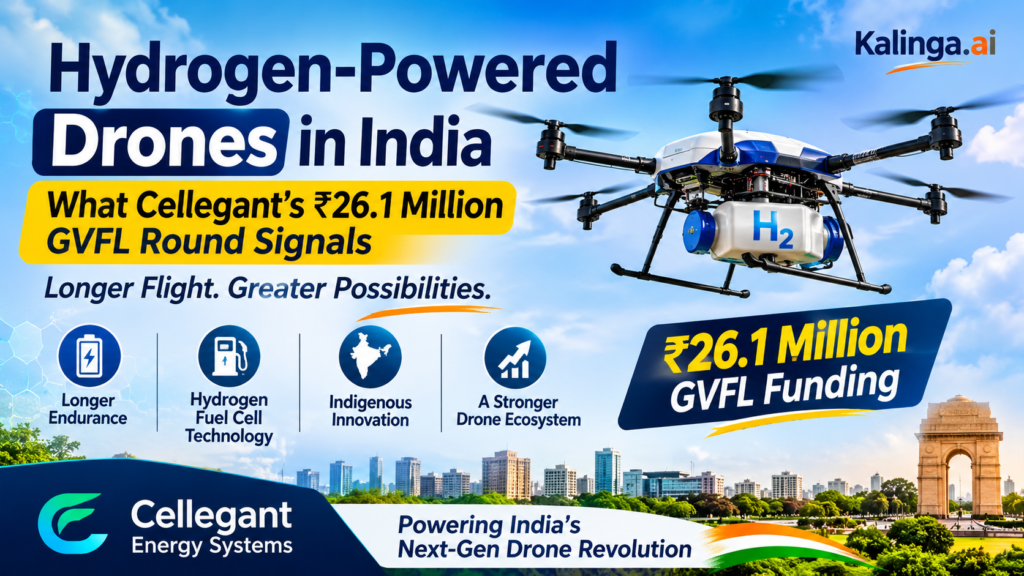
Battery life is the quiet bottleneck that keeps most drones on a short leash, and hydrogen is the most credible way to loosen it. On November 3–4, 2026, Gandhinagar-based Cellegant Energy Systems announced ₹26.1 million (about ₹2.61 crore) in funding to build indigenous hydrogen fuel-cell drivetrains, which makes this a useful moment to understand how hydrogen-powered drones work, why India wants them, and what this small but pointed round actually tells us.
This guide is written for founders, engineers, students, and investors who want the facts without the hype. Every section stands on its own, so you can jump straight to the part you need.
Key Facts at a Glance
Here is the short version of the news, drawn from reports by Entrepreneur India, India Technology News, and YourStory.
- Company: Cellegant Energy Systems Private Limited, incorporated in April 2022 and based in Gandhinagar, Gujarat.
- Founder: Dr. Atul Bhargav, a professor at IIT Gandhinagar who earlier worked on product development at Ballard Power Systems.
- Amount raised: ₹26.1 million, roughly ₹2.61 crore.
- Investors: GVFL Prarambh Fund Trust, CoCreate Aarambh, and IIEC, the incubator at IIT Gandhinagar.
- Immediate goal: Demonstrate a 35-kg hydrogen-powered drone.
- Timeline: Move the programme from technology readiness level (TRL) 3 to TRL 6 over six to twelve months.
- Other uses of funds: Intellectual property protection and team building.
What Are Hydrogen-Powered Drones?
Hydrogen-powered drones are unmanned aircraft that generate electricity onboard by feeding hydrogen into a fuel cell, instead of relying only on a lithium battery. The fuel cell combines hydrogen and oxygen to produce electricity, with water as the main byproduct, and that electricity spins the same electric motors a battery drone would use.
The appeal is energy density. A kilogram of hydrogen holds far more usable energy than a kilogram of lithium battery, so the same airframe can stay aloft much longer, or carry more payload for the same flight time. Industry coverage of H3 Dynamics, for example, notes that hydrogen designs can fly several times longer than comparable battery-electric aircraft.
How a Hydrogen Fuel Cell Powers a Drone
A fuel cell is an electrochemical device that converts hydrogen into electricity without burning it. Hydrogen is stored onboard, either as compressed gas in a composite cylinder or in a solid-state chemical form. It flows to the fuel cell stack, where a membrane splits it into protons and electrons. The electrons travel through a circuit to power the motors, while the protons recombine with oxygen from the air to form water.
In practice, a drone rarely runs on the stack alone. Most designs are hybrids: a small battery handles sudden power spikes during takeoff and manoeuvres, and the fuel cell supplies steady cruise power. This pairing is called hybrid power management, and it is one of the core ideas behind Cellegant’s approach.
Hydrogen vs. Battery: A Direct Comparison
For long-endurance missions, hydrogen fuel cell drones trade simplicity for range. The table below summarises the general engineering trade-offs, not the specifications of any single product.
| Factor | Lithium-battery drone | Hydrogen fuel cell drone |
|---|---|---|
| Energy density | Lower; flight time is the main limit | Higher; designed for long endurance |
| Refuelling or recharging | Recharge or swap batteries, often over an hour | Refill or swap a hydrogen cylinder, typically in minutes |
| System complexity | Simple and mature | Higher: fuel cell, storage, power electronics |
| Upfront cost | Lower | Higher today |
| Cold-weather behaviour | Capacity drops in cold | Generally more tolerant, though design-dependent |
| Infrastructure needed | Electricity | Hydrogen supply and safe handling |
| Best fit | Short missions, mapping, inspection | Surveillance, logistics, long-range monitoring |
The honest summary: batteries win on simplicity and cost, and hydrogen wins when endurance decides whether the mission succeeds at all. That is why hydrogen-powered drones are attracting attention for long missions while battery drones keep their place in short, cheap, everyday work such as quick surveys and training flights.
Who Is Cellegant Energy Systems?
Cellegant Energy Systems is an IIT Gandhinagar-incubated deep-tech startup that develops hydrogen fuel-cell power systems for drones, robots, and stationary power. The company was incorporated in 2022 and grew out of years of research in Professor Atul Bhargav’s laboratory. Its stated mission is to engineer and deploy internationally competitive fuel cell systems, starting with the harder problem of making them reliable outside a lab.
From Diesel Generator Alternative to Drone Power
Cellegant did not start with drones. According to IIT Gandhinagar’s own profile of the company, the original target was stationary power: fuel-cell alternatives to diesel generator sets. Growing demand for longer-endurance drones pulled the team toward unmanned aerial vehicles (UAVs), where the weight and energy-density advantages of hydrogen matter most.
Along the way, the team worked through component sourcing, building its own power electronics, improving hydrogen storage, and countering common misconceptions about hydrogen safety. Support has included the NIDHI PRAYAS programme, grants from the Government of Gujarat, and collaboration with the Defence Research and Development Organisation (DRDO) on technologies for quadruped robots.
The Technology Stack: Three Ideas Working Together
Cellegant Energy Systems combines three techniques to raise energy density and endurance:
- Hybrid power management: Software and electronics that split load between the fuel cell and a battery so each does what it does best.
- Passive hydrogen recirculation: A way to reuse unconsumed hydrogen inside the stack without extra pumps, which cuts weight and parts count. This is a general engineering description; the company has not published design detail in the coverage reviewed.
- Solid-state chemical hydrogen storage: Storing hydrogen in a solid chemical form rather than only as high-pressure gas, aimed at improving how much energy fits into a given volume and mass.
The company reports it has already demonstrated hydrogen fuel-cell systems for UAVs and a custom-designed drone for long-endurance power packs. The next step is proving the system outside controlled research settings.
What the ₹26.1 Million GVFL Investment Will Fund
The money is earmarked for building indigenous hybrid hydrogen fuel-cell electric drivetrains, protecting the resulting intellectual property, and growing the team. The stated purpose is to keep drones and UAVs airborne longer while reducing dependence on conventional batteries and imported technology.
Mihir Joshi, Managing Director of GVFL, framed the thesis in the announcement: India has made real progress in indigenous technology, but plenty of room remains for engineering that solves practical needs. This GVFL investment is therefore less a bet on a finished product and more a bet on a team that can move a hard technology from lab to field.
The 35-kg Hydrogen-Powered Drone Demonstrator
The immediate milestone is a 35-kg hydrogen-powered drone. That is a heavy platform by commercial standards, and the weight class matters. At this size, a drone can carry meaningful payloads such as cargo, sensors, or equipment, and the endurance advantage of hydrogen becomes commercially interesting rather than merely impressive.
A demonstrator also forces integration problems into the open: vibration, thermal management, hydrogen leak safety, fuel-cell response under changing load, and mission planning around refuelling. Solving them on a 35-kg airframe is a genuine proof point.
What Does “TRL 3 to TRL 6” Mean?
Technology readiness level (TRL) is a nine-point scale that tracks how mature a technology is, from basic concept to proven in operation.
- TRL 3: Analytical and laboratory proof that the concept can work.
- TRL 4–5: Components and subsystems validated in lab and then in relevant environments.
- TRL 6: A system or prototype demonstrated in a relevant environment.
Moving from TRL 3 to TRL 6 in six to twelve months is ambitious. It is the difference between “the physics works on a bench” and “a representative drone flies a real mission.” Readers should treat it as a target, not an accomplishment.
Prospective Markets: What Is Confirmed and What Is Not
Cellegant has described several applications, but only the UAV work has been demonstrated so far. The company is developing energy solutions for drones, marine and underwater vehicles, autonomous vehicles, quadruped robots, and stationary power. Reports also mention plans to apply the technology to autonomous robots, high-altitude heavy-lift drones, and humanoid robots.
One outlet explicitly cautioned that these remain prospective markets rather than confirmed commercial deployments. That is the right way to read them: promising directions, not signed contracts.
Why Does This Matter for Indigenous Drone Technology?
Indigenous drone technology matters because the drone itself is only as sovereign as its power system. Many Indian platforms still depend on imported batteries, cells, and propulsion components. A domestically developed fuel-cell drivetrain addresses a deeper layer of the supply chain than airframes or flight software alone.
Question: Does a ₹26.1 million round move the market?
Answer: Not by size, but by signal. ₹26.1 million is a small seed-stage cheque compared with global rounds. It matters because it comes from an institutional venture fund and an academic incubator, and because it funds a specific, testable milestone rather than a vague roadmap.
Question: Why would defence and homeland security care?
Answer: Endurance and acoustic or thermal signature. Fuel-cell drones can fly longer and, because they run on electric motors without combustion, are quieter than many engine-driven alternatives. Paras Defence’s joint venture with HevenDrones, aimed at hydrogen-powered drones for India’s defence and homeland security market, shows where institutional demand is already pointing. Cellegant’s DRDO collaboration, on quadruped robots rather than drones, shows the same strategic interest.
Question: Is hydrogen safe to fly with?
Answer: It is manageable with proper engineering, but it demands discipline. Hydrogen is flammable and leaks through tiny gaps, so storage design, sensors, and handling procedures matter. India’s Petroleum and Explosives Safety Organisation (PESO) has approved Type-III composite hydrogen cylinders from Time Technoplast, a sign that the supporting safety and certification ecosystem is starting to form.
How India’s Hydrogen Drone Field Compares
Cellegant is one of several Indian players approaching hydrogen from different angles, and most are still early. The table below shows how reported efforts differ. Claims about performance come from the companies themselves and have not been independently verified.
| Player | Focus | Reported status |
|---|---|---|
| Cellegant Energy Systems | Fuel-cell drivetrains for UAVs, robots, marine, stationary power | ₹26.1 million raised; 35-kg demonstrator is the next milestone |
| Time Technoplast | Composite hydrogen cylinders integrated with fuel-cell drones | Reported successful in-house flight trials in December 2025 |
| Visron | Hydrogen-powered agricultural drones | Founder says it bootstrapped with ₹4 crore and serves farmers in Rajasthan |
| Paras Defence and HevenDrones | Hydrogen-powered drones for defence and homeland security | Joint venture announced to design and manufacture in India |
| Green Aero | Hydrogen-capable aero engine technology | Test-fired “Blue Dragon” engine core; raised $1.6 million |
Two lessons stand out. First, the ecosystem is layered: cylinders, fuel cells, airframes, and engines are being built by different companies. Second, global capital is moving much faster. Heven AeroTech raised $100 million at a $1 billion valuation in late 2025, which puts Cellegant’s round in perspective.
Where Could Hydrogen-Powered Drones Be Used in India?
The strongest early use cases for hydrogen-powered drones are missions where flight time, not purchase price, decides whether the job gets done. India’s geography, from long coastlines to high-altitude borders and sprawling farmland, makes several of these plausible. Each one still needs field validation, so read this section as a map of possibilities rather than a list of deployments.
Border and Coastal Surveillance
Persistent monitoring over rugged terrain or open water rewards endurance. Hydrogen-powered drones can stay aloft longer than comparable battery aircraft, which means fewer launches, fewer handovers, and fewer gaps in coverage. This is the segment where the Paras Defence and HevenDrones venture is aimed.
Logistics and Medical Delivery
Moving supplies to remote or hard-to-reach areas depends on range and payload together. A heavier platform, such as the 35-kg class Cellegant is targeting, is the kind of airframe that could carry useful loads over longer distances. Hydrogen-powered drones in this class are exactly what global players like H3 Dynamics have pursued for cargo delivery.
Agriculture and Crop Monitoring
Spraying and survey work benefits from long, uninterrupted flights. A Haryana-based startup has claimed a hydrogen drone that flies about three hours with a 10 to 50 kg payload, and Visron says its hydrogen-powered drones cut operating costs for farmers. Both sets of figures come from the companies and remain unverified.
Infrastructure Inspection and Disaster Response
Pipelines, transmission lines, and flood-hit regions are long and awkward to cover. Longer endurance lets one aircraft survey more ground per sortie, which is where hydrogen fuel cell drones could earn their keep once costs fall.
What Are the Real Challenges?
The biggest hurdles for hydrogen fuel cell drones are cost, weight, hydrogen logistics, and proving reliability at scale. None is unique to Cellegant, and all of them decide who survives.
- Cost: Fuel cells and composite cylinders are still expensive compared with lithium batteries.
- Refuelling infrastructure: Operators need a safe supply of compressed hydrogen or a chemical storage alternative in the field.
- Reliability: Fuel cells must handle vibration, dust, humidity, and rapid load changes without degrading.
- Regulation and safety: Approvals for hydrogen storage and flight operations are still maturing.
- Capital intensity: Hardware startups need repeated rounds to move from prototype to production.
Cellegant’s own framing is a useful compass: the hard part is making the whole system work reliably outside the laboratory, not just building a fuel cell. That one idea explains why this round funds integration and demonstration rather than lab research.
What Should Students, Engineers, and Investors Take Away?
Hydrogen-powered drones are a legitimate career and investment theme, but they reward patience and systems thinking.
- Students and early-career engineers: Skills in power electronics, thermal management, control systems, and embedded software are the bottlenecks. The Cellegant story shows that a lab project can become a company.
- Founders: Specific milestones, such as a 35-kg demonstrator, make fundraising more credible than broad promises.
- Investors: Judge on technology readiness, IP position, and the founding team’s ability to integrate hardware, not on market-size slides.
Frequently Asked Questions
What is Cellegant Energy Systems?
Cellegant Energy Systems is an IIT Gandhinagar-incubated startup, founded by Dr. Atul Bhargav, that builds hydrogen fuel-cell power systems for drones, robots, marine vehicles, and stationary power.
How much did Cellegant raise and from whom?
Cellegant raised ₹26.1 million (about ₹2.61 crore) from GVFL Prarambh Fund Trust, CoCreate Aarambh, and IIEC, IIT Gandhinagar’s incubator.
What will the funding be used for?
The funds will support developing indigenous hybrid hydrogen fuel-cell drivetrains, demonstrating a 35-kg drone, protecting intellectual property, and building the team.
How are hydrogen-powered drones different from battery drones?
They generate electricity onboard from hydrogen through a fuel cell, which gives them higher energy density and longer endurance than comparable battery-only designs, at the cost of greater complexity and expense.
Are hydrogen-powered drones commercially available in India yet?
A few Indian companies report prototypes, trials, or early products, but broad commercial deployment is still emerging. Cellegant’s own first product milestone is the 35-kg demonstrator.
Why are hydrogen-powered drones getting investor attention?
Endurance is the limiting factor for many drone missions, and hydrogen directly attacks it. Global rounds such as Heven AeroTech’s $100 million raise, plus smaller Indian bets like this one, show that investors see hydrogen-powered drones as a route to missions batteries cannot cover.
What is TRL and why does it matter here?
Technology readiness level measures maturity on a nine-point scale. Cellegant aims to move from TRL 3 to TRL 6, meaning from laboratory proof to a prototype demonstrated in a relevant environment.
Conclusion: A Small Round With a Clear Direction
Cellegant’s ₹26.1 million round is best read as a credible early step for indigenous hydrogen power, not a market-defining event. Its value lies in the clarity of the plan: demonstrate a 35-kg platform, climb three readiness levels, protect the IP, and prove the system works beyond the lab.
If that happens, India gains something more strategic than another airframe: a domestic power system for long-endurance unmanned platforms. For anyone tracking hydrogen-powered drones, Cellegant Energy Systems is now a company to watch, and the 35-kg demonstration is the milestone that will show whether the promise holds up in the field.
ଭାରତରେ ହାଇଡ୍ରୋଜେନ୍ ଚାଳିତ ଡ୍ରୋନ୍: ‘ସେଲେଗାଣ୍ଟ’ (Cellegant) ର ₹୨୬.୧ ନିୟୁତ ପାଣ୍ଠି ସଂଗ୍ରହ କ’ଣ ସୂଚିତ କରେ?
ବ୍ୟାଟେରୀ କ୍ଷମତା (ବା ବ୍ୟାଟେରୀ ଲାଇଫ୍) ହେଉଛି ଏକ ଗୁପ୍ତ ପ୍ରତିବନ୍ଧକ, ଯାହା ଅଧିକାଂଶ ଡ୍ରୋନ୍ର କାର୍ଯ୍ୟ ପରିସରକୁ ସୀମିତ ରଖିଥାଏ। ହାଇଡ୍ରୋଜେନ୍ ଏହି ସୀମାବଦ୍ଧତାକୁ ଦୂର କରିବାର ଏକ ବିଶ୍ୱସନୀୟ ମାଧ୍ୟମ ହୋଇପାରେ। ୨୦୨୬ ମସିହା ନଭେମ୍ବର ୩-୪ ତାରିଖରେ, ଗାନ୍ଧୀନଗରସ୍ଥିତ ‘ସେଲେଗାଣ୍ଟ ଏନର୍ଜି ସିଷ୍ଟମ୍ସ’ (Cellegant Energy Systems) ଦେଶୀୟ ହାଇଡ୍ରୋଜେନ୍ ଫୁଏଲ୍-ସେଲ୍ ଡ୍ରାଇଭଟ୍ରେନ୍ (hydrogen fuel-cell drivetrains) ନିର୍ମାଣ ପାଇଁ ₹୨୬.୧ ନିୟୁତ (ପ୍ରାୟ ₹୨.୬୧ କୋଟି) ପାଣ୍ଠି ସଂଗ୍ରହ କରିଥିବା ଘୋଷଣା କରିଛି। ଏହି ପରିପ୍ରେକ୍ଷୀରେ, ହାଇଡ୍ରୋଜେନ୍ ଚାଳିତ ଡ୍ରୋନ୍ କିପରି କାମ କରେ, ଭାରତ କାହିଁକି ଏଗୁଡ଼ିକୁ ଚାହୁଁଛି ଏବଂ ଏହି ଛୋଟ କିନ୍ତୁ ଗୁରୁତ୍ୱପୂର୍ଣ୍ଣ ପାଣ୍ଠି ସଂଗ୍ରହ ଘଟଣାଟି ପ୍ରକୃତରେ କ’ଣ ସୂଚିତ କରେ, ତାହା ବୁଝିବା ପାଇଁ ଏହା ଏକ ଉପଯୁକ୍ତ ସମୟ।
ଏହି ବିବରଣୀଟି ଉଦ୍ୟୋକ୍ତା (founders), ଇଞ୍ଜିନିୟର, ଛାତ୍ରଛାତ୍ରୀ ଏବଂ ନିବେଶକମାନଙ୍କ ପାଇଁ ପ୍ରସ୍ତୁତ କରାଯାଇଛି, ଯେଉଁମାନେ ଅତ୍ୟଧିକ ପ୍ରଚାର-ପ୍ରସାର (hype) ବାଦ୍ ଦେଇ କେବଳ ବାସ୍ତବ ତଥ୍ୟ ଜାଣିବାକୁ ଚାହାଁନ୍ତି। ଏହାର ପ୍ରତ୍ୟେକ ଅଂଶ ସ୍ୱତନ୍ତ୍ର, ତେଣୁ ଆପଣ ସିଧାସଳଖ ନିଜ ଆବଶ୍ୟକତା ଅନୁଯାୟୀ ନିର୍ଦ୍ଦିଷ୍ଟ ଅଂଶକୁ ପଢ଼ିପାରିବେ।
ମୁଖ୍ୟ ତଥ୍ୟ ଉପରେ ଏକ ନଜର
‘ଏଣ୍ଟରପ୍ରିନ୍ୟୋର୍ ଇଣ୍ଡିଆ’ (Entrepreneur India), ‘ଇଣ୍ଡିଆ ଟେକ୍ନୋଲୋଜି ନ୍ୟୁଜ୍’ (India Technology News) ଏବଂ ‘ୟୋର୍ ଷ୍ଟୋରୀ’ (YourStory) ର ରିପୋର୍ଟ ଆଧାରରେ ଏହି ଖବରର ସଂକ୍ଷିପ୍ତ ବିବରଣୀ ନିମ୍ନରେ ଦିଆଗଲା:
କମ୍ପାନୀ: ସେଲେଗାଣ୍ଟ ଏନର୍ଜି ସିଷ୍ଟମ୍ସ ପ୍ରାଇଭେଟ୍ ଲିମିଟେଡ୍ (Cellegant Energy Systems Private Limited) – ଏପ୍ରିଲ୍ ୨୦୨୨ରେ ସ୍ଥାପିତ ଏବଂ ଗୁଜୁରାଟର ଗାନ୍ଧୀନଗରରେ ଅବସ୍ଥିତ।
ପ୍ରତିଷ୍ଠାତା: ଡ. ଅତୁଲ ଭାର୍ଗବ, ଯିଏ ଆଇଆଇଟି (IIT) ଗାନ୍ଧୀନଗରର ଜଣେ ପ୍ରଫେସର ଏବଂ ପୂର୍ବରୁ ‘ବଲାର୍ଡ ପାୱାର ସିଷ୍ଟମ୍ସ’ (Ballard Power Systems) ରେ ଉତ୍ପାଦ ବିକାଶ କ୍ଷେତ୍ରରେ କାର୍ ଏକ କିଲୋଗ୍ରାମ ଲିଥିୟମ୍ ବ୍ୟାଟେରୀ ତୁଳନାରେ ଏକ କିଲୋଗ୍ରାମ ହାଇଡ୍ରୋଜେନ୍ରେ ବହୁତ ଅଧିକ ବ୍ୟବହାରଯୋଗ୍ୟ ଶକ୍ତି ଥାଏ। ତେଣୁ, ସମାନ ବିମାନ ଢାଞ୍ଚା (airframe) ବ୍ୟବହାର କରି ଏହା ଅଧିକ ସମୟ ପର୍ଯ୍ୟନ୍ତ ଆକାଶରେ ଉଡ଼ିପାରିବ କିମ୍ବା ସମାନ ଉଡ଼ାଣ ସମୟ ମଧ୍ୟରେ ଅଧିକ ଓଜନର ସାମଗ୍ରୀ (payload) ବହନ କରିପାରିବ। ଉଦାହରଣ ସ୍ୱରୂପ, ‘H3 ଡାଇନାମିକ୍ସ’ (H3 Dynamics) ବିଷୟରେ ଶିଳ୍ପ ସମ୍ବନ୍ଧୀୟ ରିପୋର୍ଟଗୁଡ଼ିକ ଦର୍ଶାଏ ଯେ, ହାଇଡ୍ରୋଜେନ୍ ଆଧାରିତ ଡିଜାଇନ୍ଯୁକ୍ତ ବିମାନଗୁଡ଼ିକ ସମାନ ଧରଣର ବ୍ୟାଟେରୀ-ଇଲେକ୍ଟ୍ରିକ୍ ବିମାନ ତୁଳନାରେ ଅନେକ ଗୁଣ ଅଧିକ ସମୟ ପର୍ଯ୍ୟନ୍ତ ଉଡ଼ିପାରନ୍ତି।
ହାଇଡ୍ରୋଜେନ୍ ଫୁଏଲ୍ ସେଲ୍ (Hydrogen Fuel Cell) କିପରି ଏକ ଡ୍ରୋନ୍କୁ ଶକ୍ତି ଯୋଗାଏ?
ଫୁଏଲ୍ ସେଲ୍ ହେଉଛି ଏକ ଇଲେକ୍ଟ୍ରୋକେମିକାଲ୍ (ବୈଦ୍ୟୁତିକ-ରାସାୟନିକ) ଯନ୍ତ୍ର, ଯାହା ହାଇଡ୍ରୋଜେନ୍କୁ ନ ଜାଳି ବିଦ୍ୟୁତ୍ ଶକ୍ତିରେ ପରିଣତ କରେ। ହାଇଡ୍ରୋଜେନ୍କୁ ଡ୍ରୋନ୍ରେ ଏକ ସ୍ୱତନ୍ତ୍ର ସିଲିଣ୍ଡରରେ ସଙ୍କୁଚିତ ଗ୍ୟାସ୍ (compressed gas) ଭାବରେ କିମ୍ବା କଠିନ ରାସାୟନିକ ଅବସ୍ଥାରେ ଗଚ୍ଛିତ ରଖାଯାଏ। ଏହା ଫୁଏଲ୍ ସେଲ୍ ଷ୍ଟାକ୍ (fuel cell stack) ଆଡ଼କୁ ପ୍ରବାହିତ ହୁଏ, ଯେଉଁଠାରେ ଏକ ପରଦା ବା ମେମ୍ବ୍ରେନ୍ (membrane) ସାହାଯ୍ୟରେ ଏହା ପ୍ରୋଟନ୍ ଏବଂ ଇଲେକ୍ଟ୍ରନ୍ରେ ବିଭାଜିତ ହୁଏ। ଇଲେକ୍ଟ୍ରନ୍ଗୁଡ଼ିକ ଏକ ସର୍କିଟ୍ ମାଧ୍ୟମରେ ଗତି କରି ମୋଟରକୁ ଶକ୍ତି ଯୋଗାନ୍ତି, ଅନ୍ୟପକ୍ଷରେ ପ୍ରୋଟନ୍ଗୁଡ଼ିକ ବାୟୁମଣ୍ଡଳର ଅମ୍ଳଜାନ ସହିତ ମିଶି ପାଣି (ଜଳ) ସୃଷ୍ଟି କରନ୍ତି।
ବାସ୍ତବରେ, ଏକ ଡ୍ରୋନ୍ କେବଳ ଫୁଏଲ୍ ସେଲ୍ ଷ୍ଟାକ୍ ଉପରେ ନିର୍ଭର କରି ଚାଲେ ନାହିଁ। ଅଧିକାଂଶ ଡିଜାଇନ୍ ‘ହାଇବ୍ରିଡ୍’ (ମିଶ୍ରିତ) ହୋଇଥାଏ: ଉଡ଼ାଣ ଆରମ୍ଭ ସମୟରେ (takeoff) କିମ୍ବା ଗତିପଥ ପରିବର୍ତ୍ତନ ବେଳେ ଆବଶ୍ୟକ ହେଉଥିବା ଅତିରିକ୍ତ ଶକ୍ତି ଏକ ଛୋଟ ବ୍ୟାଟେରୀ ଯୋଗାଇଥାଏ, ଏବଂ ଫୁଏଲ୍ ସେଲ୍ ନିରନ୍ତର ଭାବେ ଉଡ଼ାଣ ପାଇଁ ଆବଶ୍ୟକ ଶକ୍ତି ଯୋଗାଇଥାଏ। ଏହି ବ୍ୟବସ୍ଥାକୁ ‘ହାଇବ୍ରିଡ୍ ପାୱାର୍ ମ୍ୟାନେଜମେଣ୍ଟ’ (hybrid power management) କୁହାଯାଏ ଏବଂ ‘ସେଲେଗାଣ୍ଟ’ (Cellegant) ର କାର୍ଯ୍ୟପଦ୍ଧତି ପଛରେ ଥିବା ସେଥିପାଇଁ ହାଇଡ୍ରୋଜେନ୍ ଚାଳିତ ଡ୍ରୋନ୍ ଲମ୍ବା ମିଶନ ପାଇଁ ଧ୍ୟାନ ଆକର୍ଷଣ କରୁଛି ଯେତେବେଳେ ବ୍ୟାଟେରୀ ଡ୍ରୋନ୍ ଶୀଘ୍ର ସର୍ଭେ ଏବଂ ତାଲିମ ଉଡ଼ାଣ ଭଳି ଛୋଟ, ଶସ୍ତା, ଦୈନନ୍ଦିନ କାମରେ ନିଜର ସ୍ଥାନ ବଜାୟ ରଖେ।
ସେଲେଗାଣ୍ଟ୍ ଏନର୍ଜି ସିଷ୍ଟମ୍ସ କିଏ?
ସେଲେଗାଣ୍ଟ୍ ଏନର୍ଜି ସିଷ୍ଟମ୍ସ ହେଉଛି ଏକ IIT ଗାନ୍ଧୀନଗର-ଇନ୍କ୍ୟୁବେଟେଡ୍ ଡିପ୍-ଟେକ୍ ଷ୍ଟାର୍ଟଅପ୍ ଯାହା ଡ୍ରୋନ୍, ରୋବୋଟ୍ ଏବଂ ସ୍ଥିର ଶକ୍ତି ପାଇଁ ହାଇଡ୍ରୋଜେନ୍ ଇନ୍ଧନ-ସେଲ୍ ପାୱାର ସିଷ୍ଟମ୍ ବିକଶିତ କରେ। କମ୍ପାନୀଟି 2022 ରେ ଅନ୍ତର୍ଭୁକ୍ତ ହୋଇଥିଲା ଏବଂ ପ୍ରଫେସର ଅତୁଲ ଭାର୍ଗବଙ୍କ ପ୍ରୟୋଗଶାଳାରେ ବର୍ଷ ବର୍ଷ ଧରି ଗବେଷଣାରୁ ବଢ଼ିଥିଲା। ଏହାର ଉଲ୍ଲେଖିତ ଲକ୍ଷ୍ୟ ହେଉଛି ଅନ୍ତର୍ଜାତୀୟ ସ୍ତରରେ ପ୍ରତିଯୋଗିତାମୂଳକ ଇନ୍ଧନ ସେଲ୍ ସିଷ୍ଟମଗୁଡ଼ିକୁ ଇଞ୍ଜିନିୟରିଂ ଏବଂ ନିୟୋଜିତ କରିବା, ଏକ ପ୍ରୟୋଗଶାଳା ବାହାରେ ସେମାନଙ୍କୁ ନିର୍ଭରଯୋଗ୍ୟ କରିବାର କଷ୍ଟକର ସମସ୍ୟାରୁ ଆରମ୍ଭ କରି।
ଡ୍ରୋନ୍ ପାୱାର ପାଇଁ ଡିଜେଲ ଜେନେରେଟର ବିକଳ୍ପରୁ
ସେଲେଗାଣ୍ଟ୍ ଡ୍ରୋନ୍ ସହିତ ଆରମ୍ଭ କରିନଥିଲା। IIT ଗାନ୍ଧୀନଗରର କମ୍ପାନୀର ନିଜସ୍ୱ ପ୍ରୋଫାଇଲ୍ ଅନୁସାରେ, ମୂଳ ଲକ୍ଷ୍ୟ ଥିଲା ସ୍ଥିର ଶକ୍ତି: ଡିଜେଲ ଜେନେରେଟର ସେଟ୍ ପାଇଁ ଇନ୍ଧନ-ସେଲ୍ ବିକଳ୍ପ। ଦୀର୍ଘକାଳୀନ ଡ୍ରୋନ୍ ପାଇଁ ବଢ଼ୁଥିବା ଚାହିଦା ଟାଣି ନିଆଯାଇଛି।
ମାନବହୀନ ବାୟୁଚାଳିତ ଯାନ (UAV) ଆଡକୁ ଦଳ, ଯେଉଁଠାରେ ହାଇଡ୍ରୋଜେନର ଓଜନ ଏବଂ ଶକ୍ତି-ଘନତା ଲାଭ ସବୁଠାରୁ ଗୁରୁତ୍ୱପୂର୍ଣ୍ଣ।
ବାଟରେ, ଦଳ କମ୍ପୋନେଣ୍ଟ ସୋର୍ସିଂ ମାଧ୍ୟମରେ କାର୍ଯ୍ୟ କରିଥିଲା, ନିଜର ପାୱାର ଇଲେକ୍ଟ୍ରୋନିକ୍ସ ନିର୍ମାଣ କରିଥିଲା, ହାଇଡ୍ରୋଜେନ ସଂରକ୍ଷଣରେ ଉନ୍ନତି ଆଣିଥିଲା ଏବଂ ହାଇଡ୍ରୋଜେନ ସୁରକ୍ଷା ବିଷୟରେ ସାଧାରଣ ଭୁଲ ଧାରଣାକୁ ମୁକାବିଲା କରିଥିଲା। ସମର୍ଥନରେ ନିଧି ପ୍ରୟାସ କାର୍ଯ୍ୟକ୍ରମ, ଗୁଜରାଟ ସରକାରଙ୍କ ଅନୁଦାନ ଏବଂ ଚାରିପାଖିଆ ରୋବୋଟ୍ ପାଇଁ ପ୍ରଯୁକ୍ତିବିଦ୍ୟା ଉପରେ ପ୍ରତିରକ୍ଷା ଗବେଷଣା ଏବଂ ବିକାଶ ସଂଗଠନ (DRDO) ସହିତ ସହଯୋଗ ଅନ୍ତର୍ଭୁକ୍ତ।
ପ୍ରଯୁକ୍ତିବିଦ୍ୟା ଷ୍ଟାକ୍: ତିନୋଟି ଧାରଣା ଏକାଠି କାମ କରୁଛି
ସେଲେଗାଣ୍ଟ ଏନର୍ଜି ସିଷ୍ଟମ୍ସ ଶକ୍ତି ଘନତ୍ୱ ଏବଂ ସହନଶୀଳତା ବୃଦ୍ଧି କରିବା ପାଇଁ ତିନୋଟି କୌଶଳକୁ ମିଶ୍ରଣ କରିଥାଏ:
ହାଇବ୍ରିଡ୍ ପାୱାର ପରିଚାଳନା: ସଫ୍ଟୱେର୍ ଏବଂ ଇଲେକ୍ଟ୍ରୋନିକ୍ସ ଯାହା ଇନ୍ଧନ ସେଲ୍ ଏବଂ ଏକ ବ୍ୟାଟେରୀ ମଧ୍ୟରେ ଲୋଡ୍ ବିଭାଜିତ କରେ ଯାହା ପ୍ରତ୍ୟେକେ ସର୍ବୋତ୍ତମ ଭାବରେ କରନ୍ତି।
ନିଷ୍କ୍ରିୟ ହାଇଡ୍ରୋଜେନ ପୁନଃସଞ୍ଚାର: ଅତିରିକ୍ତ ପମ୍ପ ବିନା ଷ୍ଟାକ୍ ଭିତରେ ବ୍ୟବହାର ନ ହୋଇଥିବା ହାଇଡ୍ରୋଜେନକୁ ପୁନଃବ୍ୟବହାର କରିବାର ଏକ ଉପାୟ, ଯାହା ଓଜନ ଏବଂ ଅଂଶ ଗଣନାକୁ ହ୍ରାସ କରେ। ଏହା ଏକ ସାଧାରଣ ଇଞ୍ଜିନିୟରିଂ ବର୍ଣ୍ଣନା; କମ୍ପାନୀ ସମୀକ୍ଷା କରାଯାଇଥିବା କଭରେଜରେ ଡିଜାଇନ୍ ବିବରଣୀ ପ୍ରକାଶ କରିନାହିଁ।
କଠିନ-ଅବସ୍ଥା ରାସାୟନିକ ହାଇଡ୍ରୋଜେନ୍ ସଂରକ୍ଷଣ: କେବଳ ଉଚ୍ଚ-ଚାପ ଗ୍ୟାସ ଭାବରେ ନୁହେଁ ବରଂ କଠିନ ରାସାୟନିକ ରୂପରେ ହାଇଡ୍ରୋଜେନ୍ ସଂରକ୍ଷଣ କରିବା, ଯାହାର ଲକ୍ଷ୍ୟ ଏକ ନିର୍ଦ୍ଦିଷ୍ଟ ଆୟତନ ଏବଂ ବସ୍ତୁତ୍ୱରେ କେତେ ଶକ୍ତି ଫିଟ୍ ହୁଏ ତାହା ଉନ୍ନତ କରିବା।
କମ୍ପାନୀ ରିପୋର୍ଟ କରିଛି ଯେ ଏହା ପୂର୍ବରୁ UAV ପାଇଁ ହାଇଡ୍ରୋଜେନ୍ ଇନ୍ଧନ-ସେଲ୍ ସିଷ୍ଟମ୍ ଏବଂ ଦୀର୍ଘ-ସ୍ଥାୟୀ ପାୱାର ପ୍ୟାକ୍ ପାଇଁ ଏକ କଷ୍ଟମ୍-ଡିଜାଇନ୍ ଡ୍ରୋନ୍ ପ୍ରଦର୍ଶନ କରିଛି। ପରବର୍ତ୍ତୀ ପଦକ୍ଷେପ ହେଉଛି ନିୟନ୍ତ୍ରିତ ଗବେଷଣା ସେଟିଂସ୍ ବାହାରେ ସିଷ୍ଟମ୍ ପ୍ରମାଣିତ କରିବା।
₹26.1 ନିୟୁତ GVFL ନିବେଶ କ’ଣ ପାଣ୍ଠି ଦେବ
ସ୍ୱଦେଶୀ ହାଇବ୍ରିଡ୍ ହାଇଡ୍ରୋଜେନ୍ ଇନ୍ଧନ-ସେଲ୍ ବୈଦ୍ୟୁତିକ ଡ୍ରାଇଭ୍ରାଇନ୍ ନିର୍ମାଣ କରିବା, ଫଳସ୍ୱରୂପ ବୌଦ୍ଧିକ ସମ୍ପତ୍ତିକୁ ସୁରକ୍ଷା ଦେବା ଏବଂ ଦଳକୁ ବୃଦ୍ଧି କରିବା ପାଇଁ ଟଙ୍କା ରଖାଯାଇଛି। ଉଲ୍ଲେଖିତ ଉଦ୍ଦେଶ୍ୟ ହେଉଛି ପାରମ୍ପରିକ ବ୍ୟାଟେରୀ ଏବଂ ଆମଦାନୀ ହୋଇଥିବା ପ୍ରଯୁକ୍ତିବିଦ୍ୟା ଉପରେ ନିର୍ଭରତା ହ୍ରାସ କରିବା ସହିତ ଡ୍ରୋନ୍ ଏବଂ UAV ଗୁଡ଼ିକୁ ଅଧିକ ସମୟ ପାଇଁ ଉଡ଼ାଣରେ ରଖିବା।
GVFL ର ପରିଚାଳନା ନିର୍ଦ୍ଦେଶକ ମିହିର ଜୋଶୀ ଘୋଷଣାରେ ଥିସିସ୍ ପ୍ରସ୍ତୁତ କରିଛନ୍ତି: ଭାରତ ସ୍ୱଦେଶୀ ପ୍ରଯୁକ୍ତିବିଦ୍ୟାରେ ପ୍ରକୃତ ଅଗ୍ରଗତି କରିଛି, କିନ୍ତୁ ବ୍ୟବହାରିକ ଆବଶ୍ୟକତାଗୁଡ଼ିକୁ ସମାଧାନ କରୁଥିବା ଇଞ୍ଜିନିୟରିଂ ପାଇଁ ପ୍ରଚୁର ସ୍ଥାନ ରହିଛି। ତେଣୁ ଏହି GVFL ନିବେଶ ଏକ ସମାପ୍ତ ଉତ୍ପାଦ ଉପରେ ବାଜି କମ୍ ଏବଂ ଏକ ଦଳ ଉପରେ ବାଜି ଅଧିକ ଯାହା ଏକ କଠିନ ପ୍ରଯୁକ୍ତିବିଦ୍ୟାକୁ ଲ୍ୟାବରୁ କ୍ଷେତ୍ରକୁ ସ୍ଥାନାନ୍ତର କରିପାରିବ।
35-କିଲୋଗ୍ରାମ ହାଇଡ୍ରୋଜେନ୍-ଚାଳିତ ଡ୍ରୋନ୍ ଡେମୋନଷ୍ଟ୍ରେଟର
ତାତ୍କାଳିକ ମାଇଲଖୁଣ୍ଟ ହେଉଛି ଏକ 35-କିଲୋଗ୍ରାମ ହାଇଡ୍ରୋଜେନ୍-ଚାଳିତ ଡ୍ରୋନ୍। ଏହା ବାଣିଜ୍ୟିକ ମାନଦଣ୍ଡ ଦ୍ୱାରା ଏକ ଭାରୀ ପ୍ଲାଟଫର୍ମ, ଏବଂ ଓଜନ ଶ୍ରେଣୀ ଗୁରୁତ୍ୱପୂର୍ଣ୍ଣ। ଏହି ଆକାରରେ, ଏକ ଡ୍ରୋନ୍ କାର୍ଗୋ, ସେନ୍ସର କିମ୍ବା ଉପକରଣ ଭଳି ଅର୍ଥପୂର୍ଣ୍ଣ ପେଲୋଡ୍ ବହନ କରିପାରିବ, ଏବଂ ହାଇଡ୍ରୋଜେନର ସହନଶୀଳତା ସୁବିଧା କେବଳ ପ୍ରଭାବଶାଳୀ ହେବା ପରିବର୍ତ୍ତେ ବାଣିଜ୍ୟିକ ଭାବରେ ଆକର୍ଷଣୀୟ ହୋଇଯାଏ।
ଜଣେ ଡେମୋନଷ୍ଟ୍ରେଟର ଖୋଲାରେ ଏକୀକରଣ ସମସ୍ୟାକୁ ମଧ୍ୟ ବାଧ୍ୟ କରନ୍ତି: କମ୍ପନ, ତାପଜ ପରିଚାଳନା, ହାଇଡ୍ରୋଜେନ୍ ଲିକ୍ ସୁରକ୍ଷା, ପରିବର୍ତ୍ତନଶୀଳ ଲୋଡ୍ ଅଧୀନରେ ଇନ୍ଧନ-କୋଷ ପ୍ରତିକ୍ରିୟା, ଏବଂ ଇନ୍ଧନ ଭର୍ତ୍ତି କରିବା ଚାରିପାଖରେ ମିଶନ ଯୋଜନା। 35-କିଲୋଗ୍ରାମ ଏୟାରଫ୍ରେମରେ ସେଗୁଡ଼ିକୁ ସମାଧାନ କରିବା ଏକ ପ୍ରକୃତ ପ୍ରମାଣ ବିନ୍ଦୁ।
“TRL 3 ରୁ TRL 6” ର ଅର୍ଥ କ’ଣ?
ପ୍ରଯୁକ୍ତିବିଦ୍ୟା ପ୍ରସ୍ତୁତି ସ୍ତର (TRL) ଏକ ନଅ-ପଏଣ୍ଟ ସ୍କେଲ୍ ଯାହା ମୌଳିକ ଧାରଣାରୁ କାର୍ଯ୍ୟରେ ପ୍ରମାଣିତ ହେବା ପର୍ଯ୍ୟନ୍ତ ଏକ ପ୍ରଯୁକ୍ତିବିଦ୍ୟା କେତେ ପରିପକ୍ୱ ତାହା ଟ୍ରାକ୍ କରେ।
TRL 3: ବିଶ୍ଳେଷଣାତ୍ମକ ଏବଂ ପ୍ରୟୋଗଶାଳା ପ୍ରମାଣ ଯେ ଧାରଣା କାମ କରିପାରିବ।
TRL 4-5: ଉପାଦାନ ଏବଂ ଉପ-ସିଷ୍ଟମଗୁଡ଼ିକ ପ୍ରୟୋଗଶାଳାରେ ଏବଂ ତା’ପରେ ପ୍ରାସଙ୍ଗିକ ପରିବେଶରେ ବୈଧ।
TRL 6: ଏକ ପ୍ରାସଙ୍ଗିକ ପରିବେଶରେ ପ୍ରଦର୍ଶିତ ଏକ ସିଷ୍ଟମ୍ କିମ୍ବା ପ୍ରୋଟୋଟାଇପ୍।
ଛଅରୁ ବାର ମାସ ମଧ୍ୟରେ TRL 3 ରୁ TRL 6 କୁ ସ୍ଥାନାନ୍ତରିତ ହେବା ମହତ୍ୱାକାଂକ୍ଷୀ। ଏହା “ଭୌତିକ ବିଜ୍ଞାନ ଏକ ବେଞ୍ଚରେ କାମ କରେ” ଏବଂ “ଏକ ପ୍ରତିନିଧି ଡ୍ରୋନ୍ ଏକ ପ୍ରକୃତ ମିଶନ ଉଡ଼ାଏ” ମଧ୍ୟରେ ପାର୍ଥକ୍ୟ। ପାଠକମାନେ ଏହାକୁ ଏକ ଲକ୍ଷ୍ୟ ଭାବରେ ଗ୍ରହଣ କରିବା ଉଚିତ, ଏକ ସଫଳତା ନୁହେଁ।
ସମ୍ଭାବ୍ୟ ବଜାର: କ’ଣ ନିଶ୍ଚିତ ହୋଇଛି ଏବଂ କ’ଣ ନୁହେଁ
Cellegant ଅନେକ ପ୍ରୟୋଗ ବର୍ଣ୍ଣନା କରିଛି, କିନ୍ତୁ ଏପର୍ଯ୍ୟନ୍ତ କେବଳ UAV କାର୍ଯ୍ୟ ପ୍ରଦର୍ଶନ କରାଯାଇଛି। କମ୍ପାନୀ ଡ୍ରୋନ୍, ସାମୁଦ୍ରିକ ଏବଂ ଜଳମଗ୍ନ ଯାନ, ସ୍ୱୟଂଚାଳିତ ଯାନ, ଚତୁର୍ଭୁଜ ରୋବୋଟ୍ ଏବଂ ସ୍ଥିର ଶକ୍ତି ପାଇଁ ଶକ୍ତି ସମାଧାନ ବିକାଶ କରୁଛି। ରିପୋର୍ଟରେ ସ୍ୱୟଂଚାଳିତ ରୋବୋଟ୍, ଉଚ୍ଚ-ଉଚ୍ଚତା ହେଭି-ଲିଫ୍ଟ ଡ୍ରୋନ୍ ଏବଂ ହ୍ୟୁମାନାଏଡ୍ ରୋବୋଟ୍ ପାଇଁ ପ୍ରଯୁକ୍ତିବିଦ୍ୟା ପ୍ରୟୋଗ କରିବାର ଯୋଜନା ମଧ୍ୟ ଉଲ୍ଲେଖ କରାଯାଇଛି।
ଗୋଟିଏ ଆଉଟଲେଟ୍ ସ୍ପଷ୍ଟ ଭାବରେ ସତର୍କ କରାଇ ଦେଇଛି ଯେ ଏଗୁଡ଼ିକ ନିଶ୍ଚିତ ବାଣିଜ୍ୟିକ ନିୟୋଜନ ଅପେକ୍ଷା ସମ୍ଭାବ୍ୟ ବଜାର ହୋଇ ରହିଛି। ସେଗୁଡ଼ିକୁ ପଢ଼ିବାର ଏହା ସଠିକ୍ ଉପାୟ: ପ୍ରତିଶ୍ରୁତିପୂର୍ଣ୍ଣ ନିର୍ଦ୍ଦେଶନା, ସ୍ୱାକ୍ଷରିତ ଚୁକ୍ତିନାମା ନୁହେଁ।
ସ୍ୱଦେଶୀ ଡ୍ରୋନ୍ ପ୍ରଯୁକ୍ତିବିଦ୍ୟା ପାଇଁ ଏହା କାହିଁକି ଗୁରୁତ୍ୱପୂର୍ଣ୍ଣ?
ସ୍ୱଦେଶୀ ଡ୍ରୋନ୍ ପ୍ରଯୁକ୍ତିବିଦ୍ୟା ଗୁରୁତ୍ୱପୂର୍ଣ୍ଣ କାରଣ ଡ୍ରୋନ୍ ନିଜେ କେବଳ ଏହାର ଶକ୍ତି ବ୍ୟବସ୍ଥା ପରି ସାର୍ବଭୌମ। ଅନେକ ଭାରତୀୟ ପ୍ଲାଟଫର୍ମ ଏବେ ବି ଆମଦାନୀ ହୋଇଥିବା ବ୍ୟାଟେରୀ, ସେଲ୍ ଏବଂ ପ୍ରପଲ୍ସନ ଉପାଦାନ ଉପରେ ନିର୍ଭର କରେ। କେବଳ ଏୟାରଫ୍ରେମ୍ କିମ୍ବା ଫ୍ଲାଇଟ୍ ସଫ୍ଟୱେର୍ ଅପେକ୍ଷା ଘରୋଇ ଭାବରେ ବିକଶିତ ଇନ୍ଧନ-ସେଲ୍ ଡ୍ରାଇଭ୍ରାଇନ୍ ଯୋଗାଣ ଶୃଙ୍ଖଳର ଏକ ଗଭୀର ସ୍ତରକୁ ସମ୍ବୋଧିତ କରେ।
ପ୍ରଶ୍ନ: କ’ଣ ₹26.1 ନିୟୁତ ରାଉଣ୍ଡ ବଜାରକୁ ସ୍ଥାନାନ୍ତର କରେ?
ଉତ୍ତର: ଆକାର ଦ୍ୱାରା ନୁହେଁ, ବରଂ ସିଗନାଲ ଦ୍ୱାରା। ₹26.1 ନିୟୁତ ହେଉଛି ବିଶ୍ୱ ରାଉଣ୍ଡ ତୁଳନାରେ ଏକ ଛୋଟ ସିଡ୍-ଷ୍ଟେଜ୍ ଚେକ୍। ଏହା ଗୁରୁତ୍ୱପୂର୍ଣ୍ଣ କାରଣ ଏହା ଏକ ସଂସ୍ଥାଗତ ଉଦ୍ୟୋଗ ପାଣ୍ଠି ଏବଂ ଏକ ଶିକ୍ଷାଗତ ଇନକ୍ୟୁବେଟରରୁ ଆସେ, ଏବଂ କାରଣ ଏହା ଏକ ଅସ୍ପଷ୍ଟ ରୋଡମ୍ୟାପ୍ ଅପେକ୍ଷା ଏକ ନିର୍ଦ୍ଦିଷ୍ଟ, ପରୀକ୍ଷଣଯୋଗ୍ୟ ମାଇଲଖୁଣ୍ଟକୁ ପାଣ୍ଠି ଯୋଗାଇଥାଏ।
ପ୍ରଶ୍ନ: ପ୍ରତିରକ୍ଷା ଏବଂ ଘରୋଇ ସୁରକ୍ଷା କାହିଁକି ଯତ୍ନ ନେବ?
ଉତ୍ତର: ସହନଶୀଳତା ଏବଂ ଶବ୍ଦାତ୍ମକ କିମ୍ବା ଥର୍ମାଲ୍ ସ୍ୱାକ୍ଷର। ଇନ୍ଧନ-ସେଲ୍ ଡ୍ରୋନ୍ ଅଧିକ ସମୟ ଉଡ଼ିପାରିବ ଏବଂ, କାରଣ ସେମାନେ ଦହନ ବିନା ବୈଦ୍ୟୁତିକ ମୋଟରରେ ଚାଲିଥାନ୍ତି, ଅନେକ ଏନ ଅପେକ୍ଷା ନୀରବ।
ଜିନ୍-ଚାଳିତ ବିକଳ୍ପ। ଭାରତର ପ୍ରତିରକ୍ଷା ଏବଂ ଗୃହ ସୁରକ୍ଷା ବଜାର ପାଇଁ ହାଇଡ୍ରୋଜେନ୍-ଚାଳିତ ଡ୍ରୋନ୍ ପାଇଁ ଲକ୍ଷ୍ୟ ରଖିଥିବା ହେଭେନଡ୍ରୋନ୍ସ ସହିତ ପାରସ୍ ଡିଫେନ୍ସର ମିଳିତ ଉଦ୍ୟମ, ଦେଖାଉଛି ଯେ ପୂର୍ବରୁ କେଉଁଠାରେ ସଂସ୍ଥାଗତ ଚାହିଦା ରହିଛି। ଡ୍ରୋନ୍ ବଦଳରେ ଚତୁର୍ଭୁଜ ରୋବୋଟ୍ ଉପରେ ସେଲେଗାଣ୍ଟର DRDO ସହଯୋଗ, ସମାନ ରଣନୈତିକ ଆଗ୍ରହ ଦେଖାଉଛି।
ପ୍ରଶ୍ନ: ହାଇଡ୍ରୋଜେନ୍ ସହିତ ଉଡ଼ିବା ସୁରକ୍ଷିତ କି?
ଉତ୍ତର: ଏହା ଉପଯୁକ୍ତ ଇଞ୍ଜିନିୟରିଂ ସହିତ ପରିଚାଳନାଯୋଗ୍ୟ, କିନ୍ତୁ ଏହା ଶୃଙ୍ଖଳା ଦାବି କରେ। ହାଇଡ୍ରୋଜେନ୍ ଜ୍ୱଳନଶୀଳ ଏବଂ ଛୋଟ ଫାଙ୍କ ଦେଇ ଲିକ୍ ହୁଏ, ତେଣୁ ଷ୍ଟୋରେଜ୍ ଡିଜାଇନ୍, ସେନ୍ସର ଏବଂ ପରିଚାଳନା ପ୍ରକ୍ରିୟା ଗୁରୁତ୍ୱପୂର୍ଣ୍ଣ। ଭାରତର ପେଟ୍ରୋଲିୟମ୍ ଏବଂ ବିସ୍ଫୋରକ ସୁରକ୍ଷା ସଂଗଠନ (PESO) ଟାଇମ୍ ଟେକ୍ନୋପ୍ଲାଷ୍ଟରୁ ଟାଇପ୍-III କମ୍ପୋଜିଟ୍ ହାଇଡ୍ରୋଜେନ୍ ସିଲିଣ୍ଡରଗୁଡ଼ିକୁ ଅନୁମୋଦନ କରିଛି, ଯାହା ଏକ ସଙ୍କେତ ଯେ ସହାୟକ ସୁରକ୍ଷା ଏବଂ ପ୍ରମାଣପତ୍ର ଇକୋସିଷ୍ଟମ୍ ଗଠନ ହେବା ଆରମ୍ଭ ହେଉଛି।
ଭାରତର ହାଇଡ୍ରୋଜେନ୍ ଡ୍ରୋନ୍ କ୍ଷେତ୍ର କିପରି ତୁଳନା କରେ
ସେଲେଗାଣ୍ଟ ବିଭିନ୍ନ ଦୃଷ୍ଟିକୋଣରୁ ହାଇଡ୍ରୋଜେନ୍ ପାଖକୁ ଆସୁଥିବା ଅନେକ ଭାରତୀୟ ଖେଳାଳିଙ୍କ ମଧ୍ୟରୁ ଗୋଟିଏ, ଏବଂ ଅଧିକାଂଶ ଏପର୍ଯ୍ୟନ୍ତ ପ୍ରାରମ୍ଭିକ। ନିମ୍ନରେ ଥିବା ସାରଣୀ ଦର୍ଶାଉଛି ଯେ ରିପୋର୍ଟ କରାଯାଇଥିବା ପ୍ରୟାସ କିପରି ଭିନ୍ନ। କାର୍ଯ୍ୟଦକ୍ଷତା ବିଷୟରେ ଦାବିଗୁଡ଼ିକ କମ୍ପାନୀଗୁଡ଼ିକଠାରୁ ଆସିଥାଏ ଏବଂ ସ୍ୱାଧୀନ ଭାବରେ ଯାଞ୍ଚ କରାଯାଇ ନାହିଁ।
ଖେଳାଳି ଫୋକସ୍ ରିପୋର୍ଟ କରାଯାଇଥିବା ସ୍ଥିତି
ସେଲେଗାଣ୍ଟ ଏନର୍ଜି ସିଷ୍ଟମ୍ସ ୟୁଏଭି, ରୋବୋଟ୍, ସାମୁଦ୍ରିକ, ସ୍ଥିର ଶକ୍ତି ପାଇଁ ଇନ୍ଧନ-ସେଲ୍ ଡ୍ରାଇଭ୍ରାଇନ୍ ₹୨୬.୧ ନିୟୁତ ସଂଗ୍ରହ; ୩୫-କିଲୋଗ୍ରାମ ଡେମୋନଷ୍ଟର ହେଉଛି ପରବର୍ତ୍ତୀ ମାଇଲଖୁଣ୍ଟ
ଟାଇମ୍ ଟେକ୍ନୋପ୍ଲାଷ୍ଟ କମ୍ପୋଜିଟ୍ ହାଇଡ୍ରୋଜେନ୍ ସିଲିଣ୍ଡର ଇନ୍ଧନ-ସେଲ୍ ଡ୍ରୋନ୍ ସହିତ ସମନ୍ୱିତ ଡିସେମ୍ବର ୨୦୨୫ରେ ସଫଳ ଇନ-ହାଉସ୍ ଫ୍ଲାଇଟ୍ ପରୀକ୍ଷଣ ରିପୋର୍ଟ ହୋଇଛି
ଭିସ୍ରନ୍ ହାଇଡ୍ରୋଜେନ୍-ଚାଳିତ କୃଷି ଡ୍ରୋନ୍ ପ୍ରତିଷ୍ଠାତା କହିଛନ୍ତି ଯେ ଏହା ₹୪ କୋଟି ସହିତ ବୁଟଷ୍ଟ୍ରାପ୍ ହୋଇଛି ଏବଂ ରାଜସ୍ଥାନରେ ଚାଷୀମାନଙ୍କୁ ସେବା ପ୍ରଦାନ କରୁଛି
ପାରସ୍ ଡିଫେନ୍ସ ଏବଂ ହେଭେନଡ୍ରୋନ୍ସ ପ୍ରତିରକ୍ଷା ଏବଂ ଗୃହ ସୁରକ୍ଷା ପାଇଁ ହାଇଡ୍ରୋଜେନ୍-ଚାଳିତ ଡ୍ରୋନ୍ ଭାରତରେ ଡିଜାଇନ୍ ଏବଂ ନିର୍ମାଣ କରିବାକୁ ମିଳିତ ଉଦ୍ୟମ ଘୋଷଣା କରିଛନ୍ତି
ଗ୍ରୀନ୍ ଏରୋ ହାଇଡ୍ରୋଜେନ୍-ସକ୍ଷମ ଏରୋ ଇଞ୍ଜିନ୍ ପ୍ରଯୁକ୍ତିବିଦ୍ୟା ପରୀକ୍ଷଣ-ଚାଳିତ “ବ୍ଲୁ ଡ୍ରାଗନ୍” ଇଞ୍ଜିନ୍ କୋର୍; ୧.୬ ନିୟୁତ ଡଲାର ସଂଗ୍ରହ କରିଛି
ଦୁଇଟି ଶିକ୍ଷା ସ୍ପଷ୍ଟ। ପ୍ରଥମତଃ, ଇକୋସିଷ୍ଟମ୍ ସ୍ତରୀଭୂତ: ସିଲିଣ୍ଡର, ଇନ୍ଧନ ସେଲ୍, ଏୟାରଫ୍ରେମ୍ ଏବଂ ଇଞ୍ଜିନ୍ ବିଭିନ୍ନ କମ୍ପାନୀ ଦ୍ୱାରା ନିର୍ମାଣ କରାଯାଉଛି। ଦ୍ୱିତୀୟତଃ, ବିଶ୍ୱ ପୁଞ୍ଜି ବହୁତ ଦ୍ରୁତ ଗତିରେ ଗତି କରୁଛି। ହେଭେନ୍ ଏରୋଟେକ୍ ୨୦୨୫ ଶେଷ ଭାଗରେ ୧ ବିଲିୟନ ଡଲାର ମୂଲ୍ୟାଙ୍କନରେ ୧୦୦ ନିୟୁତ ଡଲାର ସଂଗ୍ରହ କରିଛି, ଯାହା ସେଲେଗାଣ୍ଟର ଗୋଲକୁ ଦୃଷ୍ଟିକୋଣରେ ରଖିଛି।
ଭାରତରେ ହାଇଡ୍ରୋଜେନ୍-ଚାଳିତ ଡ୍ରୋନ୍ଗୁଡ଼ିକ କେଉଁଠାରେ ବ୍ୟବହାର କରାଯାଇପାରିବ?
ହାଇଡ୍ରୋଜେନ୍-ଚାଳିତ ଡ୍ରୋନ୍ଗୁଡ଼ିକର ପ୍ରାରମ୍ଭିକ ବ୍ୟବହାର ପାଇଁ ସବୁଠାରୁ ଶକ୍ତିଶାଳୀ ମାମଲା ହେଉଛି ମିଶନ୍ ଯେଉଁଠାରେ ଉଡ଼ାଣ ସମୟ, କ୍ରୟ ମୂଲ୍ୟ ନୁହେଁ, ନିଷ୍ପତ୍ତି ନିଏ ଯେ କାମ ସମାପ୍ତ ହେବ କି ନାହିଁ। ଭାରତର ଭୂଗୋଳ, ଲମ୍ବା ଉପକୂଳରୁ ଉଚ୍ଚ-ଉଚ୍ଚ ସୀମା ଏବଂ ବିସ୍ତୃତ କୃଷିଭୂମି ପର୍ଯ୍ୟନ୍ତ, ଏହିଗୁଡ଼ିକ ମଧ୍ୟରୁ ଅନେକଙ୍କୁ ବିଶ୍ୱାସଯୋଗ୍ୟ କରିଥାଏ। ପ୍ରତ୍ୟେକକୁ ଏପର୍ଯ୍ୟନ୍ତ କ୍ଷେତ୍ର ବୈଧତା ଆବଶ୍ୟକ, ତେଣୁ ଏହି ବିଭାଗକୁ ନିୟୋଜନର ତାଲିକା ପରିବର୍ତ୍ତେ ସମ୍ଭାବନାର ମାନଚିତ୍ର ଭାବରେ ପଢ଼ନ୍ତୁ।
ସୀମା ଏବଂ ଉପକୂଳ ନିରୀକ୍ଷଣ
ଦୁର୍ବଳ ଭୂଖଣ୍ଡ କିମ୍ବା ଖୋଲା ଜଳ ଉପରେ ନିରନ୍ତର ନିରୀକ୍ଷଣ ଧୈର୍ଯ୍ୟକୁ ପୁରସ୍କୃତ କରେ। ହାଇଡ୍ରୋଜେନ୍-ଚାଳିତ ଡ୍ରୋନ୍ଗୁଡ଼ିକ ତୁଳନାତ୍ମକ ବ୍ୟାଟେରୀ ବିମାନ ଅପେକ୍ଷା ଅଧିକ ସମୟ ଉଚ୍ଚରେ ରହିପାରିବ, ଯାହାର ଅର୍ଥ କମ୍ ଲଞ୍ଚ, କମ୍ ହସ୍ତାନ୍ତର ଏବଂ କଭରେଜରେ କମ୍ ବ୍ୟବଧାନ। ଏହା ସେହି କ୍ଷେତ୍ର ଯେଉଁଠାରେ ପାରସ୍ ପ୍ରତିରକ୍ଷା ଏବଂ ହେଭେନଡ୍ରୋନ୍ସ ଉଦ୍ୟମ ଲକ୍ଷ୍ୟ ରଖାଯାଇଛି।
ଲଜିଷ୍ଟିକ୍ସ ଏବଂ ମେଡିକାଲ୍ ଡେଲିଭରି
ଦୂରବର୍ତ୍ତୀ କିମ୍ବା କଷ୍ଟକର ଅଞ୍ଚଳକୁ ଯୋଗାଣ ସ୍ଥାନାନ୍ତର କରିବା ପରିସର ଏବଂ ପେଲୋଡ୍ ଉପରେ ନିର୍ଭର କରେ। 35-କିଲୋଗ୍ରାମ ଶ୍ରେଣୀ ସେଲେଗାଣ୍ଟ ଲକ୍ଷ୍ୟ କରୁଛି ଭଳି ଏକ ଭାରୀ ପ୍ଲାଟଫର୍ମ, ହେଉଛି ଏପରି ଏକ ପ୍ରକାରର ଏୟାରଫ୍ରେମ୍ ଯାହା ଅଧିକ ଦୂରତାରେ ଉପଯୋଗୀ ଭାର ବହନ କରିପାରିବ। ଏହି ଶ୍ରେଣୀରେ ହାଇଡ୍ରୋଜେନ୍-ଚାଳିତ ଡ୍ରୋନ୍ ହେଉଛି ଠିକ୍ ଯାହା H3 ଡାଇନାମିକ୍ସ ଭଳି ବିଶ୍ୱ ଖେଳାଳିମାନେ କାର୍ଗୋ ଡେଲିଭରି ପାଇଁ ଅନୁସରଣ କରିଛନ୍ତି।
କୃଷି ଏବଂ ଫସଲ ନିରୀକ୍ଷଣ
ସ୍ପ୍ରେ ଏବଂ ସର୍ଭେ କାର୍ଯ୍ୟ ଲମ୍ବା, ଅବିରତ ଉଡ଼ାଣରୁ ଲାଭ ପାଏ। ହରିୟାଣା-ଭିତ୍ତିକ ଏକ ଷ୍ଟାର୍ଟଅପ୍ ଏକ ହାଇଡ୍ରୋଜେନ୍ ଡ୍ରୋନ୍ ଦାବି କରିଛି ଯାହା 10 ରୁ 50 କିଲୋଗ୍ରାମ ପେଲୋଡ୍ ସହିତ ପ୍ରାୟ ତିନି ଘଣ୍ଟା ଉଡ଼େ, ଏବଂ ଭିସରୋନ୍ କହିଛି ଯେ ଏହାର ହାଇଡ୍ରୋଜେନ୍-ଚାଳିତ ଡ୍ରୋନ୍ ଚାଷୀଙ୍କ ପାଇଁ ପରିଚାଳନା ଖର୍ଚ୍ଚ ହ୍ରାସ କରେ। ଉଭୟ ସଂଖ୍ୟା କମ୍ପାନୀଗୁଡ଼ିକରୁ ଆସିଛି ଏବଂ ଯାଞ୍ଚ କରାଯାଇନାହିଁ।
ଭିତ୍ତିଭୂମି ଯାଞ୍ଚ ଏବଂ ବିପର୍ଯ୍ୟୟ ପ୍ରତିକ୍ରିୟା
ପାଇପ୍ଲାଇନ୍, ଟ୍ରାନ୍ସମିସନ୍ ଲାଇନ୍ ଏବଂ ବନ୍ୟା ପ୍ରଭାବିତ ଅଞ୍ଚଳଗୁଡ଼ିକ କଭର କରିବା ପାଇଁ ଲମ୍ବା ଏବଂ କଷ୍ଟକର। ଦୀର୍ଘ ସହନଶୀଳତା ଗୋଟିଏ ବିମାନକୁ ପ୍ରତି ସୋର୍ଟି ପାଇଁ ଅଧିକ ଭୂମି ସର୍ଭେ କରିବାକୁ ଦିଏ, ଯେଉଁଠାରେ ଖର୍ଚ୍ଚ ହ୍ରାସ ପାଇବା ପରେ ହାଇଡ୍ରୋଜେନ୍ ଇନ୍ଧନ ସେଲ୍ ଡ୍ରୋନ୍ ସେମାନଙ୍କର ରକ୍ଷଣାବେକ୍ଷଣ ପାଇପାରିବ।
ପ୍ରକୃତ ଚ୍ୟାଲେଞ୍ଜଗୁଡ଼ିକ କ’ଣ?
ହାଇଡ୍ରୋଜେନ୍ ଇନ୍ଧନ ସେଲ୍ ଡ୍ରୋନ୍ ପାଇଁ ସବୁଠାରୁ ବଡ଼ ବାଧା ହେଉଛି ମୂଲ୍ୟ, ଓଜନ, ହାଇଡ୍ରୋଜେନ୍ ଲଜିଷ୍ଟିକ୍ସ ଏବଂ ସ୍କେଲ୍ ରେ ନିର୍ଭରଯୋଗ୍ୟତା ପ୍ରମାଣିତ କରିବା। ସେଲେଗାଣ୍ଟ ପାଇଁ କୌଣସିଟି ଅନନ୍ୟ ନୁହେଁ, ଏବଂ ସେମାନେ ସମସ୍ତେ ନିଷ୍ପତ୍ତି ନିଅନ୍ତି ଯେ କିଏ ବଞ୍ଚିବ।
ମୂଲ୍ୟ: ଲିଥିୟମ୍ ବ୍ୟାଟେରୀ ତୁଳନାରେ ଇନ୍ଧନ ସେଲ୍ ଏବଂ କମ୍ପୋଜିଟ୍ ସିଲିଣ୍ଡରଗୁଡ଼ିକ ଏବେ ବି ମହଙ୍ଗା।
ଇନ୍ଧନ ଭର୍ତ୍ତି ଭିତ୍ତିଭୂମି: ଅପରେଟରମାନଙ୍କୁ କ୍ଷେତ୍ରରେ ସଙ୍କୁଚିତ ହାଇଡ୍ରୋଜେନର ଏକ ସୁରକ୍ଷିତ ଯୋଗାଣ କିମ୍ବା ରାସାୟନିକ ସଂରକ୍ଷଣ ବିକଳ୍ପ ଆବଶ୍ୟକ।
ନିର୍ଭରଯୋଗ୍ୟତା: ଇନ୍ଧନ କୋଷଗୁଡ଼ିକୁ ହ୍ରାସ ନକରି କମ୍ପନ, ଧୂଳି, ଆର୍ଦ୍ରତା ଏବଂ ଦ୍ରୁତ ଲୋଡ୍ ପରିବର୍ତ୍ତନଗୁଡ଼ିକୁ ପରିଚାଳନା କରିବାକୁ ପଡିବ।
ନିୟମ ଏବଂ ସୁରକ୍ଷା: ହାଇଡ୍ରୋଜେନ୍ ସଂରକ୍ଷଣ ଏବଂ ଉଡ଼ାଣ କାର୍ଯ୍ୟ ପାଇଁ ଅନୁମୋଦନ ଏପର୍ଯ୍ୟନ୍ତ ପରିପକ୍ୱ ହେଉଛି।
ପୁଞ୍ଜି ତୀବ୍ରତା: ପ୍ରୋଟୋଟାଇପ୍ ରୁ ଉତ୍ପାଦନକୁ ଯିବା ପାଇଁ ହାର୍ଡୱେର୍ ଷ୍ଟାର୍ଟଅପ୍ଗୁଡ଼ିକୁ ବାରମ୍ବାର ରାଉଣ୍ଡ ଆବଶ୍ୟକ।
ସେଲେଗାଣ୍ଟର ନିଜସ୍ୱ ଫ୍ରେମିଂ ଏକ ଉପଯୋଗୀ କମ୍ପାସ୍: କଠିନ ଅଂଶ ହେଉଛି ସମଗ୍ର ସିଷ୍ଟମକୁ ପରୀକ୍ଷାଗାର ବାହାରେ ନିର୍ଭରଯୋଗ୍ୟ ଭାବରେ କାର୍ଯ୍ୟ କରିବା, କେବଳ ଏକ ଇନ୍ଧନ କୋଷ ନିର୍ମାଣ କରିବା ନୁହେଁ। ସେହି ଗୋଟିଏ ଧାରଣା ବ୍ୟାଖ୍ୟା କରେ ଯେ ଏହି ରାଉଣ୍ଡ କାହିଁକି ଲ୍ୟାବ ଗବେଷଣା ବଦଳରେ ସମନ୍ୱୟ ଏବଂ ପ୍ରଦର୍ଶନକୁ ପାଣ୍ଠି ଦିଏ।
ଛାତ୍ର, ଇଞ୍ଜିନିୟର ଏବଂ ନିବେଶକମାନେ କ’ଣ ନେବା ଉଚିତ?
ହାଇଡ୍ରୋଜେନ୍-ଚାଳିତ ଡ୍ରୋନ୍ ଏକ ବୈଧ କ୍ୟାରିଅର୍ ଏବଂ ନିବେଶ।
ଏହା ଏକ ନିବେଶ ବିଷୟବସ୍ତୁ (investment theme) ହୋଇପାରେ, କିନ୍ତୁ ଏଥିପାଇଁ ଧୈର୍ଯ୍ୟ ଏବଂ ‘ସିଷ୍ଟମ୍ ଚିନ୍ତାଧାରା’ (systems thinking) ଆବଶ୍ୟକ ହୁଏ।
ଛାତ୍ରଛାତ୍ରୀ ଏବଂ କ୍ୟାରିୟରର ପ୍ରାରମ୍ଭିକ ପର୍ଯ୍ୟାୟରେ ଥିବା ଇଞ୍ଜିନିୟରମାନଙ୍କ ପାଇଁ: ପାୱାର ଇଲେକ୍ଟ୍ରୋନିକ୍ସ, ଥର୍ମାଲ୍ ମ୍ୟାନେଜମେଣ୍ଟ (ତାପମାତ୍ରା ନିୟନ୍ତ୍ରଣ), କଣ୍ଟ୍ରୋଲ୍ ସିଷ୍ଟମ୍ ଏବଂ ଏମ୍ବେଡେଡ୍ ସଫ୍ଟୱେର୍ କ୍ଷେତ୍ରରେ ଦକ୍ଷତା ହେଉଛି ମୁଖ୍ୟ ଆହ୍ୱାନ ବା ପ୍ରତିବନ୍ଧକ। ‘ସେଲେଗାଣ୍ଟ’ (Cellegant) ର ଉଦାହରଣ ଦର୍ଶାଏ ଯେ, ଏକ ଲାବୋରେଟୋରୀ ପ୍ରୋଜେକ୍ଟ କିପରି ଏକ କମ୍ପାନୀରେ ପରିଣତ ହୋଇପାରେ।
ପ୍ରତିଷ୍ଠାତାମାନଙ୍କ ପାଇଁ: କେବଳ ବଡ଼ ବଡ଼ ପ୍ରତିଶ୍ରୁତି ଦେବା ଅପେକ୍ଷା, ନିର୍ଦ୍ଦିଷ୍ଟ ଲକ୍ଷ୍ୟ (milestones) ହାସଲ କରିବା — ଯେପରିକି ୩୫ କିଲୋଗ୍ରାମ ଓଜନର ଏକ ‘ଡେମୋନଷ୍ଟ୍ରେଟର’ (ପ୍ରଦର୍ଶନକାରୀ ମଡେଲ୍) ପ୍ରସ୍ତୁତ କରିବା — ନିବେଶକଙ୍କ ନିକଟରେ ଆପଣଙ୍କ ପ୍ରସ୍ତାବକୁ ଅଧିକ ବିଶ୍ୱାସଯୋଗ୍ୟ କରିଥାଏ।
ନିବେଶକମାନଙ୍କ ପାଇଁ: କେବଳ ବଜାରର ଆକାର ଦର୍ଶାଉଥିବା ସ୍ଲାଇଡ୍କୁ ନ ଦେଖି, ବରଂ ପ୍ରଯୁକ୍ତିବିଦ୍ୟାର ପ୍ରସ୍ତୁତି ସ୍ତର (technology readiness), ବୌଦ୍ଧିକ ସମ୍ପତ୍ତି (IP) ସ୍ଥିତି ଏବଂ ହାର୍ଡୱେର୍କୁ ଏକତ୍ରିତ କରିବାରେ ପ୍ରତିଷ୍ଠାତା ଦଳର ଦକ୍ଷତାକୁ ଆଧାର କରି ନିଷ୍ପତ୍ତି ନିଅନ୍ତୁ।
ସାଧାରଣତଃ ପଚରାଯାଉଥିବା ପ୍ରଶ୍ନଗୁଡ଼ିକ
‘ସେଲେଗାଣ୍ଟ ଏନର୍ଜି ସିଷ୍ଟମ୍ସ’ (Cellegant Energy Systems) କ’ଣ?
‘ସେଲେଗାଣ୍ଟ ଏନର୍ଜି ସିଷ୍ଟମ୍ସ’ ହେଉଛି ଆଇଆଇଟି (IIT) ଗାନ୍ଧୀନଗରର ଇନକ୍ୟୁବେସନ୍ କେନ୍ଦ୍ରରୁ ଆରମ୍ଭ ହୋଇଥିବା ଏକ ଷ୍ଟାର୍ଟଅପ୍। ଡକ୍ଟର ଅତୁଲ ଭାର୍ଗବଙ୍କ ଦ୍ୱାରା ପ୍ରତିଷ୍ଠିତ ଏହି କମ୍ପାନୀ ଡ୍ରୋନ୍, ରୋବଟ୍, ସାମୁଦ୍ରିକ ଯାନ ଏବଂ ସ୍ଥିର ବିଦ୍ୟୁତ୍ ଉତ୍ସ ପାଇଁ ‘ହାଇଡ୍ରୋଜେନ୍ ଫୁଏଲ୍-ସେଲ୍’ (hydrogen fuel-cell) ଆଧାରିତ ଶକ୍ତି ପ୍ରଣାଳୀ ପ୍ରସ୍ତୁତ କରେ।
‘ସେଲେଗାଣ୍ଟ’ କେତେ ପୁଞ୍ଜି ସଂଗ୍ରହ କରିଛି ଏବଂ କାହାଠାରୁ କରିଛି?
‘ସେଲେଗାଣ୍ଟ’ GVFL ପ୍ରାରମ୍ଭ ଫଣ୍ଡ ଟ୍ରଷ୍ଟ (GVFL Prarambh Fund Trust), କୋ-କ୍ରିଏଟ୍ ଆରମ୍ଭ (CoCreate Aarambh) ଏବଂ ଆଇଆଇଟି ଗାନ୍ଧୀନଗରର ଇନକ୍ୟୁବେଟର ‘IIEC’ ଠାରୁ ମୋଟ ୨୬.୧ ନିୟୁତ ଟଙ୍କା (ପ୍ରାୟ ୨.୬୧ କୋଟି ଟ TRL କ’ଣ ଏବଂ ଏହା ଏଠାରେ କାହିଁକି ଗୁରୁତ୍ୱପୂର୍ଣ୍ଣ?
ପ୍ରଯୁକ୍ତିବିଦ୍ୟା ପ୍ରସ୍ତୁତି ସ୍ତର ନଅ-ପଏଣ୍ଟ ସ୍କେଲରେ ପରିପକ୍ୱତା ମାପ କରେ। ସେଲେଗାଣ୍ଟ TRL 3 ରୁ TRL 6 କୁ ଯିବାକୁ ଲକ୍ଷ୍ୟ ରଖିଛି, ଯାହାର ଅର୍ଥ ହେଉଛି ପ୍ରୟୋଗଶାଳା ପ୍ରମାଣରୁ ଏକ ପ୍ରାସଙ୍ଗିକ ପରିବେଶରେ ପ୍ରଦର୍ଶିତ ଏକ ପ୍ରୋଟୋଟାଇପ୍।
ନିଷ୍କର୍ଷ: ଏକ ସ୍ପଷ୍ଟ ଦିଗ ସହିତ ଏକ ଛୋଟ ରାଉଣ୍ଡ
ସେଲେଗାଣ୍ଟର ₹26.1 ନିୟୁତ ରାଉଣ୍ଡ ସ୍ୱଦେଶୀ ହାଇଡ୍ରୋଜେନ୍ ଶକ୍ତି ପାଇଁ ଏକ ବିଶ୍ୱସନୀୟ ପ୍ରାରମ୍ଭିକ ପଦକ୍ଷେପ ଭାବରେ ସର୍ବୋତ୍ତମ ଭାବରେ ପଢ଼ାଯାଏ, ଏକ ବଜାର-ପରିଭାଷିତ ଘଟଣା ନୁହେଁ। ଏହାର ମୂଲ୍ୟ ଯୋଜନାର ସ୍ପଷ୍ଟତାରେ ନିହିତ: ଏକ 35-କିଲୋଗ୍ରାମ ପ୍ଲାଟଫର୍ମ ପ୍ରଦର୍ଶନ କରନ୍ତୁ, ତିନୋଟି ପ୍ରସ୍ତୁତି ସ୍ତର ଚଢ଼ନ୍ତୁ, IP କୁ ସୁରକ୍ଷା ଦିଅନ୍ତୁ, ଏବଂ ସିଷ୍ଟମ ପ୍ରୟୋଗଶାଳା ବାହାରେ କାମ କରେ ବୋଲି ପ୍ରମାଣ କରନ୍ତୁ।
ଯଦି ଏହା ହୁଏ, ତେବେ ଭାରତ ଅନ୍ୟ ଏକ ଏୟାରଫ୍ରେମ୍ ଅପେକ୍ଷା ଅଧିକ ରଣନୈତିକ କିଛି ଲାଭ କରେ: ଦୀର୍ଘ-ଧର୍ମଶୀଳ ମାନବହୀନ ପ୍ଲାଟଫର୍ମ ପାଇଁ ଏକ ଘରୋଇ ଶକ୍ତି ପ୍ରଣାଳୀ। ହାଇଡ୍ରୋଜେନ୍-ଚାଳିତ ଡ୍ରୋନଗୁଡ଼ିକୁ ଟ୍ରାକ୍ କରୁଥିବା ଯେକୌଣସି ବ୍ୟକ୍ତିଙ୍କ ପାଇଁ, ସେଲେଗାଣ୍ଟ ଏନର୍ଜି ସିଷ୍ଟମ୍ସ ଏବେ ଦେଖିବା ପାଇଁ ଏକ କମ୍ପାନୀ, ଏବଂ 35-କିଲୋଗ୍ରାମ ପ୍ରଦର୍ଶନ ହେଉଛି ମାଇଲଖୁଣ୍ଟ ଯାହା ଦେଖାଇବ ଯେ ପ୍ରତିଶ୍ରୁତି କ୍ଷେତ୍ରରେ ରହିଛି କି ନାହିଁ।