ଭୌତିକ ଇଞ୍ଜିନିୟରିଂ ପାଇଁ AI: ହାର୍ଡୱେର୍ ଦଳ ପାଇଁ OpenAIର CAD, PCB ଏବଂ ସିମୁଲେସନ୍ ପୁସ୍ ଅର୍ଥ କ’ଣ
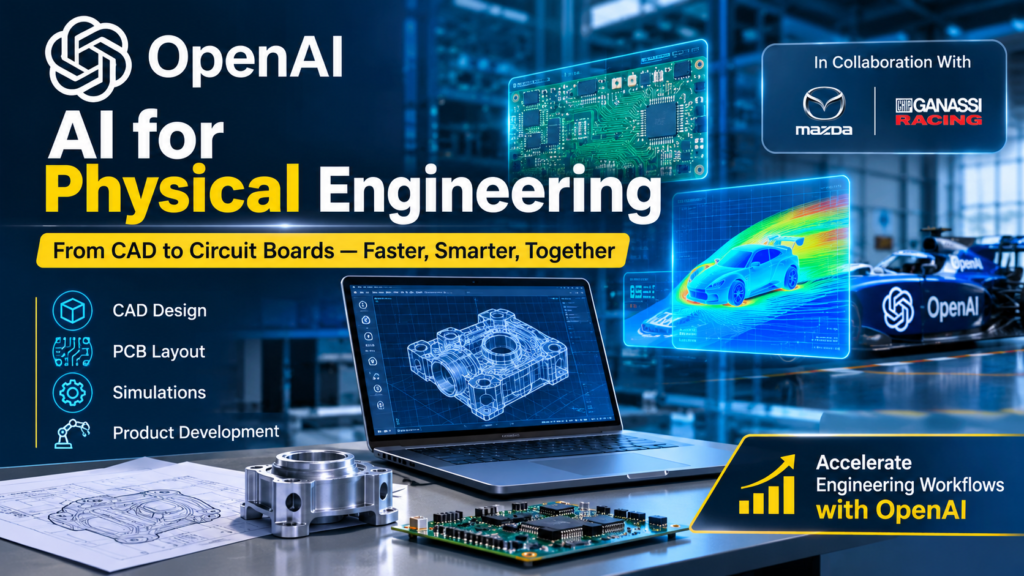
AI for physical engineering moved from promise to practice on November 3, 2026, when OpenAI reported that ChatGPT and Codex are being used for CAD, PCB layout and simulation work with Chip Ganassi Racing and Mazda, with human review still required. The short answer for hardware teams is that these models can now draft real parts, boards and drawings, but experienced engineers must still catch problems with tolerances, assembly and manufacturability. runtimewire
This guide explains what OpenAI announced, how to read its benchmark numbers, what the Mazda and Chip Ganassi Racing collaborations suggest, and how to pilot these tools without putting your product at risk. Each section stands on its own, so you can jump straight to the answer you need.
Quick Answer: What Did OpenAI Announce About Engineering for the Physical World?
OpenAI published a research post called “Accelerating engineering for the physical world.” It describes how OpenAI models help engineers design, simulate and build physical products, and it invites engineers, engineering firms and software vendors to collaborate. openai
The main points:
- Internal use: OpenAI’s hardware and infrastructure teams use Codex and ChatGPT to create and revise CAD models, prepare manufacturing drawings, set up simulations and review designs. openai
- Rapid adoption: Token use across those teams grew 23-fold since February. ai-tldr
- A working prototype: Two team members used GPT-6 Astra to design a device for talking to Codex in under a week, as a side project. ai-tldr
- A new benchmark: BenchCAD 2.0 tests whether models can reconstruct 3D parts and assemblies and identify circuit-board connections. hyper
- Industry partners: Mazda is working with OpenAI on simulating and refining aerodynamic vehicle designs, and Chip Ganassi Racing on turning 3D scans into editable CAD models. aimagazine
- An open call: OpenAI is seeking collaborators in mechanical engineering, electrical engineering, electromechanical design, mechatronics and manufacturing. hyper
What Is AI for Physical Engineering?
Definition. AI for physical engineering is the use of large AI models to assist with the design, simulation, prototyping and manufacturing of tangible products such as vehicles, electronics and machines. Instead of producing text or software, the models produce or revise engineering artifacts: 3D CAD models, printed circuit board layouts, technical drawings and simulation setups.
Expansion. In practice, AI for physical engineering sits on top of tools engineers already use. OpenAI names mechanical design, electrical engineering and simulation as the areas where ChatGPT and Codex are being applied. OpenAI’s job listings describe the same scope: an initial focus on mechanical and electrical engineering, with experiences inside ChatGPT and integrations with engineering software. devzapply
That framing matters. The goal is to speed up existing workflows such as concept sketching, part revision, drawing preparation and design review. It is not to replace the CAD, CAE or simulation packages that engineering teams have spent years learning.
Why Is AI for Physical Engineering Harder Than Software AI?
Physical engineering is harder because the physical world punishes mistakes slowly and expensively, and because training data is scarce. A software bug shows up in seconds. A hardware error can show up as scrapped parts, a failed test or a missed launch window.
Data is the second obstacle. One founder working on engineering AI has argued that, unlike software, physical engineering domains lack large, accessible datasets. Most real design work is proprietary, unlabeled or never written down, so models cannot simply learn it from the open web. This is why OpenAI’s call for industry collaborators is strategically important: partners can supply the real tools, constraints and feedback that public data cannot. sequoiacap
How Is OpenAI Using ChatGPT and Codex on Hardware?
OpenAI is using the models in two ways: day-to-day work by its own hardware teams, and a bounded prototype project that tests the whole design chain.
Inside OpenAI’s Hardware and Infrastructure Teams
According to OpenAI’s post, internal teams use Codex and ChatGPT to create and revise computer-aided design (CAD) models, prepare manufacturing drawings, set up simulations and review designs. Those are four of the most repetitive, time-consuming tasks in a mechanical engineer’s week. openai
The adoption figure suggests engineers found the tools useful enough to keep using them. Daily model usage across OpenAI’s internal hardware and infrastructure teams grew 23-fold since February. Usage growth is not the same as quality, though, so treat it as a signal of interest rather than proof of accuracy. aimagazine
The Codex Device: A Case Study in Hardware Design
The most concrete example is a small gadget that lets people talk to Codex. GPT-6 Astra wrote the requirements and designed the enclosure, the circuit board and the software. Two team members finished the design in under a week, and a contract manufacturer built a small batch of prototypes in under a month. ai-tldrai-tldr
It is the clearest public example of AI for physical engineering so far, and it comes with an important caveat. The device still needed several review rounds because the model did not always account for production limits, tolerances and assembly details. ai-tldr
Two lessons follow:
- Speed gains are real but front-loaded. The model compressed early design work dramatically.
- The last mile belongs to humans. Manufacturing constraints are exactly where experience matters most.
What Is BenchCAD 2.0 and What Do Its Scores Mean?
Definition. BenchCAD 2.0 is a benchmark OpenAI uses to track engineering-specific capability. It tests whether models can reconstruct 3D parts and assemblies and identify circuit-board connections. In other words, it checks whether a model can “see” a physical design and rebuild or interpret it correctly, which is a foundation for both AI CAD design and AI PCB design. hyper
Expansion. The reported results show a wide gap between current and future models. GPT-6 Astra scored 0.594, while a newer unreleased internal model averaged 0.875. ai-tldr
How should you read those numbers?
- The jump is large. A move from 0.594 to 0.875 suggests fast progress on spatial and geometric reasoning.
- The best score cannot be verified. The highest score comes from a model the public cannot use yet, so it cannot be checked independently. ai-tldr
- A benchmark is not a factory. Reconstructing a part from a reference is one skill. Designing a part that survives manufacturing, assembly and field use is a broader one.
How Are Mazda and Chip Ganassi Racing Involved?
Both organizations show how engineering simulation with AI and AI CAD design can work in demanding environments.
Mazda. OpenAI is working with the Japanese carmaker on simulating and refining aerodynamic vehicle designs. The collaboration is described as newly involving Mazda’s aerodynamics and crash-safety engineers. These are disciplines where small design changes can have large consequences, so expert review is built in. aimagazineai-tldr
Chip Ganassi Racing (CGR). The racing team works with OpenAI on converting 3D scans into editable CAD models. The work also covers 2D drawings. OpenAI says it is expanding the collaboration to explore how its models can accelerate engineering and prototyping. OpenAI, Mazda & CGR: Inside the Physical Engineering AI Race +2
Motorsport is a sensible proving ground because teams iterate constantly under tight deadlines. Reverse-engineering a scanned part into clean, editable geometry is a time-consuming task that is easy to measure, which makes it a good test of whether AI saves real hours. That interpretation is my analysis rather than a statement from OpenAI.
Comparison: Traditional Workflow vs. AI for Physical Engineering
The table below compares how common engineering tasks change when AI assists. It is a general analysis informed by OpenAI’s described use cases, not a set of results OpenAI has published.
| Task | Traditional workflow | AI-assisted workflow | Human responsibility |
|---|---|---|---|
| Requirements drafting | Written manually from customer input | Model drafts requirements for review | Validate against real needs |
| CAD modeling | Built part by part in CAD software | Model creates or revises parts from prompts and references | Check geometry, tolerances, fit |
| Scan-to-CAD | Manual re-modeling from point clouds | Model converts 3D scans into editable models | Verify accuracy against the original |
| Manufacturing drawings | Hand-annotated 2D drawings | Model prepares drawings from the 3D model | Confirm standards and callouts |
| PCB layout | Schematic capture and routing by specialists | Model proposes layouts and checks connections | Review signal integrity and safety |
| Simulation setup | Manual meshing, boundary conditions, runs | Model configures simulation inputs | Judge whether results are physically plausible |
| Design review | Meetings and checklists | Model flags issues before review | Make the final call |
The pattern is consistent: the model accelerates drafting and setup, while people keep accountability for correctness.
What Are the Benefits of AI for Physical Engineering?
OpenAI says it sees early evidence that these capabilities improve professional workflows in industry and describes improvements as early evidence of faster iteration. Based on the use cases described, the potential benefits include: openai
- Faster iteration cycles: Early concepts, revisions and prototypes can take days instead of weeks.
- Less repetitive drafting: Engineers spend less time on routine drawing preparation and CAD edits.
- Cheaper exploration: Teams can test more design variants before committing to tooling.
- Broader access: Small teams without large specialist benches can attempt work that once required more headcount.
- Earlier problem detection: A model that reviews designs can flag issues before they reach a prototype.
Each benefit depends on strong human review. Speed without verification only moves errors earlier in the process.
Limits and Risks: What Hardware Teams Should Watch
AI for physical engineering raises stakes that software teams rarely face, because mistakes can become physical objects. Four limits deserve attention.
Human Review Is Still Required
OpenAI’s own prototype needed several review rounds. Its prototype required human correction on tolerances and assembly. Any team adopting these tools should budget review time as a core part of the process. runtimewire
The Announcement Is Not a Product Launch
Coverage of the announcement stresses that OpenAI names CAD, simulation and PCB design as example toolchains for collaboration, but the announcement does not confirm specific product integrations. Likewise, OpenAI describes progress and workflow testing rather than a standalone hardware-design product or a replacement for established engineering software. Don’t plan procurement around features that have not been announced. devdev
Benchmarks Don’t Capture Everything
OpenAI itself notes that the engineering lifecycle includes many elements beyond design. Manufacturing process knowledge, supplier constraints, certification, and long-term reliability are not fully captured by a reconstruction benchmark. openai
Safety-Critical and Proprietary Work Needs Extra Care
Crash safety, aerodynamics and electrical safety demand rigorous validation. Teams should also decide in advance what proprietary design data can be shared with any AI tool, and under what contractual protections.
Frequently Asked Questions
Does AI for physical engineering replace CAD software?
No. The announcement describes models helping engineers within existing workflows, and it does not present a standalone hardware-design product or a replacement for established engineering software. The models work with or alongside CAD, simulation and PCB tools. dev
Can ChatGPT design a physical product on its own?
Not reliably. In OpenAI’s own test, a model produced an enclosure, circuit board and software, but the device still needed several review rounds. Treat the model as a fast junior collaborator, not an autonomous designer. ai-tldr
What is BenchCAD 2.0?
It is a benchmark for engineering capability. It checks whether models can rebuild 3D parts and assemblies and identify connections on circuit boards. hyper
Which companies are working with OpenAI on this?
Mazda and Chip Ganassi Racing are the two named collaborators. OpenAI is also inviting additional engineers, engineering firms and software vendors to join. aimagazine
Is the best-performing model available to the public?
No. The highest BenchCAD 2.0 score comes from an unreleased internal model. ai-tldr
Can my company take part?
Possibly. OpenAI invites engineers, engineering firms and software vendors involved in the design, simulation, manufacturing or production of complex physical products to work with it. Check OpenAI’s original post for the current application link. openai
How Can Teams Start with AI for Physical Engineering?
Treat your first pilot of AI for physical engineering as an experiment with clear pass/fail criteria. A practical sequence:
- Pick a low-risk, repetitive task. Scan-to-CAD cleanup, drawing preparation and design-review checklists are good candidates.
- Define acceptance criteria up front. Decide what accuracy, time saved and error rate would make the pilot worthwhile.
- Keep an expert in the loop. Require sign-off on every output before it moves toward manufacturing.
- Measure honestly. Track time saved and errors caught against your current process.
- Set data rules early. Decide which models, files and suppliers are in scope, and protect proprietary designs.
- Expand gradually. Move to simulation setup or PCB review only after the first task proves reliable.
For AI PCB design in particular, pair the model’s output with your standard electrical review. For engineering simulation with AI, always sanity-check results against physical intuition and prior test data.
Key Takeaways
- OpenAI’s November 3, 2026 post shows ChatGPT and Codex supporting CAD, PCB design, drawings, simulation and design review.
- A prototype device went from idea to design in under a week, but still needed repeated human correction.
- BenchCAD 2.0 scores rose sharply in an unreleased model, yet that result is not independently verifiable.
- Mazda and Chip Ganassi Racing show interest from automotive and motorsport engineering.
- The announcement is about progress and partnership, not a confirmed product or software integration.
AI for physical engineering is early, but the direction is clear: faster drafting and setup, with people responsible for correctness. Teams that learn to supervise AI for physical engineering now will be better placed to use stronger models as they arrive.
ଭୌତିକ ଇଞ୍ଜିନିୟରିଂ ପାଇଁ AI: ହାର୍ଡୱେର୍ ଦଳ ପାଇଁ OpenAIର CAD, PCB ଏବଂ ସିମୁଲେସନ୍ ପୁସ୍ ଅର୍ଥ କ’ଣ
ନଭେମ୍ବର 3, 2026 ରେ, ଯେତେବେଳେ OpenAI ରିପୋର୍ଟ କଲା ଯେ ChatGPT ଏବଂ Codex ଚିପ୍ ଗାନାସି ରେସିଂ ଏବଂ ମାଜଦା ସହିତ CAD, PCB ଲେଆଉଟ୍ ଏବଂ ସିମୁଲେସନ୍ କାର୍ଯ୍ୟ ପାଇଁ ବ୍ୟବହାର କରାଯାଉଛି, ମାନବ ସମୀକ୍ଷା ଆବଶ୍ୟକ। ହାର୍ଡୱେର୍ ଦଳ ପାଇଁ ସଂକ୍ଷିପ୍ତ ଉତ୍ତର ହେଉଛି ଯେ ଏହି ମଡେଲ୍ଗୁଡ଼ିକ ବର୍ତ୍ତମାନ ପ୍ରକୃତ ଅଂଶ, ବୋର୍ଡ ଏବଂ ଚିତ୍ରାଙ୍କନ ଡ୍ରାଫ୍ଟ କରିପାରିବେ, କିନ୍ତୁ ଅଭିଜ୍ଞ ଇଞ୍ଜିନିୟରମାନେ ଏବେ ବି ସହନଶୀଳତା, ଆସେମ୍ବଲି ଏବଂ ଉତ୍ପାଦନକ୍ଷମତା ସହିତ ସମସ୍ୟାଗୁଡ଼ିକୁ ଧରିବେ।
ରନଟାଇମୱାୟାର
ଏହି ମାର୍ଗଦର୍ଶିକା ବ୍ୟାଖ୍ୟା କରେ ଯେ OpenAI କ’ଣ ଘୋଷଣା କରିଛି, ଏହାର ବେଞ୍ଚମାର୍କ ସଂଖ୍ୟା କିପରି ପଢିବେ, Mazda ଏବଂ Chip Ganassi ରେସିଂ ସହଯୋଗ କ’ଣ ପରାମର୍ଶ ଦେଇଛି, ଏବଂ ଆପଣଙ୍କ ଉତ୍ପାଦକୁ ବିପଦରେ ନ ପକାଇ ଏହି ଉପକରଣଗୁଡ଼ିକୁ କିପରି ପାଇଲଟ୍ କରିବେ। ପ୍ରତ୍ୟେକ ବିଭାଗ ନିଜସ୍ୱ ଭାବରେ ଠିଆ ହୋଇଛି, ତେଣୁ ଆପଣ ସିଧାସଳଖ ଆପଣଙ୍କୁ ଆବଶ୍ୟକ ଉତ୍ତରକୁ ଡେଇଁପାରିବେ।
ଶୀଘ୍ର ଉତ୍ତର: OpenAI ଭୌତିକ ବିଶ୍ୱ ପାଇଁ ଇଞ୍ଜିନିୟରିଂ ବିଷୟରେ କ’ଣ ଘୋଷଣା କରିଥିଲା?
OpenAI “ଭୌତିକ ବିଶ୍ୱ ପାଇଁ ତ୍ୱରାନ୍ୱିତ ଇଞ୍ଜିନିୟରିଂ” ନାମକ ଏକ ଗବେଷଣା ପୋଷ୍ଟ ପ୍ରକାଶ କରିଛି। ଏହା ବର୍ଣ୍ଣନା କରେ ଯେ OpenAI ମଡେଲଗୁଡ଼ିକ କିପରି ଇଞ୍ଜିନିୟରମାନଙ୍କୁ ଭୌତିକ ଉତ୍ପାଦ ଡିଜାଇନ୍, ସିମୁଲେଟ୍ ଏବଂ ନିର୍ମାଣ କରିବାରେ ସାହାଯ୍ୟ କରନ୍ତି, ଏବଂ ଏହା ଇଞ୍ଜିନିୟର, ଇଞ୍ଜିନିୟରିଂ ଫାର୍ମ ଏବଂ ସଫ୍ଟୱେର୍ ବିକ୍ରେତାମାନଙ୍କୁ ସହଯୋଗ କରିବାକୁ ଆମନ୍ତ୍ରଣ କରେ।
openai
ମୁଖ୍ୟ ବିନ୍ଦୁ:
ଆଭ୍ୟନ୍ତରୀଣ ବ୍ୟବହାର: OpenAIର ହାର୍ଡୱେର୍ ଏବଂ ଭିତ୍ତିଭୂମି ଦଳଗୁଡ଼ିକ CAD ମଡେଲଗୁଡ଼ିକ ସୃଷ୍ଟି ଏବଂ ସଂଶୋଧନ କରିବା, ଉତ୍ପାଦନ ଚିତ୍ର ପ୍ରସ୍ତୁତ କରିବା, ସିମୁଲେସନ୍ ସେଟ୍ ଅପ୍ କରିବା ଏବଂ ଡିଜାଇନ୍ ସମୀକ୍ଷା କରିବା ପାଇଁ Codex ଏବଂ ChatGPT ବ୍ୟବହାର କରନ୍ତି।
openai
କ୍ଷୁଦ୍ର ଗ୍ରହଣ: ଫେବୃଆରୀ ପରଠାରୁ ସେହି ଦଳଗୁଡ଼ିକରେ ଟୋକନ୍ ବ୍ୟବହାର 23 ଗୁଣ ବୃଦ୍ଧି ପାଇଛି।
ai-tldr
ଏକ କାର୍ଯ୍ୟକାରୀ ପ୍ରୋଟୋଟାଇପ୍: ଦୁଇ ଜଣ ଦଳର ସଦସ୍ୟ GPT-6 Astra ବ୍ୟବହାର କରି ଏକ ସପ୍ତାହ ମଧ୍ୟରେ Codex ସହିତ କଥା ହେବା ପାଇଁ ଏକ ଡିଭାଇସ୍ ଡିଜାଇନ୍ କରିଛନ୍ତି, ଏକ ପାର୍ଶ୍ୱ ପ୍ରକଳ୍ପ ଭାବରେ।
ai-tldr
ଏକ ନୂତନ ମାନଦଣ୍ଡ: BenchCAD 2.0 ପରୀକ୍ଷା କରେ ଯେ ମଡେଲଗୁଡ଼ିକ 3D ଅଂଶ ଏବଂ ଆସେମ୍ବଲିଗୁଡ଼ିକୁ ପୁନଃନିର୍ମାଣ କରିପାରିବେ ଏବଂ ସର୍କିଟ୍-ବୋର୍ଡ ସଂଯୋଗଗୁଡ଼ିକୁ ଚିହ୍ନଟ କରିପାରିବେ କି ନାହିଁ।
ହାଇପର
ଉଦ୍ୟୋଗ ଅଂଶୀଦାର: Mazda OpenAI ସହିତ ଏୟାରୋଡାଇନାମିକ୍ ଯାନ ଡିଜାଇନ୍ ସିମୁଲେଟ୍ ଏବଂ ପରିଷ୍କାର କରିବା ପାଇଁ କାମ କରୁଛି, ଏବଂ Chip Ganassi Racing 3D ସ୍କାନକୁ ସମ୍ପାଦନଯୋଗ୍ୟ CAD ମଡେଲରେ ପରିଣତ କରିବା ପାଇଁ କାମ କରୁଛି।
aimagazine
ଏକ ଖୋଲା ଆହ୍ୱାନ: OpenAI ମେକାନିକାଲ୍ ଇଞ୍ଜିନିୟରିଂ, ବୈଦ୍ୟୁତିକ ଇଞ୍ଜିନିୟରିଂ, ଇଲେକ୍ଟ୍ରୋମେକାନିକାଲ୍ ଡିଜାଇନ୍, ମେକାଟ୍ରୋନିକ୍ସ ଏବଂ ଉତ୍ପାଦନ କ୍ଷେତ୍ରରେ ସହଯୋଗୀ ଖୋଜୁଛି।
ହାଇପର
ଭୌତିକ ଇଞ୍ଜିନିୟରିଂ ପାଇଁ AI କ’ଣ?
ପରିଭାଷା। ଭୌତିକ ଇଞ୍ଜିନିୟରିଂ ପାଇଁ AI ହେଉଛି ଯାନବାହାନ, ଇଲେକ୍ଟ୍ରୋନିକ୍ସ ଏବଂ ମେସିନ୍ ଭଳି ଦୃଶ୍ଯ ଉତ୍ପାଦଗୁଡ଼ିକର ଡିଜାଇନ୍, ସିମୁଲେସନ୍, ପ୍ରୋଟୋଟାଇପିଂ ଏବଂ ଉତ୍ପାଦନରେ ସହାୟତା କରିବା ପାଇଁ ବଡ଼ AI ମଡେଲର ବ୍ୟବହାର। ପାଠ୍ୟ କିମ୍ବା ସଫ୍ଟୱେର୍ ଉତ୍ପାଦନ କରିବା ପରିବର୍ତ୍ତେ, ମଡେଲ୍ ଇଞ୍ଜିନିୟରିଂ କଳାକୃତି ଉତ୍ପାଦନ କିମ୍ବା ସଂଶୋଧନ କରନ୍ତି: 3D CAD ମଡେଲ୍, ମୁଦ୍ରିତ ସର୍କିଟ୍ ବୋର୍ଡ ଲେଆଉଟ୍, ବୈଷୟିକ ଚିତ୍ର ଏବଂ ସିମୁଲେସନ୍ ସେଟଅପ୍।
ବିସ୍ତାର। ଅଭ୍ୟାସରେ, ଭୌତିକ ଇଞ୍ଜିନିୟରିଂ ପାଇଁ AI ଇଞ୍ଜିନିୟରମାନେ ପୂର୍ବରୁ ବ୍ୟବହାର କରୁଥିବା ଉପକରଣଗୁଡ଼ିକର ଶୀର୍ଷରେ ଅବସ୍ଥିତ। OpenAI ମେକାନିକାଲ୍ ଡିଜାଇନ୍, ବୈଦ୍ୟୁତିକ ଇଞ୍ଜିନିୟରିଂ ଏବଂ ସିମୁଲେସନ୍କୁ ସେହି କ୍ଷେତ୍ର ଭାବରେ ନାମିତ କରେ ଯେଉଁଠାରେ ChatGPT ଏବଂ Codex ପ୍ରୟୋଗ କରାଯାଉଛି। OpenAI ର ଚାକିରି ତାଲିକା ସମାନ ପରିସରକୁ ବର୍ଣ୍ଣନା କରେ: ChatGPT ଭିତରେ ଅଭିଜ୍ଞତା ଏବଂ ଇଞ୍ଜିନିୟରିଂ ସଫ୍ଟୱେର୍ ସହିତ ସମନ୍ୱୟ ସହିତ ମେକାନିକାଲ୍ ଏବଂ ବୈଦ୍ୟୁତିକ ଇଞ୍ଜିନିୟରିଂ ଉପରେ ପ୍ରାରମ୍ଭିକ ଧ୍ୟାନ।
ସେହି ଫ୍ରେମିଂ ଗୁରୁତ୍ୱପୂର୍ଣ୍ଣ। ଲକ୍ଷ୍ୟ ହେଉଛି ଧାରଣା ସ୍କେଚିଂ, ଅଂଶ ସଂଶୋଧନ, ଚିତ୍ର ପ୍ରସ୍ତୁତି ଏବଂ ଡିଜାଇନ୍ ସମୀକ୍ଷା ଭଳି ବିଦ୍ୟମାନ କାର୍ଯ୍ୟପ୍ରବାହକୁ ତ୍ୱରାନ୍ୱିତ କରିବା। ଏହା CAD, CAE କିମ୍ବା ସିମୁଲେସନ୍ ପ୍ୟାକେଜ୍ଗୁଡ଼ିକୁ ବଦଳାଇବା ନୁହେଁ ଯାହା ଇଞ୍ଜିନିୟରିଂ ଦଳଗୁଡ଼ିକ ବର୍ଷ ବର୍ଷ ଧରି ଶିଖିଛନ୍ତି।
କାହିଁକି ଭୌତିକ ଇଞ୍ଜିନିୟରିଂ ପାଇଁ AI ସଫ୍ଟୱେର୍ AI ଅପେକ୍ଷା କଷ୍ଟକର?
ଭୌତିକ ଇଞ୍ଜିନିୟରିଂ କଷ୍ଟକର କାରଣ ଭୌତିକ ଜଗତ ଧୀରେ ଧୀରେ ଏବଂ ମହଙ୍ଗା ଭାବରେ ଭୁଲକୁ ଦଣ୍ଡ ଦିଏ, ଏବଂ କାରଣ ତାଲିମ ତଥ୍ୟ ଅଭାବପୂର୍ଣ୍ଣ। ଏକ ସଫ୍ଟୱେର୍ ବଗ୍ କିଛି ସେକେଣ୍ଡରେ ଦେଖାଯାଏ। ଏକ ହାର୍ଡୱେର୍ ତ୍ରୁଟି ସ୍କ୍ରାପ୍ ହୋଇଥିବା ଅଂଶ, ଏକ ବିଫଳ ପରୀକ୍ଷା କିମ୍ବା ଏକ ମିସ୍ ଲଞ୍ଚ ୱିଣ୍ଡୋ ଭାବରେ ଦେଖାଯାଇପାରେ।
ଡାଟା ହେଉଛି ଦ୍ୱିତୀୟ ପ୍ରତିବନ୍ଧକ। ଇଞ୍ଜିନିୟରିଂ AI ଉପରେ କାମ କରୁଥିବା ଜଣେ ପ୍ରତିଷ୍ଠାତା ଯୁକ୍ତି ଦେଇଛନ୍ତି ଯେ, ସଫ୍ଟୱେର୍ ପରି ନୁହେଁ, ଭୌତିକ ଇଞ୍ଜିନିୟରିଂ ଡୋମେନ୍ଗୁଡ଼ିକରେ ବଡ଼, ସୁଗମ ଡାଟାସେଟ୍ ନାହିଁ। ଅଧିକାଂଶ ପ୍ରକୃତ ଡିଜାଇନ୍ କାର୍ଯ୍ୟ ମାଲିକାନା, ଲେବଲ୍ ହୋଇନଥିବା କିମ୍ବା କେବେ ଲେଖାଯାଇ ନଥାଏ, ତେଣୁ ମଡେଲ୍ କେବଳ ଖୋଲା ୱେବ୍ ରୁ ଏହାକୁ ଶିଖିପାରିବେ ନାହିଁ। ଏହି କାରଣରୁ ଶିଳ୍ପ ସହଯୋଗୀଙ୍କ ପାଇଁ OpenAIର ଆହ୍ୱାନ ରଣନୈତିକ ଭାବରେ ଗୁରୁତ୍ୱପୂର୍ଣ୍ଣ: ଅଂଶୀଦାରମାନେ ପ୍ରକୃତ ଉପକରଣ, ପ୍ରତିବନ୍ଧକ ଏବଂ ମତାମତ ଯୋଗାଇ ପାରିବେ ଯାହା ସାଧାରଣ ତଥ୍ୟ କରିପାରିବ ନାହିଁ।
ହାର୍ଡୱେର୍ ଉପରେ OpenAI କିପରି ChatGPT ଏବଂ କୋଡେକ୍ସ ବ୍ୟବହାର କରୁଛି?
OpenAI ମଡେଲ୍ଗୁଡ଼ିକୁ ଦୁଇଟି ଉପାୟରେ ବ୍ୟବହାର କରୁଛି: ନିଜସ୍ୱ ହାର୍ଡୱେର୍ ଦଳ ଦ୍ୱାରା ଦୈନନ୍ଦିନ କାର୍ଯ୍ୟ, ଏବଂ ଏକ ସୀମିତ ପ୍ରୋଟୋଟାଇପ୍ ପ୍ରୋଜେକ୍ଟ ଯାହା ସମ୍ପୂର୍ଣ୍ଣ ଡିଜାଇନ୍ ଶୃଙ୍ଖଳାକୁ ପରୀକ୍ଷା କରେ।
OpenAI ର ହାର୍ଡୱେୟାର ଏବଂ ଭିତ୍ତିଭୂମି ଦଳ ଭିତରେ
OpenAI ର ପୋଷ୍ଟ ଅନୁଯାୟୀ, ଆଭ୍ୟନ୍ତରୀଣ ଦଳଗୁଡ଼ିକ କମ୍ପ୍ୟୁଟର-ଏଡେଡ୍ ଡିଜାଇନ୍ (CAD) ମଡେଲ୍ ତିଆରି ଏବଂ ସଂଶୋଧନ କରିବା, ଉତ୍ପାଦନ ଡ୍ରଇଂ ପ୍ରସ୍ତୁତ କରିବା, ସିମୁଲେସନ୍ ସେଟ୍ ଅପ୍ କରିବା ଏବଂ ଡିଜାଇନ୍ ସମୀକ୍ଷା କରିବା ପାଇଁ Codex ଏବଂ ChatGPT ବ୍ୟବହାର କରନ୍ତି। ଏଗୁଡ଼ିକ ଜଣେ ମେକାନିକାଲ୍ ଇଞ୍ଜିନିୟରଙ୍କ ସପ୍ତାହରେ ସବୁଠାରୁ ପୁନରାବୃତ୍ତିକାରୀ, ସମୟ ସାପେକ୍ଷ କାର୍ଯ୍ୟ ମଧ୍ୟରୁ ଚାରୋଟି।
ଗ୍ରହଣ ଚିତ୍ର ସୂଚାଇ ଦିଏ ଯେ ଇଞ୍ଜିନିୟରମାନେ ଉପକରଣଗୁଡ଼ିକୁ ବ୍ୟବହାର ଜାରି ରଖିବା ପାଇଁ ଯଥେଷ୍ଟ ଉପଯୋଗୀ ପାଇଛନ୍ତି। ଫେବୃଆରୀ ପରଠାରୁ OpenAI ର ଆଭ୍ୟନ୍ତରୀଣ ହାର୍ଡୱେୟାର ଏବଂ ଭିତ୍ତିଭୂମି ଦଳଗୁଡ଼ିକରେ ଦୈନିକ ମଡେଲ୍ ବ୍ୟବହାର 23 ଗୁଣ ବୃଦ୍ଧି ପାଇଛି। ତଥାପି, ବ୍ୟବହାର ବୃଦ୍ଧି ଗୁଣବତ୍ତା ସହିତ ସମାନ ନୁହେଁ, ତେଣୁ ଏହାକୁ ସଠିକତାର ପ୍ରମାଣ ବଦଳରେ ଆଗ୍ରହର ସଙ୍କେତ ଭାବରେ ବ୍ୟବହାର କରନ୍ତୁ।
କୋଡେକ୍ସ ଡିଭାଇସ୍: ହାର୍ଡୱେର୍ ଡିଜାଇନ୍ ରେ ଏକ କେସ୍ ଷ୍ଟଡି
ସର୍ବାଧିକ କଂକ୍ରିଟ୍ ଉଦାହରଣ ହେଉଛି ଏକ ଛୋଟ ଗ୍ୟାଜେଟ୍ ଯାହା ଲୋକଙ୍କୁ ଟେଲ କରିବାକୁ ଦିଏCodex (କୋଡେକ୍ସ) ସହିତ ଜଡିତ ଏହି ପ୍ରକ୍ରିୟାରେ, GPT-6 Astra ଆବଶ୍ୟକତାଗୁଡ଼ିକୁ ଲେଖିବା ସହ ଏହାର ବାହ୍ୟ ଢାଞ୍ଚା (enclosure), ସର୍କିଟ୍ ବୋର୍ଡ ଏବଂ ସଫ୍ଟୱେର୍ର ଡିଜାଇନ୍ ପ୍ରସ୍ତୁତ କରିଥିଲା। ଦଳର ଦୁଇଜଣ ସଦସ୍ୟ ଏକ ସପ୍ତାହରୁ କମ୍ ସମୟ ମଧ୍ୟରେ ଡିଜାଇନ୍ କାର୍ଯ୍ୟ ସମ୍ପନ୍ନ କରିଥିଲେ ଏବଂ ଏକ ଠିକା ଉତ୍ପାଦନକାରୀ ସଂସ୍ଥା (contract manufacturer) ଏକ ମାସରୁ କମ୍ ସମୟ ମଧ୍ୟରେ ଏହାର କିଛି ପ୍ରାରମ୍ଭିକ ନମୁନା (prototypes) ପ୍ରସ୍ତୁତ କରିଥିଲେ।
ଭୌତିକ ଇଞ୍ଜିନିୟରିଂ କ୍ଷେତ୍ରରେ AI (କୃତ୍ରିମ ବୁଦ୍ଧିମତ୍ତା)ର ବ୍ୟବହାରକୁ ନେଇ ଏହା ବର୍ତ୍ତମାନ ପର୍ଯ୍ୟନ୍ତ ସର୍ବସାଧାରଣରେ ଉପଲବ୍ଧ ସବୁଠାରୁ ସ୍ପଷ୍ଟ ଉଦାହରଣ ଅଟେ, କିନ୍ତୁ ଏଥିରେ ଏକ ଗୁରୁତ୍ୱପୂର୍ଣ୍ଣ ସତର୍କତା ମଧ୍ୟ ରହିଛି। ଉକ୍ତ ଉପକରଣଟିକୁ ଅନେକ ଥର ସମୀକ୍ଷା କରିବାକୁ ପଡ଼ିଥିଲା, କାରଣ AI ମଡେଲ୍ଟି ସବୁବେଳେ ଉତ୍ପାଦନ ସୀମାବଦ୍ଧତା, ସହନଶୀଳତା (tolerances) ଏବଂ ଯନ୍ତ୍ରାଂଶ ଯୋଡ଼ିବା (assembly) ସମ୍ବନ୍ଧୀୟ ବିବରଣୀକୁ ଠିକ୍ ଭାବରେ ବିଚାରକୁ ନେଇପାରି ନଥିଲା।
ଏଥିରୁ ଦୁଇଟି ଶିକ୍ଷା ମିଳିଥାଏ:
କାର୍ଯ୍ୟ ଗତିରେ ଉନ୍ନତି ବାସ୍ତବ, କିନ୍ତୁ ଏହା ମୁଖ୍ୟତଃ ପ୍ରାରମ୍ଭିକ ପର୍ଯ୍ୟାୟରେ ଅଧିକ ଦେଖାଯାଏ। AI ମଡେଲ୍ଟି ଡିଜାଇନ୍ ପ୍ରକ୍ରିୟାର ପ୍ରାରମ୍ଭିକ କାର୍ଯ୍ୟକୁ ବହୁତ ଦ୍ରୁତ କରିଦେଇଥିଲା।
ଅନ୍ତିମ ପର୍ଯ୍ୟାୟ କାର୍ଯ୍ୟ ମଣିଷ ଦ୍ୱାରା ହିଁ ସମ୍ପାଦିତ ହେବା ଆବଶ୍ୟକ। ଉତ୍ପାଦନ କ୍ଷେତ୍ରରେ ଥିବା ବିଭିନ୍ନ ସୀମାବଦ୍ଧତା ବା ଚ୍ୟାଲେଞ୍ଜଗୁଡ଼ିକୁ ବୁଝିବା ପାଇଁ ମାନବୀୟ ଅଭିଜ୍ଞତା ସବୁଠାରୁ ଗୁରୁତ୍ୱପୂର୍ଣ୍ଣ ଅଟେ।
BenchCAD 2.0 କ’ଣ ଏବଂ ଏହାର ସ୍କୋରଗୁଡ଼ିକର ଅର୍ଥ କ’ଣ?
ସଂଜ୍ଞା: BenchCAD 2.0 ହେଉଛି ଏକ ମାନଦଣ୍ଡ (benchmark) ଯାହାକୁ OpenAI ଇଞ୍ଜିନିୟରିଂ ସମ୍ବନ୍ଧୀୟ ଦକ୍ଷତା ମାପିବା ପାଇଁ ବ୍ୟବହାର କରେ। ଏହା ପରୀକ୍ଷା କରେ ଯେ AI ମଡେଲ୍ଗୁଡ଼ିକ 3D ଯନ୍ତ୍ରାଂଶ ଓ ସେଗୁଡ଼ିକର ସଂଯୋଜନାକୁ ପୁନଃନିର୍ମାଣ କରିପାରୁଛନ୍ତି କି ନାହିଁ ଏବଂ ସର୍କିଟ୍ ବୋର୍ଡର ସଂଯୋଗଗୁଡ଼ିକୁ ଚିହ୍ନଟ କରିପାରୁଛନ୍ତି କି ନାହିଁ। ଅନ୍ୟ ଅର୍ଥରେ, ଏହା ଯାଞ୍ଚ କରେ ଯେ ଏକ AI ମଡେଲ୍ କୌଣସି ଭୌତିକ ଡିଜାଇନ୍କୁ “ଦେଖି” ତାହାକୁ ସଠିକ୍ OpenAI ଜାପାନୀ ଗାଡ଼ି ନିର୍ମାତା କମ୍ପାନୀ ସହିତ ମିଶି ଗାଡ଼ିର ‘ଏରୋଡାଇନାମିକ୍’ (ବାୟୁ ପ୍ରବାହ ସମ୍ବନ୍ଧୀୟ) ଡିଜାଇନ୍କୁ ସିମୁଲେସନ୍ (କୃତ୍ରିମ ପରୀକ୍ଷଣ) କରିବା ଏବଂ ତା’କୁ ଉନ୍ନତ କରିବା ଦିଗରେ କାମ କରୁଛି।
ଏହି ସହଯୋଗରେ ବର୍ତ୍ତମାନ Mazda (ମାଜଡା) କମ୍ପାନୀର ଏରୋଡାଇନାମିକ୍ସ ଏବଂ ଦୁର୍ଘଟଣା ସମୟରେ ସୁରକ୍ଷା (crash-safety) ସମ୍ବନ୍ଧୀୟ ଇଞ୍ଜିନିୟରମାନେ ମଧ୍ୟ ସାମିଲ ହୋଇଛନ୍ତି। ଏହି କ୍ଷେତ୍ରଗୁଡ଼ିକରେ ଡିଜାଇନ୍ରେ କରାଯାଇଥିବା ଛୋଟ ପରିବର୍ତ୍ତନ ମଧ୍ୟ ବଡ଼ ପ୍ରଭାବ ପକାଇପାରେ, ତେଣୁ ଏଥିରେ ବିଶେଷଜ୍ଞଙ୍କ ଦ୍ୱାରା ଯାଞ୍ଚ ବା ସମୀକ୍ଷା କରିବା ଏକ ଅବିଚ୍ଛେଦ୍ୟ ଅଙ୍ଗ ଅଟେ।
Chip Ganassi Racing (CGR) – ଏହି ରେସିଂ ଦଳ OpenAI ସହିତ ମିଶି 3D ସ୍କାନଗୁଡ଼ିକୁ ଏଡିଟ୍ (ସମ୍ପାଦନ) ଯୋଗ୍ୟ CAD ମଡେଲରେ ପରିଣତ କରିବା ପାଇଁ କାମ କରୁଛି। ଏହି କାର୍ଯ୍ୟରେ 2D ଡ୍ରଇଂ ବା ଚିତ୍ରଣ ମଧ୍ୟ ଅନ୍ତର୍ଭୁକ୍ତ। OpenAI କହିଛି ଯେ, ସେମାନଙ୍କର ମଡେଲଗୁଡ଼ିକ କିପରି ଇଞ୍ଜିନିୟରିଂ ଏବଂ ପ୍ରୋଟୋଟାଇପ୍ (ନମୁନା) ପ୍ରସ୍ତୁତି ପ୍ରକ୍ରିୟାକୁ ତ୍ୱରାନ୍ୱିତ କରିପାରିବ, ତାହା ଜାଣିବା ପାଇଁ ସେମାନେ ଏହି ସହଯୋଗକୁ ଆହୁରି ବ୍ୟାପକ କରୁଛନ୍ତି।
OpenAI, Mazda ଏବଂ CGR: ଫିଜିକାଲ୍ ଇଞ୍ଜିନିୟରିଂ କ୍ଷେତ୍ରରେ AI (କୃତ୍ରିମ ବୁଦ୍ଧିମତ୍ତା)ର ପ୍ରୟୋଗ
ମୋଟରସ୍ପୋର୍ଟ (ଗାଡ଼ି ଦୌଡ଼ ପ୍ରତିଯୋଗିତା) ଏକ ଉପଯୁକ୍ତ ପରୀକ୍ଷା କ୍ଷେତ୍ର ଅଟେ, କାରଣ ଏଠାରେ ଦଳଗୁଡ଼ିକୁ ଅତି କମ୍ ସମୟ ମଧ୍ୟରେ ବାରମ୍ବାର ଡିଜାଇନ୍ରେ ପରିବର୍ତ୍ତନ ଓ ଉନ୍ନତି ଆଣିବାକୁ ପଡ଼ିଥାଏ। ଏକ ସ୍କାନ୍ ହୋଇଥିବା ଅଂଶକୁ ପୁନଃ-ଇଞ୍ଜିନିୟରିଂ (reverse-engineering) ମାଧ୍ୟମରେ ଏକ ସ୍ପଷ୍ଟ ଏବଂ ସମ୍ପାଦନ ଯୋଗ୍ୟ ଜ୍ୟାମିତିକ ମଡେଲରେ ପରିଣତ କରିବା ଏକ ସମୟସାପେକ୍ଷ କାମ। ଏହି ସମୟକୁ ସହଜରେ ମାପି ହେଉଥିବାରୁ, AI ପ୍ରକୃତରେ କେତେ ସମୟ ବଞ୍ଚାଉଛି, ତାହା ପରୀକ୍ଷା କରିବା ପାଇଁ ଏହା ଏକ ଉତ୍ତମ ମାଧ୍ୟମ। ତେବେ, ଏହି ମତଟି ମୋର ନିଜସ୍ୱ ବିଶ୍ଳେଷଣ ଅଟେ, OpenAI ପକ୍ଷରୁ ଦିଆଯାଇଥିବା କୌଣସି ବିବୃତ୍ତି ନୁହେଁ।
ତୁଳନା: ପାରମ୍ପାରିକ କାର୍ଯ୍ୟପଦ୍ଧତି ବନାମ ଫିଜିକାଲ୍ ଇଞ୍ଜିନିୟରିଂରେ AI
ନିମ୍ନ ସାରଣୀରେ ଦର୍ଶାଯାଇ ଭୌତିକ ଇଞ୍ଜିନିୟରିଂ ପାଇଁ AI ର ଲାଭ କ’ଣ?
OpenAI କହିଛି ଯେ ଏହା ପ୍ରାରମ୍ଭିକ ପ୍ରମାଣ ଦେଖୁଛି ଯେ ଏହି କ୍ଷମତାଗୁଡ଼ିକ ଶିଳ୍ପରେ ବୃତ୍ତିଗତ କାର୍ଯ୍ୟପ୍ରବାହକୁ ଉନ୍ନତ କରେ ଏବଂ ଦ୍ରୁତ ପୁନରାବୃତ୍ତିର ପ୍ରାରମ୍ଭିକ ପ୍ରମାଣ ଭାବରେ ଉନ୍ନତିକୁ ବର୍ଣ୍ଣନା କରେ। ବର୍ଣ୍ଣିତ ବ୍ୟବହାର ମାମଲାଗୁଡ଼ିକ ଉପରେ ଆଧାର କରି, ସମ୍ଭାବ୍ୟ ଲାଭଗୁଡ଼ିକ ମଧ୍ୟରେ ଅନ୍ତର୍ଭୁକ୍ତ:
openai
ଦ୍ରୁତ ପୁନରାବୃତ୍ତି ଚକ୍ର: ପ୍ରାରମ୍ଭିକ ଧାରଣା, ସଂଶୋଧନ ଏବଂ ପ୍ରୋଟୋଟାଇପ୍ ସପ୍ତାହ ବଦଳରେ ଦିନ ନେଇପାରେ।
କମ୍ ପୁନରାବୃତ୍ତି ଡ୍ରାଫ୍ଟିଂ: ଇଞ୍ଜିନିୟରମାନେ ନିୟମିତ ଚିତ୍ରାଙ୍କନ ପ୍ରସ୍ତୁତି ଏବଂ CAD ସମ୍ପାଦନାରେ କମ୍ ସମୟ ବିତାଇଥାନ୍ତି।
ଶସ୍ତା ଅନୁସନ୍ଧାନ: ଦଳଗୁଡ଼ିକ ଟୁଲିଂ ପାଇଁ ପ୍ରତିଶ୍ରୁତିବଦ୍ଧ ହେବା ପୂର୍ବରୁ ଅଧିକ ଡିଜାଇନ୍ ପ୍ରକାର ପରୀକ୍ଷା କରିପାରିବେ।
ବିସ୍ତୃତ ପ୍ରବେଶ: ବଡ଼ ବିଶେଷଜ୍ଞ ବେଞ୍ଚ ବିନା ଛୋଟ ଦଳଗୁଡ଼ିକ ଏପରି କାର୍ଯ୍ୟ ଚେଷ୍ଟା କରିପାରିବେ ଯାହା ପୂର୍ବରୁ ଅଧିକ ହେଡ୍କାଉଣ୍ଟ ଆବଶ୍ୟକ କରୁଥିଲା।
ସମସ୍ୟାଗୁଡ଼ିକର ପ୍ରାରମ୍ଭିକ ଚିହ୍ନଟ: ଡିଜାଇନ୍ଗୁଡ଼ିକୁ ଯାଞ୍ଚ କରୁଥିବା ଏକ ମଡେଲ୍, ପ୍ରୋଟୋଟାଇପ୍ (ନମୁନା) ପ୍ରସ୍ତୁତ ହେବା ପୂର୍ବରୁ ହିଁ ସେଥିରେ ଥିବା ତ୍ରୁଟିଗୁଡ଼ିକୁ ଚିହ୍ନଟ କରିପାରିବ।
ଏହି ପ୍ରତ୍ୟେକ ଲାଭ ମୁଖ୍ୟତଃ ମାନବୀୟ ଯାଞ୍ଚ (human review) ଉପରେ ନିର୍ଭର କରେ। ଯଦି ଯାଞ୍ଚ ନକରି କେବଳ କାମକୁ ତ୍ୱରାନ୍ୱିତ କରାଯାଏ, ତେବେ ତାହା କେବଳ ତ୍ରୁଟିଗୁଡ଼ିକୁ ପ୍ରକ୍ରିୟାର ଆହୁରି ପ୍ରାରମ୍ଭିକ ପର୍ଯ୍ୟାୟକୁ ଠେଲି ଦେଇଥାଏ।
ସୀମାବଦ୍ଧତା ଏବଂ ବିପଦ: ହାର୍ଡୱେର୍ ଟିମ୍ଗୁଡ଼ିକ ଯାହା ଉପରେ ଧ୍ୟାନ ଦେବା ଉଚିତ୍
ଭୌତିକ ଇଞ୍ଜିନିୟରିଂ (physical engineering) କ୍ଷେତ୍ରରେ AI ବ୍ୟବହାର କରିବା ସମୟରେ ଏପରି କିଛି ଆହ୍ୱାନ ସାମ୍ନାକୁ ଆସିପାରେ ଯାହା ସଫ୍ଟୱେର୍ ଟିମ୍ଗୁଡ଼ିକ ସାଧାରଣତଃ ଅନୁଭବ କରନ୍ତି ନାହିଁ; କାରଣ ଏଠାରେ ହୋଇଥିବା ଭୁଲ୍ ବା ତ୍ରୁଟିଗୁଡ଼ିକ ବାସ୍ତବ ଭୌତିକ ବସ୍ତୁରେ ପରିଣତ ହୋଇପାରେ। ଏଠାରେ ଚାରୋଟି ସୀମାବଦ୍ଧତା ଉପରେ ଧ୍ୟାନ ଦେବା ଆବଶ୍ୟକ।
ମାନବୀୟ ଯାଞ୍ଚ (Human Review) ଏବେ ମଧ୍ୟ ଆବଶ୍ୟକ
OpenAI ର ନିଜସ୍ୱ ପ୍ରୋଟୋଟାଇପ୍କୁ ମଧ୍ୟ ଅନେକ ଥର ଯାଞ୍ଚ ଓ ସଂଶୋଧନ କରିବାକୁ ପଡ଼ିଥିଲା। ଏହାର ପ୍ରୋଟୋଟାଇପ୍ରେ ଟଲରେନ୍ସ (tolerances) ଏବଂ ଆସେମ୍ବଲି (ଯନ୍ତ୍ରାଂଶ ଯୋଡ଼ିବା) ସମ୍ବନ୍ଧୀୟ ବିଷୟଗୁଡ଼ିକରେ ମାନବୀୟ ସଂଶୋଧନର ଆବଶ୍ୟକତା ପଡ଼ିଥିଲା। ଯେକୌଣସି ଟିମ୍ ଯଦି ଏହି ଟୁଲ୍ଗୁଡ଼ିକୁ ବ୍ୟବହାର କରନ୍ତି, ତେବେ ସେମାନଙ୍କୁ ନିଜ କାର୍ଯ୍ୟ ପ୍ରକ୍ରିୟାରେ ଯାଞ୍ଚ ପାଇଁ ସମୟ ନିର୍ଦ୍ଧାରଣ କରି ରଖିବା ଉଚିତ୍।
ଏହି ଘୋଷଣା କୌଣସି ନୂତନ ଉତ୍ପାଦର ଶୁଭାରମ୍ଭ (product launch) ନୁହେଁ
ଏହି ଘୋଷଣାରେ ଉଲ୍ଲେଖ କରାଯାଇଛି ଯେ OpenAI, ସହଯୋଗୀ କାର୍ଯ୍ୟ ପାଇଁ CAD, ସିମୁଲେସନ୍ ଏବଂ PCB ଡିଜାଇନ୍ ଭଳି ଟୁଲ୍ଗୁଡ଼ିକୁ ଉଦାହରଣ ଭାବରେ ବ୍ୟବହାର କରୁଛି, କିନ୍ତୁ ଏଥିରେ କୌଣସି ନିର୍ଦ୍ଦିଷ୍ଟ ଉତ୍ପାଦର ସମନ୍ୱୟ (product integration) ବିଷୟରେ ନିଶ୍ଚିତ କରାଯାଇ ନାହିଁ। ସେହିଭଳି, OpenAI ଏଠାରେ କେବଳ କାର୍ଯ୍ୟ ପ୍ରଗତି ଏବଂ କାର୍ଯ୍ୟ ପ୍ରକ୍ରିୟା (workflow) ପରୀକ୍ଷଣ ବିଷୟରେ ବର୍ଣ୍ଣନା କରୁଛି; ଏହା କୌଣସି ସ୍ୱତନ୍ତ୍ର ହାର୍ଡୱେର୍-ଡିଜାଇନ୍ ଉ ଏହା ଇଞ୍ଜିନିୟରିଂ ଦକ୍ଷତା ପାଇଁ ଏକ ମାନଦଣ୍ଡ (benchmark) ଅଟେ। ଏହା ଯାଞ୍ଚ କରେ ଯେ ମଡେଲଗୁଡ଼ିକ 3D ଅଂଶ ଏବଂ ଆସେମ୍ବଲିଗୁଡ଼ିକୁ ପୁନଃନିର୍ମାଣ କରିପାରିବେ କି ନାହିଁ, ଏବଂ ସର୍କିଟ୍ ବୋର୍ଡରେ ଥିବା ସଂଯୋଗଗୁଡ଼ିକୁ ଚିହ୍ନଟ କରିପାରିବେ କି ନାହିଁ।
ଏଥିପାଇଁ କେଉଁ କମ୍ପାନୀଗୁଡ଼ିକ OpenAI ସହିତ କାମ କରୁଛନ୍ତି?
Mazda ଏବଂ Chip Ganassi Racing ହେଉଛନ୍ତି ଏଥିରେ ସାମିଲ ଥିବା ଦୁଇଟି ପ୍ରମୁଖ ସହଯୋଗୀ। OpenAI ଅନ୍ୟ ଇଞ୍ଜିନିୟର, ଇଞ୍ଜିନିୟରିଂ ସଂସ୍ଥା ଏବଂ ସଫ୍ଟୱେର୍ ବିକ୍ରେତାମାନଙ୍କୁ ମଧ୍ୟ ଏଥିରେ ଯୋଗଦେବା ପାଇଁ ଆମନ୍ତ୍ରଣ କରୁଛି।
ସର୍ବୋତ୍ତମ ପ୍ରଦର୍ଶନ କରୁଥିବା ମଡେଲଟି କ’ଣ ସାଧାରଣ ଜନତାଙ୍କ ପାଇଁ ଉପଲବ୍ଧ ଅଛି?
ନା। BenchCAD 2.0 ରେ ସର୍ବୋଚ୍ଚ ସ୍କୋର ହାସଲ କରିଥିବା ମଡେଲଟି ଏକ ଆଭ୍ୟନ୍ତରୀଣ ମଡେଲ, ଯାହା ଏପର୍ଯ୍ୟନ୍ତ ସର୍ବସାଧାରଣଙ୍କ ପାଇଁ ଜାରି କରାଯାଇନାହିଁ।
ମୋ କମ୍ପାନୀ କ’ଣ ଏଥିରେ ଅଂଶଗ୍ରହଣ କରିପାରିବ?
ହୁଏତ ପାରିବ। OpenAI ସେହି ଇଞ୍ଜିନିୟର, ଇଞ୍ଜିନିୟରିଂ ସଂସ୍ଥା ଏବଂ ସଫ୍ଟୱେର୍ ବିକ୍ରେତାମାନଙ୍କୁ ଆମନ୍ତ୍ରଣ କରୁଛି ଯେଉଁମାନେ ଜଟିଳ ଭୌତିକ ଉତ୍ପାଦର ଡିଜାଇନ୍, ସିମୁଲେସନ୍, ଉତ୍ପାଦନ କିମ୍ବା ନିର୍ମାଣ କାର୍ଯ୍ୟରେ ଜଡ଼ିତ ଅଛନ୍ତି। ଆବେଦନ କରିବା ପାଇଁ ଲିଙ୍କ୍ ପାଇବାକୁ OpenAI ର ମୂଳ ପୋଷ୍ଟ ଦେଖନ୍ତୁ।
ଭୌତିକ ଇଞ୍ଜିନିୟରିଂ (Physical Engineering) କ୍ଷେତ୍ରରେ ଟିମ୍ଗୁଡ଼ିକ AI ସହିତ କିପରି କାମ ଆରମ୍ଭ କରିପାରିବେ?
ଭୌତିକ ଇଞ୍ଜିନିୟରିଂ ପାଇଁ AI ର ପ୍ରଥମ ପରୀକ୍ଷାମୂଳକ ପ୍ରୟୋଗକୁ (pilot) ଏକ ପରୀକ୍ଷଣ ଭାବରେ ବିବେଚନା କରନ୍ତୁ, ଯେଉଁଥିରେ ସଫଳତା କିମ୍ବା ବିଫଳତା ନିର୍ଦ୍ଧାରଣ କରିବା ପାଇଁ ସ୍ପଷ୍ଟ ମାନଦଣ୍ଡ ରହିଥିବ। ଏକ ବ୍ୟାବହାରିକ ପଦ୍ଧତି ହେଲା:
କମ୍ ବିପଦ ଥିବା ଏବଂ ବାରମ୍ବାର କରାଯାଉଥିବା କୌଣସି କାମ ବାଛନ୍ତୁ। ଯେପରିକି ‘Scan-to-CAD’ (ସ୍କାନରୁ CAD ରେ ରୂପାନ୍ତର) ପରେ ସଫା-ସୁତୁରା କରିବା, ଡ୍ରଇଂ ପ୍ରସ୍ତୁତ କରିବା କିମ୍ବା ଡିଜାଇନ୍-ସମୀକ୍ଷା ଚେକ୍ଲିଷ୍ଟ ପ୍ରସ୍ତୁତ କରିବା ଭଳି କାମ ଏଥିପାଇଁ ଉପଯୁକ୍ତ।
ଆରମ୍ଭରୁ ହିଁ ଗ୍ରହଣଯୋଗ୍ୟତାର ମାନଦଣ୍ଡ (acceptance criteria) ସ୍ଥିର କରନ୍ତୁ। ଏହି ପରୀକ୍ଷାମୂଳକ ପ୍ରୟୋଗକୁ ସାର୍ଥକ ବୋଲି କହିବା ପାଇଁ କେତ ଏକ ଅପ୍ରକାଶିତ ମଡେଲରେ BenchCAD 2.0 ସ୍କୋର ଦ୍ରୁତ ଗତିରେ ବୃଦ୍ଧି ପାଇଛି, ତଥାପି ସେହି ଫଳାଫଳ ସ୍ୱାଧୀନ ଭାବରେ ଯାଞ୍ଚଯୋଗ୍ୟ ନୁହେଁ।
Mazda ଏବଂ Chip Ganassi Racing ଅଟୋମୋଟିଭ୍ ଏବଂ ମୋଟରସ୍ପୋର୍ଟ ଇଞ୍ଜିନିୟରିଂ ପ୍ରତି ଆଗ୍ରହ ଦେଖାଉଛି।
ଘୋଷଣା ପ୍ରଗତି ଏବଂ ସହଭାଗୀତା ବିଷୟରେ, ଏକ ନିଶ୍ଚିତ ଉତ୍ପାଦ କିମ୍ବା ସଫ୍ଟୱେର୍ ସମନ୍ୱୟ ବିଷୟରେ ନୁହେଁ।
ଭୌତିକ ଇଞ୍ଜିନିୟରିଂ ପାଇଁ AI ପ୍ରାରମ୍ଭିକ, କିନ୍ତୁ ଦିଗ ସ୍ପଷ୍ଟ: ସଠିକତା ପାଇଁ ଦାୟୀ ଲୋକଙ୍କ ସହିତ ଦ୍ରୁତ ଡ୍ରାଫ୍ଟିଂ ଏବଂ ସେଟଅପ୍। ଯେଉଁ ଦଳଗୁଡ଼ିକ ଏବେ ଭୌତିକ ଇଞ୍ଜିନିୟରିଂ ପାଇଁ AI ତଦାରଖ କରିବାକୁ ଶିଖନ୍ତି ସେମାନେ ଆସିବା ପରେ ଅଧିକ ଶକ୍ତିଶାଳୀ ମଡେଲ ବ୍ୟବହାର କରିବାକୁ ଭଲ ଭାବରେ ସ୍ଥାନିତ ହେବେ।