ଏକ UV ବିଶୋଧନ ରୋବଟ୍ କିପରି କାମ କରେ: GlobalLogic ଏବଂ Haystack Robotics ର ‘ଫିଜିକାଲ୍ AI’ (Physical AI) ନିର୍ମାଣ ବିଷୟରେ
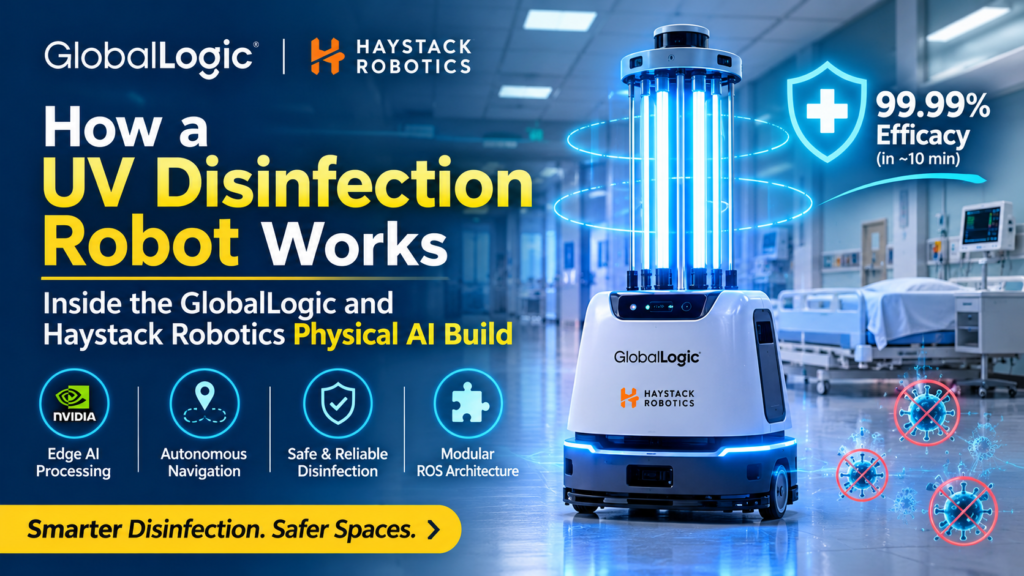
A UV disinfection robot is an autonomous mobile robot that drives through a room, delivers a measured dose of UV-C light, and avoids people and obstacles without a human steering it. In the Haystack Robotics project, GlobalLogic’s Silicon & Embedded division combined real-time perception, edge-based decision-making, and safe navigation to deliver fast, consistent disinfection in dynamic, real-world environments. globallogic
Manual disinfection has a stubborn weakness: the outcome depends on who does the work, how rushed they are, and what they remember to wipe. Automation attacks that variability directly. This guide explains how the technology works, what the Haystack build reveals about modern robot design, and how to judge whether a system is ready for a real hospital floor or a busy commercial facility.
Key Takeaways
- A UV disinfection robot replaces variable manual effort with a programmable, repeatable workflow.
- Physical AI, meaning AI that perceives and acts in the real world, is what lets these machines navigate safely around people and furniture.
- The Haystack platform is reported to deliver up to 99.99% efficacy in as little as 10 minutes. That figure is vendor-reported, so ask for the test method. globallogic
- Processing happens locally on NVIDIA hardware, which allows low-latency responses and continuous operation without relying on cloud connectivity. globallogic
- A modular, ROS-based architecture makes the system easier to extend and maintain. globallogic
- Buyers should demand independent microbiology testing, proven safety behavior, and reliable navigation before committing.
What Is a UV Disinfection Robot?
Definition and Expansion
Definition: A UV disinfection robot is a self-navigating machine fitted with ultraviolet-C (UV-C) lamps that inactivates bacteria, viruses, and other pathogens on the surfaces and in the air of an unoccupied space.
Expansion: A handheld wand or a fixed lamp tower needs a person to carry it, position it, and time it. The robot handles all three jobs itself. Most designs share the same subsystems:
- Perception sensors such as LiDAR and cameras that map the surroundings and spot obstacles
- An onboard computer that runs navigation, planning, and safety logic
- A drive base that moves the unit between positions
- A UV-C lamp array that delivers the disinfecting dose
- Safety systems that stop or shut off the lamps when a person is detected
The value comes from how these parts cooperate. The lamp is the easy part. The hard part is deciding where to stop, how long to stay, and when to shut off.
How Does UV-C Light Kill Pathogens?
Short answer: UV-C light, generally in the 200 to 280 nanometer range, damages the genetic material of microorganisms so they can no longer replicate.
The dose a surface receives depends on lamp intensity, distance, and exposure time. Shadowed areas get less light, which is why positioning matters so much. A robot that repeats the same stops and dwell times every cycle removes one major source of inconsistency. This is the core idea behind hospital-grade UV-C disinfection: a defined dose, applied the same way each time.
What Makes a Robot “Autonomous”?
Short answer: An autonomous robot perceives its environment, decides what to do, and acts, all without a person controlling each move.
For disinfection, that means planning a route, reacting to changes such as a moved bed or an open door, and completing the job on its own. Haystack’s Violet AI goes a step further. It is designed to move through complex indoor environments without requiring pre-mapping. That matters for facilities that can’t spend days on a mapping exercise before the first cycle. pulse2
Why Hospitals and Shared Spaces Need Automation
The Consistency Problem
Cleaning quality drifts with staffing levels, time pressure, and training. Coverage of Haystack’s funding notes that its robot helps standardize a process that can otherwise vary depending on staffing, procedures, and individual execution. A UV disinfection robot removes much of that person-to-person variation, because the route, the dwell time, and the dose are all defined in software. pulse2
The Infection Control Stakes
Haystack’s UV-C platform is positioned to help minimize healthcare-associated infections, in line with the broader trend toward smart hospital technologies. Healthcare-associated infections are among the most persistent operational and patient-safety problems hospitals face. Better disinfection consistency does not solve them alone, but it removes one preventable weak link. frost
The Labor Reality
Environmental services teams are asked to do more with less. Robots don’t replace that expertise. They take on the repetitive, time-consuming parts of terminal room disinfection so staff can focus on judgment-heavy work like cleaning high-touch surfaces and managing turnover.
The GlobalLogic and Haystack Robotics Project at a Glance
Who Is Involved
Haystack Robotics is a startup building mobile UV-C robots. It was founded in 2021 and is headquartered in Portland, Oregon. Its engineering and manufacturing operations are based in Chennai, India. linkedindealroom
GlobalLogic contributed through its Silicon & Embedded division. The case study credits its Embedded Software, Hardware & Silicon Solutions team for the engineering. globallogic
The Problem They Set Out to Solve
Haystack needed a fundamentally different approach, one that ensures consistent, reliable disinfection while operating safely in dynamic, real-world environments. Static equipment and manual routines couldn’t meet that bar. The answer was a robot that senses and adapts as it works. globallogic
Physical AI Explained
Definition: Physical AI is artificial intelligence that perceives and acts in the physical world rather than only generating text or images.
Expansion: A language model can answer a question without ever touching anything. A robot has to turn sensor data into motion in real time, and mistakes have physical consequences. In a UV disinfection robot, Physical AI means the machine continuously interprets its surroundings, adapts to changes, and runs its disinfection workflow with precision. GlobalLogic describes the solution as combining real-time perception, edge-based intelligence, and autonomous navigation to deliver hospital-grade UV disinfection with minimal human intervention. globallogic
Core Capabilities of the Haystack UV Disinfection Robot
Autonomous Navigation in Dynamic Environments
Navigation is the make-or-break skill of any UV disinfection robot. A hospital corridor is not a warehouse aisle. People step out of rooms, carts roll by, doors open and close, and furniture moves between shifts. A robot that only works in a frozen, pre-mapped layout will fail in the first week.
The Haystack robot continuously interprets its surroundings and adapts to changing environments. Combined with Violet AI’s design for navigating without pre-mapping, this is what makes the approach practical for real facilities rather than lab demonstrations. globallogic
Edge Intelligence on NVIDIA Hardware
Question: Why does the robot process data on the device instead of in the cloud?
Direct answer: Local processing gives faster reactions and keeps the robot working even when connectivity is poor. The robot processes data locally on NVIDIA hardware, enabling low-latency responses and continuous operation without reliance on cloud connectivity. globallogic
Hospitals often have dead zones, strict network policies, and privacy concerns. A robot that must phone home to decide whether to stop for an obstacle would be both slow and fragile. Edge compute keeps the safety-critical loop on the machine itself.
Rapid, Medical-Grade UV-C Disinfection
GlobalLogic reports medical-grade UV-C disinfection with up to 99.99% efficacy in as little as 10 minutes, enabling rapid and repeatable sanitation cycles. Haystack’s own social channels point to microbiology testing as support for the claim. One post describes swabbing surfaces before and after a cycle and counting the germs left behind. globallogiclinkedin
A practical note: efficacy numbers depend on the organism, the surface, the distance, and the room layout. Treat 99.99% as a headline to verify, not a guarantee for every scenario. Ask any vendor for the test protocol, the target pathogens, and the conditions.
Modular, ROS-Based Architecture
The project highlights a modular robotics architecture built on ROS, the Robot Operating System. Modularity matters for three reasons: globallogic
- Upgradability: perception, planning, or UV hardware can be improved without rewriting the whole stack.
- Maintainability: faults are easier to isolate in a layered design.
- Ecosystem: ROS gives teams access to a large body of tested navigation and tooling.
Autonomous, Repeatable Workflows
The solution turns disinfection into a programmable, consistent process, reducing variability and delivering standardized outcomes. This is arguably the most important benefit. Once disinfection is a defined workflow, it can be scheduled, repeated, audited, and improved. Manual routines rarely offer that. globallogic
Comparison: Manual vs. Portable UV vs. Autonomous Robot
| Factor | Manual wiping or spraying | Portable UV-C unit (placed by a person) | Autonomous UV-C robot (Haystack-style) |
|---|---|---|---|
| Consistency | Varies by person and shift | Better, but depends on placement | Defined by software, repeated each cycle |
| Labor required | High, continuous | Moderate, someone must move and start it | Low, supervision rather than operation |
| Navigation | Human | Human | Onboard autonomous navigation |
| Adapts to changed layouts | Yes, by judgment | Only if the operator notices | Yes, through real-time perception |
| Cycle documentation | Often paper-based | Limited | Programmable and repeatable |
| Reported cycle time | Varies widely | Varies | As little as 10 minutes (vendor-reported) |
| Upfront cost | Lowest | Moderate | Highest |
| Best for | Visible soil, high-touch surfaces | Smaller or lower-volume sites | High-volume, multi-room facilities |
The table makes the trade-off plain. A UV disinfection robot costs more up front, but it buys consistency, lower labor dependence, and a workflow you can standardize. Manual cleaning remains essential for visible soil and physical removal of contaminants, since UV-C works best as a complement to cleaning rather than a substitute.
How to Evaluate a UV Disinfection Robot Before You Deploy It
Any serious UV disinfection robot should hold up under scrutiny across several dimensions. Use this checklist when you assess a system:
- Independent efficacy data: ask for third-party microbiology results, the test method, and the target organisms.
- Navigation reliability: observe it in a live, busy environment, not just an empty demo room.
- Safety behavior: confirm how it detects people and what happens to the lamps when someone enters.
- Edge compute and offline operation: verify it keeps working when the network does not.
- Software architecture: a modular design is easier to update and support over the years.
- Workflow control: check that you can schedule, repeat, and review cycles.
- Service and support: confirm who maintains the lamps, sensors, and software, and how quickly.
- Total cost of ownership: include lamp replacement, training, and integration, not just the sticker price.
What Should You Ask a Vendor First?
Question: What is the single most revealing question to ask?
Direct answer: Ask to see a full cycle in an occupied, changing environment, and ask for the independent test data behind the efficacy claim. A confident vendor will welcome both.
Real-World Use Cases
A UV disinfection robot earns its keep where disinfection must be frequent, fast, and uniform. Haystack is targeting hospitals, senior living communities, educational facilities, hospitality, fitness centers, and other shared spaces where consistent disinfection is operationally challenging. pulse2
- Hospitals: patient rooms, operating rooms, and waiting areas between occupancies
- Senior living: shared dining and activity rooms where outbreaks spread quickly
- Hotels: guest room turnover under tight deadlines
- Schools and gyms: high-traffic spaces that need a reliable end-of-day routine
The common thread is a large number of rooms, short turnaround windows, and a real cost to getting it wrong.
The Business Case: Cost, Funding, and Market Signals
Price is a key adoption barrier. Frost & Sullivan notes that Haystack has positioned its Violet Gen IV robot competitively, with an anticipated cost below 2,000,000 INR, roughly $23,000. At that level, the price of a UV disinfection robot becomes manageable for mid-sized facilities, not just large health systems. frost
Investors appear to see the opportunity. Haystack raised $2.7 million in 2024 from an investment entity associated with healthcare IT company Agadia Systems. It has since raised $3.95 million in Series A funding, led by Agadia, to expand its autonomous UV-C platform. geekwirepulse2
The market is also competitive. Competitors listed by CB Insights include Breezy Med, R-Zero Systems, and Loop Robots, with UVD Robots also named as a comparison. That competition is healthy for buyers, because it pushes vendors to prove their claims. cbinsights
Lessons for Teams Building a UV Disinfection Robot
The Haystack and GlobalLogic project offers useful lessons for any team building a UV disinfection robot or a similar autonomous system:
- Start with embedded depth. Reliable robots depend on solid silicon, firmware, and hardware integration, not just clever software.
- Process at the edge. Safety-critical decisions belong on the device.
- Design for modularity. A ROS-based, layered stack lets you improve parts without rebuilding everything.
- Standardize the outcome. The product is not the robot, it is the repeatable result.
- Plan for dynamic reality. Real spaces change constantly, so test where people actually are.
Frequently Asked Questions
Does a UV Disinfection Robot Replace Human Cleaning Staff?
No. It automates one repetitive step, UV-C exposure of cleared rooms. Staff are still needed to remove visible soil, clean high-touch surfaces, and manage workflow. The robot extends their reach rather than replacing their expertise.
Is UV-C Light Safe Around People?
UV-C can harm skin and eyes, so exposure must be controlled. The Haystack solution is described as designed to operate safely alongside people. Still, follow the manufacturer’s safety protocol, confirm how people are detected, and treat room clearance procedures seriously. globallogic
How Long Does a Disinfection Cycle Take?
As little as 10 minutes, according to the vendor. GlobalLogic reports up to 99.99% efficacy in as little as 10 minutes. Actual time varies with room size, layout, and the target dose. globallogic
Does the Robot Need an Internet Connection?
No, not for core operation. The robot processes data locally, enabling continuous operation without reliance on cloud connectivity. globallogic
How Much Does a UV Disinfection Robot Cost?
Pricing varies widely by vendor. For reference, Haystack’s Violet Gen IV carries an anticipated price below 2,000,000 INR, about $23,000, according to Frost & Sullivan. Factor in lamps, training, service, and integration when you budget.
Can a UV Disinfection Robot Work in a Room It Has Never Mapped?
Some can. Haystack’s Violet AI is designed to navigate complex indoor environments without requiring pre-mapping, which shortens onboarding. Verify this in a live demo at your own site.
Conclusion
A UV disinfection robot turns disinfection from a variable manual task into a repeatable, measurable workflow. The Haystack Robotics and GlobalLogic build shows how that happens in practice: Physical AI for perception and navigation, NVIDIA-powered edge processing for fast and resilient decisions, and a modular ROS-based architecture for long-term flexibility.
If you are evaluating a UV disinfection robot, focus on evidence over marketing. Ask for independent efficacy data, watch it work in a busy environment, and check how it behaves around people. Do that, and you will separate genuinely capable autonomous systems from expensive lamps on wheels.
ଏକ UV ବିଶୋଧନ ରୋବଟ୍ କିପରି କାମ କରେ: GlobalLogic ଏବଂ Haystack Robotics ର ‘ଫିଜିକାଲ୍ AI’ (Physical AI) ନିର୍ମାଣ ବିଷୟରେ
ଏକ UV ବିଶୋଧନ ରୋବଟ୍ ହେଉଛି ଏକ ସ୍ୱୟଂଚାଳିତ ମୋବାଇଲ୍ ରୋବଟ୍, ଯାହା ଏକ କକ୍ଷ ମଧ୍ୟରେ ଚଳପ୍ରଚଳ କରି ନିର୍ଦ୍ଦିଷ୍ଟ ପରିମାଣର UV-C ଆଲୋକ ପ୍ରଦାନ କରିଥାଏ। ଏହା କୌଣସି ମନୁଷ୍ୟଙ୍କ ନିୟନ୍ତ୍ରଣ ବିନା ନିଜେ ରାସ୍ତା ଖୋଜି ଚାଲିପାରେ ଏବଂ ଲୋକ କିମ୍ବା ଅନ୍ୟାନ୍ୟ ବାଧାବିଘ୍ନକୁ ଏଡ଼ାଇ ଯାଇପାରେ। Haystack Robotics ପ୍ରକଳ୍ପରେ, GlobalLogic ର ‘ସିଲିକନ୍ ଆଣ୍ଡ ଏମ୍ବେଡେଡ୍’ (Silicon & Embedded) ବିଭାଗ ‘ରିଅଲ୍-ଟାଇମ୍ ପର୍ସେପସନ୍’ (ପରିବେଶକୁ ତୁରନ୍ତ ବୁଝିବାର କ୍ଷମତା), ‘ଏଜ୍-ବେସ୍ଡ ଡିସିଜନ୍-ମେକିଂ’ (ସ୍ଥାନୀୟ ସ୍ତରରେ ନିଷ୍ପତ୍ତି ନେବା) ଏବଂ ‘ସେଫ୍ ନାଭିଗେସନ୍’ (ସୁରକ୍ଷିତ ଭାବେ ଚଳପ୍ରଚଳ କରିବା) କୁ ଏକତ୍ରିତ କରିଛି। ଏହା ଫଳରେ ବାସ୍ତବ ଦୁନିଆର ପରିବର୍ତ୍ତନଶୀଳ ପରିବେଶରେ ମଧ୍ୟ ଦ୍ରୁତ ଏବଂ ସୁନିଶ୍ଚିତ ବିଶୋଧନ ସମ୍ଭବ ହୋଇପାରୁଛି।
ମାନୁଆଲ୍ (ହାତରେ କରାଯାଉଥିବା) ବିଶୋଧନ ପ୍ରକ୍ରିୟାରେ ଏକ ବଡ଼ ଅସୁବିଧା ରହିଛି: ଏହାର ଫଳାଫଳ କିଏ କାମ କରୁଛି, ସେ କେତେ ତରବର ହେଉଛନ୍ତି ଏବଂ କେଉଁ ସ୍ଥାନଗୁଡ଼ିକୁ ସଫା କରିବାକୁ ମନେ ରଖୁଛନ୍ତି, ତା’ ଉପରେ ନିର୍ଭର କରେ। ସ୍ୱୟଂଚାଳିତ ବ୍ୟବସ୍ଥା (Automation) ଏହି ଅନିଶ୍ଚିତତାକୁ ଦୂର କରିଥାଏ। ଏହି ଗାଇଡ୍ରେ ବର୍ଣ୍ଣନା କରାଯାଇଛି ଯେ ଏହି ପ୍ରଯୁକ୍ତିବିଦ୍ୟା କିପରି କାମ କରେ, Haystack ର ନିର୍ମାଣ ଆଧୁନିକ ରୋବଟ୍ ଡିଜାଇନ୍ ବିଷୟରେ କ’ଣ ସୂଚିତ କରେ ଏବଂ ଏକ ସିଷ୍ଟମ୍ ପ୍ରକୃତ ଡାକ୍ତରଖାନା କିମ୍ବା ବ୍ୟସ୍ତବହୁଳ ବ୍ୟବସାୟିକ ସ୍ଥାନରେ ବ୍ୟବହାର ପାଇଁ ଉପଯୁକ୍ତ କି ନୁହେଁ, ତାହା କିପରି ନିର୍ଦ୍ଧାରଣ କରାଯିବ।
ମୁଖ୍ୟ ବିଷୟଗୁଡ଼ିକ
ଏକ UV ବିଶୋଧନ ରୋବଟ୍, ମାନବୀୟ ପରିଶ୍ରମ ଉପରେ ନିର୍ଭର କରୁଥିବା ପରିବର୍ତ୍ତନଶୀଳ ପ୍ରକ୍ରିୟାକୁ ବଦଳାଇ ଏକ ପ୍ରୋଗ୍ରାମଯୋଗ୍ୟ ଏବଂ ସୁନିଶ୍ଚିତ କାର୍ଯ୍ୟପ୍ରଣାଳୀ ପ୍ରଦାନ କରେ।
‘ଫିଜିକାଲ୍ AI’ (Physical AI) – ଅର୍ଥାତ୍ ବାସ୍ତବ ଦୁନିଆକୁ ଅନୁଭବ କରିପାରୁଥିବା ଏବଂ ସେହି ଅନୁଯାୟୀ କାର୍ଯ୍ୟ କରୁଥିବା AI – ଯାହା ଏହି ମେସିନ୍ଗୁଡ଼ିକୁ ଲୋକ ଏବଂ ଆସବାବପତ୍ର ମଧ ଅଧିକାଂଶ ଡିଜାଇନରେ ସମାନ ଉପ-ପ୍ରଣାଳୀ (subsystems) ରହିଥାଏ:
LiDAR ଏବଂ କ୍ୟାମେରା ଭଳି ସେନ୍ସର, ଯାହା ଆଖପାଖର ପରିବେଶକୁ ଚିହ୍ନଟ କରି ମାନଚିତ୍ର ପ୍ରସ୍ତୁତ କରେ ଏବଂ ବାଧାବିଘ୍ନଗୁଡ଼ିକୁ ଠାବ କରେ।
ଏକ ଅନ୍-ବୋର୍ଡ କମ୍ପ୍ୟୁଟର, ଯାହା ନାଭିଗେସନ୍ (ଗତିପଥ ନିର୍ଦ୍ଧାରଣ), ଯୋଜନା ଏବଂ ସୁରକ୍ଷା ସମ୍ବନ୍ଧୀୟ ନିୟମାବଳୀକୁ ପରିଚାଳନା କରେ।
ଏକ ଡ୍ରାଇଭ୍ ବେସ୍ (ଚାଳନ ଆଧାର), ଯାହା ଉପକରଣଟିକୁ ଗୋଟିଏ ସ୍ଥାନରୁ ଅନ୍ୟ ସ୍ଥାନକୁ ନେଇଯାଏ।
UV-C ଲ୍ୟାମ୍ପର ଏକ ସେଟ୍, ଯାହା ଜୀବାଣୁ ନାଶ କରିବା ପାଇଁ ଆବଶ୍ୟକ ମାତ୍ରାର ବିକିରଣ ପ୍ରଦାନ କରେ।
ସୁରକ୍ଷା ବ୍ୟବସ୍ଥା, ଯାହା କୌଣସି ବ୍ୟକ୍ତିଙ୍କ ଉପସ୍ଥିତି ଜଣାପଡ଼ିଲେ ଲ୍ୟାମ୍ପଗୁଡ଼ିକୁ ବନ୍ଦ କରିଦିଏ।
ଏହି ଅଂଶଗୁଡ଼ିକ ପରସ୍ପର ସହ କିପରି ମିଶି କାମ କରନ୍ତି, ତାହା ହିଁ ଏହାର ପ୍ରକୃତ ମୂଲ୍ୟ ନିର୍ଦ୍ଧାରଣ କରେ। ଲ୍ୟାମ୍ପ ଲଗାଇବା ଏକ ସହଜ କାମ, କିନ୍ତୁ କେଉଁଠାରେ ଅଟକିବା, କେତେ ସମୟ ରହିବା ଏବଂ କେତେବେଳେ ଲ୍ୟାମ୍ପ ବନ୍ଦ କରିବା – ଏହି ନିଷ୍ପତ୍ତି ନେବା ଅଧିକ କଷ୍ଟସାଧ୍ୟ ଅଟେ।
UV-C ଆଲୋକ କିପରି ରୋଗକାରୀ ଜୀବାଣୁ (pathogens) କୁ ନଷ୍ଟ କରେ?
ସଂକ୍ଷେପରେ କହିଲେ: UV-C ଆଲୋକ (ସାଧାରଣତଃ ୨୦୦ ରୁ ୨୮୦ ନାନୋମିଟର ତରଙ୍ଗଦୈର୍ଘ୍ୟ ବିଶିଷ୍ଟ) ଅଣୁଜୀବମାନଙ୍କର ଜେନେଟିକ୍ ପଦାର୍ଥ (genetic material) କୁ ନଷ୍ଟ କରିଦିଏ, ଯାହା ଫଳରେ ସେଗୁଡ଼ିକ ଆଉ ନିଜର ବଂଶବୃଦ୍ଧି କରିପାରନ୍ତି ନାହିଁ।
କୌଣସି ପୃଷ୍ଠଭାଗ ଉପରେ କେତେ ମାତ୍ରାର ବିକିରଣ ପଡ଼ିବ, ତାହା ଲ୍ୟାମ୍ପର ତୀବ୍ରତା, ଦୂରତା ଏବଂ ସେଠାରେ ଆଲୋକ କେତେ ସମୟ ଧରି ପଡ଼ିଲା (exposure time) ତା’ ଉପରେ ନିର୍ଭର କରେ। ଯେଉଁ ସ୍ଥାନରେ ଛାଇ ପଡ଼େ, ସେଠାରେ କମ୍ ଆଲୋକ ପହଞ୍ଚେ; ତେଣୁ ଉପକରଣକୁ ଠିକ୍ ସ୍ଥାନରେ ରଖିବା ଅତ୍ୟନ୍ତ ଗୁରୁତ୍ୱପୂର୍ଣ୍ଣ। ଯେଉଁ ରୋବୋଟ୍ ପ୍ରତ୍ୟେକ ଥର ସମାନ ସ୍ଥାନରେ ଅଟକେ ଏବଂ ସମାନ ସମୟ ପର୍ଯ୍ୟନ୍ତ ରହେ, ତାହା କାର୍ଯ୍ୟରେ ଦେଖାଦେଉଥିବା ଅସଙ୍ଗତିକୁ ଦୂର କରିଥାଏ। ହସ୍ପିଟାଲ୍-ଗ୍ରେଡ୍ (ଡାକ୍ତରଖାନା ଉପଯୋଗୀ) UV-C ବିଶୋଧନ ପ୍ରକ୍ରିୟାର ମୂଳ ଲକ୍ଷ୍ୟ ହେଉଛି – ପ୍ରତ୍ୟେକ ଥର ଏକ ନ pulse2
ସଂକ୍ରମଣ ନିୟନ୍ତ୍ରଣ ସ୍ଥିତି
ହେଷ୍ଟାକର UV-C ପ୍ଲାଟଫର୍ମ ସ୍ମାର୍ଟ ହସ୍ପିଟାଲ ପ୍ରଯୁକ୍ତିବିଦ୍ୟା ପ୍ରତି ବ୍ୟାପକ ଧାରା ସହିତ ସ୍ୱାସ୍ଥ୍ୟସେବା-ସମ୍ବନ୍ଧିତ ସଂକ୍ରମଣକୁ କମ କରିବାରେ ସାହାଯ୍ୟ କରିବା ପାଇଁ ଅବସ୍ଥିତ। ସ୍ୱାସ୍ଥ୍ୟସେବା-ସମ୍ବନ୍ଧିତ ସଂକ୍ରମଣ ହେଉଛି ହସ୍ପିଟାଲଗୁଡ଼ିକ ସମ୍ମୁଖୀନ ହେଉଥିବା ସବୁଠାରୁ ସ୍ଥାୟୀ କାର୍ଯ୍ୟକ୍ଷମ ଏବଂ ରୋଗୀ-ସୁରକ୍ଷା ସମସ୍ୟା ମଧ୍ୟରୁ ଗୋଟିଏ। ଉନ୍ନତ ଜୀବାଣୁମୁକ୍ତ ସ୍ଥିରତା କେବଳ ସେମାନଙ୍କୁ ସମାଧାନ କରେ ନାହିଁ, କିନ୍ତୁ ଏହା ଏକ ପ୍ରତିରୋଧଯୋଗ୍ୟ ଦୁର୍ବଳ ଲିଙ୍କକୁ ଦୂର କରେ।
ତୁଷାର
ଶ୍ରମିକ ବାସ୍ତବତା
ପରିବେଶିକ ସେବା ଦଳଗୁଡ଼ିକୁ କମ୍ ସହିତ ଅଧିକ କରିବାକୁ କୁହାଯାଇଛି। ରୋବୋଟ୍ ସେହି ବିଶେଷଜ୍ଞତାକୁ ବଦଳାଇ ପାରିବେ ନାହିଁ। ସେମାନେ ଟର୍ମିନାଲ ରୁମ୍ ଜୀବାଣୁମୁକ୍ତ କରିବାର ପୁନରାବୃତ୍ତିମୂଳକ, ସମୟସାପେକ୍ଷ ଅଂଶ ଗ୍ରହଣ କରନ୍ତି ଯାହା ଫଳରେ କର୍ମଚାରୀମାନେ ଉଚ୍ଚ-ସ୍ପର୍ଶ ପୃଷ୍ଠ ସଫା କରିବା ଏବଂ ଟର୍ନଓଭର ପରିଚାଳନା କରିବା ଭଳି ବିଚାର-ଭାରୀ କାର୍ଯ୍ୟ ଉପରେ ଧ୍ୟାନ ଦେଇପାରିବେ।
ଗ୍ଲୋବାଲଲଜିକ୍ ଏବଂ ହେଷ୍ଟାକ ରୋବୋପ୍ରକଳ୍ପର ଏକ ସଂକ୍ଷିପ୍ତ ଝଲକ
କେଉଁମାନେ ଜଡ଼ିତ ଅଛନ୍ତି?
‘ହେଷ୍ଟାକ୍ ରୋବୋଟିକ୍ସ’ (Haystack Robotics) ହେଉଛି ଏକ ଷ୍ଟାର୍ଟଅପ୍ କମ୍ପାନୀ, ଯାହା ମୋବାଇଲ୍ UV-C (ଅଲଟ୍ରାଭାୟୋଲେଟ୍-ସି) ରୋବଟ୍ ନିର୍ମାଣ କରୁଛି। ଏହା ୨୦୨୧ ମସିହାରେ ପ୍ରତିଷ୍ଠିତ ହୋଇଥିଲା ଏବଂ ଏହାର ମୁଖ୍ୟ କାର୍ଯ୍ୟାଳୟ ଓରେଗନ୍ର ପୋର୍ଟଲ୍ୟାଣ୍ଡରେ ଅବସ୍ଥିତ। ଏହାର ଇଞ୍ଜିନିୟରିଂ ଏବଂ ଉତ୍ପାଦନ କାର୍ଯ୍ୟ ଭାରତର ଚେନ୍ନାଇରେ ପରିଚାଳିତ ହୁଏ।
ଲିଙ୍କଡଇନ୍ (LinkedIn)
ଡିଲରୁମ୍ (Dealroom)
‘ଗ୍ଲୋବାଲ୍ଲଜିକ୍’ (GlobalLogic) ଏହାର ‘ସିଲିକନ୍ ଆଣ୍ଡ ଏମ୍ବେଡେଡ୍’ (Silicon & Embedded) ବିଭାଗ ମାଧ୍ୟମରେ ଏଥିରେ ଯୋଗଦାନ ଦେଇଛି। ଏହି ପ୍ରକଳ୍ପର ଇଞ୍ଜିନିୟରିଂ କାର୍ଯ୍ୟ ପାଇଁ କମ୍ପାନୀର ‘ଏମ୍ବେଡେଡ୍ ସଫ୍ଟୱେର୍, ହାର୍ଡୱେର୍ ଏବଂ ସିଲିକନ୍ ସଲ୍ୟୁସନ୍ସ’ ଟିମ୍କୁ ଶ୍ରେୟ ଦିଆଯାଇଛି।
ଗ୍ଲୋବାଲ୍ଲଜିକ୍ (GlobalLogic)
ସମାଧାନ କରିବାକୁ ଲକ୍ଷ୍ୟ ରଖାଯାଇଥିବା ସମସ୍ୟା
‘ହେଷ୍ଟାକ୍’ (Haystack) କୁ ଏକ ସମ୍ପୂର୍ଣ୍ଣ ଭିନ୍ନ ପଦ୍ଧତିର ଆବଶ୍ୟକତା ଥିଲା; ଏପରି ଏକ ପଦ୍ଧତି ଯାହା ବାସ୍ତବ ଦୁନିଆର ପରିବର୍ତ୍ତନଶୀଳ ପରିବେଶରେ ସୁରକ୍ଷିତ ଭାବରେ କାର୍ଯ୍ୟ କରିବା ସହ ନିର୍ଭରଯୋଗ୍ୟ ଭାବରେ ଜୀବାଣୁମୁକ୍ତ (disinfection) କରିପାରିବ। ସ୍ଥିର ଉପକରଣ କିମ୍ବା ମାନୁଆଲ୍ (ହାତରେ କରାଯାଉଥିବା) ପ୍ରକ୍ରିୟା ଏହି ଆବଶ୍ୟକତା ପୂରଣ କରିପାରିବ ନାହିଁ। ଏହାର ଉତ୍ତର ଥିଲା ଏପରି ଏକ ରୋବଟ୍, ଯାହା କାମ କରିବା ସମୟରେ ନିଜ ଚାରିପାଖର ପରିସ୍ଥିତିକୁ ବୁଝିପାରିବ ଏବଂ ସେହି ଅନୁଯାୟୀ ନିଜକୁ ଖାପ ଖୁଆଇ ପାରିବ।
ଗ୍ଲୋବାଲ୍ଲଜିକ୍ (GlobalLogic)
‘ଫିଜିକାଲ୍ AI’ (Physical AI) ର ବ୍ୟାଖ୍ୟା
ସଂଜ୍ଞା: ‘ଫିଜିକାଲ୍ AI’ ହେଉଛି ଏପରି ଏକ କୃତ୍ରିମ ବୁଦ୍ଧିମତ୍ତା (Artificial Intelligence), ଯାହା କେବଳ ଲେଖା କିମ୍ବା ଚିତ୍ର ସୃଷ୍ଟି କରେ ନାହିଁ, ବରଂ ଭୌତିକ ଜଗତକୁ ଅନୁଭବ କରିପାରେ ଏବଂ ସେଠାରେ କାର୍ଯ୍ୟ ମଧ୍ୟ କରିପାରେ।
ବିସ୍ତୃତ ବ୍ୟାଖ୍ୟା: ଏକ ‘ଲାଙ୍ଗୁଏଜ୍ ମଡେଲ୍’ (language model) କୌଣସି ଜିନିଷକୁ ସ୍ପର୍ଶ ନକରି ମଧ୍ୟ ପ୍ରଶ୍ନର ଉତ୍ତର ଦେଇପାରେ। କିନ୍ତୁ ଏକ ରୋବଟ୍କୁ ସେନ୍ସରରୁ ମିଳୁଥିବା ତଥ୍ୟକୁ ବାସ୍ତବ ସମୟରେ (real-time) ଗତିବି ସିଧାସଳଖ ଉତ୍ତର: ସ୍ଥାନୀୟ ସ୍ତରରେ ତଥ୍ୟ ପ୍ରକ୍ରିୟାକରଣ (local processing) ଦ୍ରୁତ ପ୍ରତିକ୍ରିୟା ସୁନିଶ୍ଚିତ କରେ ଏବଂ ନେଟୱର୍କ ସଂଯୋଗ ଦୁର୍ବଳ ଥିଲେ ମଧ୍ୟ ରୋବଟକୁ କାର୍ଯ୍ୟକ୍ଷମ ରଖେ। ରୋବଟଟି NVIDIA ହାର୍ଡୱେର୍ ବ୍ୟବହାର କରି ସ୍ଥାନୀୟ ଭାବରେ ତଥ୍ୟ ପ୍ରକ୍ରିୟାକରଣ କରିଥାଏ, ଯାହା ଫଳରେ ଏହା କ୍ଲାଉଡ୍ ସଂଯୋଗ ଉପରେ ନିର୍ଭର ନକରି ତୁରନ୍ତ ପ୍ରତିକ୍ରିୟା ଦେଇପାରେ ଏବଂ ନିରନ୍ତର କାର୍ଯ୍ୟ କରିପାରେ।
ଡାକ୍ତରଖାନାଗୁଡ଼ିକରେ ପ୍ରାୟତଃ ଏପରି ସ୍ଥାନ ଥାଏ ଯେଉଁଠାରେ ନେଟୱର୍କ ସଂଯୋଗ ମିଳେ ନାହିଁ (dead zones), କଠୋର ନେଟୱର୍କ ନୀତି ଥାଏ ଏବଂ ଗୋପନୀୟତା ସମ୍ବନ୍ଧୀୟ ଚିନ୍ତା ରହିଥାଏ। ଯଦି କୌଣସି ରୋବଟକୁ କୌଣସି ବାଧା ଦେଖି ଅଟକିବା ପାଇଁ କେନ୍ଦ୍ରୀୟ ସର୍ଭର (cloud) ସହ ଯୋଗାଯୋଗ କରିବାକୁ ପଡ଼େ, ତେବେ ତାହା ଅତ୍ୟନ୍ତ ଧୀର ଏବଂ ଅବିଶ୍ୱସନୀୟ ହୋଇପାରେ। ‘ଏଜ୍ କମ୍ପ୍ୟୁଟ୍’ (Edge compute) ବ୍ୟବସ୍ଥା ସୁରକ୍ଷା ସହ ଜଡ଼ିତ ଗୁରୁତ୍ୱପୂର୍ଣ୍ଣ ପ୍ରକ୍ରିୟାଗୁଡ଼ିକୁ ରୋବଟ୍ ମଧ୍ୟରେ ହିଁ ସୀମିତ ରଖିଥାଏ।
ଦ୍ରୁତ, ମେଡିକାଲ୍-ଗ୍ରେଡ୍ UV-C ବିଶୋଧନ
GlobalLogic ଅନୁଯାୟୀ, ଏହି ମେଡିକାଲ୍-ଗ୍ରେଡ୍ UV-C ବିଶୋଧନ ପ୍ରକ୍ରିୟା ମାତ୍ର ୧୦ ମିନିଟ୍ ମଧ୍ୟରେ ୯୯.୯୯% ପର୍ଯ୍ୟନ୍ତ କାର୍ଯ୍ୟକାରିତା ପ୍ରଦର୍ଶନ କରେ, ଯାହା ଦ୍ରୁତ ଏବଂ ବାରମ୍ବାର କରାଯାଇପାରୁଥିବା ବିଶୋଧନ ପ୍ରକ୍ରିୟାକୁ ସମ୍ଭବ କରିଥାଏ। Haystack ର ସୋସିଆଲ୍ ମିଡିଆ ପୃଷ୍ଠାଗୁଡ଼ିକରେ ମାଇକ୍ରୋବାୟୋଲୋଜି ପରୀକ୍ଷଣର ଉଲ୍ଲେଖ ରହିଛି, ଯାହା ଏହି ଦାବିକୁ ସମର୍ଥନ କରେ। ଏଥିରେ ବର୍ଣ୍ଣନା କରାଯାଇଛି ଯେ, ବିଶୋଧନ ପ୍ରକ୍ରିୟା ପୂର୍ବରୁ ଏବଂ ପରେ ବିଭିନ୍ନ ପୃଷ୍ଠଭାଗରୁ ନମୁନା (swab) ସଂଗ୍ରହ କରାଯାଇ ସେଠାରେ ବଳି ରହିଥିବା ଜୀବାଣୁଙ୍କ ସଂଖ୍ୟା ଗଣନା କରାଯାଇଥିଲା।
ଏକ ଗୁରୁତ୍ୱପୂର୍ଣ୍ଣ ବିଷୟ: ଏହି କାର୍ଯ୍ୟକାରିତା (୯୯.୯୯%) ନିର୍ଦ୍ଦିଷ୍ଟ ଜୀବାଣୁ, ପୃଷ୍ଠଭାଗର ପ୍ରକାର, ଦୂରତା ଏବଂ କକ୍ଷର ଗଠନ ଉପରେ ନିର୍ଭର କରେ। ତେଣୁ, ୯୯.୯୯% ସଫଳତାକୁ ଏକ ସାଧାରଣ ସୂଚନା ଭାବରେ ଗ୍ରହଣ କରନ୍ତୁ, ନିଶ୍ଚିତ ଗ୍ୟାରେଣ୍ଟି ଭାବରେ ନୁହେଁ। ଯେକୌଣସି ବିକ୍ରେତାଙ୍କୁ ପରୀକ୍ଷଣ ପଦ୍ଧତି (test protocol), globallogic
ତୁଳନା: ମାନୁଆଲ୍ ବନାମ ପୋର୍ଟେବଲ୍ UV ବନାମ ସ୍ୱୟଂଶାସିତ ରୋବୋଟ୍
କାରକ ମାନୁଆଲ୍ ପୋଛିବା କିମ୍ବା ସ୍ପ୍ରେ କରିବା ପୋର୍ଟେବଲ୍ UV-C ୟୁନିଟ୍ (ଜଣେ ବ୍ୟକ୍ତି ଦ୍ୱାରା ରଖାଯାଇଥାଏ) ସ୍ୱୟଂଶାସିତ UV-C ରୋବୋଟ୍ (ହେଷ୍ଟାକ୍-ଶୈଳୀ)
ସଂଗତତା ବ୍ୟକ୍ତି ଏବଂ ସ୍ଥାନାନ୍ତର ଅନୁସାରେ ଭିନ୍ନ ହୁଏ ଭଲ, କିନ୍ତୁ ସ୍ଥାନ ଉପରେ ନିର୍ଭର କରେ ସଫ୍ଟୱେର୍ ଦ୍ୱାରା ପରିଭାଷିତ, ପ୍ରତ୍ୟେକ ଚକ୍ରକୁ ପୁନରାବୃତ୍ତି
ଶ୍ରମ ଆବଶ୍ୟକ ଉଚ୍ଚ, ନିରନ୍ତର ମଧ୍ୟମ, କେହି ଜଣେ ଏହାକୁ ସ୍ଥାନାନ୍ତର ଏବଂ ଆରମ୍ଭ କରିବାକୁ ପଡିବ ନିମ୍ନ, କାର୍ଯ୍ୟ ଅପେକ୍ଷା ତଦାରଖ
ନେଭିଗେସନ୍ ମାନବ ମାନବ ଜାହାଜରେ ସ୍ୱୟଂଶାସିତ ନାଭିଗେସନ୍
ପରିବର୍ତ୍ତିତ ଲେଆଉଟ୍ ସହିତ ଖାପ ଖୁଆଇଥାଏ ହଁ, ବିଚାର ଦ୍ୱାରା କେବଳ ଯଦି ଅପରେଟର୍ ଲକ୍ଷ୍ୟ କରନ୍ତି ହଁ, ବାସ୍ତବ-ସମୟ ଧାରଣା ମାଧ୍ୟମରେ
ଚକ୍ର ଡକ୍ୟୁମେଣ୍ଟେସନ୍ ପ୍ରାୟତଃ କାଗଜ-ଆଧାରିତ ସୀମିତ ପ୍ରୋଗ୍ରାମେବଲ୍ ଏବଂ ପୁନରାବୃତ୍ତିଯୋଗ୍ୟ
ରିପୋର୍ଟ କରାଯାଇଥିବା ଚକ୍ର ସମୟ ବ୍ୟାପକ ଭାବରେ ଭିନ୍ନ ହୁଏ 10 ମିନିଟ୍ ପର୍ଯ୍ୟନ୍ତ କମ୍ (ବିକ୍ରେତା-ରିପୋର୍ଟ କରାଯାଇଥିବା)
ପ୍ରମୁଖ କାରଣ ସର୍ବନିମ୍ନ ମଧ୍ୟମ ସର୍ବାଧିକ
ଉପଯୁକ୍ତ ସ୍ଥାନ ଦୃଶ୍ୟମାନ ମଇଳା ଥିବା ସ୍ଥାନ, ଅଧିକ ସ୍ପର୍ଶ କରାଯାଉଥିବା ପୃଷ୍ଠଭାଗ ଛୋଟ କିମ୍ବା କମ୍ ଚଳପ୍ରଚଳ ଥିବା ସ୍ଥାନ ଅଧିକ ଚଳପ୍ରଚଳ ଥିବା, ଏକାଧିକ କକ୍ଷ ବିଶିଷ୍ଟ ସ୍ଥାନ
ଏହି ସାରଣୀଟି ବିଭିନ୍ନ ବିକଳ୍ପ ମଧ୍ୟରେ ଥିବା ପାର୍ଥକ୍ୟକୁ ସ୍ପଷ୍ଟ କରେ। ଏକ UV ବିଶୋଧନ ରୋବଟ୍ (UV disinfection robot) ପାଇଁ ଆରମ୍ଭରେ ଅଧିକ ଖର୍ଚ୍ଚ ହୋଇପାରେ, କିନ୍ତୁ ଏହା କାର୍ଯ୍ୟରେ ସମାନତା (consistency) ଆଣିଥାଏ, ଶ୍ରମିକଙ୍କ ଉପରେ ନିର୍ଭରଶୀଳତା କମାଇଥାଏ ଏବଂ କାର୍ଯ୍ୟ ପ୍ରକ୍ରିୟାକୁ ଏକ ନିର୍ଦ୍ଦିଷ୍ଟ ମାନକ (standardize) ଅନୁଯାୟୀ ପରିଚାଳନା କରିବାରେ ସାହାଯ୍ୟ କରେ। ଦୃଶ୍ୟମାନ ମଇଳାକୁ ସଫା କରିବା ଏବଂ ପ୍ରଦୂଷକଗୁଡ଼ିକୁ ଭୌତିକ ଭାବରେ ହଟାଇବା ପାଇଁ ହାତରେ ସଫେଇ (manual cleaning) କରିବା ଅତ୍ୟନ୍ତ ଆବଶ୍ୟକ; କାରଣ UV-C କେବଳ ସଫେଇ ପ୍ରକ୍ରିୟାର ଏକ ପରିପୂରକ ଭାବରେ କାମ କରେ, ଏହା ସଫେଇର ସମ୍ପୂର୍ଣ୍ଣ ବିକଳ୍ପ ନୁହେଁ।
UV ବିଶୋଧନ ରୋବଟ୍ ବ୍ୟବହାର କରିବା ପୂର୍ବରୁ ଏହାର ମୂଲ୍ୟାଙ୍କନ କିପରି କରିବେ?
ଯେକୌଣସି ଉନ୍ନତ UV ବିଶୋଧନ ରୋବଟ୍ ବିଭିନ୍ନ ଦୃଷ୍ଟିକୋଣରୁ ପରୀକ୍ଷା କଲେ ଉପଯୁକ୍ତ ବୋଲି ପ୍ରମାଣିତ ହେବା ଆବଶ୍ୟକ। କୌଣସି ସିଷ୍ଟମର ମୂଲ୍ୟାଙ୍କନ କରିବା ସମୟରେ ନିମ୍ନଲିଖିତ ବିଷୟଗୁଡ଼ିକୁ ଯାଞ୍ଚ କରନ୍ତୁ:
ସ୍ୱାଧୀନ କାର୍ଯ୍ୟକ୍ଷମତା ତଥ୍ୟ (Independent efficacy data): ଅନ୍ୟ କୌଣସି ସ୍ୱାଧୀନ ସଂସ୍ଥା (third-party) ଦ୍ୱାରା କରାଯାଇଥିବା ମାଇକ୍ରୋବାୟୋଲୋଜି ପରୀକ୍ଷା ଫଳାଫଳ, ପରୀକ୍ଷା ପଦ୍ଧତି ଏବଂ କେଉଁ ଜୀବାଣୁ/ଅଣୁଜୀବଙ୍କ ବିରୁଦ୍ଧରେ ଏହା କାମ କରେ, ସେ ବିଷୟରେ ପଚାରି ବୁଝନ୍ତୁ।
ଚଳନ ନିର୍ଭରଯୋଗ୍ୟତା (Navigation reliability): କେବଳ ଏକ ଖାଲି ଡେମୋ ରୁମ୍ରେ ନୁହେଁ, ବରଂ ଲୋକଙ୍କ ଚଳପ୍ରଚଳ ଥିବା ଏକ ବ୍ୟସ୍ତବହୁଳ ପରିବେଶରେ ଏହା କିପରି କାମ କରୁଛି, ତାହା ଦେଖନ୍ତୁ।
ସୁରକ୍ଷା ବ୍ୟବସ୍ଥା (Safety behavior): ଏହା ଲୋକଙ୍କ ଉପସ୍ଥିତିକୁ କିପରି ଚିହ୍ନଟ କରେ ଏବଂ କେହି ପାଖକୁ ଆସିଲେ ଏହାର ଲ୍ୟାମ୍ପଗୁଡ଼ିକର ଅବସ୍ଥା କ’ଣ ହୁଏ, ତାହା ନିଶ୍ଚିତ କରନ୍ତୁ।
ନେଟୱାର୍କ ବିହୀନ କାର୍ଯ୍ୟକ୍ଷମତା (Edge compute and offline operation): ନେଟୱାର୍କ ନଥିବା ସମୟରେ ମଧ୍ୟ ଏହା କାମ କରିପାରୁଛି କି ନାହିଁ, ତା pulse2
ଡାକ୍ତରଖାନା: ରୋଗୀଙ୍କ କକ୍ଷ, ଅପରେସନ୍ ଥିଏଟର (ଶଲ୍ୟ ଚିକିତ୍ସା କକ୍ଷ) ଏବଂ ଅପେକ୍ଷା ସ୍ଥାନ (waiting areas) – ଯେଉଁଠାରେ ଗୋଟିଏ ଗୋଷ୍ଠୀ ବାହାରିବା ପରେ ଅନ୍ୟ ଗୋଷ୍ଠୀ ଆସିଥାନ୍ତି।
ବୟସ୍କ ବ୍ୟକ୍ତିଙ୍କ ଆବାସସ୍ଥଳୀ: ସାଧାରଣ ଭୋଜନ କକ୍ଷ ଏବଂ କାର୍ଯ୍ୟକଳାପ କକ୍ଷ – ଯେଉଁଠାରେ ସଂକ୍ରମଣ ବହୁତ ଶୀଘ୍ର ବ୍ୟାପିପାରେ।
ହୋଟେଲ: ଅତିଥିଙ୍କ କକ୍ଷ – ଯେଉଁଠାରେ ଅଳ୍ପ ସମୟ ମଧ୍ୟରେ ପୁନଃ ପ୍ରସ୍ତୁତି (turnover) କରିବାକୁ ପଡ଼ିଥାଏ।
ବିଦ୍ୟାଳୟ ଏବଂ ଜିମ୍: ଅଧିକ ଲୋକଙ୍କ ଯାତାୟାତ ଥିବା ସ୍ଥାନ – ଯେଉଁଠାରେ ପ୍ରତିଦିନ କାର୍ଯ୍ୟ ଶେଷରେ ଏକ ନିର୍ଭରଯୋଗ୍ୟ ସଫେଇ ପ୍ରକ୍ରିୟା ଆବଶ୍ୟକ ହୁଏ।
ଏସବୁ କ୍ଷେତ୍ରରେ ସାଧାରଣ କଥା ହେଲା – ଅନେକ ସଂଖ୍ୟକ କକ୍ଷ, କାର୍ଯ୍ୟ ସମ୍ପାଦନ ପାଇଁ ଅଳ୍ପ ସମୟ, ଏବଂ ଯଦି କାମ ଠିକ୍ ଭାବରେ ନ ହୁଏ ତେବେ ଏହାର ଗମ୍ଭୀର ଆର୍ଥିକ କ୍ଷତି ହେବାର ସମ୍ଭାବନା।
ବ୍ୟବସାୟିକ ଦୃଷ୍ଟିକୋଣ: ଖର୍ଚ୍ଚ, ପାଣ୍ଠି ଏବଂ ବଜାର ସଙ୍କେତ
ମୂଲ୍ୟ ହେଉଛି ଏହାକୁ ଗ୍ରହଣ କରିବା କ୍ଷେତ୍ରରେ ଏକ ମୁଖ୍ୟ ବାଧା। ‘ଫ୍ରଷ୍ଟ ଆଣ୍ଡ ସୁଲିଭାନ୍’ (Frost & Sullivan) ଅନୁଯାୟୀ, ‘ହେଷ୍ଟାକ୍’ (Haystack) ନିଜର ‘ଭାୟୋଲେଟ୍ ଜେନ୍ ୪’ (Violet Gen IV) ରୋବୋଟକୁ ଏପରି ମୂଲ୍ୟରେ ଉପସ୍ଥାପନ କରିଛି ଯାହା ବଜାରରେ ପ୍ରତିଯୋଗିତାମୂଳକ ଅଟେ। ଏହାର ଆନୁମାନିକ ମୂଲ୍ୟ ୨୦ ଲକ୍ଷ ଭାରତୀୟ ଟଙ୍କା (ପ୍ରାୟ ୨୩,୦୦୦ ଆମେରିକୀୟ ଡଲାର) ରୁ କମ୍ ରହିବ ବୋଲି ଆଶା କରାଯାଉଛି। ଏହି ମୂଲ୍ୟ ସ୍ତରରେ, କେବଳ ବଡ଼ ସ୍ୱାସ୍ଥ୍ୟସେବା ସଂସ୍ଥା ନୁହେଁ, ବରଂ ମଧ୍ୟମ ଆକାରର ସଂସ୍ଥାଗୁଡ଼ିକ ମଧ୍ୟ ଏହି UV ବିଶୋଧନ ରୋବୋଟକୁ ବ୍ୟବହାର କରିବାକୁ ସକ୍ଷମ ହେବେ।
frost
ନିବେଶକମାନେ ଏଥିରେ ଏକ ଭଲ ସୁଯୋଗ ଦେଖୁଥିବା ପରି ମନେହୁଏ। ‘ହେଷ୍ଟାକ୍’ ୨୦୨୪ ମସିହାରେ ସ୍ୱାସ୍ଥ୍ୟସେବା ଆଇଟି (IT) କମ୍ପାନୀ ‘ଆଗାଡିଆ ସିଷ୍ଟମ୍ସ’ (Agadia Systems) ସହ ଜଡ଼ିତ ଏକ ନିବେଶ ସଂସ୍ଥା ଠାରୁ ୨.୭ ନିୟୁତ ଡଲାର ପାଣ୍ଠି ସଂଗ୍ରହ କରିଥିଲା। ଏହା ପରେ, ନିଜର ସ୍ୱୟଂଚାଳିତ UV-C ପ୍ଲାଟଫର୍ମକୁ ବିସ୍ତାର କରିବା ପାଇଁ ‘ଆଗାଡିଆ’ର ନେତୃତ୍ୱରେ କମ୍ପାନୀ ‘ସିରିଜ୍ A’ (Series A) ପାଣ୍ଠି ଅଧୀନରେ ୩.୯୫ ନ ପ୍ରାୟତଃ ପଚରାଯାଉଥିବା ପ୍ରଶ୍ନ
କ’ଣ ଏକ UV ଜୀବାଣୁମୁକ୍ତ ରୋବୋଟ୍ ମାନବ ସଫାକାରୀ କର୍ମଚାରୀଙ୍କୁ ବଦଳାଇଥାଏ?
ନାଁ। ଏହା ଗୋଟିଏ ପୁନରାବୃତ୍ତି ପଦକ୍ଷେପ, ସଫା କରାଯାଇଥିବା କୋଠରୀଗୁଡ଼ିକର UV-C ଏକ୍ସପୋଜରକୁ ସ୍ୱୟଂଚାଳିତ କରିଥାଏ। ଦୃଶ୍ୟମାନ ମାଟିକୁ ହଟାଇବା, ଉଚ୍ଚ-ସ୍ପର୍ଶ ପୃଷ୍ଠଗୁଡ଼ିକୁ ସଫା କରିବା ଏବଂ କାର୍ଯ୍ୟପ୍ରବାହ ପରିଚାଳନା କରିବା ପାଇଁ କର୍ମଚାରୀମାନଙ୍କୁ ଏବେ ବି ଆବଶ୍ୟକ। ରୋବୋଟ୍ ସେମାନଙ୍କର ବିଶେଷଜ୍ଞତାକୁ ବଦଳାଇବା ପରିବର୍ତ୍ତେ ସେମାନଙ୍କର ପହଞ୍ଚିବାକୁ ବିସ୍ତାର କରେ।
ଲୋକମାନଙ୍କ ପାଖରେ UV-C ଆଲୋକ ସୁରକ୍ଷିତ କି?
UV-C ଚର୍ମ ଏବଂ ଆଖିକୁ କ୍ଷତି ପହଞ୍ଚାଇପାରେ, ତେଣୁ ଏକ୍ସପୋଜରକୁ ନିୟନ୍ତ୍ରଣ କରାଯିବା ଆବଶ୍ୟକ। ହେଷ୍ଟାକ୍ ସମାଧାନକୁ ଲୋକଙ୍କ ସହିତ ସୁରକ୍ଷିତ ଭାବରେ କାର୍ଯ୍ୟ କରିବା ପାଇଁ ଡିଜାଇନ୍ କରାଯାଇଥିବା ଭାବରେ ବର୍ଣ୍ଣନା କରାଯାଇଛି। ତଥାପି, ନିର୍ମାତାଙ୍କ ସୁରକ୍ଷା ପ୍ରୋଟୋକଲ୍ ଅନୁସରଣ କରନ୍ତୁ, ଲୋକଙ୍କୁ କିପରି ଚିହ୍ନଟ କରାଯାଏ ତାହା ନିଶ୍ଚିତ କରନ୍ତୁ ଏବଂ ରୁମ୍ କ୍ଲିୟରାନ୍ସ ପ୍ରକ୍ରିୟାକୁ ଗମ୍ଭୀରତାର ସହିତ ବ୍ୟବହାର କରନ୍ତୁ।
globallogic
ଏକ ଜୀବାଣୁମୁକ୍ତି ଚକ୍ର କେତେ ସମୟ ନିଏ?
ବିକ୍ରେତାଙ୍କ ଅନୁଯାୟୀ 10 ମିନିଟ୍ ପର୍ଯ୍ୟନ୍ତ କମ୍। ଗ୍ଲୋବାଲଲଜିକ୍ 10 ମିନିଟରେ 99.99% ପ୍ରଭାବଶାଳୀ ରିପୋର୍ଟ କରେ। ପ୍ରକୃତ ସମୟ କୋଠରୀ ଆକାର, ଲେଆଉଟ୍ ଏବଂ ଲକ୍ଷ୍ୟ ଡୋଜ୍ ସହିତ ଭିନ୍ନ ହୁଏ।
globallogic
ରୋବୋଟ୍କୁ ଇଣ୍ଟରନେଟ୍ ସଂଯୋଗ ଆବଶ୍ୟକ କି?
ନାଁ, କୋର୍ ଅପରେସନ୍ ପାଇଁ ନୁହେଁ। ରୋବୋଟ୍ ଡାଟା ପ୍ରକ୍ରିୟାକରଣ କରେସ୍ଥାନୀୟ ସ୍ତରରେ (locally) କାର୍ଯ୍ୟ କରିପାରୁଥିବାରୁ, ଏହା କ୍ଲାଉଡ୍ ସଂଯୋଗ (cloud connectivity) ଉପରେ ନିର୍ଭର ନକରି ନିରନ୍ତର ଭାବେ ଚାଲିପାରେ।
GlobalLogic
ଏକ UV ବିଶୋଧନ ରୋବଟ୍ର ମୂଲ୍ୟ କେତେ?
ବିକ୍ରେତା ଅନୁସାରେ ଏହାର ମୂଲ୍ୟରେ ବହୁତ ପାର୍ଥକ୍ୟ ଥାଏ। ‘Frost & Sullivan’ ଅନୁଯାୟୀ, Haystack ର ‘Violet Gen IV’ ର ଆନୁମାନିକ ମୂଲ୍ୟ ୨୦,୦୦,୦୦୦ ଭାରତୀୟ ଟଙ୍କା (ପ୍ରାୟ ୨୩,୦୦୦ ଆମେରିକୀୟ ଡଲାର) ରୁ କମ୍ ଅଟେ। ବଜେଟ୍ ପ୍ରସ୍ତୁତ କରିବା ସମୟରେ ଲ୍ୟାମ୍ପ୍, ପ୍ରଶିକ୍ଷଣ, ସେବା ଏବଂ ସିଷ୍ଟମ୍ ସଂଯୋଜନ (integration) ପାଇଁ ହେବାକୁ ଥିବା ଖର୍ଚ୍ଚକୁ ମଧ୍ୟ ବିଚାରକୁ ନିଅନ୍ତୁ।
ଏକ UV ବିଶୋଧନ ରୋବଟ୍ କ’ଣ ଏପରି ଏକ କକ୍ଷରେ କାମ କରିପାରିବ ଯାହାର ମାନଚିତ୍ର (map) ଏହା ପୂର୍ବରୁ ପ୍ରସ୍ତୁତ କରିନାହିଁ?
କିଛି ରୋବଟ୍ ଏହା କରିପାରନ୍ତି। Haystack ର ‘Violet AI’ କୁ ଏଭଳି ଭାବରେ ଡିଜାଇନ୍ କରାଯାଇଛି ଯେ, ଏହା ପୂର୍ବରୁ କୌଣସି ମାନଚିତ୍ର ପ୍ରସ୍ତୁତ ନକରି ମଧ୍ୟ ଜଟିଳ ଘର ଭିତରର ପରିବେଶରେ ଚଳାଚଳ କରିପାରିବ; ଯାହା ଏହାକୁ କାର୍ଯ୍ୟକ୍ଷମ କରିବା ପ୍ରକ୍ରିୟାକୁ (onboarding) ତ୍ୱରାନ୍ୱିତ କରିଥାଏ। ଆପଣଙ୍କ ନିଜ ସ୍ଥାନରେ ଏକ ‘ଲାଇଭ୍ ଡେମୋ’ (live demo) ଦେଖି ଏହାକୁ ନିଶ୍ଚିତ କରନ୍ତୁ।
ଉପସଂହାର
ଏକ UV ବିଶୋଧନ ରୋବଟ୍, ବିଶୋଧନ ପ୍ରକ୍ରିୟାକୁ ଏକ ଅନିଶ୍ଚିତ ମାନୁଆଲ୍ (ହସ୍ତଚାଳିତ) କାର୍ଯ୍ୟରୁ ପରିବର୍ତ୍ତନ କରି ଏକ ସୁନିଶ୍ଚିତ, ପୁନରାବୃତ୍ତି ଯୋଗ୍ୟ ଏବଂ ମାପଯୋଗ୍ୟ କାର୍ଯ୍ୟ ପ୍ରଣାଳୀରେ ପରିଣତ କରେ। Haystack Robotics ଏବଂ GlobalLogic ର ମିଳିତ ଉଦ୍ୟମରୁ ଜଣାପଡ଼େ ଯେ ବାସ୍ତବ କ୍ଷେତ୍ରରେ ଏହା କିପରି କାମ କରେ: ପରିବେଶକୁ ବୁଝିବା ଓ ଚଳାଚଳ ପାଇଁ ‘Physical AI’, ଦ୍ରୁତ ଏବଂ ସଠିକ୍ ନିଷ୍ପତ୍ତି ନେବା ପାଇଁ NVIDIA-ଚାଳିତ ‘edge processing’, ଏବଂ ଦୀର୍ଘକାଳୀନ ନମନୀୟତା (flexibility) ପାଇଁ ROS-ଆଧାରିତ ମଡ୍ୟୁଲାର୍ ଆର୍କିଟେକ୍ଚର୍।
ଯଦି ଆପଣ ଏକ UV ବିଶୋଧନ ରୋବଟ୍ କିଣିବା ପାଇଁ ବିଚାର କରୁଛନ୍ତି, ତେବେ କେବଳ ବିଜ୍ଞାପନ ବା ମାର୍କେଟିଂ ଉପରେ ନୁହେଁ, ବରଂ ପ୍ରମାଣ ଉପରେ ଧ୍ୟାନ ଦିଅନ୍ତୁ।