୨୦୨୬ରେ ନିଯୁକ୍ତି ଦେଉଥିବା ପ୍ରମୁଖ କମ୍ପାନୀଗୁଡ଼ିକ: ଦକ୍ଷତା, ଚାକିରିର ଭୂମିକା ଏବଂ ଏକ ସଫଳ ଆଇଟି (IT) କ୍ୟାରିୟର ପାଇଁ କିପରି ପ୍ରସ୍ତୁତ ହେବେ
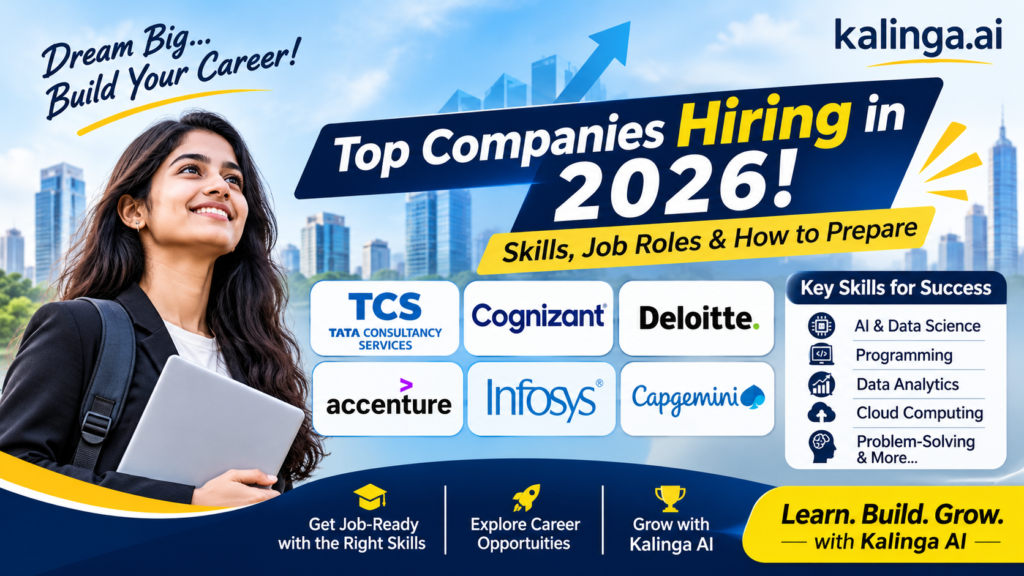
Introduction: Your Dream Career Starts with the Right Skills
The professional world is changing rapidly. Artificial Intelligence (AI), Data Science, Cloud Computing, Software Development and Digital Transformation are reshaping how businesses operate and how organisations recruit talent.
For students, fresh graduates and working professionals, this transformation presents exciting career opportunities. However, getting a job at a reputed company is no longer just about having a degree. Employers increasingly look for candidates who possess practical knowledge, technical expertise, problem-solving abilities and the confidence to apply their skills in real-world situations.
India continues to be an important destination for technology services, consulting, software development and digital innovation. Leading organisations such as Tata Consultancy Services (TCS), Cognizant, Deloitte, Accenture, Infosys and Capgemini offer career opportunities across multiple domains.
As we move through 2026, candidates interested in building a career in the technology industry should focus on one important question:
Are you developing the skills that employers actually need?
Whether you are a college student planning your first job, a recent graduate preparing for campus placements or a professional looking to upgrade your career, understanding industry requirements is the first step towards success.
In this guide, we will explore some leading companies to target in 2026, the job roles they are associated with, the technical skills worth developing and how practical AI-focused training can help you prepare for the professional world.
1. Top Companies to Target for Career Opportunities in 2026
Several established technology and consulting organisations recruit professionals across different technical and business domains. Their requirements vary according to projects, departments, experience levels and locations.
Here are six prominent companies featured in the Kalinga AI career guide.
1. Tata Consultancy Services (TCS)
Tata Consultancy Services is one of India’s leading IT services and consulting organisations. It works with clients across industries, helping them with software development, business transformation, cloud solutions, data management and digital technologies.
For candidates interested in beginning a technology career, TCS offers opportunities across different technical and business functions.
Potential job roles to explore:
- Data Analyst
- Software Engineer
- Software Developer
- IT Consultant
- Business and Technology Analyst
Important skills to develop:
- Python Programming
- SQL
- Data Analytics
- Problem-Solving
- Software Development Fundamentals
Python and SQL are particularly useful for candidates interested in data-related and software development roles.
For example, a Data Analyst should understand how to collect, clean, organise and interpret information. Similarly, a Software Engineer should have a strong understanding of programming concepts, logical thinking and application development.
Candidates should also develop communication skills because working in IT services often involves collaborating with teams and understanding client requirements.
2. Cognizant
Cognizant is a global professional services company that works in technology consulting, digital engineering, data and artificial intelligence, and business transformation.
With organisations increasingly adopting AI-driven solutions, professionals with knowledge of data science, machine learning and modern technology tools can explore relevant career paths.
Potential job roles to explore:
- Data Scientist
- AI/ML Engineer
- Software Engineer
- Data Analyst
- Technology Consultant
Important skills to develop:
- Artificial Intelligence and Machine Learning
- Generative AI
- Python
- Data Science Fundamentals
- Mathematics and Statistics
- Machine Learning Frameworks
For an aspiring AI/ML professional, understanding the fundamentals is essential.
Simply knowing how to use an AI application is not the same as understanding artificial intelligence. Candidates should learn how models work, how data is processed, how algorithms are applied and how AI solutions can address real business problems.
Knowledge of Generative AI is also becoming valuable across different professional fields. Understanding prompt engineering, AI-assisted workflows and practical AI applications can help candidates improve their technical capabilities.
3. Deloitte
Deloitte is a global professional services organisation known for its work in consulting, technology, risk advisory, financial advisory and other business services.
Unlike traditional software development roles, consulting positions often require a combination of analytical thinking, business understanding and communication skills.
Potential job roles to explore:
- Business Analyst
- Technology Consultant
- Data Analyst
- Risk Advisory Professional
- Business Intelligence Analyst
Important skills to develop:
- Data Analytics
- Business Analysis
- Advanced Excel
- Power BI
- SQL
- Communication and Presentation Skills
- Critical Thinking
A Business Analyst plays an important role in understanding business challenges and identifying suitable solutions.
For example, a company may want to improve its customer service process. A Business Analyst studies the existing process, identifies problems, analyses available data and helps recommend improvements.
Therefore, candidates interested in consulting and business analysis should focus not only on technical knowledge but also on understanding how organisations operate.
4. Accenture
Accenture is a global consulting and technology services company working across artificial intelligence, cloud, digital transformation, cybersecurity and technology operations.
The increasing adoption of AI and automation has created demand for professionals who can combine technical knowledge with practical business applications.
Potential job roles to explore:
- Technology Consultant
- Software Engineer
- Data Analyst
- AI and Automation Professional
- Digital Transformation Associate
Important skills to develop:
- Digital Technologies
- Data Analytics
- Artificial Intelligence
- Programming Fundamentals
- Cloud Computing
- Automation Tools
One particularly useful area to explore is automation.
Businesses regularly perform repetitive activities involving data entry, reporting, customer communication and information management. Automation tools can help reduce manual work and improve operational efficiency.
Learning automation alongside programming and AI fundamentals can help candidates understand how technology can solve everyday business challenges.
5. Infosys
Infosys is another major Indian IT services and consulting organisation with a global presence.
It provides services in software development, cloud, data analytics, enterprise solutions and digital transformation.
For students interested in building a technical career, software engineering and technology development are important areas to explore.
Potential job roles to explore:
- Developer
- Systems Engineer
- Software Engineer
- Cloud Professional
- Data Analyst
Important skills to develop:
- Java
- Python
- SQL
- Cloud Computing
- Software Development
- Database Management
Programming languages such as Java and Python are useful foundations for different technology careers.
However, learning a programming language alone is not enough. Candidates should also understand data structures, logical problem-solving, debugging, databases and application development.
Building small applications and completing practical assignments can help convert theoretical knowledge into demonstrable skills.
6. Capgemini
Capgemini is a global business and technology transformation partner offering services in engineering, consulting, technology and digital innovation.
The company works across different sectors and technology domains, creating opportunities for professionals with software development and digital technology skills.
Potential job roles to explore:
- Software Engineer
- Software Developer
- Technology Consultant
- Cloud Engineer
- Data and AI Professional
Important skills to develop:
- Java
- Cloud Computing
- Artificial Intelligence
- Software Development
- Database Technologies
- Analytical Thinking
Candidates interested in software engineering should focus on writing clean code, understanding programming logic and developing applications.
Those interested in cloud and AI-related careers should build their understanding of modern computing infrastructure and intelligent applications.
Important: These roles and skills are career areas to explore, not a confirmation of current vacancies. Actual openings, job titles, experience requirements and recruitment locations may change. Always check the official career websites of the respective companies before applying.
2. What Skills Are Companies Looking for in 2026?
One of the biggest mistakes students make while preparing for employment is concentrating only on completing academic qualifications.
A degree provides a foundation, but employers also want to understand what candidates can actually do.
In 2026, developing a combination of technical and professional skills can help candidates prepare for a wider range of opportunities.
Let’s explore some important skill areas.
A. Artificial Intelligence and Machine Learning
Artificial Intelligence is transforming industries such as healthcare, banking, education, manufacturing, retail and information technology.
Machine Learning, a branch of AI, allows systems to identify patterns in data and make predictions or recommendations.
Candidates interested in this field should develop knowledge of:
- AI fundamentals
- Machine Learning concepts
- Python programming
- Data preprocessing
- Model development
- Practical AI applications
Understanding Generative AI tools and their applications can also help professionals work more efficiently.
B. Data Analytics and Data Science
Data has become an important resource for businesses.
Organisations collect enormous amounts of information, but that information becomes valuable only when it can be analysed and converted into meaningful insights.
Data Analytics helps businesses understand trends, identify problems and make informed decisions.
Important skills include:
- Python
- SQL
- Microsoft Excel
- Data Visualisation
- Power BI
- Statistics
- Data Interpretation
For example, a retail company can analyse customer purchasing patterns to understand which products are performing well and where improvements are required.
Professionals who can interpret data and communicate useful findings can contribute to business decision-making.
C. Programming and Software Development
Software development remains an important career path within the technology industry.
From mobile applications to enterprise software, businesses need professionals who can develop, maintain and improve digital products.
Useful skills include:
- Java
- Python
- C++
- JavaScript
- Database Management
- Data Structures and Algorithms
- Software Testing
Students should not limit themselves to watching programming tutorials. Writing code regularly, solving problems and developing projects are essential parts of learning.
D. Cloud Computing
Cloud computing allows organisations to access computing resources, storage and services over the internet.
Many businesses use cloud platforms to manage applications, databases and digital infrastructure.
Candidates interested in this domain can explore:
- Cloud Computing Fundamentals
- Cloud Architecture
- Virtualisation
- Cloud Security
- Deployment and Infrastructure Management
Knowledge of platforms such as Amazon Web Services, Microsoft Azure and Google Cloud can also be useful, depending on the target role.
E. Communication and Problem-Solving
Technical knowledge is important, but professional success also depends on how effectively you communicate and solve problems.
Employees often work with colleagues, managers and clients from different backgrounds.
Therefore, candidates should develop:
- Verbal and written communication
- Teamwork
- Critical thinking
- Time management
- Adaptability
- Presentation skills
A technically skilled candidate who cannot explain their work clearly may struggle in interviews and professional environments.
The ideal preparation strategy combines technical knowledge with the ability to apply and communicate it.
3. Why Is Practical Training Important for Getting a Job?
Imagine two candidates applying for the same software development position.
Both have completed similar academic qualifications.
However, one candidate has only studied theoretical concepts, while the other has developed applications, worked with programming tools, solved practical problems and completed projects.
Who can demonstrate stronger practical experience during an interview?
In many situations, the candidate who can explain their projects and demonstrate their abilities may have an advantage.
This is why practical learning is important.
Learn Beyond Textbooks
Academic education provides theoretical foundations, but professional work often involves solving problems that do not have straightforward textbook answers.
Practical training helps learners understand how concepts are applied in actual projects.
Work with Industry-Relevant Tools
Technology changes quickly. Candidates should become familiar with tools and platforms relevant to their chosen career paths.
For example:
- Python for programming and data analysis.
- SQL for database queries.
- Power BI for data visualisation.
- AI tools for intelligent workflows.
- Cloud platforms for computing and deployment.
- Automation tools for improving business processes.
The objective is not to learn every available tool. It is to understand which tools are relevant to your career goals and learn to use them effectively.
Build Real Projects
Projects provide an opportunity to demonstrate practical knowledge.
A candidate interested in Data Analytics could develop a sales analysis dashboard.
An aspiring AI professional could build a simple AI-powered application.
A software development student could create a functional website or application.
These projects can become valuable additions to a professional portfolio.
Prepare for Interviews
Technical interviews often evaluate more than theoretical knowledge.
Candidates may be asked to solve programming problems, explain projects, demonstrate analytical thinking or discuss real-world situations.
Mock interviews and structured preparation can help improve confidence and communication.
4. How to Prepare for Campus and Off-Campus Opportunities
Not every student gets the same recruitment opportunities through their college.
Some candidates receive access to campus placements, while others need to explore off-campus recruitment opportunities independently.
Both pathways require preparation.
Step 1: Identify Your Career Goal
Before enrolling in multiple courses, identify the type of role you want to pursue.
For example:
- Interested in programming? Explore Software Development.
- Interested in numbers and business insights? Explore Data Analytics.
- Interested in intelligent technologies? Explore AI and Machine Learning.
- Interested in business strategy? Explore Business Analysis and Technology Consulting.
Choosing a direction helps you avoid wasting time learning unrelated skills.
Step 2: Build Strong Fundamentals
Do not rush into advanced tools without understanding the basics.
Learn programming logic, mathematics where relevant, database concepts and problem-solving fundamentals.
Strong foundations make it easier to understand advanced concepts later.
Step 3: Develop Practical Skills
Once you understand the fundamentals, start working with relevant tools.
Practise regularly and focus on completing small projects.
Consistency is more valuable than collecting certificates without understanding the subject.
Step 4: Create a Professional Portfolio
Your resume tells employers what you claim to know.
Your portfolio can help demonstrate what you have actually created.
Include:
- Academic and personal projects
- Technical skills
- Internships or practical experience
- GitHub repositories, where relevant
- Project descriptions
- Demonstrable outcomes
Make sure every project included in your portfolio is something you can confidently explain.
Step 5: Prepare Your Resume and Interview Skills
Keep your resume clear, relevant and easy to understand.
Highlight skills that match the position you are applying for.
Practise common interview questions, technical assessments and project explanations.
Also prepare a professional LinkedIn profile and keep it updated.
Step 6: Apply Strategically
Do not apply randomly to every available vacancy.
Read the job description carefully and check:
- Required qualifications
- Technical skills
- Experience requirements
- Work location
- Recruitment process
- Application deadlines
Use official company career portals and verified recruitment channels.
Remember that rejection is part of the job search process. Analyse feedback where available, identify skill gaps and improve your preparation.
5. How Kalinga AI Training Helps You Become Job-Ready
Understanding industry requirements is one thing. Developing the skills to meet those requirements is another.
This is where structured, industry-aligned learning can make a difference.
Kalinga AI, based in Bhubaneswar, focuses on helping learners develop relevant technical capabilities through training that emphasises practical knowledge and career preparation.
The learning approach highlighted by Kalinga AI focuses on four important areas.
1. Build In-Demand Skills
The technology industry requires professionals who understand emerging tools and technologies.
Developing knowledge in areas such as Artificial Intelligence, Data Analytics, Embedded Technologies and other relevant technical domains can help learners explore different career pathways.
Instead of focusing only on certificates, students should aim to understand the concepts and develop the ability to apply them.
2. Work on Real Projects and Industry Tools
Practical exposure helps students understand how technology works beyond classroom explanations.
Working on projects allows learners to:
- Apply theoretical concepts.
- Understand real-world challenges.
- Develop technical confidence.
- Practise using relevant tools.
- Build a professional project portfolio.
For students with limited practical experience, project-based learning can be an important part of career preparation.
3. Prepare for Campus and Off-Campus Opportunities
Getting ready for recruitment requires more than technical training.
Students must also understand how recruitment processes work and prepare for assessments and interviews.
Career preparation can include improving communication, understanding job requirements, presenting projects and developing confidence.
Both campus and off-campus opportunities should be considered when planning a career.
4. Start Your Career with Confidence
Confidence comes from preparation.
When you understand your skills, have completed practical projects and can explain your work clearly, you are better equipped to approach interviews and professional opportunities.
Kalinga AI aims to support learners in taking these steps through its industry-aligned training approach.
For course details, training schedules, eligibility and available programmes, prospective learners should contact Kalinga AI directly through its official website.
6. A Practical 90-Day Roadmap to Become Job-Ready
If you are unsure where to begin, a structured 90-day preparation plan can help you organise your learning.
The following roadmap is a suggested self-study framework. The time required will depend on your existing knowledge and chosen career path.
Days 1–30: Build Your Foundation
Your first month should focus on understanding the fundamentals of your chosen domain.
Suggested activities:
- Identify one target career role.
- Understand its required skills.
- Learn basic programming or domain fundamentals.
- Develop logical thinking and problem-solving.
- Practise regularly.
- Explore relevant industry tools.
For example, an aspiring Data Analyst can begin with Excel, basic statistics and SQL fundamentals.
A student interested in AI can begin with Python, mathematics fundamentals and introductory AI concepts.
Goal: Develop a clear understanding of the subject and build a strong foundation.
Days 31–60: Develop Practical Skills
The second month should focus on applying what you have learned.
Suggested activities:
- Work with relevant software and tools.
- Complete practical assignments.
- Analyse real or publicly available datasets.
- Develop small projects.
- Identify mistakes and improve your work.
- Document your learning.
Try to complete at least one meaningful project that demonstrates your understanding.
Goal: Move from theoretical learning to practical application.
Days 61–90: Prepare for Recruitment
The final month should focus on presenting your skills professionally.
Suggested activities:
- Build and improve your resume.
- Organise your project portfolio.
- Practise technical interview questions.
- Participate in mock interviews.
- Improve communication skills.
- Create or update your LinkedIn profile.
- Research suitable job openings.
- Apply to relevant opportunities.
Goal: Become better prepared to demonstrate your skills during recruitment.
Remember, completing a 90-day plan does not guarantee employment. It provides a structured starting point for building the knowledge, practical experience and confidence needed to pursue opportunities.
7. Which Career Path Should You Choose?
Choosing a career can feel confusing when there are so many technologies and job roles available.
The best approach is to consider your interests, existing strengths and long-term goals.
Here is a simple overview:
For students interested in mathematics and analysis:
Explore Data Analytics, Data Science and Business Intelligence.
For students interested in programming:
Explore Software Development, Application Development and Systems Engineering.
For students interested in emerging technologies:
Explore Artificial Intelligence, Machine Learning and Generative AI.
For students interested in business and technology together:
Explore Business Analysis, Technology Consulting and Digital Transformation.
For students interested in infrastructure and systems:
Explore Cloud Computing and related technology domains.
You do not need to master every technology to build a successful career.
Choose one direction, develop relevant skills and build practical experience.
8. Why Choose Skill Development in Bhubaneswar?
Bhubaneswar is an important educational and technology centre in Odisha.
Students from Bhubaneswar, Cuttack and nearby areas increasingly have access to different educational and professional development opportunities.
For local students, skill development programmes can provide a structured way to explore modern technologies without necessarily having to relocate for every learning opportunity.
However, when selecting a training institute, do not make a decision based only on advertisements or placement-related claims.
Consider the following factors:
- Does the training cover relevant technical fundamentals?
- Is practical project work included?
- Are students given exposure to industry-relevant tools?
- Are instructors experienced in the subjects they teach?
- Is career guidance available?
- Are course outcomes and fees clearly explained?
- Can the institute provide verifiable information about its previous student outcomes?
These questions can help you make a more informed decision.
Kalinga AI, located in Bhubaneswar, invites aspiring professionals to explore industry-aligned learning and take the next step towards developing their technical capabilities.
9. Common Mistakes Students Should Avoid While Preparing for IT Jobs
Even motivated students sometimes make mistakes that slow down their career preparation.
Here are some common issues to avoid.
1. Learning too many technologies at once
Trying to learn Python, Java, AI, Cloud Computing, Web Development and Data Science simultaneously can result in superficial knowledge.
Choose a primary career direction and build your skills progressively.
2. Collecting certificates without practical knowledge
Certificates can demonstrate learning, but they cannot replace the ability to solve problems and explain your work.
Focus on understanding concepts and building projects.
3. Ignoring communication skills
Technical knowledge may help you qualify for an interview, but communication plays an important role in explaining your capabilities.
Practise speaking about your projects and technical decisions.
4. Depending only on campus placements
Campus recruitment is one pathway, not the only pathway.
Explore official company career pages, professional networks and verified off-campus opportunities.
5. Believing in guaranteed job promises
Be careful about unrealistic employment guarantees.
Before joining any training programme, understand the actual course structure, placement assistance, eligibility conditions and documented outcomes.
6. Not updating technical knowledge
Technology evolves continuously.
Make regular learning part of your professional routine, especially in areas such as AI, automation and cloud technologies.
Conclusion: Dream Big, Build Your Skills and Prepare for 2026
Getting a job at a reputed organisation is an important goal for many students and aspiring professionals.
Companies such as TCS, Cognizant, Deloitte, Accenture, Infosys and Capgemini offer career opportunities across technology, consulting, software development, analytics and other professional domains.
However, the path towards these opportunities requires more than academic qualifications.
You need relevant technical knowledge, practical experience, problem-solving abilities and the confidence to demonstrate your skills.
The most important thing is to start preparing today.
Identify your career goal. Understand industry requirements. Learn the right technologies. Work on meaningful projects. Improve your communication skills and prepare consistently for recruitment.
If you are looking for an opportunity to develop industry-relevant technical skills, explore the training programmes offered by Kalinga AI.
Your career is built through the skills you develop and the effort you invest in learning.
Dream big. Build your skills. Grow with confidence.
Learn. Build. Grow with Kalinga AI.
Visit: https://kalinga.ai/
Location: Bhubaneswar, Odisha
୨୦୨୬ରେ ନିଯୁକ୍ତି ଦେଉଥିବା ପ୍ରମୁଖ କମ୍ପାନୀଗୁଡ଼ିକ: ଦକ୍ଷତା, ଚାକିରିର ଭୂମିକା ଏବଂ ଏକ ସଫଳ ଆଇଟି (IT) କ୍ୟାରିୟର ପାଇଁ କିପରି ପ୍ରସ୍ତୁତ ହେବେ
ପ୍ରସ୍ତାବନା: ଆପଣଙ୍କ ସ୍ୱପ୍ନର କ୍ୟାରିୟର ସଠିକ୍ ଦକ୍ଷତା ସହିତ ଆରମ୍ଭ ହୁଏ
ବୃତ୍ତିଗତ ଜଗତ ଦ୍ରୁତ ଗତିରେ ପରିବର୍ତ୍ତନ ହେଉଛି। ଆର୍ଟିଫିସିଆଲ୍ ଇଣ୍ଟେଲିଜେନ୍ସ (AI), ଡାଟା ସାଇନ୍ସ, କ୍ଲାଉଡ୍ କମ୍ପ୍ୟୁଟିଂ, ସଫ୍ଟୱେର୍ ଡେଭଲପମେଣ୍ଟ ଏବଂ ଡିଜିଟାଲ୍ ଟ୍ରାନ୍ସଫର୍ମେସନ୍ (ଡିଜିଟାଲ୍ ରୂପାନ୍ତରଣ) ବ୍ୟବସାୟ ପରିଚାଳନା ଏବଂ ସଂସ୍ଥାଗୁଡ଼ିକର ନିଯୁକ୍ତି ପ୍ରକ୍ରିୟାକୁ ସମ୍ପୂର୍ଣ୍ଣ ବଦଳାଇ ଦେଉଛି।
ଛାତ୍ରଛାତ୍ରୀ, ନୂତନ ସ୍ନାତକ ଏବଂ କାର୍ଯ୍ୟରତ ବୃତ୍ତିଜୀବୀମାନଙ୍କ ପାଇଁ, ଏହି ପରିବର୍ତ୍ତନ କ୍ୟାରିୟର ଗଢ଼ିବାର ଅନେକ ରୋମାଞ୍ଚକର ସୁଯୋଗ ଆଣିଦେଇଛି। ତେବେ, ଏକ ପ୍ରତିଷ୍ଠିତ କମ୍ପାନୀରେ ଚାକିରି ପାଇବା ପାଇଁ କେବଳ ଏକ ଡିଗ୍ରୀ ଥାଇପାରିବା ଯଥେଷ୍ଟ ନୁହେଁ। ନିଯୁକ୍ତିଦାତାମାନେ ବର୍ତ୍ତମାନ ଏପରି ପ୍ରାର୍ଥୀଙ୍କୁ ଖୋଜୁଛନ୍ତି ଯେଉଁମାନଙ୍କ ପାଖରେ ବ୍ୟାବହାରିକ ଜ୍ଞାନ, ବୈଷୟିକ ଦକ୍ଷତା, ସମସ୍ୟା ସମାଧାନ କରିବାର କ୍ଷମତା ଏବଂ ବାସ୍ତବ ପରିସ୍ଥିତିରେ ନିଜ ଦକ୍ଷତାକୁ ପ୍ରୟୋଗ କରିବାର ଆତ୍ମବିଶ୍ୱାସ ରହିଛି।
ଭାରତ ବୈଷୟିକ ସେବା, ପରାମର୍ଶ (consulting), ସଫ୍ଟୱେର୍ ଡେଭଲପମେଣ୍ଟ ଏବଂ ଡିଜିଟାଲ୍ ଇନୋଭେସନ୍ (ନବସୃଜନ) କ୍ଷେତ୍ରରେ ଏକ ଗୁରୁତ୍ୱପୂର୍ଣ୍ଣ କେନ୍ଦ୍ର ଭାବରେ ରହିଆସିଛି। ଟାଟା କନସଲଟାନ୍ସି ସର୍ଭିସେସ୍ (TCS), କଗ୍ନିଜାଣ୍ଟ (Cognizant), ଡେଲୋଇଟ୍ (Deloitte), ଆକ୍ସେଞ୍ଚର (Accenture), ଇନଫୋସିସ୍ (Infosys) ଏବଂ କ୍ୟାପଜେମିନି (Capgemini) ଭଳି ଅଗ୍ରଣୀ ସଂସ୍ଥାଗୁଡ଼ିକ ବିଭିନ୍ନ କ୍ଷେତ୍ରରେ କ୍ୟାରିୟର ଗଢ଼ିବାର ସୁଯୋଗ ପ୍ରଦାନ କରନ୍ତି।
୨୦୨୬ ମସିହା ଆଡ଼କୁ ଅଗ୍ରସର ହେବା ସହିତ, ଯେଉଁ ପ୍ରାର୍ଥୀମାନେ ବୈଷୟିକ ଶିଳ୍ପରେ (technology industry) ନିଜର କ୍ୟାରିୟର ଗଢ଼ିବାକୁ ଚାହୁଁଛନ୍ତି, ସେମାନେ ଏକ ଗୁରୁତ୍ୱପୂର୍ଣ୍ଣ ପ୍ରଶ୍ନ ଉପରେ ଧ୍ୟାନ ଦେବା ଉଚିତ୍:
ଆପଣ କ’ଣ ସେହି ଦକ୍ଷତାଗୁଡ଼ିକୁ ବିକାଶ କରୁଛନ୍ତି ଯାହା ନିଯୁକ୍ତିଦାତାମାନଙ୍କ ପାଇଁ ପ୍ରକୃତରେ ଆବଶ୍ୟକ? ଯେଉଁ ପ୍ରାର୍ଥୀମାନେ ପ୍ରଯୁକ୍ତିବିଦ୍ୟା (technology) କ୍ଷେତ୍ରରେ ନିଜର କ୍ୟାରିୟର ଆରମ୍ଭ କରିବାକୁ ଚାହାଁନ୍ତି, ସେମାନଙ୍କ ପାଇଁ TCS ବିଭିନ୍ନ ବୈଷୟିକ ଏବଂ ବ୍ୟବସାୟିକ କ୍ଷେତ୍ରରେ ସୁଯୋଗ ପ୍ରଦାନ କରିଥାଏ।
ଯେଉଁ ପଦବୀଗୁଡ଼ିକ ପାଇଁ ଆପଣ ବିଚାର କରିପାରିବେ:
- ଡାଟା ଆନାଲିଷ୍ଟ (Data Analyst)
- ସଫ୍ଟୱେର୍ ଇଞ୍ଜିନିୟର (Software Engineer)
- ସଫ୍ଟୱେର୍ ଡେଭଲପର (Software Developer)
- ଆଇଟି (IT) କନସଲଟାଣ୍ଟ
- ବିଜନେସ୍ ଆଣ୍ଡ ଟେକ୍ନୋଲୋଜି ଆନାଲିଷ୍ଟ (Business and Technology Analyst)
ବିକାଶ କରିବାକୁ ଥିବା ଗୁରୁତ୍ୱପୂର୍ଣ୍ଣ ଦକ୍ଷତା:
- ପାଇଥନ୍ (Python) ପ୍ରୋଗ୍ରାମିଂ
- SQL
- ଡାଟା ଆନାଲିଟିକ୍ସ (Data Analytics)
- ସମସ୍ୟା ସମାଧାନ (Problem-Solving)
- ସଫ୍ଟୱେର୍ ଡେଭଲପମେଣ୍ଟର ମୌଳିକ ବିଷୟଗୁଡ଼ିକ
ଯେଉଁ ପ୍ରାର୍ଥୀମାନେ ଡାଟା ସମ୍ବନ୍ଧୀୟ କିମ୍ବା ସଫ୍ଟୱେର୍ ଡେଭଲପମେଣ୍ଟ କ୍ଷେତ୍ରରେ କାମ କରିବାକୁ ଆଗ୍ରହୀ, ସେମାନଙ୍କ ପାଇଁ ପାଇଥନ୍ (Python) ଏବଂ SQL ଶିଖିବା ବିଶେଷ ଲାଭଦାୟକ ଅଟେ।
ଉଦାହରଣ ସ୍ୱରୂପ, ଜଣେ ଡାଟା ଆନାଲିଷ୍ଟଙ୍କୁ ତଥ୍ୟ (data) ସଂଗ୍ରହ କରିବା, ତାହାକୁ ଶୁଦ୍ଧ (clean) କରିବା, ସୁବ୍ୟବସ୍ଥିତ କରିବା ଏବଂ ବିଶ୍ଳେଷଣ କରିବା (interpret) ଜାଣିବା ଆବଶ୍ୟକ। ସେହିପରି, ଜଣେ ସଫ୍ଟୱେର୍ ଇଞ୍ଜିନିୟରଙ୍କର ପ୍ରୋଗ୍ରାମିଂ ଧାରଣା, ଯୁକ୍ତିଯୁକ୍ତ ଚିନ୍ତାଧାରା (logical thinking) ଏବଂ ଆପ୍ଲିକେସନ୍ ଡେଭଲପମେଣ୍ଟ ଉପରେ ଭଲ ଜ୍ଞାନ ରହିବା ଆବଶ୍ୟକ।
ପ୍ରାର୍ଥୀମାନଙ୍କର ଯୋଗାଯୋଗ ଦକ୍ଷତା (communication skills) ମଧ୍ୟ ବିକାଶ ହେବା ଆବଶ୍ୟକ, କାରଣ ଆଇଟି (IT) କ୍ଷେତ୍ରରେ କାମ କରିବା ସମୟରେ ଅନେକ ସମୟରେ ଦଳଗତ ଭାବେ କାମ କରିବାକୁ ପଡ଼ିଥାଏ ଏବଂ ଗ୍ରାହକଙ୍କ ଆବଶ୍ୟକତାକୁ ବୁଝିବାକୁ ପଡ଼ିଥାଏ।
୨. କଗ୍ନିଜାଣ୍ଟ (Cognizant)
କଗ୍ନିଜାଣ୍ଟ ହେଉଛି ଏକ ବିଶ୍ୱସ୍ତରୀୟ ବୃତ୍ତିଗତ ସେବା ପ୍ରଦାନକାରୀ କମ୍ପାନୀ, ଯାହା ଟେକ୍ନୋଲୋଜି କନସଲଟିଂ, ଡିଜିଟାଲ୍ ଇଞ୍ଜିନିୟରିଂ, ଡାଟା ଓ କୃତ୍ରିମ ବୁଦ୍ଧିମତ୍ତା (AI), ଏବଂ ବ୍ୟବସାୟିକ ରୂପାନ୍ତରଣ (business transformation) କ୍ଷେତ୍ରରେ କାର୍ଯ୍ୟ କରିଥାଏ।
ବର୍ତ୍ତମାନ ବିଭିନ୍ନ ସଂସ୍ଥା AI-ଆଧାରିତ ସମାଧାନଗୁଡ଼ିକୁ ଅଧିକରୁ ଅଧିକ ଗ୍ରହଣ କରୁଛନ୍ତି। ତେଣୁ, ଯେଉଁମାନଙ୍କ ପାଖରେ ପାରମ୍ପାରିକ ସଫ୍ଟୱେର୍ ବିକାଶ ଭୂମିକାଗୁଡ଼ିକ ଠାରୁ ଭିନ୍ନ, ପରାମର୍ଶଦାତା (consulting) ପଦବୀଗୁଡ଼ିକ ପାଇଁ ପ୍ରାୟତଃ ବିଶ୍ଳେଷଣାତ୍ମକ ଚିନ୍ତାଧାରା, ବ୍ୟବସାୟିକ ବୁଝାମଣା ଏବଂ ଯୋଗାଯୋଗ ଦକ୍ଷତାର ଏକ ମିଶ୍ରଣ ଆବଶ୍ୟକ ହୋଇଥାଏ।
ସମ୍ଭାବ୍ୟ ଚାକିରି ଭୂମିକାଅନୁସନ୍ଧାନ କରିବା ପାଇଁ କ୍ଷେତ୍ରଗୁଡ଼ିକ:
- ବିଜନେସ୍ ଆନାଲିଷ୍ଟ (Business Analyst)
- ଟେକ୍ନୋଲୋଜି କନସଲଟାଣ୍ଟ (Technology Consultant)
- ଡାଟା ଆନାଲିଷ୍ଟ (Data Analyst)
- ରିସ୍କ ଆଡଭାଇଜରୀ ପ୍ରଫେସନାଲ୍ (Risk Advisory Professional)
- ବିଜନେସ୍ ଇଣ୍ଟେଲିଜେନ୍ସ ଆନାଲିଷ୍ଟ (Business Intelligence Analyst)
ବିକାଶ କରିବାକୁ ଥିବା ଗୁରୁତ୍ୱପୂର୍ଣ୍ଣ ଦକ୍ଷତା:
- ଡାଟା ଆନାଲିଟିକ୍ସ (Data Analytics)
- ବିଜନେସ୍ ଆନାଲିସିସ୍ (Business Analysis)
- ଆଡଭାନ୍ସଡ୍ ଏକ୍ସେଲ୍ (Advanced Excel)
- ପାୱାର୍ ବିଆଇ (Power BI)
- ଏସକ୍ୟୁଏଲ୍ (SQL)
- ଯୋଗାଯୋଗ ଏବଂ ଉପସ୍ଥାପନା ଦକ୍ଷତା (Communication and Presentation Skills)
- ଗମ୍ଭୀର ଚିନ୍ତାଧାରା ବା କ୍ରିଟିକାଲ୍ ଥିଙ୍କିଂ (Critical Thinking)
ବ୍ୟବସାୟିକ ଆହ୍ୱାନଗୁଡ଼ିକୁ ବୁଝିବା ଏବଂ ଉପଯୁକ୍ତ ସମାଧାନ ଚିହ୍ନଟ କରିବାରେ ଜଣେ ‘ବିଜନେସ୍ ଆନାଲିଷ୍ଟ’ ଏକ ଗୁରୁତ୍ୱପୂର୍ଣ୍ଣ ଭୂମିକା ଗ୍ରହଣ କରନ୍ତି।
ଉଦାହରଣ ସ୍ୱରୂପ, ଏକ କମ୍ପାନୀ ନିଜର ଗ୍ରାହକ ସେବା ପ୍ରକ୍ରିୟାରେ ଉନ୍ନତି ଆଣିବାକୁ ଚାହିଁପାରେ। ଏଭଳି କ୍ଷେତ୍ରରେ, ଜଣେ ବିଜନେସ୍ ଆନାଲିଷ୍ଟ ବର୍ତ୍ତମାନର ପ୍ରକ୍ରିୟାକୁ ଅଧ୍ୟୟନ କରନ୍ତି, ସମସ୍ୟାଗୁଡ଼ିକୁ ଚିହ୍ନଟ କରନ୍ତି, ଉପଲବ୍ଧ ତଥ୍ୟ (data) ର ବିଶ୍ଳେଷଣ କରନ୍ତି ଏବଂ ଉନ୍ନତି ପାଇଁ ପରାମର୍ଶ ଦେବାରେ ସାହାଯ୍ୟ କରନ୍ତି।
ତେଣୁ, ଯେଉଁ ପ୍ରାର୍ଥୀମାନେ କନସଲଟିଂ (ପରାମର୍ଶଦାତା) ଏବଂ ବିଜନେସ୍ ଆନାଲିସିସ୍ କ୍ଷେତ୍ରରେ ଆଗ୍ରହୀ, ସେମାନେ କେବଳ ବୈଷୟିକ ଜ୍ଞାନ ଉପରେ ନୁହେଁ, ବରଂ ବିଭିନ୍ନ ସଂସ୍ଥା କିପରି କାର୍ଯ୍ୟ କରେ ତାହା ବୁଝିବା ଉପରେ ମଧ୍ୟ ଧ୍ୟାନ ଦେବା ଉଚିତ୍।
4. ଆକ୍ସେଞ୍ଚର୍ (Accenture)
ଆକ୍ସେଞ୍ଚର୍ ହେଉଛି ଏକ ବିଶ୍ୱସ୍ତରୀୟ କନସଲଟିଂ ଏବଂ ଟେକ୍ନୋଲୋଜି ସେବା ପ୍ରଦାନକାରୀ କମ୍ପାନୀ। ଏହା ଆର୍ଟିଫିସିଆଲ୍ ଇଣ୍ଟେଲିଜେନ୍ସ (AI), କ୍ଲାଉଡ୍, ଡିଜିଟାଲ୍ ରୂପାନ୍ତରଣ (Digital Transformation), ସାଇବର ସୁରକ୍ଷା ଏବଂ ଟେକ୍ନୋଲୋଜି ପରିଚାଳନା ଭଳି କ୍ଷେତ୍ରରେ କାର୍ଯ୍ୟ କରେ।
AI ଏବଂ ଅଟୋମେସନ୍ (ସ୍ୱୟଂଚାଳିତ ବ୍ୟବସ୍ଥା) ର ବ୍ୟାପକ ପ୍ରୟୋଗ ଯୋଗୁଁ ଏପରି ବୃତ୍ତିଗତ ବ୍ୟକ୍ତିଙ୍କ ଚାହିଦା ବୃଦ୍ଧି ପାଇଛି, ଯେଉଁମାନେ ବୈଷୟିକ ଜ୍ଞାନକୁ ବ୍ୟବସାୟିକ କ୍ଷେତ୍ରରେ ବ୍ୟାବହାରିକ ଭାବେ ପ୍ରୟୋଗ କରିପ ଅନୁସନ୍ଧାନ କରିବାକୁ ଉପଯୁକ୍ତ ଚାକିରି ପଦବୀଗୁଡ଼ିକ:
- ଡେଭଲପର (Developer)
- ସିଷ୍ଟମ୍ ଇଞ୍ଜିନିୟର (Systems Engineer)
- ସଫ୍ଟୱେର୍ ଇଞ୍ଜିନିୟର (Software Engineer)
- କ୍ଲାଉଡ୍ ପ୍ରଫେସନାଲ୍ (Cloud Professional)
- ଡାଟା ଆନାଲିଷ୍ଟ (Data Analyst)
ବିକାଶ କରିବାକୁ ଗୁରୁତ୍ୱପୂର୍ଣ୍ଣ ଦକ୍ଷତାଗୁଡ଼ିକ:
- Java
- Python
- SQL
- କ୍ଲାଉଡ୍ କମ୍ପ୍ୟୁଟିଂ (Cloud Computing)
- ସଫ୍ଟୱେର୍ ଡେଭଲପମେଣ୍ଟ (Software Development)
- ଡାଟାବେସ୍ ମ୍ୟାନେଜମେଣ୍ଟ (Database Management)
Java ଏବଂ Python ଭଳି ପ୍ରୋଗ୍ରାମିଂ ଭାଷାଗୁଡ଼ିକ ବିଭିନ୍ନ ବୈଷୟିକ କ୍ୟାରିୟର ପାଇଁ ଏକ ଉପଯୁକ୍ତ ଆଧାର ପ୍ରଦାନ କରିଥାଏ।
ତେବେ, କେବଳ ଏକ ପ୍ରୋଗ୍ରାମିଂ ଭାଷା ଶିଖିବା ଯଥେଷ୍ଟ ନୁହେଁ। ପ୍ରାର୍ଥୀମାନଙ୍କୁ ଡାଟା ଷ୍ଟ୍ରକ୍ଚର୍ (data structures), ଯୁକ୍ତିଯୁକ୍ତ ସମସ୍ୟା ସମାଧାନ (logical problem-solving), ଡିବଗିଂ (debugging), ଡାଟାବେସ୍ ଏବଂ ଆପ୍ଲିକେସନ୍ ଡେଭଲପମେଣ୍ଟ ବିଷୟରେ ମଧ୍ୟ ବୁଝିବା ଆବଶ୍ୟକ।
ଛୋଟ ଛୋଟ ଆପ୍ଲିକେସନ୍ ତିଆରି କରିବା ଏବଂ ବ୍ୟାବହାରିକ କାର୍ଯ୍ୟ (practical assignments) ସମ୍ପନ୍ନ କରିବା ଦ୍ୱାରା ତତ୍ତ୍ୱଗତ ଜ୍ଞାନକୁ ବାସ୍ତବ ଦକ୍ଷତାରେ ପରିଣତ କରିବାରେ ସାହାଯ୍ୟ ମିଳିଥାଏ।
୬. କ୍ୟାପଜେମିନି (Capgemini)
କ୍ୟାପଜେମିନି (Capgemini) ହେଉଛି ଏକ ବିଶ୍ୱସ୍ତରୀୟ ବ୍ୟବସାୟ ଏବଂ ପ୍ରଯୁକ୍ତିବିଦ୍ୟା ରୂପାନ୍ତରଣ ସହଯୋଗୀ (partner), ଯାହା ଇଞ୍ଜିନିୟରିଂ, ପରାମର୍ଶ (consulting), ପ୍ରଯୁକ୍ତିବିଦ୍ୟା ଏବଂ ଡିଜିଟାଲ୍ ଇନୋଭେସନ୍ କ୍ଷେତ୍ରରେ ସେବା ପ୍ରଦାନ କରିଥାଏ।
ଏହି କମ୍ପାନୀ ବିଭିନ୍ନ କ୍ଷେତ୍ର ଏବଂ ବୈଷୟିକ କ୍ଷେତ୍ରରେ କାର୍ଯ୍ୟ କରେ, ଯାହା ସଫ୍ଟୱେର୍ ଡେଭଲପମେଣ୍ଟ ଏବଂ ଡିଜିଟାଲ୍ ପ୍ରଯୁକ୍ତିବିଦ୍ୟାରେ ଦକ୍ଷତା ଥିବା ବ୍ୟକ୍ତିଙ୍କ ପାଇଁ ସୁଯୋଗ ସୃଷ୍ଟି କରିଥାଏ।
ଅନୁସନ୍ଧାନ କରିବାକୁ ଉପଯୁକ୍ତ ଚାକିରି ପଦବୀଗୁଡ଼ିକ:
- ସଫ୍ଟୱେର୍ ଇଞ୍ଜିନିୟର (Software Engineer)
- ସଫ୍ଟୱେର୍ ଡେଭଲପର (Software Developer)
- ଟେକ୍ନୋଲୋଜି କନସଲଟାଣ୍ଟ (Technology Consultant)
- କ୍ଲାଉଡ୍ ଇଞ୍ଜିନିୟର (Cloud Engineer)
- ଡାଟା ଏବଂ AI ପ୍ରଫେସନାଲ୍ (Data and AI Professional)
ବିକାଶ କରିବାକୁ ଗୁରୁତ୍ୱପୂର୍ଣ୍ଣ ଦକ୍ଷତାଗୁଡ଼ିକ:
- Java
- କ୍ଲାଉଡ୍ କମ୍ପ୍ୟୁଟିଂ (Cloud Computing)
- ଆର୍ଟିଫିସିଆଲ୍ ଇଣ୍ଟେ ### ଉ. କୃତ୍ରିମ ବୁଦ୍ଧିମତ୍ତା ଏବଂ ମେସିନ୍ ଶିକ୍ଷଣ
କୃତ୍ରିମ ବୁଦ୍ଧିମତ୍ତା ସ୍ୱାସ୍ଥ୍ୟସେବା, ବ୍ୟାଙ୍କିଙ୍ଗ୍, ଶିକ୍ଷା, ଉତ୍ପାଦନ, ଖୁଚୁରା ଏବଂ ସୂଚନା ପ୍ରଯୁକ୍ତିବିଦ୍ୟା ଭଳି ଶିଳ୍ପଗୁଡ଼ିକୁ ପରିବର୍ତ୍ତନ କରୁଛି।
ମେସିନ୍ ଶିକ୍ଷଣ, AI ର ଏକ ଶାଖା, ସିଷ୍ଟମଗୁଡ଼ିକୁ ତଥ୍ୟରେ ପ୍ୟାଟର୍ଣ୍ଣ ଚିହ୍ନଟ କରିବାକୁ ଏବଂ ଭବିଷ୍ୟବାଣୀ କିମ୍ବା ସୁପାରିଶ କରିବାକୁ ଅନୁମତି ଦିଏ।
ଏହି କ୍ଷେତ୍ରରେ ଆଗ୍ରହୀ ପ୍ରାର୍ଥୀମାନେ ଏହି ବିଷୟରେ ଜ୍ଞାନ ବିକାଶ କରିବା ଉଚିତ:AI (କୃତ୍ରିମ ବୁଦ୍ଧିମତ୍ତା) ର ମୌଳିକ ଧାରଣା
ମେସିନ୍ ଲର୍ନିଂ (Machine Learning) ସମ୍ବନ୍ଧୀୟ ଧାରଣା
ପାଇଥନ୍ (Python) ପ୍ରୋଗ୍ରାମିଂ
ଡାଟା ପ୍ରି-ପ୍ରୋସେସିଂ (Data Preprocessing)
ମଡେଲ୍ ବିକାଶ (Model Development)
AI ର ବ୍ୟାବହାରିକ ପ୍ରୟୋଗ
‘ଜେନେରେଟିଭ୍ AI’ (Generative AI) ଟୁଲ୍ ଏବଂ ସେଗୁଡ଼ିକର ପ୍ରୟୋଗ ବିଷୟରେ ଜାଣିବା ଦ୍ୱାରା ବୃତ୍ତିଗତ ବ୍ୟକ୍ତିମାନେ ଅଧିକ ଦକ୍ଷତାର ସହ କାମ କରିପାରିବେ।
B. ଡାଟା ଆନାଲିଟିକ୍ସ ଏବଂ ଡାଟା ସାଇନ୍ସ
ବ୍ୟବସାୟ କ୍ଷେତ୍ରରେ ‘ଡାଟା’ (ତଥ୍ୟ) ଏକ ଗୁରୁତ୍ୱପୂର୍ଣ୍ଣ ସମ୍ବଳ ହୋଇପାରିଛି।
ବିଭିନ୍ନ ସଂସ୍ଥା ବହୁ ପରିମାଣର ତଥ୍ୟ ସଂଗ୍ରହ କରନ୍ତି, କିନ୍ତୁ ସେହି ତଥ୍ୟ କେବଳ ସେତେବେଳେ ମୂଲ୍ୟବାନ ହୁଏ ଯେତେବେଳେ ଏହାର ବିଶ୍ଳେଷଣ କରାଯାଇ ଏଥିରୁ କିଛି ଅର୍ଥପୂର୍ଣ୍ଣ ନିଷ୍କର୍ଷ ବା ସୂଚନା ବାହାର କରାଯାଇପାରେ।
‘ଡାଟା ଆନାଲିଟିକ୍ସ’ (Data Analytics) ବ୍ୟବସାୟଗୁଡ଼ିକୁ ବିଭିନ୍ନ ଧାରା (trends) ବୁଝିବା, ସମସ୍ୟା ଚିହ୍ନଟ କରିବା ଏବଂ ତଥ୍ୟ ଉପରେ ଆଧାରିତ ସଠିକ୍ ନିଷ୍ପତ୍ତି ନେବାରେ ସାହାଯ୍ୟ କରେ।
ଏଥିପାଇଁ ଆବଶ୍ୟକ କିଛି ଗୁରୁତ୍ୱପୂର୍ଣ୍ଣ ଦକ୍ଷତା ହେଲା:
- ପାଇଥନ୍ (Python)
- SQL
- ମାଇକ୍ରୋସଫ୍ଟ ଏକ୍ସେଲ୍ (Microsoft Excel)
- ଡାଟା ଭିଜୁଆଲାଇଜେସନ୍ (Data Visualisation)
- ପାୱାର୍ ବିଆଇ (Power BI)
- ପରିସଂଖ୍ୟାନ (Statistics)
- ଡାଟା ବ୍ୟାଖ୍ୟା (Data Interpretation)
ଉଦାହରଣ ସ୍ୱରୂପ, ଏକ ରିଟେଲ୍ (ଖୁଚୁରା ବିକ୍ରୟ) କମ୍ପାନୀ ଗ୍ରାହକଙ୍କ କିଣାକିଣି ଅଭ୍ୟାସକୁ ବିଶ୍ଳେଷଣ କରି ଜାଣିପାରିବ ଯେ କେଉଁ ଉତ୍ପାଦଗୁଡ଼ିକ ଭଲ ପ୍ରଦର୍ଶନ କରୁଛି ଏବଂ କେଉଁ କ୍ଷେତ୍ରରେ ଉନ୍ନତି ଆବଶ୍ୟକ।
ଯେଉଁ ବୃତ୍ତିଗତ ବ୍ୟକ୍ତିମାନେ ଡାଟାକୁ ବୁଝିପାରନ୍ତି (interpret) ଏବଂ ସେଥିରୁ ମିଳିଥିବା ଉପଯୋଗୀ ତଥ୍ୟକୁ ଅନ୍ୟମାନଙ୍କୁ ଜଣାଇପାରନ୍ତି, ସେମାନେ ବ୍ୟବସାୟିକ ନିଷ୍ପତ୍ତି ନେବା ପ୍ରକ୍ରିୟାରେ ଗୁରୁତ୍ୱପୂର୍ଣ୍ଣ ଯୋଗଦାନ ଦେଇପାରିବେ।
C. ପ୍ରୋଗ୍ରାମିଂ ଏବଂ ସଫ୍ଟୱେର୍ ବିକାଶ
ଟେକ୍ନୋଲୋଜି କ୍ଷେତ୍ରରେ ‘ସଫ୍ଟୱେର୍ ବିକାଶ’ (Software Development) ଏକ ଗୁରୁତ୍ୱପୂର୍ଣ୍ଣ କ୍ୟାରିୟର ପଥ ହୋଇ ରହିଛି।
ମୋବାଇଲ୍ ଆପ୍ଲିକେସନ୍ ଠାରୁ ଆରମ୍ଭ କରି ବଡ଼ ବ୍ୟବସାୟ ତେଣୁ, ପ୍ରାର୍ଥୀମାନେ ନିମ୍ନଲିଖିତ ଦକ୍ଷତାଗୁଡ଼ିକ ବିକାଶ କରିବା ଉଚିତ୍:
- ମୌଖିକ ଏବଂ ଲିଖିତ ଯୋଗାଯୋଗ (Communication)
- ଦଳଗତ କାର୍ଯ୍ୟ (Teamwork)
- ସମାଲୋଚନାତ୍ମକ ଚିନ୍ତାଧାରା (Critical thinking)
- ସମୟ ପରିଚାଳନା (Time management)
- ପରିସ୍ଥିତି ସହ ଖାପ ଖୁଆଇ ଚଳିବାର କ୍ଷମତା (Adaptability)
- ଉପସ୍ଥାପନା ଦକ୍ଷତା (Presentation skills)
ଯଦି ଜଣେ ବୈଷୟିକ ଦକ୍ଷତା ଥିବା ପ୍ରାର୍ଥୀ ନିଜ କାମ ବିଷୟରେ ସ୍ପଷ୍ଟ ଭାବରେ ବୁଝାଇ ପାରନ୍ତି ନାହିଁ, ତେବେ ସେମାନଙ୍କୁ ସାକ୍ଷାତକାର (Interview) ଏବଂ ବୃତ୍ତିଗତ କ୍ଷେତ୍ରରେ ଅସୁବିଧାର ସମ୍ମୁଖୀନ ହେବାକୁ ପଡ଼ିପାରେ।
ଏକ ଉତ୍ତମ ପ୍ରସ୍ତୁତି ରଣନୀତି ହେଉଛି ବୈଷୟିକ ଜ୍ଞାନ ସହିତ, ସେହି ଜ୍ଞାନକୁ ପ୍ରୟୋଗ କରିବା ଏବଂ ଅନ୍ୟମାନଙ୍କୁ ବୁଝାଇବାର କ୍ଷମତାର ସମନ୍ୱୟ।
୩. ଚାକିରି ପାଇବା ପାଇଁ ବ୍ୟାବହାରିକ ପ୍ରଶିକ୍ଷଣ (Practical Training) କାହିଁକି ଗୁରୁତ୍ୱପୂର୍ଣ୍ଣ?
କଳ୍ପନା କରନ୍ତୁ ଯେ ଦୁଇଜଣ ପ୍ରାର୍ଥୀ ଏକ ସଫ୍ଟୱେର୍ ଡେଭଲପମେଣ୍ଟ ପଦବୀ ପାଇଁ ଆବେଦନ କରୁଛନ୍ତି।
ଉଭୟଙ୍କର ଶିକ୍ଷାଗତ ଯୋଗ୍ୟତା ସମାନ ଅଟେ।
ତଥାପି, ଜଣେ ପ୍ରାର୍ଥୀ କେବଳ ତତ୍ତ୍ୱଗତ (Theoretical) ଧାରଣାଗୁଡ଼ିକ ପଢ଼ିଛନ୍ତି, ଯେତେବେଳେ କି ଅନ୍ୟ ଜଣେ ପ୍ରାର୍ଥୀ ଆପ୍ଲିକେସନ୍ ବିକାଶ କରିଛନ୍ତି, ପ୍ରୋଗ୍ରାମିଂ ଟୁଲ୍ଗୁଡ଼ିକ ସହିତ କାମ କରିଛନ୍ତି, ବ୍ୟାବହାରିକ ସମସ୍ୟାର ସମାଧାନ କରିଛନ୍ତି ଏବଂ ବିଭିନ୍ନ ପ୍ରୋଜେକ୍ଟ ସମ୍ପନ୍ନ କରିଛନ୍ତି।
ସାକ୍ଷାତକାର ସମୟରେ କିଏ ଅଧିକ ଦୃଢ଼ ବ୍ୟାବହାରିକ ଅଭିଜ୍ଞତା ପ୍ରଦର୍ଶନ କରିପାରିବେ?
ଅନେକ କ୍ଷେତ୍ରରେ, ଯେଉଁ ପ୍ରାର୍ଥୀ ନିଜର ପ୍ରୋଜେକ୍ଟଗୁଡ଼ିକ ବିଷୟରେ ବୁଝାଇ ପାରନ୍ତି ଏବଂ ନିଜର ଦକ୍ଷତା ପ୍ରଦର୍ଶନ କରିପାରନ୍ତି, ସେମାନଙ୍କର ସୁଯୋଗ ଅଧିକ ଥାଏ।
ଏଥିପାଇଁ ବ୍ୟାବହାରିକ ଶିକ୍ଷା (Practical Learning) ଗୁରୁତ୍ୱପୂର୍ଣ୍ଣ ଅଟେ।
ପାଠ୍ୟପୁସ୍ତକ ବାହାରେ ଶିଖନ୍ତୁ
ଶିକ୍ଷାଗତ ପାଠ୍ୟକ୍ରମ କେବଳ ତତ୍ତ୍ୱଗତ ଭିତ୍ତିଭୂମି ପ୍ରଦାନ କରେ, କିନ୍ତୁ ବୃତ୍ତିଗତ କ୍ଷେତ୍ରରେ ପ୍ରାୟତଃ ଏପରି ସମସ୍ୟାର ସମାଧାନ କରିବାକୁ ପଡ଼େ ଯାହାର ଉତ୍ତର ପାଠ୍ୟପୁସ୍ତକରେ ସିଧାସଳଖ ମିଳିନଥାଏ।
ବ୍ୟାବହାରିକ ପ୍ରଶିକ୍ଷଣ ଶିକ୍ଷାର୍ଥୀମାନଙ୍କୁ ବୁଝିବାରେ ସାହାଯ୍ୟ କରେ ଯେ, ବିଭିନ୍ନ ଧାରଣା ବା ନକଲି ସାକ୍ଷାତକାର (mock interviews) ଏବଂ ସୁସଂଗଠିତ ପ୍ରସ୍ତୁତି ଆତ୍ମବିଶ୍ୱାସ ଓ ଯୋଗାଯୋଗ ଦକ୍ଷତା ବୃଦ୍ଧି କରିବାରେ ସାହାଯ୍ୟ କରିପାରେ।4. କ୍ୟାମ୍ପସ୍ ଏବଂ କ୍ୟାମ୍ପସ୍ ବାହାରେ ସୁଯୋଗ ପାଇଁ କିପରି ପ୍ରସ୍ତୁତ ହେବେ
ପ୍ରତ୍ୟେକ ଛାତ୍ର ସେମାନଙ୍କ କଲେଜ ମାଧ୍ୟମରେ ସମାନ ନିଯୁକ୍ତି ସୁଯୋଗ ପାଆନ୍ତି ନାହିଁ।
କିଛି ପ୍ରାର୍ଥୀ କ୍ୟାମ୍ପସ୍ ପ୍ଲେସମେଣ୍ଟ ପାଇଁ ପ୍ରବେଶ ପାଆନ୍ତି, ଯେତେବେଳେ ଅନ୍ୟମାନେ ନିଜେ କ୍ୟାମ୍ପସ୍ ବାହାରେ ନିଯୁକ୍ତି ସୁଯୋଗ ଅନୁସନ୍ଧାନ କରିବାକୁ ଆବଶ୍ୟକ କରନ୍ତି।
ଉଭୟ ପଥ ପାଇଁ ପ୍ରସ୍ତୁତି ଆବଶ୍ୟକ।
ପଦକ୍ଷେପ 1: ଆପଣଙ୍କର କ୍ୟାରିଅର୍ ଲକ୍ଷ୍ୟ ଚିହ୍ନଟ କରନ୍ତୁ
ଏକାଧିକ ପାଠ୍ୟକ୍ରମରେ ନାମ ଲେଖା ପୂର୍ବରୁ, ଆପଣ କେଉଁ ପ୍ରକାରର ଭୂମିକା ଗ୍ରହଣ କରିବାକୁ ଚାହୁଁଛନ୍ତି ତାହା ଚିହ୍ନଟ କରନ୍ତୁ।
ଉଦାହରଣ ସ୍ୱରୂପ:
- ପ୍ରୋଗ୍ରାମିଂରେ ଆଗ୍ରହୀ? ସଫ୍ଟୱେର୍ ବିକାଶ ଅନୁସନ୍ଧାନ କରନ୍ତୁ।
- ସଂଖ୍ୟା ଏବଂ ବ୍ୟବସାୟିକ ଅନ୍ତର୍ଦୃଷ୍ଟିରେ ଆଗ୍ରହୀ? ଡାଟା ଆନାଲିଟିକ୍ସ ଅନୁସନ୍ଧାନ କରନ୍ତୁ।
- ବୁଦ୍ଧିମାନ ପ୍ରଯୁକ୍ତିବିଦ୍ୟାରେ ଆଗ୍ରହୀ? AI ଏବଂ ମେସିନ୍ ଲର୍ଣ୍ଣିଂ ଅନୁସନ୍ଧାନ କରନ୍ତୁ।
- ବ୍ୟବସାୟ ରଣନୀତିରେ ଆଗ୍ରହୀ? ବ୍ୟବସାୟ ବିଶ୍ଳେଷଣ ଏବଂ ପ୍ରଯୁକ୍ତିବିଦ୍ୟା ପରାମର୍ଶ ଅନୁସନ୍ଧାନ କରନ୍ତୁ।
ଏକ ଦିଗ ବାଛିବା ଆପଣଙ୍କୁ ଅସମ୍ପର୍କିତ ଦକ୍ଷତା ଶିଖିବାରେ ସମୟ ନଷ୍ଟ କରିବାରୁ ରକ୍ଷା କରିଥାଏ।
ପଦକ୍ଷେପ 2: ଦୃଢ଼ ମୌଳିକତା ନିର୍ମାଣ କରନ୍ତୁ
ମୌଳିକତା ନ ବୁଝି ଉନ୍ନତ ଉପକରଣରେ ଶୀଘ୍ର ହୁଅନ୍ତୁ ନାହିଁ।
ପ୍ରୋଗ୍ରାମିଂ ଲଜିକ୍, ପ୍ରାସଙ୍ଗିକ ସ୍ଥାନରେ ଗଣିତ, ଡାଟାବେସ୍ ଧାରଣା ଏବଂ ସମସ୍ୟା ସମାଧାନ ମୌଳିକତା ଶିଖନ୍ତୁ।
ଦୃଢ଼ ମୂଳଦୁଆ ପରେ ଉନ୍ନତ ଧାରଣାଗୁଡ଼ିକୁ ବୁଝିବା ସହଜ କରିଥାଏ।
ପଦକ୍ଷେପ 3: ବ୍ୟବହାରିକ ଦକ୍ଷତା ବିକାଶ କରନ୍ତୁ
ମୌଳିକ ବିଷୟଗୁଡ଼ିକୁ ବୁଝିବା ପରେ, ପ୍ରାସଙ୍ଗିକ ଉପକରଣଗୁଡ଼ିକ ସହିତ କାମ କରିବା ଆରମ୍ଭ କରନ୍ତୁ।
ନିୟମିତ ଅଭ୍ୟାସ କରନ୍ତୁ ଏବଂ ଛୋଟ ପ୍ରକଳ୍ପଗୁଡ଼ିକୁ ସମାପ୍ତ କରିବା ଉପରେ ଧ୍ୟାନ ଦିଅନ୍ତୁ।
ବିଷୟକୁ ନ ବୁଝି ପ୍ରମାଣପତ୍ର ସଂଗ୍ରହ କରିବା ଅପେକ୍ଷା ସ୍ଥିରତା ଅଧିକ ମୂଲ୍ୟବାନ।
ପଦକ୍ଷେପ 4: ଏକ ବୃତ୍ତିଗତ ପୋର୍ଟଫୋଲିଓ ତିଆରି କରନ୍ତୁ
ଆପଣଙ୍କର ଜୀବନାବଳୀ ନିଯୁକ୍ତିଦାତାମାନଙ୍କୁ ଆପଣ ଯାହା ଜାଣନ୍ତି ବୋଲି ଦାବି କରନ୍ତି ତାହା କହିଥାଏ।
ଆପଣଙ୍କର ପୋର୍ଟଫୋଲିଓ ଆପଣ ପ୍ରକୃତରେ କ’ଣ ସୃଷ୍ଟି କରିଛନ୍ତି ତାହା ପ୍ରଦର୍ଶନ କରିବାରେ ସାହାଯ୍ୟ କରିପାରିବ।
ଅନ୍ତର୍ଭୁକ୍ତ କରନ୍ତୁ:
- ଶିକ୍ଷାଗତ ଏବଂ ବ୍ୟକ୍ତିଗତ ପ୍ରକଳ୍ପ
- ବୈଷୟିକ ଦକ୍ଷତା
- ଇଣ୍ଟର୍ନସିପ୍ କିମ୍ବା ବ୍ୟବହାରିକ ଅଭିଜ୍ଞତା
- GitHub ସଂଗ୍ରହାଳୟ, ଯେଉଁଠାରେ ପ୍ରାସଙ୍ଗିକ
- ପ୍ରକଳ୍ପ ବର୍ଣ୍ଣନା
- ପ୍ରଦର୍ଶନଯୋଗ୍ୟ ଫଳାଫଳ
ନିଶ୍ଚିତ କରନ୍ତୁ ଯେ ଆପଣଙ୍କ ପୋର୍ଟଫୋଲିଓରେ ଅନ୍ତର୍ଭୁକ୍ତ ପ୍ରତ୍ୟେକ ପ୍ରକଳ୍ପ ଏପରି କିଛି ଯାହା ଆପଣ ଆତ୍ମବିଶ୍ୱାସର ସହିତ ବ୍ୟାଖ୍ୟା କରିପାରିବେ।
ପଦକ୍ଷେପ 5: ଆପଣଙ୍କର ଜୀବନାବଳୀ ଏବଂ ସାକ୍ଷାତକାର ଦକ୍ଷତା ପ୍ରସ୍ତୁତ କରନ୍ତୁ
ଆପଣଙ୍କର ଜୀବନାବଳୀ ସ୍ପଷ୍ଟ, ପ୍ରାସଙ୍ଗିକ ଏବଂ ବୁଝିବା ସହଜ ରଖନ୍ତୁ।
ଆପଣ ଯେଉଁ ପଦବୀ ପାଇଁ ଆବେଦନ କରୁଛନ୍ତି ତାହା ସହିତ ମେଳ ଖାଉଥିବା ଦକ୍ଷତାକୁ ହାଇଲାଇଟ୍ କରନ୍ତୁ।
ସାଧାରଣ ସାକ୍ଷାତକାର ପ୍ରଶ୍ନ, ବୈଷୟିକ ମୂଲ୍ୟାଙ୍କନ ଏବଂ ପ୍ରକଳ୍ପ ବ୍ୟାଖ୍ୟା ଅଭ୍ୟାସ କରନ୍ତୁ।
ଏକ ବୃତ୍ତିଗତ ଲିଙ୍କଡଇନ୍ ପ୍ରୋଫାଇଲ୍ ମଧ୍ୟ ପ୍ରସ୍ତୁତ କରନ୍ତୁ ଏବଂ ଏହାକୁ ଅପଡେଟ୍ ରଖନ୍ତୁ।
ପଦକ୍ଷେପ 6: ରଣନୀତିକ ଭାବରେ ଆବେଦନ କରନ୍ତୁ
ପ୍ରତ୍ୟେକ ଉପଲବ୍ଧ ଖାଲିସ୍ଥାନ ପାଇଁ ଅନିୟମିତ ଭାବରେ ଆବେଦନ କରନ୍ତୁ ନାହିଁ।
ଚାକିରି ବର୍ଣ୍ଣନାକୁ ଭଲଭାବେ ପଢ଼ନ୍ତୁ ଏବଂ ଯାଞ୍ଚ କରନ୍ତୁ:
- ଆବଶ୍ୟକୀୟ ଯୋଗ୍ୟତା
- ବୈଷୟିକ ଦକ୍ଷତା
- ଅଭିଜ୍ଞତା ଆବଶ୍ୟକତା
- କାର୍ଯ୍ୟ ସ୍ଥାନ
- ନିଯୁକ୍ତି ପ୍ରକ୍ରିୟା
- ଆବେଦନର ଶେଷ ତାରିଖ
ଆଧିକାରିକ କମ୍ପାନୀ କ୍ୟାରିଅର ପୋର୍ଟାଲ୍ ଏବଂ ଯାଞ୍ଚ କରାଯାଇଥିବା ନିଯୁକ୍ତି ଚ୍ୟାନେଲଗୁଡ଼ିକ ବ୍ୟବହାର କରନ୍ତୁ।
ମନେରଖନ୍ତୁ ଯେ ପ୍ରତ୍ୟାଖ୍ୟାନ ଚାକିରି ସନ୍ଧାନ ପ୍ରକ୍ରିୟାର ଏକ ଅଂଶ। ଉପଲବ୍ଧ ସ୍ଥାନରେ ମତାମତ ବିଶ୍ଳେଷଣ କରନ୍ତୁ, ଦକ୍ଷତାର ବ୍ୟବଧାନ ଚିହ୍ନଟ କରନ୍ତୁ ଏବଂ ଆପଣଙ୍କର ପ୍ରସ୍ତୁତିକୁ ଉନ୍ନତ କରନ୍ତୁ।
5. କଳିଙ୍ଗ AI ତାଲିମ ଆପଣଙ୍କୁ ଚାକିରି ପାଇଁ ପ୍ରସ୍ତୁତ ହେବାରେ କିପରି ସାହାଯ୍ୟ କରେ
ଶିଳ୍ପ ଆବଶ୍ୟକତାକୁ ବୁଝିବା ଗୋଟିଏ ଜିନିଷ। ସେହି ଆବଶ୍ୟକତାଗୁଡ଼ିକୁ ପୂରଣ କରିବା ପାଇଁ ଦକ୍ଷତା ବିକାଶ କରିବା ଅନ୍ୟ ଏକ ଜିନିଷ।
ଏହିଠାରେ ସଂରଚିତ, ଶିଳ୍ପ-ସମର୍ଥିତ ଶିକ୍ଷା ଏକ ପାର୍ଥକ୍ୟ ଆଣିପାରେ।
ଭୁବନେଶ୍ୱରରେ ଅବସ୍ଥିତ କଳିଙ୍ଗ AI, ବ୍ୟବହାରିକ ଜ୍ଞାନ ଏବଂ କ୍ୟାରିଅର ପ୍ରସ୍ତୁତିକୁ ଗୁରୁତ୍ୱ ଦେଉଥିବା ତାଲିମ ମାଧ୍ୟମରେ ପ୍ରାସଙ୍ଗିକ ବୈଷୟିକ କ୍ଷମତା ବିକାଶ କରିବାରେ ଶିକ୍ଷାର୍ଥୀମାନଙ୍କୁ ସାହାଯ୍ୟ କରିବା ଉପରେ ଧ୍ୟାନ ଦିଏ।
କଳିଙ୍ଗ AI ଦ୍ୱାରା ହାଇଲାଇଟ୍ କରାଯାଇଥିବା ଶିକ୍ଷଣ ପଦ୍ଧତି ଚାରୋଟି ଗୁରୁତ୍ୱପୂର୍ଣ୍ଣ କ୍ଷେତ୍ର ଉପରେ ଧ୍ୟାନ ଦିଏ।
1. ଆବଶ୍ୟକତା ଅନୁଯାୟୀ ଦକ୍ଷତା ନିର୍ମାଣ କରନ୍ତୁ
ପ୍ରଯୁକ୍ତିବିଦ୍ୟା ଶିଳ୍ପ ପାଇଁ ଉଦୀୟମାନ ଉପକରଣ ଏବଂ ପ୍ରଯୁକ୍ତିବିଦ୍ୟାକୁ ବୁଝିବା ଭଳି ବୃତ୍ତିଗତ ଆବଶ୍ୟକ।
କୃତ୍ରିମ ବୁଦ୍ଧିମତ୍ତା, ଡାଟା ଆନାଲିଟିକ୍ସ, ଏମ୍ବେଡେଡ୍ ଟେକ୍ନୋଲୋଜି ଏବଂ ଅନ୍ୟାନ୍ୟ ପ୍ରାସଙ୍ଗିକ ବୈଷୟିକ କ୍ଷେତ୍ରଗୁଡ଼ିକରେ ଜ୍ଞାନ ବିକାଶ ଶିକ୍ଷାର୍ଥୀମାନଙ୍କୁ ବିଭିନ୍ନ କ୍ୟାରିଅର ପଥ ଅନୁସନ୍ଧାନ କରିବାରେ ସାହାଯ୍ୟ କରିପାରିବ।
କେବଳ ପ୍ରମାଣପତ୍ର ଉପରେ ଧ୍ୟାନ ଦେବା ପରିବର୍ତ୍ତେ, ଛାତ୍ରଛାତ୍ରୀମାନେ ଧାରଣାଗୁଡ଼ିକୁ ବୁଝିବା ଏବଂ ସେଗୁଡ଼ିକୁ ପ୍ରୟୋଗ କରିବାର କ୍ଷମତା ବିକାଶ କରିବା ଲକ୍ଷ୍ୟ ରଖିବା ଉଚିତ।
2. ପ୍ରକୃତ ପ୍ରକଳ୍ପ ଏବଂ ଶିଳ୍ପ ଉପକରଣଗୁଡ଼ିକ ଉପରେ କାର୍ଯ୍ୟ କରନ୍ତୁ
ବ୍ୟବହାରିକ ଏକ୍ସପୋଜର ଛାତ୍ରଛାତ୍ରୀମାନଙ୍କୁ ବୁଝିବାରେ ସାହାଯ୍ୟ କରେ ଯେ କିପରି ପ୍ରଯୁକ୍ତିବିଦ୍ୟା ଶ୍ରେଣୀଗୃହ ବ୍ୟାଖ୍ୟା ବାହାରେ କାର୍ଯ୍ୟ କରେ।
ପ୍ରୋଜେକ୍ଟଗୁଡ଼ିକରେ କାର୍ଯ୍ୟ କରିବା ଶିକ୍ଷାର୍ଥୀମାନଙ୍କୁ ଅନୁମତି ଦିଏ:
- ତାତ୍ତ୍ୱିକ ଧାରଣାଗୁଡ଼ିକୁ ପ୍ରୟୋଗ କରନ୍ତୁ।
- ବାସ୍ତବ-ବିଶ୍ୱ ଚ୍ୟାଲେଞ୍ଜଗୁଡ଼ିକୁ ବୁଝିବା।
- ବୈଷୟିକ ଆତ୍ମବିଶ୍ୱାସ ବିକାଶ କରନ୍ତୁ।
- ପ୍ରାସଙ୍ଗିକ ଉପକରଣଗୁଡ଼ିକ ବ୍ୟବହାର କରି ଅଭ୍ୟାସ କରନ୍ତୁ।
- ଏକ ବୃତ୍ତିଗତ ପ୍ରକଳ୍ପ ପୋର୍ଟଫୋଲିଓ ନିର୍ମାଣ କରନ୍ତୁ।
ସୀମିତ ବ୍ୟବହାରିକ ଅଭିଜ୍ଞତା ଥିବା ଛାତ୍ରଛାତ୍ରୀମାନଙ୍କ ପାଇଁ, ପ୍ରକଳ୍ପ-ଆଧାରିତ ଶିକ୍ଷା କ୍ୟାରିଅର ପ୍ରସ୍ତୁତିର ଏକ ଗୁରୁତ୍ୱପୂର୍ଣ୍ଣ ଅଂଶ ହୋଇପାରେ।
3. କ୍ୟାମ୍ପସ୍ ଏବଂ କ୍ୟାମ୍ପସ୍ ବାହାରେ ସୁଯୋଗ ପାଇଁ ପ୍ରସ୍ତୁତ ହୁଅନ୍ତୁ
ନିଯୁକ୍ତି ପାଇଁ ପ୍ରସ୍ତୁତ ହେବା ପାଇଁ ବୈଷୟିକ ତାଲିମ ଅପେକ୍ଷା ଅଧିକ ଆବଶ୍ୟକ।
ଛାତ୍ରଛାତ୍ରୀମାନଙ୍କୁ ନିଯୁକ୍ତି ପ୍ରକ୍ରିୟାଗୁଡ଼ିକ କିପରି କାର୍ଯ୍ୟ କରେ ତାହା ମଧ୍ୟ ବୁଝିବା ଏବଂ ମୂଲ୍ୟାୟନ ଏବଂ ସାକ୍ଷାତକାର ପାଇଁ ପ୍ରସ୍ତୁତ ହେବା ଆବଶ୍ୟକ।
କ୍ୟାରିଅର ପ୍ରସ୍ତୁତିରେ ଯୋଗାଯୋଗରେ ଉନ୍ନତି, ଚାକିରି ଆବଶ୍ୟକତାକୁ ବୁଝିବା, ପ୍ରକଳ୍ପ ଉପସ୍ଥାପନା ଏବଂ ଆତ୍ମବିଶ୍ୱାସ ବିକାଶ ଅନ୍ତର୍ଭୁକ୍ତ ହୋଇପାରେ।
କ୍ୟାରିଅର ଯୋଜନା କରିବା ସମୟରେ କ୍ୟାମ୍ପସ୍ ଏବଂ କ୍ୟାମ୍ପସ୍ ବାହାରେ ଉଭୟ ସୁଯୋଗକୁ ବିଚାର କରାଯିବା ଉଚିତ।
4. ଆତ୍ମବିଶ୍ୱାସ ସହିତ ଆପଣଙ୍କର କ୍ୟାରିଅର ଆରମ୍ଭ କରନ୍ତୁ
ପ୍ରସ୍ତୁତିରୁ ଆତ୍ମବିଶ୍ୱାସ ଆସିଥାଏ।
ଯେତେବେଳେ ଆପଣ ଆପଣଙ୍କର ଦକ୍ଷତା ବୁଝିପାରନ୍ତି, ବ୍ୟବହାରିକ ପ୍ରକଳ୍ପଗୁଡ଼ିକ ସମାପ୍ତ କରିଥାଆନ୍ତି ଏବଂ ଆପଣଙ୍କର କାମକୁ ସ୍ପଷ୍ଟ ଭାବରେ ବ୍ୟାଖ୍ୟା କରିପାରିବେ, ସେତେବେଳେ ଆପଣ ସାକ୍ଷାତକାର ଏବଂ ବୃତ୍ତିଗତ ସୁଯୋଗଗୁଡ଼ିକୁ ପାଇବା ପାଇଁ ଭଲ ଭାବରେ ସଜ୍ଜିତ ହୋଇପାରନ୍ତି।
କଳିଙ୍ଗ AI ଏହାର ଶିଳ୍ପ-ସମର୍ଥିତ ତାଲିମ ପଦ୍ଧତି ମାଧ୍ୟମରେ ଏହି ପଦକ୍ଷେପଗୁଡ଼ିକ ନେବାରେ ଶିକ୍ଷାର୍ଥୀମାନଙ୍କୁ ସମର୍ଥନ କରିବା ଲକ୍ଷ୍ୟ ରଖିଛି।
ପାଠ୍ୟକ୍ରମ ବିବରଣୀ, ତାଲିମ ସମୟସୂଚୀ, ଯୋଗ୍ୟତା ଏବଂ ଉପଲବ୍ଧ କାର୍ଯ୍ୟକ୍ରମ ପାଇଁ, ସମ୍ଭାବ୍ୟ ଶିକ୍ଷାର୍ଥୀମାନେ କ’ଣ କରିବେ?Kalinga AI ସହିତ ସିଧାସଳଖ ସେମାନଙ୍କର ଅଫିସିଆଲ୍ ୱେବସାଇଟ୍ ମାଧ୍ୟମରେ ଯୋଗାଯୋଗ କରନ୍ତୁ।
୬. ଚାକିରି ପାଇଁ ପ୍ରସ୍ତୁତ ହେବା ନିମନ୍ତେ ଏକ ବ୍ୟାବହାରିକ ୯୦-ଦିନିଆ ରୋଡମ୍ୟାପ୍ (କାର୍ଯ୍ୟ ଯୋଜନା)
ଯଦି ଆପଣ କେଉଁଠାରୁ ଆରମ୍ଭ କରିବେ ତାହା ନେଇ ଦ୍ୱନ୍ଦ୍ୱରେ ଅଛନ୍ତି, ତେବେ ଏକ ସୁସଂଗଠିତ ୯୦-ଦିନିଆ ପ୍ରସ୍ତୁତି ଯୋଜନା ଆପଣଙ୍କ ଶିକ୍ଷା ପ୍ରକ୍ରିୟାକୁ ସୁବ୍ୟବସ୍ଥିତ କରିବାରେ ସାହାଯ୍ୟ କରିପାରେ।
ନିମ୍ନରେ ଦିଆଯାଇଥିବା ରୋଡମ୍ୟାପ୍ ହେଉଛି ନିଜସ୍ୱ ଅଧ୍ୟୟନ (self-study) ପାଇଁ ଏକ ପ୍ରସ୍ତାବିତ ଢାଞ୍ଚା। ଏଥିପାଇଁ କେତେ ସମୟ ଲାଗିବ, ତାହା ଆପଣଙ୍କର ବର୍ତ୍ତମାନର ଜ୍ଞାନ ଏବଂ ଆପଣ ବାଛିଥିବା କ୍ୟାରିୟର କ୍ଷେତ୍ର ଉପରେ ନିର୍ଭର କରେ।
ଦିନ ୧–୩୦: ନିଜର ମୂଳଦୁଆ (Foundation) ଗଢ଼ନ୍ତୁ
ପ୍ରଥମ ମାସରେ ଆପଣଙ୍କର ଲକ୍ଷ୍ୟ ଆପଣ ବାଛିଥିବା କ୍ଷେତ୍ରର ମୌଳିକ ବିଷୟଗୁଡ଼ିକୁ ବୁଝିବା ଉପରେ ରହିବା ଉଚିତ୍।
ପ୍ରସ୍ତାବିତ କାର୍ଯ୍ୟଗୁଡ଼ିକ:
- ନିଜ ପାଇଁ ଏକ ନିର୍ଦ୍ଦିଷ୍ଟ କ୍ୟାରିୟର ଭୂମିକା (role) ଚୟନ କରନ୍ତୁ।
- ସେହି ଭୂମିକା ପାଇଁ ଆବଶ୍ୟକ ଦକ୍ଷତାଗୁଡ଼ିକ ବିଷୟରେ ଜାଣନ୍ତୁ।
- ମୌଳିକ ପ୍ରୋଗ୍ରାମିଂ କିମ୍ବା ସମ୍ପୃକ୍ତ କ୍ଷେତ୍ରର ମୌଳିକ ଧାରଣାଗୁଡ଼ିକ ଶିଖନ୍ତୁ।
- ଯୁକ୍ତିଯୁକ୍ତ ଚିନ୍ତାଧାରା (logical thinking) ଏବଂ ସମସ୍ୟା ସମାଧାନ କ୍ଷମତାର ବିକାଶ କରନ୍ତୁ।
- ନିୟମିତ ଅଭ୍ୟାସ କରନ୍ତୁ।
- ସମ୍ପୃକ୍ତ କ୍ଷେତ୍ରରେ ବ୍ୟବହୃତ ହେଉଥିବା ବିଭିନ୍ନ ଟୁଲ୍ (tools) ବିଷୟରେ ଜାଣନ୍ତୁ।
ଉଦାହରଣ ସ୍ୱରୂପ, ଯଦି ଆପଣ ଜଣେ ‘ଡାଟା ଆନାଲିଷ୍ଟ’ (Data Analyst) ହେବାକୁ ଚାହୁଁଛନ୍ତି, ତେବେ ଆପଣ Excel, ମୌଳିକ ପରିସଂଖ୍ୟାନ (statistics) ଏବଂ SQL ର ମୌଳିକ ଧାରଣାଗୁଡ଼ିକରୁ ଆରମ୍ଭ କରିପାରିବେ।
ଯଦି ଆପଣ AI (କୃତ୍ରିମ ବୁଦ୍ଧିମତ୍ତା) କ୍ଷେତ୍ରରେ ଆଗ୍ରହୀ, ତେବେ ଆପଣ Python, ଗଣିତର ମୌଳିକ ବିଷୟ ଏବଂ AI ସମ୍ବନ୍ଧୀୟ ପ୍ରାରମ୍ଭିକ ଧାରଣାଗୁଡ଼ିକରୁ ଆରମ୍ଭ କରିପାରିବେ।
ଲକ୍ଷ୍ୟ: ବିଷୟବସ୍ତୁ ବିଷୟରେ ଏକ ସ୍ପଷ୍ଟ ବୁଝାମଣା ସୃଷ୍ଟି କରିବା ଏବଂ ଏକ ଦୃଢ଼ ମୂଳଦୁଆ ଗଢ଼ିବା।
ଦିନ ୩୧–୬୦: ବ୍ୟାବହାରିକ ଦକ୍ଷତା (Practical Skills) ବିକାଶ କରନ୍ତୁ
ଦ୍ୱିତୀୟ ମା ଏହା ବିଭିନ୍ନ ସୁଯୋଗକୁ ହାସଲ କରିବା ପାଇଁ ଆବଶ୍ୟକ ଜ୍ଞାନ, ବ୍ୟାବହାରିକ ଅଭିଜ୍ଞତା ଏବଂ ଆତ୍ମବିଶ୍ୱାସ ଗଢ଼ି ତୋଳିବା ନିମନ୍ତେ ଏକ ସୁସଂଗଠିତ ଆରମ୍ଭ ପ୍ରଦାନ କରିଥାଏ।
୭. ଆପଣ କେଉଁ କ୍ୟାରିୟର ପଥ ବାଛିବା ଉଚିତ୍?
ଯେତେବେଳେ ଅନେକ ପ୍ରକାରର ପ୍ରଯୁକ୍ତିବିଦ୍ୟା (technologies) ଏବଂ ଚାକିରି କ୍ଷେତ୍ର ଉପଲବ୍ଧ ଥାଏ, ସେତେବେଳେ କ୍ୟାରିୟର ବାଛିବା କ୍ଷେତ୍ରରେ ଦ୍ୱନ୍ଦ୍ୱ ସୃଷ୍ଟି ହୋଇପାରେ।
ଏଥିପାଇଁ ସର୍ବୋତ୍ତମ ଉପାୟ ହେଲା ନିଜର ଆଗ୍ରହ, ବର୍ତ୍ତମାନର ଦକ୍ଷତା ଏବଂ ଦୀର୍ଘକାଳୀନ ଲକ୍ଷ୍ୟଗୁଡ଼ିକୁ ବିଚାରକୁ ନେବା।
ଏଠାରେ ଏକ ସରଳ ଧାରଣା ଦିଆଗଲା:
ଗଣିତ ଏବଂ ବିଶ୍ଳେଷଣ (analysis) ରେ ଆଗ୍ରହ ଥିବା ଛାତ୍ରଛାତ୍ରୀଙ୍କ ପାଇଁ:
ଡାଟା ଆନାଲିଟିକ୍ସ (Data Analytics), ଡାଟା ସାଇନ୍ସ (Data Science) ଏବଂ ବିଜନେସ୍ ଇଣ୍ଟେଲିଜେନ୍ସ (Business Intelligence) ବିଷୟରେ ଅନୁସନ୍ଧାନ କରନ୍ତୁ।
ପ୍ରୋଗ୍ରାମିଂରେ ଆଗ୍ରହ ଥିବା ଛାତ୍ରଛାତ୍ରୀଙ୍କ ପାଇଁ:
ସଫ୍ଟୱେର୍ ଡେଭଲପମେଣ୍ଟ (Software Development), ଆପ୍ଲିକେସନ୍ ଡେଭଲପମେଣ୍ଟ (Application Development) ଏବଂ ସିଷ୍ଟମ୍ ଇଞ୍ଜିନିୟରିଂ (Systems Engineering) ବିଷୟରେ ଅନୁସନ୍ଧାନ କରନ୍ତୁ।
ଉଦୀୟମାନ ପ୍ରଯୁକ୍ତିବିଦ୍ୟା (emerging technologies) ରେ ଆଗ୍ରହ ଥିବା ଛାତ୍ରଛାତ୍ରୀଙ୍କ ପାଇଁ:
ଆର୍ଟିଫିସିଆଲ୍ ଇଣ୍ଟେଲିଜେନ୍ସ (Artificial Intelligence), ମେସିନ୍ ଲର୍ନିଂ (Machine Learning) ଏବଂ ଜେନେରେଟିଭ୍ ଏଆଇ (Generative AI) ବିଷୟରେ ଅନୁସନ୍ଧାନ କରନ୍ତୁ।
ବ୍ୟବସାୟ ଏବଂ ପ୍ରଯୁକ୍ତିବିଦ୍ୟା ଉଭୟରେ ଆଗ୍ରହ ଥିବା ଛାତ୍ରଛାତ୍ରୀଙ୍କ ପାଇଁ:
ବିଜନେସ୍ ଆନାଲିସିସ୍ (Business Analysis), ଟେକ୍ନୋଲୋଜି କନସଲ୍ଟିଂ (Technology Consulting) ଏବଂ ଡିଜିଟାଲ୍ ଟ୍ରାନ୍ସଫର୍ମେସନ୍ (Digital Transformation) ବିଷୟରେ ଅନୁସନ୍ଧାନ କରନ୍ତୁ।
ଇନଫ୍ରାଷ୍ଟ୍ରକଚର୍ (infrastructure) ଏବଂ ସିଷ୍ଟମ୍ରେ ଆଗ୍ରହ ଥିବା ଛାତ୍ରଛାତ୍ରୀଙ୍କ ପାଇଁ:
କ୍ଲାଉଡ୍ କମ୍ପ୍ୟୁଟିଂ (Cloud Computing) ଏବଂ ଏହା ସହ ଜଡ଼ିତ ଅନ୍ୟାନ୍ୟ ବୈଷୟିକ କ୍ଷେତ୍ରଗୁଡ଼ିକ ବିଷୟରେ ଅନୁସନ୍ଧାନ କରନ୍ତୁ।
ଏକ ସଫଳ କ୍ୟାରିୟର ଗଢ଼ିବା ପାଇଁ ଆପଣଙ୍କୁ ପ୍ରତ୍ୟେକ ପ୍ରଯୁକ୍ତିବିଦ୍ୟାରେ ପାରଙ୍ଗମ ହେବାର ଆବଶ୍ୟକତା ନାହିଁ।
ଯେକୌଣସି ଗୋଟିଏ ଦିଗ ବାଛନ୍ତୁ, ସେହି ଅନୁଯାୟୀ ଦକ୍ଷତା ବିକାଶ କରନ୍ତୁ ଏବଂ ବ ## ୯. ଆଇଟି (IT) ଚାକିରି ପାଇଁ ପ୍ରସ୍ତୁତି ସମୟରେ ଛାତ୍ରଛାତ୍ରୀମାନେ ଏଡ଼ାଇବା ଉଚିତ୍ ହୋଇଥିବା ସାଧାରଣ ଭୁଲ୍ଗୁଡ଼ିକ
ଉତ୍ସାହୀ ଛାତ୍ରଛାତ୍ରୀମାନେ ମଧ୍ୟ ବେଳେବେଳେ ଏପରି କିଛି ଭୁଲ୍ କରିବସନ୍ତି, ଯାହା ସେମାନଙ୍କ କ୍ୟାରିୟର ପ୍ରସ୍ତୁତିକୁ ଧୀମା କରିଦିଏ।
ଏଠାରେ କିଛି ସାଧାରଣ ଭୁଲ୍ ବିଷୟରେ କୁହାଯାଇଛି, ଯାହାକୁ ଏଡ଼ାଇବା ଆବଶ୍ୟକ।
୧. ଏକାସାଙ୍ଗରେ ଅନେକ ପ୍ରଯୁକ୍ତିବିଦ୍ୟା (Technologies) ଶିଖିବା
ଏକା ସମୟରେ Python, Java, AI, Cloud Computing, Web Development ଏବଂ Data Science ଶିଖିବାକୁ ଚେଷ୍ଟା କଲେ, କେବଳ ଉପରଠାଉରିଆ ଜ୍ଞାନ ହିଁ ମିଳିଥାଏ।
ତେଣୁ, ନିଜ କ୍ୟାରିୟର ପାଇଁ ଏକ ମୁଖ୍ୟ ଦିଗ ବାଛନ୍ତୁ ଏବଂ କ୍ରମଶଃ ନିଜ ଦକ୍ଷତା ବୃଦ୍ଧି କରନ୍ତୁ।
୨. ସଂଗ୍ରହ କରିବାବ୍ୟାବହାରିକ ଜ୍ଞାନ ବିନା କେବଳ ପ୍ରମାଣପତ୍ର (Certificates)
ପ୍ରମାଣପତ୍ରଗୁଡ଼ିକ ଆପଣଙ୍କ ଶିକ୍ଷାଗତ ଯୋଗ୍ୟତାକୁ ଦର୍ଶାଇପାରେ, କିନ୍ତୁ ସେଗୁଡ଼ିକ ସମସ୍ୟା ସମାଧାନ କରିବାର କ୍ଷମତା କିମ୍ବା ନିଜ କାର୍ଯ୍ୟକୁ ବୁଝାଇବାର ଦକ୍ଷତାର ବିକଳ୍ପ ହୋଇପାରିବ ନାହିଁ।
ତେଣୁ, ବିଭିନ୍ନ ଧାରଣା (concepts) ବୁଝିବା ଏବଂ ପ୍ରୋଜେକ୍ଟ (projects) ପ୍ରସ୍ତୁତ କରିବା ଉପରେ ଧ୍ୟାନ ଦିଅନ୍ତୁ।
୩. ଯୋଗାଯୋଗ ଦକ୍ଷତା (Communication Skills) କୁ ଅଣଦେଖା କରିବା
ଯାନ୍ତ୍ରିକ ଜ୍ଞାନ (Technical knowledge) ଆପଣଙ୍କୁ ସାକ୍ଷାତକାର (interview) ପାଇଁ ଯୋଗ୍ୟ ବିବେଚିତ ହେବାରେ ସାହାଯ୍ୟ କରିପାରେ, କିନ୍ତୁ ଆପଣଙ୍କ ଦକ୍ଷତାକୁ ଅନ୍ୟମାନଙ୍କ ଆଗରେ ଉପସ୍ଥାପନ କରିବା ପାଇଁ ଯୋଗାଯୋଗ ଦକ୍ଷତା ଏକ ଗୁରୁତ୍ୱପୂର୍ଣ୍ଣ ଭୂମିକା ଗ୍ରହଣ କରେ।
ନିଜର ପ୍ରୋଜେକ୍ଟ ଏବଂ ନେଇଥିବା ବୈଷୟିକ ନିଷ୍ପତ୍ତିଗୁଡ଼ିକ ବିଷୟରେ କହିବା ପାଇଁ ଅଭ୍ୟାସ କରନ୍ତୁ।
୪. କେବଳ କ୍ୟାମ୍ପସ୍ ପ୍ଲେସମେଣ୍ଟ (Campus Placements) ଉପରେ ନିର୍ଭର କରିବା
କ୍ୟାମ୍ପସ୍ ନିଯୁକ୍ତି ଏକ ମାଧ୍ୟମ ହୋଇପାରେ, କିନ୍ତୁ ଏହା ଏକମାତ୍ର ମାଧ୍ୟମ ନୁହେଁ।
କମ୍ପାନୀଗୁଡ଼ିକର ଅଫିସିଆଲ୍ କ୍ୟାରିୟର ପେଜ୍, ପ୍ରଫେସନଲ୍ ନେଟୱାର୍କ ଏବଂ ଅନ୍ୟାନ୍ୟ ବିଶ୍ୱସ୍ତ ଉତ୍ସ ମାଧ୍ୟମରେ ଉପଲବ୍ଧ ସୁଯୋଗଗୁଡ଼ିକ ବିଷୟରେ ଅନୁସନ୍ଧାନ କରନ୍ତୁ।
୫. ନିଶ୍ଚିତ ଚାକିରି ମିଳିବାର ପ୍ରତିଶ୍ରୁତି ଉପରେ ବିଶ୍ୱାସ କରିବା
ଅବାସ୍ତବ ଚାକିରି ପ୍ରତିଶ୍ରୁତି କିମ୍ବା ଗ୍ୟାରେଣ୍ଟି ପ୍ରତି ସତର୍କ ରୁହନ୍ତୁ।
ଯେକୌଣସି ପ୍ରଶିକ୍ଷଣ କାର୍ଯ୍ୟକ୍ରମରେ ଯୋଗଦେବା ପୂର୍ବରୁ, ସେହି ପାଠ୍ୟକ୍ରମର ସଂରଚନା, ପ୍ଲେସମେଣ୍ଟ ସହାୟତା, ଯୋଗ୍ୟତା ମାନଦଣ୍ଡ ଏବଂ ପୂର୍ବରୁ ମିଳିଥିବା ଫଳାଫଳ ବିଷୟରେ ଭଲଭାବେ ଜାଣିନିଅନ୍ତୁ।
୬. ବୈଷୟିକ ଜ୍ଞାନକୁ ଅପଡେଟ୍ ନ କରିବା
ଟେକ୍ନୋଲୋଜି ବା ପ୍ରଯୁକ୍ତିବିଦ୍ୟା କ୍ରମାଗତ ଭାବରେ ପରିବର୍ତ୍ତନ ହେଉଛି।
ତେଣୁ, ନିୟମିତ ଭାବରେ ନୂଆ ଜିନିଷ ଶିଖିବାକୁ ନିଜର ବୃତ୍ତିଗତ ଜୀବନର ଏକ ଅଂଶ କରନ୍ତୁ; ବିଶେଷକରି AI (କୃତ୍ରିମ ବୁଦ୍ଧିମତ୍ତା), ଅଟୋମେସନ୍ ଏବଂ କ୍ଲାଉଡ୍ ଟେକ୍ନୋଲୋଜି ଭଳି କ୍ଷେତ୍ରରେ।
ଉପସଂହାର: ବଡ଼ ସ୍ୱପ୍ନ ଦେଖନ୍ତୁ, ନିଜ ଦକ୍ଷତା ବିକାଶ କରନ୍ତୁ ଏବଂ