AI ଚିପ୍ ରପ୍ତାନି ନିୟନ୍ତ୍ରଣ ବ୍ୟାଖ୍ୟା କରାଯାଇଛି: କ୍ଲାଉଡ୍ ପ୍ରଦାନକାରୀ, Nvidia ଏବଂ ଚୀନ୍ ପାଇଁ ନୂତନ US ରିମୋଟ୍-ଆକ୍ସେସ୍ ନିୟମ କ’ଣ ଅର୍ଥ କରେ
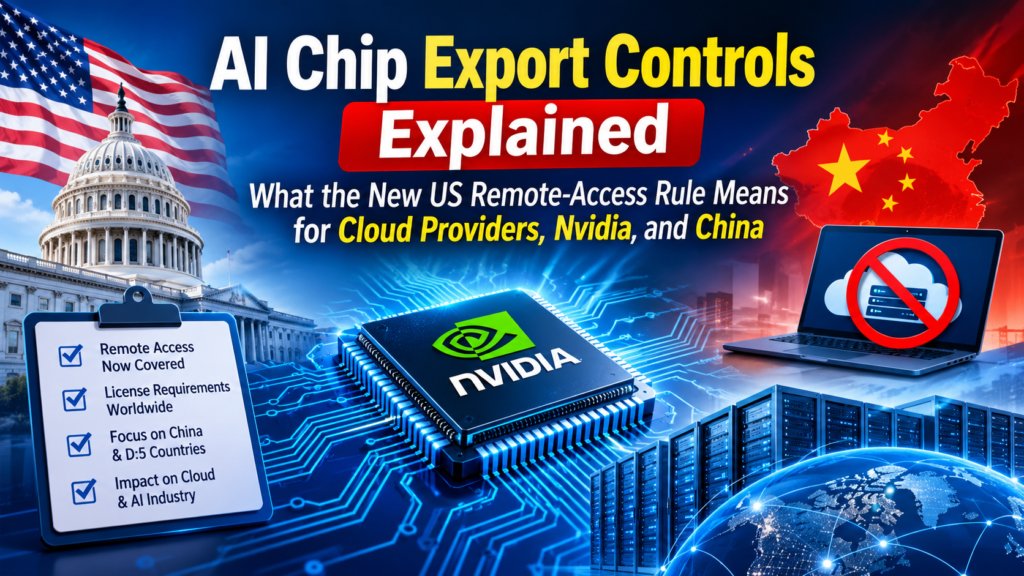
The short answer: A new Commerce Department interim rule stretches AI chip export controls beyond physical shipments to cover remote access. Companies now need a license to send advanced AI chips and servers to any data center in the world that could supply compute to firms in China or other restricted countries.
That matters because, until now, a company blocked from buying top-end Nvidia hardware could often rent that same hardware by the hour from a facility in another country. Regulators now treat that rental as the same national-security problem as a sale. If you run a cloud business, build AI products, advise investors, or follow US–China tech policy, this guide explains what changed, who is affected, what is exempt, and what to watch next.
Source note: this guide draws on TechCrunch’s November 16, 2026 report by Ram Iyer, which summarizes the interim rule, plus supporting coverage. Rule text and effective dates can change, so confirm specifics against the official document and with counsel before making compliance decisions. This is not legal advice.
Key Facts at a Glance
- What changed: The Commerce Department’s interim rule requires licenses to export, reexport, or transfer AI chips and servers to data centers anywhere in the world if they may provide compute to companies in China or other restricted countries.
- Who it targets: Companies based in the D:5 group of embargoed countries, which includes China, Russia, Iran, North Korea, and 18 others.
- Size threshold: Data centers or networks able to supply more than 12 million total processing performance (TPP), roughly the maximum computing power of about 750 Nvidia H100 or H200 chips.
- Middlemen: Indirect access through go-betweens or brokers is covered.
- Deadline: Existing data center operators providing covered services must get licenses within 90 days of the rule taking effect.
- New country-level licensing: Chip exports, reexports, and transfers to Malaysia, Singapore, Indonesia, Thailand, and Brazil now need licenses, with a carve-out for chips destined for US-based companies.
- Policy reversal: The rule rescinds the Biden administration’s January 2025 AI Diffusion Rule.
What Are AI Chip Export Controls?
Definition: AI chip export controls are US government licensing requirements that restrict the sale, transfer, or re-export of advanced AI semiconductors, and the servers built around them, to certain countries and companies.
Expansion: The stated goal is national security. Advanced accelerators from companies like Nvidia and AMD are the engines used to train and run frontier AI models. The interim rule itself argues that access to that much computing power can support military and intelligence activities that threaten US interests. The Commerce Department, through its Bureau of Industry and Security (BIS), writes and enforces the rules and decides who needs a license.
How the first generation of controls worked
The first generation of AI chip export controls focused on hardware. Chipmakers needed a license to ship advanced AI chips to companies based in, or owned by any business in, the D:5 group of countries. The logic was simple: if the chip never arrives, the model never gets trained on it.
Why renting compute became the loophole
A chip does not have to cross a border to be useful to someone on the other side of it. A company can rent GPU capacity in a third country and use it over the internet. That is the gap the new rule targets.
Regulators had already been tightening around it. A July 2026 report noted that Commerce clarified that licenses apply to China-headquartered companies even when their overseas subsidiaries are the buyers. TechCrunch also cited a Reuters report that Chinese AI companies were rushing to secure computing capacity overseas amid fears of tighter US restrictions.
What Does the New Interim Rule Actually Do?
How does the interim rule change AI chip export controls?
It extends them from where chips are shipped to what the chips can be used to provide. Previously the question was “who is buying this hardware?” Now it is also “who could end up using the compute this hardware delivers?” Exporters must get a data center export license when the facility may supply compute to companies in China or other restricted countries.
The rule is framed as a “logical extension of existing controls.” Its stated aim is to undermine the ability of companies headquartered in countries of concern to use advanced US semiconductors to train advanced AI models.
Which companies does it target?
The remote-access provisions focus on companies based in the D:5 countries. Existing rules already required licenses for shipping AI chips to companies based in, or owned by any business in, that group. The new rule applies the same logic to remote access to AI compute, so a D:5-based company can’t simply rent what it can’t buy.
How large does a data center have to be to be covered?
The rule applies to data centers or any network that can supply more than 12 million TPP. TPP is the metric US export rules use to measure computing power. TechCrunch’s translation: roughly 750 H100 or H200 chips at maximum capacity. Small deployments fall below the line, but a mid-sized AI cluster does not.
Does the rule cover brokers and resellers?
Yes. The rule explicitly covers indirect access through go-betweens or brokers. Exporters and data center operators must monitor their customers’ ownership structures and activities to make sure the customers are not run by anyone from the D:5 group. In practice, “know your customer” now means knowing your customer’s owners and their customers.
Before and After: How the Rules Compare
The table below shows how the interim rule changes the practical scope of AI chip export controls, based on TechCrunch’s reporting.
| Area | Before | Under the new interim rule |
|---|---|---|
| Chip sales to D:5-based companies | License required | License still required |
| Remote compute from third-country data centers | The gap regulators describe | License required if the facility may supply compute to D:5-based or other restricted companies |
| Brokers and resellers | Not a named focus | Explicitly covered |
| Facility size | Not defined | Applies at more than 12 million TPP |
| Malaysia, Singapore, Indonesia, Thailand, Brazil | No country-level licensing for these destinations | New license requirements for advanced chip exports, reexports, and transfers (not for chips destined for US-based companies) |
| Existing data center operators | No remote-access licensing | 90 days to obtain licenses once the rule takes effect |
| AI Diffusion Rule (Jan. 2025) | Announced for scrapping in May 2025 | Formally rescinded |
Which Countries Face New Licensing Requirements?
Short answer: Malaysia, Singapore, Indonesia, Thailand, and Brazil.
The Commerce Department said these five “present a higher-than-normal risk of diversion,” meaning chips shipped there could end up serving restricted buyers. This is notable because AI chip export controls now reach countries that are not themselves under embargo. For these five, the license requirement does not apply to chips destined for companies based in the United States. That exception protects US cloud and AI firms building capacity abroad while keeping pressure on intermediaries who might serve D:5 customers.
What Is Exempt?
Two limits are worth knowing. First, the license requirements for the five diversion-risk countries do not apply to chips destined for US-based companies. Second, the rule does not apply to commercial recommendation systems, such as those used in e-commerce or social media. Even broad AI chip export controls leave room for ordinary consumer-internet workloads, so the focus stays on compute capable of training or running advanced models.
Why Is the US Acting Now?
Timing matters here. The announcement landed days after Nvidia co-founder Jensen Huang resigned amid a scandal involving an alleged Chinese spy linked to one of the chipmaker’s customers. TechCrunch reports the US government has reportedly wanted to place that customer, Megaspeed, on a special entity list, believing it bought thousands of Nvidia chips to provide compute to Chinese businesses and sidestep restrictions. These are reported allegations, not established findings.
There is also a legislative backdrop. The House passed the bipartisan Remote Access Security Act in January 2026, which would give BIS explicit authority over remote access to export-controlled items. And the new rule replaces the Biden-era AI Diffusion Rule, which sought country-level caps on advanced chip exports. The Trump administration argued that framework burdened US companies and allies. The interim rule swaps broad country tiers for targeted, customer-focused controls, so AI chip export controls are now organized around who uses compute rather than just where it sits.
Who Is Affected and What Should They Do?
| Group | Likely impact | First move |
|---|---|---|
| Cloud and data center operators | Need licenses if they may supply compute to restricted companies; 90-day clock for existing operators | Inventory capacity against the 12 million TPP threshold |
| Chipmakers and server vendors | Licensing for shipments to covered data centers and to the five named countries | Review distributor and integrator customer lists |
| GPU resellers and brokers | Directly covered | Map every downstream customer |
| AI startups renting compute | Providers may tighten onboarding and ask about ownership | Prepare ownership documentation |
| Chinese AI firms | Less access to overseas capacity | Expect higher costs and fewer workarounds |
A practical compliance checklist
If you operate or sell into data centers, treat AI chip export controls as a customer-due-diligence issue, not just a shipping one:
- Measure capacity: Determine whether any single facility or network exceeds 12 million TPP.
- Screen ownership: Check whether customers are headquartered in, or owned by entities from, D:5 countries.
- Trace the chain: Identify brokers, resellers, and go-betweens between you and the end user.
- Review geography: Flag exposure in Malaysia, Singapore, Indonesia, Thailand, and Brazil.
- Set a license calendar: Existing operators have 90 days from the effective date.
- Document everything: Ownership checks and monitoring records are the evidence regulators will ask for.
Will the New Rule Work?
Supporters argue AI chip export controls only work if they follow the compute. If hardware sales are restricted but rental is not, the restriction is easy to sidestep. Closing the remote-access door also raises costs and complexity for restricted buyers.
Critics make three counterpoints. Demand for compute does not disappear; it can be relocated or hidden behind intermediaries. Enforcement is hard, since masking a customer’s true owner is easier than verifying it. And Nvidia’s leadership has previously argued that denying China access to US chips can push Chinese developers toward domestic alternatives and reduce US firms’ global market share.
The fair answer is that the effectiveness of AI chip export controls will depend on enforcement quality and how operators interpret “may provide compute.” Because this is an interim rule, details may still shift.
What to Watch Next
- Effective date and licensing guidance: The 90-day window for existing operators begins when the rule takes effect.
- Entity listings: Whether Megaspeed or similar companies are formally restricted.
- Allied alignment: Whether other governments adopt matching remote-access restrictions.
- Market reaction: Whether Chinese firms secure capacity through other routes, and how Southeast Asian data center markets respond.
- Legislation: Whether Congress finishes work on remote-access authority, which could harden the policy beyond an interim rule.
Frequently Asked Questions
Are AI chip export controls new?
No. The US has restricted advanced AI chip shipments to China and other restricted destinations for years. What is new is extending them to remote access to AI compute, and adding licensing for chips going to five higher-risk countries.
Do AI chip export controls apply to cloud customers?
Directly, the license obligations fall on exporters, reexporters, and data center operators, not ordinary customers. But operators must monitor customer ownership and activities, so customers will likely face more screening and documentation requests.
What is the D:5 group?
It is the US group of embargoed countries that includes China, Russia, Iran, North Korea, and 18 others. The remote-access rule targets companies based in these countries.
How big is 12 million TPP?
TechCrunch estimates it roughly equals the maximum computing power of about 750 Nvidia H100 or H200 chips.
Does the rule affect e-commerce or social media recommendation engines?
No. Commercial recommendation systems like those used in e-commerce or social media are excluded.
How long do existing data center operators have to comply?
Existing operators providing covered services must obtain licenses within 90 days of the rule coming into effect.
Does this replace the AI Diffusion Rule?
Yes. The rule rescinds the January 2025 AI Diffusion Rule and replaces country-level limits with controls tied to specific customers and compute scale.
The Bottom Line
AI chip export controls have moved from “where do the chips go?” to “who can use the compute?” The interim rule closes the rental loophole by requiring licenses for data centers that may serve restricted companies, adding oversight of brokers, and putting five diversion-risk countries under new licensing. Whether it succeeds depends on enforcement and on how quickly restricted buyers adapt. For operators, the practical takeaway is to know your customers’ owners, measure your capacity, and start license planning early.
AI ଚିପ୍ ରପ୍ତାନି ନିୟନ୍ତ୍ରଣ ବ୍ୟାଖ୍ୟା କରାଯାଇଛି: କ୍ଲାଉଡ୍ ପ୍ରଦାନକାରୀ, Nvidia ଏବଂ ଚୀନ୍ ପାଇଁ ନୂତନ US ରିମୋଟ୍-ଆକ୍ସେସ୍ ନିୟମ କ’ଣ ଅର୍ଥ କରେ
ସଂକ୍ଷିପ୍ତ ଉତ୍ତର: ଏକ ନୂତନ ବାଣିଜ୍ୟ ବିଭାଗ ମଧ୍ୟବର୍ତ୍ତୀକାଳୀନ ନିୟମ ଦୂରବର୍ତ୍ତୀ ପ୍ରବେଶକୁ କଭର କରିବା ପାଇଁ AI ଚିପ୍ ରପ୍ତାନି ନିୟନ୍ତ୍ରଣକୁ ଭୌତିକ ପଠାଣ ବ୍ୟତୀତ ବିସ୍ତାର କରିଛି। କମ୍ପାନୀଗୁଡ଼ିକୁ ବର୍ତ୍ତମାନ ବିଶ୍ୱର ଯେକୌଣସି ଡାଟା ସେଣ୍ଟରକୁ ଉନ୍ନତ AI ଚିପ୍ସ ଏବଂ ସର୍ଭର ପଠାଇବା ପାଇଁ ଏକ ଲାଇସେନ୍ସ ଆବଶ୍ୟକ ଯାହା ଚୀନ୍ କିମ୍ବା ଅନ୍ୟ ପ୍ରତିବନ୍ଧିତ ଦେଶଗୁଡ଼ିକର ଫାର୍ମଗୁଡ଼ିକୁ କମ୍ପ୍ୟୁଟ୍ ଯୋଗାଇପାରିବ।
ଏହା ଗୁରୁତ୍ୱପୂର୍ଣ୍ଣ କାରଣ, ବର୍ତ୍ତମାନ ପର୍ଯ୍ୟନ୍ତ, ଟପ୍-ଏଣ୍ଡ Nvidia ହାର୍ଡୱେର୍ କିଣିବାରୁ ଅବରୋଧ କରାଯାଇଥିବା ଏକ କମ୍ପାନୀ ପ୍ରାୟତଃ ଅନ୍ୟ ଦେଶର ଏକ ସୁବିଧାରୁ ଘଣ୍ଟା ପ୍ରତି ସେହି ହାର୍ଡୱେର୍ ଭଡ଼ା ନେଇପାରୁଥିଲା। ନିୟାମକମାନେ ବର୍ତ୍ତମାନ ସେହି ଭଡ଼ାକୁ ବିକ୍ରୟ ପରି ସମାନ ଜାତୀୟ-ସୁରକ୍ଷା ସମସ୍ୟା ଭାବରେ ବ୍ୟବହାର କରନ୍ତି। ଯଦି ଆପଣ ଏକ କ୍ଲାଉଡ୍ ବ୍ୟବସାୟ ଚଲାନ୍ତି, AI ଉତ୍ପାଦ ନିର୍ମାଣ କରନ୍ତି, ନିବେଶକମାନଙ୍କୁ ପରାମର୍ଶ ଦିଅନ୍ତି, କିମ୍ବା US-China ଟେକ୍ ନୀତି ଅନୁସରଣ କରନ୍ତି, ତେବେ ଏହି ମାର୍ଗଦର୍ଶିକା ବ୍ୟାଖ୍ୟା କରେ ଯେ କ’ଣ ପରିବର୍ତ୍ତନ ହୋଇଛି, କିଏ ପ୍ରଭାବିତ ହୋଇଛି, କ’ଣ ଛାଡ ପାଇଛି, ଏବଂ ପରବର୍ତ୍ତୀ ସମୟରେ କ’ଣ ଦେଖିବାକୁ ହେବ।
ଉତ୍ସ ଟିପ୍ପଣୀ: ଏହି ମାର୍ଗଦର୍ଶିକା ରାମ୍ ଆୟରଙ୍କ ଦ୍ୱାରା ନଭେମ୍ବର 16, 2026 ରେ ଟେକ୍କ୍ରଞ୍ଚର ରିପୋର୍ଟ ଉପରେ ଆଧାରିତ, ଯାହା ଅନ୍ତରୀଣ ନିୟମର ସାରାଂଶ ପ୍ରଦାନ କରେ, ଏବଂ ସମର୍ଥନ କଭରେଜ୍। ନିୟମ ପାଠ୍ୟ ଏବଂ କାର୍ଯ୍ୟକାରୀ ତାରିଖ ପରିବର୍ତ୍ତନ ହୋଇପାରେ, ତେଣୁ ଅନୁପାଳନ ନିଷ୍ପତ୍ତି ନେବା ପୂର୍ବରୁ ସରକାରୀ ଡକ୍ୟୁମେଣ୍ଟ ବିରୁଦ୍ଧରେ ଏବଂ ପରାମର୍ଶଦାତାଙ୍କ ସହିତ ନିର୍ଦ୍ଦିଷ୍ଟ ସୂଚନା ନିଶ୍ଚିତ କରନ୍ତୁ। ଏହା ଆଇନଗତ ପରାମର୍ଶ ନୁହେଁ।
ଏକ ନଜରରେ ମୁଖ୍ୟ ତଥ୍ୟ
କଣ ପରିବର୍ତ୍ତନ ହୋଇଛି: ବାଣିଜ୍ୟ ବିଭାଗର ମଧ୍ୟବର୍ତ୍ତୀକାଳୀନ ନିୟମ ଅନୁଯାୟୀ ଚୀନ୍ କିମ୍ବା ଅନ୍ୟ ପ୍ରତିବନ୍ଧିତ ଦେଶର କମ୍ପାନୀଗୁଡ଼ିକୁ କମ୍ପ୍ୟୁଟ୍ ପ୍ରଦାନ କଲେ ବିଶ୍ୱର ଯେକୌଣସି ସ୍ଥାନରେ AI ଚିପ୍ସ ଏବଂ ସର୍ଭରଗୁଡ଼ିକୁ ଡାଟା ସେଣ୍ଟରଗୁଡ଼ିକୁ ରପ୍ତାନି, ପୁନଃରପ୍ତାନି କିମ୍ବା ସ୍ଥାନାନ୍ତର କରିବା ପାଇଁ ଲାଇସେନ୍ସ ଆବଶ୍ୟକ।
ଏହା କାହାକୁ ଟାର୍ଗେଟ କରେ: ନିଷେଧିତ ଦେଶଗୁଡ଼ିକର D:5 ଗୋଷ୍ଠୀରେ ଆଧାରିତ କମ୍ପାନୀଗୁଡ଼ିକ, ଯେଉଁଥିରେ ଚୀନ୍, ରୁଷିଆ, ଇରାନ, ଉତ୍ତର କୋରିଆ ଏବଂ ଅନ୍ୟ 18 ଜଣ ଅନ୍ତର୍ଭୁକ୍ତ।
ଆକାର ସୀମା: ଡାଟା ସେଣ୍ଟର କିମ୍ବା ନେଟୱାର୍କଗୁଡ଼ିକ 12 ନିୟୁତରୁ ଅଧିକ ମୋଟ ପ୍ରକ୍ରିୟାକରଣ କାର୍ଯ୍ୟଦକ୍ଷତା (TPP) ଯୋଗାଇବାକୁ ସକ୍ଷମ, ପ୍ରାୟ 750 Nvidia H100 କିମ୍ବା H200 ଚିପ୍ସର ସର୍ବାଧିକ କମ୍ପ୍ୟୁଟିଂ ଶକ୍ତି।
ମଧ୍ୟସ୍ଥି: ଗୋ-ବିଚୀନ କିମ୍ବା ଦଲାଲମାନଙ୍କ ମାଧ୍ୟମରେ ପରୋକ୍ଷ ପ୍ରବେଶ କଭର କରାଯାଇଛି।
ଅବଧି: କଭର ହୋଇଥିବା ସେବା ପ୍ରଦାନ କରୁଥିବା ବିଦ୍ୟମାନ ଡାଟା ସେଣ୍ଟର ଅପରେଟରମାନଙ୍କୁ ନିୟମ କାର୍ଯ୍ୟକାରୀ ହେବାର 90 ଦିନ ମଧ୍ୟରେ ଲାଇସେନ୍ସ ପାଇବାକୁ ପଡିବ।
ନୂତନ ଦେଶ-ସ୍ତରୀୟ ଲାଇସେନ୍ସିଂ: ମାଲେସିଆ, ସିଙ୍ଗାପୁର, ଇଣ୍ଡୋନେସିଆ, ଥାଇଲ୍ୟାଣ୍ଡ ଏବଂ ବ୍ରାଜିଲକୁ ଚିପ୍ ରପ୍ତାନି, ପୁନଃରପ୍ତାନି ଏବଂ ସ୍ଥାନାନ୍ତର ପାଇଁ ଏବେ ଲାଇସେନ୍ସ ଆବଶ୍ୟକ, ଆମେରିକା-ଭିତ୍ତିକ କମ୍ପାନୀଗୁଡ଼ିକ ପାଇଁ ଉଦ୍ଦିଷ୍ଟ ଚିପ୍ସ ପାଇଁ ଏକ କାରଭ-ଆଉଟ୍ ସହିତ।
ନୀତି ପରିବର୍ତ୍ତନ: ଏହି ନିୟମ ବାଇଡେନ୍ ପ୍ରଶାସନର ଜାନୁଆରୀ 2025 AI ପ୍ରସାରଣ ନିୟମକୁ ବାତିଲ କରେ।
AI ଚିପ୍ ରପ୍ତାନି ନିୟନ୍ତ୍ରଣଗୁଡ଼ିକ କ’ଣ?
ପରିଭାଷା: AI ଚିପ୍ ରପ୍ତାନି ନିୟନ୍ତ୍ରଣଗୁଡ଼ିକ ହେଉଛି ଆମେରିକୀୟ ସରକାରଙ୍କ ଲାଇସେନ୍ସିଂ ଆବଶ୍ୟକତା ଯାହା ଉନ୍ନତ AI ସେମିକଣ୍ଡକ୍ଟର ଏବଂ ସେମାନଙ୍କ ଚାରିପାଖରେ ନିର୍ମିତ ସର୍ଭରଗୁଡ଼ିକର ବିକ୍ରୟ, ସ୍ଥାନାନ୍ତର କିମ୍ବା ପୁନଃରପ୍ତାନିକୁ କିଛି ଦେଶ ଏବଂ କମ୍ପାନୀଗୁଡ଼ିକୁ ସୀମିତ କରେ।
ପ୍ରସାରଣ: ଉଲ୍ଲେଖିତ ଲକ୍ଷ୍ୟ ହେଉଛି ଜାତୀୟ ସୁରକ୍ଷା। Nvidia ଏବଂ AMD ଭଳି କମ୍ପାନୀଗୁଡ଼ିକରୁ ଉନ୍ନତ ତ୍ୱରାନ୍ୱିତକାରୀ ହେଉଛି ସୀମାନ୍ତ AI ମଡେଲଗୁଡ଼ିକୁ ତାଲିମ ଏବଂ ଚଲାଇବା ପାଇଁ ବ୍ୟବହୃତ ଇଞ୍ଜିନ। ମଧ୍ୟବର୍ତ୍ତୀକାଳୀନ ନିୟମ ନିଜେ ଯୁକ୍ତି ଦିଏ ଯେ ଏତେ କମ୍ପ୍ୟୁଟିଂ ଶକ୍ତିର ପ୍ରବେଶ ଆମେରିକାର ସ୍ୱାର୍ଥକୁ ବିପଦରେ ପକାଇଥିବା ସାମରିକ ଏବଂ ଗୁପ୍ତଚର କାର୍ଯ୍ୟକଳାପକୁ ସମର୍ଥନ କରିପାରିବ। ବାଣିଜ୍ୟ ବିଭାଗ, ଏହାର ଶିଳ୍ପ ଏବଂ ସୁରକ୍ଷା ବ୍ୟୁରୋ (BIS) ମାଧ୍ୟମରେ, ନିୟମ ଲେଖେ ଏବଂ ଲାଗୁ କରେ ଏବଂ ନିଷ୍ପତ୍ତି ନିଏ ଯେ କାହାକୁ ଲାଇସେନ୍ସ ଆବଶ୍ୟକ।
ନିୟନ୍ତ୍ରଣର ପ୍ରଥମ ପିଢ଼ି କିପରି କାମ କଲା
ଏଆଇ ଚିପ୍ ରପ୍ତାନି ନିୟନ୍ତ୍ରଣଗୁଡ଼ିକର ପ୍ରଥମ ପିଢ଼ି ହାର୍ଡୱେର୍ ଉପରେ କେନ୍ଦ୍ରିତ। ଚିପ୍ ନିର୍ମାତାମାନଙ୍କୁ D:5 ଗୋଷ୍ଠୀ ଦେଶଗୁଡ଼ିକରେ ଥିବା କିମ୍ବା ସେମାନଙ୍କ ମାଲିକାନାରେ ଥିବା କୌଣସି ବ୍ୟବସାୟିକ କମ୍ପାନୀଗୁଡ଼ିକୁ ଉନ୍ନତ AI ଚିପ୍ସ ପଠାଇବା ପାଇଁ ଲାଇସେନ୍ସ ଆବଶ୍ୟକ ଥିଲା। ଯୁକ୍ତି ସରଳ ଥିଲା: ଯଦି ଚିପ୍ କେବେ ଆସିନଥାଏ, ତେବେ ମଡେଲ୍ କେବେ ଏଥିରେ ତାଲିମ ପାଏ ନାହିଁ।
କାହିଁକି ଭଡ଼ା କମ୍ପ୍ୟୁଟ୍ ଏକ ଫାଙ୍କ ହୋଇଗଲା
ଏକ ଚିପ୍ ଅନ୍ୟ ପାର୍ଶ୍ୱରେ କାହା ପାଇଁ ଉପଯୋଗୀ ହେବା ପାଇଁ ସୀମା ପାର କରିବାକୁ ପଡ଼େ ନାହିଁ। ଏକ କମ୍ପାନୀ ତୃତୀୟ ଦେଶରେ GPU କ୍ଷମତା ଭଡ଼ା ନେଇପାରିବ ଏବଂ ଏହାକୁ ଇଣ୍ଟରନେଟ୍ ମାଧ୍ୟମରେ ବ୍ୟବହାର କରିପାରିବ। ନୂତନ ନିୟମ ଲକ୍ଷ୍ୟ ରଖିଥିବା ଏହି ବ୍ୟବଧାନ।
ନିୟାମକମାନେ ପୂର୍ବରୁ ଏହାକୁ କଡ଼ାକଡ଼ି କରୁଥିଲେ। ଜୁଲାଇ 2026 ର ଏକ ରିପୋର୍ଟରେ ଉଲ୍ଲେଖ କରାଯାଇଛି ଯେ ବାଣିଜ୍ୟ ସ୍ପଷ୍ଟ କରିଛି ଯେ ଚୀନ୍-ମୁଖ୍ୟାଳୟ କମ୍ପାନୀଗୁଡ଼ିକ ପାଇଁ ଲାଇସେନ୍ସ ପ୍ରଯୁଜ୍ୟ ହେଲେ ମଧ୍ୟ ସେମାନଙ୍କର ବିଦେଶୀ ସହାୟକ କମ୍ପାନୀଗୁଡ଼ିକ କ୍ରେତା। ଟେକ୍ କ୍ରଞ୍ଚ୍ ଏକ ରଏଟର୍ସ ରିପୋର୍ଟକୁ ମଧ୍ୟ ଉଦ୍ଧୃତ କରିଛି ଯେ କଠୋର ଆମେରିକାର କଟକଣାର ଭୟ ମଧ୍ୟରେ ଚୀନ୍ AI କମ୍ପାନୀଗୁଡ଼ିକ ବିଦେଶରେ କମ୍ପ୍ୟୁଟିଂ କ୍ଷମତା ସୁରକ୍ଷିତ କରିବାକୁ ଧାଇଁ ଆସୁଥିଲେ।
ନୂତନ ଅନ୍ତରୀଣ ନିୟମ ପ୍ରକୃତରେ କ’ଣ କରେ?
ଅନ୍ତରୀଣ ନିୟମ AI ଚିପ୍ ରପ୍ତାନି ନିୟନ୍ତ୍ରଣକୁ କିପରି ପରିବର୍ତ୍ତନ କରେ?
ଏହା ଚିପ୍ସ ପଠାଯିବା ସ୍ଥାନରୁ ଚିପ୍ସ ପ୍ରଦାନ କରିବା ପାଇଁ ବ୍ୟବହାର କରାଯାଇପାରୁଥିବା ସ୍ଥାନ ପର୍ଯ୍ୟନ୍ତ ସେମାନଙ୍କୁ ବିସ୍ତାର କରେ। ପୂର୍ବରୁ ପ୍ରଶ୍ନ ଥିଲା “ଏହି ହାର୍ଡୱେର୍ କିଏ କିଣୁଛି?” ଏବେ ଏହା ମଧ୍ୟ ହେଉଛି ଯେ “ଏହି ହାର୍ଡୱେୟାର ପ୍ରଦାନ କରୁଥିବା କମ୍ପ୍ୟୁଟ୍ ବ୍ୟବହାର କରି କିଏ ହୋଇପାରିବ?” ଯେତେବେଳେ ସୁବିଧା ଚୀନ୍ କିମ୍ବା ଅନ୍ୟ ପ୍ରତିବନ୍ଧିତ ଦେଶଗୁଡ଼ିକର କମ୍ପାନୀଗୁଡ଼ିକୁ କମ୍ପ୍ୟୁଟ୍ ଯୋଗାଣ କରିପାରିବ, ସେତେବେଳେ ରପ୍ତାନିକାରୀମାନଙ୍କୁ ଏକ ଡାଟା ସେଣ୍ଟର ରପ୍ତାନି ଲାଇସେନ୍ସ ପାଇବାକୁ ପଡିବ।
ନିୟମଟି “ବିଦ୍ୟମାନ ନିୟନ୍ତ୍ରଣର ଏକ ତାର୍କିକ ବିସ୍ତାର” ଭାବରେ ପ୍ରସ୍ତୁତ କରାଯାଇଛି। ଏହାର ଉଲ୍ଲେଖିତ ଲକ୍ଷ୍ୟ ହେଉଛି ଚିନ୍ତାର ଦେଶଗୁଡ଼ିକରେ ମୁଖ୍ୟାଳୟ ଥିବା କମ୍ପାନୀଗୁଡ଼ିକର ଉନ୍ନତ AI ମଡେଲଗୁଡ଼ିକୁ ତାଲିମ ଦେବା ପାଇଁ ଉନ୍ନତ US ସେମିକଣ୍ଡକ୍ଟର ବ୍ୟବହାର କରିବାର କ୍ଷମତାକୁ ଦୁର୍ବଳ କରିବା।
ଏହା କେଉଁ କମ୍ପାନୀଗୁଡ଼ିକୁ ଟାର୍ଗେଟ କରେ?
ଦୂର-ପ୍ରବେଶ ବ୍ୟବସ୍ଥାଗୁଡ଼ିକ D:5 ଦେଶଗୁଡ଼ିକରେ ଆଧାରିତ କମ୍ପାନୀଗୁଡ଼ିକ ଉପରେ ଧ୍ୟାନ କେନ୍ଦ୍ରିତ କରେ। ବିଦ୍ୟମାନ ନିୟମଗୁଡ଼ିକ ପୂର୍ବରୁ ସେହି ଗୋଷ୍ଠୀରେ ଆଧାରିତ କିମ୍ବା ଯେକୌଣସି ବ୍ୟବସାୟର ମାଲିକାନା ଥିବା କମ୍ପାନୀଗୁଡ଼ିକୁ AI ଚିପ୍ସ ପଠାଇବା ପାଇଁ ଲାଇସେନ୍ସ ଆବଶ୍ୟକ କରିଥାଏ। ନୂତନ ନିୟମ AI କମ୍ପ୍ୟୁଟ୍ ପାଇଁ ଦୂର-ପ୍ରବେଶ ପାଇଁ ସମାନ ଯୁକ୍ତି ପ୍ରୟୋଗ କରେ, ତେଣୁ ଏକ D:5-ଆଧାରିତ କମ୍ପାନୀ କେବଳ ଯାହା କିଣିପାରିବ ନାହିଁ ତାହା ଭଡାରେ ନେଇପାରିବ ନାହିଁ।
କିପରିକେତେ ବଡ଼ ଡାଟା ସେଣ୍ଟର ଏହି ନିୟମ ଅଧୀନରେ ଆସିବ?
ଏହି ନିୟମ ସେହି ଡାଟା ସେଣ୍ଟର କିମ୍ବା ନେଟୱାର୍କ ଉପରେ ଲାଗୁ ହୁଏ, ଯାହା ୧୨ ନିୟୁତ (୧ କୋଟି ୨୦ ଲକ୍ଷ) TPP ରୁ ଅଧିକ କ୍ଷମତା ଯୋଗାଇପାରେ। TPP ହେଉଛି ଏକ ମାପକାଠି, ଯାହାକୁ ଆମେରିକାର ରପ୍ତାନି ନିୟମାବଳୀରେ କମ୍ପ୍ୟୁଟିଂ କ୍ଷମତା ମାପିବା ପାଇଁ ବ୍ୟବହାର କରାଯାଏ। ‘ଟେକ୍କ୍ରଞ୍ଚ’ (TechCrunch) ଅନୁଯାୟୀ, ଏହାର ଅର୍ଥ ହେଉଛି ସର୍ବାଧିକ କ୍ଷମତାରେ ଚାଲୁଥିବା ପ୍ରାୟ ୭୫୦ଟି H100 କିମ୍ବା H200 ଚିପ୍। ଛୋଟ ଆକାରର ସ୍ଥାପନାଗୁଡ଼ିକ ଏହି ସୀମା ତଳେ ଆସନ୍ତି, କିନ୍ତୁ ମଧ୍ୟମ ଆକାରର AI କ୍ଲଷ୍ଟର (AI cluster) ଏହି ନିୟମ ଅଧୀନରେ ଆସିଥାଏ।
ଏହି ନିୟମ କ’ଣ ବ୍ରୋକର ଏବଂ ପୁନଃ-ବିକ୍ରେତାଙ୍କ (resellers) ଉପରେ ଲାଗୁ ହୁଏ?
ହଁ। ଏହି ନିୟମ ସ୍ପଷ୍ଟ ଭାବରେ ମଧ୍ୟସ୍ଥି କିମ୍ବା ବ୍ରୋକରଙ୍କ ମାଧ୍ୟମରେ ମିଳୁଥିବା ପରୋକ୍ଷ ପ୍ରବେଶାଧିକାରକୁ ଅନ୍ତର୍ଭୁକ୍ତ କରେ। ରପ୍ତାନିକାରୀ ଏବଂ ଡାଟା ସେଣ୍ଟର ପରିଚାଳକମାନଙ୍କୁ ନିଜ ଗ୍ରାହକଙ୍କ ମାଲିକାନା ଢାଞ୍ଚା ଏବଂ କାର୍ଯ୍ୟକଳାପ ଉପରେ ନଜର ରଖିବାକୁ ପଡ଼ିବ, ଯାହାଦ୍ୱାରା ସେମାନେ ନିଶ୍ଚିତ ହୋଇପାରିବେ ଯେ ଗ୍ରାହକମାନେ ‘D:5’ ଗୋଷ୍ଠୀର କୌଣସି ବ୍ୟକ୍ତି କିମ୍ବା ସଂସ୍ଥା ଦ୍ୱାରା ପରିଚାଳିତ ହେଉନାହାନ୍ତି। ବ୍ୟାବହାରିକ ଦୃଷ୍ଟିକୋଣରୁ, “ନିଜ ଗ୍ରାହକଙ୍କୁ ଜାଣନ୍ତୁ” (Know Your Customer – KYC) ର ଅର୍ଥ ବର୍ତ୍ତମାନ କେବଳ ଗ୍ରାହକଙ୍କୁ ଜାଣିବା ନୁହେଁ, ବରଂ ସେହି ଗ୍ରାହକଙ୍କ ମାଲିକ ଏବଂ ସେମାନଙ୍କ ଗ୍ରାହକମାନଙ୍କ ବିଷୟରେ ମଧ୍ୟ ଜାଣିବା।
ପୂର୍ବରୁ ଏବଂ ବର୍ତ୍ତମାନ: ନିୟମାବଳୀରେ କ’ଣ ପରିବର୍ତ୍ତନ ଆସିଛି?
‘ଟେକ୍କ୍ରଞ୍ଚ’ର ରିପୋର୍ଟ ଅନୁଯାୟୀ, ନିମ୍ନ ସାରଣୀରେ ଦର୍ଶାଯାଇଛି ଯେ କିପରି ଏହି ଅନ୍ତରୀଣ (interim) ନିୟମ AI ଚିପ୍ ରପ୍ତାନି ନିୟନ୍ତ୍ରଣର ବ୍ୟାବହାରିକ ପରିସରକୁ ପରିବର୍ତ୍ତନ କରୁଛି।
କ୍ଷେତ୍ର | ପୂର୍ବ ସ୍ଥିତି | ନୂତନ ଅନ୍ତରୀଣ ନିୟମ ଅଧୀନରେ
D:5 ଗୋଷ୍ଠୀଭୁକ୍ତ କମ୍ପାନୀଗୁଡ଼ିକୁ ଚିପ୍ ବିକ୍ରି | ଲାଇସେନ୍ସ ଆବଶ୍ୟକ | ଲାଇସେନ୍ସ ଆବଶ୍ୟକ ରହିବ
ତୃତୀୟ ଦେଶର ଡାଟା ସେଣ୍ଟରରୁ ରିମୋଟ୍ କମ୍ପ୍ୟୁଟିଂ | ପୂର୍ ଏହା ଉଲ୍ଲେଖନୀୟ କାରଣ AI ଚିପ୍ ରପ୍ତାନି ନିୟନ୍ତ୍ରଣ ବର୍ତ୍ତମାନ ଏପରି ଦେଶଗୁଡ଼ିକ ପର୍ଯ୍ୟନ୍ତ ବ୍ୟାପିଛି, ଯେଉଁଗୁଡ଼ିକ ଉପରେ ନିଜେ କୌଣସି ପ୍ରତିବନ୍ଧକ (embargo) ନାହିଁ। ଏହି ପାଞ୍ଚଟି ଦେଶ ପାଇଁ, ଯଦି ଚିପ୍ଗୁଡ଼ିକ ଆମେରିକାରେ ଅବସ୍ଥିତ କମ୍ପାନୀଗୁଡ଼ିକ ପାଇଁ ଉଦ୍ଦିଷ୍ଟ ହୁଏ, ତେବେ ଲାଇସେନ୍ସ ଆବଶ୍ୟକତା ଲାଗୁ ହେବ ନାହିଁ।
ଏହି ବ୍ୟତିକ୍ରମ ଆମେରିକାର କ୍ଲାଉଡ୍ (cloud) ଏବଂ AI କମ୍ପାନୀଗୁଡ଼ିକୁ ସୁରକ୍ଷା ଦିଏ, ଯେଉଁମାନେ ବିଦେଶରେ ନିଜର କ୍ଷମତା ବିସ୍ତାର କରୁଛନ୍ତି; ଏହା ସହିତ, ଏହା ସେହି ମଧ୍ୟସ୍ଥମାନଙ୍କ ଉପରେ ଚାପ ବଜାୟ ରଖେ ଯେଉଁମାନେ ‘D:5’ (ପାଞ୍ଚଟି ନିର୍ଦ୍ଦିଷ୍ଟ ଦେଶ) ର ଗ୍ରାହକମାନଙ୍କୁ ସେବା ଯୋଗାଇ ପାରନ୍ତି।
କେଉଁଗୁଡ଼ିକ ଏହି ନିୟମରୁ ମୁକ୍ତ?
ଏଠାରେ ଦୁଇଟି ସୀମାବଦ୍ଧତା ବିଷୟରେ ଜାଣିବା ଆବଶ୍ୟକ। ପ୍ରଥମତଃ, ‘ଡାଇଭର୍ସନ୍ ରିସ୍କ’ (ଅନ୍ୟ ଦେଶକୁ ଚାଲିଯିବାର ଆଶଙ୍କା) ଥିବା ପାଞ୍ଚଟି ଦେଶ ପାଇଁ ଉଦ୍ଦିଷ୍ଟ ଲାଇସେନ୍ସ ନିୟମଗୁଡ଼ିକ, ଆମେରିକା-ଆଧାରିତ କମ୍ପାନୀଗୁଡ଼ିକ ପାଇଁ ଉଦ୍ଦିଷ୍ଟ ଚିପ୍ଗୁଡ଼ିକ କ୍ଷେତ୍ରରେ ଲାଗୁ ହୁଏ ନାହିଁ। ଦ୍ୱିତୀୟତଃ, ଏହି ନିୟମ ବାଣିଜ୍ୟିକ ‘ସୁପାରିଶ ପ୍ରଣାଳୀ’ (commercial recommendation systems) ଉପରେ ଲାଗୁ ହୁଏ ନାହିଁ, ଯେପରିକି ଇ-କମର୍ସ କିମ୍ବା ସୋସିଆଲ୍ ମିଡିଆରେ ବ୍ୟବହୃତ ହେଉଥିବା ପ୍ରଣାଳୀ।
AI ଚିପ୍ ରପ୍ତାନି ଉପରେ ବ୍ୟାପକ ନିୟନ୍ତ୍ରଣ ଥିଲେ ମଧ୍ୟ, ସାଧାରଣ ଉପଭୋକ୍ତା-ଇଣ୍ଟରନେଟ୍ କାର୍ଯ୍ୟଭାର (workloads) ପାଇଁ ଏଥିରେ ସୁଯୋଗ ରହିଛି; ତେଣୁ ମୁଖ୍ୟ ଧ୍ୟାନ ସେହି କମ୍ପ୍ୟୁଟେସନାଲ୍ କ୍ଷମତା ଉପରେ ରହିଛି ଯାହା ଉନ୍ନତ ମଡେଲ୍ଗୁଡ଼ିକୁ ଟ୍ରେନ୍ କରିବା କିମ୍ବା ଚଳାଇବା ପାଇଁ ସକ୍ଷମ।
ଆମେରିକା ବର୍ତ୍ତମାନ କାହିଁକି ଏପରି ପଦକ୍ଷେପ ନେଉଛି?
ଏଠାରେ ସମୟ (timing) ଗୁରୁତ୍ୱପୂର୍ଣ୍ଣ। ଏହି ଘୋଷଣା ଏପରି ଏକ ସମୟରେ ଆସିଛି ଯେତେବେଳେ ‘ଏନଭିଡିଆ’ (Nvidia) ର ସହ-ପ୍ରତିଷ୍ଠାତା ଜେନସେନ୍ ହୁଆଙ୍ଗ ଇସ୍ତଫା ଦେଇଛନ୍ତି। ଏହା ପଛରେ ଏକ ବିବାଦ ରହିଛି, ଯେଉଁଥିରେ ଜଣେ ଚାଇନିଜ୍ ଗୁପ୍ତଚର (ଯିଏ ଏହି ଚିପ୍ ନିର୍ମାତା କମ୍ପାନୀର ଜଣେ ଗ୍ରାହକଙ୍କ ସହ ଜଡ ବିଦ୍ୟମାନ ଅପରେଟରମାନଙ୍କ ପାଇଁ 90-ଦିନର ଘଣ୍ଟା 12 ନିୟୁତ TPP ସୀମା ବିରୁଦ୍ଧରେ ଇନଭେଣ୍ଟରୀ କ୍ଷମତା
ଚିପମେକର୍ସ ଏବଂ ସର୍ଭର ବିକ୍ରେତାମାନେ ଆବୃତ ଡାଟା ସେଣ୍ଟର ଏବଂ ପାଞ୍ଚଟି ନାମିତ ଦେଶକୁ ପଠାଣ ପାଇଁ ଲାଇସେନ୍ସ ପ୍ରଦାନକାରୀ ଏବଂ ଇଣ୍ଟିଗ୍ରେଟର ଗ୍ରାହକ ତାଲିକା ସମୀକ୍ଷା କରନ୍ତୁ
GPU ପୁନଃବିକ୍ରେତା ଏବଂ ଦଲାଲମାନେ ସିଧାସଳଖ ଆବୃତ ପ୍ରତ୍ୟେକ ଡାଉନଷ୍ଟ୍ରିମ୍ ଗ୍ରାହକଙ୍କୁ ମ୍ୟାପ୍ କରନ୍ତୁ
AI ଷ୍ଟାର୍ଟଅପ୍ ଭଡା ନେଉଥିବା କମ୍ପ୍ୟୁଟ୍ ପ୍ରଦାନକାରୀମାନେ ଅନବୋର୍ଡିଂକୁ କଠୋର କରିପାରିବେ ଏବଂ ମାଲିକାନା ବିଷୟରେ ପଚାରିପାରିବେ ମାଲିକାନା ଡକ୍ୟୁମେଣ୍ଟେସନ୍ ପ୍ରସ୍ତୁତ କରନ୍ତୁ
ଚାଇନିଜ୍ AI ଫାର୍ମଗୁଡ଼ିକ ବିଦେଶ କ୍ଷମତା ପାଇଁ କମ୍ ପ୍ରବେଶ ଅଧିକ ଖର୍ଚ୍ଚ ଏବଂ କମ୍ କାର୍ଯ୍ୟକ୍ଷମତା ଆଶା କରନ୍ତୁ
ଏକ ବ୍ୟବହାରିକ ଅନୁପାଳନ ଯାଞ୍ଚଲିଷ୍ଟ
ଯଦି ଆପଣ ଡାଟା ସେଣ୍ଟରରେ କାର୍ଯ୍ୟ କରନ୍ତି କିମ୍ବା ବିକ୍ରୟ କରନ୍ତି, ତେବେ AI ଚିପ୍ ରପ୍ତାନି ନିୟନ୍ତ୍ରଣଗୁଡ଼ିକୁ ଗ୍ରାହକ-କାରଣ-ଅଧ୍ୟୟନ ସମସ୍ୟା ଭାବରେ ବ୍ୟବହାର କରନ୍ତୁ, କେବଳ ଏକ ପରିବହନ ସମସ୍ୟା ନୁହେଁ:
କ୍ଷମତା ମାପ କରନ୍ତୁ: କୌଣସି ଏକକ ସୁବିଧା କିମ୍ବା ନେଟୱାର୍କ 12 ନିୟୁତ TPP ଅତିକ୍ରମ କରେ କି ନାହିଁ ତାହା ନିର୍ଣ୍ଣୟ କରନ୍ତୁ।
ସ୍କ୍ରିନ୍ ମାଲିକାନା: ଯାଞ୍ଚ କରନ୍ତୁ ଯେ ଗ୍ରାହକମାନେ ମୁଖ୍ୟାଳୟରେ ଅଛନ୍ତି କି ନାହିଁ, କିମ୍ବା ସେମାନଙ୍କ ମାଲିକାନା, D:୫ଟି ଦେଶ।
ଶୃଙ୍ଖଳା (chain) ଉପରେ ନଜର ରଖନ୍ତୁ: ଆପଣ ଏବଂ ଚୂଡ଼ାନ୍ତ ବ୍ୟବହାରକାରୀଙ୍କ ମଧ୍ୟରେ ଥିବା ଦଲାଲ, ପୁନଃବିକ୍ରେତା ଏବଂ ମଧ୍ୟସ୍ଥମାନଙ୍କୁ ଚିହ୍ନଟ କରନ୍ତୁ।
ଭୌଗୋଳିକ ସ୍ଥିତି ଯାଞ୍ଚ କରନ୍ତୁ: ମାଲେସିଆ, ସିଙ୍ଗାପୁର, ଇଣ୍ଡୋନେସିଆ, ଥାଇଲ୍ୟାଣ୍ଡ ଏବଂ ବ୍ରାଜିଲରେ ଥିବା ସମ୍ଭାବ୍ୟ ସମ୍ପୃକ୍ତି ଉପରେ ଧ୍ୟାନ ଦିଅନ୍ତୁ।
ଲାଇସେନ୍ସ କ୍ୟାଲେଣ୍ଡର ସ୍ଥିର କରନ୍ତୁ: ବର୍ତ୍ତମାନ କାର୍ଯ୍ୟରତ ଅପରେଟରମାନଙ୍କ ପାଇଁ ନିୟମ ଲାଗୁ ହେବା ତାରିଖରୁ ୯୦ ଦିନର ସମୟସୀମା ରହିଛି।
ସବୁକିଛିର ଲିଖିତ ରେକର୍ଡ ରଖନ୍ତୁ: ମାଲିକାନା ଯାଞ୍ଚ ଏବଂ ନିରୀକ୍ଷଣ ତଥ୍ୟ ହେଉଛି ସେହି ପ୍ରମାଣ, ଯାହା ନିୟାମକ ସଂସ୍ଥାଗୁଡ଼ିକ ମାଗିପାରନ୍ତି।
ଏହି ନୂତନ ନିୟମ କ’ଣ କାର୍ଯ୍ୟକାରୀ ହେବ?
ସମର୍ଥକମାନଙ୍କ ଯୁକ୍ତି ହେଉଛି, AI ଚିପ୍ ରପ୍ତାନି ନିୟନ୍ତ୍ରଣ କେବଳ ସେତେବେଳେ ଫଳପ୍ରଦ ହେବ ଯେତେବେଳେ ଏହା ‘କମ୍ପ୍ୟୁଟ୍’ (କମ୍ପ୍ୟୁଟେସନାଲ୍ କ୍ଷମତା) ଉପରେ ନଜର ରଖିବ। ଯଦି ହାର୍ଡୱେର୍ ବିକ୍ରି ଉପରେ କଟକଣା ଥାଏ କିନ୍ତୁ ଭଡ଼ାରେ ଦେବା ଉପରେ ନଥାଏ, ତେବେ ଏହି କଟକଣାକୁ ଏଡ଼ାଇବା ସହଜ ହୋଇଯିବ। ରିମୋଟ୍ ଆକ୍ସେସ୍ (ଦୂରରୁ ପ୍ରବେଶ ଅନୁମତି) ବନ୍ଦ କରିଦେଲେ, କଟକଣା ଭିତରେ ଥିବା କ୍ରେତାମାନଙ୍କ ପାଇଁ ଖର୍ଚ୍ଚ ଏବଂ ଜଟିଳତା ବୃଦ୍ଧି ପାଇବ।
ସମାଲୋଚକମାନେ ତିନୋଟି ବିପରୀତ ଯୁକ୍ତି ଉପସ୍ଥାପନ କରନ୍ତି। କମ୍ପ୍ୟୁଟେସନାଲ୍ କ୍ଷମତା ପାଇଁ ଚାହିଦା କେବେବି ଶେଷ ହୁଏ ନାହିଁ; ଏହା ଅନ୍ୟ ସ୍ଥାନକୁ ସ୍ଥାନାନ୍ତରିତ ହୋଇପାରେ କିମ୍ବା ମଧ୍ୟସ୍ଥମାନଙ୍କ ପଛରେ ଲୁଚି ରହିପାରେ। ଏହାକୁ କାର୍ଯ୍ୟକାରୀ କରିବା କଷ୍ଟକର, କାରଣ ଗ୍ରାହକଙ୍କ ପ୍ରକୃତ ମାଲିକଙ୍କୁ ଲୁଚାଇ ରଖିବା, ସେମାନଙ୍କୁ ସଠିକ୍ ଭାବେ ଚିହ୍ନଟ କରିବା ଅପେକ୍ଷା ଅଧିକ ସହଜ। ଏହା ବ୍ୟତୀତ, Nvidia (ଏନଭିଡିଆ) ର ନେତୃତ୍ୱ ପୂର୍ବରୁ ଯୁକ୍ତି ଦର୍ଶାଇଛନ୍ତି ଯେ, ଚୀନ୍କୁ ଆମେରିକୀୟ ଚିପ୍ରୁ ବଞ୍ଚିତ କଲେ, ଚୀନ୍ର ଡେଭଲପରମାନେ ସ୍ଥାନୀୟ ବିକଳ୍ପଗୁଡ଼ିକ ଆଡ଼କୁ ମୁହାଁଇ ପାରନ୍ତି ଏବଂ ଏହା ବିଶ୍ୱ ବଜାରରେ ଆମେରିକୀୟ କମ୍ପାନୀଗୁଡ଼ିକର ଅଂଶଧନ ହ୍ରାସ କରିପାରେ।
ସଠିକ୍ କଥ ଲାଇସେନ୍ସ ସମ୍ବନ୍ଧୀୟ ଦାୟିତ୍ୱଗୁଡ଼ିକ ସିଧାସଳଖ ରପ୍ତାନିକାରୀ, ପୁନଃ-ରପ୍ତାନିକାରୀ ଏବଂ ଡାଟା ସେଣ୍ଟର ପରିଚାଳକମାନଙ୍କ ଉପରେ ନ୍ୟସ୍ତ ହୁଏ, ସାଧାରଣ ଗ୍ରାହକଙ୍କ ଉପରେ ନୁହେଁ। ତେବେ, ପରିଚାଳକମାନଙ୍କୁ ନିଜ ଗ୍ରାହକଙ୍କ ମାଲିକାନା ଏବଂ କାର୍ଯ୍ୟକଳାପ ଉପରେ ନଜର ରଖିବାକୁ ପଡ଼ିବ; ଫଳସ୍ୱରୂପ, ଗ୍ରାହକମାନଙ୍କୁ ଅଧିକ ଯାଞ୍ଚ ପ୍ରକ୍ରିୟା ଦେଇ ଗତି କରିବାକୁ ପଡ଼ିପାରେ ଏବଂ ଅଧିକ ଦସ୍ତାବିଜ ପ୍ରଦାନ କରିବାକୁ କୁହାଯାଇପାରେ।
‘D:5’ ଗୋଷ୍ଠୀ କ’ଣ?
ଏହା ଆମେରିକା ଦ୍ୱାରା ପ୍ରତିବନ୍ଧିତ (embargoed) ଦେଶଗୁଡ଼ିକର ଏକ ଗୋଷ୍ଠୀ, ଯେଉଁଥିରେ ଚୀନ୍, ଋଷିଆ, ଇରାନ, ଉତ୍ତର କୋରିଆ ଏବଂ ଅନ୍ୟ ୧୮ଟି ଦେଶ ଅନ୍ତର୍ଭୁକ୍ତ। ‘ରିମୋଟ୍ ଆକ୍ସେସ୍’ (ଦୂରରୁ ପ୍ରବେଶ) ନିୟମଟି ମୁଖ୍ୟତଃ ଏହି ଦେଶଗୁଡ଼ିକରେ ଅବସ୍ଥିତ କମ୍ପାନୀଗୁଡ଼ିକୁ ଲକ୍ଷ୍ୟ କରି ପ୍ରସ୍ତୁତ କରାଯାଇଛି।
୧୨ ନିୟୁତ TPP (Total Processing Power) କେତେ ବଡ଼?
‘ଟେକ୍କ୍ରଞ୍ଚ’ (TechCrunch) ର ଆକଳନ ଅନୁଯାୟୀ, ଏହା ପ୍ରାୟ ୭୫୦ଟି ‘Nvidia H100’ କିମ୍ବା ‘H200’ ଚିପ୍ର ସର୍ବାଧିକ କମ୍ପ୍ୟୁଟିଂ କ୍ଷମତା ସହିତ ସମାନ।
ଏହି ନିୟମ କ’ଣ ଇ-କମର୍ସ କିମ୍ବା ସୋସିଆଲ୍ ମିଡିଆର ‘ସୁପାରିଶ ଇଞ୍ଜିନ୍’ (recommendation engines) ଉପରେ ପ୍ରଭାବ ପକାଏ?
ନା। ଇ-କମର୍ସ କିମ୍ବା ସୋସିଆଲ୍ ମିଡିଆରେ ବ୍ୟବହୃତ ହେଉଥିବା ବ୍ୟବସାୟିକ ସୁପାରିଶ ପ୍ରଣାଳୀଗୁଡ଼ିକୁ ଏଥିରୁ ବାଦ୍ ଦିଆଯାଇଛି।
ବର୍ତ୍ତମାନ କାର୍ଯ୍ୟରତ ଡାଟା ସେଣ୍ଟର ପରିଚାଳକମାନଙ୍କୁ ଏହି ନିୟମ ପାଳନ କରିବା ପାଇଁ କେତେ ସମୟ ମିଳିବ?
ଯେଉଁ ପରିଚାଳକମାନେ ବର୍ତ୍ତମାନ ନିୟନ୍ତ୍ରିତ ସେବାଗୁଡ଼ିକ ପ୍ରଦାନ କରୁଛନ୍ତି, ସେମାନଙ୍କୁ ଏହି ନିୟମ ଲାଗୁ ହେବାର ୯୦ ଦିନ ମଧ୍ୟରେ ଲାଇସେନ୍ସ ହାସଲ କରିବାକୁ ପଡ଼ିବ।
ଏହା କ’ଣ ‘AI Diffusion Rule’ (AI ପ୍ରସାର ନିୟମ) କୁ ବଦଳାଇ ଦିଏ?
ହଁ। ଏହି ନିୟମ ଜାନୁଆରୀ ୨୦୨୫ର ‘AI Diffusion Rule’ କୁ ରଦ୍ଦ କରେ ଏବଂ ଦେଶ-ସ୍ତରୀୟ ସୀମା ବଦଳରେ, ନିର୍ଦ୍ଦିଷ୍ଟ ଗ୍ରାହକ ଓ କମ୍ପ୍ୟୁଟ୍ କ୍ଷମତା (compute scale) ଉପରେ ଆଧାରିତ ନିୟନ୍ତ୍ରଣ ବ୍ୟବସ୍ଥା ଲାଗୁ କରେ।
ମୁଖ୍ୟ ସାରାଂଶ
AI ଚିପ୍ ରପ୍ତାନି ନିୟନ୍ତ୍ରଣ ବର୍ତ୍ତମାନ “