FAA ଏୟାର ଟ୍ରାଫିକ୍ ନିୟନ୍ତ୍ରଣ ଆଧୁନିକୀକରଣ: ଡ୍ରୋନ୍ ଏବଂ ଉନ୍ନତ ଏୟାର ମୋବିଲିଟି ପାଇଁ ଏହାର ଅର୍ଥ କ’ଣ?
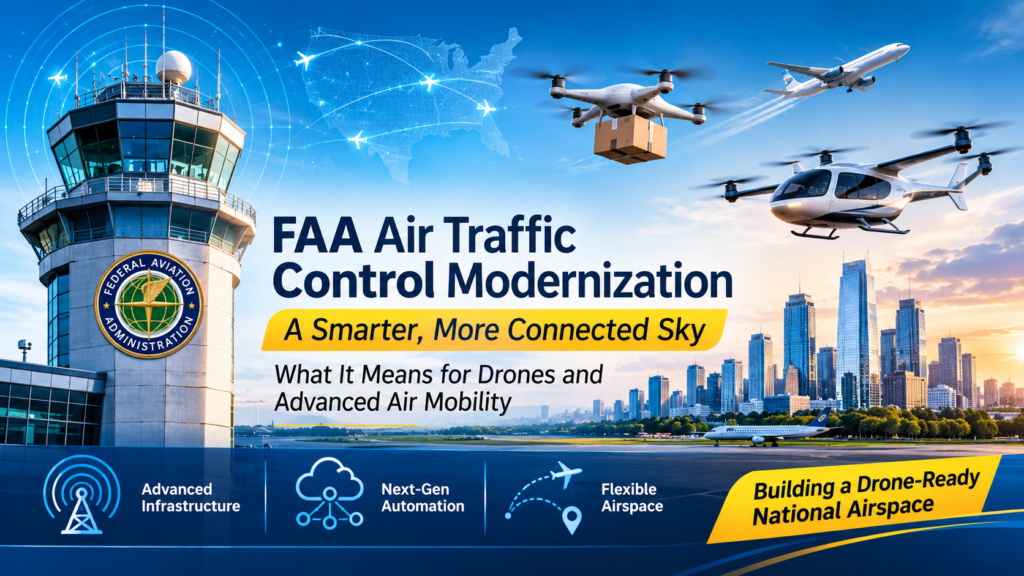
FAA Air Traffic Control Modernization is a major initiative aimed at replacing aging radar systems, upgrading aviation communications, and transforming how aircraft share the National Airspace System. This multi-year effort could reshape the future of commercial drones and Advanced Air Mobility (AAM), including delivery drones and air taxis. However, new equipment alone won’t be enough; the FAA also needs smarter digital infrastructure, updated procedures, and flexible regulations to safely integrate next-generation aircraft.
Air traffic control modernization is the FAA’s multi-year effort to replace aging radars, communications, and automation, and it matters to drone operators because it will help determine whether delivery drones and air taxis can share the National Airspace System with airliners. The catch is that FAA leaders say new equipment alone will not get there. The agency also needs a flexible digital platform, updated procedures, and a regulator willing to “get to yes safely.” dronelife
On Friday, November 13, 2026, a telecommunications failure disrupted aircraft communications and radar feeds, triggering a nationwide ground stop that the FAA resolved by that evening. Days earlier, a senior FAA operations executive had told an industry audience that the investment behind air traffic control modernization should also open the door to drones. The timing turned an abstract policy debate into a very visible one. dronelife
This guide explains what is changing, what is not, and what drone and advanced air mobility (AAM) stakeholders should do next. Each section stands on its own, so you can jump straight to the answer you need.
Key Takeaways
- The FAA has allocated 12.5 billion USD so far, which its Air Traffic Organization COO described as a first installment. That makes air traffic control modernization one of the largest aviation infrastructure efforts in decades. dronelife
- The first phase includes more than 600 new radars and communications upgrades. dronelife
- Reliability comes first. Drone-ready capabilities come second and will need separate decisions.
- FAA leadership said drones should be treated as aircraft and remote pilots as pilots. dronelife
- Data sharing between operators and the FAA, and faster counter-UAS authorizations, are active priorities.
- Programs such as SMART do not change drone operating rules today.
What Is Air Traffic Control Modernization?
Definition: Air traffic control modernization is the coordinated replacement and upgrade of the technology, facilities, and procedures the FAA uses to separate aircraft and manage traffic flow in the National Airspace System (NAS).
Expansion: It covers hardware such as radars, radios, and voice switches. It covers software such as automation and flow-management tools. It also covers the facilities that house controllers. The goal is to make a system built across many decades more reliable, more resilient, and more adaptable to new kinds of aircraft.
The Three Layers of Modernization
In practice, air traffic control modernization works on three layers at once:
- Infrastructure. Radars, telecommunications networks, voice switches, and control-center buildings. This is the layer the outage exposed.
- Automation and data. Tools that predict demand, manage flows, and share information among controllers, airlines, and other operators.
- Airspace design and rules. The procedures that decide who can fly where, and under what conditions.
Drone and AAM companies care most about layers two and three. Layer one is the prerequisite that keeps everything else standing.
How It Differs From NextGen
NextGen, the Next Generation Air Transportation System, transformed much of the technology behind U.S. air traffic management, and the FAA says it enables a shift from reactive control toward strategic, integrated management. Today’s air traffic control modernization push builds on that foundation, but it is broader and more urgent. It targets the legacy equipment NextGen never fully replaced, and it comes with an explicit timeline and funding request. dronelife
Why Did the November 13 Outage Matter?
Question: What happened on November 13?
Direct answer: A telecommunications failure disrupted aircraft communications and radar feeds, and the FAA issued a nationwide ground stop. Operations were restored that evening. According to the FAA’s November 15 explanation, legacy equipment became unstable when excessive network traffic disrupted the system. dronelife
Why Drone Operators Should Care
A reliable version of today’s system is not the same as a drone-ready system. The outage is a case study in why air traffic control modernization has to be about more than patching old equipment. If tomorrow’s drone corridors, delivery networks, and AAM routes depend on the same brittle infrastructure, one failure can ripple across every operation.
The incident also strengthens the political argument for sustained funding. When an outage grounds airline traffic nationwide, the case for replacing legacy systems no longer requires technical explanation. That helps drone advocates, because new capabilities tend to arrive on the back of new infrastructure rather than on top of old infrastructure.
How Much Money Is Behind Air Traffic Control Modernization?
The numbers show how large the effort is, and how much remains unfunded.
- Allocated so far: 12.5 billion USD, with more than 600 new radars and communications improvements in the first phase. dronelife
- Next request: At the XPONENTIAL conference in May 2026, McIntosh previewed a second-phase request of about 18 billion USD. dronexl
- Core replacement target: The Brand New Air Traffic Control System (BNATCS) project aims to replace radar, telecommunications, automation tools, and aging control-center infrastructure across the NAS by the end of 2028. dronelife
- Starting point: Transportation Secretary Sean Duffy unveiled the plan on May 8, 2025, calling it a once-in-a-generation opportunity. Reporting at the time noted that the FAA’s 21 Air Route Traffic Control Centers averaged 61 years old. spartnerships
- Early upgrades: Initial actions included upgrading more than 4,600 sites with modern telecommunications and replacing 25,000 radios and 475 voice switches. airwaysmag
- Organization: A January 2026 reorganization, described as the largest in FAA history, included an Airspace Modernization Office to oversee the new system. dronelife
Legacy System vs. Modernized System
| Dimension | Legacy Air Traffic Control | Modernized System (Goal) |
|---|---|---|
| Equipment age | Decades-old radars, radios, and switches | New radars and upgraded communications |
| Reliability | Vulnerable to cascading failures | Designed for resilience and redundancy |
| Operating model | Tactical, reactive control | Strategic, data-driven management |
| Drone access | Case-by-case, restriction-first | Aircraft-based approach aiming to “get to yes” |
| Data exchange | Limited, mostly one-way | Greater two-way sharing with operators |
| Counter-UAS review | Slow, individual evaluation | Risk-assessment frameworks by technology type |
| Planning tools | Manual and fragmented | Predictive analytics (such as SMART and FMDS) |
What Did the FAA Tell the Drone Industry?
On November 9 and 10, the AUVSI Drone and AAM Policy Symposium took place at Nationals Park in Washington, DC. Franklin McIntosh, COO of the FAA’s Air Traffic Organization, discussed modernization with Matt McCardle, Director of Global Regulatory at Amazon Prime Air. Their conversation covered four themes. dronelife
Reliability Is Step One, Not the Finish Line
McIntosh framed the current funding as a starting point. He said replacing aging equipment is only the first step, and that future investment must support a flexible platform for new aviation technologies. That distinction matters. Buying new radars restores reliability, but it does not by itself create the digital services drones need to operate at scale. dronelife
Equal Access to Airspace
McIntosh argued that every airspace user has a right to the airspace, and that drones should be treated as aircraft with remote pilots treated as pilots. This echoes his remarks at XPONENTIAL in May, where he described how air traffic controllers once resisted discussing drone integration. dronexl
For the industry, this is a notable philosophical shift. A restriction-first posture asks drones to justify their presence. An aircraft-first posture asks the system to make room for them safely.
Data Sharing and the VANTIS Example
McCardle raised the value of two-way data sharing as new services develop. McIntosh pointed to North Dakota’s VANTIS network as an example of how shared data helps the FAA understand and evaluate new operations, and he acknowledged concerns about how that data might be used. dronelife
Those concerns are real. Operators worry about proprietary route data, competitive exposure, and enforcement use. Expect data-governance questions to become a central negotiation as drone integration deepens.
Counter-Drone Systems Need Airspace Coordination
Counter-UAS technology also has to fit into the NAS. McIntosh said the FAA must confirm that proposed systems do not interfere with aviation operations. The agency is working on safety risk assessments that could streamline future authorizations based on the type of counter-UAS technology. That could help airports and other facilities deploy security systems faster while protecting surrounding air traffic. dronelife
How Do SMART, FMDS, and UTM Fit Into Air Traffic Control Modernization?
Several programs sit under the modernization umbrella, and they are easy to confuse. The most important point is that they solve different problems.
SMART and FMDS are planning tools. In June 2026 the FAA selected Air Space Intelligence to support its System Management and Resource Tool and Flight Management Data Service, which use predictive analytics to improve strategic planning around weather, capacity limits, and congestion. Crucially, the FAA did not indicate that SMART will manage unmanned aircraft traffic, enable BVLOS operations, or replace existing drone traffic initiatives. dronelifedronelife
UAS traffic management (UTM) is the separate framework for letting multiple drone operators share airspace, particularly where traditional air traffic services are not provided. It works alongside ongoing BVLOS rulemaking rather than inside SMART.
Program Comparison
| Program | Primary Purpose | Direct Drone Impact Today |
|---|---|---|
| BNATCS | Replace radar, telecom, automation, and facilities by end of 2028 | Indirect: improves reliability and creates a platform |
| SMART / FMDS | Predictive flow management and strategic planning | None immediate; shows the data-driven direction |
| NextGen | Transition to strategic, integrated air traffic management | Foundation for UTM and remote identification concepts |
| UTM | Let drone operators share low-altitude airspace | Direct: governs drone-to-drone coordination |
| BVLOS rulemaking | Define rules for flights beyond visual line of sight | Direct: determines commercial scalability |
Common Questions About the Modernization Plan
Question: Will air traffic control modernization let drones fly BVLOS?
Direct answer: Not by itself. Air traffic control modernization improves the infrastructure and data foundation, but BVLOS authorization depends on separate rulemaking and operational approvals. Think of the modernization as necessary but not sufficient.
Question: When will air traffic control modernization be finished?
Direct answer: The FAA’s stated target for replacing the core systems is the end of 2028. A second funding phase of about 18 billion USD has been previewed, which suggests work will continue beyond the first deadline.
Question: Does the plan help advanced air mobility?
Direct answer: Indirectly, yes. AAM aircraft such as eVTOL air taxis will need the same reliable communications and strategic planning tools, and the FAA has described AAM demand as one reason to modernize. The specific rules for AAM operations are being developed separately.
Question: What is VANTIS?
Direct answer: VANTIS is a North Dakota network that McIntosh cited as an example of data sharing helping the FAA understand and evaluate new drone operations.
Question: Did the outage change the modernization schedule?
Direct answer: Nothing I found indicates a schedule change. The outage renewed attention on the need for reliable infrastructure and strengthened the argument for continued funding.
What Should Drone and AAM Teams Do Now?
You cannot control federal funding, but you can position your organization to benefit when capabilities arrive.
- Track air traffic control modernization milestones. Watch BNATCS progress, the second-phase funding request, and FAA announcements that mention UAS or AAM.
- Build resilience into operations. If a nationwide outage can ground airline traffic, plan for degraded-service scenarios in your own concept of operations.
- Prepare your data story. Decide what operational data you can share, under what protections, and what you would ask the FAA to guarantee in return.
- Engage in industry forums. McIntosh said the FAA does not have all the answers and that operators can help identify practical solutions.
- Separate programs in your planning. Do not assume SMART or BNATCS delivers BVLOS. Track UTM and BVLOS rulemaking independently.
- Document safety cases. A “get to yes” posture still depends on well-supported safety arguments.
Risks and Open Questions
The biggest risk to air traffic control modernization is execution. Replacing radar, telecommunications, and automation across the entire NAS by the end of 2028 is an extraordinarily ambitious schedule. Any delay pushes back the platform drone integration depends on.
A second risk is prioritization. When resources are tight, the FAA will naturally protect existing airline operations first. Drone and AAM capabilities could slip to later phases unless they are written into requirements early.
Other open questions include:
- How will the FAA govern and protect operator data once two-way sharing expands?
- Will the airspace be managed through a single platform or through federated services?
- How quickly can counter-UAS risk assessments translate into real authorizations?
- How will workforce capacity affect the pace of change?
None of these has a settled answer yet, and any article claiming otherwise is speculating.
The Bottom Line
Air traffic control modernization is both a safety necessity and a strategic opening for the drone industry. The November 13 outage showed what aging infrastructure costs. The AUVSI discussion showed that FAA leadership is at least talking about drones as aircraft, data sharing as a partnership, and approvals as something to reach safely rather than avoid.
Still, it is wise to stay realistic. Reliable radars are not drone corridors, and SMART is not UTM. Treat air traffic control modernization as the foundation of future drone integration, then track the specific programs and rulemakings that will build on it.
FAA ଏୟାର ଟ୍ରାଫିକ୍ ନିୟନ୍ତ୍ରଣ ଆଧୁନିକୀକରଣ: ଡ୍ରୋନ୍ ଏବଂ ଉନ୍ନତ ଏୟାର ମୋବିଲିଟି ପାଇଁ ଏହାର ଅର୍ଥ କ’ଣ?
ବାୟୁ ଟ୍ରାଫିକ୍ ନିୟନ୍ତ୍ରଣ ଆଧୁନିକୀକରଣ ହେଉଛି ପୁରୁଣା ରାଡାର, ଯୋଗାଯୋଗ ଏବଂ ସ୍ୱୟଂଚାଳିତକରଣକୁ ବଦଳାଇବା ପାଇଁ FAAର ବହୁବର୍ଷ ଧରି ଚାଲିଥିବା ପ୍ରୟାସ, ଏବଂ ଏହା ଡ୍ରୋନ୍ ଅପରେଟରମାନଙ୍କ ପାଇଁ ଗୁରୁତ୍ୱପୂର୍ଣ୍ଣ କାରଣ ଏହା ନିର୍ଣ୍ଣୟ କରିବାରେ ସାହାଯ୍ୟ କରିବ ଯେ ଡେଲିଭରି ଡ୍ରୋନ୍ ଏବଂ ଏୟାର ଟ୍ୟାକ୍ସିଗୁଡ଼ିକ ଜାତୀୟ ଏୟାରସ୍ପେସ୍ ସିଷ୍ଟମକୁ ବିମାନ ଚାଳକମାନଙ୍କ ସହିତ ସେୟାର କରିପାରିବେ କି ନାହିଁ। କଥାଟି ହେଉଛି ଯେ FAA ନେତାମାନେ କୁହନ୍ତି ଯେ କେବଳ ନୂତନ ଉପକରଣ ସେଠାରେ ପହଞ୍ଚିପାରିବ ନାହିଁ। ଏଜେନ୍ସିକୁ ଏକ ନମନୀୟ ଡିଜିଟାଲ୍ ପ୍ଲାଟଫର୍ମ, ଅଦ୍ୟତନ ପ୍ରକ୍ରିୟା ଏବଂ “ସୁରକ୍ଷିତ ଭାବରେ ହଁ କରିବାକୁ” ଇଚ୍ଛୁକ ଏକ ନିୟାମକ ମଧ୍ୟ ଆବଶ୍ୟକ।
dronelife
ଶୁକ୍ରବାର, ନଭେମ୍ବର 13, 2026 ରେ, ଏକ ଦୂରସଂଚାର ବିଫଳତା ବିମାନ ଯୋଗାଯୋଗ ଏବଂ ରାଡାର ଫିଡ୍କୁ ବାଧାପ୍ରାପ୍ତ କରିଥିଲା, ଯାହା ଏକ ଦେଶବ୍ୟାପୀ ଭୂମି ବନ୍ଦକୁ ଟ୍ରିଗର କରିଥିଲା ଯାହାକୁ FAA ସେହି ସନ୍ଧ୍ୟା ସୁଦ୍ଧା ସମାଧାନ କରିଥିଲା। କିଛି ଦିନ ପୂର୍ବରୁ, FAAର ଜଣେ ବରିଷ୍ଠ କାର୍ଯ୍ୟନିର୍ବାହୀ ଏକ ଶିଳ୍ପ ଦର୍ଶକଙ୍କୁ କହିଥିଲେ ଯେ ଏୟାର ଟ୍ରାଫିକ୍ ନିୟନ୍ତ୍ରଣ ଆଧୁନିକୀକରଣ ପଛରେ ଥିବା ନିବେଶ ଡ୍ରୋନ୍ ପାଇଁ ମଧ୍ୟ ଦ୍ୱାର ଖୋଲିବା ଉଚିତ। ସମୟ ଏକ ସାରାଂଶ ନୀତି ବିତର୍କକୁ ଏକ ଦୃଶ୍ୟମାନ ବିତର୍କରେ ପରିଣତ କରିଥିଲା।
dronelife
ଏହି ମାର୍ଗଦର୍ଶିକା ବ୍ୟାଖ୍ୟା କରେ ଯେ କ’ଣ ପରିବର୍ତ୍ତନ ହେଉଛି, କ’ଣ ନୁହେଁ, ଏବଂ ଡ୍ରୋନ୍ ଏବଂ ଉନ୍ନତ ଏୟାର ମୋବିଲିଟି (AAM) ଅଂଶୀଦାରମାନେ ପରବର୍ତ୍ତୀ ସମୟରେ କ’ଣ କରିବା ଉଚିତ। ପ୍ରତ୍ୟେକ ବିଭାଗ ନିଜସ୍ୱ ଭାବରେ ଠିଆ ହୋଇଛି, ତେଣୁ ଆପଣ ସିଧାସଳଖ ଆପଣଙ୍କୁ ଆବଶ୍ୟକ ଉତ୍ତର ଦେଇପାରିବେ।
ପ୍ରମୁଖ ପ୍ରସଙ୍ଗ
FAA ଏପର୍ଯ୍ୟନ୍ତ 12.5 ବିଲିୟନ USD ଆବଣ୍ଟନ କରିଛି, ଯାହାକୁ ଏହାର ଏୟାର ଟ୍ରାଫିକ୍ ସଂଗଠନ COO ପ୍ରଥମ କିସ୍ତି ଭାବରେ ବର୍ଣ୍ଣନା କରିଛି। ଏହା ଏୟାର ଟ୍ରାଫିକ୍ ନିୟନ୍ତ୍ରଣ ଆଧୁନିକୀକରଣକୁ ଦଶନ୍ଧି ମଧ୍ୟରେ ସବୁଠାରୁ ବଡ଼ ବିମାନ ଭିତ୍ତିଭୂମି ପ୍ରୟାସ ମଧ୍ୟରୁ ଗୋଟିଏ କରିଥାଏ।
ଡ୍ରୋନଲାଇଫ୍
ପ୍ରଥମ ପର୍ଯ୍ୟାୟରେ 600 ରୁ ଅଧିକ ନୂତନ ରାଡାର ଏବଂ ଯୋଗାଯୋଗ ଅପଗ୍ରେଡ୍ ଅନ୍ତର୍ଭୁକ୍ତ।
ଡ୍ରୋନଲାଇଫ୍
ନିର୍ଭରଯୋଗ୍ୟତା ପ୍ରଥମେ ଆସେ। ଡ୍ରୋନ-ପ୍ରସ୍ତୁତ କ୍ଷମତା ଦ୍ୱିତୀୟ ସ୍ଥାନରେ ଆସେ ଏବଂ ଏହାକୁ ପୃଥକ ନିଷ୍ପତ୍ତି ଆବଶ୍ୟକ ହେବ।
FAA ନେତୃତ୍ୱ କହିଛନ୍ତି ଯେ ଡ୍ରୋନଗୁଡ଼ିକୁ ବିମାନ ଏବଂ ଦୂରବର୍ତ୍ତୀ ପାଇଲଟମାନଙ୍କୁ ପାଇଲଟ୍ ଭାବରେ ବିବେଚନା କରାଯିବା ଉଚିତ।
ଡ୍ରୋନଲାଇଫ୍
ଅପରେଟର ଏବଂ FAA ମଧ୍ୟରେ ତଥ୍ୟ ବଣ୍ଟନ, ଏବଂ ଦ୍ରୁତ ପ୍ରତି-UAS ପ୍ରାଧିକରଣ, ସକ୍ରିୟ ପ୍ରାଥମିକତା।
SMART ଭଳି କାର୍ଯ୍ୟକ୍ରମଗୁଡ଼ିକ ଆଜି ଡ୍ରୋନ ପରିଚାଳନା ନିୟମକୁ ପରିବର୍ତ୍ତନ କରେ ନାହିଁ।
ବାୟୁ ଟ୍ରାଫିକ୍ ନିୟନ୍ତ୍ରଣ ଆଧୁନିକୀକରଣ କ’ଣ?
ପରିଭାଷା: ଏୟାର ଟ୍ରାଫିକ୍ ନିୟନ୍ତ୍ରଣ ଆଧୁନିକୀକରଣ ହେଉଛି ଜାତୀୟ ଆକାଶମାର୍ଗ ପ୍ରଣାଳୀ (NAS) ରେ ବିମାନକୁ ପୃଥକ କରିବା ଏବଂ ଟ୍ରାଫିକ ପ୍ରବାହ ପରିଚାଳନା କରିବା ପାଇଁ FAA ବ୍ୟବହାର କରୁଥିବା ପ୍ରଯୁକ୍ତିବିଦ୍ୟା, ସୁବିଧା ଏବଂ ପ୍ରକ୍ରିୟାଗୁଡ଼ିକର ସମନ୍ୱିତ ପ୍ରତିସ୍ଥାପନ ଏବଂ ଅପଗ୍ରେଡ୍।
ବିସ୍ତାର: ଏହା ରାଡାର, ରେଡିଓ ଏବଂ ଭଏସ୍ ସ୍ୱିଚ୍ ଭଳି ହାର୍ଡୱେର୍ କୁ କଭର୍ କରେ। ଏହା ସ୍ୱୟଂଚାଳିତ ଏବଂ ପ୍ରବାହ-ପରିଚାଳନା ଉପକରଣ ଭଳି ସଫ୍ଟୱେର୍ କୁ କଭର୍ କରେ। ଏହା ନିୟନ୍ତ୍ରକମାନଙ୍କୁ ରଖିବା ପାଇଁ ସୁବିଧାଗୁଡ଼ିକୁ ମଧ୍ୟ କଭର୍ କରେ। ଲକ୍ଷ୍ୟ ହେଉଛି ଅନେକ ଦଶନ୍ଧି ଧରି ନିର୍ମିତ ଏକ ସିଷ୍ଟମକୁ ଅଧିକ ନିର୍ଭରଯୋଗ୍ୟ, ଅଧିକ ସ୍ଥିର ଏବଂ ନୂତନ ପ୍ରକାରର ବିମାନ ପାଇଁ ଅଧିକ ଅନୁକୂଳ କରିବା।
ଆଧୁନିକୀକରଣର ତିନି ସ୍ତର
ବ୍ୟବହାରିକ ଭାବରେ, ବିମାନ ଟ୍ରାଫିକ୍ ନିୟନ୍ତ୍ରଣ ଆଧୁନିକୀକରଣ ଏକାସାଙ୍ଗରେ ତିନୋଟି ସ୍ତର ଉପରେ କାର୍ଯ୍ୟ କରେ:
ଭିତ୍ତିଭୂମି। ରାଡାର, ଦୂରସଂଚାର ନେଟୱାର୍କ, ଭଏସ୍ ସ୍ୱିଚ୍ ଏବଂ ନିୟନ୍ତ୍ରଣ-କେନ୍ଦ୍ର କୋଠା। ଏହା ହେଉଛି ବିଭ୍ରାଟ ପ୍ରକାଶିତ ସ୍ତର।
ଅଟୋମେସନ ଏବଂ ଡାଟା। ଚାହିଦା ପୂର୍ବାନୁମାନ କରୁଥିବା ଉପକରଣ, ପ୍ରବାହ ପରିଚାଳନା ଏବଂ ନିୟନ୍ତ୍ରକ, ଏୟାରଲାଇନ୍ସ ଏବଂ ଅନ୍ୟ ଅପରେଟରମାନଙ୍କ ମଧ୍ୟରେ ସୂଚନା ଅଂଶୀଦାର କରୁଥିବା ଉପକରଣ।
ଆକାଶମଣ୍ଡଳ ଡିଜାଇନ୍ ଏବଂ ନିୟମ। କେଉଁଠାରେ ଏବଂ କେଉଁ ପରିସ୍ଥିତିରେ କିଏ ଉଡ଼ିପାରିବ ତାହା ନିଷ୍ପତ୍ତି ନେଉଥିବା ପ୍ରକ୍ରିୟା।
ଡ୍ରୋନ୍ ଏବଂ AAM କମ୍ପାନୀଗୁଡ଼ିକ ଦ୍ୱିତୀୟ ଏବଂ ତୃତୀୟ ସ୍ତର ବିଷୟରେ ସର୍ବାଧିକ ଯତ୍ନବାନ। ପ୍ରଥମ ସ୍ତର ହେଉଛି ପୂର୍ବାବସ୍ଥା ଯାହା ଅନ୍ୟ ସବୁକିଛି ସ୍ଥିର ରଖେ।
ଏହା NextGen ଠାରୁ କିପରି ଭିନ୍ନ
NextGen, ପରବର୍ତ୍ତୀ ପିଢ଼ିର ବିମାନ ପରିବହନ ବ୍ୟବସ୍ଥା, ଆମେରିକାର ବିମାନ ଟ୍ରାଫିକ ପରିଚାଳନା ପଛରେ ଥିବା ପ୍ରଯୁକ୍ତିବିଦ୍ୟାର ଅଧିକାଂଶ ଅଂଶକୁ ପରିବର୍ତ୍ତନ କରିଛି, ଏବଂ FAA କହିଛି ଯେ ଏହା ପ୍ରତିକ୍ରିୟାଶୀଳ ନିୟନ୍ତ୍ରଣରୁ ରଣନୈତିକ, ସମନ୍ୱିତ ପରିଚାଳନା ଆଡ଼କୁ ପରିବର୍ତ୍ତନକୁ ସକ୍ଷମ କରିଥାଏ। ଆଜିର ବିମାନ ଟ୍ରାଫିକ ନିୟନ୍ତ୍ରଣ ଆଧୁନିକୀକରଣ ପ୍ରୟାସ ସେହି ଭିତ୍ତିଭୂମି ଉପରେ ନିର୍ମାଣ କରେ, କିନ୍ତୁ ଏହା ବ୍ୟାପକ ଏବଂ ଅଧିକ ଜରୁରୀ। ଏହା NextGen କେବେବି ସମ୍ପୂର୍ଣ୍ଣ ଭାବରେ ବଦଳାଯାଇନଥିବା ଲିଗାସି ଉପକରଣଗୁଡ଼ିକୁ ଲକ୍ଷ୍ୟ କରେ, ଏବଂ ଏହା ଏକ ସ୍ପଷ୍ଟ ସମୟସୀମା ଏବଂ ପାଣ୍ଠି ଅନୁରୋଧ ସହିତ ଆସେ।
dronelife
ନଭେମ୍ବର 13 ବିଭ୍ରାଟ କାହିଁକି ଗୁରୁତ୍ୱପୂର୍ଣ୍ଣ ଥିଲା?
ପ୍ରଶ୍ନ: ନଭେମ୍ବର 13 ରେ କ’ଣ ଘଟିଥିଲା?
ସିଧାସଳଖ ଉତ୍ତର: ଏକ ଦୂରସଂଚାର ବିଫଳତା ବିମାନ ଯୋଗାଯୋଗ ଏବଂ ରାଡାର ଫିଡ୍ଗୁଡ଼ିକୁ ବାଧାପ୍ରାପ୍ତ କରିଥିଲା, ଏବଂ FAA ଏକ ଦେଶବ୍ୟାପୀ ଭୂମି ବନ୍ଦ ଜାରି କରିଥିଲା। ସେହି ସନ୍ଧ୍ୟାରେ କାର୍ଯ୍ୟ ପୁନରୁଦ୍ଧାର କରାଯାଇଥିଲା। FAAର ନଭେମ୍ବର 15 ବ୍ୟାଖ୍ୟା ଅନୁଯାୟୀ, ଅତ୍ୟଧିକ ନେଟୱାର୍କ ଟ୍ରାଫିକ୍ ବ୍ୟବସ୍ଥାକୁ ବାଧାପ୍ରାପ୍ତ କରିବା ପରେ ଲିଗାସି ଉପକରଣ ଅସ୍ଥିର ହୋଇଗଲା।
dronelife
ଡ୍ରୋନ୍ ଅପରେଟରମାନେ କାହିଁକି ଯତ୍ନ ନେବା ଉଚିତ
ଆଜିର ସିଷ୍ଟମର ଏକ ନିର୍ଭରଯୋଗ୍ୟ ସଂସ୍କରଣ ଡ୍ରୋନ୍-ପ୍ରସ୍ତୁତ ସିଷ୍ଟମ ସହିତ ସମାନ ନୁହେଁ। ବିଭ୍ରାଟ ହେଉଛି ଏକ କେସ୍ ଷ୍ଟଡି ଯାହା ବାୟୁ ଟ୍ରାଫିକ୍ ନିୟନ୍ତ୍ରଣ ଆଧୁନିକୀକରଣ ପୁରୁଣା ଉପକରଣଗୁଡ଼ିକୁ ପ୍ୟାଚ୍ କରିବା ଅପେକ୍ଷା ଅଧିକ ହେବା ଆବଶ୍ୟକ। ଯଦି ଆସନ୍ତାକାଲିର ଡ୍ରୋନ୍ କରିଡର, ଡେଲିଭରି ନେଟୱାର୍କ ଏବଂ AAM ରୁଟ୍ ସମାନ ଭଙ୍ଗୁର ଭିତ୍ତିଭୂମି ଉପରେ ନିର୍ଭର କରେ, ତେବେ ପ୍ରତ୍ୟେକ କାର୍ଯ୍ୟରେ ଗୋଟିଏ ବିଫଳତା ଝଡ଼ ସୃଷ୍ଟି କରିପାରେ।
ଏହି ଘଟଣା ସ୍ଥାୟୀ ପାଣ୍ଠି ପାଇଁ ରାଜନୈତିକ ଯୁକ୍ତିକୁ ମଧ୍ୟ ଦୃଢ଼ କରେ। ଯେତେବେଳେ ଏକ ବିଭ୍ରାଟ ଦେଶବ୍ୟାପୀ ବିମାନ ଟ୍ରାଫିକକୁ ପ୍ରଭାବିତ କରେ, ସେତେବେଳେ ପୁରୁଣା ସିଷ୍ଟମଗୁଡ଼ିକୁ ବଦଳାଇବା ପାଇଁ ଆଉ ବୈଷୟିକ ବ୍ୟାଖ୍ୟା ଆବଶ୍ୟକ ହୁଏ ନାହିଁ। ଏହା ଡ୍ରୋନ୍ ପ୍ରବକ୍ତାମାନଙ୍କୁ ସାହାଯ୍ୟ କରେ, କାରଣ ନୂତନ କ୍ଷମତା ପୁରୁଣା ଭିତ୍ତିଭୂମି ଉପରେ ନ ଆସି ନୂତନ ଭିତ୍ତିଭୂମି ପଛରେ ଆସିଥାଏ।
ଏୟାର ଟ୍ରାଫିକ୍ ନିୟନ୍ତ୍ରଣ ଆଧୁନିକୀକରଣ ପଛରେ କେତେ ଟଙ୍କା ଅଛି?
ସଂଖ୍ୟାଗୁଡ଼ିକ ଦର୍ଶାଏ ଯେ ପ୍ରୟାସ କେତେ ବଡ଼, ଏବଂ କେତେ ଅସଂଖ୍ୟ ରହିଛି।
ଏପର୍ଯ୍ୟନ୍ତ ଆବଣ୍ଟିତ: 12.5 ବିଲିୟନ USD, 600 ରୁ ଅଧିକ ନୂତନ ରାଡାର ଏବଂ ସି.ପ୍ରଥମ ପର୍ଯ୍ୟାୟରେ ଯୋଗାଯୋଗ ବ୍ୟବସ୍ଥାରେ ଉନ୍ନତି।
dronelife
ପରବର୍ତ୍ତୀ ଅନୁରୋଧ: ମେ ୨୦୨୬ରେ ଅନୁଷ୍ଠିତ ‘XPONENTIAL’ ସମ୍ମିଳନୀରେ, ମ୍ୟାକିଣ୍ଟୋଶ୍ (McIntosh) ପ୍ରାୟ ୧୮ ବିଲିୟନ ଆମେରିକୀୟ ଡଲାରର ଦ୍ୱିତୀୟ ପର୍ଯ୍ୟାୟ ପ୍ରସ୍ତାବ ଉପସ୍ଥାପନ କରିଥିଲେ।
dronexl
ମୁଖ୍ୟ ବ୍ୟବସ୍ଥା ବଦଳାଇବା ଲକ୍ଷ୍ୟ: ‘ବ୍ରାଣ୍ଡ ନ୍ୟୁ ଏୟାର ଟ୍ରାଫିକ୍ କଣ୍ଟ୍ରୋଲ୍ ସିଷ୍ଟମ୍’ (BNATCS) ପ୍ରକଳ୍ପର ଲକ୍ଷ୍ୟ ହେଉଛି ୨୦୨୮ ଶେଷ ସୁଦ୍ଧା ସମଗ୍ର ‘ନ୍ୟାସନାଲ୍ ଏୟାରସ୍ପେସ୍ ସିଷ୍ଟମ୍’ (NAS)ରେ ଥିବା ରାଡାର, ଦୂରସଞ୍ଚାର, ସ୍ୱୟଂଚାଳିତ ଉପକରଣ ଏବଂ ପୁରୁଣା ନିୟନ୍ତ୍ରଣ-କେନ୍ଦ୍ର ଭିତ୍ତିଭୂମିକୁ ବଦଳାଇ ନୂତନ ବ୍ୟବସ୍ଥା ଲାଗୁ କରିବା।
dronelife
ଆରମ୍ଭ ବିନ୍ଦୁ: ପରିବହନ ସଚିବ ସିନ୍ ଡଫି (Sean Duffy) ୮ ମେ, ୨୦୨୫ରେ ଏହି ଯୋଜନା ଉନ୍ମୋଚନ କରିଥିଲେ ଏବଂ ଏହାକୁ ଏକ “ପିଢ଼ିରେ ଥରେ ଆସୁଥିବା ସୁଯୋଗ” ବୋଲି ବର୍ଣ୍ଣନା କରିଥିଲେ। ସେହି ସମୟର ରିପୋର୍ଟ ଅନୁଯାୟୀ, FAA (ଫେଡେରାଲ୍ ଏଭିଏସନ୍ ଆଡମିନିଷ୍ଟ୍ରେସନ୍) ଅଧୀନରେ ଥିବା ୨୧ଟି ‘ଏୟାର ରୁଟ୍ ଟ୍ରାଫିକ୍ କଣ୍ଟ୍ରୋଲ୍ ସେଣ୍ଟର’ର ହାରାହାରି ବୟସ ୬୧ ବର୍ଷ ଥିଲା।
spartnerships
ପ୍ରାରମ୍ଭିକ ଉନ୍ନୟନ କାର୍ଯ୍ୟ: ପ୍ରାରମ୍ଭିକ ପଦକ୍ଷେପଗୁଡ଼ିକ ମଧ୍ୟରେ ୪,୬୦୦ରୁ ଅଧିକ ସ୍ଥାନରେ ଆଧୁନିକ ଦୂରସଞ୍ଚାର ବ୍ୟବସ୍ଥା ଲଗାଇବା, ଏବଂ ୨୫,୦୦୦ ରେଡିଓ ତଥା ୪୭୫ଟି ଭଏସ୍ ସୁଇଚ୍ (voice switches) ବଦଳାଇବା ଅନ୍ତର୍ଭୁକ୍ତ ଥିଲା।
airwaysmag
ସଂଗଠନ: ଜାନୁଆରୀ ୨୦୨୬ରେ ଏକ ପୁନର୍ଗଠନ ପ୍ରକ୍ରିୟା ହୋଇଥିଲା, ଯାହାକୁ FAA ଇତିହାସର ସବୁଠାରୁ ବଡ଼ ପୁନର୍ଗଠନ ବୋଲି କୁହାଯାଏ। ଏଥିରେ ନୂତନ ବ୍ୟବସ୍ଥାର ତଦାରଖ କରିବା ପାଇଁ ଏକ ‘ଏୟାରସ୍ପେସ୍ ମଡର୍ଣ୍ଣାଇଜେସନ୍ ଅଫିସ୍’ (Airspace Modernization Office) ଗଠନ କରାଯାଇଥିଲା।
dronelife
ପୁରୁଣା ବ୍ୟବସ୍ଥା (Legacy System) ବନାମ ଆଧୁନିକୀକୃତ ବ୍ୟବସ୍ଥା
ବିଷୟ | ପୁରୁଣା ଏୟାର ଟ୍ରାଫିକ୍ କଣ୍ଟ୍ରୋଲ୍ | ଆଧୁନିକୀକୃତ ବ୍ୟବସ୍ଥା (ଲକ୍ଷ୍ୟ)
ଉପକରଣର ବୟସ | ଦଶନ୍ଧି ପୁରୁଣା ରାଡାର, ରେଡିଓ ଏବଂ ସୁଇଚ୍ | ନୂତନ ରାଡାର ଏବଂ ଉନ୍ନତ ଯୋଗାଯୋଗ ବ୍ୟବସ୍ଥା
ନିର୍ଭରଯୋଗ୍ୟତା | କ୍ର FAA (ଫେଡେରାଲ୍ ଏଭିଏସନ୍ ଆଡମିନିଷ୍ଟ୍ରେସନ୍) ର ‘ଏୟାର ଟ୍ରାଫିକ୍ ଅର୍ଗାନାଇଜେସନ୍’ର COO ଫ୍ରାଙ୍କଲିନ୍ ମ୍ୟାକିଣ୍ଟୋଶ୍, ଆମାଜନ୍ ପ୍ରାଇମ୍ ଏୟାରର ‘ଗ୍ଲୋବାଲ୍ ରେଗୁଲେଟୋରୀ’ ନିର୍ଦ୍ଦେଶକ ମ୍ୟାଟ୍ ମ୍ୟାକକାର୍ଡଲ୍ଙ୍କ ସହ ଆଧୁନିକୀକରଣ ବିଷୟରେ ଆଲୋଚନା କରିଥିଲେ। ସେମାନଙ୍କ ଆଲୋଚନାରେ ମୁଖ୍ୟତଃ ଚାରୋଟି ବିଷୟ ସ୍ଥାନ ପାଇଥିଲା।
ନିର୍ଭରଯୋଗ୍ୟତା ହେଉଛି ପ୍ରଥମ ପଦକ୍ଷେପ, ଅନ୍ତିମ ଲକ୍ଷ୍ୟ ନୁହେଁ
ମ୍ୟାକିଣ୍ଟୋଶ୍ ବର୍ତ୍ତମାନର ପାଣ୍ଠି ଯୋଗାଣକୁ ଏକ ଆରମ୍ଭ ବିନ୍ଦୁ ବୋଲି କହିଛନ୍ତି। ସେ କହିଛନ୍ତି ଯେ ପୁରୁଣା ଉପକରଣଗୁଡ଼ିକୁ ବଦଳାଇବା କେବଳ ପ୍ରଥମ ପଦକ୍ଷେପ ଅଟେ; ଭବିଷ୍ୟତରେ ହେବାକୁ ଥିବା ନିବେଶ ଏପରି ଏକ ନମନୀୟ ବ୍ୟବସ୍ଥା (platform) ପ୍ରସ୍ତୁତ କରିବା ଉଚିତ୍, ଯାହା ନୂତନ ବିମାନ ଚଳାଚଳ ପ୍ରଯୁକ୍ତିବିଦ୍ୟାକୁ ସମର୍ଥନ କରିପାରିବ। ଏହି ପାର୍ଥକ୍ୟଟି ବହୁତ ଗୁରୁତ୍ୱପୂର୍ଣ୍ଣ। ନୂତନ ରାଡାର କିଣିବା ଦ୍ୱାରା ନିର୍ଭରଯୋଗ୍ୟତା ଫେରିଆସେ, କିନ୍ତୁ କେବଳ ଏତିକି ଦ୍ୱାରା ସେହି ଡିଜିଟାଲ୍ ସେବାଗୁଡ଼ିକ ସୃଷ୍ଟି ହୁଏ ନାହିଁ, ଯାହା ଡ୍ରୋନ୍ଗୁଡ଼ିକୁ ବ୍ୟାପକ ସ୍ତରରେ କାର୍ଯ୍ୟ କରିବା ପାଇଁ ଆବଶ୍ୟକ ହୋଇଥାଏ।
ଆକାଶମାର୍ଗରେ ସମାନ ପ୍ରବେଶାଧିକାର
ମ୍ୟାକିଣ୍ଟୋଶ୍ ଯୁକ୍ତି ଦର୍ଶାଇଛନ୍ତି ଯେ ଆକାଶମାର୍ଗ ବ୍ୟବହାର କରୁଥିବା ପ୍ରତ୍ୟେକଙ୍କର ସେଠାରେ ରହିବାର ଅଧିକାର ଅଛି। ଡ୍ରୋନ୍ଗୁଡ଼ିକୁ ମଧ୍ୟ ଅନ୍ୟ ବିମାନ ଭଳି ବିବେଚନା କରାଯିବା ଉଚିତ୍ ଏବଂ ସେଗୁଡ଼ିକୁ ଦୂରରୁ ନିୟନ୍ତ୍ରଣ କରୁଥିବା ବ୍ୟକ୍ତିଙ୍କୁ (remote pilots) ପ୍ରକୃତ ପାଇଲଟ୍ଙ୍କ ଭଳି ମାନ୍ୟତା ଦିଆଯିବା ଉଚିତ୍। ମେ ମାସରେ ଅନୁଷ୍ଠିତ ‘XPONENTIAL’ କାର୍ଯ୍ୟକ୍ରମରେ ମଧ୍ୟ ସେ ଏହି କଥା କହିଥିଲେ; ସେତେବେଳେ ସେ ବର୍ଣ୍ଣନା କରିଥିଲେ ଯେ କିପରି ପୂର୍ବରୁ ‘ଏୟାର ଟ୍ରାଫିକ୍ କଣ୍ଟ୍ରୋଲର୍’ମାନେ ଡ୍ରୋନ୍କୁ ବିମାନ ଚଳାଚଳ ବ୍ୟବସ୍ଥାରେ ଅନ୍ତର୍ଭୁକ୍ତ କରିବା ବିଷୟରେ ଆଲୋଚନା କରିବାକୁ ବିରୋଧ କରୁଥିଲେ।
ଏହି ଶିଳ୍ପ ପାଇଁ, ଏହା ଏକ ଗୁରୁତ୍ୱପୂର୍ଣ୍ଣ ଚିନ୍ତାଧାରାଗତ ପରିବର୍ତ୍ତନ। ଯଦି କେବଳ କଟକଣା ଉପରେ ଗୁରୁତ୍ୱ ଦିଆଯାଏ, ତେବେ ଡ୍ରୋନ୍ଗୁଡ଼ିକୁ ପ୍ରମାଣିତ କରିବାକୁ ପଡ଼ିବ ଯେ ସେଗୁଡ଼ିକ ସେଠାରେ ରହିବା କ dronelife
ବାୟୁ ଟ୍ରାଫିକ୍ ନିୟନ୍ତ୍ରଣ ଆଧୁନିକୀକରଣରେ SMART, FMDS, ଏବଂ UTM କିପରି ଫିଟ୍ ହୁଏ?
ଆଧୁନିକୀକରଣ ଛତା ତଳେ ଅନେକ କାର୍ଯ୍ୟକ୍ରମ ବସିଥାଏ, ଏବଂ ସେଗୁଡ଼ିକୁ ଦ୍ୱନ୍ଦ୍ୱରେ ପକାଇବା ସହଜ। ସବୁଠାରୁ ଗୁରୁତ୍ୱପୂର୍ଣ୍ଣ କଥା ହେଉଛି ସେମାନେ ବିଭିନ୍ନ ସମସ୍ୟାର ସମାଧାନ କରନ୍ତି।
SMART ଏବଂ FMDS ହେଉଛି ଯୋଜନା ଉପକରଣ। ଜୁନ୍ 2026 ରେ FAA ଏହାର ସିଷ୍ଟମ୍ ପରିଚାଳନା ଏବଂ ସମ୍ବଳ ଉପକରଣ ଏବଂ ଫ୍ଲାଇଟ୍ ପରିଚାଳନା ଡାଟା ସେବାକୁ ସମର୍ଥନ କରିବା ପାଇଁ ଏୟାର ସ୍ପେସ୍ ଇଣ୍ଟେଲିଜେନ୍ସକୁ ଚୟନ କରିଥିଲା, ଯାହା ପାଣିପାଗ, କ୍ଷମତା ସୀମା ଏବଂ ଭିଡ଼ ସମ୍ପର୍କରେ ରଣନୈତିକ ଯୋଜନାକୁ ଉନ୍ନତ କରିବା ପାଇଁ ଭବିଷ୍ୟବାଣୀ ବିଶ୍ଳେଷଣ ବ୍ୟବହାର କରେ। ଗୁରୁତ୍ୱପୂର୍ଣ୍ଣ ଭାବରେ, FAA ସୂଚିତ କରିନଥିଲା ଯେ SMART ମାନବହୀନ ବିମାନ ଟ୍ରାଫିକ୍ ପରିଚାଳନା କରିବ, BVLOS କାର୍ଯ୍ୟକୁ ସକ୍ଷମ କରିବ, କିମ୍ବା ବିଦ୍ୟମାନ ଡ୍ରୋନ୍ ଟ୍ରାଫିକ୍ ପଦକ୍ଷେପଗୁଡ଼ିକୁ ବଦଳାଇବ।
dronelife
dronelife
UAS ଟ୍ରାଫିକ୍ ପରିଚାଳନା (UTM) ହେଉଛି ଏକାଧିକ ଡ୍ରୋନ୍ ଅପରେଟରମାନଙ୍କୁ ଏୟାରସ୍ପେସ୍ ସେୟାର କରିବାକୁ ଦେବା ପାଇଁ ପୃଥକ ଢାଞ୍ଚା, ବିଶେଷକରି ଯେଉଁଠାରେ ପାରମ୍ପରିକ ବିମାନ ଟ୍ରାଫିକ୍ ସେବା ପ୍ରଦାନ କରାଯାଏ ନାହିଁ। ଏହା SMART ଭିତରେ ନଯାଇ ଚାଲୁଥିବା BVLOS ନିୟମ ନିର୍ଦ୍ଧାରଣ ସହିତ କାମ କରେ।
କାର୍ଯ୍ୟକ୍ରମ ତୁଳନା
କାର୍ଯ୍ୟକ୍ରମ ପ୍ରାଥମିକ ଉଦ୍ଦେଶ୍ୟ ସିଧାସଳଖଡ୍ରୋନ୍ ଉପରେ ଆଜିର ପ୍ରଭାବ
BNATCS: ୨୦୨୮ ଶେଷ ସୁଦ୍ଧା ରାଡାର୍, ଟେଲିକମ୍, ସ୍ୱୟଂଚାଳିତ ବ୍ୟବସ୍ଥା (automation) ଏବଂ ଅନ୍ୟାନ୍ୟ ସୁବିଧାଗୁଡ଼ିକୁ ବଦଳାଇବା | ପରୋକ୍ଷ: ଏହା ନିର୍ଭରଯୋଗ୍ୟତା ବୃଦ୍ଧି କରେ ଏବଂ ଏକ ପ୍ଲାଟଫର୍ମ ପ୍ରସ୍ତୁତ କରେ |
SMART / FMDS: ପୂର୍ବାନୁମାନ ଭିତ୍ତିକ ପ୍ରବାହ ପରିଚାଳନା (predictive flow management) ଏବଂ ରଣନୀତିକ ଯୋଜନା | ତୁରନ୍ତ କୌଣସି ପ୍ରଭାବ ନାହିଁ; କିନ୍ତୁ ଏହା ତଥ୍ୟ-ଆଧାରିତ ଦିଗ ନିର୍ଦ୍ଧାରଣ କରେ |
NextGen: ରଣନୀତିକ ଏବଂ ସମନ୍ୱିତ ‘ଏୟାର ଟ୍ରାଫିକ୍ ମ୍ୟାନେଜମେଣ୍ଟ’ (ବାୟୁ ଚଳାଚଳ ପରିଚାଳନା) ଆଡ଼କୁ ଅଗ୍ରଗତି | UTM (ୟୁଏଟିଏମ୍) ଏବଂ ‘ରିମୋଟ୍ ଆଇଡେଣ୍ଟିଫିକେସନ୍’ (ଦୂରରୁ ଚିହ୍ନଟ) ଧାରଣା ପାଇଁ ଏହା ଏକ ମୂଳଦୁଆ ସଦୃଶ |
UTM: ଡ୍ରୋନ୍ ପରିଚାଳନାକାରୀଙ୍କୁ କମ୍ ଉଚ୍ଚତାର ଆକାଶମାର୍ଗ ବ୍ୟବହାର କରିବାକୁ ଅନୁମତି ଦେବା | ପ୍ରତ୍ୟକ୍ଷ: ଏହା ଡ୍ରୋନ୍ଗୁଡ଼ିକ ମଧ୍ୟରେ ସମନ୍ୱୟ ରକ୍ଷା କରିବାରେ ସାହାଯ୍ୟ କରେ |
BVLOS (ଦୃଷ୍ଟିସୀମା ବାହାରେ ଉଡ଼ାଣ) ପାଇଁ ନିୟମାବଳୀ: ଦୃଷ୍ଟିସୀମା ବାହାରେ ଉଡ଼ାଣ ପାଇଁ ନିୟମ ପ୍ରସ୍ତୁତ କରିବା | ପ୍ରତ୍ୟକ୍ଷ: ଏହା ବ୍ୟବସାୟିକ ସମ୍ପ୍ରସାରଣର କ୍ଷମତା ନିର୍ଦ୍ଧାରଣ କରେ |
ଆଧୁନିକୀକରଣ ଯୋଜନା ସମ୍ବନ୍ଧୀୟ ସାଧାରଣ ପ୍ରଶ୍ନ
ପ୍ରଶ୍ନ: ‘ଏୟାର ଟ୍ରାଫିକ୍ କଣ୍ଟ୍ରୋଲ୍’ (ATC) ର ଆଧୁନିକୀକରଣ ଦ୍ୱାରା ଡ୍ରୋନ୍ଗୁଡ଼ିକ କ’ଣ BVLOS (ଦୃଷ୍ଟିସୀମା ବାହାରେ) ଉଡ଼ିପାରିବେ?
ସିଧାସଳଖ ଉତ୍ତର: କେବଳ ଏହା ଦ୍ୱାରା ସମ୍ଭବ ନୁହେଁ। ATC ଆଧୁନିକୀକରଣ ଭିତ୍ତିଭୂମି ଏବଂ ତଥ୍ୟ ଭିତ୍ତିଭୂମିକୁ ଉନ୍ନତ କରେ, କିନ୍ତୁ BVLOS ପାଇଁ ଅନୁମତି ପାଇବା ନିମନ୍ତେ ସ୍ୱତନ୍ତ୍ର ନିୟମାବଳୀ ଏବଂ କାର୍ଯ୍ୟକ୍ଷମ ଅନୁମୋଦନର ଆବଶ୍ୟକତା ରହିଛି। ଏହି ଆଧୁନିକୀକରଣକୁ ଏକ ଆବଶ୍ୟକ ପଦକ୍ଷେପ ଭାବରେ ବିବେଚନା କରାଯାଇପାରେ, କିନ୍ତୁ ଏହା ଏକମାତ୍ର ପର୍ଯ୍ୟାପ୍ତ ସର୍ତ୍ତ ନୁହେଁ।
ପ୍ରଶ୍ନ: ‘ଏୟାର ଟ୍ରାଫିକ୍ କଣ୍ଟ୍ରୋଲ୍’ ଆଧୁନିକୀକରଣ କେବେ ସମ୍ପୂର୍ଣ୍ଣ ହେବ?
ସିଧାସଳଖ ଉତ୍ତର: FAA (ଫେଡେରାଲ୍ ଏଭିଏସନ୍ ଆଡମିନିଷ୍ଟ୍ରେସନ୍) ର ଲକ୍ଷ୍ୟ ଅନୁଯାୟୀ, ମୁଖ୍ୟ ବ୍ୟବସ୍ଥା BNATCS-ର ଅଗ୍ରଗତି, ଦ୍ୱିତୀୟ ପର୍ଯ୍ୟାୟ ପାଣ୍ଠି ପାଇଁ ଅନୁରୋଧ, ଏବଂ FAA (Federal Aviation Administration) ଦ୍ୱାରା କରାଯାଇଥିବା ଘୋଷଣାଗୁଡ଼ିକ ଉପରେ ନଜର ରଖନ୍ତୁ, ଯେଉଁଥିରେ UAS (ମାନବବିହୀନ ବିମାନ ବ୍ୟବସ୍ଥା) କିମ୍ବା AAM (ଉନ୍ନତ ବାୟୁ ଗତିଶୀଳତା) ବିଷୟରେ ଉଲ୍ଲେଖ ରହିଛି।
ପରିଚାଳନା କ୍ଷେତ୍ରରେ ସ୍ଥାୟୀତ୍ୱ ବା ପ୍ରତିରୋଧକ୍ଷମତା (resilience) ଅନ୍ତର୍ଭୁକ୍ତ କରନ୍ତୁ। ଯଦି ଏକ ଦେଶବ୍ୟାପୀ ବୈଷୟିକ ତ୍ରୁଟି (outage) ଯୋଗୁଁ ବିମାନ ଚଳାଚଳ ବାଧାପ୍ରାପ୍ତ ହୋଇପାରେ, ତେବେ ନିଜର କାର୍ଯ୍ୟ ଯୋଜନାରେ ସୀମିତ ସେବା ଉପଲବ୍ଧ ଥିବା ପରିସ୍ଥିତି ପାଇଁ ମଧ୍ୟ ପ୍ରସ୍ତୁତି ରଖନ୍ତୁ।
ଆପଣଙ୍କ ତଥ୍ୟ ସମ୍ବନ୍ଧୀୟ ରଣନୀତି (data story) ପ୍ରସ୍ତୁତ କରନ୍ତୁ। କେଉଁ କାର୍ଯ୍ୟକ୍ଷମ ତଥ୍ୟ (operational data) ଆପଣ ଅନ୍ୟମାନଙ୍କ ସହ ସେୟାର କରିପାରିବେ, କେଉଁ ସୁରକ୍ଷା ବ୍ୟବସ୍ଥା ଅଧୀନରେ ଏହା କରିବେ ଏବଂ ଏହାର ବଦଳରେ FAA ଠାରୁ ଆପଣ କେଉଁ ପ୍ରତିଶ୍ରୁତି ଚାହିଁବେ, ସେ ବିଷୟରେ ନିଷ୍ପତ୍ତି ନିଅନ୍ତୁ।
ବିଭିନ୍ନ ଶିଳ୍ପ ମଞ୍ଚ (industry forums) ସହ ଯୋଡ଼ି ହୁଅନ୍ତୁ। ମ୍ୟାକିଣ୍ଟୋଶ୍ (McIntosh) କହିଛନ୍ତି ଯେ FAA ପାଖରେ ସମସ୍ତ ପ୍ରଶ୍ନର ଉତ୍ତର ନାହିଁ ଏବଂ ଅପରେଟରମାନେ ବ୍ୟାବହାରିକ ସମାଧାନ ଖୋଜିବାରେ ସାହାଯ୍ୟ କରିପାରିବେ।
ଆପଣଙ୍କ ଯୋଜନାରେ ବିଭିନ୍ନ କାର୍ଯ୍ୟକ୍ରମକୁ ପୃଥକ ଭାବରେ ବିଚାର କରନ୍ତୁ। ଏହା ଭାବନ୍ତୁ ନାହିଁ ଯେ SMART କିମ୍ବା BNATCS ଦ୍ୱାରା BVLOS (ଦୃଷ୍ଟିସୀମା ବାହାରେ ଉଡ଼ାଣ) ସମ୍ଭବ ହୋଇଯିବ। UTM (ମାନବବିହୀନ ବିମାନ ଟ୍ରାଫିକ୍ ପରିଚାଳନା) ଏବଂ BVLOS ସମ୍ବନ୍ଧୀୟ ନିୟମାବଳୀ ପ୍ରସ୍ତୁତିକୁ ସ୍ୱତନ୍ତ୍ର ଭାବରେ ଅନୁସରଣ କରନ୍ତୁ।
ସୁରକ୍ଷା ସମ୍ବନ୍ଧୀୟ ଦସ୍ତାବିଜ (safety cases) ପ୍ରସ୍ତୁତ ରଖନ୍ତୁ। ଅନୁମତି ପାଇବା ପାଇଁ ଏକ ସକାରାତ୍ମକ ଆଭିମୁଖ୍ୟ ରଖିବା ସତ୍ତ୍ୱେ, ଏହା ମୁଖ୍ୟତଃ ସୁଦୃଢ଼ ସୁରକ୍ଷା ଯୁକ୍ତି ଉପରେ ନିର୍ଭର କରେ।
ଝୁଙ୍କି ଏବଂ ଅନିର୍ଦ୍ଦିଷ୍ଟ ପ୍ରଶ୍ନଗୁଡ଼ିକ
ଏୟାର ଟ୍ରାଫିକ୍ କଣ୍ଟ୍ରୋଲ୍ (ବାୟୁ ଚଳାଚଳ ନିୟନ୍ତ୍ରଣ) ବ୍ୟବସ୍ଥାର ଆଧୁନିକୀକରଣ କ୍ଷେତ୍ରରେ ସବୁଠାରୁ ବଡ଼ ଆହ୍ୱାନ ହେଉଛି ଏହାର କାର୍ଯ୍ୟକାରିତା। ୨୦୨୮ ଶେଷ ସୁଦ୍ଧା ସମଗ୍ର NAS (National Airspace System) ରେ ରାଡାର, ଟେଲିକମ୍ୟୁନିକେ ବାୟୁ ଚଳାଚଳ ନିୟନ୍ତ୍ରଣ (Air Traffic Control) ବ୍ୟବସ୍ଥାର ଆଧୁନିକୀକରଣକୁ ଭବିଷ୍ୟତରେ ଡ୍ରୋନ୍ଗୁଡ଼ିକୁ ଅନ୍ତର୍ଭୁକ୍ତ କରିବାର ମୂଳଦୁଆ ଭାବରେ ବିବେଚନା କରନ୍ତୁ ଏବଂ ତା’ ଉପରେ ଆଧାରିତ ନିର୍ଦ୍ଦିଷ୍ଟ କାର୍ଯ୍ୟକ୍ରମ ତଥା ନିୟମାବଳୀ ପ୍ରସ୍ତୁତି ଉପରେ ନଜର ରଖନ୍ତୁ।