ଜେନସେନ୍ ହୁଆଙ୍ଗଙ୍କ ପ୍ରତ୍ୟାବର୍ତ୍ତନ: ଯେଉଁ ପ୍ରତିଷ୍ଠାତାଙ୍କୁ ବିଦା କରାଯାଇଥିଲା, ସେ କ’ଣ ପୁଣି ଥରେ Nvidia (ଏନଭିଡିଆ)ର CEO ହୋଇ ଫେରିପାରିବେ?
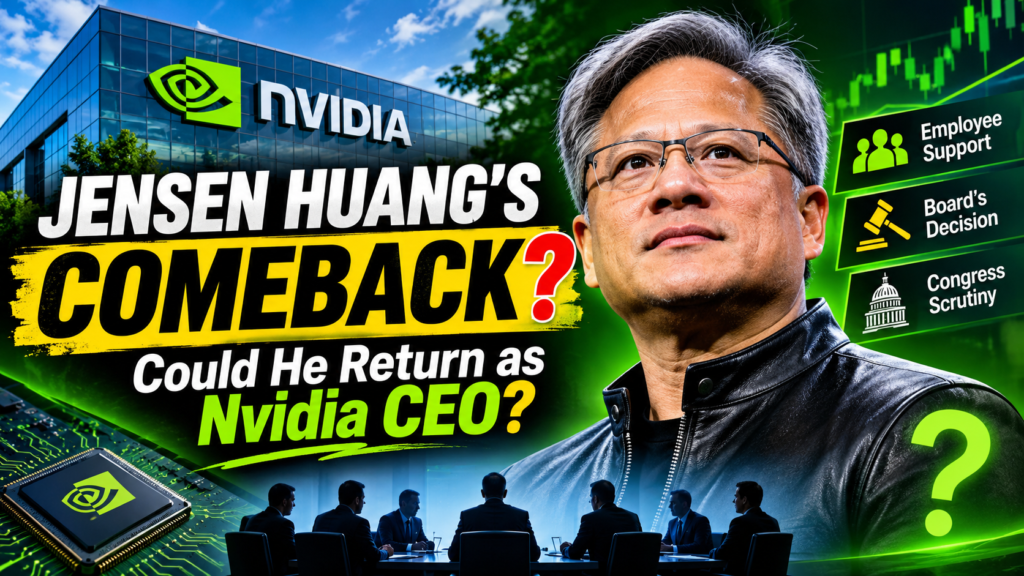
A Jensen Huang return as Nvidia CEO is possible on paper but unlikely in the near term. On November 17, 2026, Huang said in his first public statement since resigning that he would be honored to come back if the board decides it serves shareholders, employees, the company, and America. Reports from CNBC and the Washington Post, however, say Nvidia’s board is not considering reinstating him.
Five days earlier, the most recognizable executive in AI hardware walked away from the company he co-founded in 1993. Now he has publicly asked for a path back. Whether you are an investor, a developer who builds on CUDA, or a student planning a career in AI, this story matters, because it tests how much power a founder keeps once a board decides he has become a liability. This guide explains what Huang said, who is pushing for his comeback, who is blocking it, and what could realistically happen next.
Key Takeaways at a Glance
- The statement: Huang apologized for serious personal mistakes, said he would cooperate with the board’s independent investigation, and said he would return as CEO if the board judged it best for the company.
- The board’s position: CNBC reported that the board is not considering a reinstatement, and an unnamed board source told the Washington Post there were no plans to bring him back.
- The leadership today: CFO Colette Kress is interim CEO while keeping her finance role, and Harvey C. Jones is Nvidia’s first-ever board chair.
- The pressure: An open letter signed by more than 10,000 current and former employees, plus tech figures such as Elon Musk, argues Huang was removed without due process, which keeps the Jensen Huang return question alive.
- The obstacle: Congress is skeptical, and Huang is scheduled to testify on December 1 about chip exports.
What Did Jensen Huang Say in His First Public Statement?
Huang’s statement, posted on X on November 17, was a mix of apology, patriotism, and a carefully conditional job application. He thanked supporters, said he came to the United States 53 years ago, and described Nvidia as his life’s work. He then acknowledged that he had not lived up to the standards expected of everyone at Nvidia and that he had caused problems for the board.
The line that made headlines was the conditional offer: Huang said that if the board decides his return serves shareholders, employees, the company, and America, he would be “honored to answer these calls and return as CEO,” according to TechCrunch’s coverage.
What Is a “Conditional Return Offer”?
A conditional return offer is a public signal that a departed leader will accept a role again, but only if the decision-making body invites them. It is different from a campaign, a demand, or a legal challenge. Huang did not say the board was wrong, did not threaten action, and did not set terms. He placed the decision entirely with the directors.
That framing is strategic. It lets Huang appear humble and cooperative, which matters while an independent investigation is still open. It also redirects attention toward the people who have been asking for his comeback: employees, investors, partners, and customers, as he described them.
Did Huang Apologize and Accept Responsibility?
Yes. He said he had made serious mistakes in his personal life, said he deeply regretted the problems he created for the board, and said he owns those mistakes completely. He also committed to cooperating with the board’s independent investigation. Notably, the statement does not address the export-control questions or the foreign-intelligence allegations in any detail, which are the issues most likely to decide whether a Jensen Huang return is politically survivable.
Why Does the Statement Mention “America” So Prominently?
Because the national security angle is the center of the controversy. Reports tied Huang to an executive at a data-center company who is suspected of links to Chinese intelligence, and Nvidia’s chip exports have faced intense scrutiny since those reports surfaced. By stating that his return must serve “America” as well as shareholders, Huang is speaking directly to Washington, not only to the boardroom.
How Did Nvidia Get Here? A Short Timeline
Nvidia’s leadership change moved fast. The sequence below is drawn from Nvidia’s own announcements and reporting by TechCrunch and other outlets.
- November 8: Nvidia’s board announced an independent investigation after reports that Huang had been the target of a foreign intelligence effort. The board said it had no reason to believe national security or company secrets were compromised.
- November 10: The independent directors retained outside counsel to conduct the review.
- November 11-12: Further reports described additional personal relationships involving Huang. Huang had also acknowledged infidelity in a message to employees.
- November 12: Nvidia announced that Huang resigned as president, CEO, and director, effective immediately, ending a 33-year run. The company gave no reason and no timeline for a successor search.
- November 16: President Donald Trump said he would not mind if Huang returned, while the Washington Post reported a board source saying there were no plans to reinstate him.
- November 17: Huang issued his statement, and Nvidia was scheduled to report third-quarter fiscal 2027 earnings at about 1:20 p.m. PT.
What Did Nvidia’s Official Announcement Say?
Nvidia’s 8-K and press release said Kress agreed to serve as interim CEO and would remain CFO until a permanent successor is named. The board said it would consider both internal and external candidates. Jones, a former Synopsys CEO, became the first person to hold the board chair role at the company. The board also said operations, customer commitments, and the product roadmap would continue without interruption.
Who Wants a Jensen Huang Return, and Who Doesn’t?
The debate has split into two camps with very different incentives. Supporters emphasize Huang’s track record and the cost of losing him. Opponents emphasize governance, national security, and the board’s duty to act on the investigation’s findings.
The Case for Bringing Him Back
Supporters make three arguments, as reported by TechCrunch, CNBC, and others:
- Due process: The open letter says Huang was removed without meaningful due process and asks the board for a specific, evidence-based explanation if it believes his absence is necessary.
- Irreplaceable leadership: Nvidia’s director of developer technology wrote to Jones that the company will struggle through the next couple of years without Huang, according to the Wall Street Journal as relayed by Quartz.
- Strategic stability: Some investors argue a return would calm markets. Atreides Management’s Gavin Baker called Huang’s statement good for America and Nvidia, as CNBC reported.
Trump said on Monday that he would not mind if Huang came back, and Musk said he would sign the growing petition and would be honored to hire him, according to CNN.
The Case Against It
Critics focus on the unresolved investigation and the export-control exposure. TechCrunch reported significant resistance in Congress, where Huang still faces questions about chip exports to China-linked firms. Politico, cited by TechCrunch, quoted a senator who called reinstatement one of the worst ideas he had heard that day. Meanwhile, CNBC reported that the board is not entertaining the idea at all.
Comparison Table: Where Each Stakeholder Stands
| Stakeholder | Position on a Jensen Huang return | Evidence reported |
|---|---|---|
| Jensen Huang | Willing, if the board asks | Public statement on November 17 |
| Nvidia board | Not considering it, per sources | CNBC; Washington Post board source |
| Interim CEO Colette Kress | Focused on continuity | Statement in Nvidia’s announcement |
| Employees | Many in favor | Open letter with 10,000+ signatures |
| Investors | Mixed, some vocal supporters | Comments reported by CNBC |
| President Trump | Open to it | Said he would not mind |
| Elon Musk | Strong supporter | Signed petition, said he would hire Huang |
| Congress | Skeptical or opposed | Senator comments via Politico; Dec. 1 testimony |
Is a Jensen Huang Return Realistic?
A Jensen Huang return is realistic only if three things change: the investigation clears him of national security concerns, Congress stops treating his reinstatement as a red line, and the board reverses its current stance. Today none of those conditions has been met, and the board holds the only vote that counts.
What Does the Board Control?
Everything. Public petitions, presidential comments, and investor sentiment can create pressure, but Nvidia’s directors decide who runs the company. The board has already moved decisively by accepting a resignation, appointing an interim CEO, creating a chair role, and launching a search. Reversing course would signal that the original decision was a mistake, which is a costly admission for any board.
Why Does the Investigation Matter So Much?
The independent review, led by outside counsel, is the only process that can produce evidence either way. Supporters want it to establish that no secrets or security were compromised. Skeptics want to know whether chip-export oversight failed. Until it concludes, any decision to reinstate Huang would look premature to regulators and lawmakers. This is analysis rather than a reported fact, but it follows directly from how the board framed its own review.
What Role Does Congress Play?
Congress cannot vote on Nvidia’s CEO, but it can shape the cost of choosing him. Huang’s scheduled December 1 testimony will give lawmakers a chance to question him on export controls and his contacts. A poor performance there would make a Jensen Huang return nearly impossible. A strong one could soften opposition, though TechCrunch noted that resistance on Capitol Hill is currently significant.
Three Scenarios for Nvidia’s Next CEO
The table below compares the realistic paths. The likelihood column reflects the reporting available as of November 17, 2026, and is an assessment, not a prediction.
| Scenario | What it requires | Upside | Risks | Current signals |
|---|---|---|---|---|
| Huang reinstated | Board reversal, investigation outcome, easing of congressional resistance | Continuity, founder authority, employee morale | Regulatory backlash, perceived governance failure | Low; board source says no plans |
| Kress becomes permanent CEO | Board confidence after interim period | Stability, deep finance and operations knowledge | Less product-vision profile than founder | Plausible; she was described as a leading candidate by some observers |
| External or new internal CEO | Completed search | Clean break, fresh governance | Culture shock, execution risk during a fast product cadence | Open; board says it will consider both |
Why Might Kress Be the Default Choice?
Kress has been Nvidia’s CFO since September 2013 and already holds both roles. She told colleagues she is committed to building on the foundation Huang created. A board seeking calm after a shock often prefers a known operator over a Jensen Huang return. That said, the company has offered no timeline for the search, so anything beyond the interim arrangement remains speculation.
What About an Outside Candidate?
An external hire would be a statement that Nvidia wants a new governance era, symbolized by the creation of its first board chair. The trade-off is execution risk. Nvidia competes on an annual product cadence, and suppliers will watch whether a new leader keeps that rhythm.
What Does the Leadership Shake-Up Mean for Nvidia’s Business?
In the short term, Nvidia says nothing changes operationally. The company stated that the roadmap and customer commitments continue, and it kept its earnings date. Third-quarter results were scheduled for the afternoon of November 17, with revenue guidance of about $108 billion, according to the FourWeekMBA tracker.
The market has been less calm than the company. The same tracker reported that Nvidia’s stock closed at $162.85 on November 13, about 32 percent below its October 6 close. Investors are pricing in uncertainty about leadership, export exposure, and the search for a permanent chief.
What Is Nvidia Doing About Export Controls Now?
Nvidia has formed a new executive committee to oversee export-control compliance, TechCrunch reported. This is the clearest operational response to the controversy. It signals that the board wants a visible compliance structure in place regardless of who ends up as CEO, and it gives lawmakers a concrete step to evaluate.
Why Governance Is the Real Story
The Huang saga is not only a personal scandal; it is a case study in key-person risk.
What Is Key-Person Risk?
Key-person risk is the danger that a company’s strategy, culture, and relationships depend so heavily on one individual that losing them creates outsized disruption. The risk grows when the person is also the founder, the public face, and the CEO. Until this month, Huang combined founder, president, and CEO, and Nvidia’s board had never had a separate chair.
A Bloomberg report from January 2026 had already noted that Nvidia lacked a clear successor for its superstar leader. That context explains why a petition to bring him back gained traction so quickly: many stakeholders see no obvious replacement.
How Do Strong Boards Handle a Founder Crisis?
Strong boards separate three questions: what happened, what it means for the company’s legal and security position, and who should lead during the answer. Nvidia’s board has tried to follow that order by opening an investigation, appointing an interim CEO, and naming an independent chair. Critics of the removal argue the sequence moved too fast. Supporters of the board argue the national security stakes left little room to wait.
Why Does a Jensen Huang Return Debate Matter in India?
India is one of the largest sources of AI developers, data-center demand, and young engineers entering the field. Nvidia’s GPUs and CUDA software sit underneath much of that work, from college projects to enterprise AI pilots. A leadership struggle at Nvidia is therefore not a distant Silicon Valley drama.
What Should Indian Students and Freshers Take Away?
Three practical lessons stand out:
- Infrastructure depends on policy. Export rules and compliance decisions shape who can buy advanced chips and when, which influences cloud pricing and compute availability.
- AI careers include governance. Roles in compliance, security, and risk are growing alongside engineering roles, and this story shows why.
- Reputation is an asset. Even the most successful builders can lose their position quickly when trust breaks.
What Should Indian Founders Take Away?
If you are building a startup, plan for succession before you need it. Define who can act if a founder is unavailable, document key relationships, and give the board clear authority. The Huang situation shows how hard it is to manage a crisis when a company’s identity is tied to one person.
What to Watch Next
Several dated and undated events will shape whether a Jensen Huang return stays a headline or becomes a real possibility:
- Nvidia’s earnings call (November 17): Watch how Kress addresses leadership questions and whether guidance holds.
- The independent investigation: No end date has been announced, and the board has not said how it will communicate results.
- December 1 congressional testimony: Huang’s answers on chip exports will influence the political climate.
- The CEO search: Any timeline, shortlist, or statement from Jones would be a major signal.
- The petition and open letter: Continued growth in signatures would raise pressure, though it does not change who votes.
Frequently Asked Questions
Is Jensen Huang still Nvidia’s CEO?
No. Nvidia announced on November 12, 2026 that he resigned as president, CEO, and board member, effective immediately.
Who is running Nvidia right now?
Colette Kress, the company’s CFO since 2013, is interim CEO while keeping her finance duties. Harvey C. Jones chairs the board.
Will the board allow a Jensen Huang return?
Current reporting says no. CNBC reported that the board is not considering it, and a board source told the Washington Post there were no plans to reinstate him. The board has not issued a public statement rejecting or approving a return.
Why did Huang resign?
Nvidia gave no reason. Reports link the resignation to personal conduct and to concerns about a suspected foreign intelligence effort, which prompted an independent board investigation.
When does Huang testify before Congress?
TechCrunch reported that he is scheduled to testify on December 1, with chip exports expected to be a central topic.
Does the leadership change affect Nvidia’s chips and products?
Nvidia says its roadmap and customer commitments continue without interruption. Analysts and suppliers will watch whether the next permanent CEO maintains the current product cadence.
Final Take: Hope Is Not a Strategy, but It Is a Signal
Huang’s statement is best read as a message with three audiences. To the board, it says he accepts the process and will cooperate. To Washington, it says he is aligned with American interests. To employees and investors, it says the door is open. Whether a Jensen Huang return ever happens depends on facts that are still unknown, especially the outcome of the investigation and the board’s willingness to reverse itself.
For now, the most likely path is a prolonged interim period, a formal search, and a continuing debate about how much power a founder should hold. The story will keep evolving, and the next few weeks will show whether this was the first step in a comeback or the end of a 33-year chapter.
ଜେନସେନ୍ ହୁଆଙ୍ଗଙ୍କ ପ୍ରତ୍ୟାବର୍ତ୍ତନ: ଯେଉଁ ପ୍ରତିଷ୍ଠାତାଙ୍କୁ ବିଦା କରାଯାଇଥିଲା, ସେ କ’ଣ ପୁଣି ଥରେ Nvidia (ଏନଭିଡିଆ)ର CEO ହୋଇ ଫେରିପାରିବେ?
Nvidiaର CEO ଭାବରେ ଜେନସେନ୍ ହୁଆଙ୍ଗଙ୍କ ପ୍ରତ୍ୟାବର୍ତ୍ତନ କାଗଜପତ୍ରରେ ସମ୍ଭବ ମନେହେଉଥିଲେ ମଧ୍ୟ, ନିକଟ ଭବିଷ୍ୟତରେ ଏହାର ସମ୍ଭାବନା କମ୍। ୨୦୨୬ ମସିହା ନଭେମ୍ବର ୧୭ ତାରିଖରେ, ନିଜ ପଦରୁ ଇସ୍ତଫା ଦେବା ପରେ ପ୍ରଥମ ଥର ପାଇଁ ସର୍ବସାଧାରଣରେ ମତ ରଖି ହୁଆଙ୍ଗ କହିଲେ ଯେ, ଯଦି ବୋର୍ଡ (ପରିଚାଳନା ପରିଷଦ) ମନେକରେ ଯେ ତାଙ୍କର ଫେରିବା ଦ୍ୱାରା ଅଂଶୀଦାର (shareholders), କର୍ମଚାରୀ, କମ୍ପାନୀ ଏବଂ ଆମେରିକାର ହିତ ସାଧିତ ହେବ, ତେବେ ସେ ପୁଣି ଫେରିବାକୁ ସମ୍ମାନର ବିଷୟ ବୋଲି ଭାବିବେ। ତେବେ, CNBC ଏବଂ ୱାଶିଂଟନ୍ ପୋଷ୍ଟର ରିପୋର୍ଟ ଅନୁଯାୟୀ, Nvidiaର ବୋର୍ଡ ତାଙ୍କୁ ପୁନର୍ବାର ନିଯୁକ୍ତ କରିବା ବିଷୟରେ ବିଚାର କରୁନାହିଁ।
ଏହାର ପାଞ୍ଚ ଦିନ ପୂର୍ବେ, AI (କୃତ୍ରିମ ବୁଦ୍ଧିମତ୍ତା) ହାର୍ଡୱେର୍ କ୍ଷେତ୍ରର ସବୁଠାରୁ ପରିଚିତ ବ୍ୟକ୍ତିତ୍ୱ ଜଣକ ସେହି କମ୍ପାନୀ ଛାଡ଼ି ଚାଲିଯାଇଥିଲେ, ଯାହାକୁ ସେ ୧୯୯୩ ମସିହାରେ ଅନ୍ୟମାନଙ୍କ ସହ ମିଶି ପ୍ରତିଷ୍ଠା କରିଥିଲେ। ବର୍ତ୍ତମାନ ସେ ସର୍ବସାଧାରଣରେ ପୁଣି ଫେରିବାର ରାସ୍ତା ଖୋଜିବା ପାଇଁ ଅନୁରୋଧ କରିଛନ୍ତି। ଆପଣ ଜଣେ ନିବେଶକ ହୁଅନ୍ତୁ, CUDA (ସିୟୁଡିଏ) ଆଧାରରେ କାମ କରୁଥିବା ଡେଭଲପର ହୁଅନ୍ତୁ, କିମ୍ବା AI କ୍ଷେତ୍ରରେ କ୍ୟାରିୟର ଗଢ଼ିବାକୁ ଯୋଜନା କରୁଥିବା ଜଣେ ଛାତ୍ର ହୁଅନ୍ତୁ—ଏହି ଘଟଣା ଆପଣଙ୍କ ପାଇଁ ଗୁରୁତ୍ୱପୂର୍ଣ୍ଣ। କାରଣ, ଯେତେବେଳେ ଏକ କମ୍ପାନୀର ବୋର୍ଡ ମନେକରେ ଯେ ଜଣେ ପ୍ରତିଷ୍ଠାତା କମ୍ପାନୀ ପାଇଁ ବୋଝ (liability) ପାଲଟିଯାଇଛନ୍ତି, ସେତେବେଳେ ସେହି ପ୍ରତିଷ୍ଠାତାଙ୍କ ହାତରେ କେତେ କ୍ଷମତା ବାକି ରହିଥାଏ, ତାହା ଏହି ଘଟଣାରୁ ଜଣାପଡ଼ିବ। ଏହି ଲେଖାରେ ଆମେ ଆଲୋଚନା କରିବୁ ଯେ ହୁଆଙ୍ଗ କ’ଣ କହିଛନ୍ତି, କିଏ ତାଙ୍କ ପ୍ରତ୍ୟାବର୍ତ୍ତନ ପାଇଁ ଚାପ ପକାଉଛି, କିଏ ଏହାକୁ ବିରୋଧ କରୁଛି ଏବଂ ବାସ୍ତବରେ ଆଗକୁ କ’ଣ ଘଟିପାରେ।
ମୁଖ୍ୟ ବିଷୟଗୁଡ଼ିକ ଉପରେ ଏକ ନଜର
ବୟାନ: ହୁଆଙ୍ଗ ନିଜର ଗମ୍ଭୀର ବ୍ୟକ୍ତିଗତ ଭୁଲ୍ ପାଇଁ କ୍ଷମା ମାଗିଛ ନଭେମ୍ବର ୧୭ ତାରିଖରେ ‘X’ (ଟ୍ୱିଟର) ରେ ପ୍ରକାଶିତ ହୁଆଙ୍ଗଙ୍କ ବିବୃତ୍ତିରେ କ୍ଷମା ପ୍ରାର୍ଥନା, ଦେଶପ୍ରେମ ଏବଂ ଏକ ସତର୍କତାର ସହ ଉପସ୍ଥାପିତ ‘ସର୍ତ୍ତମୂଳକ’ ଚାକିରି ଆବେଦନର ମିଶ୍ରଣ ଦେଖିବାକୁ ମିଳିଥିଲା। ସେ ନିଜ ସମର୍ଥକମାନଙ୍କୁ ଧନ୍ୟବାଦ ଜଣାଇଲେ, ୫୩ ବର୍ଷ ପୂର୍ବେ ଆମେରିକା ଆସିବା ବିଷୟରେ କହିଲେ ଏବଂ ‘ଏନଭିଡିଆ’ (Nvidia) କୁ ନିଜ ଜୀବନର କାର୍ଯ୍ୟ ବୋଲି ବର୍ଣ୍ଣନା କଲେ। ଏହା ସହିତ ସେ ସ୍ୱୀକାର କଲେ ଯେ, ‘ଏନଭିଡିଆ’ରେ ସମସ୍ତଙ୍କ ଠାରୁ ଯେଉଁ ମାନଦଣ୍ଡ ଆଶା କରାଯାଏ, ସେ ସେହି ଅନୁଯାୟୀ ଚଳିପାରି ନାହାନ୍ତି ଏବଂ ତାଙ୍କ କାରଣରୁ ବୋର୍ଡ (ପରିଚାଳନା ପରିଷଦ) ପାଇଁ ସମସ୍ୟା ସୃଷ୍ଟି ହୋଇଛି।
ଯେଉଁ କଥାଟି ସବୁଠାରୁ ଅଧିକ ଚର୍ଚ୍ଚାର ବିଷୟ ପାଲଟିଲା, ତାହା ହେଉଛି ତାଙ୍କର ଏହି ‘ସର୍ତ୍ତମୂଳକ’ ପ୍ରସ୍ତାବ। ‘ଟେକ୍କ୍ରଞ୍ଚ’ (TechCrunch) ର ରିପୋର୍ଟ ଅନୁଯାୟୀ, ହୁଆଙ୍ଗ କହିଛନ୍ତି ଯେ ଯଦି ବୋର୍ଡ ଏହି ନିଷ୍ପତ୍ତି ନିଏ ଯେ ତାଙ୍କର ପ୍ରତ୍ୟାବର୍ତ୍ତନ ଶେୟାରଧାରକ, କର୍ମଚାରୀ, କମ୍ପାନୀ ଏବଂ ଆମେରିକା ପାଇଁ ଲାଭଦାୟକ ହେବ, ତେବେ ସେ “ଏହି ଆହ୍ୱାନକୁ ଗ୍ରହଣ କରି ସିଇଓ (CEO) ଭାବରେ ଫେରିବାକୁ ସମ୍ମାନିତ ମନେ କରିବେ।”
“ସର୍ତ୍ତମୂଳକ ପ୍ରତ୍ୟାବର୍ତ୍ତନ ପ୍ରସ୍ତାବ” (Conditional Return Offer) କ’ଣ?
ଏହା ଏକ ସର୍ବସାଧାରଣ ସଙ୍କେତ ଯେ, ପୂର୍ବରୁ ବିଦାୟ ନେଇଥିବା ଜଣେ ନେତା ପୁନର୍ବାର ଦାୟିତ୍ୱ ଗ୍ରହଣ କରିବାକୁ ପ୍ରସ୍ତୁତ ଅଛନ୍ତି, କିନ୍ତୁ କେବଳ ସେତେବେଳେ ଯଦି ନିଷ୍ପତ୍ତି ନେଉଥିବା କର୍ତ୍ତୃପକ୍ଷ (ବୋର୍ଡ) ତାଙ୍କୁ ନିମନ୍ତ୍ରଣ କରନ୍ତି। ଏହା କୌଣସି ଅଭିଯାନ, ଦାବି କିମ୍ବା ଆଇନଗତ ଆହ୍ୱାନ ଠାରୁ ସମ୍ପୂର୍ଣ୍ଣ ଭିନ୍ନ। ହୁଆଙ୍ଗ କେଉଁଠାରେ ବି ବୋର୍ଡକୁ ଭୁଲ ବୋଲି କହିନାହାନ୍ତି, କୌଣସି କାର୍ଯ୍ୟାନୁଷ୍ଠାନର ଧମକ ଦେଇନାହାନ୍ତି କିମ୍ବା କୌଣସି ସର୍ତ୍ତ ଲଦି ଦେଇନାହାନ୍ତି। ବରଂ, ସେ ଏହି ନିଷ୍ପତ୍ତି ନେବାର ସମ୍ପୂର୍ଣ୍ଣ ଦାୟିତ୍ୱ ନିର୍ଦ୍ଦେଶକମାନଙ୍କ ଉପରେ ଛାଡ଼ି ଦେଇଛନ୍ତି।
ଏହି ଉପସ୍ଥାପନା ଶୈଳୀ ବେଶ୍ ରଣନୀତିକ ଅଟେ। ଏହା ହୁଆଙ୍ଗଙ୍କୁ ଜଣେ ବିନମ୍ର ଏବଂ ସହଯୋଗୀ ବ୍ୟକ୍ତି ଭାବରେ ଚିତ୍ରିତ କରେ, ଯାହା ବର୍ତ୍ତମାନ ଚାଲିଥିବା ଏକ ସ୍ୱାଧୀନ ତଦନ୍ତ ସମୟ ତାଙ୍କ ପ୍ରତ୍ୟାବର୍ତ୍ତନ “ଆମେରିକା” ଏବଂ ସେୟାରହୋଲ୍ଡରମାନଙ୍କ ପାଇଁ ସେବା କରିବ ବୋଲି କହି, ହୁଆଙ୍ଗ ସିଧାସଳଖ ୱାଶିଂଟନକୁ କଥା ହେଉଛନ୍ତି, କେବଳ ବୋର୍ଡରୁମକୁ ନୁହେଁ।
Nvidia କିପରି ଏଠାକୁ ଆସିଲେ? ଏକ ସଂକ୍ଷିପ୍ତ ସମୟସୀମା
Nvidia ର ନେତୃତ୍ୱ ପରିବର୍ତ୍ତନ ଦ୍ରୁତ ଗତିରେ ଗତି କଲା। ନିମ୍ନରେ ଥିବା କ୍ରମ Nvidia ର ନିଜସ୍ୱ ଘୋଷଣା ଏବଂ TechCrunch ଏବଂ ଅନ୍ୟାନ୍ୟ ସଂସ୍ଥା ଦ୍ୱାରା ରିପୋର୍ଟିଂରୁ ନିଆଯାଇଛି।
ନଭେମ୍ବର 8: ହୁଆଙ୍ଗ ଏକ ବିଦେଶୀ ଗୁପ୍ତଚର ପ୍ରୟାସର ଟାର୍ଗେଟ ହୋଇଥିବା ରିପୋର୍ଟ ପରେ Nvidia ର ବୋର୍ଡ ଏକ ସ୍ୱାଧୀନ ତଦନ୍ତ ଘୋଷଣା କରିଥିଲା। ବୋର୍ଡ କହିଛି ଯେ ଜାତୀୟ ସୁରକ୍ଷା କିମ୍ବା କମ୍ପାନୀର ଗୁପ୍ତ କଥା ସହଜରେ ହଇରାଣ ହୋଇଛି ବୋଲି ବିଶ୍ୱାସ କରିବାର କୌଣସି କାରଣ ନାହିଁ।
ନଭେମ୍ବର 10: ସ୍ୱାଧୀନ ନିର୍ଦ୍ଦେଶକମାନେ ସମୀକ୍ଷା କରିବା ପାଇଁ ବାହ୍ୟ ପରାମର୍ଶଦାତାଙ୍କୁ ରଖିଥିଲେ।
ନଭେମ୍ବର 11-12: ଅଧିକ ରିପୋର୍ଟ ହୁଆଙ୍ଗ ସହିତ ଜଡିତ ଅତିରିକ୍ତ ବ୍ୟକ୍ତିଗତ ସମ୍ପର୍କ ବର୍ଣ୍ଣନା କରିଥିଲା। ହୁଆଙ୍ଗ କର୍ମଚାରୀମାନଙ୍କୁ ଏକ ବାର୍ତ୍ତାରେ ବିଶ୍ୱାସଘାତକତାକୁ ମଧ୍ୟ ସ୍ୱୀକାର କରିଥିଲେ।
ନଭେମ୍ବର 12: Nvidia ଘୋଷଣା କରିଥିଲା ଯେ ହୁଆଙ୍ଗ ସଭାପତି, ସିଇଓ ଏବଂ ନିର୍ଦ୍ଦେଶକ ପଦରୁ ଇସ୍ତଫା ଦେଇଛନ୍ତି, ପ୍ରଭାବଶାଳୀ iତୁରନ୍ତ ପ୍ରଭାବରୁ ଏହା ୩୩ ବର୍ଷର କାର୍ଯ୍ୟକାଳର ଅନ୍ତ ଘଟାଇଛି। କମ୍ପାନୀ ଏହାର କୌଣସି କାରଣ ଦର୍ଶାଇ ନାହିଁ କିମ୍ବା ଉତ୍ତରାଧିକାରୀ ଖୋଜିବା ପାଇଁ କୌଣସି ସମୟସୀମା ମଧ୍ୟ ଦେଇନାହିଁ।
ନଭେମ୍ବର ୧୬: ରାଷ୍ଟ୍ରପତି ଡୋନାଲ୍ଡ ଟ୍ରମ୍ପ କହିଛନ୍ତି ଯେ ହୁଆଙ୍ଗ ଫେରି ଆସିଲେ ତାଙ୍କର କୌଣସି ଆପତ୍ତି ନାହିଁ। ଅନ୍ୟପକ୍ଷରେ, ‘ୱାଶିଂଟନ୍ ପୋଷ୍ଟ’ ବୋର୍ଡର ଜଣେ ସୂତ୍ରକୁ ଉଦ୍ଧୃତ କରି ରିପୋର୍ଟ ଦେଇଛି ଯେ ତାଙ୍କୁ ପୁନଃ ନିଯୁକ୍ତ କରିବାର କୌଣସି ଯୋଜନା ନାହିଁ।
ନଭେମ୍ବର ୧୭: ହୁଆଙ୍ଗ ନିଜର ବିବୃତ୍ତି ଜାରି କଲେ ଏବଂ ଏହି ସମୟରେ ‘ଏନଭିଡିଆ’ (Nvidia) ପକ୍ଷରୁ ୨୦୨୭ ଆର୍ଥିକ ବର୍ଷର ତୃତୀୟ ତ୍ରୈମାସିକ ଆୟ ସମ୍ପର୍କିତ ରିପୋର୍ଟ ପ୍ରକାଶ ପାଇବାର କାର୍ଯ୍ୟକ୍ରମ ଥିଲା (ପିଟି ସମୟ ଅନୁସାରେ ଅପରାହ୍ନ ୧:୨୦ ରେ)।
‘ଏନଭିଡିଆ’ର ଅଫିସିଆଲ୍ ଘୋଷଣାରେ କ’ଣ କୁହାଯାଇଥିଲା?
‘ଏନଭିଡିଆ’ର ‘୮-କେ’ (8-K) ଫାଇଲିଂ ଏବଂ ପ୍ରେସ୍ ବିଜ୍ଞପ୍ତି ଅନୁଯାୟୀ, କ୍ରେସ୍ (Kress) ଅନ୍ତରୀଣ ସିଇଓ (CEO) ଭାବରେ କାର୍ଯ୍ୟ କରିବାକୁ ରାଜି ହୋଇଛନ୍ତି। ଜଣେ ସ୍ଥାୟୀ ଉତ୍ତରାଧିକାରୀ ନିଯୁକ୍ତ ନ ହେବା ପର୍ଯ୍ୟନ୍ତ ସେ ମୁଖ୍ୟ ଆର୍ଥିକ ଅଧିକାରୀ (CFO) ଭାବରେ ମଧ୍ୟ କାର୍ଯ୍ୟ ଜାରି ରଖିବେ। ବୋର୍ଡ ଜଣାଇଛି ଯେ ସେମାନେ କମ୍ପାନୀ ଭିତରର ଏବଂ ବାହାରର ଉଭୟ ପ୍ରାର୍ଥୀଙ୍କୁ ବିଚାରକୁ ନେବେ। ‘ସିନୋପସିସ୍’ (Synopsys) ର ପୂର୍ବତନ ସିଇଓ ଜୋନ୍ସ (Jones), କମ୍ପାନୀର ବୋର୍ଡ ଅଧ୍ୟକ୍ଷ (Chair) ପଦ ଗ୍ରହଣ କରିବାରେ ପ୍ରଥମ ବ୍ୟକ୍ତି ହୋଇଛନ୍ତି। ବୋର୍ଡ ଆହୁରି ମଧ୍ୟ କହିଛି ଯେ କମ୍ପାନୀର କାର୍ଯ୍ୟକଳାପ, ଗ୍ରାହକଙ୍କ ପ୍ରତି ଥିବା ପ୍ରତିଶ୍ରୁତି ଏବଂ ଉତ୍ପାଦ ଯୋଜନା (product roadmap) ବିନା କୌଣସି ବାଧାରେ ଜାରି ରହିବ।
ଜେନସେନ୍ ହୁଆଙ୍ଗଙ୍କ ପ୍ରତ୍ୟାବର୍ତ୍ତନକୁ କିଏ ଚାହୁଁଛି ଏବଂ କିଏ ଚାହୁଁନାହିଁ?
ଏହି ବିବାଦ ଦୁଇଟି ଭିନ୍ନ ମତ ରଖୁଥିବା ଗୋଷ୍ଠୀରେ ବିଭକ୍ତ ହୋଇଯାଇଛି। ସମର୍ଥକମାନେ ହୁଆଙ୍ଗଙ୍କ ପୂର୍ବ କାର୍ଯ୍ୟଦକ୍ଷତା ଏବଂ ତାଙ୍କୁ ହରାଇବା ଦ୍ୱାରା ହେବାକୁ ଥିବା କ୍ଷତି ଉପରେ ଗୁରୁତ୍ୱ ଦେଉଛନ୍ତି। ଅନ୍ୟପକ୍ଷରେ, ବିରୋଧୀମାନେ ଶାସନ ବ୍ୟବସ୍ଥା (governance), ଜାତୀୟ ସୁରକ୍ଷା ଏବଂ ତଦନ୍ତର ଫ ଏହାର ବିପକ୍ଷରେ ଯୁକ୍ତି
ସମାଲୋଚକମାନେ ଅସମାପ୍ତ ତଦନ୍ତ ଏବଂ ରପ୍ତାନି ନିୟନ୍ତ୍ରଣ ସମ୍ବନ୍ଧୀୟ ବିବାଦ ଉପରେ ଧ୍ୟାନ କେନ୍ଦ୍ରିତ କରୁଛନ୍ତି। ‘ଟେକ୍କ୍ରଞ୍ଚ’ (TechCrunch) ରିପୋର୍ଟ କରିଛି ଯେ ଆମେରିକା କଂଗ୍ରେସରେ ଏହାକୁ ନେଇ ବ୍ୟାପକ ବିରୋଧ ରହିଛି। ସେଠାରେ ଜେନସେନ୍ ହୁଆଙ୍ଗଙ୍କୁ ଚୀନ୍ ସହ ଜଡ଼ିତ କମ୍ପାନୀଗୁଡ଼ିକ ନିକଟକୁ ଚିପ୍ ରପ୍ତାନି କରିବା ନେଇ ପ୍ରଶ୍ନର ସମ୍ମୁଖୀନ ହେବାକୁ ପଡ଼ୁଛି। ‘ଟେକ୍କ୍ରଞ୍ଚ’ ଦ୍ୱାରା ଉଦ୍ଧୃତ ‘ପଲିଟିକୋ’ (Politico) ରିପୋର୍ଟ ଅନୁଯାୟୀ, ଜଣେ ସିନେଟର ଏହି ପ୍ରସ୍ତାବକୁ ସେହି ଦିନ ଶୁଣିଥିବା ସବୁଠାରୁ ଖରାପ ବିଚାର ବୋଲି ବର୍ଣ୍ଣନା କରିଛନ୍ତି। ଅନ୍ୟପକ୍ଷରେ, ‘ସିଏନବିସି’ (CNBC) ରିପୋର୍ଟ କରିଛି ଯେ କମ୍ପାନୀର ବୋର୍ଡ ଏହି ପ୍ରସ୍ତାବକୁ ଆଦୌ ବିଚାରକୁ ନେଉନାହିଁ।
ତୁଳନାତ୍ମକ ସାରଣୀ: ବିଭିନ୍ନ ପକ୍ଷଙ୍କ ମତାମତ
ପକ୍ଷ ଜେନସେନ୍ ହୁଆଙ୍ଗଙ୍କ ପ୍ରତ୍ୟାବର୍ତ୍ତନ ଉପରେ ମତାମତ ଉପଲବ୍ଧ ପ୍ରମାଣ/ସୂଚନା
ଜେନସେନ୍ ହୁଆଙ୍ଗ ବୋର୍ଡ ଚାହିଁଲେ ଫେରିବାକୁ ରାଜି ନଭେମ୍ବର ୧୭ରେ ଦେଇଥିବା ସର୍ବସାଧାରଣ ବିବୃତି
ଏନଭିଡିଆ (Nvidia) ବୋର୍ଡ ବିଚାର କରୁନାହିଁ (ସୂତ୍ର ଅନୁସାରେ) ‘ସିଏନବିସି’ ଏବଂ ‘ୱାଶିଂଟନ୍ ପୋଷ୍ଟ’ର ସୂତ୍ର
ଅନ୍ତରୀଣ ସିଇଓ କୋଲେଟ୍ କ୍ରେସ୍ କାର୍ଯ୍ୟଧାରାର ନିରନ୍ତରତା ଉପରେ ଧ୍ୟାନ ଏନଭିଡିଆର ବିବୃତିରେ ଉଲ୍ଲେଖ
କର୍ମଚାରୀ ଅଧିକାଂଶ ସପକ୍ଷରେ ୧୦,୦୦୦ରୁ ଅଧିକ ଦସ୍ତଖତ ଥିବା ଏକ ଖୋଲା ଚିଠି
ନିବେଶକ ମିଶ୍ରିତ ମତାମତ, କିଛି ସ୍ପଷ୍ଟ ଭାବେ ସମର୍ଥନ କରୁଛନ୍ତି ‘ସିଏନବିସି’ ଦ୍ୱାରା ରିପୋର୍ଟ କରାଯାଇଥିବା ମତାମତ
ରାଷ୍ଟ୍ରପତି ଟ୍ରମ୍ପ ସକାରାତ୍ମକ ମନୋଭାବ ତାଙ୍କର କୌଣସି ଆପତ୍ତି ନାହିଁ ବୋଲି କହିଛନ୍ତି
ଏଲନ୍ ମସ୍କ ଦୃଢ଼ ସମର୍ଥକ ପିଟିସନରେ ଦସ୍ତଖତ କରିଛନ୍ତି ଏବଂ ହୁଆଙ୍ଗଙ୍କୁ ନିଯୁକ୍ତ କରିବେ ବୋଲି କହିଛନ୍ତି
କଂଗ୍ରେସ ସନ୍ଦେହୀ କିମ୍ବା ବିରୋଧୀ ‘ପଲିଟିକୋ’ରେ ସିନେଟରଙ୍କ ମନ୍ତବ୍ୟ; ଡିସେମ୍ବର ୧ର ସାକ୍ଷ୍ୟ
ଜେନସେନ୍ ହୁଆଙ୍ଗଙ୍କ ପ୍ରତ୍ୟାବର୍ତ୍ତନ କେତେ ଦୂର ବାସ୍ତବସମ୍ମତ?
ଜେନସେନ୍ ହୁଆଙ୍ଗଙ୍କ ପ୍ରତ୍ୟାବର୍ତ୍ତନ କେବଳ ସେତେବେଳେ ସମ୍ଭ ଏହା ଶେଷ ନହେବା ପର୍ଯ୍ୟନ୍ତ, ହୁଆଙ୍ଗଙ୍କୁ ପୁନଃସ୍ଥାପିତ କରିବାର ଯେକୌଣସି ନିଷ୍ପତ୍ତି ନିୟାମକ ଏବଂ ଆଇନ ପ୍ରଣୟନକାରୀଙ୍କ ପାଇଁ ଅକାଳ ଦେଖାଯିବ। ଏହା ଏକ ରିପୋର୍ଟ କରାଯାଇଥିବା ତଥ୍ୟ ନୁହେଁ ବରଂ ବିଶ୍ଳେଷଣ, କିନ୍ତୁ ଏହା ସିଧାସଳଖ ବୋର୍ଡ କିପରି ନିଜର ସମୀକ୍ଷା ପ୍ରସ୍ତୁତ କରିଛି ତାହା ଉପରେ ଆଧାରିତ।
କଂଗ୍ରେସ କ’ଣ ଭୂମିକା ଗ୍ରହଣ କରେ?
କଂଗ୍ରେସ Nvidia ର CEO ଉପରେ ଭୋଟ ଦେଇପାରିବ ନାହିଁ, କିନ୍ତୁ ଏହା ତାଙ୍କୁ ବାଛିବାର ମୂଲ୍ୟକୁ ଆକାର ଦେଇପାରେ। ହୁଆଙ୍ଗଙ୍କ ନିର୍ଦ୍ଧାରିତ ଡିସେମ୍ବର 1 ସାକ୍ଷ୍ୟ ଆଇନ ପ୍ରଣୟନକାରୀମାନଙ୍କୁ ରପ୍ତାନି ନିୟନ୍ତ୍ରଣ ଏବଂ ତାଙ୍କ ସମ୍ପର୍କ ଉପରେ ପ୍ରଶ୍ନ ପଚାରିବାର ସୁଯୋଗ ଦେବ। ସେଠାରେ ଏକ ଖରାପ ପ୍ରଦର୍ଶନ ଜେନସେନ୍ ହୁଆଙ୍ଗଙ୍କ ପ୍ରତ୍ୟାବର୍ତ୍ତନକୁ ପ୍ରାୟ ଅସମ୍ଭବ କରିଦେବ। ଏକ ଶକ୍ତିଶାଳୀ ବିରୋଧୀକୁ ମଜଭୁତ କରିପାରେ, ଯଦିଓ TechCrunch ଉଲ୍ଲେଖ କରିଛି ଯେ କ୍ୟାପିଟଲ୍ ହିଲ୍ ଉପରେ ପ୍ରତିରୋଧ ବର୍ତ୍ତମାନ ଗୁରୁତ୍ୱପୂର୍ଣ୍ଣ।
Nvidia ର ପରବର୍ତ୍ତୀ CEO ପାଇଁ ତିନୋଟି ପରିସ୍ଥିତି
ନିମ୍ନରେ ଥିବା ସାରଣୀ ବାସ୍ତବବାଦୀ ପଥଗୁଡ଼ିକୁ ତୁଳନା କରେ। ସମ୍ଭାବନା ସ୍ତମ୍ଭ ଉପଲବ୍ଧ ରିପୋର୍ଟିଂକୁ ପ୍ରତିଫଳିତ କରେ aଏହା ୧୭ ନଭେମ୍ବର, ୨୦୨୬ ସୁଦ୍ଧା ଏକ ଆକଳନ ଅଟେ, କୌଣସି ଭବିଷ୍ୟବାଣୀ ନୁହେଁ।
ପରିସ୍ଥିତି | କ’ଣ ଆବଶ୍ୟକ | ସକାରାତ୍ମକ ଦିଗ | ବିପଦ | ବର୍ତ୍ତମାନର ସଙ୍କେତ
ହୁଆଙ୍ଗଙ୍କ ପ୍ରତ୍ୟାବର୍ତ୍ତନ | ବୋର୍ଡର ନିଷ୍ପତ୍ତି ପରିବର୍ତ୍ତନ, ତଦନ୍ତ ଫଳାଫଳ, କଂଗ୍ରେସର ବିରୋଧ କମିବା | କାର୍ଯ୍ୟଧାରାର ନିରନ୍ତରତା, ପ୍ରତିଷ୍ଠାତାଙ୍କ କର୍ତ୍ତୃତ୍ୱ, କର୍ମଚାରୀଙ୍କ ମନୋବଳ | ନିୟାମକ ସଂସ୍ଥାଙ୍କ କଠୋର କାର୍ଯ୍ୟାନୁଷ୍ଠାନ, ପରିଚାଳନାଗତ ବିଫଳତାର ଆଶଙ୍କା | କମ୍; ବୋର୍ଡ ସୂତ୍ରରୁ ମିଳିଥିବା ସୂଚନା ଅନୁଯାୟୀ ଏଭଳି କୌଣସି ଯୋଜନା ନାହିଁ
କ୍ରେସ୍ ସ୍ଥାୟୀ ସିଇଓ (CEO) ହେବା | ଅନ୍ତରୀଣ କାର୍ଯ୍ୟକାଳ ପରେ ବୋର୍ଡର ଆସ୍ଥା | ସ୍ଥିରତା, ଆର୍ଥିକ ଓ ପରିଚାଳନାଗତ ବିଷୟରେ ଗଭୀର ଜ୍ଞାନ | ପ୍ରତିଷ୍ଠାତାଙ୍କ ତୁଳନାରେ ଉତ୍ପାଦ ସମ୍ବନ୍ଧୀୟ ଦୂରଦୃଷ୍ଟିର ଅଭାବ | ସମ୍ଭାବନା ଅଛି; କିଛି ପର୍ଯ୍ୟବେକ୍ଷକ ତାଙ୍କୁ ଏକ ପ୍ରମୁଖ ପ୍ରାର୍ଥୀ ଭାବରେ ଦର୍ଶାଇଥିଲେ
ବାହ୍ୟ କିମ୍ବା ଅନ୍ୟ କୌଣସି ଆଭ୍ୟନ୍ତରୀଣ ବ୍ୟକ୍ତି ସିଇଓ ହେବା | ନିଯୁକ୍ତି ପ୍ରକ୍ରିୟା ସମ୍ପୂର୍ଣ୍ଣ ହେବା | ପୁରୁଣା ବ୍ୟବସ୍ଥାରୁ ସମ୍ପୂର୍ଣ୍ଣ ମୁକ୍ତି, ନୂତନ ପରିଚାଳନା ଶୈଳୀ | କାର୍ଯ୍ୟ ସଂସ୍କୃତିରେ ପରିବର୍ତ୍ତନଜନିତ ସମସ୍ୟା, ଦ୍ରୁତ ଉତ୍ପାଦ ବିକାଶ ପ୍ରକ୍ରିୟାରେ କାର୍ଯ୍ୟ ସମ୍ପାଦନ ସମ୍ବନ୍ଧୀୟ ବିପଦ | ଉନ୍ମୁକ୍ତ ବିକଳ୍ପ; ବୋର୍ଡ କହିଛି ଯେ ସେମାନେ ଉଭୟ ବିଷୟ ଉପରେ ବିଚାର କରିବେ
କ୍ରେସ୍ କାହିଁକି ସ୍ୱାଭାବିକ ପସନ୍ଦ ହୋଇପାରନ୍ତି?
କ୍ରେସ୍ ସେପ୍ଟେମ୍ବର ୨୦୧୩ରୁ ଏନଭିଡିଆ (Nvidia) ର ସିଏଫଓ (CFO) ଅଛନ୍ତି ଏବଂ ବର୍ତ୍ତମାନ ଉଭୟ ଦାୟିତ୍ୱ ତୁଲାଉଛନ୍ତି। ସେ ନିଜ ସହକର୍ମୀମାନଙ୍କୁ କହିଛନ୍ତି ଯେ ହୁଆଙ୍ଗ ଯେଉଁ ଭିତ୍ତିଭୂମି ନିର୍ମାଣ କରିଛନ୍ତି, ତା’ ଉପରେ ଆଗକୁ କାମ କରିବାକୁ ସେ ପ୍ରତିଶ୍ରୁତିବଦ୍ଧ। କୌଣସି ବଡ଼ ଘଟଣା ପରେ ଯେତେବେଳେ ବୋର୍ଡ ସ୍ଥିରତା ଚାହେଁ, ସେତେବେଳେ ସେମାନେ ଜେନସେନ୍ ହୁଆଙ୍ଗଙ୍କ ପ୍ରତ୍ୟାବର୍ତ୍ତନ ଅପେକ୍ଷା ପୂର୍ବରୁ ଜଣାଶୁଣା ବ୍ୟକ୍ତିଙ୍କୁ ପସନ୍ଦ କରିଥାନ୍ତି। ତଥାପି, କମ୍ପାନୀ ଏହି ନିଯୁକ୍ତି ପ୍ରକ୍ରିୟା ପାଇଁ କୌଣସି ନିର୍ଦ୍ଦିଷ୍ଟ ସମୟସୀମା ଦେଇନାହିଁ, ତେଣୁ ଅନ୍ତରୀଣ ‘ଟେକ୍କ୍ରଞ୍ଚ’ (TechCrunch) ର ରିପୋର୍ଟ ଅନୁଯାୟୀ, ରପ୍ତାନି ନିୟନ୍ତ୍ରଣ ନିୟମାବଳୀର ପାଳନ ଉପରେ ନଜର ରଖିବା ପାଇଁ ‘ଏନଭିଡିଆ’ (Nvidia) ଏକ ନୂତନ କାର୍ଯ୍ୟନିର୍ବାହୀ କମିଟି ଗଠନ କରିଛି।
ଏହି ବିବାଦ ପ୍ରତି ଏହା ହେଉଛି ସବୁଠାରୁ ସ୍ପଷ୍ଟ କାର୍ଯ୍ୟଗତ ପଦକ୍ଷେପ। ଏହା ସୂଚିତ କରେ ଯେ, ଭବିଷ୍ୟତରେ ଯିଏ ମଧ୍ୟ ସିଇଓ (CEO) ହୁଅନ୍ତୁ ନା କାହିଁକି, କମ୍ପାନୀର ବୋର୍ଡ ଏକ ସ୍ପଷ୍ଟ ଏବଂ ଦୃଶ୍ୟମାନ ନିୟମ ପାଳନ ବ୍ୟବସ୍ଥା (compliance structure) ରଖିବାକୁ ଚାହୁଁଛି। ଏହା ସହିତ, ନୀତି ନିର୍ଦ୍ଧାରକମାନଙ୍କ ପାଇଁ ମଧ୍ୟ ଏହା ଏକ ଠୋସ୍ ପଦକ୍ଷେପ, ଯାହାକୁ ସେମାନେ ବିଚାର କରିପାରିବେ।
‘ଶାସନ ବ୍ୟବସ୍ଥା’ (Governance) କାହିଁକି ଏହି ଘଟଣାର ମୁଖ୍ୟ ବିଷୟ?
ଜେନସେନ୍ ହୁଆଙ୍ଗଙ୍କୁ ନେଇ ଉପୁଜିଥିବା ଏହି ଘଟଣା କେବଳ ଏକ ବ୍ୟକ୍ତିଗତ ବିବାଦ ନୁହେଁ, ବରଂ ଏହା ‘କି-ପର୍ସନ୍ ରିସ୍କ’ (key-person risk) ବା ‘ଗୁରୁତ୍ୱପୂର୍ଣ୍ଣ ବ୍ୟକ୍ତିଙ୍କ ଉପରେ ନିର୍ଭରଶୀଳତାରୁ ସୃଷ୍ଟି ହେଉଥିବା ବିପଦ’ର ଏକ ଉଦାହରଣ ଅଟେ।
‘କି-ପର୍ସନ୍ ରିସ୍କ’ (Key-Person Risk) କ’ଣ?
ଯେତେବେଳେ କୌଣସି କମ୍ପାନୀର ରଣନୀତି, ସଂସ୍କୃତି ଏବଂ ସମ୍ପର୍କଗୁଡ଼ିକ କେବଳ ଜଣେ ବ୍ୟକ୍ତିଙ୍କ ଉପରେ ଅତ୍ୟଧିକ ନିର୍ଭର କରେ, ସେତେବେଳେ ସେହି ବ୍ୟକ୍ତିଙ୍କୁ ହରାଇବା ଦ୍ୱାରା କମ୍ପାନୀରେ ବଡ଼ ଧରଣର ବିଶୃଙ୍ଖଳା ସୃଷ୍ଟି ହେବାର ଆଶଙ୍କା ଥାଏ; ଏହାକୁ ହିଁ ‘କି-ପର୍ସନ୍ ରିସ୍କ’ କୁହାଯାଏ। ଯଦି ସେହି ବ୍ୟକ୍ତି ଜଣକ କମ୍ପାନୀର ପ୍ରତିଷ୍ଠାତା, ସର୍ବସାଧାରଣ ମୁଖ୍ୟ ଚେହେରା ଏବଂ ସିଇଓ (CEO) ମଧ୍ୟ ହୋଇଥାନ୍ତି, ତେବେ ଏହି ବିପଦ ଆହୁରି ବଢ଼ିଯାଏ। ଚଳିତ ମାସ ପର୍ଯ୍ୟନ୍ତ, ଜେନସେନ୍ ହୁଆଙ୍ଗ ଏକାଧାରରେ ପ୍ରତିଷ୍ଠାତା, ସଭାପତି (President) ଏବଂ ସିଇଓ ଭାବରେ କାର୍ଯ୍ୟ କରୁଥିଲେ ଏବଂ ଏନଭିଡିଆର ବୋର୍ଡରେ କେବେବି ଜଣେ ସ୍ୱତନ୍ତ୍ର ଅଧ୍ୟକ୍ଷ (Chair) ନଥିଲେ।
ଜାନୁଆରୀ ୨୦୨୬ର ଏକ ‘ବ୍ଲୁମବର୍ଗ’ (Bloomberg) ରିପୋର୍ଟରେ ପୂର୍ବରୁ ଉଲ୍ଲେଖ କରାଯାଇଥିଲା ଯେ, ଏନଭିଡିଆ ପାଖରେ ଏହି ପ୍ରମୁଖ ନେତାଙ୍କ ପାଇଁ କୌଣସି ସ୍ପଷ୍ଟ ଉତ୍ତରାଧିକାରୀ ନାହାନ୍ତି। ଏହି ପରିପ୍ରେକ୍ଷୀରୁ ବୁଝିହୁଏ ଯେ, ତାଙ୍କୁ ଫେରାଇ ଆଣିବା ପାଇଁ ଦାବି କାହିଁକି ଏତେ AI କ୍ୟାରିୟରରେ ଶାସନ ଅନ୍ତର୍ଭୁକ୍ତ। ଇଞ୍ଜିନିୟରିଂ ଭୂମିକା ସହିତ ଅନୁପାଳନ, ସୁରକ୍ଷା ଏବଂ ବିପଦର ଭୂମିକା ବଢ଼ୁଛି, ଏବଂ ଏହି କାହାଣୀ କାହିଁକି ତାହା ଦର୍ଶାଉଛି।
ପ୍ରତିଷ୍ଠା ଏକ ସମ୍ପତ୍ତି। ବିଶ୍ୱାସ ଭାଙ୍ଗିଗଲେ ସବୁଠାରୁ ସଫଳ ନିର୍ମାତାମାନେ ମଧ୍ୟ ଶୀଘ୍ର ସେମାନଙ୍କର ପଦବୀ ହରାଇପାରନ୍ତି।
ଭାରତୀୟ ପ୍ରତିଷ୍ଠାତାମାନେ କ’ଣ ଛଡ଼ାଇ ନେବା ଉଚିତ?
ଯଦି ଆପଣ ଏକ ଷ୍ଟାର୍ଟଅପ୍ ନିର୍ମାଣ କରୁଛନ୍ତି, ତେବେ ଆବଶ୍ୟକ ହେବା ପୂର୍ବରୁ ଉତ୍ତରାଧିକାର ପାଇଁ ଯୋଜନା କରନ୍ତୁ। ଯଦି ଜଣେ ପ୍ରତିଷ୍ଠାତା ଅନୁପଲବ୍ଧ ଥାଆନ୍ତି ତେବେ କିଏ କାର୍ଯ୍ୟ କରିପାରିବେ ତାହା ପରିଭାଷିତ କରନ୍ତୁ, ପ୍ରମୁଖ ସମ୍ପର୍କଗୁଡ଼ିକୁ ଡକ୍ୟୁମେଣ୍ଟ କରନ୍ତୁ ଏବଂ ବୋର୍ଡକୁ ସ୍ପଷ୍ଟ ଅଧିକାର ଦିଅନ୍ତୁ। ହୁଆଙ୍ଗ ପରିସ୍ଥିତି ଦର୍ଶାଏ ଯେ ଯେତେବେଳେ ଏକ କମ୍ପାନୀର ପରିଚୟ ଜଣେ ବ୍ୟକ୍ତିଙ୍କ ସହିତ ଜଡିତ ହୁଏ ସେତେବେଳେ ସଙ୍କଟ ପରିଚାଳନା କରିବା କେତେ କଷ୍ଟକର।
ପରବର୍ତ୍ତୀ କଣ ଦେଖିବା
ଅନେକ ପୁରୁଣା ଏବଂ ପୁରୁଣାନିମ୍ନଲିଖିତ ଘଟଣାଗୁଡ଼ିକ ସ୍ଥିର କରିବ ଯେ ଜେନସେନ୍ ହୁଆଙ୍ଗଙ୍କ ପ୍ରତ୍ୟାବର୍ତ୍ତନ କେବଳ ଏକ ଚର୍ଚ୍ଚାର ବିଷୟ ହୋଇ ରହିବ, ନା ଏହା ଏକ ବାସ୍ତବ ସମ୍ଭାବନାରେ ପରିଣତ ହେବ:
ଏନଭିଡିଆ (Nvidia) ର ଆୟ ସମ୍ବନ୍ଧୀୟ ସମୀକ୍ଷା ବୈଠକ (ନଭେମ୍ବର ୧୭): କ୍ରେସ୍ (Kress) ନେତୃତ୍ୱ ସମ୍ବନ୍ଧୀୟ ପ୍ରଶ୍ନଗୁଡ଼ିକର ଉତ୍ତର କିପରି ଦେଉଛନ୍ତି ଏବଂ କମ୍ପାନୀର ପୂର୍ବ ନିର୍ଦ୍ଧାରିତ ଲକ୍ଷ୍ୟ (guidance) ବଜାୟ ରହୁଛି କି ନାହିଁ, ତାହା ଉପରେ ନଜର ରଖନ୍ତୁ।
ସ୍ୱାଧୀନ ତଦନ୍ତ: ଏହି ତଦନ୍ତ କେବେ ଶେଷ ହେବ ସେ ନେଇ କୌଣସି ତାରିଖ ଘୋଷଣା କରାଯାଇନାହିଁ ଏବଂ ତଦନ୍ତର ଫଳାଫଳ କିପରି ଜଣାଯିବ, ସେ ବିଷୟରେ ବୋର୍ଡ କିଛି କହିନାହିଁ।
ଡିସେମ୍ବର ୧ ତାରିଖରେ କଂଗ୍ରେସ (ଆମେରିକୀୟ ସଂସଦ) ସମ୍ମୁଖରେ ସାକ୍ଷ୍ୟ: ଚିପ୍ ରପ୍ତାନି ସମ୍ବନ୍ଧୀୟ ପ୍ରଶ୍ନ ଉପରେ ହୁଆଙ୍ଗ ଦେଉଥିବା ଉତ୍ତର ରାଜନୈତିକ ପରିସ୍ଥିତି ଉପରେ ପ୍ରଭାବ ପକାଇପାରେ।
ନୂତନ ସିଇଓ (CEO) ଚୟନ ପ୍ରକ୍ରିୟା: ଜୋନ୍ସ (Jones) ଙ୍କ ପକ୍ଷରୁ କୌଣସି ସମୟସୀମା, ଚୟନ କରାଯାଇଥିବା ବ୍ୟକ୍ତିଙ୍କ ତାଲିକା (shortlist) କିମ୍ବା କୌଣସି ବିବୃତ୍ତି ଆସିଲେ, ତାହା ଏକ ଗୁରୁତ୍ୱପୂର୍ଣ୍ଣ ସଙ୍କେତ ହେବ।
ଆବେଦନ ପତ୍ର ଏବଂ ଖୋଲା ଚିଠି: ଏଥିରେ ସ୍ୱାକ୍ଷରକାରୀଙ୍କ ସଂଖ୍ୟା ବୃଦ୍ଧି ପାଇଲେ ଚାପ ମଧ୍ୟ ବଢ଼ିବ, ଯଦିଓ ଏହା ନିଷ୍ପତ୍ତି ନେବା ଅଧିକାର ଥିବା ବ୍ୟକ୍ତିଙ୍କ ଉପରେ କୌଣସି ପ୍ରଭାବ ପକାଇବ ନାହିଁ।
ସାଧାରଣତଃ ପଚରାଯାଉଥିବା ପ୍ରଶ୍ନଗୁଡ଼ିକ
ଜେନସେନ୍ ହୁଆଙ୍ଗ କ’ଣ ଏବେ ମଧ୍ୟ ଏନଭିଡିଆର ସିଇଓ ଅଛନ୍ତି?
ନା। ଏନଭିଡିଆ ୧୨ ନଭେମ୍ବର, ୨୦୨୬ ରେ ଘୋଷଣା କରିଥିଲା ଯେ ସେ ତୁରନ୍ତ ଲାଗୁ ହେବା ଭଳି ରାଷ୍ଟ୍ରପତି (president), ସିଇଓ ଏବଂ ବୋର୍ଡ ସଦସ୍ୟ ପଦରୁ ଇସ୍ତଫା ଦେଇଛନ୍ତି।
ବର୍ତ୍ତମାନ ଏନଭିଡିଆକୁ କିଏ ପରିଚାଳନା କରୁଛି?
କମ୍ପାନୀର ସିଏଫଓ (CFO) କୋଲେଟ୍ କ୍ରେସ୍ (Colette Kress) — ଯିଏ ୨୦୧୩ ମସିହାରୁ ଏହି ପଦରେ ଅଛନ୍ତି — ବର୍ତ୍ତମାନ ଅନ୍ତରୀଣ ସିଇଓ ଭାବରେ କାର୍ଯ୍ୟ କରୁଛନ୍ତି ଏବଂ ଏହା ସହିତ ନିଜର ଆର୍ଥିକ ଦାୟିତ୍ୱ ମଧ୍ୟ ତୁଲାଉଛନ୍ତି। ହାର୍ଭି ସି. ଜୋନ୍ସ (Harvey C. Jones) ବୋର୍ଡର ଅଧ୍ୟକ୍ଷ ଅଛନ୍ତି। ୱାଶିଂଟନ୍ ପାଇଁ, ଏହାର ଅର୍ଥ ହେଉଛି ଯେ ସେ ଆମେରିକୀୟ ସ୍ୱାର୍ଥ ସହିତ ଏକମତ ଅଟନ୍ତି। କର୍ମଚାରୀ ଏବଂ ନିବେଶକମାନଙ୍କ ପାଇଁ, ଏହାର ଅର୍ଥ ହେଉଛି ଯେ ସୁଯୋଗର ଦ୍ୱାର ଏବେ ମଧ୍ୟ ଖୋଲା ଅଛି। ଜେନସେନ୍ ହୁଆଙ୍ଗ (Jensen Huang) ପୁନର୍ବାର ଫେରିବେ କି ନାହିଁ, ତାହା କିଛି ଅଜ୍ଞାତ ତଥ୍ୟ ଉପରେ ନିର୍ଭର କରେ; ବିଶେଷକରି ତଦନ୍ତର ଫଳାଫଳ ଏବଂ ନିଜ ନିଷ୍ପତ୍ତିକୁ ବଦଳାଇବା ପାଇଁ ବୋର୍ଡର ଇଚ୍ଛାଶକ୍ତି ଉପରେ ଏହା ନିର୍ଭରଶୀଳ।
ସମ୍ପ୍ରତି ପରିସ୍ଥିତିକୁ ଦେଖିଲେ, ଏକ ଦୀର୍ଘ ଅନ୍ତରୀଣ ଅବଧି, ଏକ ଔପଚାରିକ ଚୟନ ପ୍ରକ୍ରିୟା ଏବଂ ଜଣେ ପ୍ରତିଷ୍ଠାତାଙ୍କ ହାତରେ କେତେ କ୍ଷମତା ରହିବା ଉଚିତ୍, ସେ ନେଇ ଚାଲିଥିବା ଆଲୋଚନା ହିଁ ସବୁଠାରୁ ସମ୍ଭାବ୍ୟ ପଥ ବୋଲି ମନେହୁଏ। ଏହି ଘଟଣାକ୍ରମ ଆଗକୁ ଆହୁରି ବିକଶିତ ହେବ ଏବଂ ଆଗାମୀ କିଛି ସପ୍ତାହ ମଧ୍ୟରେ ଜଣାପଡ଼ିବ ଯେ, ଏହା ଏକ ପ୍ରତ୍ୟାବର୍ତ୍ତନର ପ୍ରଥମ ପଦକ୍ଷେପ ଥିଲା, ନା ୩୩ ବର୍ଷର ଏକ ଅଧ୍ୟାୟର ସମ୍ପୂର୍ଣ୍ଣ ସମାପ୍ତି ଥିଲା।