ଅନ୍ତରୀକ୍ଷ ଡାଟା ସେଣ୍ଟର ଯୁଗର ଆରମ୍ଭ: ଗୁଗୁଲର ‘ସନ୍କ୍ୟାଚର୍’ (Suncatcher) ସାଟେଲାଇଟ୍ ସକ୍ରିୟ ହୋଇଛି ଏବଂ କବିତା ଲେଖୁଛି
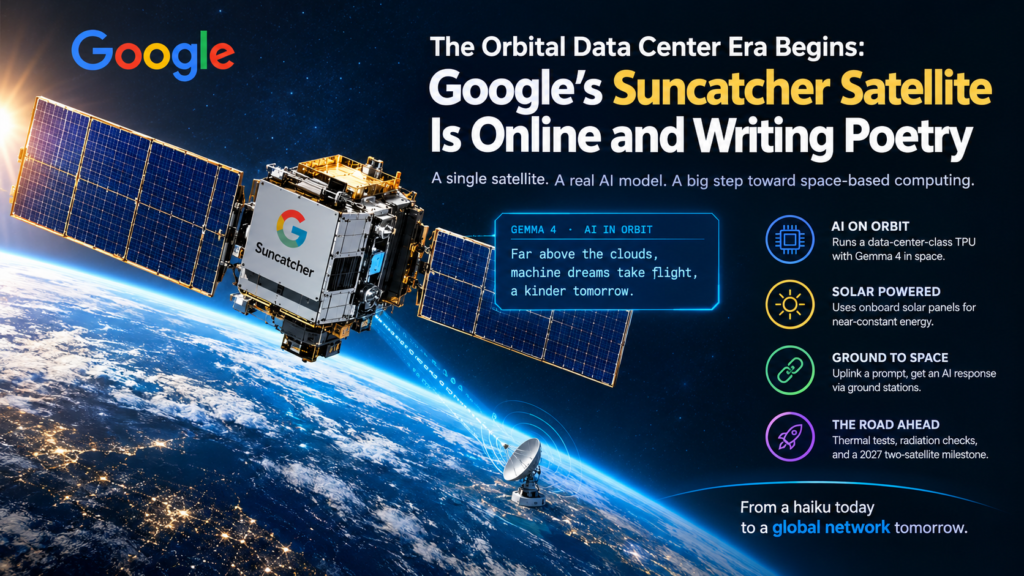
Google Suncatcher Satellite marks a major milestone in the future of artificial intelligence and space-based computing. Google’s first orbital data center prototype is now online and communicating with Earth after launching aboard a SpaceX Falcon 9 rocket earlier this month. Powered by an onboard Tensor Processing Unit (TPU), the satellite has successfully run an AI model in orbit and even written a haiku from space.
Google just got a data-center chip to write poetry from space, and that haiku is a real engineering milestone. Google’s first orbital data center prototype is online and communicating with the ground after launching earlier this month on a SpaceX Falcon 9, running an AI model on a TPU in orbit.
Those two sentences are the short version. The longer version is more interesting: is the orbital data center concept serious infrastructure or an expensive stunt? This guide covers what Google demonstrated, what it still has to prove, and why the next two years matter far more than the poem itself.
Quick Answer: What Did Google Just Prove?
Google proved that a data-center-class Tensor Processing Unit (TPU) can survive a rocket launch, power up in space, and answer a prompt using an onboard AI model. The prototype launched on October 1, went through several weeks of commissioning checks, and then produced the first AI response ever returned from a data-center-class TPU in orbit. The team called it a “Hello World” moment. blog
The test itself was simple. Engineers uplinked a prompt during a ground-station pass, asking the onboard Gemma 4 model for a haiku about being in space, and the poem came back as the satellite passed Svalbard, Norway. Google followed up with space-themed limericks and prompts asking the payload to report its own status. TechCrunch reports that a spokesperson said the satellite was operating nominally. blogTechCrunch
Here is what the milestone does and does not establish:
- Proven: A data-center-class chip powers on and runs inference after launch.
- Proven: The loop from ground prompt to orbital response to downlinked answer works.
- Not yet proven: How the chips hold up over time. Google says its next tests will evaluate TPU performance under thermal stress and radiation exposure in orbit. blog
- Not yet proven: That satellites can work as a linked cluster. Google’s next milestone is two interconnected satellites in 2027. mezha
- Not yet proven: That the economics beat building on the ground.
What Is an Orbital Data Center?
Definition: An orbital data center is a satellite, or a cluster of satellites, that carries computing hardware and runs workloads such as AI inference in space, powered by onboard solar panels instead of a terrestrial power grid.
Expansion: Many satellites already process some data onboard, so the idea alone isn’t new. What separates an orbital data center from an ordinary spacecraft is ambition. The goal is general-purpose, data-center-class compute, the same family of chips that serves AI workloads on the ground, operating in orbit at scale.
In Google’s published concept, each satellite carries TPUs connected by free-space optical links capable of moving data at tens of terabits per second. Satellites would fly in a sun-synchronous low Earth orbit, which gives the solar panels near-continuous sunlight. interestingengineeringtechradar
That design is the core logic of space-based AI: put power-hungry computing where solar energy is abundant and constant, then send only the results back to Earth.
How Project Suncatcher Works
Definition: Project Suncatcher is Google’s long-term research moonshot to test whether a network of solar-powered satellites carrying its TPUs could one day scale machine learning in space.
Expansion: Google announced the project on November 4, 2025, alongside a preprint covering constellation design, control, communication, and early radiation testing of its TPUs. The October 2026 launch is the first time any of that left the lab. unite
The Hardware: One TPU and About One Kilowatt
The prototype carries a single Google TPU and generates up to 1 kW of electricity. Planet Labs built the satellite, which rode into orbit with more than 100 other spacecraft. Pre-launch reporting described the computing power as roughly equal to one data center server, with the mission expected to last about a year. Google’s first data center satellite is online and writing poetry +2
That is deliberately modest. A single TPU in orbit is a test article, not a full orbital data center. The point is to learn how real hardware behaves before anyone commits to building hundreds of satellites.
The Model: Gemma 4 Doing Inference
The model behind the haiku was Gemma 4, an open model from Google DeepMind. The workload is inference, which is the stage where a trained model answers a prompt, as opposed to the far heavier work of training. Inference is the sensible first workload for space-based AI because it needs less power and less data movement than training a frontier model. cryptobriefing
The Link: Ground Stations and Downlink
Every response had to travel through a ground station. Svalbard’s high latitude makes it a natural place to catch passes from satellites in polar or sun-synchronous orbits. For a prototype, that link is the whole product: no ground contact means no proof.
Why a Haiku Counts as a Milestone
Is writing a haiku a serious test? Yes, as a systems check. The poem’s quality doesn’t matter. What matters is that every layer between “prompt sent” and “poem received” worked.
The chain looks like this:
- The satellite survived launch loads and deployed.
- The host computer and TPU trays powered up, and early machine learning tests ran successfully during commissioning. blog
- The uplink delivered a prompt.
- The model ran on the chip.
- The downlink returned the output.
One analysis called the result primarily a hardware validation for Google. That is the right frame. Chips built for climate-controlled ground racks had to prove they could take the shaking of a rocket and keep computing. Every future orbital data center depends on that layer working first. cryptobriefing
Why Build AI Data Centers in Space?
The case for AI data centers in space rests on three pressures: power, demand, and a long-term cost curve.
Power
On Earth, a single medium-sized data center can consume enough electricity to power about 16,500 homes, and the largest facilities use as much as a small city. An orbital data center in the right orbit swaps grid electricity for near-constant sunlight, which is why Google chose the project’s name. ground
Demand
AI is pushing compute demand up fast. A McKinsey report expects global demand for AI data center capacity to grow at a compounded annual rate of 19 to 22 percent through 2030. Space isn’t the only answer to that growth, but it is one of the few that doesn’t compete with towns and utilities for electricity. newsbytesapp
Economics
Cost is the hinge. Google’s analysis suggests that if launch prices fall below roughly $200 per kilogram by the mid-2030s, the economics of an orbital data center could become comparable to Earth-based systems. That is a projection, not a fact. It explains why Suncatcher is a classic Google moonshot, aimed at infrastructure that would be economical in the 2030s rather than today. interestingengineeringTechCrunch
Orbital Data Center vs. Terrestrial Data Center: Side-by-Side Comparison
The table below compares an orbital data center with a conventional ground facility across the factors that decide whether the idea works.
| Factor | Terrestrial data center | Orbital data center |
|---|---|---|
| Power source | Grid electricity, often with local generation | Onboard solar panels in near-continuous sunlight |
| Cooling | Air and liquid systems that use convection | Radiative cooling only, which needs large surfaces |
| Maintenance | Technicians can swap failed parts | Effectively none, so hardware must be redundant or replaced |
| Radiation exposure | Minimal | Significant, so chips need testing and protection |
| Upfront cost | Land, buildings, grid hookups | Satellite manufacturing plus launch |
| How it scales | Build more halls | Launch more satellites and link them optically |
| Maturity | Decades of operation | One prototype, first results in October 2026 |
The table shows a trade, not a winner. Orbit gains power and loses serviceability.
The Hard Problems Google Still Has to Solve
Heat
Space is cold, but it is also a vacuum, so heat can’t be carried away by air or water. Studies of orbital designs find that removing heat from dense AI chips in a vacuum takes very large radiative surfaces and complex thermal loops, which add mass and cost to every satellite. Any orbital data center has to solve this before it can scale, and Google has flagged thermal management as a central challenge. notebookcheck
Radiation and Hardware Reliability
Radiation can corrupt data and degrade chips over time. That is why Google’s next tests focus on thermal stress and radiation exposure. Past experience argues for caution. An earlier space computer called Spaceborne spent nearly two years aboard the ISS but suffered failures in one of its four redundant power supplies and nine of its 20 SSDs. Surviving in orbit for years is a different problem from surviving the first month, and the answer will shape how rugged future orbital data centers must be. theregister
Space Debris and a Crowded Orbit
More satellites mean more collision risk. Coverage of Google’s plans notes that a proposed data center in orbit will face space-debris issues in an already crowded orbit. A 2025 Google paper described operating in clusters of 81 satellites, and the company hasn’t said how many clusters a full system would need. A large orbital data center constellation multiplies the debris question. Critics also raise environmental concerns, including possible damage to the ozone layer. Google’s Proposed Data Center in Orbit Will Face Issues with Space Debris in an Already Crowded Orbit +2
Launch Mass and Cost
Meeting the power and compute needs of a large facility means more hardware. Adding enough equipment to match a big data center’s demand could increase a spacecraft’s size and launch weight, and manufacturing and launching the satellites could be expensive. That is exactly why the launch-cost curve matters so much. washingtonexaminer
Who Else Is Racing to Build an Orbital Data Center?
Google isn’t alone. Several companies are chasing the same prize, and their rival orbital data center plans differ in scale and timing.
- SpaceX: SpaceX has said it plans a constellation of up to 1 million AI-computing satellites. CNN
- Starcloud: The startup, backed by Y Combinator and Nvidia, deployed its first AI-equipped satellite in December 2025 and claims ten times lower carbon emissions than terrestrial alternatives, even counting launch emissions. It also filed an FCC application for a constellation of up to 88,000 satellites. gadgetreviewwashingtonexaminer
- Blue Origin: TechCrunch has reported that Jeff Bezos’ Blue Origin is entering the space data center game. futurism
- Google: CEO Sundar Pichai said Google will partner with Planet on tiny racks of TPU-equipped machines starting in early 2027. gadgetreview
Note the careful wording in Google’s claim. It is the first data-center-class TPU to respond from orbit, not the first AI hardware in space. Starcloud’s earlier satellite shows the field is moving in parallel. Some rivals’ plans also depend on Starship, the heavy-lift rocket that is still in development. Google’s edge is vertical integration: its own chips, its own models, and a partner that already builds satellites at volume. TechCrunch
What Comes Next: 2027 and the 2030s
The roadmap has three stages:
- Late 2026: Continue thermal and radiation testing on the prototype.
- 2027: Launch two satellites to test interconnection. Google plans to test its interconnect work with two satellites in orbit in 2027. unite
- 2030s: Reach the point where launch costs and hardware reliability make large-scale operation economical, if they do.
Skeptics point out that Google’s own first tests involve only a pair of satellites, and Pichai’s remarks hint at a long runway before anything approaching a full-scale facility comes online. Treat this as the start of a decade-long experiment, not the end of ground-based data centers. notebookcheck
What to watch next:
- Whether the TPU in orbit keeps performing as radiation exposure accumulates
- Results from the thermal stress tests
- Whether the 2027 pair of satellites links up at high bandwidth
- Launch price trends toward the sub-$200-per-kilogram target
- Regulatory and debris-management responses as constellations grow
Frequently Asked Questions
Is Google’s orbital data center real?
As a prototype, yes. A single satellite with one TPU is operating in orbit and has returned AI output. A full-scale facility doesn’t exist yet and is likely years away.
What AI model ran in space?
Gemma 4, an open model from Google DeepMind.
How powerful is the Suncatcher satellite?
It carries one TPU and generates up to about 1 kW of power, roughly the compute of a single data-center server.
Who built the satellite?
Planet Labs built the spacecraft. Google supplied the TPU payload and model.
When will Google launch more satellites?
Google’s stated next step is two interconnected satellites in 2027.
Why a haiku?
It is a low-stakes, easy-to-verify prompt that exercises the whole chain from uplink to inference to downlink.
Is this the first AI hardware in orbit?
No. Google’s specific claim is the first data-center-class TPU response from orbit. Other companies, including Starcloud, have already flown AI-equipped satellites.
Key Takeaways
- Project Suncatcher’s prototype ran Gemma 4 on a TPU in orbit and downlinked a space haiku, validating the hardware chain from launch to inference.
- The satellite is a small test article: one TPU, about 1 kW, and a mission expected to last about a year.
- The case for AI data centers in space rests on solar power, rising AI demand, and falling launch costs in the 2030s.
- Heat, radiation, debris, and launch mass remain unsolved at scale, and they decide whether orbital data centers ever beat the ground.
- The 2027 two-satellite test is the next real checkpoint for space-based AI.
ଅନ୍ତରୀକ୍ଷ ଡାଟା ସେଣ୍ଟର ଯୁଗର ଆରମ୍ଭ: ଗୁଗୁଲର ‘ସନ୍କ୍ୟାଚର୍’ (Suncatcher) ସାଟେଲାଇଟ୍ ସକ୍ରିୟ ହୋଇଛି ଏବଂ କବିତା ଲେଖୁଛି
ଗୁଗୁଲ୍ ମହାକାଶରୁ କବିତା ଲେଖିବା ପାଇଁ ଏକ ଡାଟା-ସେଣ୍ଟର ଚିପ୍କୁ ସକ୍ଷମ କରିଛି, ଏବଂ ଏହି ‘ହାଇକୁ’ (ଏକ ପ୍ରକାର କ୍ଷୁଦ୍ର କବିତା) ଲେଖିବା ଘଟଣାଟି ଇଞ୍ଜିନିୟରିଂ କ୍ଷେତ୍ରରେ ଏକ ଗୁରୁତ୍ୱପୂର୍ଣ୍ଣ ମାଇଲଖୁଣ୍ଟ ଅଟେ। ଗୁଗୁଲର ପ୍ରଥମ ଅନ୍ତରୀକ୍ଷ ଡାଟା ସେଣ୍ଟର ପ୍ରୋଟୋଟାଇପ୍ (ନମୁନା) ବର୍ତ୍ତମାନ ସକ୍ରିୟ ଅଛି ଏବଂ ପୃଥିବୀ ସହିତ ଯୋଗାଯୋଗ କରୁଛି। ଏହା ଚଳିତ ମାସ ଆରମ୍ଭରେ ‘ସ୍ପେସ୍ଏକ୍ସ ଫାଲକନ୍ ୯’ (SpaceX Falcon 9) ରକେଟ୍ ମାଧ୍ୟମରେ ମହାକାଶକୁ ପଠାଯାଇଥିଲା ଏବଂ ଏଥିରେ ଥିବା ଏକ TPU (Tensor Processing Unit) ଉପରେ ଏକ AI ମଡେଲ୍ କାର୍ଯ୍ୟ କରୁଛି।
TechCrunch
ଉପରୋକ୍ତ ଦୁଇଟି ବାକ୍ୟ ହେଉଛି ସଂକ୍ଷିପ୍ତ ବିବରଣୀ। କିନ୍ତୁ ଏହାର ବିସ୍ତୃତ ବିବରଣୀ ଅଧିକ ରୋଚକ ଅଟେ: ଅନ୍ତରୀକ୍ଷ ଡାଟା ସେଣ୍ଟରର ଧାରଣାଟି କ’ଣ ଏକ ଗୁରୁତ୍ୱପୂର୍ଣ୍ଣ ଭିତ୍ତିଭୂମି, ନା କେବଳ ଏକ ବ୍ୟୟବହୁଳ ପ୍ରଦର୍ଶନ ମାତ୍ର? ଏହି ଲେଖାରେ ଆଲୋଚନା କରାଯାଇଛି ଯେ ଗୁଗୁଲ୍ କ’ଣ ପ୍ରଦର୍ଶନ କରିଛି, କ’ଣ ପ୍ରମାଣ କରିବା ବାକି ଅଛି ଏବଂ କାହିଁକି ଆଗାମୀ ଦୁଇ ବର୍ଷ କେବଳ ସେହି କବିତା ଅପେକ୍ଷା ଅଧିକ ଗୁରୁତ୍ୱପୂର୍ଣ୍ଣ ଅଟେ।
ସଂକ୍ଷିପ୍ତ ଉତ୍ତର: ଗୁଗୁଲ୍ ପ୍ରକୃତରେ କ’ଣ ପ୍ରମାଣ କଲା?
ଗୁଗୁଲ୍ ପ୍ରମାଣ କରିଛି ଯେ ଏକ ଡାଟା-ସେଣ୍ଟର ସ୍ତରୀୟ ‘ଟେନସର୍ ପ୍ରୋସେସିଂ ୟୁନିଟ୍’ (TPU) ରକେଟ୍ ଉତ୍କ୍ଷେପଣର ଝଟକା ସହିପାରେ, ମହାକାଶରେ ସକ୍ରିୟ ହୋଇପାରେ ଏବଂ ସେଥିରେ ଥିବା AI ମଡେଲ୍ ବ୍ୟବହାର କରି ନିର୍ଦ୍ଦେଶ (prompt) ଅନୁଯାୟୀ ଉତ୍ତର ଦେଇପାରେ। ଅକ୍ଟୋବର ୧ ତାରିଖରେ ଉତ୍କ୍ଷେପଣ କରାଯାଇଥିବା ଏହି ପ୍ରୋଟୋଟାଇପ୍ଟି କିଛି ସପ୍ତାହ ଧରି ବିଭିନ୍ନ ପରୀକ୍ଷଣ ଦେଇ ଗତି କରିଥିଲା ଏବଂ ଶେଷରେ ମହାକାଶରେ ଥିବା ଏକ ଡାଟା-ସେଣ୍ଟର ସ୍ତରୀୟ TPU ମାଧ୍ୟମରେ ପ୍ରଥମ AI ଉତ୍ତର ପ୍ରଦାନ କରିଥିଲା। ଗୁଗୁଲ୍ ଟିମ୍ ଏହାକୁ ଏକ “ହେଲୋ ୱାର୍ଲ୍ଡ” (Hello World) ମୁହୂର୍ତ୍ତ ବୋଲି ଆଖ୍ୟା ଦେଇଛନ୍ତି।
blog
ଏହି ପରୀକ୍ଷଣଟି ବେଶ୍ ସରଳ ଥିଲା। ଇଞ ଗୁଗୁଲର ପରବର୍ତ୍ତୀ ମାଇଲଖୁଣ୍ଟ ହେଉଛି ୨୦୨୭ ମସିହାରେ ଦୁଇଟି ପରସ୍ପର ସଂଯୁକ୍ତ ଉପଗ୍ରହ (ସାଟେଲାଇଟ୍) ସ୍ଥାପନ କରିବା।
ଏହା ଏପର୍ଯ୍ୟନ୍ତ ପ୍ରମାଣିତ ହୋଇନାହିଁ ଯେ, ଭୂପୃଷ୍ଠରେ ଡାଟା ସେଣ୍ଟର ନିର୍ମାଣ କରିବା ଅପେକ୍ଷା ମହାକାଶରେ ଏହା ଅଧିକ ଆର୍ଥିକ ଲାଭଦାୟକ କି ନୁହେଁ।
‘ଅର୍ବିଟାଲ୍ ଡାଟା ସେଣ୍ଟର’ (Orbital Data Center) କ’ଣ?
ସଂଜ୍ଞା: ଏକ ‘ଅର୍ବିଟାଲ୍ ଡାଟା ସେଣ୍ଟର’ ହେଉଛି ଏକ ଉପଗ୍ରହ କିମ୍ବା ଉପଗ୍ରହଗୁଡ଼ିକର ଏକ ସମୂହ, ଯେଉଁଥିରେ କମ୍ପ୍ୟୁଟିଂ ହାର୍ଡୱେର୍ ଥାଏ। ଏହା ମହାକାଶରେ AI (ଆର୍ଟିଫିସିଆଲ୍ ଇଣ୍ଟେଲିଜେନ୍ସ) ସମ୍ବନ୍ଧୀୟ କାର୍ଯ୍ୟ ସମ୍ପାଦନ କରେ ଏବଂ ଏଥିପାଇଁ ଆବଶ୍ୟକ ଶକ୍ତି ଭୂପୃଷ୍ଠର ବିଦ୍ୟୁତ୍ ଗ୍ରୀଡ୍ ବଦଳରେ ଉପଗ୍ରହରେ ଲାଗିଥିବା ସୌର ପ୍ୟାନେଲ୍ (solar panels) ରୁ ମିଳିଥାଏ।
ବିସ୍ତୃତ ବିବରଣୀ: ଅନେକ ଉପଗ୍ରହ ବର୍ତ୍ତମାନ ମଧ୍ୟ ନିଜ ଭିତରେ କିଛି ତଥ୍ୟ (data) ପ୍ରକ୍ରିୟାକରଣ କରୁଛନ୍ତି, ତେଣୁ ଏହି ଧାରଣାଟି ସମ୍ପୂର୍ଣ୍ଣ ନୂଆ ନୁହେଁ। କିନ୍ତୁ ଏକ ସାଧାରଣ ମହାକାଶଯାନ ଏବଂ ‘ଅର୍ବିଟାଲ୍ ଡାଟା ସେଣ୍ଟର’ ମଧ୍ୟରେ ମୁଖ୍ୟ ପାର୍ଥକ୍ୟ ହେଉଛି ଏହାର ଲକ୍ଷ୍ୟ ବା ଅଭିଳାଷ। ଏହାର ଉଦ୍ଦେଶ୍ୟ ହେଉଛି ମହାକାଶରେ ଏକ ବ୍ୟାପକ ସ୍ତରର ‘ଡାଟା ସେଣ୍ଟର-ଶ୍ରେଣୀୟ’ କମ୍ପ୍ୟୁଟିଂ କ୍ଷମତା ପ୍ରସ୍ତୁତ କରିବା। ଏଥିରେ ସେହି ପ୍ରକାରର ଚିପ୍ସ (chips) ବ୍ୟବହାର କରାଯାଏ, ଯାହା ଭୂପୃଷ୍ଠରେ AI କାର୍ଯ୍ୟ ପାଇଁ ବ୍ୟବହୃତ ହୋଇଥାଏ।
ଗୁଗୁଲର ପ୍ରସ୍ତାବିତ ଧାରଣା ଅନୁଯାୟୀ, ପ୍ରତ୍ୟେକ ଉପଗ୍ରହରେ TPU (Tensor Processing Units) ରହିବ। ଏଗୁଡ଼ିକ ‘ଫ୍ରି-ସ୍ପେସ୍ ଅପ୍ଟିକାଲ୍ ଲିଙ୍କ୍’ (free-space optical links) ମାଧ୍ୟମରେ ପରସ୍ପର ସହ ସଂଯୁକ୍ତ ହେବେ, ଯାହା ମାଧ୍ୟମରେ ପ୍ରତି ସେକେଣ୍ଡରେ ଦଶଗୁଣ ଟେରାବିଟ୍ (terabits) ପରିମାଣର ତଥ୍ୟ ସ୍ଥାନାନ୍ତର ହୋଇପାରିବ। ଏହି ଉପଗ୍ରହଗୁଡ଼ିକ ‘ସନ୍-ସିଙ୍କ୍ରୋନସ୍ ଲୋ ଅର୍ଥ ଅର୍ବିଟ୍’ (sun-synchronous low Earth orbit) ବା ପୃଥିବୀର ନିମ୍ନ କକ୍ଷପଥରେ ପରିକ୍ରମଣ କରିବେ, ଯାହା ଫଳରେ ସୌର ପ୍ୟାନେଲଗୁଡ଼ିକ ପ୍ରାୟ ନିରନ୍ତର ସୂର୍ଯ୍ୟକିରଣ ପାଇପାରିବେ।
ଏହି ଡିଜାଇନ୍ ହେଉଛି ମହାକାଶ-ଆଧାରିତ AI ର ମୂଳ ଗୁଗୁଲର ପ୍ରଥମ ଡାଟା ସେଣ୍ଟର ସାଟେଲାଇଟ୍ ଅନଲାଇନ୍ ଏବଂ କବିତା ଲେଖୁଛି
+2
ଏହା ଜାଣିଶୁଣି ସାଧାରଣ। କକ୍ଷପଥରେ ଏକ ଏକକ TPU ଏକ ପରୀକ୍ଷାମୂଳକ ଲେଖା, ଏକ ପୂର୍ଣ୍ଣ କକ୍ଷପଥ ଡାଟା ସେଣ୍ଟର ନୁହେଁ। କଥା ହେଉଛି ଶହ ଶହ ଉପଗ୍ରହ ନିର୍ମାଣ କରିବା ପୂର୍ବରୁ ପ୍ରକୃତ ହାର୍ଡୱେର୍ କିପରି ଆଚରଣ କରେ ତାହା ଶିଖିବା।
ମଡେଲ୍: ଜେମା 4 ଅନୁମାନ କରୁଛନ୍ତି
ହାଇକୁ ପଛରେ ଥିବା ମଡେଲ୍ ଥିଲା ଜେମା 4, ଗୁଗୁଲ୍ ଡିପମାଇଣ୍ଡର ଏକ ଖୋଲା ମଡେଲ୍। କାର୍ଯ୍ୟଭାର ହେଉଛି ଅନୁମାନ, ଯାହା ସେହି ପର୍ଯ୍ୟାୟ ଯେଉଁଠାରେ ଏକ ପ୍ରଶିକ୍ଷିତ ମଡେଲ୍ ଏକ ପ୍ରମ୍ପ୍ଟର ଉତ୍ତର ଦିଏ, ତାଲିମର ବହୁତ ଭାରୀ କାର୍ଯ୍ୟର ବିପରୀତ। ଅନୁମାନ ହେଉଛି ସ୍ଥାନ-ଆଧାରିତ AI ପାଇଁ ବୁଦ୍ଧିମାନ ପ୍ରଥମ କାର୍ଯ୍ୟଭାର କାରଣ ଏହାକୁ ଏକ ସୀମାନ୍ତ ମଡେଲକୁ ତାଲିମ ଦେବା ଅପେକ୍ଷା କମ୍ ଶକ୍ତି ଏବଂ କମ୍ ତଥ୍ୟ ଗତି ଆବଶ୍ୟକ କରେ।
କ୍ରିପ୍ଟୋବ୍ରିଫିଂ
ଲିଙ୍କ୍: ଭୂମି ଷ୍ଟେସନ୍ ଏବଂ ଡାଉନଲିଙ୍କ୍
ପ୍ରତ୍ୟେକ ପ୍ରତିକ୍ରିୟାକୁ ଏକ ଭୂମି ଷ୍ଟେସନ୍ ଦେଇ ଯାତ୍ରା କରିବାକୁ ପଡୁଥିଲା। ସ୍ୱାଲବାର୍ଡର ଉଚ୍ଚ ଅକ୍ଷାଂଶ ଏହାକୁ ଧ୍ରୁବୀୟ କିମ୍ବା ସୂର୍ଯ୍ୟ-ସମକାଳୀନ କକ୍ଷପଥରେ ଉପଗ୍ରହରୁ ପାସ୍ ଧରିବା ପାଇଁ ଏକ ପ୍ରାକୃତିକ ସ୍ଥାନ କରିଥାଏ। ଏକ ପ୍ରୋଟୋଟାଇପ୍ ପାଇଁ, ସେହି ଲିଙ୍କ୍ ହେଉଛି ସମ୍ପୂର୍ଣ୍ଣ ଉତ୍ପାଦ: କୌଣସି ଭୂମି ସହକାରୀ ନୁହେଁ ଯଦି ଯୋଗାଯୋଗ ନହୁଏ, ତେବେ କୌଣସି ପ୍ରମାଣ ମିଳେ ନାହିଁ।
ଏକ ‘ହାଇକୁ’ (Haiku) କାହିଁକି ଏକ ଗୁରୁତ୍ୱପୂର୍ଣ୍ଣ ମାଇଲଖୁଣ୍ଟ ଅଟେ?
ଏକ ‘ହାଇକୁ’ (ଏକ ପ୍ରକାର କ୍ଷୁଦ୍ର କବିତା) ଲେଖିବା କ’ଣ ଏକ କଠିନ ପରୀକ୍ଷା? ହଁ, ଏହା ଏକ ‘ସିଷ୍ଟମ୍ ଯାଞ୍ଚ’ (systems check) ଭାବରେ କାମ କରେ। ଏଠାରେ କବିତାର ଗୁଣବତ୍ତା ଗୁରୁତ୍ୱପୂର୍ଣ୍ଣ ନୁହେଁ; ବରଂ ଗୁରୁତ୍ୱପୂର୍ଣ୍ଣ କଥା ହେଲା, “ନିର୍ଦ୍ଦେଶ ପଠାଇବା” (prompt sent) ଠାରୁ ଆରମ୍ଭ କରି “କବିତା ଗ୍ରହଣ କରିବା” (poem received) ପର୍ଯ୍ୟନ୍ତ ମଧ୍ୟବର୍ତ୍ତୀ ସମସ୍ତ ପର୍ଯ୍ୟାୟ ସଠିକ୍ ଭାବରେ କାର୍ଯ୍ୟ କରିଛି କି ନାହିଁ।
ଏହି ପ୍ରକ୍ରିୟାର ଶୃଙ୍ଖଳାଟି ଏହିପରି:
ଉପଗ୍ରହଟି ଉତ୍କ୍ଷେପଣ ସମୟର ପ୍ରବଳ ଚାପକୁ ସହ୍ୟ କରି ସଫଳତାର ସହ ମହାକାଶରେ ନିୟୋଜିତ ହେଲା।
ମୁଖ୍ୟ କମ୍ପ୍ୟୁଟର ଏବଂ TPU ଟ୍ରେଗୁଡ଼ିକ ଚାଲୁ ହେଲା ଏବଂ କାର୍ଯ୍ୟକ୍ଷମ ହେବା ପ୍ରକ୍ରିୟା (commissioning) ସମୟରେ ‘ମେସିନ୍ ଲର୍ନିଂ’ ସମ୍ବନ୍ଧୀୟ ପ୍ରାରମ୍ଭିକ ପରୀକ୍ଷଣଗୁଡ଼ିକ ସଫଳତାର ସହ ସମ୍ପନ୍ନ ହେଲା।
‘ଅପଲିଙ୍କ୍’ (uplink) ମାଧ୍ୟମରେ ଏକ ନିର୍ଦ୍ଦେଶ (prompt) ପଠାଗଲା।
ଚିପ୍ (chip) ଉପରେ ମଡେଲଟି କାର୍ଯ୍ୟ କଲା।
‘ଡାଉନଲିଙ୍କ୍’ (downlink) ମାଧ୍ୟମରେ ଫଳାଫଳ (output) ଫେରି ଆସିଲା।
ଏକ ବିଶ୍ଳେଷଣ ଅନୁଯାୟୀ, ଏହି ଫଳାଫଳଟି ମୁଖ୍ୟତଃ ଗୁଗୁଲ୍ (Google) ପାଇଁ ଏକ ‘ହାର୍ଡୱେର୍ ବୈଧୀକରଣ’ (hardware validation) ଥିଲା। ଏହାକୁ ଦେଖିବାର ସଠିକ୍ ଦୃଷ୍ଟିକୋଣ ହେଉଛି ଏହା। ଯେଉଁ ଚିପ୍ଗୁଡ଼ିକ ପୃଥିବୀ ପୃଷ୍ଠରେ ନିୟନ୍ତ୍ରିତ ତାପମାତ୍ରା ବିଶିଷ୍ଟ ସ୍ଥାନରେ ରଖିବା ପାଇଁ ତିଆରି ହୋଇଥିଲା, ସେଗୁଡ଼ିକ ଏବେ ପ୍ରମାଣିତ କଲେ ଯେ ସେଗୁଡ଼ିକ ରକେଟ୍ ଉତ୍କ୍ଷେପଣ ସମୟର ପ୍ରବଳ ଝଟକା ସହ୍ୟ କରି ମଧ୍ୟ କମ୍ପ୍ୟୁଟେସନ୍ (ଗଣନା କାର୍ଯ୍ୟ) ଜାରି ରଖିପାରିବେ। ଭବିଷ୍ୟତରେ ମହାକାଶରେ ସ୍ଥାପିତ ହେବାକୁ ଥିବା ପ୍ରତ୍ୟେକ ଡାଟା ସେଣ୍ଟର ପାଇଁ ଏହି ପର୍ଯ୍ୟାୟଟି ସଫଳ ହେବା ଅତ୍ୟନ୍ତ ଆବଶ୍ୟକ।
ମହାକାଶରେ AI ଡାଟା ସେଣ୍ଟର କାହିଁକି ନିର୍ମାଣ କରାଯିବ?
ମହାକାଶରେ AI ଡାଟା ସେଣ୍ଟର ନିର୍ମାଣ କରିବାର ଯୁକ୍ତି ମୁଖ୍ୟତଃ ତିନୋଟି କାରଣ ଉପରେ ଆଧାରିତ: ଶକ୍ତି (power), ଚାହିଦା (demand) ଏବ ଏଥିରୁ ଜଣାପଡ଼େ ଯେ ‘ସନ୍କ୍ୟାଚର୍’ (Suncatcher) କାହିଁକି ଗୁଗୁଲର ଏକ ‘ମୁନ୍ଶଟ୍’ (ଅତ୍ୟନ୍ତ ଉଚ୍ଚାଭିଳାଷୀ ପ୍ରକଳ୍ପ) ଅଟେ। ଏହାର ଲକ୍ଷ୍ୟ ହେଉଛି ଏପରି ଏକ ଭିତ୍ତିଭୂମି ପ୍ରସ୍ତୁତ କରିବା, ଯାହା ଆଜି ନୁହେଁ ବରଂ ୨୦୩୦ ଦଶକରେ ଅଧିକ ଲାଭଦାୟକ କିମ୍ବା ସୁବିଧାଜନକ ହେବ।
ଅର୍ବିଟାଲ୍ (ମହାକାଶସ୍ଥ) ଡାଟା ସେଣ୍ଟର ବନାମ ଭୂ-ପୃଷ୍ଠସ୍ଥ ଡାଟା ସେଣ୍ଟର: ଏକ ତୁଳନାତ୍ମକ ବିବରଣୀ
ନିମ୍ନରେ ଦିଆଯାଇଥିବା ସାରଣୀରେ ଏକ ଅର୍ବିଟାଲ୍ ଡାଟା ସେଣ୍ଟର ଏବଂ ପାରମ୍ପାରିକ ଭୂ-ପୃଷ୍ଠସ୍ଥ ଡାଟା ସେଣ୍ଟର ମଧ୍ୟରେ ତୁଳନା କରାଯାଇଛି। ଏହି ତୁଳନା ସେହି କାରକଗୁଡ଼ିକ ଉପରେ ଆଧାରିତ, ଯାହା ଏହି ଧାରଣାଟି କାର୍ଯ୍ୟକାରୀ ହେବ କି ନାହିଁ ତାହା ନିର୍ଦ୍ଧାରଣ କରେ।
କାରକ | ଭୂ-ପୃଷ୍ଠସ୍ଥ ଡାଟା ସେଣ୍ଟର | ଅର୍ବିଟାଲ୍ ଡାଟା ସେଣ୍ଟର
ଶକ୍ତି ଉତ୍ସ | ଗ୍ରୀଡ୍ ବିଦ୍ୟୁତ୍ (ପ୍ରାୟତଃ ସ୍ଥାନୀୟ ଉତ୍ପାଦନ ସହିତ) | ସୌର ପ୍ୟାନେଲ୍ (ଯାହା ନିରନ୍ତର ସୂର୍ଯ୍ୟାଲୋକ ପାଇଥାଏ)
ଥଣ୍ଡା ରଖିବା (Cooling) | ବାୟୁ କିମ୍ବା ତରଳ ପଦାର୍ଥ ବ୍ୟବହାର କରି ‘କନଭେକ୍ସନ୍’ (convection) ପ୍ରକ୍ରିୟା ମାଧ୍ୟମରେ | କେବଳ ‘ରେଡିଏଟିଭ୍ କୁଲିଂ’ (radiation ମାଧ୍ୟମରେ ଥଣ୍ଡା କରିବା) – ଯେଉଁଥିପାଇଁ ବହୁତ ବଡ଼ ପୃଷ୍ଠଭାଗ ଆବଶ୍ୟକ ହୁଏ
ରକ୍ଷଣାବେକ୍ଷଣ | ଟେକ୍ନିସିଆନମାନେ ଖରାପ ହୋଇଯାଇଥିବା ଅଂଶଗୁଡ଼ିକୁ ବଦଳାଇ ପାରିବେ | ବାସ୍ତବରେ କୌଣସି ରକ୍ଷଣାବେକ୍ଷଣ ସମ୍ଭବ ନୁହେଁ; ତେଣୁ ହାର୍ଡୱେର୍ ଅତିରିକ୍ତ (redundant) ରହିବା ଆବଶ୍ୟକ କିମ୍ବା ତାହାକୁ ବଦଳାଇବାକୁ ପଡ଼ିବ
ରେଡିଏସନ୍ (ବିକିରଣ) | ଅତି କମ୍ | ଅଧିକ; ତେଣୁ ଚିପ୍ଗୁଡ଼ିକୁ ପରୀକ୍ଷା କରିବା ଏବଂ ସୁରକ୍ଷା ପ୍ରଦାନ କରିବା ଆବଶ୍ୟକ
ପ୍ରାରମ୍ଭିକ ଖର୍ଚ୍ଚ | ଜମି, କୋଠାବାଡ଼ି, ଗ୍ରୀଡ୍ ସଂଯୋଗ | ସାଟେଲାଇଟ୍ (ଉପଗ୍ରହ) ନିର୍ମାଣ ଏବଂ ଉତ୍କ୍ଷେପଣ ଖର୍ଚ୍ଚ
କ୍ଷମତା ବୃଦ୍ଧି (Scaling) | ଅଧିକ କୋଠରୀ ନିର୍ମାଣ କରି | ଅଧିକ ସାଟେଲାଇଟ୍ ଉତ୍କ୍ଷେପଣ କରି ଏବଂ ସେଗୁଡ଼ିକୁ ଅପ୍ଟିକାଲ୍ (ଆଲୋକ ଭିତ୍ତିକ) ମାଧ୍ୟମରେ ସଂଯୋଗ କରି
ପରିପକ୍ୱତା | ଦଶନ୍ଧି ଧରି କାର୍ଯ୍ୟକ୍ଷମ | କ theregister
ମହାକାଶ ଭଗ୍ନାବଶେଷ ଏବଂ ଏକ ଭିଡ଼ କକ୍ଷପଥ
ଅଧିକ ଉପଗ୍ରହ ଅର୍ଥ ଅଧିକ ଧକ୍କା ବିପଦ। ଗୁଗୁଲର ଯୋଜନାର କଭରେଜ୍ ଉଲ୍ଲେଖ କରେ ଯେ କକ୍ଷପଥରେ ଏକ ପ୍ରସ୍ତାବିତ ଡାଟା ସେଣ୍ଟର ପୂର୍ବରୁ ଭିଡ଼ କକ୍ଷପଥରେ ମହାକାଶ-ଭଗ୍ନାବଶେଷ ସମସ୍ୟାର ସମ୍ମୁଖୀନ ହେବ। 2025 ର ଏକ ଗୁଗୁଲ୍ ପେପର 81 ଟି ଉପଗ୍ରହର କ୍ଲଷ୍ଟରରେ କାର୍ଯ୍ୟ କରୁଥିବା ବର୍ଣ୍ଣନା କରିଛି, ଏବଂ କମ୍ପାନୀ ଏହା କହିନାହିଁ ଯେ ଏକ ସମ୍ପୂର୍ଣ୍ଣ ସିଷ୍ଟମକୁ କେତେ କ୍ଲଷ୍ଟର ଆବଶ୍ୟକ ହେବ। ଏକ ବଡ଼ କକ୍ଷପଥ ଡାଟା ସେଣ୍ଟର ନକ୍ଷତ୍ର ଭଗ୍ନାବଶେଷ ପ୍ରଶ୍ନକୁ ଗୁଣିତ କରେ। ସମାଲୋଚକମାନେ ଓଜୋନ ସ୍ତରକୁ ସମ୍ଭାବ୍ୟ କ୍ଷତି ସମେତ ପରିବେଶଗତ ଚିନ୍ତା ମଧ୍ୟ ଉଠାଇଛନ୍ତି।
କକ୍ଷପଥରେ ଗୁଗୁଲର ପ୍ରସ୍ତାବିତ ଡାଟା ସେଣ୍ଟର ପୂର୍ବରୁ ଭିଡ଼ କକ୍ଷପଥରେ ମହାକାଶ ଭଗ୍ନାବଶେଷ ସହିତ ସମସ୍ୟାର ସମ୍ମୁଖୀନ ହେବ
+2
ପ୍ରକ୍ଷେପଣ ଏବଂ ମୂଲ୍ୟ
ଏକ ବଡ଼ ସୁବିଧାର ଶକ୍ତି ଏବଂ ଗଣନା ଆବଶ୍ୟକତା ପୂରଣ କରିବା ଅର୍ଥ ଅଧିକ ହାର୍ଡୱେୟାର। ଏକ ବଡ଼ ଡାଟା ସେଣ୍ଟରର ଚାହିଦା ସହିତ ମେଳ ଖାଉଥିବା ପର୍ଯ୍ୟାପ୍ତ ଉପକରଣ ଯୋଡିବା ଏକ ମହାକାଶଯାନର ଆକାର ଏବଂ ପ୍ରକ୍ଷେପଣ ଓଜନ ବୃଦ୍ଧି କରିପାରେ, ଏବଂ ଉପଗ୍ରହ ନିର୍ମାଣ ଏବଂ ଉତ୍କ୍ଷେପଣ ମହଙ୍ଗା ହୋଇପାରେ। ଠିକ୍ ସେହି କାରଣରୁ ଲଞ୍ଚ-ଖର୍ଚ୍ଚ କର୍ଭ ଅତ୍ୟନ୍ତ ଗୁରୁତ୍ୱପୂର୍ଣ୍ଣ।
ଅନ୍ତରୀକ୍ଷରେ ଡାଟା ସେଣ୍ଟର ନିର୍ମାଣ ପାଇଁ ଆଉ କିଏ ପ୍ରତିଯୋଗିତା କରୁଛି?
ଏହି ଦୌଡ଼ରେ କେବଳ ଗୁଗୁଲ୍ (Google) ନାହିଁ। ଅନ୍ୟ କେତେକ କମ୍ପାନୀ ମଧ୍ୟ ସମାନ ଲକ୍ଷ୍ୟ ହାସଲ କରିବାକୁ ଚେଷ୍ଟା କରୁଛନ୍ତି। ସେମାନଙ୍କର ଅନ୍ତରୀକ୍ଷ ଡାଟା ସେଣ୍ଟର ଯୋଜନାଗୁଡ଼ିକର ପରିସର ଏବଂ ସମୟସୀମା ଭିନ୍ନ ଭିନ୍ନ ଅଟେ।
SpaceX: SpaceX କହିଛି ଯେ ଏହା ୧ ନିୟୁତ (୧୦ ଲକ୍ଷ) ପର୍ଯ୍ୟନ୍ତ AI-କମ୍ପ୍ୟୁଟିଂ ଉପଗ୍ରହର ଏକ ନେଟୱାର୍କ (constellation) ପ୍ରସ୍ତୁତ କରିବାକୁ ଯୋଜନା କରୁଛି।
Starcloud: ‘Y Combinator’ ଏବଂ ‘Nvidia’ ଦ୍ୱାରା ସମର୍ଥିତ ଏହି ଷ୍ଟାର୍ଟଅପ୍ କମ୍ପାନୀ, ୨୦୨୫ ମସିହା ଡିସେମ୍ବର ମାସରେ ନିଜର ପ୍ରଥମ AI-ଯୁକ୍ତ ଉପଗ୍ରହ ମହାକାଶକୁ ପଠାଇଥିଲା। କମ୍ପାନୀ ଦାବି କରେ ଯେ, ଉପଗ୍ରହ ଉତ୍କ୍ଷେପଣ ସମୟରେ ହେଉଥିବା ନିର୍ଗମନକୁ ମିଶାଇଲେ ମଧ୍ୟ, ଏହାର କାର୍ଯ୍ୟପ୍ରଣାଳୀ ପୃଥିବୀ ପୃଷ୍ଠରେ ଥିବା ଡାଟା ସେଣ୍ଟର ତୁଳନାରେ ୧୦ ଗୁଣ କମ୍ କାର୍ବନ ନିର୍ଗମନ କରେ। ଏହା ବ୍ୟତୀତ, କମ୍ପାନୀ ୮୮,୦୦୦ ପର୍ଯ୍ୟନ୍ତ ଉପଗ୍ରହର ଏକ ନେଟୱାର୍କ ପାଇଁ FCC (Federal Communications Commission) ନିକଟରେ ଆବେଦନ ମଧ୍ୟ କରିଛି।
Blue Origin: ‘TechCrunch’ ରିପୋର୍ଟ ଅନୁଯାୟୀ, ଜେଫ୍ ବେଜୋସ୍ଙ୍କ କମ୍ପାନୀ ‘Blue Origin’ ମଧ୍ୟ ଅନ୍ତରୀକ୍ଷ ଡାଟା ସେଣ୍ଟର କ୍ଷେତ୍ରରେ ପ୍ରବେଶ କରୁଛି।
Google: ଗୁଗୁଲ୍ର CEO ସୁନ୍ଦର ପିଚାଇ କହିଛନ୍ତି ଯେ, ୨୦୨୭ ମସିହାର ଆରମ୍ଭରୁ ଗୁଗୁଲ୍ ‘Planet’ ନାମକ କମ୍ପାନୀ ସହ ମିଶି TPU (Tensor Processing Unit) ଯୁକ୍ତ ମେସିନ୍ଗୁଡ଼ିକର ଛୋଟ ୟୁନିଟ୍ (racks) ମହାକାଶକୁ ପଠାଇବ।
ଗୁଗୁଲ୍ର ଏହି ଦାବିରେ ବ୍ୟବହୃତ ଶବ୍ଦାବଳୀ ଉପରେ ଧ୍ୟାନ ଦିଅନ୍ତୁ। ଏହା ମହାକାଶରୁ କାର୍ଯ୍ୟ କରୁଥିବା ପ୍ରଥମ ‘ଡାଟା ସେଣ୍ଟର-ସ୍ତରୀୟ TPU’ ଅଟେ, କିନ୍ତୁ ମହାକାଶରେ ଥିବା ପ୍ରଥମ AI ହାର୍ଡୱେର୍ ନୁହେଁ। ‘Starcloud’ର ପୂର୍ବ ଉପଗ୍ରହରୁ ଜଣାପଡ଼େ ଯେ, ଏହି କ୍ଷେତ୍ରରେ ଅନ୍ୟମାନେ ମଧ୍ୟ ସମାନ୍ତରାଳ ଭାବେ କାର୍ଯ୍ୟ କରୁଛନ୍ତି। କିଛି ପ୍ରତିଯୋଗୀଙ୍କ ଯୋଜନା ‘Starship’ ଉପରେ ନିର୍ଭର କରେ, ଯାହା ଏକ ବିଶାଳ ରକେଟ୍ ଏବଂ ବର୍ତ୍ତମାନ ବିକାଶ ପର୍ଯ୍ୟାୟରେ ରହିଛି। ଗୁଗୁଲ୍ର ସବୁଠାରୁ ବଡ଼ ସୁବିଧା ହେଉଛି ଏହାର ‘ଭର୍ଟିକାଲ୍ ସନ୍ଦେହବାଦୀମାନେ ଦର୍ଶାନ୍ତି ଯେ ଗୁଗୁଲର ପ୍ରାରମ୍ଭିକ ପରୀକ୍ଷଣରେ କେବଳ ଦୁଇଟି ଉପଗ୍ରହ (ସାଟେଲାଇଟ୍) ସାମିଲ ଅଛି। ପିଚାଇଙ୍କ ମନ୍ତବ୍ୟରୁ ସ୍ପଷ୍ଟ ହୁଏ ଯେ ଏକ ପୂର୍ଣ୍ଣାଙ୍ଗ ବ୍ୟବସ୍ଥା କାର୍ଯ୍ୟକ୍ଷମ ହେବା ପୂର୍ବରୁ ଏକ ଦୀର୍ଘ ପ୍ରକ୍ରିୟା ବା ସମୟ ଆବଶ୍ୟକ ହେବ। ଏହାକୁ ଏକ ଦଶନ୍ଧି ବ୍ୟାପୀ ପରୀକ୍ଷଣର ଆରମ୍ଭ ବୋଲି ଧରିନିଅନ୍ତୁ; ଏହା ପୃଥିବୀ-ଆଧାରିତ ଡାଟା ସେଣ୍ଟରଗୁଡ଼ିକର ସମାପ୍ତି ନୁହେଁ।
ନୋଟବୁକ୍ଚେକ୍ (Notebookcheck)
ଆଗକୁ କ’ଣ ଦେଖିବାକୁ ମିଳିବ:
ଅନ୍ତରୀକ୍ଷରେ ବିକିରଣ (radiation) ପ୍ରଭାବ ବଢ଼ିବା ସତ୍ତ୍ୱେ ସେଠାରେ ଥିବା TPU କିପରି କାର୍ଯ୍ୟ କରୁଛି।
ତାପଜ ଚାପ ପରୀକ୍ଷଣର (thermal stress tests) ଫଳାଫଳ।
୨୦୨୭ ମସିହାରେ ଉତ୍କ୍ଷେପଣ ହେବାକୁ ଥିବା ଦୁଇଟି ଉପଗ୍ରହ ଉଚ୍ଚ ବ୍ୟାଣ୍ଡୱିଡଥ୍ (high bandwidth) ମାଧ୍ୟମରେ ପରସ୍ପର ସହ ଯୋଡ଼ି ହେବେ କି ନାହିଁ।
ଉତ୍କ୍ଷେପଣ ମୂଲ୍ୟ ପ୍ରତି କିଲୋଗ୍ରାମ ପିଛା ୨୦୦ ଡଲାରରୁ କମ୍ ହେବା ଦିଗରେ ଗତି କରୁଛି କି ନାହିଁ।
ଉପଗ୍ରହ ସଂଖ୍ୟା ବୃଦ୍ଧି ପାଇବା ସହ ନିୟାମକ ସଂସ୍ଥାଗୁଡ଼ିକର ପଦକ୍ଷେପ ଏବଂ ମହାକାଶ ଆବର୍ଜନା ପରିଚାଳନା ସମ୍ବନ୍ଧୀୟ ପ୍ରତିକ୍ରିୟା।
ସାଧାରଣତଃ ପଚରାଯାଉଥିବା ପ୍ରଶ୍ନ (FAQs)
ଗୁଗୁଲର ଅନ୍ତରୀକ୍ଷ-ଆଧାରିତ ଡାଟା ସେଣ୍ଟର କ’ଣ ପ୍ରକୃତରେ ଅଛି?
ଏକ ପ୍ରୋଟୋଟାଇପ୍ (ନମୁନା) ଭାବରେ, ହଁ। ଗୋଟିଏ TPU ଥିବା ଏକ ଉପଗ୍ରହ ବର୍ତ୍ତମାନ ଅନ୍ତରୀକ୍ଷରେ କାର୍ଯ୍ୟ କରୁଛି ଏବଂ AI ଆଉଟପୁଟ୍ (ଫଳାଫଳ) ପ୍ରଦାନ କରିଛି। ତେବେ, ଏକ ପୂର୍ଣ୍ଣାଙ୍ଗ ବ୍ୟବସ୍ଥା ବର୍ତ୍ତମାନ ଉପଲବ୍ଧ ନାହିଁ ଏବଂ ଏହା ପ୍ରସ୍ତୁତ ହେବାକୁ ବୋଧହୁଏ ଆହୁରି କିଛି ବର୍ଷ ଲାଗିପାରେ।
ମହାକାଶରେ କେଉଁ AI ମଡେଲ୍ ଚାଲିଲା?
ଗୁଗୁଲ୍ ଡିପ୍ମାଇଣ୍ଡ (Google DeepMind) ର ଏକ ଓପନ୍ ମଡେଲ୍, ‘ଜେମ୍ମା ୪’ (Gemma 4)।
‘ସନ୍କ୍ୟାଚର୍’ (Suncatcher) ଉପଗ୍ରହଟି କେତେ ଶକ୍ତିଶାଳୀ?
ଏଥିରେ ଗୋଟିଏ TPU ରହିଛି ଏବଂ ଏହା ପ୍ରାୟ ୧ କିଲୋୱାଟ (kW) ପର୍ଯ୍ୟନ୍ତ ଶକ୍ତି ଉତ୍ପାଦନ କରେ, ଯାହା ଏକ ଡାଟା ସେଣ୍ଟର ସର୍ଭରର କ୍ଷମତା ସହ ପ୍ରାୟ ସମାନ।
ଏହି ଉପଗ୍ରହକୁ କିଏ ନିର୍ମାଣ କରିଛି?
ଏହି ମହାକାଶଯାନକୁ ‘ପ୍ଲାନେଟ୍ ମହାକାଶରେ AI ଡାଟା ସେଣ୍ଟର ପାଇଁ ମାମଲା ସୌରଶକ୍ତି, ବୃଦ୍ଧି ପାଉଥିବା AI ଚାହିଦା ଏବଂ 2030 ଦଶକରେ ହ୍ରାସ ପାଉଥିବା ପ୍ରକ୍ଷେପଣ ଖର୍ଚ୍ଚ ଉପରେ ନିର୍ଭର କରେ।
ତାପ, ବିକିରଣ, ଭଗ୍ନାବଶେଷ ଏବଂ ପ୍ରକ୍ଷେପଣ ବସ୍ତୁତ୍ୱ ସ୍କେଲରେ ଅସମାହିତ ରହିଛି, ଏବଂ ସେମାନେ ନିଷ୍ପତ୍ତି ନିଅନ୍ତି ଯେ କକ୍ଷୀୟ ଡାଟା ସେଣ୍ଟରଗୁଡ଼ିକ କେବେ ଭୂମିକୁ ପରାସ୍ତ କରିବେ କି ନାହିଁ।
2027 ଦୁଇ-ସାଟେଲାଇଟ୍ ପରୀକ୍ଷଣ ହେଉଛି ମହାକାଶ-ଭିତ୍ତିକ AI ପାଇଁ ପରବର୍ତ୍ତୀ ପ୍ରକୃତ ଚେକପଏଣ୍ଟ।