ବିଦ୍ୟାଳୟ ପାଇଁ ଗୁଗୁଲ୍ ସର୍ଚ୍ଚ (Google Search for Schools): K-12 ଶ୍ରେଣୀଗୁଡ଼ିକ ପାଇଁ ଗୁଗୁଲର ‘AI ଅପ୍ଟ-ଇନ୍’ (AI Opt-In) ନିୟମର ଅର୍ଥ କ’ଣ?
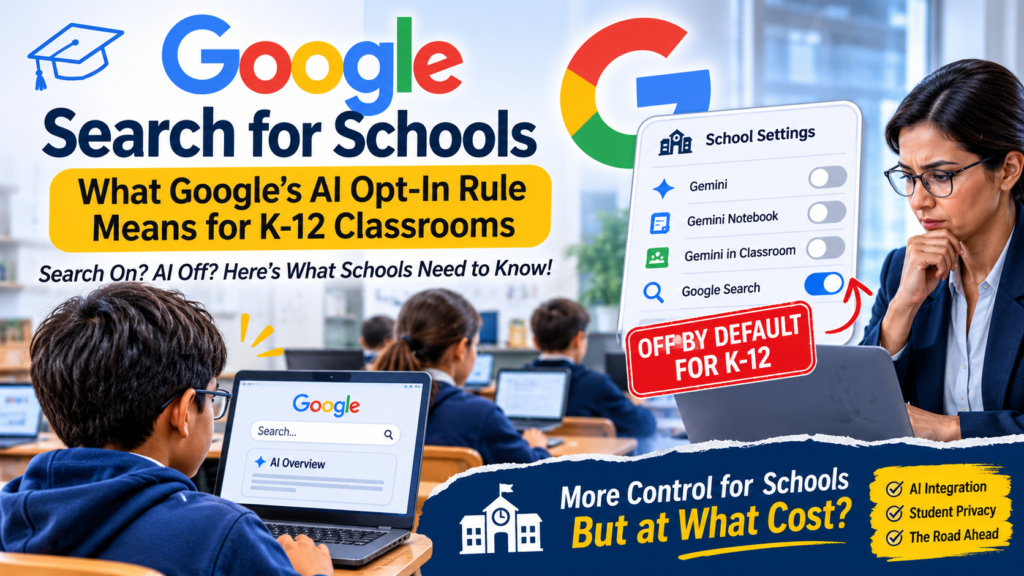
Google Search for schools is now switched off by default on K-12 student accounts that run on Google’s education software, and administrators must turn it on themselves. Schools can enable Search without the Gemini chatbot, but they cannot get Search without certain AI features such as AI-generated summaries, which is why the announcement on Tuesday, November 3, 2026, triggered an immediate political backlash.
If you run a school, teach in one, or build content for students, the practical question is simple: what exactly can a school keep, what does it give up, and what does the controversy say about where search is heading? This guide answers those questions about Google Search for schools in plain language, with every claim tied to reporting from major news outlets.
Key Takeaways
- Google announced that Gemini, Gemini Notebook, Gemini in Classroom, and Search will be off for K-12 student accounts until school administrators explicitly turn them on.
- After criticism, Google clarified that schools can enable each service individually, including Search on its own.
- Google Search for schools can be enabled on its own, but it still carries AI features, because Google says search and AI are deeply integrated.
- Critics, including Senator Bernie Sanders and New York City Mayor Zohran Mamdani, described the policy as coercion. Google says it gives schools more control.
- The decision lands in the middle of a wider debate over K-12 AI policy, with New York City and Los Angeles already restricting generative AI in some grades.
What Did Google Announce About Google Search for Schools?
Google announced that, for K-12 student accounts on its education software, AI tools and Search are both off until a school administrator turns them on. The change was published in a blog post by Chris Phillips, Google’s vice president and general manager of education, and reported the same day by The New York Times, NBC News, CBS News, ABC News, and TechCrunch.
What Is Google Search for Schools?
Google Search for schools refers to the search access that students receive through school-managed accounts on Google’s education products. These are accounts created and controlled by a school or district, not personal accounts. Administrators decide which Google services students can reach from those accounts, which is why a default setting matters so much: most schools do not change defaults on every service, and many will simply accept whatever Google ships.
In this article, the phrase describes the Search experience a student sees when signed in through a school account. Google itself has said it is updating Search for schools to make it better for learning, so the experience is evolving alongside the policy.
What Changed on November 3, 2026
Before the announcement, the debate was about whether schools could turn Gemini off. After it, the debate became about what turning Gemini off costs. Phillips told The New York Times that schools that ban AI would not have access to Search, and that students would see a message from their school saying it is unavailable.
That is the part that provoked the strongest reaction. Search is the front door to the open web for most students, and the policy tied that door to AI settings. In short, Google Search for schools moved from an assumed default to an explicit opt-in, and the opt-in comes bundled with AI.
What Is Off by Default
The default-off list, as reported by CBS News and ABC News, covers four services for K-12 student accounts:
- Gemini, Google’s AI chatbot
- Gemini Notebook, Google’s AI notebook tool
- Gemini in Classroom, the AI layer inside Google Classroom
- Google Search
Google’s own post on X framed it as three switches, Gemini, Gemini Notebook, and Search, that schools can flip on one at a time, two at a time, or all together. Each switch is independent, so Google Search for schools can be on while the chatbot stays off.
Can Schools Use Google Search Without AI?
Not entirely. A school can enable Search without turning on the Gemini chatbot, but according to NBC News, schools still would not be able to use Search without certain AI features, because AI is increasingly built into how Google Search works.
CNBC reported that Google’s response to the backlash said Search can be turned back on with AI Overviews. Google’s statement also said it is updating Search for schools so that AI Mode and AI Overviews offer step-by-step guided learning through problems, designed so students do not get quick answers to schoolwork.
CNBC also noted that Google’s post did not directly address the claim that Search access requires AI use. Phillips’s comment to The New York Times that Search and AI are deeply integrated is the closest the company came to an explanation.
How the Three School Options Compare
The table below summarizes the choices administrators face, based on the reporting cited above.
| Option | Gemini chatbot and Notebook | Google Search | What students experience | Main trade-off |
|---|---|---|---|---|
| Leave everything off (the default) | Off | Off | A message from the school says Search is unavailable | No Google Search for student accounts |
| Enable Search only | Off | On, with AI features such as AI Overviews | Search with AI summaries and step-by-step guided learning in AI Mode | AI exposure remains even without the chatbot |
| Enable Gemini, Notebook, and Search | On | On | The full Google AI toolset inside school accounts | Maximum AI exposure, the opposite of an AI-free policy |
The middle row, which is Google Search for schools without the chatbot, is the one most affected by the controversy. It looks like a compromise, but it still places AI-generated answers in front of students every time they search.
Why Did the Google Search for Schools Policy Spark Backlash?
The backlash centered on a single idea: that Google was using its dominance in search to push schools toward its AI products. The strongest language came from elected officials and child advocacy groups within hours of the announcement.
What Critics Said
Senator Bernie Sanders, an independent from Vermont, wrote on X that Google was threatening schools and called the policy “extortion.” Senator Richard Blumenthal, a Connecticut Democrat, said Google seemed more concerned with forcing Gemini into schools than with helping students succeed.
New York City Mayor Zohran Mamdani said Google was trying to use its monopoly power to force AI into public schools.
Josh Golin, executive director of the children’s advocacy group Fairplay, said the attempt to strong-arm schools would likely backfire. He argued that Google’s classroom technology is less about learning and more about building lifetime brand loyalty, and he urged schools to turn off Google’s AI tools as soon as that option exists. He also suggested that schools use the moment to explore more privacy-protective search alternatives and research methods that go beyond search and click.
Google’s Reply
Google responded the same day. The company said it had listened to educators by turning AI products off by default and that schools remain in control of each service. In a statement, it acknowledged concern that students may use AI to shortcut schoolwork and said schools have told it they want control.
Google also said it would keep engaging with educators to give schools more choice, more controls, and improved Search for learning. In another statement, it said the announcement gives schools more choice, not less, and that Search can be turned on individually without enabling Gemini products.
The disagreement is therefore not about whether schools can pick settings. It is about whether a setting that removes Search is a fair price for choosing no AI.
Why Are Search and AI So Entangled?
Search and AI are entangled because Google has built AI-generated answers directly into its results page. That integration is the technical reason a school cannot get a clean, AI-free version of Google Search for schools by flipping one switch.
Definition: What Are AI Overviews?
AI Overviews are AI-generated summaries that appear at the top of Google Search results, giving a synthesized answer before any links. Google introduced AI Overviews as a search feature in May 2024, according to CNBC. For a student, an AI Overview can look like a finished answer, which is exactly why teachers worry about shortcuts on homework.
Expansion: Why This Matters for Learning
The concern is not only that AI exists. It is that an AI summary can replace the act of reading, comparing sources, and forming an argument. Google says its school-focused updates to AI Mode and AI Overviews are designed to guide students through problems step by step rather than hand over answers. Whether that design works in real classrooms is an open question that independent research has not yet settled.
There is also an external assessment worth noting. CNBC reported that the nonprofit Common Sense Media recently gave Google’s AI Overviews an “unacceptable risk” rating. Because that rating applies to the feature that Search for schools would carry, it adds weight to the arguments of administrators who would rather not enable it.
How Did We Get Here? A Short Timeline
The Search decision is the latest step in a months-long fight over Gemini in schools. The sequence below is drawn from CBS News, NBC News, and AP coverage.
- August 2026: Google drew backlash after turning on its Gemini chatbot for many K-12 students who use Google Classroom.
- September 2026: New York City and Los Angeles, the two largest school districts in the country, announced restrictions on generative AI in some grades while they assess safety and develop policy.
- Early October 2026: Thirteen parent advocacy organizations, including the Digital Childhood Institute and Schools Beyond Screens, sent an open letter urging districts to turn off access to Gemini and YouTube.
- November 3, 2026: Google announced the default-off policy for Gemini, Gemini Notebook, Gemini in Classroom, and Search, and then clarified the individual switches after the backlash.
The timeline shows why the announcement felt so charged. Districts that had just adopted school AI restrictions discovered that those restrictions might also remove their students’ main search tool. For them, the future of Google Search for schools suddenly depended on a setting they had not planned for.
What Should School Leaders Weigh Before Choosing?
There is no single right answer, and this article does not recommend one. The decision depends on a school’s age groups, existing policy, and tolerance for AI-generated content. These are the factors worth putting on the table.
A Practical Checklist for Administrators
- Align with your existing policy. If your district already limits generative AI in certain grades, check whether enabling Search with AI Overviews conflicts with it.
- Separate Search from the chatbot. Enabling Google Search for schools does not require enabling Gemini, Gemini Notebook, or Gemini in Classroom, according to Google’s own clarification.
- Plan for the student view. If Search stays off, students see a message from the school. Decide what research tools they will use instead.
- Evaluate alternatives. Fairplay has suggested privacy-protective search alternatives. Test them for age-appropriateness and reliability before switching.
- Involve parents and teachers. Parent groups have been active on this issue since at least early October, so communication matters.
- Document the decision. Settings can change when Google updates its products, so record what was chosen and why.
What Should a Teacher Do Right Now?
Ask your school’s administrator which of the three services are enabled on student accounts, and when that was decided. If Search is on, build assignments that require students to cite and compare real sources, not just read an AI summary. If Search is off, confirm which alternative research tools are approved.
What Does This Mean for Indian Students and Educators?
The reporting so far describes a US policy, and none of the coverage reviewed spells out how the settings apply outside the United States. The examples cited are American, including New York City, Los Angeles, and US senators. Indian schools and institutes that use Google’s education tools should check their own admin settings and Google’s official documentation before assuming that Google Search for schools behaves the same way for them.
The broader lesson still travels. Wherever students rely on Google for research, the question of how much AI sits between the student and the source is becoming a school policy issue. For young people in Odisha and across India who are preparing for careers in a market shaped by AI, the goal is not to avoid AI or to accept it blindly. It is to understand how these tools work, where they fail, and how to verify what they say.
That is also why AI literacy is worth teaching directly. A student who knows how AI Overviews are produced is better placed to question them than one who has only been told to avoid them.
What Can Content Creators Learn From the Google Search for Schools Debate?
The episode shows that AI-generated answers are becoming the default layer between a question and its sources. That is an inference, not a reported fact, but it follows from Google’s own statement that Search and AI are deeply integrated.
For publishers, educators, and anyone creating learning content, that has three consequences:
- Answer-first writing matters. If an AI system summarizes your page, the first lines of each section are what it is most likely to reuse.
- Modular structure helps. Clear headings and self-contained sections make content easier for both students and AI systems to extract accurately.
- Original sourcing wins trust. In a classroom setting, content that names its sources and dates is easier for a teacher to approve than content that reads like a generic summary.
Whatever happens next with Google Search for schools, none of this requires writing for machines at the expense of readers. Content that is clear, well organized, and well sourced serves both.
Frequently Asked Questions
Is Google really shutting off Search for schools?
By default, yes, for K-12 student accounts. Google says Gemini, Gemini Notebook, Gemini in Classroom, and Search are off until a school administrator turns them on. Schools can then enable Search on its own.
What is the simplest way to explain the Google Search for schools change?
Google Search for schools used to be assumed; now it is opt-in. For K-12 student accounts, a school administrator has to turn Search on, and the Search that comes back includes AI features. The chatbot, the notebook tool, and Search are separate switches, but Search and AI are not separable in practice.
Can a school turn on Search without turning on Gemini?
Yes. Google clarified after the backlash that Search can be enabled individually, without enabling the Gemini chatbot or Gemini Notebook.
Will students still see AI Overviews if Search is on?
Reporting says AI features remain. NBC News reported that schools could not use Search without certain AI features, and CNBC reported that Google said Search can be turned back on with AI Overviews. Google says its school version offers step-by-step guided learning.
Who criticized the policy?
Senator Bernie Sanders, Senator Richard Blumenthal, New York City Mayor Zohran Mamdani, and Fairplay’s executive director Josh Golin were among the critics, according to TechCrunch, CNBC, and AP coverage.
Does this affect teacher or staff accounts?
The coverage reviewed describes the change for K-12 student accounts. It does not say how staff accounts are handled, so administrators should confirm in Google’s documentation or admin console.
Which large school districts already restrict AI?
New York City and Los Angeles. Both announced restrictions on generative AI tools in some grades in September while they assess safety and develop policy.
ବିଦ୍ୟାଳୟ ପାଇଁ ଗୁଗୁଲ୍ ସର୍ଚ୍ଚ (Google Search for Schools): K-12 ଶ୍ରେଣୀଗୁଡ଼ିକ ପାଇଁ ଗୁଗୁଲର ‘AI ଅପ୍ଟ-ଇନ୍’ (AI Opt-In) ନିୟମର ଅର୍ଥ କ’ଣ?
ଗୁଗୁଲର ଶିକ୍ଷା ସଫ୍ଟୱେର୍ ବ୍ୟବହାର କରୁଥିବା K-12 ଛାତ୍ରଛାତ୍ରୀଙ୍କ ଆକାଉଣ୍ଟରେ ‘ବିଦ୍ୟାଳୟ ପାଇଁ ଗୁଗୁଲ୍ ସର୍ଚ୍ଚ’ (Google Search for Schools) ବର୍ତ୍ତମାନ ଡିଫଲ୍ଟ ଭାବରେ ବନ୍ଦ ରହିଛି; ଏହାକୁ ସକ୍ରିୟ କରିବା ପାଇଁ ବିଦ୍ୟାଳୟ ପ୍ରଶାସକମାନଙ୍କୁ ନିଜେ ପଦକ୍ଷେପ ନେବାକୁ ପଡ଼ିବ। ବିଦ୍ୟାଳୟଗୁଡ଼ିକ ‘ଜେମିନି ଚାଟବଟ୍’ (Gemini chatbot) ବିନା କେବଳ ‘ସର୍ଚ୍ଚ’ (Search) ସୁବିଧାକୁ ସକ୍ରିୟ କରିପାରିବେ, କିନ୍ତୁ ସେମାନେ ଏହାକୁ AI-ଜନିତ ସାରାଂଶ (AI-generated summaries) ଭଳି କିଛି ନିର୍ଦ୍ଦିଷ୍ଟ AI ବୈଶିଷ୍ଟ୍ୟ ବିନା ପାଇପାରିବେ ନାହିଁ। ଏହି କାରଣରୁ, ମଙ୍ଗଳବାର, ନଭେମ୍ବର ୩, ୨୦୨୬ ରେ କରାଯାଇଥିବା ଏହି ଘୋଷଣା ତୁରନ୍ତ ଏକ ରାଜନୈତିକ ବିବାଦ ସୃଷ୍ଟି କରିଛି।
ଯଦି ଆପଣ ଏକ ବିଦ୍ୟାଳୟ ପରିଚାଳନା କରନ୍ତି, ସେଠାରେ ଶିକ୍ଷାଦାନ କରନ୍ତି କିମ୍ବା ଛାତ୍ରଛାତ୍ରୀଙ୍କ ପାଇଁ ବିଷୟବସ୍ତୁ (content) ପ୍ରସ୍ତୁତ କରନ୍ତି, ତେବେ ଏକ ଗୁରୁତ୍ୱପୂର୍ଣ୍ଣ ପ୍ରଶ୍ନ ଉଠୁଛି: ବିଦ୍ୟାଳୟଗୁଡ଼ିକ କେଉଁ ସୁବିଧାଗୁଡ଼ିକୁ ନିଜ ପାଖରେ ରଖିପାରିବେ, କେଉଁଗୁଡ଼ିକୁ ଛାଡ଼ିଦେବେ ଏବଂ ଏହି ବିବାଦ ‘ସର୍ଚ୍ଚ’ ବ୍ୟବସ୍ଥାର ଭବିଷ୍ୟତ ଦିଗ ବିଷୟରେ କ’ଣ ସୂଚାଉଛି? ଏହି ଗାଇଡ୍ରେ ‘ବିଦ୍ୟାଳୟ ପାଇଁ ଗୁଗୁଲ୍ ସର୍ଚ୍ଚ’ ସମ୍ବନ୍ଧୀୟ ପ୍ରଶ୍ନଗୁଡ଼ିକର ଉତ୍ତର ସରଳ ଭାଷାରେ ଦିଆଯାଇଛି ଏବଂ ଏଥିରେ ଉଲ୍ଲେଖ କରାଯାଇଥିବା ପ୍ରତ୍ୟେକ ଦାବି ପ୍ରମୁଖ ଗଣମାଧ୍ୟମ ସଂସ୍ଥାଗୁଡ଼ିକର ରିପୋର୍ଟ ଉପରେ ଆଧାରିତ।
ମୁଖ୍ୟ ବିଷୟବସ୍ତୁ
ଗୁଗୁଲ୍ ଘୋଷଣା କରିଛି ଯେ, K-12 ଛାତ୍ରଛାତ୍ରୀଙ୍କ ଆକାଉଣ୍ଟରେ ‘ଜେମିନି’ (Gemini), ‘ଜେମିନି ନୋଟବୁକ୍’ (Gemini Notebook), ‘ଜେମିନି ଇନ୍ କ୍ଲାସରୁମ୍’ (Gemini in Classroom) ଏବଂ ‘ସର୍ଚ୍ଚ’ (Search) ସେବାଗୁଡ଼ିକ ସେତେ ପର୍ଯ୍ୟନ୍ତ ବନ୍ଦ ରହିବ, ଯେପର୍ଯ୍ୟନ୍ତ ବିଦ୍ୟାଳୟ ପ୍ରଶାସକମାନେ ନିଜେ ସେଗୁଡ଼ିକୁ ସକ୍ରିୟ ନ କରନ୍ତି।
ସମାଲୋଚନାର ଶିକାର ହେବା ପରେ, ଗୁଗୁଲ୍ ସ୍ପଷ୍ଟ କରିଛି ଯେ ବିଦ୍ୟାଳୟଗୁଡ଼ିକ ପ୍ରତ୍ୟେକ ସେବାକୁ ପୃଥକ ଭାବରେ ସକ୍ର ‘Google Search for schools’ (ବିଦ୍ୟାଳୟ ପାଇଁ ଗୁଗଲ୍ ସର୍ଚ୍ଚ) କହିଲେ ସେହି ସର୍ଚ୍ଚ ସୁବିଧାକୁ ବୁଝାଏ, ଯାହା ଛାତ୍ରଛାତ୍ରୀମାନେ ଗୁଗଲ୍ର ଶିକ୍ଷା ସମ୍ବନ୍ଧୀୟ ଉତ୍ପାଦଗୁଡ଼ିକରେ ବିଦ୍ୟାଳୟ ଦ୍ୱାରା ପରିଚାଳିତ ଆକାଉଣ୍ଟ ମାଧ୍ୟମରେ ପାଇଥାନ୍ତି।
ଏଗୁଡ଼ିକ ବ୍ୟକ୍ତିଗତ ଆକାଉଣ୍ଟ ନୁହେଁ, ବରଂ କୌଣସି ବିଦ୍ୟାଳୟ କିମ୍ବା ଶିକ୍ଷା ଜିଲ୍ଲା (district) ଦ୍ୱାରା ସୃଷ୍ଟି ଏବଂ ନିୟନ୍ତ୍ରିତ ଆକାଉଣ୍ଟ ଅଟେ। ପ୍ରଶାସକମାନେ ସ୍ଥିର କରନ୍ତି ଯେ ଛାତ୍ରଛାତ୍ରୀମାନେ ସେହି ଆକାଉଣ୍ଟଗୁଡ଼ିକ ମାଧ୍ୟମରେ ଗୁଗଲ୍ର କେଉଁ ସେବାଗୁଡ଼ିକୁ ବ୍ୟବହାର କରିପାରିବେ। ଏଥିପାଇଁ ‘ଡିଫଲ୍ଟ ସେଟିଂ’ (ପୂର୍ବନିର୍ଦ୍ଧାରିତ ସେଟିଂ) ଅତ୍ୟନ୍ତ ଗୁରୁତ୍ୱପୂର୍ଣ୍ଣ ହୋଇଥାଏ; କାରଣ ଅଧିକାଂଶ ବିଦ୍ୟାଳୟ ପ୍ରତ୍ୟେକ ସେବାରେ ଥିବା ଡିଫଲ୍ଟ ସେଟିଂକୁ ପରିବର୍ତ୍ତନ କରନ୍ତି ନାହିଁ ଏବଂ ଗୁଗଲ୍ ଯେପରି ସେଟିଂ ପ୍ରଦାନ କରେ, ସେମାନେ ସେହିପରି ଗ୍ରହଣ କରିନିଅନ୍ତି।
ଏହି ଲେଖାରେ, ‘Google Search for schools’ ଶବ୍ଦାବଳୀଟି ସେହି ସର୍ଚ୍ଚ ଅନୁଭୂତିକୁ ବର୍ଣ୍ଣନା କରେ, ଯାହା ଜଣେ ଛାତ୍ର କିମ୍ବା ଛାତ୍ରୀ ବିଦ୍ୟାଳୟ ଆକାଉଣ୍ଟ ମାଧ୍ୟମରେ ଲଗ୍-ଇନ୍ (log in) କରିବା ପରେ ପାଇଥାନ୍ତି। ଗୁଗଲ୍ ନିଜେ କହିଛି ଯେ, ଶିକ୍ଷାଗ୍ରହଣ ପ୍ରକ୍ରିୟାକୁ ଅଧିକ ଉନ୍ନତ କରିବା ପାଇଁ ସେମାନେ ‘Google Search for schools’କୁ ଅପଡେଟ୍ କରୁଛନ୍ତି; ତେଣୁ ଏହି ନୀତି ସହିତ ଛାତ୍ରଛାତ୍ରୀଙ୍କ ଅନୁଭୂତି ମଧ୍ୟ ପରିବର୍ତ୍ତିତ ହେଉଛି।
୩ ନଭେମ୍ବର, ୨୦୨୬ରେ କ’ଣ ପରିବର୍ତ୍ତନ ହେଲା?
ଏହି ଘୋଷଣା ପୂର୍ବରୁ, ବିଦ୍ୟାଳୟଗୁଡ଼ିକ ‘Gemini’ (ଜେମିନି)କୁ ବନ୍ଦ (turn off) କରିପାରିବେ କି ନାହିଁ, ତାହାକୁ ନେଇ ଆଲୋଚନା ଚାଲିଥିଲା। କିନ୍ତୁ ଘୋଷଣା ପରେ, ପ୍ରଶ୍ନ ଉଠିଲା ଯେ Geminiକୁ ବନ୍ଦ କଲେ କ’ଣ ହେବ ବା ଏହାର ପରିଣାମ କ’ଣ ହେବ। ଫିଲିପ୍ସ (Phillips) ‘ଦି ନ୍ୟୁୟର୍କ ଟାଇମ୍ସ’ (The New York Times)କୁ କହିଛନ୍ତି ଯେ, ଯେଉଁ ବିଦ୍ୟାଳୟଗୁଡ଼ିକ AI (କୃତ୍ରିମ ବୁଦ୍ଧିମତ୍ତା)କୁ ବାରଣ କରନ୍ତି, ସେଠାରେ ଛାତ୍ରଛାତ୍ରୀମାନେ ‘Google Search’ ବ୍ୟବହାର କରିପାରିବେ ନାହିଁ। ଏହା ବଦଳରେ, ସେମାନଙ୍କୁ ବିଦ୍ୟାଳୟ ତରଫରୁ ଏକ ବାର୍ତ୍ତା ଦେଖାଯିବ ଯେ ଏହି ସୁବିଧା ଉପଲବ୍ଧ ନାହିଁ।
ଏହି ବିଷୟଟି ସ ଏକ ସ୍କୁଲ ଜେମିନି ଚାଟବଟ୍ ଚାଲୁ ନକରି ସର୍ଚ୍ଚକୁ ସକ୍ଷମ କରିପାରିବ, କିନ୍ତୁ NBC ନ୍ୟୁଜ୍ ଅନୁଯାୟୀ, ସ୍କୁଲଗୁଡ଼ିକ କିଛି AI ବୈଶିଷ୍ଟ୍ୟ ବିନା ସର୍ଚ୍ଚ ବ୍ୟବହାର କରିପାରିବେ ନାହିଁ, କାରଣ AI କ୍ରମାଗତ ଭାବରେ Google Search କିପରି କାର୍ଯ୍ୟ କରେ ତାହା ଉପରେ ନିର୍ଭର କରୁଛି।
CNBC ରିପୋର୍ଟ କରିଛି ଯେ ପ୍ରତିକ୍ରିୟାର ପ୍ରତି Google ର ପ୍ରତିକ୍ରିୟାରେ କୁହାଯାଇଛି ଯେ AI ଓଭରଭିଉ ସହିତ ସର୍ଚ୍ଚକୁ ପୁଣି ଚାଲୁ କରାଯାଇପାରିବ। Google ର ବିବୃତ୍ତିରେ ଏହା ମଧ୍ୟ କୁହାଯାଇଛି ଯେ ଏହା ସ୍କୁଲଗୁଡିକ ପାଇଁ ସର୍ଚ୍ଚକୁ ଅପଡେଟ୍ କରୁଛି ଯାହା ଦ୍ଵାରା AI ମୋଡ୍ ଏବଂ AI ଓଭରଭିଉ ସମସ୍ୟା ମାଧ୍ୟମରେ ପଦକ୍ଷେପ-ପୂର୍ବ-ନିର୍ଦ୍ଦେଶିତ ଶିକ୍ଷା ପ୍ରଦାନ କରେ, ଯାହା ଡିଜାଇନ୍ କରାଯାଇଛି ଯାହା ଦ୍ଵାରା ଛାତ୍ରମାନେ ସ୍କୁଲକାର୍ଯ୍ୟର ଶୀଘ୍ର ଉତ୍ତର ପାଇପାରିବେ ନାହିଁ।
CNBC ଏହା ମଧ୍ୟ ଉଲ୍ଲେଖ କରିଛି ଯେ Google ର ପୋଷ୍ଟ ସିଧାସଳଖ ଦାବିକୁ ସମ୍ବୋଧିତ କରିନାହିଁ ଯେ ସର୍ଚ୍ଚ ଆକ୍ସେସ୍ AI ବ୍ୟବହାର ଆବଶ୍ୟକ କରେ। ଫିଲିପ୍ସଙ୍କ ନ୍ୟୁୟର୍କ ଟାଇମ୍ସକୁ ମନ୍ତବ୍ୟ ଯେ ସର୍ଚ୍ଚ ଏବଂ AI ଗଭୀର ଭାବରେ ସମନ୍ୱିତ, କମ୍ପାନୀ ଏକ ବ୍ୟାଖ୍ୟା ପାଇଁ ସବୁଠାରୁ ନିକଟତର।
ତିନୋଟି ସ୍କୁଲ ବିକଳ୍ପ କିପରି ତୁଳନା କରାଯାଏ
ଉପରେ ଉଦ୍ଧୃତ ରିପୋର୍ଟିଂ ଉପରେ ଆଧାର କରି ପ୍ରଶାସକମାନେ ସମ୍ମୁଖୀନ ହେଉଥିବା ପସନ୍ଦଗୁଡ଼ିକୁ ନିମ୍ନରେ ଥିବା ସାରଣୀରେ ସାରାଂଶିତ କରାଯାଇଛି।
ବିକଳ୍ପ ଜେମିନି ଚାଟବଟ୍ ଏବଂ ନାହିଁ Google Search ଛାତ୍ରଛାତ୍ରୀଙ୍କ ଅନୁଭୂତି ମୁଖ୍ୟ ବିକଳ୍ପ (Trade-off)
ସବୁକିଛି ବନ୍ଦ ରଖିବା (ଡିଫଲ୍ଟ ଅବସ୍ଥା) ବନ୍ଦ ବନ୍ଦ ବିଦ୍ୟାଳୟ ପକ୍ଷରୁ ଏକ ବାର୍ତ୍ତା ମିଳିବ ଯେ ‘Search’ (ସର୍ଚ୍ଚ) ଉପଲବ୍ଧ ନାହିଁ ଛାତ୍ରଛାତ୍ରୀଙ୍କ ଆକାଉଣ୍ଟ ପାଇଁ Google Search ଉପଲବ୍ଧ ନୁହେଁ
କେବଳ ‘Search’ ସକ୍ରିୟ କରିବା ବନ୍ଦ ଚାଲୁ (AI ବୈଶିଷ୍ଟ୍ୟ ଯଥା ‘AI Overviews’ ସହିତ) AI ସାରାଂଶ ଏବଂ AI ମୋଡ୍ରେ ପର୍ଯ୍ୟାୟକ୍ରମେ ଶିକ୍ଷାଦାନ ସୁବିଧା ସହିତ ସର୍ଚ୍ଚ କରିବା ଚାଟବଟ୍ (chatbot) ନଥିଲେ ମଧ୍ୟ AI ର ପ୍ରଭାବ ରହିଥାଏ
Gemini, Notebook ଏବଂ Search ସକ୍ରିୟ କରିବା ଚାଲୁ ଚାଲୁ ବିଦ୍ୟାଳୟ ଆକାଉଣ୍ଟରେ Google AI ଟୁଲ୍ଗୁଡ଼ିକର ସମ୍ପୂର୍ଣ୍ଣ ସେଟ୍ ଉପଲବ୍ଧ AI ର ସର୍ବାଧିକ ପ୍ରଭାବ; ଏହା AI-ମୁକ୍ତ ନୀତିର ଠିକ୍ ବିପରୀତ ଅଟେ
ମଝି ଧାଡ଼ିରେ ଥିବା ବିକଳ୍ପ—ଯେଉଁଥିରେ ଚାଟବଟ୍ ବିନା କେବଳ Google Search ରହିଥାଏ—ତାହା ହିଁ ଏହି ବିବାଦ ଦ୍ୱାରା ସବୁଠାରୁ ଅଧିକ ପ୍ରଭାବିତ ହୋଇଛି। ଏହା ଏକ ମଧ୍ୟମ ମାର୍ଗ ବା ବୁଝାମଣା ପରି ମନେହେଉଥିଲେ ମଧ୍ୟ, ଛାତ୍ରଛାତ୍ରୀମାନେ ଯେତେବେଳେ ବି କିଛି ସର୍ଚ୍ଚ କରନ୍ତି, ସେତେବେଳେ ଏହା ସେମାନଙ୍କ ସାମ୍ନାରେ AI ଦ୍ୱାରା ପ୍ରସ୍ତୁତ ଉତ୍ତର ଉପସ୍ଥାପନ କରିଥାଏ।
ବିଦ୍ୟାଳୟଗୁଡ଼ିକ ପାଇଁ Google Search ନୀତି କାହିଁକି ବିରୋଧର ସମ୍ମୁଖୀନ ହେଲା?
ଏହି ବିରୋଧ ମୁଖ୍ୟତଃ ଗୋଟିଏ ବିଚାର ଉପରେ କେନ୍ଦ୍ରିତ ଥିଲା: Google ସର୍ଚ୍ଚ କ୍ଷେତ୍ରରେ ନିଜର ପ୍ରାଧାନ୍ୟକୁ ବ୍ୟବହାର କରି ବିଦ୍ୟାଳୟଗୁଡ଼ିକୁ ନିଜର AI ଉତ୍ପାଦ ବ୍ୟବହାର କରିବାକୁ ବାଧ୍ୟ କରୁଛି। ଏହି ଘୋଷଣାର କିଛି ଘଣ୍ଟା ମଧ୍ୟରେ ହିଁ ନିର୍ବାଚିତ ଜନପ୍ରତିନିଧି ଏବଂ ଶିଶୁ ଅଧିକାର ସୁରକ୍ଷା ଗୋଷ୍ଠୀଗୁଡ଼ିକ ଏହା ବିରୋଧରେ କଡ଼ା ମତ ପ୍ରକାଶ କରିଥିଲେ।
ସମାଲୋଚକମାନେ କ’ଣ କହିଲେ?
ଭର୍ମୋଣ୍ଟର ସ୍ୱାଧୀନ ସିନେଟର ବର୍ନି ସାଣ୍ଡର୍ସ ‘X’ (ଟ୍ୱିଟର) ରେ ଲେଖିଛନ୍ତି ଯେ Google ବିଦ୍ୟାଳୟଗୁଡ଼ିକୁ ଧମକ ଦେଉଛି ଏବଂ ସେ ଏହି ନୀତିକୁ “ଜୋରଜବରସ୍ତି ଆଦାୟ” (extortion) ବୋଲି ଆଖ୍ୟା ଦେଇଛନ୍ତି। କନେକ୍ଟିକଟ୍ର ଡେମୋକ୍ରାଟ୍ ସିନେଟର ରିଚାର୍ଡ ବ୍ଲୁମେନ୍ଥାଲ୍ କହିଛନ୍ତି ଯେ, ଛାତ୍ରଛାତ୍ରୀଙ୍କ ସଫଳତାରେ ସାହାଯ୍ୟ କରିବା ଅପ ଏକ ବିବୃତ୍ତିରେ, ଗୁଗୁଲ୍ ସ୍ୱୀକାର କରିଛି ଯେ ଛାତ୍ରଛାତ୍ରୀମାନେ ବିଦ୍ୟାଳୟ କାର୍ଯ୍ୟ (homework) ସହଜରେ ସାରିଦେବା ପାଇଁ AI (କୃତ୍ରିମ ବୁଦ୍ଧିମତ୍ତା) ବ୍ୟବହାର କରିପାରନ୍ତି ବୋଲି ଚିନ୍ତା ରହିଛି। କମ୍ପାନୀ କହିଛି ଯେ ବିଦ୍ୟାଳୟଗୁଡ଼ିକ ଏହା ଉପରେ ନିୟନ୍ତ୍ରଣ ଚାହୁଁଛନ୍ତି।
ଗୁଗୁଲ୍ ଆହୁରି ମଧ୍ୟ କହିଛି ଯେ ବିଦ୍ୟାଳୟଗୁଡ଼ିକୁ ଅଧିକ ବିକଳ୍ପ, ଅଧିକ ନିୟନ୍ତ୍ରଣ ଏବଂ ଶିକ୍ଷା ପାଇଁ ଉନ୍ନତ ‘ସର୍ଚ୍ଚ’ (Search) ସୁବିଧା ଯୋଗାଇବା ପାଇଁ ସେମାନେ ଶିକ୍ଷାବିତ୍ମାନଙ୍କ ସହ ଆଲୋଚନା ଜାରି ରଖିବେ। ଅନ୍ୟ ଏକ ବିବୃତ୍ତିରେ କମ୍ପାନୀ କହିଛି ଯେ ଏହି ନୂତନ ଘୋଷଣା ବିଦ୍ୟାଳୟଗୁଡ଼ିକୁ କମ୍ ନୁହେଁ, ବରଂ ଅଧିକ ବିକଳ୍ପ ପ୍ରଦାନ କରୁଛି। ଏଥିରେ ‘ଜେମିନି’ (Gemini) ଉତ୍ପାଦଗୁଡ଼ିକୁ ସକ୍ରିୟ ନ କରି ମଧ୍ୟ କେବଳ ‘ସର୍ଚ୍ଚ’ (Search) ସୁବିଧାକୁ ଅଲଗା ଭାବରେ ଚାଲୁ କରାଯାଇପାରିବ।
ତେଣୁ, ଏହି ବିବାଦ ବିଦ୍ୟାଳୟଗୁଡ଼ିକ ନିଜ ପସନ୍ଦର ସେଟିଂ ବାଛିପାରିବେ କି ନାହିଁ, ସେ ବିଷୟରେ ନୁହେଁ। ବରଂ ପ୍ରଶ୍ନଟି ହେଉଛି – ଯଦି କୌଣସି ବିଦ୍ୟାଳୟ AI ବ୍ୟବହାର କରିବାକୁ ଚାହୁଁନାହିଁ, ତେବେ ସେହି ବିକଳ୍ପ ବାଛିବା ବଦଳରେ ସେମାନଙ୍କୁ ‘ସର୍ଚ୍ଚ’ (Search) ସୁବିଧା ହରାଇବାକୁ ପଡ଼ିବା କେତେ ଯୁକ୍ତିଯୁକ୍ତ?
‘ସର୍ଚ୍ଚ’ (Search) ଏବଂ AI କାହିଁକି ଏତେ ଘନିଷ୍ଠ ଭାବେ ଜଡ଼ିତ?
‘ସର୍ଚ୍ଚ’ ଏବଂ AI ପରସ୍ପର ସହ ଜଡ଼ିତ, କାରଣ ଗୁଗୁଲ୍ ଏହାର ଫଳାଫଳ ପୃଷ୍ଠାରେ (results page) ସିଧାସଳଖ AI ଦ୍ୱାରା ପ୍ରସ୍ତୁତ ଉତ୍ତରଗୁଡ଼ିକୁ ଅନ୍ତର୍ଭୁକ୍ତ କରିଛି। ଏହି ଏକୀକରଣ (integration) ହେଉଛି ସେହି ବୈଷୟିକ କାରଣ, ଯାହା ଯୋଗୁଁ ବିଦ୍ୟାଳୟଗୁଡ଼ିକ କେବଳ ଗୋଟିଏ ବଟନ୍ ଦବାଇ ଗୁଗୁଲ୍ ‘ସର୍ଚ୍ଚ’ର ଏକ ସ୍ୱଚ୍ଛ ଏବଂ AI-ମୁକ୍ତ ସଂସ୍କରଣ ପାଇପାରିବେ ନାହିଁ।
ବ୍ୟାଖ୍ୟା: ‘AI ଓଭରଭ୍ୟୁ’ (AI Overviews) କ’ଣ?
‘AI ଓଭରଭ୍ୟୁ’ ହେଉଛି AI ଦ୍ୱାରା ପ୍ରସ୍ତୁତ ସାରାଂଶ, ଯାହା ଗୁଗୁଲ୍ ‘ସର୍ଚ୍ଚ’ ଫଳାଫଳର ଉପର ଭାଗରେ ଦେଖାଯାଏ। ଏହା ବିଭିନ୍ନ ୱେବସାଇଟ୍ ଲିଙ୍କ୍ ଆସିବା ପୂର୍ବରୁ ହିଁ ଏକ ସଂକ୍ଷିପ୍ତ ଉତ୍ତର ପ୍ରଦାନ କରିଥାଏ। CNBC ଅନୁଯାୟୀ, ଗୁଗୁଲ୍ ୨୦୨୪ ମସିହା ମେ ମାସରେ ଏକ ‘ସର୍ଚ୍ଚ’ ଫି ନିମ୍ନଲିଖିତ ଘଟଣାକ୍ରମଟି CBS News, NBC News ଏବଂ AP ର ରିପୋର୍ଟ ଉପରେ ଆଧାରିତ।
ଅଗଷ୍ଟ ୨୦୨୬: Google Classroom ବ୍ୟବହାର କରୁଥିବା K-12 (କିଣ୍ଡରଗାର୍ଟେନ୍ରୁ ଦ୍ୱାଦଶ ଶ୍ରେଣୀ ପର୍ଯ୍ୟନ୍ତ) ଛାତ୍ରଛାତ୍ରୀଙ୍କ ପାଇଁ ‘Gemini’ ଚାଟବଟ୍ (chatbot) ଉପଲବ୍ଧ କରାଇବା ପରେ Google କୁ ତୀବ୍ର ସମାଲୋଚନାର ସମ୍ମୁଖୀନ ହେବାକୁ ପଡ଼ିଲା।
ସେପ୍ଟେମ୍ବର ୨୦୨୬: ଦେଶର ଦୁଇଟି ବୃହତ୍ତମ ବିଦ୍ୟାଳୟ ଜିଲ୍ଲା (school districts) — ନ୍ୟୁୟର୍କ ସିଟି ଏବଂ ଲସ୍ ଆଞ୍ଜେଲସ୍ — ସୁରକ୍ଷା ଯାଞ୍ଚ କରିବା ଏବଂ ନୀତି ପ୍ରସ୍ତୁତ କରିବା ସମୟ ମଧ୍ୟରେ, କିଛି ଶ୍ରେଣୀରେ ‘ଜେନେରେଟିଭ୍ AI’ (generative AI) ବ୍ୟବହାର ଉପରେ କଟକଣା ଲାଗୁ କରିବାକୁ ଘୋଷଣା କଲେ।
ଅକ୍ଟୋବର ୨୦୨୬ ର ପ୍ରାରମ୍ଭ: ‘Digital Childhood Institute’ ଏବଂ ‘Schools Beyond Screens’ ସମେତ
ଅଭିଭାବକମାନଙ୍କର ତେରଟି ସଂଗଠନ ଏକ ଖୋଲା ଚିଠି ମାଧ୍ୟମରେ ବିଦ୍ୟାଳୟ ଜିଲ୍ଲାଗୁଡ଼ିକୁ ଅନୁରୋଧ କଲେ ଯେ, ସେମାନେ Gemini ଏବଂ YouTube ର ବ୍ୟବହାର ଉପରେ ରୋକ୍ ଲଗାନ୍ତୁ (ଅର୍ଥାତ୍ ଏଗୁଡ଼ିକୁ ବନ୍ଦ ରଖନ୍ତୁ)।
ନଭେମ୍ବର ୩, ୨୦୨୬: Google ଘୋଷଣା କଲା ଯେ Gemini ପାଇଁ ‘ଡିଫଲ୍ଟ ଭାବେ ବନ୍ଦ’ (default-off) ରହିବା ନୀତି ଲାଗୁ କରାଯିବ।’Gemini Notebook’, ‘Gemini in Classroom’ ଏବଂ ‘Search’ (ସର୍ଚ୍ଚ) ସମ୍ବନ୍ଧୀୟ ବିଷୟଗୁଡ଼ିକ ଉପରେ ଆଲୋକପାତ କରାଯାଇଥିଲା ଏବଂ ତୀବ୍ର ପ୍ରତିକ୍ରିୟା ପରେ, ପ୍ରତ୍ୟେକ ସେଟିଂ ବା ବିକଳ୍ପ (switch) ବିଷୟରେ ସ୍ପଷ୍ଟୀକରଣ ଦିଆଯାଇଥିଲା।
ଏହି ଘଟଣାକ୍ରମରୁ ଜଣାପଡ଼େ ଯେ କାହିଁକି ଏହି ଘୋଷଣାଟି ଏତେ ଉତ୍ତେଜନା ସୃଷ୍ଟି କରିଥିଲା। ଯେଉଁ ବିଦ୍ୟାଳୟ ଜିଲ୍ଲାଗୁଡ଼ିକ (school districts) ନିକଟରେ AI (କୃତ୍ରିମ ବୁଦ୍ଧିମତ୍ତା) ବ୍ୟବହାର ଉପରେ କଟକଣା ଲାଗୁ କରିଥିଲେ, ସେମାନେ ଜାଣିବାକୁ ପାଇଲେ ଯେ ଏହି କଟକଣା କାରଣରୁ ଛାତ୍ରଛାତ୍ରୀମାନଙ୍କ ପାଇଁ ଉପଲବ୍ଧ ମୁଖ୍ୟ ‘ସର୍ଚ୍ଚ’ (search) ସୁବିଧା ମଧ୍ୟ ବନ୍ଦ ହୋଇଯାଇପାରେ। ସେମାନଙ୍କ ପାଇଁ, ବିଦ୍ୟାଳୟରେ ‘Google Search’ର ଭବିଷ୍ୟତ ହଠାତ୍ ଏପରି ଏକ ସେଟିଂ ଉପରେ ନିର୍ଭର କରିବାକୁ ଲାଗିଲା, ଯାହା ପାଇଁ ସେମାନେ କୌଣସି ଯୋଜନା କରିନଥିଲେ।
ନିଷ୍ପତ୍ତି ନେବା ପୂର୍ବରୁ ବିଦ୍ୟାଳୟ କର୍ତ୍ତୃପକ୍ଷ କେଉଁ ବିଷୟଗୁଡ଼ିକ ଉପରେ ବିଚାର କରିବା ଉଚିତ୍?
ଏହାର କୌଣସି ଗୋଟିଏ ନିର୍ଦ୍ଦିଷ୍ଟ ‘ସଠିକ୍’ ଉତ୍ତର ନାହିଁ ଏବଂ ଏହି ଲେଖା କୌଣସି ଗୋଟିଏ ବିକଳ୍ପକୁ ସୁପାରିଶ କରେ ନାହିଁ। ଏହି ନିଷ୍ପତ୍ତି ବିଦ୍ୟାଳୟର ଛାତ୍ରଛାତ୍ରୀଙ୍କ ବୟସ, ବିଦ୍ୟାଳୟର ବର୍ତ୍ତମାନର ନୀତି ଏବଂ AI ଦ୍ୱାରା ପ୍ରସ୍ତୁତ ବିଷୟବସ୍ତୁ (content) ପ୍ରତି ସେମାନଙ୍କ ଗ୍ରହଣୀୟତା ଉପରେ ନିର୍ଭର କରେ। ଏହି କାରକଗୁଡ଼ିକ ଉପରେ ବିଚାର କରିବା ଆବଶ୍ୟକ।
ପ୍ରଶାସକମାନଙ୍କ ପାଇଁ ଏକ ବ୍ୟାବହାରିକ ଯାଞ୍ଚ ତାଲିକା (Checklist)
ଆପଣଙ୍କ ବିଦ୍ୟାଳୟର ବର୍ତ୍ତମାନର ନୀତି ସହିତ ଏହାକୁ ଖାପ ଖୁଆନ୍ତୁ। ଯଦି ଆପଣଙ୍କ ଅଞ୍ଚଳରେ କିଛି ନିର୍ଦ୍ଦିଷ୍ଟ ଶ୍ରେଣୀ ପାଇଁ ‘Generative AI’ (ଜେନେରେଟିଭ୍ AI) ବ୍ୟବହାର ଉପରେ କଟକଣା ଅଛି, ତେବେ ‘AI Overviews’ ସହିତ ‘Search’ ସୁବିଧାକୁ ସକ୍ରିୟ କରିବା ଦ୍ୱାରା ସେହି ନୀତି ଉଲ୍ଲଂଘନ ହେଉଛି କି ନାହିଁ, ତାହା ଯାଞ୍ଚ କରନ୍ତୁ।
‘
Search’ (ସର୍ଚ୍ଚ) ଏବଂ ‘Chatbot’ (ଚାଟବଟ୍) କୁ ପୃଥକ ଭାବରେ ବିଚାର କରନ୍ତୁ। Google ର ସ୍ପଷ୍ଟୀକରଣ ଅନୁଯାୟୀ, ବିଦ୍ୟାଳୟ ପାଇଁ ‘Google Search’ ସକ୍ରିୟ କରିବା ଅର୍ଥ ନୁହେଁ ଯେ ଆପଣଙ୍କୁ ‘Gemini’, ‘Gemini Notebook’ କିମ୍ବା ‘Gemini in Classroom’ ମଧ୍ୟ ସକ୍ରିୟ କରିବାକୁ ପଡ଼ିବ।
ଛାତ୍ରଛାତ୍ରୀଙ୍କ ଦୃଷ୍ଟିକୋଣ ଭାରତୀୟ ବିଦ୍ୟାଳୟ ଏବଂ ଅନୁଷ୍ଠାନଗୁଡ଼ିକ, ଯେଉଁମାନେ ଗୁଗୁଲର ଶିକ୍ଷାଗତ ଉପକରଣ ବ୍ୟବହାର କରନ୍ତି, ସେମାନେ ଏହା ଭାବିବା ପୂର୍ବରୁ ଯେ ‘ଗୁଗୁଲ ସର୍ଚ୍ଚ ଫର୍ ସ୍କୁଲ୍ସ’ (Google Search for Schools) ସେମାନଙ୍କ ପାଇଁ ମଧ୍ୟ ସମାନ ଭାବରେ କାମ କରୁଥିବ, ନିଜର ‘ଆଡମିନ୍ ସେଟିଂସ୍’ (admin settings) ଏବଂ ଗୁଗୁଲର ଅଫିସିଆଲ୍ ଡକ୍ୟୁମେଣ୍ଟେସନ୍ (ଦସ୍ତାବିଜ) ଯାଞ୍ଚ କରିନେବା ଉଚିତ୍।
ଏହାର ଏକ ବ୍ୟାପକ ଅର୍ଥ ମଧ୍ୟ ରହିଛି। ଯେଉଁଠାରେ ଛାତ୍ରଛାତ୍ରୀମାନେ ଗବେଷଣା ପାଇଁ ଗୁଗୁଲ ଉପରେ ନିର୍ଭର କରନ୍ତି, ସେଠାରେ ଛାତ୍ର ଏବଂ ତଥ୍ୟର ମୂଳ ଉତ୍ସ ମଧ୍ୟରେ କେତେ ପରିମାଣର AI (କୃତ୍ରିମ ବୁଦ୍ଧିମତ୍ତା) ରହିଛି, ତାହା ଏବେ ବିଦ୍ୟାଳୟର ନୀତିଗତ ବିଷୟ ପାଲଟିଛି। ଓଡ଼ିଶା ତଥା ସମଗ୍ର ଭାରତର ଯେଉଁ ଯୁବବର୍ଗ AI ଦ୍ୱାରା ପ୍ରଭାବିତ ବଜାରରେ ନିଜର କ୍ୟାରିୟର ଗଢ଼ିବାକୁ ପ୍ରସ୍ତୁତ ହେଉଛନ୍ତି, ସେମାନଙ୍କ ପାଇଁ ଲକ୍ଷ୍ୟ ହେଉଛି AI ଠାରୁ ଦୂରେଇ ରହିବା କିମ୍ବା ଏହାକୁ ଆଖି ବୁଜି ଗ୍ରହଣ କରିନେବା ନୁହେଁ। ବରଂ, ଏହି ଉପକରଣଗୁଡ଼ିକ କିପରି କାମ କରେ, କେଉଁଠାରେ ସେଗୁଡ଼ିକ ବିଫଳ ହୁଏ ଏବଂ ସେଗୁଡ଼ିକ ଦେଉଥିବା ତଥ୍ୟକୁ କିପରି ଯାଞ୍ଚ କରାଯାଇପାରିବ, ତାହା ବୁଝିବା ହିଁ ମୁଖ୍ୟ ଉଦ୍ଦେଶ୍ୟ।
ଏହି କାରଣରୁ ‘AI ସାକ୍ଷରତା’ (AI literacy) ବିଷୟରେ ସିଧାସଳଖ ଶିକ୍ଷା ଦେବା ଆବଶ୍ୟକ। ଯେଉଁ ଛାତ୍ର ଜାଣନ୍ତି ଯେ ‘AI ଓଭରଭ୍ୟୁ’ (AI Overviews – AI ଦ୍ୱାରା ପ୍ରସ୍ତୁତ ସାରାଂଶ) କିପରି ତିଆରି ହୁଏ, ସେ ସେହି ତଥ୍ୟ ଉପରେ ପ୍ରଶ୍ନ ଉଠାଇବାକୁ ଅଧିକ ସକ୍ଷମ ହେବେ; ତୁଳନାତ୍ମକ ଭାବରେ, ଯେଉଁ ଛାତ୍ରଙ୍କୁ କେବଳ ଏଗୁଡ଼ିକଠାରୁ ଦୂରେଇ ରହିବାକୁ କୁହାଯାଇଛି, ସେ ଏପରି କରିପାରିବେ ନାହିଁ।
‘ଗୁଗୁଲ ସର୍ଚ୍ଚ ଫର୍ ସ୍କୁଲ୍ସ’କୁ ନେଇ ଚାଲିଥିବା ଆଲୋଚନାରୁ ବିଷୟବସ୍ତୁ ପ୍ରସ୍ତୁତକାରୀମାନେ (Content Creators) କ’ଣ ଶିଖିପାରିବେ?
ଏହି ଘଟଣା ଦର୍ଶାଉଛି ଯେ, ଏକ ପ୍ରଶ୍ନ ଏବଂ ତା’ର ଉତ୍ସ ମଧ୍ୟରେ AI ଦ୍ୱାରା ପ୍ରସ୍ତୁତ ଉତ୍ତରଗୁଡ଼ିକ ଏକ ମୁଖ୍ୟ ମାଧ୍ୟମ ବା ସ୍ତର (default layer) ପାଲଟିଯାଉଛି। ଏହା ଏକ ଅନୁମାନ ମାତ୍ର, କୌଣସି ନିଶ୍ଚିତ ତଥ୍ୟ ନୁହେଁ; କିନ୍ତୁ ଗୁଗୁଲର ନିଜସ୍ୱ ବିବୃ ସ୍କୁଲ ପାଇଁ Google Search ପରିବର୍ତ୍ତନକୁ ବ୍ୟାଖ୍ୟା କରିବାର ସବୁଠାରୁ ସରଳ ଉପାୟ କ’ଣ?
ସ୍କୁଲ ପାଇଁ Google Search ପୂର୍ବରୁ ଅନୁମାନ କରାଯାଉଥିଲା; ବର୍ତ୍ତମାନ ଏହା ଅପ୍ଟ-ଇନ୍। K-12 ଛାତ୍ର ଆକାଉଣ୍ଟ ପାଇଁ, ଜଣେ ସ୍କୁଲ ପ୍ରଶାସକଙ୍କୁ Search ଚାଲୁ କରିବାକୁ ପଡିବ, ଏବଂ ଫେରି ଆସୁଥିବା Search ରେ AI ବୈଶିଷ୍ଟ୍ୟ ଅନ୍ତର୍ଭୁକ୍ତ। ଚାଟବଟ୍, ନୋଟବୁକ୍ ଉପକରଣ ଏବଂ Search ପୃଥକ ସ୍ୱିଚ୍, କିନ୍ତୁ Search ଏବଂ AI ଅଭ୍ୟାସରେ ପୃଥକ ହୋଇପାରିବ ନାହିଁ।
ଜେମିନି ଚାଲୁ ନକରି ଏକ ସ୍କୁଲ Search ଚାଲୁ କରିପାରିବ କି?
ହଁ। ପ୍ରତିକ୍ରିୟା ପରେ Google ସ୍ପଷ୍ଟ କରିଛି ଯେ ଜେମିନି ଚାଟବଟ୍ ସକ୍ଷମ ନକରି Search ବ୍ୟକ୍ତିଗତ ଭାବରେ ସକ୍ଷମ କରାଯାଇପାରିବ।
କିମ୍ବା ଜେମିନି ନୋଟବୁକ୍ (Gemini Notebook) |
ଯଦି ‘ସର୍ଚ୍ଚ’ (Search) ସୁବିଧା ଚାଲୁ ରହେ, ତେବେ ଛାତ୍ରଛାତ୍ରୀମାନେ କ’ଣ ଏବେ ମଧ୍ୟ ‘AI ଓଭରଭ୍ୟୁ’ (AI Overviews) ଦେଖିପାରିବେ?
ବିଭିନ୍ନ ରିପୋର୍ଟ ଅନୁଯାୟୀ, AI ବୈଶିଷ୍ଟ୍ୟଗୁଡ଼ିକ (AI features) ବଜାୟ ରହିବ। NBC ନ୍ୟୁଜ୍ ରିପୋର୍ଟ କରିଛି ଯେ, କିଛି ନିର୍ଦ୍ଦିଷ୍ଟ AI ବୈଶିଷ୍ଟ୍ୟ ବିନା ବିଦ୍ୟାଳୟଗୁଡ଼ିକ ‘ସର୍ଚ୍ଚ’ ସୁବିଧା ବ୍ୟବହାର କରିପାରିବେ ନାହିଁ। ସେହିପରି CNBC ରିପୋର୍ଟ କରିଛି ଯେ, ଗୁଗୁଲ୍ (Google) କହିଛି ଯେ ‘AI ଓଭରଭ୍ୟୁ’ ସହିତ ‘ସର୍ଚ୍ଚ’ ସୁବିଧାକୁ ପୁନର୍ବାର ଚାଲୁ କରାଯାଇପାରିବ। ଗୁଗୁଲ୍ର କହିବା ଅନୁଯାୟୀ, ଏହାର ବିଦ୍ୟାଳୟ ସଂସ୍କରଣରେ ପର୍ଯ୍ୟାୟକ୍ରମେ ଶିକ୍ଷାଲାଭ (step-by-step guided learning) କରିବାର ସୁବିଧା ରହିଛି।
ଏହି ନୀତିକୁ କିଏ ସମାଲୋଚନା କଲେ?
TechCrunch, CNBC ଏବଂ AP ରିପୋର୍ଟ ଅନୁଯାୟୀ, ସିନେଟର ବର୍ନି ସାଣ୍ଡର୍ସ, ସିନେଟର ରିଚାର୍ଡ ବ୍ଲୁମେନ୍ଥାଲ୍, ନ୍ୟୁୟର୍କ ସିଟିର ମେୟର ଜୋହରାନ ମାମଦାନୀ ଏବଂ ‘ଫେୟାରପ୍ଲେ’ (Fairplay) ର କାର୍ଯ୍ୟନିର୍ବାହୀ ନିର୍ଦ୍ଦେଶକ ଜୋଶ ଗୋଲିନ୍ ପ୍ରମୁଖ ଏହି ନୀତିକୁ ସମାଲୋଚନା କରିଥିଲେ।
ଏହା କ’ଣ ଶିକ୍ଷକ କିମ୍ବା କର୍ମଚାରୀଙ୍କ ଆକାଉଣ୍ଟ ଉପରେ ପ୍ରଭାବ ପକାଏ?
ଉପଲବ୍ଧ ରିପୋର୍ଟଗୁଡ଼ିକରେ କେବଳ K-12 (ବିଦ୍ୟାଳୟ ସ୍ତରୀୟ) ଛାତ୍ରଛାତ୍ରୀଙ୍କ ଆକାଉଣ୍ଟରେ ହୋଇଥିବା ପରିବର୍ତ୍ତନ ବିଷୟରେ ଉଲ୍ଲେଖ ରହିଛି। କର୍ମଚାରୀଙ୍କ ଆକାଉଣ୍ଟଗୁଡ଼ିକ କିପରି ପରିଚାଳିତ ହେବ, ସେ ବିଷୟରେ କିଛି କୁହାଯାଇନାହିଁ। ତେଣୁ, ପ୍ରଶାସକମାନେ ଗୁଗୁଲ୍ର ଦସ୍ତାବିଜ (documentation) କିମ୍ବା ‘ଆଡମିନ୍ କନସୋଲ୍’ (admin console) ଯାଞ୍ଚ କରି ଏହା ନିଶ୍ଚିତ କରିବା ଉଚିତ୍।
କେଉଁ ବଡ଼ ବିଦ୍ୟାଳୟ ଜିଲ୍ଲାଗୁଡ଼ିକ (school districts) ପୂର୍ବରୁ ହିଁ AI ଉପରେ କଟକଣା ଲଗାଇଛନ୍ତି?
ନ୍ୟୁୟର୍କ ସିଟି ଏବଂ ଲସ୍ ଆଞ୍ଜେଲସ୍। ସେପ୍ଟେମ୍ବର ମାସରେ, ଏହି ଉଭୟ ସ୍ଥାନରେ କିଛି ଶ୍ରେଣୀ ପାଇଁ ‘ଜେନେରେଟିଭ୍ AI’ (generative AI) ଉପକରଣ ବ୍ୟବହାର ଉପରେ କଟକଣା ଘୋଷଣା କରାଯାଇଥିଲା। ଏହି ସମୟରେ ସେମାନେ AI ର ସୁରକ୍ଷା ଯାଞ୍ଚ କରୁଛନ୍ତି ଏବଂ ଏଥିପାଇଁ ନୀତି ପ୍ରସ୍ତୁତ କରୁଛନ୍ତି।