Underdog-ର 32MB ସ୍ପିଚ୍ ମଡେଲ୍: ‘Woof’ (ୱୁଫ୍) ଏବଂ ଡିଭାଇସ୍-ଆଧାରିତ AI (On-Device AI)
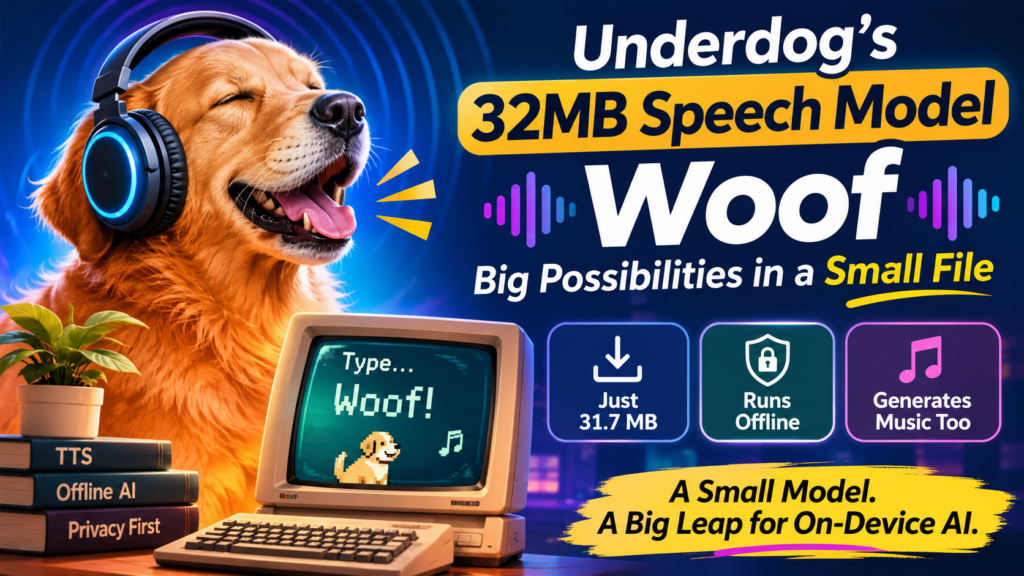
Underdog’s 32MB speech model, called Woof, is a text-to-speech system with about 31 million parameters that runs in a web browser without an internet connection, and it can generate music as well as spoken words. That is the short answer. The longer answer explains why a file about the size of a short phone video matters to anyone building voice features, privacy-first apps, or tools that must keep working offline.
TechCrunch reported on November 6, 2026 that the startup released a retro-styled browser game built on Woof. The game is a demo, not a finished product, but it proves something practical: a 32MB speech model can be downloaded, run locally, and produce audible results on ordinary hardware. This guide covers what Underdog released, how Woof compares with other speech models, what you could build with it, and what is still unknown.
Key Facts at a Glance
- Model name: Woof, a text-to-speech model that also generated music in the demo
- Size: 31.7 MB on disk, with roughly 31 million parameters
- Where it runs: in a browser tab, and on most devices without an internet connection, according to the company
- Availability: open for anyone to download
- Maker: Underdog, the local-AI startup founded by Sigil Wen
- Announced: November 5, 2026 on the company’s social account, covered by TechCrunch on November 6
- Important caveat: the performance claims come from the company, and the coverage reviewed for this post includes no independent quality benchmarks for Woof
What Is a 32MB Speech Model?
Definition. A 32MB speech model is a neural network packaged in a file of roughly 32 megabytes that either turns text into audio (text-to-speech) or turns audio into text (speech recognition). Underdog’s Woof is the first kind: you type words, and it speaks them.
Expansion. File size and parameter count are tightly linked. Woof has about 31 million parameters and a 31.7 MB file, which works out to roughly one byte per parameter. That ratio suggests aggressive compression, such as storing weights in about eight bits each. This is an inference from the published numbers, not something Underdog stated. For comparison, many popular speech systems carry hundreds of millions of parameters and ship as downloads measured in hundreds of megabytes or gigabytes.
Text-to-Speech vs. Speech-to-Text
Text-to-speech (TTS) generates audio from written words. Speech-to-text (STT), also called automatic speech recognition, does the reverse. Underdog now has one of each: Woof for generation and Bark for transcription. Keeping the two straight matters when you compare sizes, because a generation model and a recognition model solve different problems and are not judged on the same accuracy scale.
Why Megabytes Are the Metric That Matters
On a server, model size is mostly a cost question. On a phone, laptop, or browser tab, it decides whether the feature ships at all. Storage is limited, memory is shared with other apps, downloads cost time and mobile data, and battery life suffers when a device does heavy computation. A 32MB speech model fits inside a web page load budget in a way that a multi-gigabyte model never will.
What Did Underdog Actually Release?
What is Woof?
Woof is Underdog’s new text-to-speech model. In the company’s announcement, it was described as a frontier text-to-speech model of 31.7 MB, small enough to run in a browser, with every voice in the demo produced by Woof itself. The model has about 31 million parameters and is available for download.
How does the Woof demo work?
The demo is a browser game set in a room full of retro technology, including a typewriter and a CRT monitor. You type text and the model speaks it aloud. You can rotate a music tuner to generate musical sounds, and clicking a desk lamp’s switch triggers a sound effect. All of this happens inside the browser through the model rather than through pre-recorded audio files.
Does it really run offline?
The company says the model can run on most devices without any internet connection. Because the demo runs in a browser, the model weights are loaded into the page, and generation then happens on the device. The phrase “most devices” is a company claim, and the reporting does not list minimum hardware, so test on your own target devices before promising offline support.
Is this 32MB speech model open source?
Reporting says the model is open for everyone to download. The coverage reviewed here does not spell out the license terms, so read the license on the official model page before using it commercially. Underdog’s earlier Bark model uses the Creative Commons CC-BY-4.0 license, which allows commercial use with attribution, but that does not automatically apply to Woof.
Why Does a 32MB Speech Model Matter?
Privacy and data ownership
When speech is generated on the device, the text you want spoken never has to leave it. For a journaling app, a health tool, or an enterprise assistant that reads private documents aloud, that is a strong design property. Underdog’s founder has said he started building his app because he wanted AI models that run on a user’s own device and let people own their data, rather than relying on cloud note-taking services.
Cost and latency
Cloud text-to-speech is usually billed per character or per request, and every call pays a network round trip. A local model has no per-request fee and no network delay once it is loaded. For apps that speak a lot, such as readers, tutors, or games with dynamic dialogue, a 32MB speech model can turn a recurring cost into a one-time download.
Reach
A browser-sized model works wherever a browser works. That includes low-bandwidth regions, older laptops, kiosks, and devices that are offline for long stretches. Developers building for students, field workers, or rural users often cannot assume a stable connection, and tiny models are one of the few realistic answers.
How Small Is 32MB Compared With Other Speech Models?
Woof is small even next to other compact models. The table below compares download sizes. It compares footprint only, not quality, because Woof generates speech while the other models listed recognize it.
| Model | Task | Download size | Notes |
|---|---|---|---|
| Underdog Woof | Text-to-speech (also music in demo) | 31.7 MB | About 31M parameters; runs in the browser |
| Underdog Bark 3.0 | Speech-to-text | 163 MB | TechCrunch cites 167 MB for Bark; the model card lists 163 MB |
| Underdog Bark 3.0 Plus | Speech-to-text | 180 MB | Verbatim transcription, per the model card |
| Underdog Bark 3.0 Pro | Speech-to-text | 1.25 GB | Largest Bark variant |
| Qwen3-ASR-0.6B | Speech-to-text | 1,876 MB | Listed in Underdog’s comparison table |
| NVIDIA Parakeet TDT 0.6B v3 | Speech-to-text | About 2.5 GB | Base model that Bark was built on |
Two takeaways stand out. First, Woof is roughly one-fifth the size of the smallest Bark model. Second, Bark’s accuracy figures come from its maker, so treat them as claims until independent tests confirm them. The same caution applies to anything Underdog says about Woof’s quality.
How Do Speech Models Get This Small?
Definition. Model compression is the set of techniques engineers use to shrink a neural network while keeping as much of its quality as possible. Underdog has not published a full recipe for Woof in the coverage reviewed here, so the methods below describe how tiny models are commonly built in general, not what Woof specifically uses.
Expansion. Four techniques show up again and again in small-model work:
- Quantization: storing each weight with fewer bits, for example 8 bits instead of 16 or 32, which cuts file size sharply with modest quality loss
- Distillation: training a small “student” model to imitate a larger “teacher” model’s outputs
- Pruning: removing weights or connections that contribute little to the output
- Efficient architectures: designing layers that need fewer calculations per second of audio
Why compression has limits
Each technique trades quality for size. Quantize too far and voices turn noisy. Prune too hard and rare words or accents break. That is why independent listening tests matter: a small file can hide uneven quality that a short demo does not reveal. The honest way to judge any 32MB speech model is to test it on your own text, in your own language, on your own devices.
Why speech suits small models
Speech has a narrower job than open-ended chat. A text-to-speech model maps characters to sound, and it does not need to store world knowledge. That is one reason speech models can shrink further than general language models before they become unusable.
Cloud vs. On-Device Speech: Which Should You Choose?
The decision is not all-or-nothing. Many products will mix both. This table summarizes the trade-offs in general terms.
| Factor | Cloud text-to-speech | On-device model like Woof |
|---|---|---|
| Voice variety and polish | Usually richer | Likely more limited |
| Privacy | Text is sent to a server | Text can stay on the device |
| Cost model | Per-request or per-character fees | One-time download, then no per-request fee |
| Latency | Network round trip each time | No network delay after loading |
| Offline use | Not possible | Possible |
| Device requirements | Minimal | Depends on the device’s processing power |
| Maintenance | Provider updates voices for you | You manage versions and updates |
A practical pattern is to default to the local model for speed and privacy, and escalate to a cloud voice only for premium content such as marketing audio or long-form narration.
Where does a 32MB speech model fit in the wider on-device trend?
Underdog’s release sits inside a broader shift toward running AI near the user. TechCrunch framed the release against the race to build ever-larger models that demand massive processing power, noting that some startups and researchers are working in the opposite direction on phones and computers. For product teams, this means voice features can increasingly be treated like any other front-end asset: bundled, cached, and shipped to the client.
What should developers in bandwidth-constrained regions know?
A small download helps most where connections are slow, expensive, or intermittent. A voice feature that loads once and then works offline changes what an education or field-service app can promise. The caution is the same everywhere: confirm the model’s language coverage first, because a tiny English-only model does little for users who need other languages.
Who Is Behind Underdog?
Definition. Underdog is a local-first AI startup from Conway Research, founded by Sigil Wen. Its pitch is an assistant that runs on your own hardware, with privacy and data ownership as the core promise.
Expansion. TechCrunch previously reported that Wen is a Thiel Fellow who launched an invite-only beta of the Underdog assistant, powered by an inference engine called Husky that he built to run models quickly on a user’s own machine. The company has also released a 27-billion-parameter model it says can run on laptops, and it is building a waitlisted app positioned as a locally hosted alternative to cloud assistants such as Muse and Instinct.
The pattern is consistent. Bark handles listening, Woof handles speaking, and the larger model handles reasoning, all designed to run on-device. Seen this way, the 32MB speech model is a building block for a fully local voice assistant, not a one-off stunt.
What Could You Build With a 32MB Speech Model?
TechCrunch suggested the model may be enough to drive local assistant experiences or personalized podcasts, even though it is unlikely to replace larger models. Beyond those two, here are realistic directions that follow from the model’s size and offline behavior. These are my own suggestions, not claims from Underdog:
- Offline read-aloud tools: articles, study notes, or ebooks spoken without a connection
- Accessibility features: screen-reader style narration inside web apps with no server dependency
- Games and interactive stories: dynamic character lines generated at runtime instead of recorded in advance
- Local voice assistants: a speaking layer paired with an on-device transcription and reasoning model
- Language-learning apps: instant pronunciation examples for any typed phrase
- Embedded and kiosk devices: voice prompts on hardware with limited storage and unreliable networks
The strongest fit is anywhere that privacy, offline use, or zero marginal cost matters more than studio-grade voice quality.
What Are the Limits of a 32MB Speech Model?
Every size reduction is a trade. TechCrunch itself noted that a model this small likely will not replace bigger ones. Here is what to keep in mind:
Voice quality and range are unproven
The reporting describes the model’s capabilities but does not publish listening tests, naturalness scores, or error rates for Woof. Larger text-to-speech systems generally offer more voices, more expressive delivery, and better handling of unusual words. Listen to Woof yourself with your own content before committing.
Language support is unclear
The coverage does not state which languages Woof supports. Underdog’s Bark models are English-only, so do not assume multilingual output without checking the model page.
Hardware requirements are unstated
“Most devices” is not a specification. Older phones and low-power browsers may stutter or fail. Measure generation speed and memory use on your lowest-end target.
Claims are company-reported
The demo, the size, and the offline behavior are the company’s statements as relayed by the press. Independent evaluations of the 32MB speech model will matter more than any launch announcement.
How to Evaluate a 32MB Speech Model Before You Ship It
Use this checklist whether you are testing Woof or any other tiny voice model:
- Read the license. Confirm commercial use, attribution rules, and redistribution terms.
- Test on your weakest device. Measure load time, time to first audio, memory use, and battery impact.
- Stress-test your content. Try names, numbers, acronyms, code-mixed phrases, and long paragraphs.
- Run listening tests. Ask real users to rate clarity and naturalness against your current provider.
- Check offline behavior. Turn off the network and confirm the full feature still works.
- Plan a fallback. Route difficult requests to a larger cloud model when quality matters most.
- Monitor after launch. Track complaints, retries, and drop-off to catch quality problems early.
Frequently Asked Questions
What is Underdog Woof?
Underdog Woof is a 31.7 MB text-to-speech model with about 31 million parameters. It runs in a browser, can generate speech and music in the company’s demo, and is available for download.
How big is the 32MB speech model compared with Bark?
Woof is about 31.7 MB, while Bark, Underdog’s speech-to-text model, is about 163 MB on its model card, or 167 MB according to TechCrunch. Woof is roughly a fifth of Bark’s size, though the two do opposite jobs.
Can a 32MB speech model work without the internet?
According to Underdog, yes. The company says the model can run on most devices with no internet connection. Verify this on your own hardware before relying on it.
Will a 32MB speech model replace cloud text-to-speech?
Probably not for every use. TechCrunch noted that a model this small likely will not replace larger ones, but it may suit local assistants and personalized audio. Cloud systems still tend to offer richer voices and wider language coverage.
Is Woof free to use?
The model is open for download, which suggests no purchase is required. Licensing terms are not stated in the coverage reviewed, so confirm them on the official page.
Who should pay attention to this release?
Developers building offline or privacy-focused apps, edge AI engineers, accessibility teams, game designers, and anyone watching the shift from cloud AI toward on-device AI.
Where can I try the demo?
The company linked the browser game from its social account on X. Search for Underdog AI’s announcement from November 5, 2026.
Bottom Line
Underdog’s Woof does not claim to beat the best cloud voices. Its significance is the size: a working text-to-speech and music generator in about 32 megabytes that runs in a browser tab. For developers, the 32MB speech model is a practical signal that capable voice features no longer require a server, a subscription, or a stable connection. Treat the demo as proof of feasibility, verify quality and licensing yourself, and watch for independent tests. If those hold up, tiny on-device voice models could become a default building block for the next wave of private, offline-first apps.
Underdog-ର 32MB ସ୍ପିଚ୍ ମଡେଲ୍: ‘Woof’ (ୱୁଫ୍) ଏବଂ ଡିଭାଇସ୍-ଆଧାରିତ AI (On-Device AI)
Underdog-ର 32MB ସ୍ପିଚ୍ ମଡେଲ୍, ଯାହାର ନାମ ‘Woof’, ଏକ ‘ଟେକ୍ସଟ୍-ଟୁ-ସ୍ପିଚ୍’ (text-to-speech) ସିଷ୍ଟମ୍ ଅଟେ। ଏଥିରେ ପ୍ରାୟ ୩୧ ନିୟୁତ (୩.୧ କୋଟି) ପାରାମିଟର ରହିଛି। ଏହା ଇଣ୍ଟରନେଟ୍ ସଂଯୋଗ ବିନା ୱେବ୍ ବ୍ରାଉଜରରେ ଚାଲିପାରେ ଏବଂ ଏହା ମାଧ୍ୟମରେ କେବଳ କଥା କୁହାଯାଇପାରିବ ତାହା ନୁହେଁ, ବରଂ ସଙ୍ଗୀତ ମଧ୍ୟ ସୃଷ୍ଟି କରାଯାଇପାରିବ। ଏହା ହେଲା ସଂକ୍ଷିପ୍ତ ଉତ୍ତର। ବିସ୍ତୃତ ଭାବରେ କହିଲେ, ଏକ ଛୋଟ ଫୋନ୍ ଭିଡିଓ ସମାନ ଆକାରର ଏହି ଫାଇଲଟି ସେହି ଲୋକମାନଙ୍କ ପାଇଁ କାହିଁକି ଗୁରୁତ୍ୱପୂର୍ଣ୍ଣ, ଯେଉଁମାନେ ଭଏସ୍ ଫିଚର୍ (voice features), ଗୋପନୀୟତାକୁ ପ୍ରାଥମିକତା ଦେଉଥିବା ଆପ୍ (privacy-first apps), କିମ୍ବା ଅଫଲାଇନ୍ ଅବସ୍ଥାରେ ମଧ୍ୟ କାମ କରିପାରୁଥିବା ଟୁଲ୍ଗୁଡ଼ିକ ବିକାଶ କରୁଛନ୍ତି?
TechCrunch (ଟେକ୍କ୍ରଞ୍ଚ) ୬ ନଭେମ୍ବର, 2026 ରେ ରିପୋର୍ଟ କରିଥିଲା ଯେ, ଏହି ଷ୍ଟାର୍ଟଅପ୍ ‘Woof’ ଉପରେ ଆଧାରିତ ଏକ ‘ରେଟ୍ରୋ-ଷ୍ଟାଇଲ୍’ (ପୁରୁଣା ଶୈଳୀର) ବ୍ରାଉଜର ଗେମ୍ ରିଲିଜ୍ କରିଛି। ଏହି ଗେମ୍ଟି କେବଳ ଏକ ଡେମୋ (ନମୁନା), ଏକ ସମ୍ପୂର୍ଣ୍ଣ ପ୍ରସ୍ତୁତ ଉତ୍ପାଦ ନୁହେଁ। ତଥାପି, ଏହା ଏକ ବ୍ୟାବହାରିକ ସତ୍ୟ ପ୍ରମାଣିତ କରେ: ଏକ 32MB ସ୍ପିଚ୍ ମଡେଲକୁ ଡାଉନଲୋଡ୍ କରାଯାଇପାରିବ, ସ୍ଥାନୀୟ ଭାବରେ (local device-ରେ) ଚଳାଯାଇପାରିବ ଏବଂ ସାଧାରଣ ହାର୍ଡୱେର୍ରେ ମଧ୍ୟ ଏଥିରୁ ଶୁଣିଯୋଗ୍ୟ ଫଳାଫଳ ପାଇହେବ। ଏହି ଗାଇଡ୍ରେ Underdog କ’ଣ ରିଲିଜ୍ କରିଛି, ଅନ୍ୟ ସ୍ପିଚ୍ ମଡେଲ୍ଗୁଡ଼ିକ ତୁଳନାରେ ‘Woof’ କିପରି ଭିନ୍ନ, ଏହା ସାହାଯ୍ୟରେ ଆପଣ କ’ଣ ତିଆରି କରିପାରିବେ ଏବଂ କେଉଁ ବିଷୟଗୁଡ଼ିକ ଏପର୍ଯ୍ୟନ୍ତ ଅଜ୍ଞାତ ରହିଛି, ସେ ବିଷୟରେ ଆଲୋଚନା କରାଯାଇଛି।
ମୁଖ୍ୟ ତଥ୍ୟଗୁଡ଼ିକ ଏକ ନଜରରେ
ମଡେଲ୍ ନାମ: ‘Woof’ – ଏକ ‘ଟେକ୍ସଟ୍-ଟୁ-ସ୍ପିଚ୍’ ମଡେଲ୍, ଯାହା ଡେମୋରେ ସଙ୍ଗୀତ ମଧ୍ୟ ସୃଷ୍ଟି କରିଥିଲା।
ଆକାର: ଡିସ୍କରେ 31.7 MB, ଯେଉଁଥିରେ ପ୍ରାୟ ୩୧ ନିୟୁତ ପାରାମିଟର ରହିଛି।
କେଉଁଠାରେ ଚାଲେ: କମ୍ପାନୀ ଅନୁଯାୟୀ, ଏ Underdog (ଅଣ୍ଡରଡଗ୍) ର ‘Woof’ (ୱୁଫ୍) ହେଉଛି ପ୍ରଥମ ପ୍ରକାରର: ଏଥିରେ ଆପଣ ଶବ୍ଦ ଟାଇପ୍ କରନ୍ତି ଏବଂ ଏହା ସେଗୁଡ଼ିକୁ କହି ଶୁଣାଏ।
ବିସ୍ତାର (Expansion): ଫାଇଲ୍ ଆକାର ଏବଂ ପାରାମିଟର ସଂଖ୍ୟା ପରସ୍ପର ସହ ଘନିଷ୍ଠ ଭାବେ ଜଡ଼ିତ। ‘Woof’ ରେ ପ୍ରାୟ ୩୧ ନିୟୁତ (୩.୧ କୋଟି) ପାରାମିଟର ଅଛି ଏବଂ ଏହାର ଫାଇଲ୍ ଆକାର ୩୧.୭ MB ଅଟେ, ଯାହାର ଅର୍ଥ ହେଉଛି ପ୍ରତି ପାରାମିଟର ପାଇଁ ପ୍ରାୟ ଏକ ବାଇଟ୍ (byte) ସ୍ଥାନ ଲାଗିଥାଏ। ଏହି ଅନୁପାତରୁ ଜଣାପଡ଼େ ଯେ ଏଥିରେ ତଥ୍ୟକୁ ଅତ୍ୟଧିକ ସଙ୍କୁଚିତ (compressed) କରାଯାଇଛି; ଉଦାହରଣ ସ୍ୱରୂପ, ପ୍ରତ୍ୟେକ ‘ୱେଟ୍’ (weight) କୁ ପ୍ରାୟ ଆଠ ବିଟ୍ (bits) ରେ ସଂରକ୍ଷିତ କରାଯାଇଥାଇପାରେ। ଏହା ପ୍ରକାଶିତ ସଂଖ୍ୟାଗୁଡ଼ିକ ଉପରେ ଆଧାରିତ ଏକ ଅନୁମାନ ମାତ୍ର, Underdog ନିଜେ ଏହା କହିନାହିଁ। ତୁଳନା କରିବାକୁ ଗଲେ, ଅନେକ ଲୋକପ୍ରିୟ ସ୍ପିଚ୍ ସିଷ୍ଟମ୍ରେ ଶହ ଶହ ନିୟୁତ ପାରାମିଟର ଥାଏ ଏବଂ ସେଗୁଡ଼ିକର ଫାଇଲ୍ ଆକାର ଶହ ଶହ ମେଗାବାଇଟ୍ (MB) କିମ୍ବା ଗିଗାବାଇଟ୍ (GB) ପର୍ଯ୍ୟନ୍ତ ହୋଇଥାଏ।
Text-to-Speech (ଟେକ୍ସଟ୍-ଟୁ-ସ୍ପିଚ୍) ବନାମ Speech-to-Text (ସ୍ପିଚ୍-ଟୁ-ଟେକ୍ସଟ୍)
Text-to-Speech (TTS) ଲିଖିତ ଶବ୍ଦଗୁଡ଼ିକରୁ ଅଡିଓ (ଶବ୍ଦ) ସୃଷ୍ଟି କରେ। Speech-to-Text (STT) — ଯାହାକୁ ‘ସ୍ୱୟଂଚାଳିତ ବାକ୍ ଚିହ୍ନଟ’ (automatic speech recognition) ମଧ୍ୟ କୁହାଯାଏ — ଠିକ୍ ଏହାର ଓଲଟା କାମ କରେ। Underdog ପାଖରେ ବର୍ତ୍ତମାନ ଏହି ଉଭୟ ପ୍ରକାରର ମଡେଲ୍ ଅଛି: ଉତ୍ପାଦନ (generation) ପାଇଁ ‘Woof’ ଏବଂ ଲିପିବଦ୍ଧକରଣ (transcription) ପାଇଁ ‘Bark’ (ବାର୍କ୍)। ଆକାର ତୁଳନା କରିବା ସମୟରେ ଏହି ଦୁଇଟି ମଧ୍ୟରେ ପାର୍ଥକ୍ୟ ବୁଝିବା ଜରୁରୀ, କାରଣ ଏକ ‘ଜେନେରେସନ୍ ମଡେଲ୍’ (ଉତ୍ପାଦନକାରୀ ମଡେଲ୍) ଏବଂ ଏକ ‘ରେକଗ୍ନିସନ୍ ମଡେଲ୍’ (ଚିହ୍ନଟକାରୀ ମଡେଲ୍) ଭିନ୍ନ ଭିନ୍ନ ସମସ୍ୟାର ସମାଧାନ କରନ୍ତି ଏବଂ ସେଗୁଡ଼ିକର ସଠିକତା (accuracy) ମାପିବା ପାଇଁ ସମାନ ମାନଦଣ୍ଡ ବ୍ୟବହାର କରାଯାଇପାରିବ ନାହିଁ।
ମେଗାବାଇଟ୍ (Megabytes) କାହିଁକି ଏକ ଗୁରୁତ୍ୱପୂର୍ଣ୍ଣ ମାପକାଠି ଅଟେ?
ଏକ ସର୍ଭର (server) କ୍ଷେତ୍ରରେ, ମଡେଲର ଆକାର ମୁଖ୍ୟତଃ ଖର୍ଚ୍ଚ ସହ ଜଡ଼ିତ। କିନ୍ତୁ ଆପଣ ଟେକ୍ସଟ୍ (ଲେଖା) ଟାଇପ୍ କରନ୍ତି ଏବଂ ମଡେଲ୍ଟି ଏହାକୁ ପାଟିରେ ପଢ଼ି ଶୁଣାଏ। ଆପଣ ଏକ ମ୍ୟୁଜିକ୍ ଟ୍ୟୁନରକୁ ବୁଲାଇ ସଙ୍ଗୀତମୟ ଧ୍ୱନି ସୃଷ୍ଟି କରିପାରିବେ ଏବଂ ଡେସ୍କ ଲ୍ୟାମ୍ପର ସୁଇଚ୍ ଦବାଇଲେ ଏକ ନିର୍ଦ୍ଦିଷ୍ଟ ଶବ୍ଦ (ସାଉଣ୍ଡ ଇଫେକ୍ଟ) ଶୁଣାଯାଏ। ଏସବୁ କିଛି ପୂର୍ବରୁ ରେକର୍ଡ କରାଯାଇଥିବା ଅଡିଓ ଫାଇଲ୍ ମାଧ୍ୟମରେ ନୁହେଁ, ବରଂ ବ୍ରାଉଜର ମଧ୍ୟରେ ଥିବା ଏହି ମଡେଲ୍ ଦ୍ୱାରା ସମ୍ପାଦିତ ହୋଇଥାଏ।
ଏହା କ’ଣ ପ୍ରକୃତରେ ଅଫଲାଇନ୍ରେ କାମ କରେ?
କମ୍ପାନୀ କହିଛି ଯେ, ଏହି ମଡେଲ୍ଟି ଇଣ୍ଟରନେଟ୍ ସଂଯୋଗ ବିନା ଅଧିକାଂଶ ଡିଭାଇସ୍ରେ ଚାଲିପାରିବ। ଯେହେତୁ ଏହି ଡେମୋଟି ଏକ ବ୍ରାଉଜରରେ ଚାଲେ, ତେଣୁ ମଡେଲ୍ର ତଥ୍ୟ (ମଡେଲ୍ ୱେଟ୍ସ୍) ପେଜ୍ରେ ଲୋଡ୍ ହୋଇଯାଏ ଏବଂ ତା’ପରେ ଡିଭାଇସ୍ ଭିତରେ ହିଁ ଧ୍ୱନି ସୃଷ୍ଟି ହୁଏ। “ଅଧିକାଂଶ ଡିଭାଇସ୍” ବୋଲି କମ୍ପାନୀ ଦାବି କରୁଛି, କିନ୍ତୁ ଏଥିପାଇଁ ଆବଶ୍ୟକ ସର୍ବନିମ୍ନ ହାର୍ଡୱେର୍ ବିଷୟରେ କୌଣସି ସ୍ପଷ୍ଟ ତାଲିକା ଦିଆଯାଇନାହିଁ। ତେଣୁ, ଅଫଲାଇନ୍ ସୁବିଧା ଉପଲବ୍ଧ ବୋଲି କାହାକୁ ପ୍ରତିଶ୍ରୁତି ଦେବା ପୂର୍ବେ, ନିଜର ଲକ୍ଷ୍ୟ ଡିଭାଇସ୍ଗୁଡ଼ିକରେ ଏହାକୁ ପରୀକ୍ଷା କରି ଦେଖିନିଅନ୍ତୁ।
ଏହି ୩୨ ଏମବି (32MB) ବିଶିଷ୍ଟ ସ୍ପିଚ୍ ମଡେଲ୍ଟି କ’ଣ ଓପନ୍ ସୋର୍ସ (open source) ଅଟେ?
ରିପୋର୍ଟ ଅନୁଯାୟୀ, ଏହି ମଡେଲ୍ଟି ଯେକେହି ମଧ୍ୟ ଡାଉନଲୋଡ୍ କରିପାରିବେ। ଏଠାରେ ଉପଲବ୍ଧ ସୂଚନାରେ ଲାଇସେନ୍ସ ସର୍ତ୍ତାବଳୀ ବିଷୟରେ ସ୍ପଷ୍ଟ ଭାବରେ ଉଲ୍ଲେଖ କରାଯାଇନାହିଁ, ତେଣୁ ବ୍ୟବସାୟିକ ଉଦ୍ଦେଶ୍ୟରେ ବ୍ୟବହାର କରିବା ପୂର୍ବେ ଅଫିସିଆଲ୍ ପେଜ୍ରେ ଥିବା ଲାଇସେନ୍ସକୁ ପଢ଼ି ନିଅନ୍ତୁ। ‘ଅଣ୍ଡରଡଗ୍’ (Underdog) ର ପୂର୍ବତନ ‘ବାର୍କ’ (Bark) ମଡେଲ୍ଟି ‘Creative Commons CC-BY-4.0’ ଲାଇସେନ୍ସ ବ୍ୟବହାର କରେ, ଯାହା କ୍ରେଡିଟ୍ (ମୂଳ ଲେଖକଙ୍କ ନାମ ଉଲ୍ଲେଖ) ଦେବା ସର୍ତ୍ତରେ ବ୍ୟବସାୟିକ ବ୍ୟବହାର ପାଇଁ ଅନୁମତି ଦିଏ; କିନ୍ତୁ ଏହି ସର୍ତ୍ତ ‘ୱୁଫ୍’ (Woof) ପାଇଁ ସ୍ୱତଃ ପ୍ରଯୁଜ୍ୟ ହେବ କି ନାହିଁ, ତାହା ସ୍ପଷ୍ଟ ନୁହେଁ।
୩୨ ଏମବି (ବ୍ୟକ୍ତିଗତ ଦସ୍ତାବିଜଗୁଡ଼ିକୁ ପାଟି କରି ପଢ଼ିବା (text-to-speech) ଏକ ଗୁରୁତ୍ୱପୂର୍ଣ୍ଣ ଡିଜାଇନ୍ ବୈଶିଷ୍ଟ୍ୟ ଅଟେ। ‘ଅଣ୍ଡରଡଗ୍’ (Underdog) ର ପ୍ରତିଷ୍ଠାତା କହିଛନ୍ତି ଯେ, ସେ ଏହି ଆପ୍ (app) ତିଆରି କରିବା ଆରମ୍ଭ କରିଥିଲେ କାରଣ ସେ ଏପରି AI ମଡେଲ୍ ଚାହୁଁଥିଲେ ଯାହା ଉପଭୋକ୍ତାଙ୍କ ନିଜ ଡିଭାଇସରେ ଚାଲିପାରିବ। ଏହା ଦ୍ୱାରା ଲୋକମାନେ କ୍ଲାଉଡ୍-ଆଧାରିତ ନୋଟ୍-ଟେକିଂ ସେବା ଉପରେ ନିର୍ଭର ନ କରି, ନିଜ ଡାଟା (ତଥ୍ୟ) ଉପରେ ନିଜର ମାଲିକାନା ବଜାୟ ରଖିପାରିବେ।
ଖର୍ଚ୍ଚ ଏବଂ ବିଳମ୍ବ (Latency)
କ୍ଲାଉଡ୍-ଆଧାରିତ ‘ଟେକ୍ସଟ୍-ଟୁ-ସ୍ପିଚ୍’ (ଲିଖିତ ପାଠ୍ୟକୁ କଥାରେ ପରିଣତ କରିବା) ସେବାରେ ସାଧାରଣତଃ ପ୍ରତି ଅକ୍ଷର କିମ୍ବା ପ୍ରତି ଅନୁରୋଧ (request) ପାଇଁ ଦେୟ ଦେବାକୁ ପଡ଼େ ଏବଂ ପ୍ରତ୍ୟେକ ଥର ଡାଟା ନେଟୱାର୍କ ଦେଇ ଯିବା-ଆସିବା କରିବାକୁ ପଡ଼ିଥାଏ, ଯାହା ସମୟ ନେଇଥାଏ। କିନ୍ତୁ ଏକ ‘ଲୋକାଲ୍’ (ସ୍ଥାନୀୟ) ମଡେଲ୍ କ୍ଷେତ୍ରରେ, ଥରେ ଲୋଡ୍ ହୋଇଗଲେ, ପ୍ରତି ଅନୁରୋଧ ପାଇଁ କୌଣସି ଅତିରିକ୍ତ ଦେୟ ଦେବାକୁ ପଡ଼େ ନାହିଁ କିମ୍ବା ନେଟୱାର୍କ ଯୋଗୁଁ କୌଣସି ବିଳମ୍ବ ହୁଏ ନାହିଁ। ଯେଉଁ ଆପ୍ଗୁଡ଼ିକରେ ଅଧିକ କଥା କହିବାର ଆବଶ୍ୟକତା ଥାଏ — ଯେପରିକି ପଢ଼ି ଶୁଣାଉଥିବା ଆପ୍, ଶିକ୍ଷାଦାନକାରୀ ଆପ୍, କିମ୍ବା ଗତିଶୀଳ ସଂଳାପ ଥିବା ଗେମ୍ — ସେଠାରେ ୩୨ MB ବିଶିଷ୍ଟ ଏକ ‘ସ୍ପିଚ୍ ମଡେଲ୍’ ବ୍ୟବହାର କରି ବାରମ୍ବାର ହେଉଥିବା ଖର୍ଚ୍ଚକୁ କେବଳ ଥରେ ଡାଉନଲୋଡ୍ କରିବାର ଖର୍ଚ୍ଚରେ ପରିଣତ କରାଯାଇପାରିବ।
ପହଞ୍ଚ (Reach)
ଏକ ବ୍ରାଉଜର-ଆଧାରିତ ମଡେଲ୍ ସେହି ସବୁ ସ୍ଥାନରେ କାମ କରିପାରେ ଯେଉଁଠାରେ ଏକ ୱେବ୍ ବ୍ରାଉଜର କାମ କରେ। ଏଥିମଧ୍ୟରେ କମ୍ ବ୍ୟାଣ୍ଡୱିଡଥ୍ (ଇଣ୍ଟରନେଟ୍ ଗତି) ଥିବା ଅଞ୍ଚଳ, ପୁରୁଣା ଲାପଟପ୍, କିଓସ୍କ (kiosks), ଏବଂ ଦୀର୍ଘ ସମୟ ଧରି ଅଫଲାଇନ୍ ରହୁଥିବା ଡିଭାଇସ୍ଗୁଡ଼ିକ ଅନ୍ତର୍ଭୁକ୍ତ। ଛାତ୍ରଛାତ୍ରୀ, କ୍ଷେତ୍ରସ୍ତରୀୟ କର୍ମଚାରୀ (field workers) କିମ୍ବା ଗ୍ରାମାଞ୍ଚଳର ଉପଭୋକ୍ତାଙ୍କ ପାଇଁ ଆପ୍ ତିଆରି କରୁଥିବା ଡେଭଲପରମାନେ ସର୍ବଦା ଏକ ସ୍ଥିର ଇଣ୍ଟରନେଟ୍ ସଂଯୋଗ ଉପରେ ନିର୍ଭର କରିପାରିବେ ନାହି ମଡେଲ୍ କାର୍ଡରେ ଏହାର ଆକାର ୧୬୩ MB ବୋଲି ଉଲ୍ଲେଖ ଅଛି।
Underdog Bark 3.0 Plus Speech-to-text (ବାଚନରୁ ଲିଖିତ ରୂପ) ୧୮୦ MB ମଡେଲ୍ କାର୍ଡ ଅନୁଯାୟୀ, ଶବ୍ଦ-କୁ-ଶବ୍ଦ (verbatim) ଲିପିବଦ୍ଧ କରିବା ପାଇଁ।
Underdog Bark 3.0 Pro Speech-to-text ୧.୨୫ GB Bark ସଂସ୍କରଣଗୁଡ଼ିକ ମଧ୍ୟରେ ସବୁଠାରୁ ବଡ଼।
Qwen3-ASR-0.6B Speech-to-text ୧,୮୭୬ MB Underdog-ର ତୁଳନାତ୍ମକ ସାରଣୀରେ ଉଲ୍ଲେଖ ଅଛି।
NVIDIA Parakeet TDT 0.6B v3 Speech-to-text ପ୍ରାୟ ୨.୫ GB ଏହା ଏକ ମୂଳ (base) ମଡେଲ୍, ଯାହା ଉପରେ Bark ଆଧାରିତ।
ଏଥିରୁ ଦୁଇଟି ମୁଖ୍ୟ ବିଷୟ ସାମ୍ନାକୁ ଆସେ। ପ୍ରଥମତଃ, Woof-ର ଆକାର ସବୁଠାରୁ ଛୋଟ Bark ମଡେଲ୍ର ପ୍ରାୟ ଏକ-ପଞ୍ଚମାଂଶ ଅଟେ। ଦ୍ୱିତୀୟତଃ, Bark-ର ସଠିକତା ସମ୍ବନ୍ଧୀୟ ତଥ୍ୟଗୁଡ଼ିକ ଏହାର ନିର୍ମାତାଙ୍କ ଦ୍ୱାରା ପ୍ରଦାନ କରାଯାଇଛି; ତେଣୁ, ସ୍ୱାଧୀନ ପରୀକ୍ଷଣ ଦ୍ୱାରା ଏଗୁଡ଼ିକ ନିଶ୍ଚିତ ନ ହେବା ପର୍ଯ୍ୟନ୍ତ, ଏହାକୁ କେବଳ ଏକ ଦାବି ଭାବରେ ଗ୍ରହଣ କରିବା ଉଚିତ୍। Woof-ର ଗୁଣବତ୍ତା ବିଷୟରେ Underdog ଯାହା କିଛି କହୁଛି, ସେ କ୍ଷେତ୍ରରେ ମଧ୍ୟ ସମାନ ସତର୍କତା ଅବଲମ୍ବନ କରିବା ଆବଶ୍ୟକ।
ସ୍ପିଚ୍ (ବାଚନ) ମଡେଲଗୁଡ଼ିକ କିପରି ଏତେ ଛୋଟ ହୋଇପାରନ୍ତି?
ସଂଜ୍ଞା: ‘ମଡେଲ୍ କମ୍ପ୍ରେସନ୍’ (Model compression) ହେଉଛି କିଛି କୌଶଳର ସମାହାର, ଯାହାକୁ ବ୍ୟବହାର କରି ଇଞ୍ଜିନିୟରମାନେ ଏକ ‘ନ୍ୟୁରାଲ୍ ନେଟୱାର୍କ’ର ଆକାର ଛୋଟ କରିଥାନ୍ତି, କିନ୍ତୁ ଏଥିସହିତ ଏହାର ଗୁଣବତ୍ତା ଯଥାସମ୍ଭବ ଅକ୍ଷୁର୍ଣ୍ଣ ରଖିବାକୁ ଚେଷ୍ଟା କରନ୍ତି। ଏଠାରେ ସମୀକ୍ଷା କରାଯାଇଥିବା ତଥ୍ୟରେ Underdog, Woof ନିର୍ମାଣର ସମ୍ପୂର୍ଣ୍ଣ ପ୍ରକ୍ରିୟା ପ୍ରକାଶ କରିନାହିଁ। ତେଣୁ, ନିମ୍ନରେ ବର୍ଣ୍ଣିତ ପଦ୍ଧତିଗୁଡ଼ିକ ସାଧାରଣତଃ ଛୋଟ ମଡେଲ୍ ନିର୍ମାଣ ପାଇଁ ବ୍ୟବହୃତ ହେଉଥିବା ଉପାୟଗୁଡ଼ିକୁ ଦର୍ଶାଏ, ନୁହେଁ ଯେ Woof ନିର୍ଦ୍ଦିଷ୍ଟ ଭାବରେ କେଉଁ ପଦ୍ଧତି ବ୍ୟବହାର କରେ।
ବିସ୍ତୃତ ବିବରଣୀ: ଛୋଟ ମଡେଲ୍ ନିର୍ମାଣ କ୍ଷେତ୍ରରେ ନିମ୍ନଲିଖିତ ଚାରୋଟି କୌଶଳ ବାରମ୍ବାର ଦେଖିବାକୁ ମିଳେ:
Quantization (କ୍ୱାଣ୍ଟାଇଜେସନ୍): ପ୍ରତ୍ୟେକ ‘ୱେଟ୍’ (weight) କୁ କମ୍ ବିଟ୍ (bits) ବ୍ୟବହାର କରି ସଂରକ୍ଷଣ କରିବା। ଯେକୌଣସି ୩୨ MB (ମେଗାବାଇଟ୍) ବିଶିଷ୍ଟ ସ୍ପିଚ୍ (ବାକ୍ୟ-ଉଚ୍ଚାରଣ) ମଡେଲକୁ ମୂଲ୍ୟାଙ୍କନ କରିବାର ସଠିକ୍ ଉପାୟ ହେଉଛି, ଏହାକୁ ନିଜର ଭାଷାରେ, ନିଜର ଲେଖା (ଟେକ୍ସଟ୍) ଉପରେ ଏବଂ ନିଜର ଡିଭାଇସ୍ରେ ପରୀକ୍ଷା କରିବା।
ସ୍ପିଚ୍ (ବାକ୍ୟ-ଉଚ୍ଚାରଣ) କାହିଁକି ଛୋଟ ମଡେଲଗୁଡ଼ିକ ପାଇଁ ଉପଯୁକ୍ତ?
ସାଧାରଣ ଚାଟ୍ (chat) ବା କଥୋପକଥନ ତୁଳନାରେ ସ୍ପିଚ୍ର କାର୍ଯ୍ୟ ପରିସର ଅଧିକ ସୀମିତ। ଏକ ‘ଟେକ୍ସଟ୍-ଟୁ-ସ୍ପିଚ୍’ (ଲେଖାରୁ ବାକ୍ୟ-ଉଚ୍ଚାରଣ) ମଡେଲ୍ କେବଳ ଅକ୍ଷରଗୁଡ଼ିକୁ ଧ୍ୱନିରେ ପରିଣତ କରେ; ଏଥିପାଇଁ ବିଶ୍ୱ ସମ୍ବନ୍ଧୀୟ ବିସ୍ତୃତ ଜ୍ଞାନ (world knowledge) ସଂରକ୍ଷଣ କରିବାର ଆବଶ୍ୟକତା ନଥାଏ। ଏହି କାରଣରୁ, ସାଧାରଣ ଭାଷା ମଡେଲ୍ (general language models) ତୁଳନାରେ ସ୍ପିଚ୍ ମଡେଲଗୁଡ଼ିକୁ ଅଧିକ ଛୋଟ କରାଯାଇପାରେ, ଯେପର୍ଯ୍ୟନ୍ତ ସେଗୁଡ଼ିକ ଅକାମୀ ନ ହୋଇଯାଆନ୍ତି।
କ୍ଲାଉଡ୍ (Cloud) ବନାମ ଡିଭାଇସ୍-ଆଧାରିତ (On-Device) ସ୍ପିଚ୍: ଆପଣ କେଉଁଟି ବାଛିବା ଉଚିତ୍?
ଏହା କେବଳ ଗୋଟିଏ ବା ଅନ୍ୟଟି ବାଛିବା ଭଳି ବିଷୟ ନୁହେଁ; ଅନେକ ଉତ୍ପାଦରେ ଉଭୟର ମିଶ୍ରଣ ରହିପାରେ। ନିମ୍ନ ସାରଣୀରେ ଏଗୁଡ଼ିକ ମଧ୍ୟରେ ଥିବା ପାର୍ଥକ୍ୟ ଓ ବିଚାର୍ଯ୍ୟ ବିଷୟଗୁଡ଼ିକୁ ସଂକ୍ଷେପରେ ଦର୍ଶାଯାଇଛି।
ବିଷୟ | କ୍ଲାଉଡ୍ ଟେକ୍ସଟ୍-ଟୁ-ସ୍ପିଚ୍ | ଡିଭାଇସ୍-ଆଧାରିତ ମଡେଲ୍ (ଯେପରିକି Woof)
ସ୍ୱରର ବିବିଧତା ଓ ଗୁଣବତ୍ତା | ସାଧାରଣତଃ ଅଧିକ ଉନ୍ନତ | ସାଧାରଣତଃ ଅଧିକ ସୀମିତ
ଗୋପନୀୟତା | ଲେଖା (ଟେକ୍ସଟ୍) ଏକ ସର୍ଭରକୁ ପଠାଯାଏ | ଲେଖା ଡିଭାଇସ୍ରେ ହିଁ ରହିପାରେ
ଖର୍ଚ୍ଚ ପଦ୍ଧତି | ପ୍ରତି ଅନୁରୋଧ (request) କିମ୍ବା ଅକ୍ଷର ପିଛା ଶୁଳ୍କ | ଥରେ ଡାଉନଲୋଡ୍ କଲେ ଆଉ କୌଣସି ଅତିରିକ୍ତ ଶୁଳ୍କ ଲାଗେ ନାହିଁ
ବିଳମ୍ବ (Latency) | ପ୍ରତିଥର ନେଟୱାର୍କ ଯାତାୟାତ (round trip) ଯୋଗୁଁ ବିଳମ୍ବ ହୁଏ | ଲୋଡ୍ ହେବା ପରେ କୌଣସି ନେଟୱାର୍କ ବିଳମ୍ବ ହୁଏ ନାହିଁ
ଅଫଲାଇନ୍ ବ୍ୟବହାର | ସମ୍ଭବ ନୁହେଁ | ସମ୍ଭବ
ଡିଭାଇସ୍ ଆବଶ୍ୟକତା | ସର୍ବନିମ୍ନ | ଡିଭାଇସ୍ର ପ୍ରୋସେସିଂ କ୍ଷମତା ଉପରେ ନିର୍ଭର କରେ
ରକ୍ଷଣାବେକ୍ଷଣ | ସେବା ପ୍ରସୀମିତ ବ୍ୟାଣ୍ଡୱିଥ୍ (bandwidth) ଥିବା ଅଞ୍ଚଳଗୁଡ଼ିକ ବିଷୟରେ କ’ଣ ଜାଣନ୍ତି?
ଯେଉଁଠାରେ ଇଣ୍ଟରନେଟ୍ ସଂଯୋଗ ଧୀମା, ମହଙ୍ଗା କିମ୍ବା ଅସ୍ଥିର (ବାରମ୍ବାର ବିଚ୍ଛିନ୍ନ ହେଉଥିବା) ଅଟେ, ସେଠାରେ ଛୋଟ ଆକାରର ଡାଉନଲୋଡ୍ (ଯାହା କମ୍ ଡାଟା ନିଏ) ଅତ୍ୟନ୍ତ ସହାୟକ ହୋଇଥାଏ। ଏକ ଭଏସ୍ (voice) ଫିଚର୍ ଯାହା ଥରେ ଡାଉନଲୋଡ୍ ହେବା ପରେ ଇଣ୍ଟରନେଟ୍ ବିନା (offline) କାମ କରେ, ତାହା ଶିକ୍ଷା କିମ୍ବା ଫିଲ୍ଡ-ସର୍ଭିସ୍ (କ୍ଷେତ୍ରଗତ ସେବା) ସମ୍ବନ୍ଧୀୟ ଆପ୍ଗୁଡ଼ିକର କ୍ଷମତାକୁ ସମ୍ପୂର୍ଣ୍ଣ ବଦଳାଇ ଦେଇପାରେ। ତେବେ ଏକ ସତର୍କତା ସବୁଠାରେ ପ୍ରଯୁଜ୍ୟ: ବ୍ୟବହାର କରିବା ପୂର୍ବରୁ ମଡେଲଟି କେଉଁ କେଉଁ ଭାଷାକୁ ସମର୍ଥନ କରେ ତାହା ନିଶ୍ଚିତ କରନ୍ତୁ। କାରଣ, ଯଦି ଏକ ଛୋଟ ମଡେଲ୍ କେବଳ ଇଂରାଜୀ ଭାଷାରେ ଉପଲବ୍ଧ ଥାଏ, ତେବେ ଅନ୍ୟ ଭାଷା ଆବଶ୍ୟକ କରୁଥିବା ବ୍ୟବହାରକାରୀଙ୍କ ପାଇଁ ଏହା କୌଣସି କାମରେ ଆସିବ ନାହିଁ।
‘ଅଣ୍ଡରଡଗ୍’ (Underdog) ପଛରେ କିଏ ଅଛନ୍ତି?
ସଂଜ୍ଞା: ‘ଅଣ୍ଡରଡଗ୍’ (Underdog) ହେଉଛି ‘କନୱେ ରିସର୍ଚ୍ଚ’ (Conway Research) ଦ୍ୱାରା ଆରମ୍ଭ କରାଯାଇଥିବା ଏକ AI ଷ୍ଟାର୍ଟଅପ୍, ଯାହା ସ୍ଥାନୀୟ ଉପକରଣ (local device) ଉପରେ କାମ କରିବାକୁ ପ୍ରାଥମିକତା ଦିଏ। ଏହାର ପ୍ରତିଷ୍ଠାତା ହେଉଛନ୍ତି ସିଜିଲ୍ ୱେନ୍ (Sigil Wen)। ଏହାର ମୁଖ୍ୟ ଉଦ୍ଦେଶ୍ୟ ହେଉଛି ଏକ ଏପରି ‘ଆସିଷ୍ଟାଣ୍ଟ’ (ସହାୟକ) ପ୍ରଦାନ କରିବା, ଯାହା ଆପଣଙ୍କ ନିଜ ଡିଭାଇସ୍ରେ ଚାଲେ ଏବଂ ଯେଉଁଥିରେ ଗୋପନୀୟତା (privacy) ତଥା ଡାଟା ଉପରେ ଆପଣଙ୍କ ନିଜର ମାଲିକାନାକୁ ସର୍ବାଧିକ ଗୁରୁତ୍ୱ ଦିଆଯାଇଥାଏ।
ବିସ୍ତାର: ‘ଟେକ୍କ୍ରଞ୍ଚ’ (TechCrunch) ପୂର୍ବରୁ ରିପୋର୍ଟ କରିଥିଲା ଯେ ୱେନ୍ ଜଣେ ‘ଥିଲ୍ ଫେଲୋ’ (Thiel Fellow) ଅଟନ୍ତି। ସେ ‘ଅଣ୍ଡରଡଗ୍’ ଆସିଷ୍ଟାଣ୍ଟର ଏକ ‘ବିଟା’ (beta) ସଂସ୍କରଣ ଆରମ୍ଭ କରିଥିଲେ, ଯାହା କେବଳ ନିମନ୍ତ୍ରଣ (invite-only) ମାଧ୍ୟମରେ ଉପଲବ୍ଧ ଥିଲା। ଏହା ‘ହସ୍କି’ (Husky) ନାମକ ଏକ ‘ଇନଫରେନ୍ସ ଇଞ୍ଜିନ୍’ (inference engine) ଦ୍ୱାରା ପରିଚାଳିତ ହୁଏ, ଯାହାକୁ ୱେନ୍ ନିଜେ ତିଆରି କରିଛନ୍ତି। ଏହା ବ୍ୟବହାରକାରୀଙ୍କ ନିଜ ମେସିନ୍ରେ ମଡେଲଗୁଡ଼ିକୁ ଦ୍ରୁତ ଗତିରେ ଚଳାଇବାରେ ସ ଏଗୁଡ଼ିକ ମୋର ନିଜସ୍ୱ ପରାମର୍ଶ, ‘ଅଣ୍ଡରଡଗ୍’ (Underdog) ପକ୍ଷରୁ କରାଯାଇଥିବା ଦାବି ନୁହେଁ:
ଅଫଲାଇନ୍ ‘ପଢ଼ି ଶୁଣାଇବା’ (read-aloud) ସାଧନ: ଇଣ୍ଟରନେଟ୍ ସଂଯୋଗ ବିନା ଲେଖା, ଅଧ୍ୟୟନ ନୋଟ୍ କିମ୍ବା ଇ-ବୁକ୍କୁ ଶବ୍ଦ ମାଧ୍ୟମରେ ଶୁଣିବା।
ସୁଗମତା (Accessibility) ସୁବିଧା: ୱେବ୍ ଆପ୍ ଭିତରେ ‘ସ୍କ୍ରିନ୍-ରିଡର୍’ (screen-reader) ଭଳି ବର୍ଣ୍ଣନା, ଯାହା ପାଇଁ କୌଣସି ସର୍ଭର ଉପରେ ନିର୍ଭର କରିବାକୁ ପଡ଼େ ନାହିଁ।
ଗେମ୍ ଏବଂ ଇଣ୍ଟରାକ୍ଟିଭ୍ କାହାଣୀ: ପୂର୍ବରୁ ରେକର୍ଡ କରାଯାଇଥିବା ସଂଳାପ ବଦଳରେ, ଖେଳ କିମ୍ବା କାହାଣୀ ଚାଲିବା ସମୟରେ (runtime) ଚରିତ୍ରମାନଙ୍କ ସଂଳାପ ସୃଷ୍ଟି ହେବା।
ସ୍ଥାନୀୟ (Local) ଭଏସ୍ ଆସିଷ୍ଟାଣ୍ଟ: ଡିଭାଇସ୍ ଭିତରେ ଥିବା ‘ଟ୍ରାନ୍ସକ୍ରିପସନ୍’ (ଲେଖାକୁ ଶବ୍ଦରେ ପରିଣତ କରିବା) ଏବଂ ‘ଯୁକ୍ତିଯୁକ୍ତ ଚିନ୍ତାଧାରା’ (reasoning) ମଡେଲ୍ ସହିତ ଯୋଡ଼ି ହୋଇ ରହିଥିବା ଏକ କଥା କହିପାରୁଥିବା ବ୍ୟବସ୍ଥା।
ଭାଷା ଶିଖିବା ଆପ୍: ଟାଇପ୍ କରାଯାଇଥିବା ଯେକୌଣସି ବାକ୍ୟାଂଶ ପାଇଁ ତୁରନ୍ତ ଉଚ୍ଚାରଣ ଶୁଣିବାର ସୁବିଧା।
ଏମ୍ବେଡେଡ୍ (Embedded) ଏବଂ କିଓସ୍କ (Kiosk) ଡିଭାଇସ୍: ସୀମିତ ଷ୍ଟୋରେଜ୍ ଏବଂ ଅସ୍ଥିର ଇଣ୍ଟରନେଟ୍ ସଂଯୋଗ ଥିବା ହାର୍ଡୱେର୍ରେ ଭଏସ୍ ନିର୍ଦ୍ଦେଶ (voice prompts) ଦେବା।
ଯେଉଁଠାରେ ଷ୍ଟୁଡିଓ-ଗୁଣବତ୍ତା ବିଶିଷ୍ଟ ସ୍ୱର (voice quality) ଅପେକ୍ଷା ଗୋପନୀୟତା (privacy), ଅଫଲାଇନ୍ ବ୍ୟବହାର କିମ୍ବା ଅତିରିକ୍ତ ଖର୍ଚ୍ଚ ନହେବା (zero marginal cost) ଅଧିକ ଗୁରୁତ୍ୱପୂର୍ଣ୍ଣ, ସେଠାରେ ଏହା ସବୁଠାରୁ ଉପଯୁକ୍ତ ଅଟେ।
୩୨ MB ବିଶିଷ୍ଟ ସ୍ପିଚ୍ ମଡେଲ୍ର (speech model) ସୀମାବଦ୍ଧତା କ’ଣ?
ଯେତେବେଳେ ଆପଣ କୌଣସି ଜିନିଷର ଆକାର ଛୋଟ କରନ୍ତି, ସେତେବେଳେ କିଛି ନା କିଛି ବଳି ଦେବାକୁ ପଡ଼ିଥାଏ (trade-off)। ‘ଟେକ୍କ୍ରଞ୍ଚ’ (TechCrunch) ନିଜେ ଉଲ୍ଲେଖ କରିଛି ଯେ, ଏତେ ଛୋଟ ମଡେଲ୍ ବଡ଼ ମଡେଲ୍ଗୁଡ଼ିକର ସ୍ଥାନ ନେଇପାରିବ ନାହିଁ। ନିମ୍ନଲିଖିତ ବିଷୟଗୁଡ଼ିକ ଧ୍ୟାନରେ ରଖନ୍ତୁ:
ସ୍ୱରର ଗୁଣବତ୍ତା ଏବଂ ପରିସର (range) ପ୍ରମାଣିତ ହୋଇନାହିଁ
ରିପୋର୍ଟରେ ମଡେଲ୍ର କ୍ଷମତା ବିଷୟରେ କୁହାଯାଇଛି, କିନ୍ତୁ ଏଥିରେ ଶୁଣିବା ପରୀକ୍ଷ ଲୋଡ୍ ହେବା ସମୟ (load time), ପ୍ରଥମ ଅଡିଓ ଶୁଣାଯିବା ପାଇଁ ଲାଗୁଥିବା ସମୟ, ମେମୋରୀ ବ୍ୟବହାର ଏବଂ ବ୍ୟାଟେରୀ ଉପରେ ପଡୁଥିବା ପ୍ରଭାବକୁ ମାପନ୍ତୁ।
ଆପଣଙ୍କ କଣ୍ଟେଣ୍ଟ (content) ଉପରେ କଠିନ ପରୀକ୍ଷଣ (stress-test) କରନ୍ତୁ। ବିଭିନ୍ନ ନାମ, ସଂଖ୍ୟା, ସଂକ୍ଷିପ୍ତ ଶବ୍ଦ (acronyms), ମିଶ୍ରିତ ଭାଷାଯୁକ୍ତ ବାକ୍ୟାଂଶ ଏବଂ ଲମ୍ବା ପାରାଗ୍ରାଫ୍ ବ୍ୟବହାର କରି ପରୀକ୍ଷା କରନ୍ତୁ।
ଶୁଣିବା ସମ୍ବନ୍ଧୀୟ ପରୀକ୍ଷଣ (listening tests) କରନ୍ତୁ। ପ୍ରକୃତ ବ୍ୟବହାରକାରୀଙ୍କୁ କୁହନ୍ତୁ ଯେ ସେମାନେ ଆପଣଙ୍କ ବର୍ତ୍ତମାନର ସେବା ପ୍ରଦାନକାରୀଙ୍କ ତୁଳନାରେ ଏହାର ସ୍ପଷ୍ଟତା ଏବଂ ସ୍ୱାଭାବିକତାକୁ ମୂଲ୍ୟାଙ୍କନ କରନ୍ତୁ।
ଅଫଲାଇନ୍ ଅବସ୍ଥାରେ ଏହା କିପରି କାମ କରୁଛି ତାହା ଯାଞ୍ଚ କରନ୍ତୁ। ନେଟୱାର୍କ ବନ୍ଦ କରି ଦେଖନ୍ତୁ ଯେ ସମସ୍ତ ଫିଚର୍ (feature) ଠିକ୍ ଭାବରେ କାମ କରୁଛି କି ନାହିଁ।
ଏକ ବିକଳ୍ପ ବ୍ୟବସ୍ଥା (fallback plan) ପ୍ରସ୍ତୁତ ରଖନ୍ତୁ। ଯେତେବେଳେ ଗୁଣବତ୍ତା (quality) ଅତ୍ୟନ୍ତ ଗୁରୁତ୍ୱପୂର୍ଣ୍ଣ ହୁଏ, ସେତେବେଳେ ଜଟିଳ ଅନୁରୋଧଗୁଡ଼ିକୁ ଏକ ବୃହତ୍ କ୍ଲାଉଡ୍ ମଡେଲ୍ (cloud model) କୁ ପଠାଇବାର ବ୍ୟବସ୍ଥା କରନ୍ତୁ।
ଲଞ୍ଚ୍ ହେବା ପରେ ମନିଟରିଂ କରନ୍ତୁ। ଗୁଣବତ୍ତା ସମ୍ବନ୍ଧୀୟ ସମସ୍ୟାଗୁଡ଼ିକୁ ଶୀଘ୍ର ଚିହ୍ନଟ କରିବା ପାଇଁ ଅଭିଯୋଗ, ପୁନଃ ପ୍ରୟାସ (retries) ଏବଂ ବ୍ୟବହାରକାରୀଙ୍କ ମଝିରୁ ଛାଡ଼ି ଚାଲିଯିବା (drop-off) ଘଟଣା ଉପରେ ନଜର ରଖନ୍ତୁ।
ସାଧାରଣତଃ ପଚରାଯାଉଥିବା ପ୍ରଶ୍ନଗୁଡ଼ିକ (FAQs)
‘Underdog Woof’ କ’ଣ?
‘Underdog Woof’ ହେଉଛି ଏକ ୩୧.୭ MB (ମେଗାବାଇଟ୍) ବିଶିଷ୍ଟ ‘ଟେକ୍ସଟ୍-ଟୁ-ସ୍ପିଚ୍’ (text-to-speech) ମଡେଲ୍, ଯେଉଁଥିରେ ପ୍ରାୟ ୩୧ ନିୟୁତ ପାରାମିଟର ରହିଛି। ଏହା ଏକ ବ୍ରାଉଜରରେ ଚାଲିପାରେ, କମ୍ପାନୀର ଡେମୋରେ ବକ୍ତବ୍ୟ (speech) ଏବଂ ସଙ୍ଗୀତ ସୃଷ୍ଟି କରିପାରେ ଏବଂ ଏହା ଡାଉନଲୋଡ୍ ପାଇଁ ମଧ୍ୟ ଉପଲବ୍ଧ।
‘Bark’ ତୁଳନାରେ ଏହି ୩୨ MB ବିଶିଷ୍ଟ ସ୍ପିଚ୍ ମଡେଲଟି କେତେ ବଡ଼?
‘Woof’ ର ଆକାର ପ୍ରାୟ ୩୧.୭ MB ଅଟେ, ଯେତେବେଳେ କି ‘Underdog’ ର ‘ସ୍ପିଚ୍-ଟୁ-ଟେକ୍ସଟ୍’ ମଡେଲ୍ ‘Bark’ ର ଆକାର ଏହାର ମଡେଲ୍ କାର୍ଡ ଅନୁଯାୟୀ ପ୍ରାୟ ୧୬୩ MB କିମ୍ବା ‘TechCrunch’ଇଣ୍ଟରନେଟ୍ ସଂଯୋଗ ନଥିବା ପରିସ୍ଥିତିରେ ଏହା କାମ କରିପାରେ। ଏହା ଉପରେ ନିର୍ଭର କରିବା ପୂର୍ବରୁ ନିଜ ହାର୍ଡୱେର୍ରେ ଏହାକୁ ଯାଞ୍ଚ କରିନିଅନ୍ତୁ।
କ’ଣ ୩୨ MB (ମେଗାବାଇଟ୍) ବିଶିଷ୍ଟ ଏହି ସ୍ପିଚ୍ ମଡେଲ୍ (speech model), କ୍ଲାଉଡ୍ ଆଧାରିତ ‘ଟେକ୍ସଟ୍-ଟୁ-ସ୍ପିଚ୍’ (text-to-speech) ବ୍ୟବସ୍ଥାକୁ ସମ୍ପୂର୍ଣ୍ଣ ରୂପେ ବଦଳାଇ ପାରିବ?
ସମ୍ଭବତଃ ସବୁ କ୍ଷେତ୍ରରେ ଏହା ସମ୍ଭବ ହେବ ନାହିଁ। ‘ଟେକ୍କ୍ରଞ୍ଚ’ (TechCrunch) ଅନୁଯାୟୀ, ଏତେ ଛୋଟ ମଡେଲ୍ ବଡ଼ ମଡେଲଗୁଡ଼ିକର ସ୍ଥାନ ନେଇପାରିବ ନାହିଁ, କିନ୍ତୁ ଏହା ସ୍ଥାନୀୟ (local) ଡିଜିଟାଲ୍ ଆସିଷ୍ଟାଣ୍ଟ ଏବଂ ବ୍ୟକ୍ତିଗତ ଅଡିଓ ସେବା ପାଇଁ ଉପଯୁକ୍ତ ହୋଇପାରେ। କ୍ଲାଉଡ୍ ଆଧାରିତ ସିଷ୍ଟମ୍ଗୁଡ଼ିକରେ ଏବେ ମଧ୍ୟ ଅଧିକ ସ୍ୱାଭାବିକ ଶୁଣାଯାଉଥିବା ସ୍ୱର ଏବଂ ଅଧିକ ଭାଷାର ସୁବିଧା ଉପଲବ୍ଧ ରହିଛି।
‘Woof’ ବ୍ୟବହାର କରିବା କ’ଣ ମାଗଣା?
ଏହି ମଡେଲ୍ଟି ଡାଉନଲୋଡ୍ ପାଇଁ ଉପଲବ୍ଧ, ଯାହାର ଅର୍ଥ ହେଉଛି ଏଥିପାଇଁ କୌଣସି ଅର୍ଥ ପ୍ରଦାନ କରିବାକୁ ପଡ଼ିବ ନାହିଁ। ଉପଲବ୍ଧ ସୂଚନାରେ ଲାଇସେନ୍ସ ସମ୍ବନ୍ଧୀୟ ସର୍ତ୍ତାବଳୀ ଉଲ୍ଲେଖ କରାଯାଇ ନାହିଁ, ତେଣୁ ଅଫିସିଆଲ୍ ୱେବସାଇଟ୍ ପୃଷ୍ଠାରେ ଏହାକୁ ନିଶ୍ଚିତ କରିନିଅନ୍ତୁ।
କାହା ପାଇଁ ଏହି ଉପସ୍ଥାପନା (release) ଗୁରୁତ୍ୱପୂର୍ଣ୍ଣ ହୋଇପାରେ?
ଯେଉଁ ଡେଭଲପରମାନେ ଅଫଲାଇନ୍ କିମ୍ବା ଗୋପନୀୟତା ଉପରେ ଗୁରୁତ୍ୱ ଦେଉଥିବା ଆପ୍ (apps) ତିଆରି କରୁଛନ୍ତି, ‘ଏଜ୍ ଏଆଇ’ (edge AI) ଇଞ୍ଜିନିୟର, ‘ଆକ୍ସେସିବିଲିଟି’ (accessibility) ଟିମ୍, ଗେମ୍ ଡିଜାଇନର୍ ଏବଂ ଯେଉଁମାନେ କ୍ଲାଉଡ୍ AI ରୁ ଡିଭାଇସ୍-ଆଧାରିତ (on-device) AI ଆଡକୁ ହେଉଥିବା ପରିବର୍ତ୍ତନ ଉପରେ ନଜର ରଖିଛନ୍ତି, ସେମାନଙ୍କ ପାଇଁ ଏହା ଗୁରୁତ୍ୱପୂର୍ଣ୍ଣ।
ମୁଁ ଏହାର ଡେମୋ (demo) କେଉଁଠାରେ ଦେଖିପାରିବି?
କମ୍ପାନୀ ଏହାର ‘X’ (ପୂର୍ବରୁ ଟ୍ୱିଟର) ସୋସିଆଲ୍ ମିଡିଆ ଆକାଉଣ୍ଟରେ ଏହି ବ୍ରାଉଜର୍-ଆଧାରିତ ଗେମ୍ର ଲିଙ୍କ୍ ଦେଇଛି। ୫ ନଭେମ୍ବର, ୨୦୨୬ ରେ ‘Underdog AI’ ଦ୍ୱାରା କରାଯାଇଥିବା ଘୋଷଣାକୁ ଖୋଜି ଦେଖନ୍ତୁ।
ସାରାଂଶ
ଅଣ୍ଡରଡଗ୍ର ଉଫ୍ ସର୍ବୋତ୍ତମ କ୍ଲାଉଡ୍ ଭଏସ୍ଗୁଡ଼ିକୁ ପରାସ୍ତ କରିବାର ଦାବି କରେ ନାହିଁ। ଏହାର ଗୁରୁତ୍ୱ ହେଉଛି ଆକାର: ପ୍ରାୟ 32 ମେଗାବାଇଟରେ ଏକ କାର୍ଯ୍ୟକ୍ଷମ ଟେକ୍ସଟ୍-ଟୁ-ସ୍ପିଚ୍ ଏବଂ ସଂଗୀତ ଜେନେରେଟର ଯାହା ଏକ ବ୍ରାଉଜର ଟ୍ୟାବ୍ରେ ଚାଲିଥାଏ। ଡେଭଲପରମାନଙ୍କ ପାଇଁ, 32MB ସ୍ପିଚ୍ ମଡେଲ୍ ଏକ ବ୍ୟବହାରିକ ସଙ୍କେତ ଯାହା ସକ୍ଷମ ଭଏସ୍ ବୈଶିଷ୍ଟ୍ୟଗୁଡ଼ିକୁ ଆଉ ସର୍ଭର, ସଦସ୍ୟତା କିମ୍ବା ଏକ ସ୍ଥିର ସଂଯୋଗର ଆବଶ୍ୟକତା ନାହିଁ। ଡେମୋକୁ ସମ୍ଭାବ୍ୟତାର ପ୍ରମାଣ ଭାବରେ ବ୍ୟବହାର କରନ୍ତୁ, ଗୁଣବତ୍ତା ଯାଞ୍ଚ କରନ୍ତୁ ଏବଂ ନିଜକୁ ଲାଇସେନ୍ସ ଦିଅନ୍ତୁ, ଏବଂ ସ୍ୱାଧୀନ ପରୀକ୍ଷଣ ପାଇଁ ଦେଖନ୍ତୁ। ଯଦି ସେଗୁଡ଼ିକ ସ୍ଥିର ରହେ, ତେବେ ଛୋଟ ଅନ୍-ଡିଭାଇସ୍ ଭଏସ୍ ମଡେଲ୍ଗୁଡ଼ିକ ବ୍ୟକ୍ତିଗତ, ଅଫଲାଇନ୍-ପ୍ରଥମ ଆପ୍ଗୁଡ଼ିକର ପରବର୍ତ୍ତୀ ତରଙ୍ଗ ପାଇଁ ଏକ ଡିଫଲ୍ଟ ନିର୍ମାଣ ବ୍ଲକ ହୋଇପାରେ।