AI ଯୋଗାଣ ଶୃଙ୍ଖଳା ରୋବୋଟିକ୍ସକୁ କିପରି ପରିବର୍ତ୍ତନ କରୁଛି: 2026 ପାଇଁ ଏକ ବ୍ୟବହାରିକ ମାର୍ଗଦର୍ଶିକା
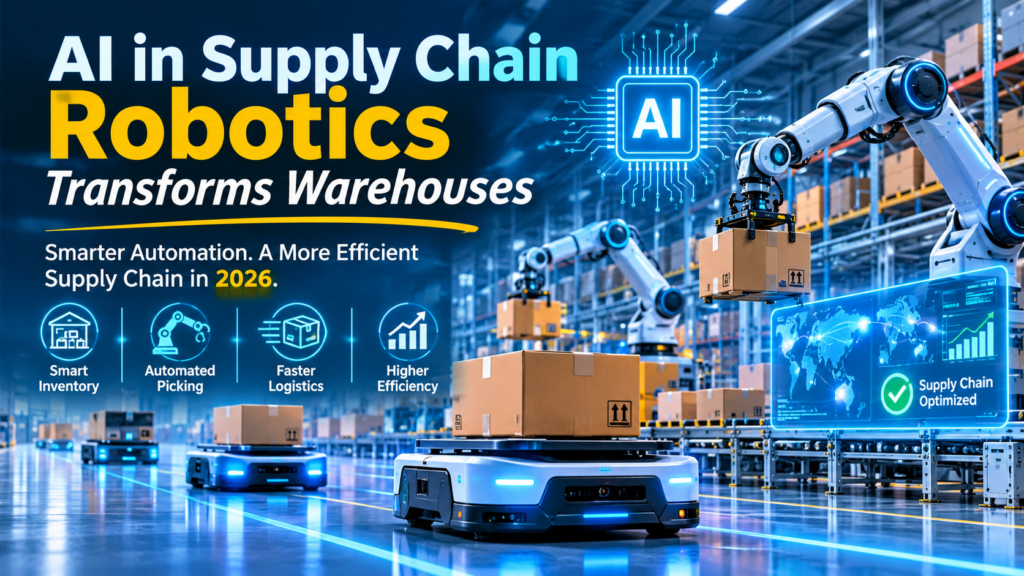
AI is changing supply chain robotics by giving machines the ability to see, decide, and adapt in real time, so robots can handle the variable, messy work that once required human judgment. The practical payoff is automation that deploys faster, flexes when demand shifts, and recovers more gracefully from disruption.
That shift was the focus of The Robot Report’s live webinar “Robots in the Supply Chain” on November 18, 2026, which featured the founders of InVia Robotics, Gideon, and Ambi Robotics. It reflects a wider reality: supply chain robotics is moving away from rigid, scripted equipment and toward adaptive systems that improve with data. This guide explains what is changing, which technologies matter, where the limits remain, and how to evaluate the opportunity for your own operation. therobotreport
Key Takeaways
- AI makes robots adaptable. Modern supply chain robotics relies on perception and learning to handle products, layouts, and workflows that change from day to day.
- Physical AI is the umbrella trend. It describes AI that acts in the physical world through sensors, motion, and manipulation rather than only generating text or forecasts.
- Integration beats isolated machines. The biggest gains appear when robots, warehouse software, and predictive analytics share data.
- Fit matters more than hype. High-volume, predictable processes remain the safest starting point, while humanoid robots are still early.
- Start small and measure. Choose one bounded problem, define KPIs, and scale from evidence.
What Is Supply Chain Robotics?
Definition
Supply chain robotics is the use of robotic systems to move, handle, sort, store, load, and track goods as they flow from suppliers to customers. It covers machines inside warehouses and distribution centers, at loading docks, on factory floors, and, increasingly, along last-mile routes.
Expansion: Where Robots Operate
A robot can touch nearly every stage in the flow of goods. The most common stages include:
- Receiving and unloading: removing cartons or pallets from trailers and containers.
- Putaway and storage: moving inventory into racks, shelves, or dense storage systems.
- Picking: retrieving items for customer orders, either by bringing goods to a person or by picking them autonomously.
- Sorting and packing: routing parcels and preparing orders for shipment.
- Loading and transport: moving pallets and totes with autonomous forklifts and carts.
- Inventory counting: scanning shelves and locations with mobile robots or drones.
Why the Definition Keeps Expanding
Early industrial robots repeated fixed motions inside fenced, controlled cells. Today’s systems work in shared, changing spaces alongside people. That expansion is exactly why the AI layer matters: the more variable the environment, the more a robot depends on software that can interpret it.
How Is AI Changing Supply Chain Robotics?
Direct answer: AI is changing supply chain robotics in four ways. Robots perceive their surroundings more accurately, coordinate as fleets, predict problems before they cause downtime, and learn new tasks without exhaustive reprogramming.
The table below contrasts the older model with the AI-enabled one.
| Dimension | Traditional automation | AI-enabled robotics |
|---|---|---|
| Handling variation | Needs consistent items and positions | Adapts to new shapes, sizes, and placements |
| Programming | Specialist scripting for each task | Learning from demonstration, simulation, and data |
| Coordination | Machines run in isolated zones | Fleets are orchestrated by shared software |
| Maintenance | Fix after failure | Predict and schedule from sensor data |
| Change tolerance | Costly to reconfigure | Faster to redeploy as demand shifts |
1. From Scripted Motion to Perception
Traditional automation assumes every item arrives in the same place and orientation. AI-driven computer vision removes that assumption. A picking arm can identify an unfamiliar package, estimate how to grip it, and adjust if it slips. That ability is the foundation of modern robotic picking, where the product mix can span thousands of SKUs with different shapes, materials, and packaging.
2. From Isolated Machines to Orchestrated Fleets
A single robot is useful, but a coordinated fleet changes the economics. Orchestration software assigns tasks, routes machines around congestion, and balances work between robots and people. When warehouse software hands tasks to robots automatically, throughput becomes a system-level outcome rather than a machine-level one.
3. From Reactive to Predictive
Robots generate rich data: cycle times, grip failures, battery levels, and travel paths. Predictive analytics turns that stream into early warnings, such as a gripper trending toward failure or a zone heading toward congestion. Maintenance shifts from repairing breakdowns to scheduling interventions, and planners can adjust staffing and inventory placement before bottlenecks form.
4. From Programmed to Trained
Historically, teaching a robot a new task meant specialist programming. Newer approaches let systems learn from demonstration and adapt to new scenarios without extensive reprogramming, which shortens deployment time and lowers the expertise needed to reconfigure a workcell. For operators, that means a robot is less likely to be locked into the single job it was installed to do. therobotreport
The Core Technologies Behind Modern Supply Chain Robotics
Not every machine on the warehouse floor uses AI in the same way. The comparison below summarizes the main categories and how mature each one is.
| Technology | Primary use | What AI adds | Maturity |
|---|---|---|---|
| Autonomous mobile robots (AMRs) | Moving totes, carts, and pallets; assisting pickers | Dynamic route planning, obstacle avoidance, fleet orchestration | Widely deployed |
| Robotic picking arms | Piece picking, induction, sorting | Vision-based grasp planning for unfamiliar items | Growing rapidly |
| Autonomous forklifts | Trailer loading, unloading, pallet moves | Perception of pallets, trailers, and people in unstructured docks | Early to growing |
| Goods-to-person systems | Bringing inventory to stationary stations | Slotting optimization and task assignment | Established |
| Humanoid robots | General tasks in human-built spaces | Whole-body control and learned manipulation | Early-stage |
Physical AI: The Umbrella Concept
Physical AI is artificial intelligence that perceives and acts in the real world, rather than only producing text or predictions. In supply chain robotics, physical AI is the bridge between a planning system that decides what should happen and a machine that can actually do it. Gartner’s annual report on 2026 supply chain technology trends puts agentic AI and physical AI at the top of its list. supplychain247
Autonomous Mobile Robots
Autonomous mobile robots navigate by sensing their surroundings rather than following fixed tracks or magnetic tape. Because they can reroute around obstacles, they suit warehouses where layouts and traffic patterns change. They are often the first step in warehouse automation because they can be added incrementally without rebuilding a facility.
Robotic Picking and Sorting
Picking is the labor-intensive heart of fulfillment, and it is where AI matters most. Vision models and learned grasping let arms handle products they were never explicitly programmed for. Parcel sorting and induction follow the same logic at higher speeds, with the robot deciding in fractions of a second where each item should go.
Autonomous Forklifts and Truck Loading
Loading and unloading trailers is physically demanding and notoriously hard to automate, because every trailer is packed differently. Gideon, one of the webinar participants, builds a physical AI platform that automates truck trailer loading and unloading with autonomous forklifts. therobotreport
Humanoid Robots
Gartner places humanoid robots at the very start of its Innovation Trigger phase and says the industry is still years away from broad adoption. Treat them as a technology to monitor, not one to build a 2027 operating plan around. supplychain247
Real-World Applications of AI-Driven Warehouse Automation
These examples show where supply chain robotics delivers value today, and where human-robot teamwork still wins.
Goods-to-Person Fulfillment
Instead of sending workers to walk aisles, robots bring inventory to stationary stations. AI decides which items to store where, which robot serves which order, and how to sequence work so stations never starve. This model is a mature pillar of warehouse automation and a natural base for adding smarter software.
Parcel Sorting and Stacking
Parcel handling is repetitive, fast, and full of irregular packages, which makes it a strong match for learned perception. Ambi Robotics, whose CTO Jeff Mahler joined the webinar, works on AI-driven robotic handling of this kind.
Dock and Yard Operations
The dock is where goods enter and leave the building, so delays there ripple everywhere. Automating trailer handling reduces one of the most physically punishing jobs in logistics and can stabilize throughput at a known bottleneck.
Hybrid Human-Robot Workflows
Many of the best results come from pairing people with machines. Autonomous mobile robots carry totes and cut walking time while human pickers handle the delicate, ambiguous cases. MIT researchers describe AI as foundational to how large-scale warehouses operate, with companies moving beyond pilots to real deployment. mit
Why Supply Chain Robotics Is Accelerating Now
Question: Why are companies investing in robots now?
Direct answer: Three pressures are converging: labor shortages, the demand for higher efficiency, and the need for resilience against disruption. AI makes robots flexible enough to answer all three at once.
The Three Pressures
- Labor availability: repetitive, strenuous roles are hard to staff consistently, and robots can fill the gaps.
- Efficiency: faster cycle times and fewer errors compound across thousands of orders.
- Resilience: adaptive systems can absorb demand swings and reroute work when something breaks.
Investment Signals
Large operators are putting real money behind the trend. Amazon has announced plans for a one-billion-dollar robotics fulfillment center on Long Island and an 11.6-billion-dollar robotics push across Europe. Smaller players are moving too, and the ecosystem of startups, software platforms, and integrators keeps widening. supplychain247
What Limits Supply Chain Robotics Today
Honest evaluation requires understanding the constraints. Four stand out.
Variability and Cost
Commonly available robotics platforms still work best in high-volume, low-variability environments, while cutting-edge systems that approach human performance amid high variability remain very expensive. If your operation handles an enormous range of items or irregular workflows, the business case needs extra scrutiny. Substack
Integration and Execution
A robot is only as good as the systems around it. Poor integration with warehouse management software, weak data quality, or unclear processes can erase the benefit. A Cleo survey found that companies keep losing revenue to supply chain problems despite growing investment in automation and AI, a reminder that technology alone does not guarantee results. DHL’s Brian Gaunt makes a related point: companies should move beyond AI hype and focus on practical tools that solve real business problems. supplychain247supplychain247
Workforce and Change Management
Robots change jobs, not just tasks. Teams need training, clear communication, and a voice in how automation is designed and measured. Projects that treat the workforce as a design partner tend to go more smoothly than those that treat it as an afterthought.
Safety and Standards
Robots that share space with people need dependable safety design. That means speed limits near workers, reliable obstacle detection, clear zones, and well-defined behavior when a sensor fails. Ask vendors how their systems are validated, which industry safety standards they follow, and how incidents are logged and reviewed. AI can make a robot more capable, but it should never be the only layer protecting a person.
How to Evaluate Supply Chain Robotics for Your Operation
Question: How should an operator decide whether to invest?
Direct answer: Start with the problem, not the product. Define a measurable pain point, test whether a robot can handle your real variability, and pilot before you scale.
A Six-Step Evaluation Framework
- Define the problem. Name the task, the cost of the status quo, and the outcome you need, such as fewer injuries, faster dock turns, or higher pick rates.
- Measure variability. Catalog item types, volumes, and exceptions. High variability raises technical risk.
- Calculate total lifecycle cost. Include hardware, software, integration, maintenance, and downtime, not just the purchase price.
- Check integration. Confirm how the system connects to your warehouse and transport software, and who owns the data.
- Run a bounded pilot. Test in one zone with agreed KPIs and a clear stop-or-scale decision.
- Plan for people. Budget for training, role changes, and ongoing support.
Metrics to Track
- Units or lines processed per hour
- Pick accuracy and error rate
- Uptime and mean time between failures
- Dock-to-stock and order cycle time
- Safety incidents and ergonomic injury rates
- Cost per order, including maintenance and support
What a Typical Rollout Looks Like
Question: What does a sensible adoption path look like?
Direct answer: Most successful programs move through three phases: discover, pilot, and scale. Each phase has a different goal, and skipping one is the most common source of expensive surprises.
Phase 1: Discover
Map the workflow end to end, gather baseline data, and identify the one process where supply chain robotics could remove the most friction. The output of this phase is a short list of candidate use cases, a baseline for each, and a rough view of the integration work involved.
Phase 2: Pilot
Deploy in a single zone or shift with agreed success criteria. The pilot should expose real exceptions, such as damaged packaging, unusual items, and network dropouts, because those edge cases decide whether the system holds up in production. Capture what the robots handle well, what still needs people, and what the data reveals about hidden bottlenecks.
Phase 3: Scale
Expand only after the pilot meets its targets. Scaling means more than adding machines: it also means standardizing training, building a maintenance routine, and connecting robot data to planning tools so that supply chain robotics becomes part of everyday operations rather than a side project. Revisit the business case regularly, because the technology, and its pricing, keeps changing quickly.
Where Supply Chain Robotics Is Heading Next
Several trends are worth watching. The Gartner emphasis on agentic AI and physical AI points toward software agents that plan work and robots that carry it out. Robotics foundation models are also maturing: Runway launched its Praxis-1 world action model for robotics, with open weights available to developers, which shows how quickly the tooling is opening up. therobotreport
Expect three practical effects. First, deployment should get faster as models transfer skills between tasks. Second, simulation and digital twins will let operators test changes before touching a live floor. Third, humanoids will keep improving, but the near-term gains will come from mobile robots, picking arms, and autonomous forklifts that already have a clear business case.
Frequently Asked Questions
How does AI improve warehouse robots?
AI improves warehouse robots by adding perception, learning, and coordination. Robots can recognize unfamiliar items, adapt to changing layouts, and work as orchestrated fleets instead of isolated machines.
Is supply chain robotics only for large enterprises?
No. Large operators lead in spending, but modular systems such as autonomous mobile robots can be added in stages, which makes them accessible to mid-sized operations that start with one process.
What is physical AI?
Physical AI is artificial intelligence that senses and acts in the physical world through robots, vehicles, and other machines, rather than only processing digital information.
Will robots replace warehouse workers?
Robots are taking over the most repetitive and physically strenuous tasks, while people shift toward supervision, exception handling, and maintenance. The mix varies by facility and by how deliberately the transition is managed.
How long does it take to see a return on investment?
It depends on the use case, the integration effort, and how variable the work is. Bounded pilots with clear KPIs are the most reliable way to estimate payback before committing at scale.
Conclusion
AI has turned supply chain robotics from a story about fixed machines into a story about adaptable systems that perceive, coordinate, predict, and learn. The winners will not be the companies that buy the most robots, but the ones that match the right technology to a well-defined problem and build the data and people practices around it. Start with a bounded pilot, measure honestly, and expand as the evidence earns it.
AI ଯୋଗାଣ ଶୃଙ୍ଖଳା ରୋବୋଟିକ୍ସକୁ କିପରି ପରିବର୍ତ୍ତନ କରୁଛି: 2026 ପାଇଁ ଏକ ବ୍ୟବହାରିକ ମାର୍ଗଦର୍ଶିକା
AI ମେସିନଗୁଡ଼ିକୁ ପ୍ରକୃତ ସମୟରେ ଦେଖିବା, ନିଷ୍ପତ୍ତି ନେବା ଏବଂ ଅନୁକୂଳନ କରିବାର କ୍ଷମତା ଦେଇ ଯୋଗାଣ ଶୃଙ୍ଖଳା ରୋବୋଟିକ୍ସକୁ ପରିବର୍ତ୍ତନ କରୁଛି, ଯାହା ଦ୍ଵାରା ରୋବୋଟ୍ ମାନବ ବିଚାର ଆବଶ୍ୟକ କରୁଥିବା ପରିବର୍ତ୍ତନଶୀଳ, ଅବ୍ୟବସ୍ଥିତ କାର୍ଯ୍ୟକୁ ପରିଚାଳନା କରିପାରିବେ। ବ୍ୟବହାରିକ ଲାଭ ହେଉଛି ସ୍ୱୟଂଚାଳିତତା ଯାହା ଦ୍ରୁତ ଗତିରେ ନିୟୋଜିତ ହୁଏ, ଚାହିଦା ପରିବର୍ତ୍ତନ ହେଲେ ନମନୀୟ ହୁଏ ଏବଂ ବାଧାରୁ ଅଧିକ ସୁନ୍ଦର ଭାବରେ ପୁନରୁଦ୍ଧାର ହୁଏ।
ସେହି ପରିବର୍ତ୍ତନ ନଭେମ୍ବର 18, 2026 ରେ ଦି ରୋବୋଟ୍ ରିପୋର୍ଟର ଲାଇଭ୍ ୱେବିନାର “ସପ୍ଲାଏ ଶୃଙ୍ଖଳାରେ ରୋବୋଟ୍ସ” ର କେନ୍ଦ୍ରବିନ୍ଦୁ ଥିଲା, ଯେଉଁଥିରେ ଇନଭିଆ ରୋବୋଟିକ୍ସ, ଗିଡିଅନ୍ ଏବଂ ଆମ୍ବି ରୋବୋଟିକ୍ସର ପ୍ରତିଷ୍ଠାତାମାନେ ଉପସ୍ଥିତ ଥିଲେ। ଏହା ଏକ ବ୍ୟାପକ ବାସ୍ତବତାକୁ ପ୍ରତିଫଳିତ କରେ: ଯୋଗାଣ ଶୃଙ୍ଖଳା ରୋବୋଟିକ୍ସ କଠୋର, ସ୍କ୍ରିପ୍ଟେଡ୍ ଉପକରଣରୁ ଦୂରେଇ ଯାଉଛି ଏବଂ ତଥ୍ୟ ସହିତ ଉନ୍ନତ ହେଉଥିବା ଅନୁକୂଳନ ସିଷ୍ଟମ ଆଡକୁ ଗତି କରୁଛି। ଏହି ମାର୍ଗଦର୍ଶିକା ବୁଝାଏ ଯେ କଣ ପରିବର୍ତ୍ତନ ହେଉଛି, କେଉଁ ପ୍ରଯୁକ୍ତିବିଦ୍ୟା ଗୁରୁତ୍ୱପୂର୍ଣ୍ଣ, ସୀମା କେଉଁଠି ରହିଛି, ଏବଂ ଆପଣଙ୍କ ନିଜସ୍ୱ କାର୍ଯ୍ୟ ପାଇଁ ସୁଯୋଗକୁ କିପରି ମୂଲ୍ୟାଙ୍କନ କରିବେ।
therobotreport
ମୁଖ୍ୟ ପ୍ରସଙ୍ଗ
AI ରୋବୋଟକୁ ଅନୁକୂଳନଯୋଗ୍ୟ କରିଥାଏ। ଆଧୁନିକ ଯୋଗାଣ ଶୃଙ୍ଖଳା ରୋବୋଟିକ୍ସ ଦିନକୁ ଦିନ ପରିବର୍ତ୍ତନ ହେଉଥିବା ଉତ୍ପାଦ, ଲେଆଉଟ୍ ଏବଂ କାର୍ଯ୍ୟପ୍ରବାହକୁ ପରିଚାଳନା କରିବା ପାଇଁ ଧାରଣା ଏବଂ ଶିଖିବା ଉପରେ ନିର୍ଭର କରେ।
ଭୌତିକ AI ହେଉଛି ଏକ ପ୍ରମୁଖ ଧାରା। ଏହା AI କୁ ବର୍ଣ୍ଣନା କରେ ଯାହା କେବଳ ପାଠ୍ୟ କିମ୍ବା ପୂର୍ବାନୁମାନ ସୃଷ୍ଟି କରିବା ପରିବର୍ତ୍ତେ ସେନ୍ସର, ଗତି ଏବଂ ପରିଚାଳନା ମାଧ୍ୟମରେ ଭୌତିକ ଜଗତରେ କାର୍ଯ୍ୟ କରେ।
ସମନ୍ୱୟ ପୃଥକ ମେସିନଗୁଡ଼ିକୁ ପରାସ୍ତ କରେ। ଯେତେବେଳେ ରୋବୋଟ୍, ଗୋଦାମ ସଫ୍ଟୱେର୍ ଏବଂ ଭବିଷ୍ୟବାଣୀ ବିଶ୍ଳେଷଣ ତଥ୍ୟ ଅଂଶୀଦାର କରେ ସେତେବେଳେ ସବୁଠାରୁ ବଡ଼ ଲାଭ ଦେଖାଯାଏ।
ଫିଟ୍ ପ୍ରଚାର ଅପେକ୍ଷା ଅଧିକ ଗୁରୁତ୍ୱପୂର୍ଣ୍ଣ। ଉଚ୍ଚ-ଭଲ୍ୟୁମ୍, ପୂର୍ବାନୁମାନଯୋଗ୍ୟ ପ୍ରକ୍ରିୟାଗୁଡ଼ିକ ସବୁଠାରୁ ସୁରକ୍ଷିତ ଆରମ୍ଭ ବିନ୍ଦୁ ରହିଥାଏ, ଯେତେବେଳେ ମାନବୀୟ ରୋବୋଟ୍ ଏପର୍ଯ୍ୟନ୍ତ ଶୀଘ୍ର ଥାଏ।
ଛୋଟ ଆରମ୍ଭ କରନ୍ତୁ ଏବଂ ମାପ କରନ୍ତୁ। ଗୋଟିଏ ସୀମିତ ସମସ୍ୟା ବାଛନ୍ତୁ, KPI ପରିଭାଷିତ କରନ୍ତୁ ଏବଂ ପ୍ରମାଣରୁ ସ୍କେଲ୍ କରନ୍ତୁ।
ଯୋଗାଣ ଶୃଙ୍ଖଳା ରୋବୋଟିକ୍ସ କ’ଣ?
ପରିଭାଷା
ଯୋଗାଣ ଶୃଙ୍ଖଳା ରୋବୋଟିକ୍ସ ହେଉଛି ଯୋଗାଣକାରୀଙ୍କଠାରୁ ଗ୍ରାହକଙ୍କ ନିକଟକୁ ପ୍ରବାହିତ ହେଉଥିବା ସାମଗ୍ରୀଗୁଡ଼ିକୁ ସ୍ଥାନାନ୍ତର, ପରିଚାଳନା, ସଜାଡ଼ିବା, ସଂରକ୍ଷଣ, ଲୋଡ୍ ଏବଂ ଟ୍ରାକ୍ କରିବା ପାଇଁ ରୋବୋଟିକ୍ ସିଷ୍ଟମର ବ୍ୟବହାର। ଏହା ଗୋଦାମ ଏବଂ ବଣ୍ଟନ କେନ୍ଦ୍ର ଭିତରେ, ଲୋଡିଂ ଡକ୍ ରେ, କାରଖାନା ମହଲାରେ ଏବଂ, କ୍ରମାଗତ ଭାବରେ, ଶେଷ-ମାଇଲ୍ ରୁଟ୍ ସହିତ ମେସିନଗୁଡ଼ିକୁ କଭର କରେ।
ପ୍ରସାରଣ: ଯେଉଁଠାରେ ରୋବୋଟ୍ କାର୍ଯ୍ୟ କରେ
ଏକ ରୋବୋଟ୍ ସାମଗ୍ରୀ ପ୍ରବାହର ପ୍ରାୟ ପ୍ରତ୍ୟେକ ପର୍ଯ୍ୟାୟକୁ ଛୁଇଁପାରେ। ସବୁଠାରୁ ସାଧାରଣ ପର୍ଯ୍ୟାୟଗୁଡ଼ିକ ମଧ୍ୟରେ ଅନ୍ତର୍ଭୁକ୍ତ:
ଗ୍ରହଣ ଏବଂ ଅନଲୋଡିଂ: ଟ୍ରେଲର ଏବଂ ପାତ୍ରରୁ କାର୍ଟନ କିମ୍ବା ପ୍ୟାଲେଟଗୁଡ଼ିକୁ ବାହାର କରିବା।
ପୁଟଅୱେ ଏବଂ ଷ୍ଟୋରେଜ୍: ର୍ୟାକ୍, ସେଲ୍ଫ କିମ୍ବା ଘନ ଷ୍ଟୋରେଜ୍ ସିଷ୍ଟମରେ ଇନଭେଣ୍ଟରୀ ସ୍ଥାନାନ୍ତର।
ପିକିଂ: ଗ୍ରାହକ ଅର୍ଡର ପାଇଁ ଜିନିଷଗୁଡ଼ିକ ଉଦ୍ଧାର କରିବା, ଜଣେ ବ୍ୟକ୍ତିଙ୍କୁ ସାମଗ୍ରୀ ଆଣି କିମ୍ବା ସ୍ୱୟଂଚାଳିତ ଭାବରେ ସେଗୁଡ଼ିକୁ ଉଠାଇ।
ସଜାଡ଼ିବା ଏବଂ ପ୍ୟାକିଂ: ପାର୍ସଲଗୁଡ଼ିକୁ ରାଉଟିଂ କରିବା ଏବଂ ପଠାଣ ପାଇଁ ଅର୍ଡର ପ୍ରସ୍ତୁତ କରିବା।
ଲୋଡିଂ ଏବଂ ପରିବହନ: ସ୍ୱୟଂଚାଳିତ ଫୋର୍କଲିଫ୍ଟ ଏବଂ କାର୍ଟ ସହିତ ପ୍ୟାଲେଟ ଏବଂ ଟୋଟଗୁଡ଼ିକୁ ସ୍ଥାନାନ୍ତର କରିବା।
ଇନଭେଣ୍ଟରୀ ଗଣନା: ମୋବାଇଲ୍ ରୋବୋଟ୍ କିମ୍ବା ଡ୍ରୋନ୍ ସହିତ ସେଲ୍ଫ ଏବଂ ସ୍ଥାନଗୁଡ଼ିକୁ ସ୍କାନିଂ କରିବା।
ପରିଭାଷା କାହିଁକି ବିସ୍ତାରିତ ହୋଇରହିଛି
ପ୍ରାରମ୍ଭିକ ଶିଳ୍ପ ରୋବୋଟ୍ ବାଡ଼ଯୁକ୍ତ, ନିୟନ୍ତ୍ରିତ କୋଷଗୁଡ଼ିକ ଭିତରେ ସ୍ଥିର ଗତିକୁ ପୁନରାବୃତ୍ତି କରେ। ଆଜିର ସିଷ୍ଟମଗୁଡ଼ିକ ଲୋକଙ୍କ ସହିତ ସେୟାର, ପରିବର୍ତ୍ତନଶୀଳ ସ୍ଥାନରେ କାର୍ଯ୍ୟ କରେ। ସେହି ବିସ୍ତାର ହେଉଛି କାହିଁକି AI ସ୍ତର ଗୁରୁତ୍ୱପୂର୍ଣ୍ଣ: ପରିବେଶ ଯେତେ ପରିବର୍ତ୍ତନଶୀଳ, ଏକ ରୋବୋଟ୍ ସଫ୍ଟୱେର୍ ଉପରେ ନିର୍ଭର କରେ ଯାହା ଏହାକୁ ବ୍ୟାଖ୍ୟା କରିପାରିବ।
ଏଆଇ ଯୋଗାଣ ଶୃଙ୍ଖଳା ରୋବୋଟିକ୍ସକୁ କିପରି ପରିବର୍ତ୍ତନ କରୁଛି?
ସିଧା ଉତ୍ତର: AI ଚାରୋଟି ଉପାୟରେ ଯୋଗାଣ ଶୃଙ୍ଖଳା ରୋବୋଟିକ୍ସକୁ ପରିବର୍ତ୍ତନ କରୁଛି। ରୋବୋଟ୍ମାନେ ସେମାନଙ୍କର ପରିବେଶକୁ ଅଧିକ ସଠିକ୍ ଭାବରେ ଅନୁଭବ କରନ୍ତି, ଫ୍ଲିଟ୍ ଭାବରେ ସମନ୍ୱୟ କରନ୍ତି, ସମସ୍ୟାଗୁଡ଼ିକର ପୂର୍ବାନୁମାନ କରନ୍ତି ଏବଂ ସମ୍ପୂର୍ଣ୍ଣ ପୁନଃପ୍ରୋଗ୍ରାମିଂ ବିନା ନୂତନ କାର୍ଯ୍ୟ ଶିଖନ୍ତି।
ନିମ୍ନରେ ଥିବା ସାରଣୀ ପୁରୁଣା ମଡେଲ୍କୁ AI-ସକ୍ଷମ ମଡେଲ୍ ସହିତ ବିପରୀତ କରେ।
ପରିମାଣ ପାରମ୍ପରିକ ସ୍ୱୟଂଚାଳିତତା AI-ସକ୍ଷମ ରୋବୋଟିକ୍ସ
ପରିବର୍ତ୍ତନ ପରିଚାଳନା ସ୍ଥିର ଜିନିଷ ଏବଂ ସ୍ଥିତି ଆବଶ୍ୟକ କରେ ନୂତନ ଆକୃତି, ଆକାର ଏବଂ ସ୍ଥାନ ସହିତ ଖାପ ଖୁଆଇଥାଏ
ପ୍ରୋଗ୍ରାମିଂ ପ୍ରତ୍ୟେକ କାର୍ଯ୍ୟ ପାଇଁ ବିଶେଷଜ୍ଞ ସ୍କ୍ରିପ୍ଟିଂ ପ୍ରଦର୍ଶନ, ସିମୁଲେସନ୍ ଏବଂ ତଥ୍ୟରୁ ଶିଖିବା
ବିଚ୍ଛିନ୍ନ ଜୋନ୍ରେ ଚାଲିଥାଏ ସମନ୍ୱୟ ମେସିନ୍ଗୁଡ଼ିକ ସେୟାର କରାଯାଇଥିବା ସଫ୍ଟୱେର୍ ଦ୍ୱାରା ଅର୍କେଷ୍ଟ୍ରେଟ୍ କରାଯାଏ
ବିଫଳତା ପରେ ରକ୍ଷଣାବେକ୍ଷଣ ସମାଧାନ ସେନ୍ସର ଡାଟାରୁ ପୂର୍ବାନୁମାନ ଏବଂ ସମୟସୂଚୀ
ପରିବର୍ତ୍ତନ ସହନଶୀଳତା ପୁନଃବିନ୍ୟାସ କରିବାକୁ ମହଙ୍ଗା ଚାହିଦା ପରିବର୍ତ୍ତନ ହେବା ସହିତ ପୁନଃନିୟୋଜନ କରିବାକୁ ଦ୍ରୁତ
- ସ୍କ୍ରିପ୍ଟେଡ୍ ଗତିରୁ ଧାରଣା
ପାରମ୍ପରିକ ସ୍ୱୟଂଚାଳିତତା ଅନୁମାନ କରେ ଯେ ପ୍ରତ୍ୟେକ ଜିନିଷ ସମାନ ସ୍ଥାନ ଏବଂ ଦିଗକୁ ପହଞ୍ଚେ। AI-ଚାଳିତ କମ୍ପ୍ୟୁଟର ଦୃଷ୍ଟି ସେହି ଧାରଣାକୁ ହଟାଇ ଦିଏ। ଏକ ପିକିଂ ବାହୁ ଏକ ଅପରିଚିତ ପ୍ୟାକେଜ୍କୁ ଚିହ୍ନଟ କରିପାରିବ, ଏହାକୁ କିପରି ଧରିବ ଅନୁମାନ କରିପାରିବ ଏବଂ ଯଦି ଏହା ଖସିଯାଏ ତେବେ ଏହାକୁ ଆଡଜଷ୍ଟ କରିପାରିବ। ସେହି କ୍ଷମତା ହେଉଛି ଆଧୁନିକ ରୋବୋଟିକ୍ ପିକିଂର ମୂଳଦୁଆ, ଯେଉଁଠାରେ ଉତ୍ପାଦ ମିଶ୍ରଣ ହଜାର ହଜାର SKUକୁ ବିଭିନ୍ନ ଆକୃତି, ସାମଗ୍ରୀ ଏବଂ ପ୍ୟାକେଜିଂ ସହିତ ବିସ୍ତାର କରିପାରିବ।
- ବିଚ୍ଛିନ୍ନ ମେସିନ୍ ରୁ ଅର୍କେଷ୍ଟ୍ରେଟେଡ୍ ଫ୍ଲିଟ୍ ପର୍ଯ୍ୟନ୍ତ
ଏକକ ରୋବଟ୍ ଉପଯୋଗୀ, କିନ୍ତୁ ଏକ ସମନ୍ୱିତ ଫ୍ଲିଟ୍ ଅର୍ଥନୀତିକୁ ପରିବର୍ତ୍ତନ କରେ। ଅର୍କେଷ୍ଟ୍ରେସନ୍ ସଫ୍ଟୱେର୍ କାର୍ଯ୍ୟ ପ୍ରଦାନ କରେ, ଭିଡ଼ ଚାରିପାଖରେ ମେସିନ୍ ଗୁଡିକୁ ମାର୍ଗ ଦିଏ ଏବଂ ରୋବଟ୍ ଏବଂ ଲୋକଙ୍କ ମଧ୍ୟରେ କାର୍ଯ୍ୟ ସନ୍ତୁଳନ କରେ। ଯେତେବେଳେ ଗୋଦାମ ସଫ୍ଟୱେର୍ ସ୍ୱଚାଳିତ ଭାବରେ ରୋବଟ୍କୁ କାର୍ଯ୍ୟ ହସ୍ତାନ୍ତର କରେ, ସେତେବେଳେ ଥ୍ରୁପୁଟ୍ ମେସିନ୍-ସ୍ତରୀୟ ପରିବର୍ତ୍ତେ ଏକ ସିଷ୍ଟମ୍-ସ୍ତରୀୟ ଫଳାଫଳ ହୋଇଯାଏ।
- ପ୍ରତିକ୍ରିୟାଶୀଳରୁ ଭବିଷ୍ୟବାଣୀ
ରୋବୋଟ୍ ସମୃଦ୍ଧ ତଥ୍ୟ ସୃଷ୍ଟି କରେ: ଚକ୍ର ସମୟ, ଗ୍ରୀପ୍ ବିଫଳତା, ବ୍ୟାଟେରୀ ସ୍ତର ଏବଂ ଯାତ୍ରା ପଥ। ଭବିଷ୍ୟବାଣୀ ବିଶ୍ଳେଷଣ ସେହି ଷ୍ଟ୍ରିମ୍ କୁ ପ୍ରାରମ୍ଭିକ ଚେତାବନୀରେ ପରିଣତ କରେ, ଯେପରିକି ବିଫଳତା ଆଡ଼କୁ ପ୍ରବଣ ଏକ ଗ୍ରୀପର୍ କିମ୍ବା ଭିଡ଼ ଆଡ଼କୁ ଯାଉଥିବା ଏକ ଜୋନ୍। ରକ୍ଷଣାବେକ୍ଷଣ ମରାମତିରୁ ସମୟ ନିର୍ଦ୍ଧାରଣ ହସ୍ତକ୍ଷେପକୁ ସ୍ଥାନାନ୍ତରିତ ହୁଏ, ଏବଂ ଯୋଜନାକାରୀମାନେ ବାଧା ସୃଷ୍ଟି ହେବା ପୂର୍ବରୁ କର୍ମଚାରୀ ଏବଂ ଇନଭେଣ୍ଟରୀ ସ୍ଥାନକୁ ସଜାଡ଼ି ପାରିବେ।
- ପ୍ରୋଗ୍ରାମଡ୍ ରୁ ପ୍ରଶିକ୍ଷିତ
ଇତିହାସପାରମ୍ପାରିକ ଭାବରେ, ଏକ ରୋବଟକୁ ନୂଆ କାମ ଶିଖାଇବା ପାଇଁ ବିଶେଷଜ୍ଞ ସ୍ତରୀୟ ପ୍ରୋଗ୍ରାମିଂର ଆବଶ୍ୟକତା ପଡ଼ୁଥିଲା। କିନ୍ତୁ ଆଧୁନିକ ପଦ୍ଧତିଗୁଡ଼ିକରେ, ରୋବଟ୍ଗୁଡ଼ିକ କୌଣସି କାର୍ଯ୍ୟକୁ ପ୍ରତ୍ୟକ୍ଷ ଭାବେ ଦେଖି (demonstration) ଶିଖିପାରନ୍ତି ଏବଂ ବ୍ୟାପକ ପୁନଃ-ପ୍ରୋଗ୍ରାମିଂ ବିନା ନୂତନ ପରିସ୍ଥିତି ସହ ଖାପ ଖୁଆଇ ପାରନ୍ତି। ଏହା ଫଳରେ କାର୍ଯ୍ୟ ଆରମ୍ଭ କରିବା ପାଇଁ ଲାଗୁଥିବା ସମୟ କମିଯାଏ ଏବଂ କାର୍ଯ୍ୟକ୍ଷେତ୍ରକୁ ପୁନଃ ସଜ୍ଜିତ କରିବା ପାଇଁ ଆବଶ୍ୟକ ହେଉଥିବା ବୈଷୟିକ ଦକ୍ଷତାର ଆବଶ୍ୟକତା ମଧ୍ୟ ହ୍ରାସ ପାଏ। ଅପରେଟରମାନଙ୍କ ପାଇଁ ଏହାର ଅର୍ଥ ହେଉଛି, ଏକ ରୋବଟ୍ କେବଳ ଗୋଟିଏ ନିର୍ଦ୍ଦିଷ୍ଟ କାମରେ ସୀମିତ ରହିବାର ସମ୍ଭାବନା କମିଯାଏ।
ଆଧୁନିକ ଯୋଗାଣ ଶୃଙ୍ଖଳା (Supply Chain) ରୋବୋଟିକ୍ସ ପଛରେ ଥିବା ମୁଖ୍ୟ ପ୍ରଯୁକ୍ତିବିଦ୍ୟା
ୱେୟାରହାଉସ୍ (ଗୋଦାମ) ମଧ୍ୟରେ ଥିବା ସମସ୍ତ ମେସିନ୍ ଏକା ପ୍ରକାରର AI (କୃତ୍ରିମ ବୁଦ୍ଧିମତ୍ତା) ବ୍ୟବହାର କରନ୍ତି ନାହିଁ। ନିମ୍ନରେ ଦିଆଯାଇଥିବା ତୁଳନାତ୍ମକ ବିବରଣୀରେ ମୁଖ୍ୟ ବର୍ଗଗୁଡ଼ିକ ଏବଂ ସେଗୁଡ଼ିକର ବିକାଶ ସ୍ତର (maturity level) ସମ୍ପର୍କରେ ସଂକ୍ଷିପ୍ତ ସୂଚନା ଦିଆଯାଇଛି।
ପ୍ରଯୁକ୍ତିବିଦ୍ୟା | ମୁଖ୍ୟ ବ୍ୟବହାର | AI ଦ୍ୱାରା ଯୋଡ଼ା ଯାଉଥିବା ସୁବିଧା | ବିକାଶ ସ୍ତର
ସ୍ୱୟଂଚାଳିତ ମୋବାଇଲ୍ ରୋବଟ୍ (AMRs) | ସାମଗ୍ରୀ ରଖାଯାଇଥିବା ବାକ୍ସ, ଗାଡ଼ି (carts) ଏବଂ ପ୍ୟାଲେଟ୍ଗୁଡ଼ିକୁ ଏକ ସ୍ଥାନରୁ ଅନ୍ୟ ସ୍ଥାନକୁ ନେବା; ସାମଗ୍ରୀ ସଂଗ୍ରହ କରୁଥିବା କର୍ମଚାରୀଙ୍କୁ ସାହାଯ୍ୟ କରିବା | ଗତିପଥର ଗତିଶୀଳ ପରିବର୍ତ୍ତନ (dynamic routing), ବାଧାବିଘ୍ନକୁ ଏଡ଼ାଇବା, ଏକାଧିକ ରୋବଟ୍ର ପରିଚାଳନା | ବ୍ୟାପକ ଭାବେ ବ୍ୟବହୃତ
ରୋବୋଟିକ୍ ପିକିଂ ଆର୍ମ (ସାମଗ୍ରୀ ଉଠାଇବା ବାହୁ) | ସାମଗ୍ରୀ ଉଠାଇବା, ସଜାଡ଼ିବା (sorting) | ଦୃଷ୍ଟିଶକ୍ତି (vision-based) ଉପରେ ଆଧାରିତ ଗ୍ରହଣ କ୍ଷମତା, ଯାହା ଅଜଣା ବସ୍ତୁକୁ ମଧ୍ୟ ଧରିପାରେ |
ଦ୍ରୁତ ଗତିରେ ବିକାଶଶୀଳ
ସ୍ୱୟଂଚାଳିତ ଫର୍କଲିଫ୍ଟ (Autonomous forklifts) | ଟ୍ରେଲରରେ ସାମଗ୍ରୀ ଲଦିବା, ଓହ୍ଲାଇବା ଏବଂ ପ୍ୟାଲେଟ୍ଗୁଡ଼ିକୁ ସ୍ଥାନାନ୍ତର କରିବା | ପ୍ୟାଲେଟ୍, ଟ୍ରେଲର ଏବଂ ମଣିଷଙ୍କ ପାର୍ସଲ୍ (ପ୍ୟାକେଟ୍) ବର୍ଗୀକରଣ ଏବଂ ସେଗୁଡ଼ିକୁ ନିର୍ଦ୍ଦିଷ୍ଟ ସ୍ଥାନକୁ ପଠାଇବା ପ୍ରକ୍ରିୟା ଅଧିକ ଗତିରେ ସମ୍ପାଦିତ ହୁଏ; ଏଥିରେ ରୋବଟ୍ ମାତ୍ର କିଛି ମିଲିସେକେଣ୍ଡ୍ (ସେକେଣ୍ଡର ଏକ ଛୋଟ ଭାଗ) ମଧ୍ୟରେ ନିଷ୍ପତ୍ତି ନିଏ ଯେ ପ୍ରତ୍ୟେକ ସାମଗ୍ରୀ କେଉଁଠାକୁ ଯିବା ଉଚିତ୍।
ସ୍ୱୟଂଚାଳିତ ଫର୍କଲିଫ୍ଟ (Autonomous Forklifts) ଏବଂ ଟ୍ରକ୍ ଲୋଡିଂ
ଟ୍ରେଲରରେ ସାମଗ୍ରୀ ଲୋଡ୍ କରିବା (ଭର୍ତ୍ତି କରିବା) ଏବଂ ଅନଲୋଡ୍ କରିବା (ଓହ୍ଲାଇବା) କାର୍ଯ୍ୟ ଶାରୀରିକ ଦୃଷ୍ଟିରୁ ଅତ୍ୟନ୍ତ କଷ୍ଟକର ଏବଂ ଏହାକୁ ସ୍ୱୟଂଚାଳିତ କରିବା ମଧ୍ୟ ଅତ୍ୟନ୍ତ ଜଟିଳ; କାରଣ ପ୍ରତ୍ୟେକ ଟ୍ରେଲରରେ ସାମଗ୍ରୀଗୁଡ଼ିକ ଭିନ୍ନ ଭିନ୍ନ ଢଙ୍ଗରେ ରଖାଯାଇଥାଏ। ‘ଗିଡିଅନ୍’ (Gideon) ନାମକ ଏକ କମ୍ପାନୀ – ଯାହାର ପ୍ରତିନିଧି ଏହି ୱେବିନାରରେ ଅଂଶଗ୍ରହଣ କରିଥିଲେ – ଏପରି ଏକ AI-ଆଧାରିତ ପ୍ଲାଟଫର୍ମ ବିକଶିତ କରୁଛି, ଯାହା ସ୍ୱୟଂଚାଳିତ ଫର୍କଲିଫ୍ଟ ମାଧ୍ୟମରେ ଟ୍ରକ୍ ଟ୍ରେଲରରେ ସାମଗ୍ରୀ ଲୋଡ୍ ଏବଂ ଅନଲୋଡ୍ କରିବା କାର୍ଯ୍ୟକୁ ସ୍ୱୟଂଚାଳିତ କରିଥାଏ।
ହ୍ୟୁମାନଏଡ୍ (ମନୁଷ୍ୟାକୃତି ବିଶିଷ୍ଟ) ରୋବଟ୍
‘ଗାର୍ଟନର୍’ (Gartner) ସଂସ୍ଥା ଅନୁଯାୟୀ, ହ୍ୟୁମାନଏଡ୍ ରୋବଟଗୁଡ଼ିକ ବର୍ତ୍ତମାନ ସେମାନଙ୍କର ‘ଇନୋଭେସନ୍ ଟ୍ରିଗର୍’ (ନୂତନ ଉଦ୍ଭାବନର ପ୍ରାରମ୍ଭିକ ପର୍ଯ୍ୟାୟ)ରେ ରହିଛନ୍ତି। ଏହି ସଂସ୍ଥା କୁହେ ଯେ, ଏଗୁଡ଼ିକର ବ୍ୟାପକ ବ୍ୟବହାର ଆରମ୍ଭ ହେବାକୁ ଏବେ ମଧ୍ୟ ଅନେକ ବର୍ଷ ଲାଗିବ। ତେଣୁ, ଏଗୁଡ଼ିକୁ କେବଳ ଏକ ପ୍ରଯୁକ୍ତିବିଦ୍ୟା ଭାବରେ ବିବେଚନା କରନ୍ତୁ ଯାହା ଉପରେ ନଜର ରଖାଯାଇପାରେ, କିନ୍ତୁ ୨୦୨୭ ମସିହା ପାଇଁ କୌଣସି କାର୍ଯ୍ୟ ଯୋଜନା ପ୍ରସ୍ତୁତ କରିବା ବେଳେ ଏହାକୁ ମୁଖ୍ୟ ଆଧାର ଭାବରେ ଗ୍ରହଣ କରନ୍ତୁ ନାହିଁ।
AI-ଚାଳିତ ୱେୟାରହାଉସ୍ (ଗୋଦାମ) ସ୍ୱୟଂଚାଳିତ ବ୍ୟବସ୍ଥାର ବାସ୍ତବ ପ୍ରୟୋଗ
ଏହି ଉଦାହରଣଗୁଡ଼ିକ ଦର୍ଶାଏ ଯେ, ସପ୍ଲାଇ ଚେନ୍ (ଯୋଗାଣ ଶୃଙ୍ଖଳା) କ୍ଷେତ୍ରରେ ରୋବଟ୍ କିପରି ମୂଲ୍ୟବାନ ଯୋଗଦାନ ଦେଉଛି ଏବଂ କେଉଁ କ୍ଷେତ୍ରରେ ମଣିଷ ଓ ରୋବଟର ମିଳିତ କାର୍ଯ୍ୟ ଅଧିକ ଫଳପ୍ରଦ ହେଉଛି।
‘ଗୁଡ୍ସ-ଟୁ-ପର୍ସନ୍’ (Goods-to ସିଧାସଳଖ ଉତ୍ତର: ତିନୋଟି ଚାପ ଏକତ୍ରିତ ହେଉଛି: ଶ୍ରମ ଅଭାବ, ଉଚ୍ଚ ଦକ୍ଷତାର ଚାହିଦା, ଏବଂ ବାଧା ବିରୁଦ୍ଧରେ ସ୍ଥିରତାର ଆବଶ୍ୟକତା। AI ରୋବୋଟଗୁଡ଼ିକୁ ଏକାଥରେ ତିନୋଟିର ଉତ୍ତର ଦେବା ପାଇଁ ଯଥେଷ୍ଟ ନମନୀୟ କରିଥାଏ।
ତିନୋଟି ଚାପ
ଶ୍ରମ ଉପଲବ୍ଧତା: ପୁନରାବୃତ୍ତି, କଠିନ ଭୂମିକା ନିରନ୍ତର ଭାବରେ କର୍ମଚାରୀ କରିବା କଷ୍ଟକର, ଏବଂ ରୋବୋଟଗୁଡ଼ିକ ଶୂନ୍ୟସ୍ଥାନ ପୂରଣ କରିପାରିବେ।
ଦକ୍ଷତା: ଦ୍ରୁତ ଚକ୍ର ସମୟ ଏବଂ କମ୍ ତ୍ରୁଟି ହଜାର ହଜାର ସଂଖ୍ୟାରେ ମିଶ୍ରିତଅର୍ଡର ସମ୍ବନ୍ଧୀୟ।
ନମନୀୟତା (Resilience): ଅନୁକୂଳନକ୍ଷମ (adaptive) ପ୍ରଣାଳୀଗୁଡ଼ିକ ଚାହିଦାରେ ହେଉଥିବା ପରିବର୍ତ୍ତନକୁ ସମ୍ଭାଳି ପାରନ୍ତି ଏବଂ କୌଣସି ତ୍ରୁଟି ଦେଖାଦେଲେ କାର୍ଯ୍ୟ ପ୍ରବାହକୁ ଅନ୍ୟ ଦିଗରେ ପରିଚାଳିତ କରିପାରନ୍ତି।
ନିବେଶ ସଙ୍କେତ
ବଡ଼ କମ୍ପାନୀଗୁଡ଼ିକ ଏହି ଧାରାରେ ପ୍ରକୃତ ପୁଞ୍ଜି ନିବେଶ କରୁଛନ୍ତି। ଆମାଜନ୍ (Amazon) ଲଙ୍ଗ୍ ଆଇଲ୍ୟାଣ୍ଡରେ ଏକ ବିଲିୟନ ଡଲାର୍ ମୂଲ୍ୟର ରୋବୋଟିକ୍ସ-ଆଧାରିତ ‘ଫୁଲଫିଲମେଣ୍ଟ ସେଣ୍ଟର’ (ଅର୍ଡର ପୂରଣ କେନ୍ଦ୍ର) ଏବଂ ସମଗ୍ର ୟୁରୋପରେ ୧୧.୬ ବିଲିୟନ ଡଲାର୍ ମୂଲ୍ୟର ରୋବୋଟିକ୍ସ ପ୍ରକଳ୍ପ ଆରମ୍ଭ କରିବାକୁ ଘୋଷଣା କରିଛି। ଛୋଟ କମ୍ପାନୀଗୁଡ଼ିକ ମଧ୍ୟ ଏ ଦିଗରେ ପଦକ୍ଷେପ ନେଉଛନ୍ତି; ଫଳରେ ଷ୍ଟାର୍ଟଅପ୍, ସଫ୍ଟୱେର୍ ପ୍ଲାଟଫର୍ମ ଏବଂ ସମନ୍ୱୟକାରୀ ସଂସ୍ଥାଗୁଡ଼ିକର ଏକ ବିସ୍ତୃତ ପରିସର ଗଢ଼ି ଉଠୁଛି।
ଆଜି ସପ୍ଲାଏ ଚେନ୍ (ଯୋଗାଣ ଶୃଙ୍ଖଳା) କ୍ଷେତ୍ରରେ ରୋବୋଟିକ୍ସର ପ୍ରୟୋଗକୁ କେଉଁ ବିଷୟଗୁଡ଼ିକ ସୀମିତ କରୁଛି?
ଏହାର ଏକ ସଠିକ୍ ମୂଲ୍ୟାଙ୍କନ ପାଇଁ ଏଥିରେ ଥିବା ପ୍ରତିବନ୍ଧକଗୁଡ଼ିକୁ ବୁଝିବା ଆବଶ୍ୟକ। ଏଥିମଧ୍ୟରୁ ମୁଖ୍ୟତଃ ଚାରୋଟି ବିଷୟ ଉଲ୍ଲେଖନୀୟ।
ବିବିଧତା ଏବଂ ମୂଲ୍ୟ
ସାଧାରଣତଃ ଉପଲବ୍ଧ ରୋବୋଟିକ୍ସ ପ୍ରଣାଳୀଗୁଡ଼ିକ ସେହି ସ୍ଥାନରେ ଭଲ କାମ କରନ୍ତି ଯେଉଁଠାରେ କାର୍ଯ୍ୟର ପରିମାଣ ଅଧିକ କିନ୍ତୁ କାର୍ଯ୍ୟର ପ୍ରକାରରେ ବିବିଧତା କମ୍ ଥାଏ। ଅନ୍ୟପକ୍ଷରେ, ଅତ୍ୟାଧୁନିକ ପ୍ରଣାଳୀଗୁଡ଼ିକ, ଯାହା ବିଭିନ୍ନ ପ୍ରକାରର କାର୍ଯ୍ୟ ମଧ୍ୟରେ ମଣିଷ ଭଳି ଦକ୍ଷତା ପ୍ରଦର୍ଶନ କରିପାରନ୍ତି, ସେଗୁଡ଼ିକ ଅତ୍ୟନ୍ତ ବ୍ୟୟବହୁଳ ଅଟନ୍ତି। ଯଦି ଆପଣଙ୍କ କାର୍ଯ୍ୟକ୍ଷେତ୍ରରେ ବିଭିନ୍ନ ପ୍ରକାରର ସାମଗ୍ରୀ ନେଇ କାମ ହୁଏ କିମ୍ବା କାର୍ଯ୍ୟ ପ୍ରକ୍ରିୟା ଅନିୟମିତ ରହେ, ତେବେ ଏହି ପ୍ରଯୁକ୍ତିବିଦ୍ୟାକୁ ଗ୍ରହଣ କରିବା ପୂର୍ବରୁ ଏହାର ବ୍ୟବସାୟିକ ଉପଯୋଗିତାକୁ ଅଧିକ ଗଭୀର ଭାବରେ ବିଚାର କରିବା ଆବଶ୍ୟକ।
ସମନ୍ୱୟ ଏବଂ କାର୍ଯ୍ୟକାରିତା
ଏକ ରୋବୋଟ୍ କେବଳ ସେତେବେଳେ ହିଁ ଉତ୍ତମ ପ୍ରଦର୍ଶନ କରିପାରିବ ଯେତେବେଳେ ଏହାର ଆଖପାଖରେ ଥିବା ଅନ୍ୟାନ୍ୟ ବ୍ୟବସ୍ଥାଗୁଡ଼ିକ ମଧ୍ୟ ଉନ୍ନତ ମାନର ହୋଇଥିବ। ଯଦି ଆପଣଙ୍କ କାର୍ଯ୍ୟ ପରିଚାଳନା ପାଇଁ ‘ସପ୍ଲାଏ ଚେନ୍ ରୋବୋଟିକ୍ସ’ (Supply Chain Robotics) ର ମୂଲ୍ୟାଙ୍କନ କିପରି କରିବେ
ପ୍ରଶ୍ନ: ନିବେଶ କରିବା ଉଚିତ୍ କି ନୁହେଁ, ସେ ନେଇ ଜଣେ ପରିଚାଳକ କିପରି ନିଷ୍ପତ୍ତି ନେବେ?
ସିଧାସଳଖ ଉତ୍ତର: ଉତ୍ପାଦରୁ ନୁହେଁ, ବରଂ ସମସ୍ୟାରୁ ଆରମ୍ଭ କରନ୍ତୁ। ଏକ ନିର୍ଦ୍ଦିଷ୍ଟ ଏବଂ ମାପଯୋଗ୍ୟ ସମସ୍ୟା (pain point) ଚିହ୍ନଟ କରନ୍ତୁ; ଆପଣଙ୍କ କାର୍ଯ୍ୟକ୍ଷେତ୍ରରେ ଥିବା ବିଭିନ୍ନ ପ୍ରକାରର ପରିବର୍ତ୍ତନଶୀଳତା (variability) କୁ ରୋବୋଟ୍ ସମ୍ଭାଳି ପାରିବ କି ନାହିଁ ତାହା ପରୀକ୍ଷା କରନ୍ତୁ; ଏବଂ ବ୍ୟାପକ ସ୍ତରରେ ଲାଗୁ କରିବା ପୂର୍ବରୁ ଏକ ପ୍ରାରମ୍ଭିକ ପରୀକ୍ଷଣ (pilot) କରନ୍ତୁ।
ମୂଲ୍ୟାଙ୍କନ ପାଇଁ ଛଅ-ପର୍ଯ୍ୟାୟ ବିଶିଷ୍ଟ ଢାଞ୍ଚା
ସମସ୍ୟାକୁ ସ୍ପଷ୍ଟ ଭାବେ ବ୍ୟାଖ୍ୟା କରନ୍ତୁ। କାର୍ଯ୍ୟଟି କ’ଣ, ବର୍ତ୍ତମାନର ପଦ୍ଧତି ବଜାୟ ରଖିଲେ କେତେ ଖର୍ଚ୍ଚ ହେଉଛି ଏବଂ ଆପଣ କ’ଣ ଫଳାଫଳ ଚାହୁଁଛନ୍ତି (ଯେପରିକି ଦୁର୍ଘଟଣା ହ୍ରାସ, ଡକ୍ରେ (dock) କାର୍ଯ୍ୟ ସମ୍ପାଦନର ଗତି ବୃଦ୍ଧି, କିମ୍ବା ସାମଗ୍ରୀ ଚୟନ ବା ‘ପିକିଂ’ (picking) ହାରରେ ଉନ୍ନତି) ତାହା ନିର୍ଦ୍ଧାରଣ କରନ୍ତୁ।
ପରିବର୍ତ୍ତନଶୀଳତା (Variability) ମାପନ୍ତୁ। ବିଭିନ୍ନ ପ୍ରକାରର ସାମଗ୍ରୀ, ସେଗୁଡ଼ିକର ପରିମାଣ ଏବଂ ସମ୍ଭାବ୍ୟ ଅସ୍ୱାଭାବିକ ପରିସ୍ଥିତିଗୁଡ଼ିକର ତାଲିକା ପ୍ରସ୍ତୁତ କରନ୍ତୁ। ଅଧିକ ପରିବର୍ତ୍ତନଶୀଳତା ଥିଲେ ବୈଷୟିକ ବିପଦ (technical risk) ବଢ଼ିଯାଏ।
ସମ୍ପୂର୍ଣ୍ଣ ଜୀବନକାଳ ଖର୍ଚ୍ଚ (Total Lifecycle Cost) ହିସାବ କରନ୍ତୁ। କେବଳ କିଣିବା ମୂଲ୍ୟ ନୁହେଁ, ବରଂ ହାର୍ଡୱେର୍, ସଫ୍ଟୱେର୍, ସିଷ୍ଟମ୍ ସଂଯୋଜନ (integration), ରକ୍ଷଣାବେକ୍ଷଣ ଏବଂ କାର୍ଯ୍ୟ ବନ୍ଦ ରହିବା (downtime) ଯୋଗୁଁ ହେଉଥିବା ଖର୍ଚ୍ଚକୁ ମଧ୍ୟ ଏଥିରେ ଅନ୍ତର୍ଭୁକ୍ତ କରନ୍ତୁ।
ସିଷ୍ଟମ୍ ସଂଯୋଜନ (Integration) ଯାଞ୍ଚ କରନ୍ତୁ। ଏହି ସିଷ୍ଟମ୍ ଆପଣଙ୍କ ଗୋଦାମ (warehouse) ଏବଂ ପରିବହନ ସଫ୍ଟୱେର୍ ସହିତ କିପରି ଯୋଡ଼ି ହେବ ଏବଂ ତଥ୍ୟ (data) ଉପରେ କାହାର ନିୟନ୍ତ୍ରଣ ରହିବ, ତାହା ନିଶ୍ଚିତ କରନ୍ତୁ।
ଏକ ସୀମିତ ପରିସରରେ ପରୀକ୍ଷଣ (Pilot) କରନ୍ତୁ। କିଛି ନିର୍ଦ୍ଧାରିତ ସଫଳତା ମାନଦଣ୍ଡ (KPIs) ଆଧାରରେ ଗୋଟିଏ ନିର୍ଦ୍ଦିଷ୍ଟ ଅଞ୍ଚଳରେ ଏହାକୁ ରୋବୋଟ୍ମାନେ କ’ଣ ଭଲ ଭାବରେ ପରିଚାଳନା କରନ୍ତି, ଲୋକଙ୍କ ପାଇଁ ଏବେ ବି କ’ଣ ଆବଶ୍ୟକ, ଏବଂ ତଥ୍ୟ ଲୁକ୍କାୟିତ ପ୍ରତିବନ୍ଧକ ବିଷୟରେ କ’ଣ ପ୍ରକାଶ କରେ ତାହା କ୍ୟାପଚର୍ କରନ୍ତୁ।
ପର୍ଯ୍ୟାୟ 3: ସ୍କେଲ୍
ପାଇଲଟ୍ ତାର ଲକ୍ଷ୍ୟ ପୂରଣ କରିବା ପରେ ହିଁ ବିସ୍ତାର କରନ୍ତୁ। ସ୍କେଲିଂର ଅର୍ଥ ମେସିନ୍ ଯୋଡିବା ଅପେକ୍ଷା ଅଧିକ: ଏହାର ଅର୍ଥ ତାଲିମକୁ ମାନକୀକରଣ କରିବା, ଏକ ରକ୍ଷଣାବେକ୍ଷଣ ରୁଟିନ୍ ନିର୍ମାଣ କରିବା ଏବଂ ରୋବୋଟ୍ ଡାଟାକୁ ଯୋଜନା ଉପକରଣ ସହିତ ସଂଯୋଗ କରିବା ଯାହା ଦ୍ଵାରା ଯୋଗାଣ ଶୃଙ୍ଖଳା ରୋବୋଟିକ୍ସ ଏକ ପାର୍ଶ୍ୱ ପ୍ରକଳ୍ପ ପରିବର୍ତ୍ତେ ଦୈନନ୍ଦିନ କାର୍ଯ୍ୟର ଅଂଶ ହୋଇଯାଏ। ବ୍ୟବସାୟିକ ମାମଲାକୁ ନିୟମିତ ଭାବରେ ପୁନଃପରିଦର୍ଶନ କରନ୍ତୁ, କାରଣ ପ୍ରଯୁକ୍ତିବିଦ୍ୟା ଏବଂ ଏହାର ମୂଲ୍ୟ ନିର୍ଦ୍ଧାରଣ ଦ୍ରୁତ ଗତିରେ ପରିବର୍ତ୍ତନ ହେଉଛି।
ଯୋଗାଣ ଶୃଙ୍ଖଳା ରୋବୋଟିକ୍ସ ପରବର୍ତ୍ତୀ କେଉଁଠାରେ ଯାଉଛି
ଅନେକ ଧାରା ଦେଖିବା ଯୋଗ୍ୟ। ଏଜେଣ୍ଟିକ୍ AI ଏବଂ ଭୌତିକ AI ଉପରେ ଗାର୍ଟନର୍ ଗୁରୁତ୍ୱ ସଫ୍ଟୱେର୍ ଏଜେଣ୍ଟ ଆଡ଼କୁ ଇଙ୍ଗିତ କରେ।ଏଥିରେ ଏପରି ଯୋଜନା ପ୍ରସ୍ତୁତକାରୀ ବ୍ୟବସ୍ଥା ଏବଂ ତାହାକୁ କାର୍ଯ୍ୟକାରୀ କରୁଥିବା ରୋବଟ୍ଗୁଡ଼ିକ ଅନ୍ତର୍ଭୁକ୍ତ। ରୋବୋଟିକ୍ସ ପାଇଁ ଉଦ୍ଦିଷ୍ଟ ‘ଫାଉଣ୍ଡେସନ୍ ମଡେଲ୍’ (foundational models) ଗୁଡ଼ିକ ମଧ୍ୟ ବିକଶିତ ହେବାରେ ଲାଗିଛି: ‘ରନ୍ୱେ’ (Runway) ନିଜର ‘Praxis-1’ ନାମକ ଏକ ‘ୱାର୍ଲ୍ଡ ଆକ୍ସନ୍ ମଡେଲ୍’ (world action model) ଉନ୍ମୋଚନ କରିଛି, ଯାହାର ‘ଓପନ୍ ୱେଟ୍ସ୍’ (open weights) ଡେଭଲପରମାନଙ୍କ ପାଇଁ ଉପଲବ୍ଧ। ଏହା ଦର୍ଶାଏ ଯେ, ଏହି କ୍ଷେତ୍ରରେ ବ୍ୟବହୃତ ହେଉଥିବା ସାଧନଗୁଡ଼ିକ କେତେ ଦ୍ରୁତ ଗତିରେ ସମସ୍ତଙ୍କ ପାଇଁ ଉପଲବ୍ଧ ହେଉଛି।
ଏଥିରୁ ତିନୋଟି ବ୍ୟାବହାରିକ ପରିଣାମ ଦେଖିବାକୁ ମିଳିପାରେ। ପ୍ରଥମତଃ, ମଡେଲଗୁଡ଼ିକ ଗୋଟିଏ କାର୍ଯ୍ୟରୁ ଅନ୍ୟ କାର୍ଯ୍ୟକୁ ଦକ୍ଷତା ସ୍ଥାନାନ୍ତର କରିପାରୁଥିବାରୁ, ରୋବଟ୍ଗୁଡ଼ିକୁ କାର୍ଯ୍ୟକ୍ଷେତ୍ରରେ ନିୟୋଜିତ କରିବା ପ୍ରକ୍ରିୟା ଅଧିକ ଦ୍ରୁତ ହେବ। ଦ୍ୱିତୀୟତଃ, ‘ସିମୁଲେସନ୍’ (simulation) ଏବଂ ‘ଡିଜିଟାଲ୍ ଟ୍ୱିନ୍’ (digital twins) ମାଧ୍ୟମରେ, ଅପରେଟରମାନେ ପ୍ରକୃତ କାର୍ଯ୍ୟକ୍ଷେତ୍ରରେ କୌଣସି ପରିବର୍ତ୍ତନ ଲାଗୁ କରିବା ପୂର୍ବରୁ ତାହାର ପରୀକ୍ଷଣ କରିପାରିବେ। ତୃତୀୟତଃ, ‘ହ୍ୟୁମାନଏଡ୍’ (ମଣିଷ ଆକୃତିର ରୋବଟ୍) ଗୁଡ଼ିକର ଉନ୍ନତି ଜାରି ରହିବ, କିନ୍ତୁ ନିକଟ ଭବିଷ୍ୟତରେ ମୁଖ୍ୟ ଲାଭ ‘ମୋବାଇଲ୍ ରୋବଟ୍’, ‘ପିକିଂ ଆର୍ମ’ (ବସ୍ତୁ ଉଠାଇବା ପାଇଁ ବ୍ୟବହୃତ ବାହୁ) ଏବଂ ‘ସ୍ୱୟଂଚାଳିତ ଫର୍କଲିଫ୍ଟ’ (autonomous forklifts) ଭଳି ଯନ୍ତ୍ରରୁ ମିଳିବ, ଯାହାର ବ୍ୟବସାୟିକ ଉପଯୋଗିତା ସ୍ପଷ୍ଟ ଭାବରେ ପ୍ରମାଣିତ ହୋଇସାରିଛି।
ସାଧାରଣତଃ ପଚରାଯାଉଥିବା ପ୍ରଶ୍ନଗୁଡ଼ିକ (FAQs)
AI (କୃତ୍ରିମ ବୁଦ୍ଧିମତ୍ତା) କିପରି ଗୋଦାମ ଘର (warehouse) ରୋବଟ୍ଗୁଡ଼ିକର କାର୍ଯ୍ୟଦକ୍ଷତା ବୃଦ୍ଧି କରେ?
AI ଗୋଦାମ ଘର ରୋବଟ୍ଗୁଡ଼ିକରେ ପରିବେଶକୁ ଅନୁଭବ କରିବାର କ୍ଷମତା (perception), ଶିଖିବାର କ୍ଷମତା ଏବଂ ସମନ୍ୱୟ ରକ୍ଷା କରିବାର ଦକ୍ଷତା ଯୋଡ଼ିଥାଏ। ଏହା ଫଳରେ ରୋବଟ୍ଗୁଡ଼ିକ ଅଜଣା ବସ୍ତୁକୁ ଚିହ୍ନିପାରନ୍ତି, ପରିବର୍ତ୍ତିତ ପରିବେଶ ସହ ଖାପ ଖୁଆଇ ଚଳିପାରନ୍ତି ଏବଂ ପରସ୍ପରଠାରୁ ଅଲଗା ରହି କାମ କରିବା ପରିବର୍ତ୍ତେ