AI (କୃତ୍ରିମ ବୁଦ୍ଧିମତ୍ତା) ସମ୍ବନ୍ଧୀୟ ଧାର୍ମିକ ଛାଡ଼: କର୍ମଚାରୀମାନେ କ’ଣ ନୈତିକ କିମ୍ବା ଧାର୍ମିକ ଆଧାରରେ କାର୍ଯ୍ୟକ୍ଷେତ୍ରରେ AI ବ୍ୟବହାର କରିବାକୁ ମନା କରିପାରିବେ?
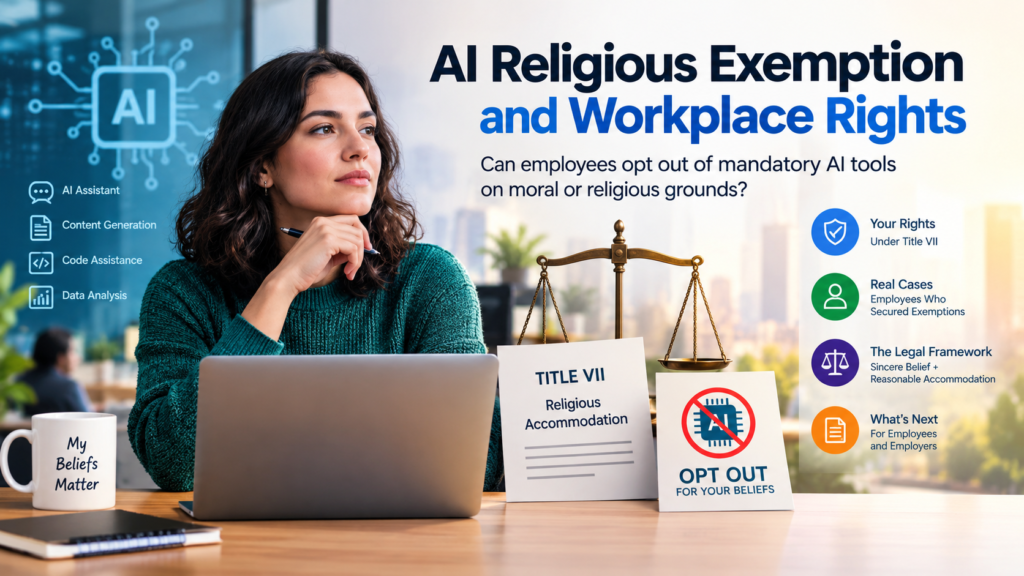
Yes, in some cases. An AI religious exemption is a workplace accommodation that lets an employee decline to personally use AI tools because doing so conflicts with a sincerely held religious or moral belief. As of October 30, 2026, at least two U.S. workers have publicly secured one, and the newest case involves a man who does not believe in any god.
Picture the scenario. Your employer announces a mandatory AI assistant, your manager starts tracking adoption, and you believe that handing your thinking to a machine is wrong. A few years ago, that conversation with HR would have gone nowhere. Today it can be a formal legal request with real precedent behind it.
This guide explains how an AI religious exemption works, walks through the two cases driving the conversation, outlines the law behind them, and shows both employees and employers what to do next.
Key takeaways
- An AI religious exemption rests on existing Title VII religious accommodation law, not on a new AI-specific statute.
- Belief in a god is not required. A nontheistic humanist recently secured a religious exemption from using AI in the workplace. TechCrunch
- Employers must assess each request individually and can decline only for limited reasons, such as undue hardship.
- An exemption usually covers personal use of AI, not every AI-related meeting, colleague, or workflow.
What Is an AI Religious Exemption?
Definition: A Religious Accommodation Applied to AI
An AI religious exemption is ordinary religious accommodation applied to a new kind of job requirement. Employers have long adjusted schedules, dress codes, and duties for employees whose faith conflicts with a workplace rule. The same logic now reaches AI coding assistants, writing generators, and automated analysis tools.
The framework is familiar. HR guidance from BambooHR explains that existing U.S. law already supplies a standard test: is the belief sincerely held, and does it conflict with a workplace requirement? If both answers are yes, the employer must consider whether it can accommodate the employee without undue hardship. Nothing about this process was invented for AI, which is exactly why it is so powerful. Employees do not need a new law. They need to use the one that already exists. bamboohr
What an Exemption Does Not Cover
An exemption is narrow. In the University of Kentucky case, the arrangement does not shield the employee from every AI-related situation. He may still attend meetings where AI is used or work with colleagues who use it, but he does not have to operate AI tools himself. technews
That makes an AI religious exemption a personal-use accommodation rather than a veto over company technology. The employer keeps its AI strategy. The employee keeps the ability to do the job without personally using the tools they object to.
Why Are Employees Seeking an AI Religious Exemption Now?
Direct answer: Three forces have converged. Employers are mandating AI, a prominent moral authority has framed AI as an ethical question, and public precedents show that requests can succeed.
Workplace AI Mandates Create the Conflict
Many employers now expect staff to use AI tools in daily work, and some track adoption. For a worker with ethical objections, a workplace AI mandate turns an abstract belief into a concrete conflict with a job duty. That conflict is the trigger that obliges an employer to consider an accommodation in the first place.
A Prominent Moral Voice Frames the Issue
Pope Leo XIV has decried AI as a threat to human dignity. His encyclical, Magnifica Humanitas, was cited in an HR context to help a software developer gain an exemption from using AI in her coding work. TechCrunchit
The encyclical worked as a reference point, not a membership requirement. The employee in that case is a Unitarian Universalist, not a Catholic. A teaching can inform a belief without the person belonging to the institution that issued it. it
Public Precedent Lowers the Barrier
The newest applicant is described as the first humanist to secure workplace accommodations that let him abstain from AI use, and one of the first people to publicly discuss pursuing them. Public stories matter because they give other employees a roadmap and give HR teams a reason to prepare. Each public win makes the next AI religious exemption request easier to imagine, for employees and HR teams alike. TechCrunch
The Two Cases That Define the Trend
Erin Maus: The Unitarian Universalist Software Engineer
Erin Maus is a software engineer at a large tech-entertainment company in North Carolina, and she secured a religious accommodation in May that lets her opt out of using AI tools at work. Reports describe her as a 34-year-old Unitarian Universalist. corporatecomplianceinsightsaiweekly
According to Gizmodo, she requested the accommodation in April and was granted permission in May. Her objections reportedly combined ethical and environmental concerns rooted in her Unitarian Universalist beliefs. Coverage also says she argued that using AI for coding conflicts with her beliefs about vigilance and responsibility in how technology is deployed. Legal commentators have framed such requests as claims under Title VII of the Civil Rights Act of 1964. Pope’s AI Encyclical Fuels Religious Exemption Claims +3
David Durman: The Humanist University Administrator
David Durman works at the University of Kentucky, where he supports researchers with grant applications. He worked with the American Humanist Association (AHA), a nonprofit that promotes secular humanism, to obtain legal protection against being required to use AI. The university approved his request on September 25, 2026. hypertechnews
His reasoning has two layers. The first is practical and societal. He argues that AI interferes with people’s ability to earn a living, carries environmental costs, and supplants human creativity in ways that threaten art and literature. The second is personal and philosophical. He holds that people become moral agents by actively applying their minds, and that using AI diminishes the capacity for critical thinking. TechCrunchdin3surse
This is a humanist religious exemption in the plainest sense. His belief system centers on human well-being and flourishing rather than on a deity, and the employer treated it as a religious belief for accommodation purposes.
Side-by-Side Comparison
The table below compares the two best-known cases.
| Factor | Erin Maus | David Durman |
|---|---|---|
| Role | Software engineer at a large tech-entertainment company in North Carolina | Administrator supporting grant applications at the University of Kentucky |
| Belief tradition | Unitarian Universalist | Nontheistic humanist |
| Reported concerns | Ethical and environmental concerns, plus responsibility in deploying technology | Livelihoods, environmental costs, human creativity, and moral agency |
| Timeline | Requested in April, granted in May | Approved September 25, 2026 |
| Scope | Opt out of workplace AI tools, including AI-assisted coding | Avoids personally operating AI, but may still attend AI-enabled meetings |
| Why it matters | An early publicly reported case, tied to a papal encyclical | Reported as the first publicly known humanist case |
Sources for the table: Corporate Compliance Insights, Gizmodo’s account, reporting on Durman’s request, and the AHA’s account of the approval. for some workers ai resistance matter faith +3
Do You Need to Believe in a God to Qualify?
Direct answer: No. U.S. religious accommodation law does not require belief in a deity, and the Durman case is a live example.
How Title VII Defines Religion
Title VII of the Civil Rights Act of 1964 prohibits religious discrimination and requires employers to reasonably accommodate sincerely held religious beliefs and practices unless doing so creates undue hardship. Federal guidance has long read “religion” broadly. It covers moral or ethical beliefs about right and wrong that a person holds with the strength of traditional religious views.
That broad reading is what lets a nontheist qualify. A belief does not need a church, a scripture, or a god behind it. It needs to occupy the place in a person’s life that a traditional religion would.
What the American Humanist Association Says
AHA staff attorney Alexandria Huiskens told TechCrunch that concern about AI and human dignity runs through several faiths and traditions, including Catholic teaching, Universalism, and Humanism, and that nontheists are also protected by workplace law. yahoo
The AHA’s message is deliberate. It wants nonreligious employees to know they are not locked out of a process that sounds like it belongs only to churchgoers.
Sincerity Matters More Than Orthodoxy
Employers generally cannot demand that a religious group officially oppose AI before honoring an individual’s belief. The legal question is whether this person sincerely holds this belief. The Maus coverage illustrates the point: she is not Catholic, yet she drew on the Pope’s message about vigilance in how AI is deployed. it
Legal commentators also note that workers may invoke very broad beliefs, from the nature of work itself to views about worshiping idols. Employers will need to evaluate sincerity carefully rather than dismiss unfamiliar theology. That is why the Durman case matters for any AI religious exemption grounded in secular ethics. bloomberglaw
How Strict Is the Law on Employers?
Groff v. DeJoy Raised the Bar
Rejecting these requests will likely be harder for employers after the Supreme Court’s 2023 decision in Groff v. DeJoy, which raised the bar for denying a religious accommodation. bloomberglaw
In plain terms, the Court rejected the older idea that any cost beyond a trivial one counts as undue hardship. Employers now have to show a substantial burden in the context of their particular business. An employer that rejects a request today needs a stronger reason than inconvenience or a preference for uniform tooling.
Individual Assessment Is Required
Requests are decided case by case. A blanket policy that says “everyone must use the approved AI assistant, no exceptions” does not satisfy the accommodation process. The employer must look at the specific employee, the specific belief, and the specific job duties.
How Do Employers Evaluate an AI Religious Exemption Request?
Direct answer: Employers assess each request individually using a four-part process: sincerity, conflict, hardship, and documentation.
- Sincerity. Is the belief genuinely held? Employers look at consistency and context, not at whether the belief is mainstream.
- Conflict. Does a specific job requirement clash with the belief? “Use the AI assistant for all code reviews” is specific. “Be innovative” is not.
- Undue hardship. Could the employer provide an alternative without substantial cost or burden to its business? After Groff, this is a demanding test.
- Documentation and review. The decision, the reasoning, and the terms of the arrangement should be recorded, and the arrangement should be revisited as circumstances change.
What the University of Kentucky Said
The university’s statement shows how an employer can frame its decision. A spokesperson said the university reviews religious accommodation requests individually, considering the employee’s job responsibilities and circumstances. It determined an accommodation could be provided while the employee continues performing the essential functions of his position, and said accommodations may be reviewed as technology and responsibilities evolve. primanews
The key phrase is “essential functions.” If a job can be done without personally using AI, the accommodation is straightforward. If AI use is truly inseparable from the role, the analysis gets harder.Workplace AI Religious Accommodation
AI Workplace Rights
Title VII Religious Accommodation
Religious Exemption From AIWorkplace AI Religious Accommodation
AI Workplace Rights
Title VII Religious Accommodation
Religious Exemption From AI
Examples of Workable Accommodations
These are illustrative, not exhaustive. Real arrangements depend on the role and the workplace.
- Assigning tasks that can be completed without AI tools while the employee keeps their core responsibilities
- Allowing a manual workflow to produce the same deliverable that others produce with AI assistance
- Excusing the employee from personally operating AI while still including them in AI-enabled meetings and team processes
- Scheduling periodic reviews of the arrangement as tools and duties change
- Documenting the terms in writing so the employee, manager, and HR share the same expectations
How Should Employees Prepare an AI Religious Exemption Request?
Direct answer: Be specific about the belief, specific about the conflict, and practical about the solution. A strong AI religious exemption request is specific, written, and realistic.
Put the Belief in Your Own Words
Explain what you believe and why using AI conflicts with it. You do not need to quote scripture or belong to a formal congregation. Durman’s argument centered on moral agency and human flourishing, and Maus’s on responsibility and ethical concerns. Honest, personal language is more credible than borrowed talking points.
Name the Specific Requirement
Point to the exact policy, tool, or expectation that creates the conflict. A narrow request (“I cannot personally use the AI coding assistant mandated for code generation”) is easier to evaluate than a sweeping one (“I object to AI”).
Propose a Workable Arrangement
Suggest how you can still perform the essential functions of your job. Employers are more receptive when the request arrives with a solution attached. Remember that the Kentucky arrangement still lets the employee participate in AI-enabled meetings and work alongside colleagues who use AI.
Get Support Before You File
Durman went through the AHA, which has a staff attorney who works on these questions. Employees might also consult an employment lawyer, a union representative, or an organization connected to their belief tradition. Keep your request in writing and keep copies.
Know When Religion Is the Wrong Frame
Not every objection to AI is religious. Durman himself said he hopes his story encourages people with similar concerns to pursue them in whatever way they find most appropriate, not necessarily through a religious exemption. The table below shows which route generally fits which situation. yahoo
| Basis for the objection | Legal anchor | What you generally need to show |
|---|---|---|
| Religious or moral belief | Title VII | A sincerely held belief that conflicts with a specific job requirement |
| Disability that affects use of a tool | Americans with Disabilities Act | A qualifying condition and a reasonable accommodation request |
| Ethical discomfort without a religious or moral framework | No specific statutory right | Negotiation, policy feedback, or a choice about which employer to work for |
Employees should avoid inflating a preference into a belief. Sincerity is the foundation of the request, and a pretextual claim can undermine both the request and the employee’s credibility.
How Should Employers Prepare for the First AI Religious Exemption Request?
Direct answer: Build the process before the request arrives. BambooHR’s research stresses that a good accommodations process, with HR and managers educated on it, is the key factor. bamboohr
Draft the Policy Before You Need It
BambooHR recommends working with legal counsel to outline how the standard religious accommodation framework (sincerely held belief, conflict with a work requirement, and undue hardship) applies specifically to AI tools. A written policy keeps decisions consistent and defensible, and it gives managers something to follow when an employee raises the issue unexpectedly. bamboohr
Train Managers to Recognize a Request
Employees rarely say “I am requesting a religious accommodation.” They might say, “I can’t do this in good conscience.” Managers need to know that such statements may trigger legal obligations and should be routed to HR immediately rather than answered with a quick no.
Treat Requests as a Workforce Signal
Employee resistance to AI may be more than a public relations problem. A request for an accommodation is a legal matter, but it can also reveal real concerns about how AI is being rolled out. Companies that listen early can address both the legal exposure and the underlying questions. corporatecomplianceinsights
Frequently Asked Questions
Do You Need to Be Religious to Get an AI Religious Exemption?
No. Title VII covers sincerely held moral and ethical beliefs that function like religion in a person’s life. The University of Kentucky case involved a nontheistic humanist whose employer granted an accommodation. What matters is sincerity and a genuine conflict with a job requirement, not belief in a god.
Can an Employer Deny an AI Religious Exemption?
Yes, but only for limited reasons. An employer can decline if it can show the belief is not sincerely held, that no real conflict exists with a job requirement, or that accommodating the employee would cause undue hardship. After Groff v. DeJoy, the hardship standard is demanding, so denials based on convenience alone are risky.
Does an Exemption Mean AI Is Banned From My Workplace?
No. An exemption is personal. The employee avoids personally using AI tools, but the company can keep using them. In the Kentucky case, the employee may still attend meetings where AI is used and collaborate with colleagues who use it.
Is an AI Religious Exemption Permanent?
Not necessarily. The University of Kentucky said accommodations may be reviewed as technology and job responsibilities evolve. If a role changes so that AI use becomes essential, the employer may revisit the arrangement through the same accommodation process. primanews
Who Was the First Person to Win One?
Erin Maus is among the first publicly reported cases, with an accommodation granted in May 2026. David Durman is described as the first humanist to secure such an accommodation. Both cases are recent, and neither is a court ruling, so the legal landscape is still forming. TechCrunch
What Law Applies?
In the United States, Title VII of the Civil Rights Act of 1964 governs religious accommodation in private employment. Public employers like state universities are also covered. State laws may add protections, and requirements differ outside the U.S.
The Bottom Line
An AI religious exemption is no longer hypothetical. Two employees with very different belief systems, one a Unitarian Universalist engineer and one a nontheistic humanist administrator, have each secured the right to avoid personally using AI at work. Both outcomes rest on the same decades-old legal framework: a sincerely held belief, a conflict with a job requirement, and an employer that cannot show undue hardship.
For employees, the lesson is to be sincere, specific, and practical. For employers, it is to build a process now, train managers, and treat each request on its own facts. For everyone else, it is a reminder that the AI debate is no longer only about productivity. It is also about conscience.
AI (କୃତ୍ରିମ ବୁଦ୍ଧିମତ୍ତା) ସମ୍ବନ୍ଧୀୟ ଧାର୍ମିକ ଛାଡ଼: କର୍ମଚାରୀମାନେ କ’ଣ ନୈତିକ କିମ୍ବା ଧାର୍ମିକ ଆଧାରରେ କାର୍ଯ୍ୟକ୍ଷେତ୍ରରେ AI ବ୍ୟବହାର କରିବାକୁ ମନା କରିପାରିବେ?
ହଁ, କିଛି କ୍ଷେତ୍ରରେ ଏହା ସମ୍ଭବ। AI ସମ୍ବନ୍ଧୀୟ ‘ଧାର୍ମିକ ଛାଡ଼’ (Religious Exemption) ହେଉଛି କାର୍ଯ୍ୟକ୍ଷେତ୍ରରେ ଏପରି ଏକ ବ୍ୟବସ୍ଥା, ଯାହା ଜଣେ କର୍ମଚାରୀଙ୍କୁ AI ଉପକରଣ ବ୍ୟବହାର କରିବାକୁ ମନା କରିବାର ଅନୁମତି ଦେଇଥାଏ; ଯଦି ସେହି ବ୍ୟବହାର ତାଙ୍କର ଗଭୀର ଧାର୍ମିକ କିମ୍ବା ନୈତିକ ବିଶ୍ୱାସ ସହିତ ସଂଘର୍ଷ କରୁଥାଏ। ୩୦ ଅକ୍ଟୋବର, ୨୦୨୬ ସୁଦ୍ଧା, ଯୁକ୍ତରାଷ୍ଟ୍ର ଆମେରିକାରେ ଅନ୍ତତଃ ଦୁଇଜଣ କର୍ମଚାରୀ ସର୍ବସାଧାରଣରେ ଏଭଳି ଛାଡ଼ ହାସଲ କରିଛନ୍ତି। ଏଥିମଧ୍ୟରୁ ସର୍ବଶେଷ ଘଟଣାଟି ଜଣେ ଏପରି ବ୍ୟକ୍ତିଙ୍କ ସହ ଜଡ଼ିତ, ଯିଏ କୌଣସି ଈଶ୍ୱରଙ୍କ ଅସ୍ତିତ୍ୱରେ ବିଶ୍ୱାସ କରନ୍ତି ନାହିଁ।
ଏକ ପରିସ୍ଥିତି କଳ୍ପନା କରନ୍ତୁ: ଆପଣଙ୍କ ନିଯୁକ୍ତିଦାତା ଏକ AI ସହାୟକ (AI assistant) ବ୍ୟବହାରକୁ ବାଧ୍ୟତାମୂଳକ କରନ୍ତି, ଆପଣଙ୍କ ମ୍ୟାନେଜର କିଏ ଏହାକୁ ଗ୍ରହଣ କରୁଛି ତାହାର ତଦାରଖ ଆରମ୍ଭ କରନ୍ତି, କିନ୍ତୁ ଆପଣ ଭାବନ୍ତି ଯେ ନିଜର ଚିନ୍ତା କରିବାର କ୍ଷମତାକୁ ଏକ ଯନ୍ତ୍ର (ମେସିନ୍) ହାତରେ ଟେକି ଦେବା ଭୁଲ୍ ଅଟେ। କିଛି ବର୍ଷ ପୂର୍ବେ, HR (ମାନବ ସମ୍ବଳ ବିଭାଗ) ସହିତ ଏଭଳି ଆଲୋଚନା କଲେ କୌଣସି ସମାଧାନ ମିଳୁନଥିଲା। କିନ୍ତୁ ଆଜି, ଏହା ଏକ ଆନୁଷ୍ଠାନିକ ଆଇନଗତ ଅନୁରୋଧ ହୋଇପାରେ, ଯାହା ପଛରେ ପୂର୍ବରୁ ଘଟିଯାଇଥିବା ଉଦାହରଣ (precedent) ମଧ୍ୟ ରହିଛି।
ଏହି ମାର୍ଗଦର୍ଶିକା ବ୍ୟାଖ୍ୟା କରେ ଯେ AI ସମ୍ବନ୍ଧୀୟ ଧାର୍ମିକ ଛାଡ଼ କିପରି କାମ କରେ, ଏହି ବିଷୟ ସହ ଜଡ଼ିତ ଦୁଇଟି ଘଟଣା ଉପରେ ଆଲୋକପାତ କରେ, ଏହା ପଛରେ ଥିବା ଆଇନକୁ ବୁଝାଏ ଏବଂ କର୍ମଚାରୀ ତଥା ନିଯୁକ୍ତିଦାତା ଉଭୟଙ୍କୁ ଆଗକୁ କ’ଣ କରିବା ଉଚିତ୍, ସେ ବିଷୟରେ ପରାମର୍ଶ ଦିଏ।
ମୁଖ୍ୟ ବିଷୟଗୁଡ଼ିକ
AI ସମ୍ବନ୍ଧୀୟ ଧାର୍ମିକ ଛାଡ଼, ‘ଟାଇଟଲ୍ VII’ (Title VII) ଅଧୀନରେ ଥିବା ବିଦ୍ୟମାନ ଧାର୍ମିକ ସୁବିଧା (religious accommodation) ଆଇନ ଉପରେ ଆଧାରିତ; ଏହା କୌଣସି ନୂତନ AI-ନିର୍ଦ୍ଦିଷ୍ଟ ଆଇନ ନୁହେଁ।
ଏଥିପାଇଁ ଈଶ୍ୱରଙ୍କ ଉପରେ ବିଶ୍ୱାସ ରହିବା ଆବଶ ଏହି ପ୍ରକ୍ରିୟାର କୌଣସି ଅଂଶ AI (କୃତ୍ରିମ ବୁଦ୍ଧିମତ୍ତା) ପାଇଁ ସ୍ୱତନ୍ତ୍ର ଭାବେ ସୃଷ୍ଟି କରାଯାଇ ନାହିଁ, ଯେଉଁ କାରଣରୁ ଏହା ଅତ୍ୟନ୍ତ ପ୍ରଭାବଶାଳୀ ଅଟେ। କର୍ମଚାରୀମାନଙ୍କୁ କୌଣସି ନୂତନ ଆଇନର ଆବଶ୍ୟକତା ନାହିଁ; ବରଂ ସେମାନେ ବର୍ତ୍ତମାନ ଉପଲବ୍ଧ ଥିବା ଆଇନକୁ ବ୍ୟବହାର କରିପାରିବେ।
ଧାର୍ମିକ ଆଧାରରେ AI ବ୍ୟବହାରରୁ ମିଳୁଥିବା ‘ଛାଡ଼’ (Exemption) କ’ଣ ଅନ୍ତର୍ଭୁକ୍ତ କରେ ନାହିଁ?
ଏହି ‘ଛାଡ଼’ର ପରିସର ସୀମିତ ଅଟେ। ‘ୟୁନିଭରସିଟି ଅଫ୍ କେଣ୍ଟକି’ (University of Kentucky) ମାମଲାରେ, ଏହି ବ୍ୟବସ୍ଥା କର୍ମଚାରୀଙ୍କୁ AI ସମ୍ବନ୍ଧୀୟ ସମସ୍ତ ପରିସ୍ଥିତିରୁ ସୁରକ୍ଷା ଦିଏ ନାହିଁ। ସେ ଏପରି ବୈଠକରେ ଯୋଗ ଦେଇପାରନ୍ତି ଯେଉଁଠାରେ AI ବ୍ୟବହୃତ ହେଉଛି, କିମ୍ବା ସେହି ସହକର୍ମୀମାନଙ୍କ ସହ କାମ କରିପାରନ୍ତି ଯେଉଁମାନେ AI ବ୍ୟବହାର କରନ୍ତି; କିନ୍ତୁ ତାଙ୍କୁ ନିଜେ AI ଉପକରଣଗୁଡ଼ିକ ଚଳାଇବାକୁ ପଡ଼ିବ ନାହିଁ।
ଏହାର ଅର୍ଥ ହେଉଛି, ଧାର୍ମିକ ଆଧାରରେ AI ବ୍ୟବହାରରୁ ମିଳୁଥିବା ଏହି ‘ଛାଡ଼’ କମ୍ପାନୀର ପ୍ରଯୁକ୍ତିବିଦ୍ୟା ଉପରେ କୌଣସି ‘ଭିଟୋ’ (ବାରଣ କରିବାର ଅଧିକାର) ନୁହେଁ, ବରଂ ଏହା କର୍ମଚାରୀଙ୍କ ବ୍ୟକ୍ତିଗତ ବିଶ୍ୱାସକୁ ସମ୍ମାନ ଦେବା ପାଇଁ ଏକ ସ୍ୱତନ୍ତ୍ର ବ୍ୟବସ୍ଥା ଅଟେ। ଏହା ଦ୍ୱାରା ନିଯୁକ୍ତିଦାତା ନିଜର AI ରଣନୀତି ବଜାୟ ରଖିପାରନ୍ତି ଏବଂ କର୍ମଚାରୀ ମଧ୍ୟ ନିଜର ଆପତ୍ତି ଥିବା ଉପକରଣଗୁଡ଼ିକୁ ବ୍ୟକ୍ତିଗତ ଭାବେ ବ୍ୟବହାର ନ କରି ନିଜର କାର୍ଯ୍ୟ ସମ୍ପାଦନ କରିପାରନ୍ତି।
କର୍ମଚାରୀମାନେ ବର୍ତ୍ତମାନ କାହିଁକି ଧାର୍ମିକ ଆଧାରରେ AI ବ୍ୟବହାରରୁ ‘ଛାଡ଼’ ପାଇବାକୁ ଚାହୁଁଛନ୍ତି?
ସିଧାସଳଖ ଉତ୍ତର: ଏଥିପାଇଁ ତିନୋଟି କାରଣ ଦାୟୀ। ପ୍ରଥମତଃ, ନିଯୁକ୍ତିଦାତାମାନେ AI ବ୍ୟବହାରକୁ ବାଧ୍ୟତାମୂଳକ କରୁଛନ୍ତି; ଦ୍ୱିତୀୟତଃ, ଜଣେ ପ୍ରମୁଖ ନୈତିକ ବ୍ୟକ୍ତିତ୍ୱ AI କୁ ଏକ ନୈତିକ ପ୍ରଶ୍ନ ଭାବରେ ଉପସ୍ଥାପନ କରିଛନ୍ତି; ଏବଂ ତୃତୀୟତଃ, ପୂର୍ବରୁ ଘଟିଥିବା ଘଟଣାଗୁଡ଼ିକ ଦର୍ଶାଉଛି ଯେ ଏଭଳି ଅନୁରୋଧ ସଫଳ ହୋଇପାରେ।
କର୍ମକ୍ଷେତ୍ରରେ AI ବ୍ୟବହାର ବାଧ୍ୟତାମୂଳକ ହେବା ହିଁ ବିବାଦର ମୂଳ କାରଣ
ଅନେକ ନିଯୁକ୍ତିଦାତା ବର୍ତ୍ତମାନ କର୍ମଚାରୀମାନଙ୍କଠାରୁ ଦୈନନ୍ଦିନ କାର୍ଯ୍ୟରେ AI ଉ ସାର୍ବଜନୀନ କାହାଣୀଗୁଡ଼ିକ ଗୁରୁତ୍ୱପୂର୍ଣ୍ଣ କାରଣ ସେମାନେ ଅନ୍ୟ କର୍ମଚାରୀମାନଙ୍କୁ ଏକ ରୋଡମ୍ୟାପ୍ ଦିଅନ୍ତି ଏବଂ HR ଦଳଗୁଡ଼ିକୁ ପ୍ରସ୍ତୁତ ହେବାର କାରଣ ଦିଅନ୍ତି। ପ୍ରତ୍ୟେକ ସାର୍ବଜନୀନ ବିଜୟ ପରବର୍ତ୍ତୀ AI ଧାର୍ମିକ ଛାଡ଼ ଅନୁରୋଧକୁ କଳ୍ପନା କରିବା ସହଜ କରିଥାଏ, କର୍ମଚାରୀ ଏବଂ HR ଦଳଗୁଡ଼ିକ ପାଇଁ ସମାନ।
ଧାରାକୁ ପରିଭାଷିତ କରୁଥିବା ଦୁଇଟି ମାମଲା
ଏରିନ୍ ମାଉସ୍: ୟୁନିଟାରିଆନ୍ ୟୁନିଭର୍ସାଲିଷ୍ଟ ସଫ୍ଟୱେର୍ ଇଞ୍ଜିନିୟର
ଏରିନ୍ ମାଉସ୍ ଉତ୍ତର କାରୋଲିନାର ଏକ ବଡ଼ ଟେକ୍-ମନୋରଞ୍ଜନ କମ୍ପାନୀରେ ଜଣେ ସଫ୍ଟୱେର୍ ଇଞ୍ଜିନିୟର, ଏବଂ ସେ ମେ ମାସରେ ଏକ ଧାର୍ମିକ ଆବାସ ପାଇଥିଲେ ଯାହା ତାଙ୍କୁ କାର୍ଯ୍ୟସ୍ଥଳରେ AI ଉପକରଣ ବ୍ୟବହାର କରିବାରୁ ବାଦ୍ ଦେବାକୁ ଅନୁମତି ଦିଏ। ରିପୋର୍ଟଗୁଡ଼ିକ ତାଙ୍କୁ ଜଣେ 34 ବର୍ଷୀୟ ୟୁନିଟାରିଆନ୍ ୟୁନିଭର୍ସାଲିଷ୍ଟ ଭାବରେ ବର୍ଣ୍ଣନା କରେ।
Gizmodo ଅନୁଯାୟୀ, ସେ ଏପ୍ରିଲରେ ଆବାସ ପାଇଁ ଅନୁରୋଧ କରିଥିଲେ ଏବଂ ମେ ମାସରେ ଅନୁମତି ପାଇଥିଲେ। ତାଙ୍କର ଆପତ୍ତି ରିପୋର୍ଟ କରାଯାଇଛି।
ତାଙ୍କର ‘ୟୁନିଟାରିଆନ୍ ୟୁନିଭର୍ସାଲିଷ୍ଟ’ (Unitarian Universalist) ବିଶ୍ୱାସ ଉପରେ ଆଧାରିତ ନୈତିକ ଏବଂ ପରିବେଶଗତ ଚିନ୍ତାଧାରା ଏଥିରେ ଅନ୍ତର୍ଭୁକ୍ତ। ରିପୋର୍ଟ ଅନୁଯାୟୀ, ସେ ଯୁକ୍ତି ଦର୍ଶାଇଛନ୍ତି ଯେ କୋଡିଂ (coding) ପାଇଁ AI ବ୍ୟବହାର କରିବା, ପ୍ରଯୁକ୍ତିବିଦ୍ୟାର ପ୍ରୟୋଗ କ୍ଷେତ୍ରରେ ସତର୍କତା ଏବଂ ଦାୟିତ୍ୱବୋଧ ସମ୍ବନ୍ଧୀୟ ତାଙ୍କର ବିଶ୍ୱାସ ସହ ବିରୋଧାଭାସ ସୃଷ୍ଟି କରେ। ଆଇନ ବିଶେଷଜ୍ଞମାନେ ଏଭଳି ଅନୁରୋଧକୁ ୧୯୬୪ ମସିହାର ‘ସିଭିଲ୍ ରାଇଟ୍ସ ଆକ୍ଟ’ (Civil Rights Act) ର ‘ଟାଇଟଲ୍ VII’ (Title VII) ଅଧୀନରେ ଏକ ଦାବି ଭାବରେ ବ୍ୟାଖ୍ୟା କରିଛନ୍ତି।
ପୋପ୍ଙ୍କ AI ସମ୍ବନ୍ଧୀୟ ‘ଏନସାଇକ୍ଲିକାଲ୍’ (ଧାର୍ମିକ ନିର୍ଦ୍ଦେଶନାମା) ଧାର୍ମିକ ଆଧାରରେ ଛାଡ଼ (religious exemption) ପାଇଁ ଦାବିକୁ ଉତ୍ସାହିତ କରିଛି।
ଡେଭିଡ୍ ଡର୍ମାନ: ଜଣେ ମାନବବାଦୀ ବିଶ୍ୱବିଦ୍ୟାଳୟ ପ୍ରଶାସକ
ଡେଭିଡ୍ ଡର୍ମାନ ‘ୟୁନିଭର୍ସିଟି ଅଫ୍ କେଣ୍ଟକି’ (University of Kentucky) ରେ କାର୍ଯ୍ୟ କରନ୍ତି, ଯେଉଁଠାରେ ସେ ଗବେଷକମାନଙ୍କୁ ଅନୁଦାନ (grant) ପାଇଁ ଆବେଦନ କରିବାରେ ସହାୟତା କରନ୍ତି। AI ବ୍ୟବହାର କରିବାକୁ ବାଧ୍ୟ କରାଯିବା ବିରୁଦ୍ଧରେ ଆଇନଗତ ସୁରକ୍ଷା ପାଇବା ପାଇଁ, ସେ ‘ଆମେରିକାନ୍ ହ୍ୟୁମାନିଷ୍ଟ ଆସୋସିଏସନ୍’ (AHA) ସହ ମିଶି କାର୍ଯ୍ୟ କରିଥିଲେ। ଏହା ଏକ ଅଣ-ଲାଭକାରୀ ସଂସ୍ଥା ଯାହା ‘ଧର୍ମନିରପେକ୍ଷ ମାନବବାଦ’ (secular humanism) କୁ ପ୍ରୋତ୍ସାହିତ କରେ। ବିଶ୍ୱବିଦ୍ୟାଳୟ ୨୦୨୬ ମସିହା ସେପ୍ଟେମ୍ବର ୨୫ ତାରିଖରେ ତାଙ୍କ ଅନୁରୋଧକୁ ଗ୍ରହଣ କରିଥିଲା।
ତାଙ୍କ ଯୁକ୍ତିର ଦୁଇଟି ଦିଗ ରହିଛି। ପ୍ରଥମଟି ହେଉଛି ବ୍ୟାବହାରିକ ଏବଂ ସାମାଜିକ। ସେ ଯୁକ୍ତି କରନ୍ତି ଯେ AI ଲୋକଙ୍କ ଜୀବିକା ଅର୍ଜନ କରିବାର କ୍ଷମତାରେ ବାଧା ସୃଷ୍ଟି କରେ, ପରିବେଶ ଉପରେ ନକାରାତ୍ମକ ପ୍ରଭାବ ପକାଏ ଏବଂ ମାନବୀୟ ସୃଜନଶୀଳତାକୁ ଏପରି ଭାବରେ ବିସ୍ଥାପିତ କରେ ଯାହା କଳା ଓ ସାହିତ୍ୟ ପାଇଁ ବିପଦ ସୃଷ୍ଟି କରେ। ଦ୍ୱିତୀୟଟି ହେଉଛି ବ୍ୟକ୍ତିଗତ ଏବଂ ଦାର୍ଶନିକ। ତାଙ୍କ ମତରେ, ମଣିଷ ନିଜ ମନକୁ ସକ୍ରିୟ ଭାବରେ ପ୍ରୟୋଗ କରି ନୈତିକ ନିଷ୍ପତ୍ତି ନେବାକୁ ସକ୍ଷମ ହୁଏ, କିନ୍ତୁ AI ର ବ୍ୟବହାର ‘କ୍ଷମତାସମ୍ପନ୍ନ ଚିନ୍ତନ’ (critical thinking) କରିବାର କ୍ଷମତାକୁ ହ୍ରାସ କରିଦିଏ।
ଏହା ସବୁଠାରୁ ସ୍ପଷ୍ଟ ଅ ବିଷୟ | ଏରିନ୍ ମସ୍ (Erin Maus) | ଡେଭିଡ୍ ଡର୍ମାନ୍ (David Durman)
ଭୂମିକା | ଉତ୍ତର କାରୋଲିନାର ଏକ ବଡ଼ ପ୍ରଯୁକ୍ତିବିଦ୍ୟା-ମନୋରଞ୍ଜନ କମ୍ପାନୀରେ ସଫ୍ଟୱେର୍ ଇଞ୍ଜିନିୟର | କେଣ୍ଟକି ବିଶ୍ୱବିଦ୍ୟାଳୟରେ ଅନୁଦାନ ଆବେଦନ ପ୍ରକ୍ରିୟାରେ ସହାୟତା କରୁଥିବା ପ୍ରଶାସକ
ଧାର୍ମିକ/ବିଶ୍ୱାସଗତ ପରମ୍ପରା |
ୟୁନିଟାରିଆନ୍ ୟୁନିଭର୍ସାଲିଷ୍ଟ (Unitarian Universalist) | ଈଶ୍ୱର-ବିଶ୍ୱାସୀ ନୁହଁନ୍ତି (Nontheistic) ଏପରି ମାନବବାଦୀ (Humanist) ଉତ୍ଥାପିତ ଚିନ୍ତା | ନୈତିକ ଓ ପରିବେଶଗତ ଚିନ୍ତା, ଏବଂ ପ୍ରଯୁକ୍ତିବିଦ୍ୟା ପ୍ରୟୋଗ କ୍ଷେତ୍ରରେ ଦାୟିତ୍ୱବୋଧ | ଜୀବିକା, ପରିବେଶଗତ ମୂଲ୍ୟ (କ୍ଷତି), ମାନବୀୟ ସୃଜନଶୀଳତା ଏବଂ ନୈତିକ ନିଷ୍ପତ୍ତି ନେବାର କ୍ଷମତା
ସମୟସୀମା | ଏପ୍ରିଲ୍ରେ ଅନୁରୋଧ କରାଯାଇଥିଲା, ମେ’ ମାସରେ ଅନୁମତି ମିଳିଲା | ୨୫ ସେପ୍ଟେମ୍ବର, ୨୦୨୬ ରେ ଅନୁମୋଦିତ ହେଲା ପରିସର |
କର୍ମକ୍ଷେତ୍ରରେ AI (କୃତ୍ରିମ ବୁଦ୍ଧିମତ୍ତା) ଉପକରଣଗୁଡ଼ିକର ବ୍ୟବହାରରୁ ଓହରି ରହିବା (ଯେପରିକି AI ସହାୟତାରେ କୋଡିଂ କରିବା) | ନିଜେ AI ପରିଚାଳନା କରିବାରୁ ଦୂରେଇ ରୁହନ୍ତି, କିନ୍ତୁ AI ସହାୟକ ବୈଠକଗୁଡ଼ିକରେ ଯୋଗ ଦେଇପାରନ୍ତି
ଏହା କାହିଁକି ଗୁରୁତ୍ୱପୂର୍ଣ୍ଣ | ଏହା ଏକ ପ୍ରାରମ୍ଭିକ ସାର୍ବଜନୀନ ଘଟଣା, ଯାହା ପୋପ୍ଙ୍କ ଏକ ଧାର୍ମିକ ନିର୍ଦ୍ଦେଶନାମା (encyclical) ସହ ଜଡ଼ିତ | ଏହାକୁ ପ୍ରଥମ ଜଣାଶୁଣା ‘ମାନବବାଦୀ’ (humanist) ମାମଲା ଭାବରେ ଉଲ୍ଲେଖ କରାଯାଇଛି
ସାରଣୀ ପାଇଁ ଉତ୍ସ: ‘କର୍ପୋରେଟ୍ କମ୍ପ୍ଲାଏନ୍ସ ଇନ୍ସାଇଟ୍ସ୍’ (Corporate Compliance Insights), ‘ଗିଜ୍ମୋଡୋ’ (Gizmodo) ର ରିପୋର୍ଟ (ଡର୍ମାନ୍ଙ୍କ ଅନୁରୋଧ ସମ୍ବନ୍ଧୀୟ), ଏବଂ ‘ଆମେରିକାନ୍ ହ୍ୟୁମାନିଷ୍ଟ ଆସୋସିଏସନ୍’ (AHA) ଦ୍ୱାରା ଅନୁମୋଦନ ସମ୍ବନ୍ଧୀୟ ବିବରଣୀ।
କିଛି କର୍ମଚାରୀଙ୍କ ପାଇଁ AI ପ୍ରତି ବିରୋଧ ଭାବନା ତାଙ୍କ ବିଶ୍ୱାସ ସହ ଜଡ଼ିତ ହୋଇପାରେ।
ଯୋଗ୍ୟ ବିବେଚିତ ହେବା ପାଇଁ କ’ଣ ଈଶ୍ୱରଙ୍କ ଉପରେ ବିଶ୍ୱାସ ରଖିବା ଆବଶ୍ୟକ?
ସିଧାସଳଖ ଉତ୍ତର: ନା। ଆମେରିକାର ଧାର୍ମିକ ସୁବିଧା/ସମାଯୋଜନ ସମ୍ବନ୍ଧୀୟ ଆଇନ୍ (religious accommodation law) ଅନୁଯାୟୀ କୌଣସି ଦେବତା ବା ଈଶ୍ୱ ଏହା ଧର୍ମନିରପେକ୍ଷ କର୍ମଚାରୀମାନଙ୍କୁ ଜଣାଇବାକୁ ଚାହେଁ ଯେ, ଯେଉଁ ପ୍ରକ୍ରିୟାଟି କେବଳ ଧର୍ମସ୍ଥଳୀକୁ ଯାଉଥିବା ଲୋକଙ୍କ ପାଇଁ ଉଦ୍ଦିଷ୍ଟ ବୋଲି ମନେହୁଏ, ସେଥିରୁ ସେମାନେ ବଞ୍ଚିତ ନୁହନ୍ତି।
ପାରମ୍ପରିକ ଧାର୍ମିକ ନିୟମ ପାଳନ ଅପେକ୍ଷା ଆନ୍ତରିକତା ଅଧିକ ଗୁରୁତ୍ୱପୂର୍ଣ୍ଣ
କୌଣସି ବ୍ୟକ୍ତିଙ୍କ ବିଶ୍ୱାସକୁ ସମ୍ମାନ ଦେବା ପୂର୍ବରୁ, ନିଯୁକ୍ତିଦାତାମାନେ ସାଧାରଣତଃ ଏହା ଦାବି କରିପାରିବେ ନାହିଁ ଯେ, ସେହି ବ୍ୟକ୍ତିଙ୍କ ଧାର୍ମିକ ଗୋଷ୍ଠୀକୁ ଆନୁଷ୍ଠାନିକ ଭାବରେ ‘କୃତ୍ରିମ ବୁଦ୍ଧିମତ୍ତା’ (AI) ର ବିରୋଧ କରିବାକୁ ପଡ଼ିବ। ଆଇନଗତ ପ୍ରଶ୍ନଟି ହେଉଛି, ସମ୍ପୃକ୍ତ ବ୍ୟକ୍ତି ଜଣକ କ’ଣ ପ୍ରକୃତରେ ଏହି ବିଶ୍ୱାସକୁ ଆନ୍ତରିକତାର ସହ ପାଳନ କରନ୍ତି? ‘ମାଉସ୍’ (Maus) ସମ୍ବନ୍ଧୀୟ ଘଟଣାଟି ଏହାକୁ ସ୍ପଷ୍ଟ କରେ: ସେ କ୍ୟାଥୋଲିକ୍ ଧର୍ମାବଲମ୍ବୀ ନୁହଁନ୍ତି, ତଥାପି ସେ AI ର ପ୍ରୟୋଗ କ୍ଷେତ୍ରରେ ସତର୍କତା ଅବଲମ୍ବନ କରିବା ନେଇ ପୋପ୍ (Pope) ଦେଇଥିବା ବାର୍ତ୍ତାକୁ ଆଧାର କରିଥିଲେ।
ଆଇନ ବିଶେଷଜ୍ଞମାନେ ମଧ୍ୟ ଉଲ୍ଲେଖ କରନ୍ତି ଯେ, କର୍ମଚାରୀମାନେ ବିଭିନ୍ନ ପ୍ରକାରର ବ୍ୟାପକ ବିଶ୍ୱାସକୁ ଆଧାର କରିପାରନ୍ତି—ଯେପରିକି କାର୍ଯ୍ୟର ପ୍ରକୃତି ଠାରୁ ଆରମ୍ଭ କରି ମୂର୍ତ୍ତି ପୂଜା ସମ୍ବନ୍ଧୀୟ ମତ ପର୍ଯ୍ୟନ୍ତ। ନିଯୁକ୍ତିଦାତାମାନଙ୍କୁ କୌଣସି ଅପରିଚିତ ଧାର୍ମିକ ବିଚାରଧାରାକୁ ଖାରଜ କରିବା ପରିବର୍ତ୍ତେ, ସେହି ବିଶ୍ୱାସ ପଛରେ ଥିବା ଆନ୍ତରିକତାକୁ ଯତ୍ନର ସହ ବିଚାର କରିବାକୁ ପଡ଼ିବ। ଏହି କାରଣରୁ, ଧର୍ମନିରପେକ୍ଷ ନୈତିକତା ଉପରେ ଆଧାରିତ AI ସମ୍ବନ୍ଧୀୟ ଧାର୍ମିକ ରିହାତି (religious exemption) ପାଇଁ ‘ଡର୍ମାନ’ (Durman) ମାମଲାଟି ଗୁରୁତ୍ୱପୂର୍ଣ୍ଣ ଅଟେ।
ନିଯୁକ୍ତିଦାତାଙ୍କ ପାଇଁ ଆଇନ କେତେ କଠୋର?
‘ଗ୍ରଫ୍ ବନାମ ଡିଜୟ’ (Groff v. DeJoy) ମାମଲା ମାନଦଣ୍ଡକୁ ଅଧିକ କଠୋର କରିଛି
‘ଗ୍ରଫ୍ ବନାମ ଡିଜୟ’ ମାମଲାରେ ସୁପ୍ରିମକୋର୍ଟଙ୍କ ୨୦୨୩ ରାୟ ପରେ, ନିଯୁକ୍ତିଦାତାଙ୍କ ପକ୍ଷରୁ ଏଭଳି ଅନୁରୋଧଗୁଡ଼ିକୁ ପ୍ରତ୍ୟାଖ୍ୟାନ କରିବା ଅଧିକ କଷ୍ଟକର ହୋଇପାରେ; କାରଣ ଏହି ରାୟ ଧାର୍ମିକ ସୁବିଧା (religious accommodation) ପ୍ରଦାନ କରିବାକୁ ମନା କରିବା ପାଇଁ ଆବଶ୍ୟକ ମାନଦଣ୍ଡକୁ ଅଧିକ କଠୋର କରିଦେଇଛି।
ସରଳ ଭାଷାରେ କହିଲେ, କୋର୍ଟ ସେହି ପୁରୁଣା
ସୁବିଧା କିମ୍ବା ସମାନ ଉପକରଣ ବ୍ୟବହାର କରିବାର ପସନ୍ଦ।
ବ୍ୟକ୍ତିଗତ ମୂଲ୍ୟାଙ୍କନ ଆବଶ୍ୟକ
ଅନୁରୋଧଗୁଡ଼ିକ ଉପରେ ପ୍ରତ୍ୟେକ କ୍ଷେତ୍ର ପାଇଁ ପୃଥକ ଭାବରେ ନିଷ୍ପତ୍ତି ନିଆଯାଏ। ଏକ ସାଧାରଣ ନୀତି ଯେଉଁଥିରେ କୁହାଯାଇଥାଏ ଯେ “ସମସ୍ତଙ୍କୁ ଅନୁମୋଦିତ AI ସହାୟକ (AI assistant) ବ୍ୟବହାର କରିବାକୁ ପଡ଼ିବ, ଏଥିରେ କୌଣସି ବ୍ୟତିକ୍ରମ ନାହିଁ” — ତାହା ଉପଯୁକ୍ତ ବ୍ୟବସ୍ଥା (accommodation) ପ୍ରଦାନ କରିବାର ପ୍ରକ୍ରିୟାକୁ ପୂରଣ କରେ ନାହିଁ। ନିଯୁକ୍ତିଦାତାଙ୍କୁ ନିର୍ଦ୍ଦିଷ୍ଟ କର୍ମଚାରୀ, ତାଙ୍କର ନିର୍ଦ୍ଦିଷ୍ଟ ବିଶ୍ୱାସ ଏବଂ ତାଙ୍କର ନିର୍ଦ୍ଦିଷ୍ଟ କାର୍ଯ୍ୟ ଦାୟିତ୍ୱଗୁଡ଼ିକୁ ବିଚାରକୁ ନେବାକୁ ପଡ଼ିବ।
ନିଯୁକ୍ତିଦାତାମାନେ ଧାର୍ମିକ କାରଣରୁ AI ବ୍ୟବହାରରୁ ମୁକ୍ତି (religious exemption) ପାଇଁ ଆସିଥିବା ଅନୁରୋଧକୁ କିପରି ମୂଲ୍ୟାଙ୍କନ କରନ୍ତି?
ସିଧାସଳଖ ଉତ୍ତର: ନିଯୁକ୍ତିଦାତାମାନେ ପ୍ରତ୍ୟେକ ଅନୁରୋଧକୁ ଚାରୋଟି ପର୍ଯ୍ୟାୟ ବିଶିଷ୍ଟ ପ୍ରକ୍ରିୟା ମାଧ୍ୟମରେ ପୃଥକ ଭାବରେ ମୂଲ୍ୟାଙ୍କନ କରନ୍ତି: ଆନ୍ତରିକତା, ସଂଘର୍ଷ, ଅତ୍ୟଧିକ ଅସୁବିଧା (hardship), ଏବଂ ଦସ୍ତାବିଜ।
ଆନ୍ତରିକତା: କର୍ମଚାରୀଙ୍କ ବିଶ୍ୱାସ କ’ଣ ପ୍ରକୃତ ଅଟେ? ନିଯୁକ୍ତିଦାତାମାନେ ଏହା ଦେଖନ୍ତି ଯେ ବିଶ୍ୱାସଟି ସ୍ଥିର ଏବଂ ପ୍ରସଙ୍ଗ ସହ ସଙ୍ଗତ କି ନୁହେଁ; ସେମାନେ ଏହା ଦେଖନ୍ତି ନାହିଁ ଯେ ସେହି ବିଶ୍ୱାସଟି ସାଧାରଣତଃ ଅଧିକାଂଶ ଲୋକଙ୍କ ଦ୍ୱାରା ଗ୍ରହଣୀୟ କି ନୁହେଁ।
ସଂଘର୍ଷ: କାର୍ଯ୍ୟର କୌଣସି ନିର୍ଦ୍ଦିଷ୍ଟ ଆବଶ୍ୟକତା କ’ଣ ସେହି ବିଶ୍ୱାସ ସହିତ ବିରୋଧାଭାସ ସୃଷ୍ଟି କରୁଛି? ଉଦାହରଣ ସ୍ୱରୂପ, “ସମସ୍ତ କୋଡ୍ ସମୀକ୍ଷା (code reviews) ପାଇଁ AI ସହାୟକ ବ୍ୟବହାର କରନ୍ତୁ” — ଏହା ଏକ ନିର୍ଦ୍ଦିଷ୍ଟ ନିର୍ଦ୍ଦେଶ। କିନ୍ତୁ “ନୂତନତ୍ୱ ଆଣନ୍ତୁ” (Be innovative) — ଏହା ନିର୍ଦ୍ଦିଷ୍ଟ ନୁହେଁ।
ଅତ୍ୟଧିକ ଅସୁବିଧା (Undue hardship): କ’ଣ ନିଯୁକ୍ତିଦାତା ନିଜ ବ୍ୟବସାୟ ଉପରେ ଅତ୍ୟଧିକ ଆର୍ଥିକ ବୋଝ କିମ୍ବା ଅସୁବିଧା ନ ପକାଇ କୌଣସି ବିକଳ୍ପ ବ୍ୟବସ୍ଥା କରିପାରିବେ? ‘ଗ୍ରଫ୍’ (Groff) ମାମଲାର ରାୟ ପରେ, ଏହା ଏକ କଠୋର ପରୀକ୍ଷା ଅଟେ।
ଦସ୍ତାବିଜ ଏବଂ ସମୀକ୍ଷା: ନିଆଯାଇଥିବା ନିଷ୍ପତ୍ତି, ଏହାର କାରଣ ଏବଂ ବୁଝାମଣାର ସର୍ତ୍ତାବଳ କର୍ମଚାରୀଙ୍କ ମୁଖ୍ୟ ଦାୟିତ୍ୱଗୁଡ଼ିକୁ ଅକ୍ଷୁର୍ଣ୍ଣ ରଖି, ଏପରି କାର୍ଯ୍ୟ ପ୍ରଦାନ କରିବା ଯାହା AI (କୃତ୍ରିମ ବୁଦ୍ଧିମତ୍ତା) ଉପକରଣ ବିନା ସମ୍ପାଦନ କରାଯାଇପାରିବ।
ଅନ୍ୟମାନେ AI ସହାୟତାରେ ଯେଉଁ ଫଳାଫଳ (deliverable) ପ୍ରସ୍ତୁତ କରନ୍ତି, ସେହି ସମାନ ଫଳାଫଳକୁ AI ବ୍ୟବହାର ନକରି (ମାନୁଆଲ୍ ପଦ୍ଧତିରେ) ପ୍ରସ୍ତୁତ କରିବାକୁ ଅନୁମତି ଦେବା।
କର୍ମଚାରୀଙ୍କୁ ବ୍ୟକ୍ତିଗତ ଭାବେ AI ପରିଚାଳନା କରିବାରୁ ମୁକ୍ତ ରଖିବା, କିନ୍ତୁ ତାଙ୍କୁ AI-ଯୁକ୍ତ ବୈଠକ ଏବଂ ଦଳଗତ ପ୍ରକ୍ରିୟାରେ ଅନ୍ତର୍ଭୁକ୍ତ କରିବା।
ଉପକରଣ ଏବଂ ଦାୟିତ୍ୱରେ ପରିବର୍ତ୍ତନ ଆସିବା ସହ, ଏହି ବ୍ୟବସ୍ଥାର ନିୟମିତ ସମୀକ୍ଷା ପାଇଁ ସମୟ ନିର୍ଦ୍ଧାରଣ କରିବା।
ଏହି ସର୍ତ୍ତଗୁଡ଼ିକୁ ଲିଖିତ ଆକାରରେ ରଖିବା, ଯାହାଦ୍ୱାରା କର୍ମଚାରୀ, ପରିଚାଳକ (ମ୍ୟାନେଜର) ଏବଂ HR (ମାନବ ସମ୍ବଳ ବିଭାଗ) ସମସ୍ତଙ୍କର ଆଶା ଓ ବୁଝାମଣା ସମାନ ରହିବ।
କର୍ମଚାରୀମାନେ କିପରି AI ସମ୍ବନ୍ଧୀୟ ‘ଧାର୍ମିକ ଛାଡ଼’ (religious exemption) ପାଇଁ ଅନୁରୋଧ ପ୍ରସ୍ତୁତ କରିବେ?
ସିଧାସଳଖ ଉତ୍ତର: ନିଜର ବିଶ୍ୱାସ ବିଷୟରେ ସ୍ପଷ୍ଟ ହୁଅନ୍ତୁ, କେଉଁ କାରଣରୁ ସଂଘର୍ଷ (ବିରୋଧାଭାସ) ସୃଷ୍ଟି ହେଉଛି ତାହା ନିର୍ଦ୍ଦିଷ୍ଟ ଭାବେ ଦର୍ଶାନ୍ତୁ ଏବଂ ସମାଧାନ ପାଇଁ ବ୍ୟାବହାରିକ ପନ୍ଥା ପ୍ରସ୍ତାବ ଦିଅନ୍ତୁ। ଏକ ଦୃଢ଼ ‘ଧାର୍ମିକ ଛାଡ଼’ ଅନୁରୋଧ ସୁନିର୍ଦ୍ଦିଷ୍ଟ, ଲିଖିତ ଏବଂ ବାସ୍ତବସମ୍ମତ ହୋଇଥାଏ।
ନିଜ ବିଶ୍ୱାସକୁ ନିଜ ଶବ୍ଦରେ ବ୍ୟକ୍ତ କରନ୍ତୁ
ଆପଣ କ’ଣ ବିଶ୍ୱାସ କରନ୍ତି ଏବଂ AI ବ୍ୟବହାର କରିବା କିପରି ସେହି ବିଶ୍ୱାସ ସହ ସଂଘର୍ଷ କରୁଛି, ତାହା ବ୍ୟାଖ୍ୟା କରନ୍ତୁ। ଏଥିପାଇଁ ଧାର୍ମିକ ଗ୍ରନ୍ଥରୁ ଉଦ୍ଧୃତି ଦେବା କିମ୍ବା କୌଣସି ନିର୍ଦ୍ଦିଷ୍ଟ ଧାର୍ମିକ ସମ୍ପ୍ରଦାୟର ସଦସ୍ୟ ହେବା ଆବଶ୍ୟକ ନୁହେଁ। ଡର୍ମାନ (Durman) ନୈତିକ ସ୍ୱାଧୀନତା (moral agency) ଏବଂ ମାନବୀୟ ବିକାଶ ଉପରେ ଗୁରୁତ୍ୱ ଦେଇଥିଲେ, ଯେତେବେଳେ କି ମାଉସ୍ (Maus) ଦାୟିତ୍ୱବୋଧ ଏବଂ ନୈତିକ ଚିନ୍ତାଧାରା ଉପରେ ଧ୍ୟାନ ଦେଇଥିଲେ। ଅନ୍ୟଠାରୁ ଶୁଣା କଥା ବା ଧାର କରାଯାଇଥିବା ଯୁକ୍ତି ଅପେକ୍ଷା, ନିଜର ସଚ୍ଚୋଟ ଏବଂ ବ୍ୟକ୍ତିଗତ ଭାଷା ଅଧିକ ବିଶ୍ୱାସଯୋଗ୍ୟ ହୋଇଥା yahoo
ଆପତ୍ତିର ଆଧାର ଆଇନଗତ ଆଙ୍କର ଆପଣଙ୍କୁ ସାଧାରଣତଃ କ’ଣ ଦେଖାଇବାକୁ ପଡିବ
ଧାର୍ମିକ କିମ୍ବା ନୈତିକ ବିଶ୍ୱାସ ଶୀର୍ଷକ VII ଏକ ନିଷ୍ଠାପର ବିଶ୍ୱାସ ଯାହା ଏକ ନିର୍ଦ୍ଦିଷ୍ଟ ଚାକିରି ଆବଶ୍ୟକତା ସହିତ ସଂଘର୍ଷ କରେ
ଅକ୍ଷମତା ଯାହା ଏକ ଉପକରଣ ବ୍ୟବହାରକୁ ପ୍ରଭାବିତ କରେ ଅକ୍ଷମତା ଆମେରିକୀୟ ଅକ୍ଷମତା ଆଇନ ଏକ ଯୋଗ୍ୟତା ସର୍ତ୍ତ ଏବଂ ଏକ ଯୁକ୍ତିଯୁକ୍ତ ଆବାସ ଅନୁରୋଧ
ଧାର୍ମିକ କିମ୍ବା ନୈତିକ ଢାଞ୍ଚା ବିନା ନୈତିକ ଅସ୍ୱସ୍ତି କୌଣସି ନିର୍ଦ୍ଦିଷ୍ଟ ବୈଧାନିକ ଅଧିକାର ନାହିଁ ଆଲୋଚନା, ନୀତି ମତାମତ, କିମ୍ବା କେଉଁ ନିଯୁକ୍ତିଦାତା ପାଇଁ କାମ କରିବେ ସେ ବିଷୟରେ ଏକ ପସନ୍ଦ
କର୍ମଚାରୀମାନେ ଏକ ପସନ୍ଦକୁ ଏକ ବିଶ୍ୱାସରେ ପରିଣତ କରିବା ଏଡାଇବା ଉଚିତ। ଆନ୍ତରିକତା ହେଉଛି ଅନୁରୋଧର ମୂଳଦୁଆ, ଏବଂ ଏକ ବାହାନାମୂଳକ ଦାବି ଅନୁରୋଧ ଏବଂ କର୍ମଚାରୀଙ୍କ ବିଶ୍ୱସନୀୟତା ଉଭୟକୁ ଦୁର୍ବଳ କରିପାରେ।
ନିଯୁକ୍ତିଦାତାମାନେ ପ୍ରଥମ ପାଇଁ କିପରି ପ୍ରସ୍ତୁତ ହେବା ଉଚିତ AI (କୃତ୍ରିମ ବୁଦ୍ଧିମତ୍ତା) ସମ୍ବନ୍ଧୀୟ ଧାର୍ମିକ ରିହାତି (Religious Exemption) ପାଇଁ ଅନୁରୋଧ?
ସିଧାସଳଖ ଉତ୍ତର: ଅନୁରୋଧ ଆସିବା ପୂର୍ବରୁ ହିଁ ଏଥିପାଇଁ ଏକ ପ୍ରକ୍ରିୟା ପ୍ରସ୍ତୁତ ରଖନ୍ତୁ। BambooHR ର ଗବେଷଣା ଅନୁଯାୟୀ, ଏକ ଉତ୍ତମ ‘ସୁବିଧା ପ୍ରଦାନ ପ୍ରକ୍ରିୟା’ (accommodations process) ରହିବା ଅତ୍ୟନ୍ତ ଗୁରୁତ୍ୱପୂର୍ଣ୍ଣ; ଏଥିପାଇଁ HR (ମାନବ ସମ୍ବଳ ବିଭାଗ) ଏବଂ ପରିଚାଳକମାନଙ୍କୁ (managers) ଉପଯୁକ୍ତ ପ୍ରଶିକ୍ଷଣ ଦିଆଯିବା ଆବଶ୍ୟକ।
bamboohr
ଆବଶ୍ୟକ ହେବା ପୂର୍ବରୁ ନୀତି (Policy) ପ୍ରସ୍ତୁତ କରନ୍ତୁ
BambooHR ପରାମର୍ଶ ଦିଏ ଯେ, ଆଇନଗତ ପରାମର୍ଶଦାତାଙ୍କ ସହ ମିଶି ଏକ ନୀତି ପ୍ରସ୍ତୁତ କରନ୍ତୁ। ଏଥିରେ ଉଲ୍ଲେଖ ରହିବା ଉଚିତ୍ ଯେ, ଧାର୍ମିକ ଆଧାରରେ ସୁବିଧା ପ୍ରଦାନ କରିବାର ମାନକ ନିୟମଗୁଡ଼ିକ (ଯେପରିକି: ଆନ୍ତରିକ ବିଶ୍ୱାସ, କାର୍ଯ୍ୟ ସର୍ତ୍ତ ସହ ବିଶ୍ୱାସର ସଂଘର୍ଷ, ଏବଂ ଅତ୍ୟଧିକ କଷ୍ଟକର ପରିସ୍ଥିତି ବା ‘undue hardship’) AI ଉପକରଣଗୁଡ଼ିକ କ୍ଷେତ୍ରରେ କିପରି ପ୍ରଯୁଜ୍ୟ ହେବ। ଏକ ଲିଖିତ ନୀତି ନିଷ୍ପତ୍ତିଗୁଡ଼ିକୁ ସମାନ ଏବଂ ଯୁକ୍ତିଯୁକ୍ତ ରଖିବାରେ ସାହାଯ୍ୟ କରେ। ଏହା ସହିତ, ଯଦି କୌଣସି କର୍ମଚାରୀ ହଠାତ୍ ଏଭଳି ପ୍ରସଙ୍ଗ ଉଠାନ୍ତି, ତେବେ ପରିଚାଳକମାନଙ୍କ ପାଇଁ ଅନୁସରଣ କରିବାକୁ ଏକ ନିର୍ଦ୍ଦିଷ୍ଟ ମାର୍ଗଦର୍ଶିକା ରହିଥାଏ।
bamboohr
ଅନୁରୋଧକୁ ଚିହ୍ନିବା ପାଇଁ ପରିଚାଳକମାନଙ୍କୁ ପ୍ରଶିକ୍ଷିତ କରନ୍ତୁ
କର୍ମଚାରୀମାନେ ବହୁତ କମ୍ କ୍ଷେତ୍ରରେ ସିଧାସଳଖ କୁହନ୍ତି ଯେ, “ମୁଁ ଧାର୍ମିକ କାରଣରୁ କିଛି ସୁବିଧା (accommodation) ଚାହୁଁଛି।” ବରଂ ସେମାନେ କହିପାରନ୍ତି, “ମୋର ବିବେକ ଅନୁସାରେ ମୁଁ ଏହି କାମ କରିପାରିବି ନାହିଁ।” ପରିଚାଳକମାନେ ଜାଣିବା ଆବଶ୍ୟକ ଯେ, ଏଭଳି କଥା ଆଇନଗତ ଦାୟିତ୍ୱ ସୃଷ୍ଟି କରିପାରେ। ତେଣୁ, ତୁରନ୍ତ ‘ନା’ କହିବା ପରିବର୍ତ୍ତେ, ଏହି ବିଷୟଟିକୁ HR ବିଭାଗ ନିକଟକୁ ପଠାଇବା ଉଚିତ୍।
bamboohr
ଅନୁରୋଧଗୁଡ଼ିକୁ କର୍ମଚାରୀଙ୍କ ପକ୍ଷରୁ ଏକ ସଙ୍କେତ (Signal) ଭାବରେ ଗ୍ରହଣ କରନ୍ତୁ
AI ପ୍ରତି କର୍ମଚାରୀଙ୍କ ବିରୋଧ କେବଳ ଏକ ‘ପବ୍ଲିକ୍ ରିଲେସନ୍ସ’ (ଜନସମ୍ପର୍କ) ସମସ୍ୟା ନ ହୋଇପାରେ। ଏକ ସୁବିଧା ପାଇଁ କରାଯାଇଥିବା ଅନୁରୋଧ ଏକ ଆଇନଗତ ବିଷୟ ଅଟେ, କିନ୍ତୁ ଏହା AI କ କର୍ମଚାରୀ ଜଣକ ବ୍ୟକ୍ତିଗତ ଭାବେ AI (କୃତ୍ରିମ ବୁଦ୍ଧିମତ୍ତା) ଉପକରଣ ବ୍ୟବହାର କରିବାକୁ ଏଡ଼ାଇ ପାରିବେ, କିନ୍ତୁ କମ୍ପାନୀ ସେଗୁଡ଼ିକୁ ବ୍ୟବହାର କରିବା ଜାରି ରଖିପାରିବ। କେଣ୍ଟକି (Kentucky) ମାମଲାରେ, ସମ୍ପୃକ୍ତ କର୍ମଚାରୀ ଏପରି ବୈଠକରେ ଯୋଗ ଦେଇପାରନ୍ତି ଯେଉଁଠାରେ AI ବ୍ୟବହୃତ ହେଉଛି ଏବଂ ସେହି ସହକର୍ମୀମାନଙ୍କ ସହ ମିଶି କାମ କରିପାରନ୍ତି ଯେଉଁମାନେ AI ବ୍ୟବହାର କରନ୍ତି।
AI ସମ୍ବନ୍ଧୀୟ ଧାର୍ମିକ ରିହାତି (Religious Exemption) କ’ଣ ସ୍ଥାୟୀ ଅଟେ?
ଅବଶ୍ୟ ସେପରି ନୁହେଁ। ୟୁନିଭରସିଟି ଅଫ୍ କେଣ୍ଟକି (University of Kentucky) କହିଛି ଯେ, ପ୍ରଯୁକ୍ତିବିଦ୍ୟା ଏବଂ କାର୍ଯ୍ୟ ଦାୟିତ୍ୱରେ ପରିବର୍ତ୍ତନ ଆସିବା ସହିତ ଏହି ସୁବିଧା ବା ବ୍ୟବସ୍ଥାଗୁଡ଼ିକର ପୁନଃ ସମୀକ୍ଷା କରାଯାଇପାରେ। ଯଦି କୌଣସି ପଦବୀରେ ଏପରି ପରିବର୍ତ୍ତନ ଆସେ ଯେଉଁଠାରେ AI ବ୍ୟବହାର କରିବା ଅପରିହାର୍ଯ୍ୟ ହୋଇପଡ଼େ, ତେବେ ନିଯୁକ୍ତିଦାତା ସେହି ସମାନ ପ୍ରକ୍ରିୟା ମାଧ୍ୟମରେ ଏହି ବ୍ୟବସ୍ଥାକୁ ପୁନର୍ବିଚାର କରିପାରନ୍ତି।
ଏହି ଅନୁମତି ପାଇଥିବା ପ୍ରଥମ ବ୍ୟକ୍ତି କିଏ ଥିଲେ?
ଏରିନ୍ ମାଉସ୍ (Erin Maus) ହେଉଛନ୍ତି ସର୍ବସାଧାରଣରେ ଜଣାପଡ଼ିଥିବା ପ୍ରାରମ୍ଭିକ ଉଦାହରଣଗୁଡ଼ିକ ମଧ୍ୟରୁ ଜଣେ, ଯାହାଙ୍କୁ ମେ’ ୨୦୨୬ ରେ ଏଭଳି ଅନୁମତି ପ୍ରଦାନ କରାଯାଇଥିଲା। ଡେଭିଡ୍ ଡର୍ମାନ (David Durman) ଙ୍କୁ ଏଭଳି ଅନୁମତି ହାସଲ କରିଥିବା ପ୍ରଥମ ‘ହ୍ୟୁମାନିଷ୍ଟ’ (humanist – ମାନବବାଦୀ) ଭାବରେ ବର୍ଣ୍ଣନା କରାଯାଇଛି। ଉଭୟ ଘଟଣା ନିକଟ ଅତୀତର ଏବଂ ଏଗୁଡ଼ିକ କୌଣସି କୋର୍ଟଙ୍କ ରାୟ ନୁହେଁ, ତେଣୁ ଏ ସମ୍ବନ୍ଧୀୟ ଆଇନଗତ ସ୍ଥିତି ବର୍ତ୍ତମାନ ମଧ୍ୟ ଗଢ଼ି ଉଠୁଛି।
କେଉଁ ଆଇନ ଏଥିରେ ଲାଗୁ ହୁଏ?
ଯୁକ୍ତରାଷ୍ଟ୍ର ଆମେରିକାରେ, ୧୯୬୪ ମସିହାର ‘ସିଭିଲ୍ ରାଇଟ୍ସ ଆକ୍ଟ’ (Civil Rights Act) ର ‘ଟାଇଟଲ୍ VII’ (Title VII) ଘରୋଇ କ୍ଷେତ୍ରରେ ଧାର୍ମିକ ଆଧାରରେ ମିଳୁଥିବା ସୁବିଧା ବା ରିହାତିକୁ ନିୟନ୍ତ୍ରଣ କରେ। ରାଜ୍ୟ ବିଶ୍ୱବିଦ୍ୟାଳୟ ଭଳି ସରକାରୀ ନିଯୁକ୍ତିଦାତାମାନେ ମଧ୍ୟ ଏହାର ପରିସରଭୁକ୍ତ ଅଟନ୍ତି। ବିଭିନ୍ନ ରାଜ୍ୟର ଆଇନ ଅନୁଯାୟୀ ଅତିରିକ୍ତ ସୁରକ୍ଷା ବ୍ୟବସ୍ଥା ରହିପାରେ ଏବଂ ଆମେରିକା ବାହାରେ ଏଥିପାଇଁ ଭିନ୍ନ ଭିନ୍ନ ନିୟମାବଳୀ ରହିପାରେ।