AI (କୃତ୍ରିମ ବୁଦ୍ଧିମତ୍ତା) କ୍ଷେତ୍ରରେ ବ୍ୟୟ ସ୍ଥିର ହୋଇଯାଇଛି: Anthropic ର IPO ଏବଂ ଆପଣଙ୍କ ବଜେଟ୍ ଉପରେ Ramp ର ତଥ୍ୟର ପ୍ରଭାବ
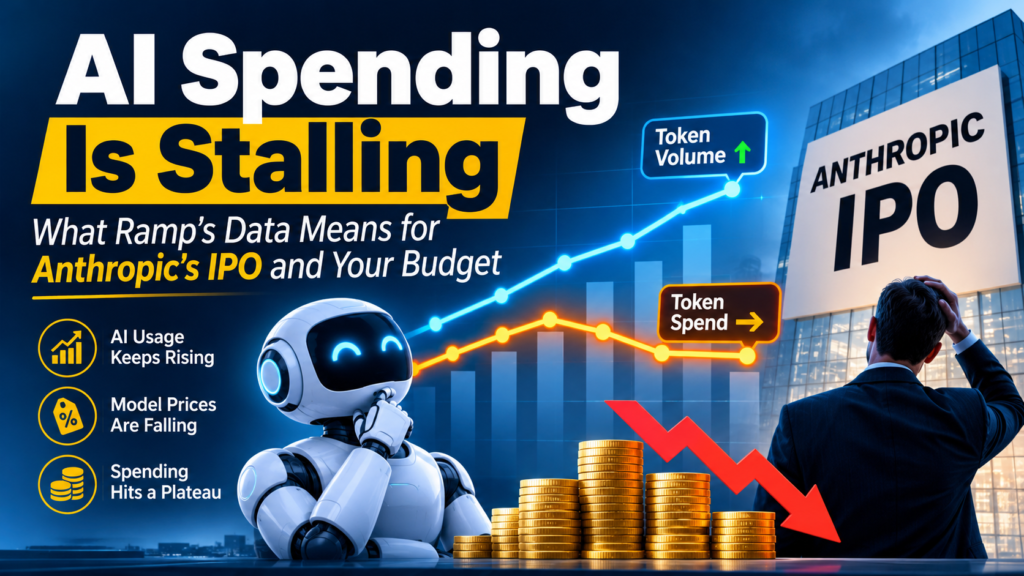
AI spending has flatlined even though businesses are using more AI than ever. Ramp’s latest data shows that token volumes kept rising through late summer while dollars barely moved, because price cuts, enterprise discounts, and smarter cost controls let companies get more work out of every dollar. For buyers, that is good news. For AI labs heading toward public markets, it is a warning that growth may be flatter than investors assumed.
On November 6, 2026, TechCrunch reported on the new numbers from Ramp, a business spend-management platform. This guide breaks down what the data says, why usage and revenue have come apart, and what it means for the buyers, builders, and investors watching the Anthropic IPO.
Key Takeaways
- Token spend grew just 1.5% across August and September combined, compared with 42% growth in July alone.
- The slowdown in AI spending reflects price and efficiency gains, not weak demand.
- The top 1% of firms, the most aggressive adopters, slipped slightly below their summer peak of roughly $10,000 per employee per month.
- Price cuts at OpenAI and Anthropic, plus cheaper rival models, have created a buyer’s market.
- Reported valuations for both Anthropic and OpenAI have fallen as investors reassess their growth assumptions.
What Is AI Spending, and How Is It Measured?
AI spending is the money organizations pay for AI models and AI-powered tools, from raw API calls to enterprise subscriptions. In Ramp’s data, the clearest measure is token spend, which tracks what companies pay model providers for the text their systems read and write. Reading this distinction correctly matters, because usage and spending can move in opposite directions, as this quarter shows.
What Is Token Spend?
Token spend is the total dollars a company pays for tokens, the small chunks of text that language models process. A model reads tokens in your prompt and produces tokens in its answer, and providers bill for both.
Two related terms are worth separating:
- Token volume counts how many tokens were processed.
- Token spend multiplies that volume by price.
When the price per token falls faster than volume rises, token spend stalls even as usage grows. That is the core dynamic in this story, and it explains how a market can look busier and earn less at the same time.
Whose AI Spending Does Ramp’s Data Capture?
Ramp’s lead economist, Ara Kharazian, told TechCrunch that almost all the money flowing into AI comes from venture-backed, high-growth tech companies. That makes the Ramp AI Index a sharp read on the early-adopter frontier, but not a census of the whole economy.
This skew cuts two ways. It means the data is concentrated in the firms most likely to experiment aggressively. It also means that if those firms slow down together, the whole picture changes quickly. A doctor’s office or a car dealership, Kharazian noted, may never need to spend what a software company does.
The Numbers Behind the AI Spending Slowdown
The headline figures from Ramp’s data, as reported by TechCrunch, fit in one table:
| Metric | Figure | Period |
|---|---|---|
| Month-over-month token spend growth | 42% | July 2026 |
| Combined token spend growth | 1.5% | August and September 2026 |
| Token spend growth | 8.9% | September 23 to October 23, 2026 |
| Median firm spend per employee | $12 to $15 per month | Current Ramp data |
| Top 10% of firms, spend per employee | $600 to $1,000 per month | Current Ramp data |
| Top 1% of firms, spend per employee | Just under $10,000 per month | Summer peak, slightly lower in August and September |
Read together, these figures show AI spending decelerating from explosive to nearly flat within a single quarter. The median and top-decile groups are still growing, but their dollar amounts are too small to offset a stall at the very top.
Is AI Usage Falling?
No. Kharazian stressed that the slowdown is not a demand problem. Token volumes kept climbing through the period. Companies are doing more with AI; they are simply paying less per unit of work.
Did October Change the Picture?
Partly. Token spend re-accelerated by 8.9% between September 23 and October 23, which is a real rebound. But Kharazian said the headwinds on spend growth remain strong. One healthy month does not erase two flat ones, and the October figure covers a shorter window than the two-month stall it follows.
Why Has AI Spending Stalled While Usage Keeps Rising?
Three forces explain the gap: a price war among the leading labs, a crowded field of cheaper models, and customers who have become far better at controlling costs. Each one lowers what a company pays for the same amount of AI work.
The Price War Between OpenAI and Anthropic
A price war is a period when competitors repeatedly cut prices to win or keep customers, which shrinks revenue per unit sold. In September, OpenAI cut API prices in half for GPT-6 Sol and GPT-6 Luna. Anthropic answered with significant reductions on Fable 5.1 and Opus 5.5. The company said in a recent filing that those reductions cut its revenue growth by about $600 million.
Both labs have also offered enterprise discounts designed to lock in customer commitments. The price war is the most direct reason AI spending stopped compounding. In Kharazian’s framing, it has become a buyer’s market.
A Crowded Field of Cheaper Models
The leading labs are no longer the only serious options. Kharazian pointed to Meta and Nvidia, which are introducing enterprise offerings built around inexpensive or open-source models. He also noted open-model developers in both China and the United States.
One newer name stands out: Jev, a lightweight tool for choosing between a handful of predetermined outputs. It has become one of the top performers on Ramp. The logic is simple. Plenty of business tasks need only a yes or no answer, so teams move workloads that were already cheap onto Jev and make them cheaper still.
Customers Are Getting Better at Controlling Costs
Sophisticated users learn to govern their usage. According to Kharazian, advanced adopters tend to:
- Set defaults that block very expensive models for long-running tasks
- Impose budgets on employees
- Use routers to push work from standard models to cheaper, lighter ones
A model router is software that sends each request to the least expensive model able to handle it. Notion co-founder Akshay Kothari recently shared internal data that matched Ramp’s picture: usage surging while the cost side became the pressing concern.
This kind of governance does not just trim waste. It structurally lowers AI spending per task, which means the savings persist even if usage keeps growing.
Why the Ride-Hailing Playbook Does Not Work Here
Big Tech has long subsidized an expensive technology to lock in customers, then raised prices once rivals thinned out. Ride-hailing is the familiar example: fares were cheap while Uber and Lyft competed, then rose as the field narrowed.
Kharazian argues the same trick fails in AI because there is simply too much competition. Subsidies only work when customers have nowhere cheaper to go, and in AI they do.
Why Concentration Makes AI Spending Fragile
Concentration risk is the danger that a market depends on a small group of buyers, so a change in their behavior moves the whole market. When a small cohort drives most AI spending, a pause in that cohort ripples through everything built on top of it.
Kharazian warned that if spend slows because of some market shock, venture-backed firms could all slow at once, with cascading effects. He also said the top 1% of firms, the most “AI-pilled,” already stuttered in August and September. That cohort’s pullback alone is enough to flatten revenue even while volumes rise.
Will Every Business Reach $10,000 Per Employee?
Probably not. Kharazian said it is not clear the broader economy will ever approach the figure the top 1% hit. Demand for AI coding agents is strong in software and finance, but a doctor’s office or a car dealership is unlikely to need that much AI.
The implication is important: the hypergrowth story cannot rely on more of the same. It depends on new use cases that pull in new kinds of buyers.
What Does the Slowdown Mean for the Anthropic IPO?
Ramp’s data lands just as the market reassesses what AI spending is worth. Anthropic is preparing its public offering, and TechCrunch framed the data as a challenge to the assumption that AI companies will keep growing at breakneck speed.
Bloomberg reported that Anthropic’s potential valuation has fallen from an estimate of about $2 trillion in early October to roughly $1.2 to $1.3 trillion. Credit agencies are also reportedly expected to give the company a high “junk” rating. OpenAI, according to the Financial Times, lowered its proposed valuation and cut its latest fundraising goal by about $10 billion.
| Company | Earlier valuation figure | Latest reported figure |
|---|---|---|
| Anthropic | About $2 trillion (early October estimate) | $1.2 to $1.3 trillion (Bloomberg) |
| OpenAI | $1.4 trillion (proposed) | $1.25 trillion (proposed) |
Kharazian said Ramp’s dataset likely informs many investor concerns. That is his read, and it is worth treating as one input among several. Valuations reflect many factors, and a single data series cannot explain them on its own.
Could a New Use Case Restart Growth?
The case for continued hypergrowth rests on the idea that AI will keep producing new commercial use cases. AI coding emerged only about a year and a half ago as the most commercially viable product, and it helped carry Anthropic and OpenAI to trillion-dollar status. Investors hope another breakthrough of that scale is coming.
Personal agents are the leading candidate. OpenAI, SpaceXAI, and Meta have each released one, alongside startups like Instinct. Kharazian is skeptical, because personal agents are “not as economically productive as coding.”
If a new category does take off, AI spending could re-accelerate. Until one does, the observable data points toward slowing growth.
How Should Businesses Respond to the AI Spending Slowdown?
For buyers, the slowdown is leverage. The suggestions below are editorial, built on the cost-control behaviors Ramp’s data describes. The most useful mindset shift is to treat AI spending like cloud spending: measured, budgeted, and continuously optimized.
| Cost-control lever | What it does | Where it helps most |
|---|---|---|
| Default model limits | Blocks expensive models on long-running tasks unless approved | Agentic and multi-step workflows |
| Per-employee budgets | Caps how much any one person can consume | Broad company-wide rollouts |
| Model routers | Sends simple requests to cheaper models automatically | High-volume, light workloads |
| Lightweight specialist models | Handles narrow decisions such as yes/no classification | Simple, repetitive tasks |
| Contract negotiation | Uses competition among labs to win better terms | Large enterprise agreements |
How Much Should a Typical Company Budget?
Ramp’s figures offer a rough benchmark. The median firm spends about $12 to $15 per employee per month, and the top 10% spend $600 to $1,000. Treat these as reference points, not targets. A team heavy on coding agents will legitimately spend more than a team using AI for light drafting.
The better question is cost per outcome: what does it cost to resolve a support ticket, review a contract, or ship a feature with AI help? Tracking that number shows whether rising usage is delivering value or just burning tokens.
What Should Investors and Analysts Watch Next?
If you follow the Anthropic IPO or the broader sector, these are the signals that will matter most:
- Monthly AI spending growth compared with token volume growth, since the gap between them measures price compression
- Whether the top 1% of firms climb back toward $10,000 per employee
- Further price cuts or deeper enterprise discounts from the major labs
- Whether a new use case, such as personal agents, produces measurable spend
- Whether spend broadens beyond venture-backed tech companies
Frequently Asked Questions
Is AI spending really slowing down?
By Ramp’s measure, yes. Token spend grew 1.5% across August and September combined, after growing 42% in July. October showed a rebound of 8.9%, but Ramp’s economist says headwinds remain strong.
Does slower AI spending mean the AI boom is over?
Not necessarily. Usage is still rising. Kharazian suggests the era of hypergrowth may be over, which is a statement about growth rates, not about AI adoption ending.
What is the difference between token volume and token spend?
Token volume is how many tokens were processed. Token spend is what companies paid for them. Spend can stay flat while volume rises when prices fall or when users shift to cheaper models.
How much do typical companies spend on AI per employee?
According to Ramp, the median firm spends about $12 to $15 per employee per month. The top 10% spend $600 to $1,000, and the top 1% reached nearly $10,000 at summer peaks.
Did Anthropic cut prices?
Yes. Anthropic made significant price reductions on Fable 5.1 and Opus 5.5 after OpenAI halved API prices for GPT-6 Sol and GPT-6 Luna. Anthropic said in a filing that the cuts reduced revenue growth by about $600 million.
What is the Ramp AI Index?
It is Ramp’s public data resource on how businesses spend on AI, drawn from its own customer data. It skews toward venture-backed, high-growth tech companies.
Bottom Line
The lesson of this quarter is that AI spending and AI usage are no longer the same thing. Price cuts, competition, and smarter cost controls mean businesses can do more with AI while paying about the same, or less. That is a gift to buyers and a challenge for the labs, especially as the Anthropic IPO approaches and investors weigh how much growth is left in the current set of use cases.
The next chapter depends on whether a new category of AI use can pull in new kinds of spenders. Until then, watch the gap between token volume and token spend. It tells you more about the health of the market than usage numbers alone.
AI (କୃତ୍ରିମ ବୁଦ୍ଧିମତ୍ତା) କ୍ଷେତ୍ରରେ ବ୍ୟୟ ସ୍ଥିର ହୋଇଯାଇଛି: Anthropic ର IPO ଏବଂ ଆପଣଙ୍କ ବଜେଟ୍ ଉପରେ Ramp ର ତଥ୍ୟର ପ୍ରଭାବ
ବ୍ୟବସାୟିକ ପ୍ରତିଷ୍ଠାନଗୁଡ଼ିକ ପୂର୍ବ ଅପେକ୍ଷା ଅଧିକ AI ବ୍ୟବହାର କରୁଥିଲେ ମଧ୍ୟ, ଏଥିପାଇଁ ହେଉଥିବା ବ୍ୟୟ ସ୍ଥିର ରହିଛି। Ramp ର ସାମ୍ପ୍ରତିକ ତଥ୍ୟ ଅନୁଯାୟୀ, ଗ୍ରୀଷ୍ମ ଋତୁର ଶେଷ ଭାଗ ପର୍ଯ୍ୟନ୍ତ ‘ଟୋକନ୍’ (token) ବ୍ୟବହାର ପରିମାଣ ବୃଦ୍ଧି ପାଇଥିଲା, କିନ୍ତୁ ଖର୍ଚ୍ଚ ହେଉଥିବା ଅର୍ଥରାଶିରେ ବିଶେଷ ପରିବର୍ତ୍ତନ ଆସିନାହିଁ। ଏହାର କାରଣ ହେଲା—ମୂଲ୍ୟ ହ୍ରାସ, ବଡ଼ କମ୍ପାନୀଗୁଡ଼ିକ ପାଇଁ ରିହାତି ଏବଂ ଖର୍ଚ୍ଚ ନିୟନ୍ତ୍ରଣର ଉନ୍ନତ ପଦ୍ଧତି ଯୋଗୁଁ, କମ୍ପାନୀଗୁଡ଼ିକ ନିଜର ପ୍ରତ୍ୟେକ ଡଲାର୍ ବିନିମୟରେ ଅଧିକ କାମ ହାସଲ କରିପାରୁଛନ୍ତି। କ୍ରେତାମାନଙ୍କ ପାଇଁ ଏହା ଏକ ଭଲ ଖବର। କିନ୍ତୁ ଯେଉଁ AI କମ୍ପାନୀଗୁଡ଼ିକ ସର୍ବସାଧାରଣ ବଜାର (public markets) କୁ ଆସିବାକୁ ଯାଉଛନ୍ତି, ସେମାନଙ୍କ ପାଇଁ ଏହା ଏକ ଚେତାବନୀ ଯେ, ନିବେଶକମାନେ ଯେପରି ଅଭିବୃଦ୍ଧିର ଆଶା ରଖିଥିଲେ, ବାସ୍ତବରେ ଅଭିବୃଦ୍ଧି ତା’ଠାରୁ କମ୍ ହୋଇପାରେ।
୬ ନଭେମ୍ବର, ୨୦୨୬ ରେ, ବ୍ୟବସାୟିକ ଖର୍ଚ୍ଚ ପରିଚାଳନା ପ୍ଲାଟଫର୍ମ ‘Ramp’ ର ନୂତନ ତଥ୍ୟ ଉପରେ TechCrunch ଏକ ରିପୋର୍ଟ ପ୍ରକାଶ କରିଛି। ଏହି ଲେଖାରେ ଉକ୍ତ ତଥ୍ୟର ବିଶ୍ଳେଷଣ କରାଯାଇଛି; କାହିଁକି ବ୍ୟବହାର ଏବଂ ରାଜସ୍ୱ (ଆୟ) ମଧ୍ୟରେ ପାର୍ଥକ୍ୟ ଦେଖାଦେଇଛି ତାହା ବୁଝାଯାଇଛି; ଏବଂ Anthropic ର IPO ଉପରେ ନଜର ରଖିଥିବା କ୍ରେତା, ବିକାଶକାରୀ (builders) ଓ ନିବେଶକମାନଙ୍କ ପାଇଁ ଏହାର ଅର୍ଥ କ’ଣ, ତାହା ଆଲୋଚନା କରାଯାଇଛି।
ମୁଖ୍ୟ ବିଷୟଗୁଡ଼ିକ
ଅଗଷ୍ଟ ଏବଂ ସେପ୍ଟେମ୍ବର ମାସରେ ମିଶି ‘ଟୋକନ୍’ ବ୍ୟବହାର ପାଇଁ ଖର୍ଚ୍ଚ ମାତ୍ର ୧.୫% ବୃଦ୍ଧି ପାଇଛି, ଯେତେବେଳେ କି କେବଳ ଜୁଲାଇ ମାସରେ ଏହି ବୃଦ୍ଧି ୪୨% ଥିଲା।
AI କ୍ଷେତ୍ରରେ ବ୍ୟୟ ବୃଦ୍ଧିର ଗତି ମନ୍ଥର ହେବା ପଛରେ ମୂଲ୍ୟ ହ୍ରାସ ଏବଂ କାର୍ଯ୍ୟଦକ୍ଷତାରେ ଉନ୍ନତି ରହିଛି, ଚାହିଦା କମିଯିବା ଏହାର କାରଣ ନୁହେଁ।
ସବୁଠାରୁ ଅଧିକ AI ବ୍ୟବହାର କରୁଥିବା ଶୀର୍ଷ ୧% କମ୍ପାନୀଗୁଡ଼ିକରେ, ପ୍ରତି କର୍ମଚାରୀ ପିଛା ମାସିକ ଖର୍ଚ୍ଚ ଗ୍ରୀଷ୍ମ ଋତୁର ସ ଦୁଇଟି ପାରସ୍ପରିକ ସମ୍ବନ୍ଧିତ ଶବ୍ଦକୁ ଅଲଗା କରି ବୁଝିବା ଆବଶ୍ୟକ:
‘ଟୋକନ୍ ଭଲ୍ୟୁମ୍’ (Token volume) କହିଲେ କେତେ ସଂଖ୍ୟକ ଟୋକନ୍ ପ୍ରକ୍ରିୟାକରଣ (processed) ହୋଇଛି, ତାହା ବୁଝାଏ।
‘ଟୋକନ୍ ସ୍ପେଣ୍ଡ୍’ (Token spend) ବା ଟୋକନ୍ ଖର୍ଚ୍ଚ ହେଉଛି ଏହି ପରିମାଣ (ଭଲ୍ୟୁମ୍) ସହିତ ମୂଲ୍ୟର ଗୁଣଫଳ।
ଯେତେବେଳେ ଟୋକନ୍ର ମୂଲ୍ୟ ହ୍ରାସ ପାଇବାର ଗତି, ଏହାର ବ୍ୟବହାର ପରିମାଣ (ଭଲ୍ୟୁମ୍) ବୃଦ୍ଧି ପାଇବାର ଗତି ଠାରୁ ଅଧିକ ହୁଏ, ସେତେବେଳେ ବ୍ୟବହାର ବଢ଼ୁଥିଲେ ମଧ୍ୟ ‘ଟୋକନ୍ ଖର୍ଚ୍ଚ’ ସ୍ଥିର ହୋଇଯାଏ। ଏହି ଘଟଣାକ୍ରମର ମୁଖ୍ୟ କାରଣ ଏହା ହିଁ ଅଟେ; ଏହା ବୁଝାଇଥାଏ ଯେ କିପରି ଏକ ବଜାର ଅଧିକ ସକ୍ରିୟ ଦେଖାଯାଇପାରେ, କିନ୍ତୁ ସେହି ସମୟରେ ସେଠାରେ ଆୟ କିମ୍ବା ଖର୍ଚ୍ଚ କମ୍ ହୋଇପାରେ।
Ramp (ରାମ୍ପ୍) ର ତଥ୍ୟ କାହାର AI (କୃତ୍ରିମ ବୁଦ୍ଧିମତ୍ତା) ଖର୍ଚ୍ଚକୁ ଦର୍ଶାଏ?
Ramp ର ମୁଖ୍ୟ ଅର୍ଥନୀତିଜ୍ଞ, ଆରା ଖାରାଜିଆନ୍ (Ara Kharazian), ‘ଟେକ୍କ୍ରଞ୍ଚ’ (TechCrunch) କୁ କହିଛନ୍ତି ଯେ AI କ୍ଷେତ୍ରରେ ନିବେଶ ହେଉଥିବା ପ୍ରାୟ ସମସ୍ତ ଅର୍ଥ, ଭେଞ୍ଚର କ୍ୟାପିଟାଲ୍ (venture capital) ସମର୍ଥିତ ଏବଂ ଦ୍ରୁତ ଗତିରେ ବିକାଶ କରୁଥିବା ଟେକ୍ନୋଲୋଜି କମ୍ପାନୀଗୁଡ଼ିକରୁ ଆସିଥାଏ। ଏହି କାରଣରୁ ‘Ramp AI Index’ (ରାମ୍ପ୍ AI ସୂଚକାଙ୍କ) ନୂତନ ପ୍ରଯୁକ୍ତିବିଦ୍ୟାକୁ ପ୍ରାରମ୍ଭିକ ପର୍ଯ୍ୟାୟରେ ଗ୍ରହଣ କରୁଥିବା ସଂସ୍ଥାଗୁଡ଼ିକର ସ୍ଥିତି ଜାଣିବା ପାଇଁ ଏକ ଉପଯୁକ୍ତ ମାଧ୍ୟମ ଅଟେ, କିନ୍ତୁ ଏହା ସମଗ୍ର ଅର୍ଥନୀତିର ଏକ ସମ୍ପୂର୍ଣ୍ଣ ଚିତ୍ର (census) ନୁହେଁ।
ଏହି ପକ୍ଷପାତର ଦୁଇଟି ଦିଗ ରହିଛି। ଏହାର ଅର୍ଥ ହେଉଛି ଯେ ତଥ୍ୟଗୁଡ଼ିକ ମୁଖ୍ୟତଃ ସେହି କମ୍ପାନୀଗୁଡ଼ିକ ଉପରେ କେନ୍ଦ୍ରିତ, ଯେଉଁମାନେ ନୂତନ ପରୀକ୍ଷା-ନିରୀକ୍ଷା କରିବାକୁ ଅଧିକ ଆଗ୍ରହୀ। ଅନ୍ୟ ପକ୍ଷରେ, ଯଦି ଏହି କମ୍ପାନୀଗୁଡ଼ିକର କାର୍ଯ୍ୟକଳାପ ଏକାସାଙ୍ଗରେ ମନ୍ଥର ହୋଇଯାଏ, ତେବେ ସମଗ୍ର ପରିସ୍ଥିତି ଦ୍ରୁତ ଗତିରେ ବଦଳିଯାଇପାରେ। ଖାରାଜିଆନ୍ ଉଲ୍ଲେଖ କରିଛନ୍ତି ଯେ, ଏକ ଡାକ୍ତରଖାନା କିମ୍ବା ଗାଡ଼ି ବିକ୍ରୟ କେନ୍ଦ୍ର (ଡିଲରସିପ୍) ପାଇଁ AI କ୍ଷେତ୍ରରେ ସେତେ ଅର୍ଥ ଖର୍ଚ୍ଚ କରିବାର ଆବଶ୍ୟକତା ନଥାଇପାରେ, ଯେ ନା।
ଖାରାଜିଆନ୍ (Kharazian) ଗୁରୁତ୍ୱ ଦେଇ କହିଛନ୍ତି ଯେ, ଏହି ମନ୍ଥରତା ଚାହିଦା ସମ୍ବନ୍ଧୀୟ ସମସ୍ୟା ନୁହେଁ। ଏହି ସମୟ ମଧ୍ୟରେ ‘ଟୋକନ୍’ (AI ବ୍ୟବହାରର ଏକ ମାପକାଠି) ବ୍ୟବହାରର ପରିମାଣ କ୍ରମାଗତ ଭାବେ ବୃଦ୍ଧି ପାଉଥିଲା। କମ୍ପାନୀଗୁଡ଼ିକ AI ମାଧ୍ୟମରେ ଅଧିକ କାର୍ଯ୍ୟ କରୁଛନ୍ତି; କିନ୍ତୁ ସେମାନେ ପ୍ରତି ୟୁନିଟ୍ କାର୍ଯ୍ୟ ପାଇଁ ପୂର୍ବ ଅପେକ୍ଷା କମ୍ ଅର୍ଥ ପ୍ରଦାନ କରୁଛନ୍ତି।
ଅକ୍ଟୋବର ମାସ କ’ଣ ପରିସ୍ଥିତି ବଦଳାଇ ଦେଲା?
କିଛି ମାତ୍ରାରେ। ସେପ୍ଟେମ୍ବର ୨୩ ରୁ ଅକ୍ଟୋବର ୨୩ ମଧ୍ୟରେ ‘ଟୋକନ୍’ ଖର୍ଚ୍ଚ ପୁନର୍ବାର ୮.୯% ବୃଦ୍ଧି ପାଇଲା, ଯାହା ଏକ ପ୍ରକୃତ ପ୍ରତ୍ୟାବର୍ତ୍ତନ (rebound) କୁହାଯାଇପାରେ। ତେବେ ଖାରାଜିଆନ୍ କହିଛନ୍ତି ଯେ, ଖର୍ଚ୍ଚ ବୃଦ୍ଧି କ୍ଷେତ୍ରରେ ବାଧା ସୃଷ୍ଟି କରୁଥିବା କାରକଗୁଡ଼ିକ ଏବେ ମଧ୍ୟ ବଳବତ୍ତର ରହିଛି। ଗୋଟିଏ ଭଲ ମାସ, ପୂର୍ବର ଦୁଇଟି ସ୍ଥିର (ବୃଦ୍ଧିହୀନ) ମାସର ପ୍ରଭାବକୁ ସମ୍ପୂର୍ଣ୍ଣ ରୂପେ ଦୂର କରିପାରିବ ନାହିଁ। ଅଧିକନ୍ତୁ, ଅକ୍ଟୋବର ମାସର ତଥ୍ୟ ଯେଉଁ ସମୟସୀମାକୁ ଦର୍ଶାଉଛି, ତାହା ପୂର୍ବର ସେହି ଦୁଇ ମାସର ସ୍ଥିର ଅବସ୍ଥା ତୁଳନାରେ କମ୍ ଅଟେ।
AI ବ୍ୟବହାର ବୃଦ୍ଧି ପାଉଥିବା ସତ୍ତ୍ୱେ, ଏଥିପାଇଁ ହେଉଥିବା ଖର୍ଚ୍ଚ କାହିଁକି ସ୍ଥିର ହୋଇଯାଇଛି?
ଏହି ପାର୍ଥକ୍ୟ ପଛରେ ତିନୋଟି ମୁଖ୍ୟ କାରଣ ରହିଛି: ଅଗ୍ରଣୀ AI ଗବେଷଣା ସଂସ୍ଥାଗୁଡ଼ିକ ମଧ୍ୟରେ ଚାଲିଥିବା ‘ମୂଲ୍ୟ ଯୁଦ୍ଧ’ (price war), ବଜାରରେ ଶସ୍ତା ମଡେଲଗୁଡ଼ିକର ପ୍ରାଚୁର୍ଯ୍ୟ, ଏବଂ ଗ୍ରାହକମାନଙ୍କ ଦ୍ୱାରା ଖର୍ଚ୍ଚ ନିୟନ୍ତ୍ରଣ କରିବାର ଦକ୍ଷତାରେ ଉନ୍ନତି। ଏହି ପ୍ରତ୍ୟେକ କାରଣ ଯୋଗୁଁ, ସମାନ ପରିମାଣର AI କାର୍ଯ୍ୟ ପାଇଁ କମ୍ପାନୀଗୁଡ଼ିକୁ ପୂର୍ବ ଅପେକ୍ଷା କମ୍ ଅର୍ଥ ଦେବାକୁ ପଡ଼ୁଛି।
OpenAI ଏବଂ Anthropic ମଧ୍ୟରେ ମୂଲ୍ୟ ଯୁଦ୍ଧ
‘ମୂଲ୍ୟ ଯୁଦ୍ଧ’ (price war) ହେଉଛି ଏପରି ଏକ ପରିସ୍ଥିତି ଯେଉଁଠାରେ ପ୍ରତିଯୋଗୀମାନେ ଗ୍ରାହକଙ୍କୁ ଆକର୍ଷିତ କରିବା କିମ୍ବା ବଜାୟ ରଖିବା ପାଇଁ ବାରମ୍ବାର ମୂଲ୍ୟ ହ୍ରାସ କରନ୍ତି। ଏହା ଫଳରେ ପ୍ରତି ୟୁନିଟ୍ ବିକ୍ରିରୁ ମିଳୁଥିବା ରାଜସ୍ୱ କମିଯାଏ। ସେପ୍ଟେମ୍ବର ମାସରେ, OpenAI ନିଜର ‘GPT-6 Sol’ ଏବଂ ‘GPT-6 Luna’ ପାଇଁ API ମୂଲ୍ୟସାମ୍ପ୍ରତିକ ଏକ ଦାଖଲ ହୋଇଥିବା ରିପୋର୍ଟ ଅନୁଯାୟୀ, ଏହି ହ୍ରାସଗୁଡ଼ିକ କମ୍ପାନୀର ରାଜସ୍ୱ ଅଭିବୃଦ୍ଧିକୁ ପ୍ରାୟ ୬୦୦ ନିୟୁତ ଡଲାର କମାଇ ଦେଇଛି।
ଉଭୟ ଲାବ୍ (AI କମ୍ପାନୀ) ଗ୍ରାହକଙ୍କ ପ୍ରତିବଦ୍ଧତାକୁ ସୁନିଶ୍ଚିତ କରିବା ପାଇଁ ବ୍ୟବସାୟିକ ସଂସ୍ଥାଗୁଡ଼ିକୁ ବିଶେଷ ରିହାତି (enterprise discounts) ପ୍ରଦାନ କରିଛନ୍ତି। ଏହି ମୂଲ୍ୟ ଯୁଦ୍ଧ (price war) ହେଉଛି ମୁଖ୍ୟ କାରଣ ଯେଉଁଥିପାଇଁ AI କ୍ଷେତ୍ରରେ ବ୍ୟୟ ବୃଦ୍ଧି ପାଇବାର ଧାରା ଅଟକି ଯାଇଛି। ଖରାଜିଆନଙ୍କ ମତରେ, ବର୍ତ୍ତମାନର ବଜାର ସମ୍ପୂର୍ଣ୍ଣ ଭାବେ କ୍ରେତାଙ୍କ ସପକ୍ଷରେ ରହିଛି (buyer’s market)।
ଶସ୍ତା ମଡେଲଗୁଡ଼ିକର ଭିଡ଼
ଅଗ୍ରଣୀ AI ଲାବ୍ଗୁଡ଼ିକ ବର୍ତ୍ତମାନ ଏକମାତ୍ର ବିକଳ୍ପ ହୋଇ ରହିନାହାନ୍ତି। ଖରାଜିଆନ ‘ମେଟା’ (Meta) ଏବଂ ‘ଏନଭିଡିଆ’ (Nvidia) ର ଉଦାହରଣ ଦେଇଛନ୍ତି, ଯେଉଁମାନେ ଶସ୍ତା କିମ୍ବା ‘ଓପନ୍-ସୋର୍ସ’ (open-source) ମଡେଲ୍ ଉପରେ ଆଧାରିତ ସେବା ବ୍ୟବସାୟିକ ସଂସ୍ଥାଗୁଡ଼ିକୁ ଯୋଗାଉଛନ୍ତି। ସେ ଚୀନ୍ ଏବଂ ଯୁକ୍ତରାଷ୍ଟ୍ର ଆମେରିକାରେ ଥିବା ‘ଓପନ୍-ମଡେଲ୍’ ବିକାଶକାରୀଙ୍କ ବିଷୟରେ ମଧ୍ୟ ଉଲ୍ଲେଖ କରିଛନ୍ତି।
ଏଥିମଧ୍ୟରେ ‘Jev’ ନାମକ ଏକ ନୂତନ ସାଧନ (tool) ଉଲ୍ଲେଖନୀୟ; ଏହା ଏକ ହାଲୁକା ସଫ୍ଟୱେର୍ ଯାହା ପୂର୍ବରୁ ନିର୍ଦ୍ଧାରିତ କିଛି ଉତ୍ତର (outputs) ମଧ୍ୟରୁ ଗୋଟିଏ ବାଛିବାରେ ସାହାଯ୍ୟ କରେ। ‘Ramp’ ପ୍ଲାଟଫର୍ମରେ ଏହା ସର୍ବୋତ୍ତମ ପ୍ରଦର୍ଶନକାରୀ ସାଧନଗୁଡ଼ିକ ମଧ୍ୟରୁ ଅନ୍ୟତମ ହୋଇପାରିଛି। ଏହାର କାର୍ଯ୍ୟପଦ୍ଧତି ସରଳ; ଅନେକ ବ୍ୟବସାୟିକ କାର୍ଯ୍ୟ ପାଇଁ କେବଳ ‘ହଁ’ କିମ୍ବା ‘ନା’ ଉତ୍ତର ଆବଶ୍ୟକ ହୁଏ। ତେଣୁ, କମ୍ପାନୀଗୁଡ଼ିକ ସେମାନଙ୍କର ସେହି କାର୍ଯ୍ୟଭାରକୁ ‘Jev’ କୁ ସ୍ଥାନାନ୍ତର କରୁଛନ୍ତି, ଯାହା ଫଳରେ ଖର୍ଚ୍ଚ ଆହୁରି କମିଯାଉଛି।
ଗ୍ରାହକମାନେ ଖର୍ଚ୍ଚ ନିୟନ୍ତ୍ରଣ କରିବାରେ ଅଧିକ ଦକ୍ଷ ହେଉଛନ୍ତି
ସଚେତନ ବ୍ୟବହାରକାରୀମାନେ ନିଜର ବ୍ୟବହାର ଉପରେ ନିୟନ୍ତ୍ରଣ ରଖିବା ଶିଖିଯାଇଛନ୍ତି। ଖରାଜିଆନଙ୍କ ଅନୁଯାୟୀ, ଅଭିଜ୍ଞ ବ୍ୟବହାରକାରୀମାନେ ନିମ୍ନଲିଖିତ ପଦକ୍ଷେପ ନେଉଛନ୍ତି:
ଦୀର୍ଘ ସମୟ ଧରି ଚାଲୁଥିବା କାର୍ଯ୍ୟ ପାଇଁ ଅତ୍ୟଧିକ ମହଙ୍ଗା ମଡେଲ୍ଗୁଡ଼ିକୁ ବ୍ୟବ କେନ୍ଦ୍ରୀଭୂତ ନିବେଶ କିପରି AI ଖର୍ଚ୍ଚକୁ ଅସ୍ଥିର କରିଥାଏ
‘କେନ୍ଦ୍ରୀଭୂତ ହେବାର ଆଶଙ୍କା’ (Concentration risk) ହେଉଛି ଏପରି ଏକ ବିପଦ, ଯେଉଁଠାରେ ବଜାର କିଛି ନିର୍ଦ୍ଦିଷ୍ଟ କ୍ରେତାଙ୍କ ଉପରେ ନିର୍ଭର କରେ; ଫଳସ୍ୱରୂପ, ସେମାନଙ୍କ ଆଚରଣରେ ପରିବର୍ତ୍ତନ ଆସିଲେ ସମଗ୍ର ବଜାର ପ୍ରଭାବିତ ହୁଏ। ଯେତେବେଳେ AI କ୍ଷେତ୍ରରେ ହେଉଥିବା ଅଧିକାଂଶ ଖର୍ଚ୍ଚ କେବଳ ଏକ ଛୋଟ ଗୋଷ୍ଠୀ ଦ୍ୱାରା ପରିଚାଳିତ ହୁଏ, ସେତେବେଳେ ସେହି ଗୋଷ୍ଠୀର କାର୍ଯ୍ୟକଳାପ ମନ୍ଥର ହେଲେ, ତା’ ଉପରେ ଆଧାରିତ ଅନ୍ୟ ସମସ୍ତ ବ୍ୟବସ୍ଥା ମଧ୍ୟ ପ୍ରଭାବିତ ହୋଇଥାଏ।
ଖାରାଜିଆନ୍ ଚେତାବନୀ ଦେଇଛନ୍ତି ଯେ, ଯଦି ବଜାରରେ କୌଣସି ଆକସ୍ମିକ ଝଟକା କାରଣରୁ ଖର୍ଚ୍ଚ କମିଯାଏ, ତେବେ ଭେଞ୍ଚର ପୁଞ୍ଜି (venture capital) ଦ୍ୱାରା ପରିଚାଳିତ କମ୍ପାନୀଗୁଡ଼ିକ ଏକାସାଙ୍ଗରେ ମନ୍ଥର ହୋଇପାରନ୍ତି, ଯାହାର ସୁଦୂରପ୍ରସାରୀ ନକାରାତ୍ମକ ପ୍ରଭାବ ପଡ଼ିପାରେ। ସେ ଆହୁରି ମଧ୍ୟ କହିଛନ୍ତି ଯେ, ଶୀର୍ଷ ୧% କମ୍ପାନୀ – ଯେଉଁମାନେ AI ଉପରେ ସବୁଠାରୁ ଅଧିକ ନିର୍ଭରଶୀଳ – ସେମାନଙ୍କ କାର୍ଯ୍ୟକଳାପ ଅଗଷ୍ଟ ଏବଂ ସେପ୍ଟେମ୍ବର ମାସରେ ପୂର୍ବରୁ ହିଁ ଧୀମା ହୋଇଯାଇଥିଲା। କେବଳ ଏହି ଗୋଷ୍ଠୀର ନିବେଶ ହ୍ରାସ ପାଇବା ଯଥେଷ୍ଟ, ଯାହା ଫଳରେ AI ସେବା ବ୍ୟବହାରର ପରିମାଣ ବୃଦ୍ଧି ପାଉଥିଲେ ମଧ୍ୟ କମ୍ପାନୀଗୁଡ଼ିକର ଆୟ (revenue) ସ୍ଥିର ହୋଇଯାଇପାରେ।
କ’ଣ ପ୍ରତ୍ୟେକ ବ୍ୟବସାୟ ପ୍ରତି କର୍ମଚାରୀ ପିଛା $୧୦,୦୦୦ ଆୟ କରିବା ସ୍ତରରେ ପହଞ୍ଚିପାରିବ?
ସମ୍ଭବତଃ ନୁହେଁ। ଖାରାଜିଆନ୍ କହିଛନ୍ତି ଯେ, ସାମଗ୍ରିକ ଅର୍ଥବ୍ୟବସ୍ଥା କେବେ ସେହି ସ୍ତରରେ ପହଞ୍ଚିବ କି ନାହିଁ, ଯେଉଁଠାରେ ବର୍ତ୍ତମାନ ଶୀର୍ଷ ୧% କମ୍ପାନୀଗୁଡ଼ିକ ପହଞ୍ଚିଛନ୍ତି, ତାହା ଅସ୍ପଷ୍ଟ। ସଫ୍ଟୱେର୍ ଏବଂ ଆର୍ଥିକ କ୍ଷେତ୍ରରେ AI କୋଡିଂ ଏଜେଣ୍ଟଗୁଡ଼ିକର ଚାହିଦା ବହୁତ ଅଧିକ ରହିଛି, କିନ୍ତୁ ଡାକ୍ତରଖାନା କିମ୍ବା ଗାଡ଼ି ବିକ୍ରୟ କେନ୍ଦ୍ର (car dealership) ଭଳି ସ୍ଥାନରେ ଏତେ ଅଧିକ AI ବ୍ୟବହାରର ଆବଶ୍ୟକତା ନଥାଇପାରେ।
ଏହାର ଏକ ଗୁରୁତ୍ୱପୂର୍ଣ୍ଣ ଅର୍ଥ ରହିଛି: କମ୍ପାନୀଗୁଡ଼ିକର ଅତ୍ୟଧିକ ଦ୍ରୁତ ଅଭିବୃଦ୍ଧି (hypergrowth) କେବଳ ପୂର୍ବ ପଦ୍ କମ୍ପାନୀ ପୂର୍ବ ମୂଲ୍ୟାଙ୍କନ ସଂଖ୍ୟା ସର୍ବଶେଷ ରିପୋର୍ଟ କରାଯାଇଥିବା ସଂଖ୍ୟା
ଆନ୍ଥ୍ରୋପିକ୍ ପ୍ରାୟ $2 ଟ୍ରିଲିୟନ (ଅକ୍ଟୋବର ପ୍ରାରମ୍ଭିକ ଆକଳନ) $1.2 ରୁ $1.3 ଟ୍ରିଲିୟନ (ବ୍ଲୁମବର୍ଗ)
OpenAI $1.4 ଟ୍ରିଲିୟନ (ପ୍ରସ୍ତାବିତ) $1.25 ଟ୍ରିଲିୟନ (ପ୍ରସ୍ତାବିତ)
ଖରାଜିୟାନ୍ କହିଛନ୍ତି ଯେ ରାମ୍ପର ଡାଟାସେଟ୍ ସମ୍ଭବତଃ ଅନେକ ନିବେଶକଙ୍କ ଚିନ୍ତାକୁ ସୂଚିତ କରିଥାଏ। ଏହା ତାଙ୍କର ପଠନ, ଏବଂ ଏହାକୁ ଅନେକ ମଧ୍ୟରୁ ଗୋଟିଏ ଇନପୁଟ୍ ଭାବରେ ବିଚାର କରିବା ଉଚିତ। ମୂଲ୍ୟାଙ୍କନ ଅନେକ କାରଣକୁ ପ୍ରତିଫଳିତ କରେ, ଏବଂ ଏକ ଡାଟା ସିରିଜ୍ ସେଗୁଡ଼ିକୁ ନିଜେ ବ୍ୟାଖ୍ୟା କରିପାରିବ ନାହିଁ।
ଏକ ନୂତନ ବ୍ୟବହାର ମାମଲା ପୁନରାରମ୍ଭ କରିପାରେ କି?
ନିରନ୍ତର ହାଇପରଗ୍ରୋଥ୍ ପାଇଁ ମାମଲା ଏହି ଧାରଣା ଉପରେ ନିର୍ଭର କରେ ଯେ AI ନୂତନ ବାଣିଜ୍ୟିକ ବ୍ୟବହାର ମାମଲା ଉତ୍ପାଦନ କରିବ। AI କୋଡିଂ ପ୍ରାୟ ଦେଢ଼ ବର୍ଷ ପୂର୍ବରୁ ସବୁଠାରୁ ବାଣିଜ୍ୟିକ ଭାବରେ ସମ୍ଭବ ଉତ୍ପାଦ ଭାବରେ ଉଭା ହୋଇଥିଲା, ଏବଂ ଏହା ଆନ୍ଥ୍ରୋପିକ୍ ଏବଂ OpenAI କୁ ଟ୍ରିଲିୟନ-ଡଲାର ସ୍ଥିତିକୁ ନେଇଯିବାରେ ସାହାଯ୍ୟ କରିଥିଲା। ନିବେଶକମାନେ ଆଶା କରୁଛନ୍ତି ଯେ ସେହି ସ୍କେଲର ଆଉ ଏକ ସଫଳତା ଆସିବ।
ବ୍ୟକ୍ତିଗତ ଏଜେଣ୍ଟମାନେ ପ୍ରମୁଖ ପ୍ରାର୍ଥୀ। OpenAI, SpaceXAI, ଏବଂ Meta ପ୍ରତ୍ୟେକେ Instinct ଭଳି ଷ୍ଟାର୍ଟଅପ୍ ସହିତ ଗୋଟିଏ ପ୍ରକାଶ କରିଛନ୍ତି। ଖାରାଜିଆନ୍ ସନ୍ଦେହବାଦୀ, କାରଣ ବ୍ୟକ୍ତିଗତ ଏଜେଣ୍ଟମାନେ “କୋଡିଂ ପରି ଆର୍ଥିକ ଭାବରେ ଉତ୍ପାଦନକ୍ଷମ ନୁହଁନ୍ତି।”
ଯଦି ଏକ ନୂତନ ବର୍ଗ ଆରମ୍ଭ ହୁଏ, ତେବେ AI ଖର୍ଚ୍ଚ ପୁନଃ ତ୍ୱରାନ୍ୱିତ ହୋଇପାରେ। ଯେପର୍ଯ୍ୟନ୍ତ ଏହା ନହୁଏ, ପର୍ଯ୍ୟବେକ୍ଷଣଯୋଗ୍ୟ ତଥ୍ୟ ମନ୍ଥରତା ଆଡ଼କୁ ଇଙ୍ଗିତ କରେAI (କୃତ୍ରିମ ବୁଦ୍ଧିମତ୍ତା) କ୍ଷେତ୍ରରେ ବ୍ୟୟ ବୃଦ୍ଧିର ଗତି କମିବା।
AI ଉପରେ ହେଉଥିବା ଖର୍ଚ୍ଚର ଗତି ମନ୍ଥର ହେଲେ ବ୍ୟବସାୟଗୁଡ଼ିକ କିପରି ପ୍ରତିକ୍ରିୟା ଦେଖାଇବା ଉଚିତ୍?
କ୍ରେତାମାନଙ୍କ ପାଇଁ, ଏହି ମନ୍ଥରତା ଏକ ସୁଯୋଗ (leverage) ଭାବରେ କାମ କରିପାରେ। ନିମ୍ନରେ ଦିଆଯାଇଥିବା ପରାମର୍ଶଗୁଡ଼ିକ ‘Ramp’ (ରାମ୍ପ୍) ର ତଥ୍ୟ ଉପରେ ଆଧାରିତ, ଯାହା ଖର୍ଚ୍ଚ ନିୟନ୍ତ୍ରଣ ପାଇଁ ଗ୍ରହଣ କରାଯାଉଥିବା ବିଭିନ୍ନ ପଦକ୍ଷେପକୁ ଦର୍ଶାଏ। ସବୁଠାରୁ ଉପଯୋଗୀ ପରିବର୍ତ୍ତନ ହେଉଛି AI ଖର୍ଚ୍ଚକୁ ‘କ୍ଲାଉଡ୍’ (cloud) ଖର୍ଚ୍ଚ ଭଳି ବିବେଚନା କରିବା: ଅର୍ଥାତ୍ ଏହାକୁ ସୁଚିନ୍ତିତ ଭାବେ ମାପିବା, ବଜେଟ୍ ମଧ୍ୟରେ ରଖିବା ଏବଂ କ୍ରମାଗତ ଭାବରେ ଏହାର ଉପଯୋଗିତାକୁ ଉନ୍ନତ କରିବା।
ଖର୍ଚ୍ଚ ନିୟନ୍ତ୍ରଣ ପଦକ୍ଷେପ | ଏହା କ’ଣ କରେ | କେଉଁଠାରେ ଅଧିକ ସହାୟକ ହୁଏ
ଡିଫଲ୍ଟ ମଡେଲ୍ ସୀମା (Default model limits) | ଅନୁମୋଦନ ବିନା ଦୀର୍ଘ ସମୟ ଧରି ଚାଲୁଥିବା କାର୍ଯ୍ୟରେ ମହଙ୍ଗା ମଡେଲଗୁଡ଼ିକୁ ବ୍ୟବହାର କରିବାକୁ ରୋକିଥାଏ | ଏଜେଣ୍ଟ-ଆଧାରିତ (Agentic) ଏବଂ ଏକାଧିକ ପର୍ଯ୍ୟାୟ ବିଶିଷ୍ଟ କାର୍ଯ୍ୟ ପ୍ରକ୍ରିୟା (workflows)
ପ୍ରତ୍ୟେକ କର୍ମଚାରୀଙ୍କ ପାଇଁ ବଜେଟ୍ | ଜଣେ ବ୍ୟକ୍ତି କେତେ ଖର୍ଚ୍ଚ କରିପାରିବେ ତାହାର ସୀମା ନିର୍ଦ୍ଧାରଣ କରେ | ସମ୍ପୂର୍ଣ୍ଣ କମ୍ପାନୀ ସ୍ତରରେ ବ୍ୟାପକ କାର୍ଯ୍ୟକାରିତା
ମଡେଲ୍ ରାଉଟର (Model routers) | ସରଳ ଅନୁରୋଧଗୁଡ଼ିକୁ ସ୍ୱୟଂଚାଳିତ ଭାବରେ ଶସ୍ତା ମଡେଲଗୁଡ଼ିକ ନିକଟକୁ ପଠାଏ | ଅଧିକ ପରିମାଣର କିନ୍ତୁ ସରଳ କାର୍ଯ୍ୟଭାର
ସୀମିତ କାର୍ଯ୍ୟ ପାଇଁ ଉଦ୍ଦିଷ୍ଟ ମଡେଲ୍ (Specialist models) | ‘ହଁ/ନା’ (yes/no) ଶ୍ରେଣୀଭୁକ୍ତ କରିବା ଭଳି ନିର୍ଦ୍ଦିଷ୍ଟ କାର୍ଯ୍ୟ ପରିଚାଳନା କରେ | ସରଳ ଏବଂ ବାରମ୍ବାର ହେଉଥିବା କାର୍ଯ୍ୟ
ଚୁକ୍ତିନାମା ବୁଝାମଣା (Contract negotiation) | ଭଲ ସର୍ତ୍ତ ପାଇବା ପାଇଁ ବିଭିନ୍ନ AI କମ୍ପାନୀ (labs) ମଧ୍ୟରେ ଥିବା ପ୍ରତିଯୋଗିତାର ଲାଭ ଉଠାଏ | ବଡ଼ କର୍ପୋରେଟ୍ ଚୁକ୍ତିନାମା
ଏକ ସାଧାରଣ କମ୍ପାନୀ କେତେ ବଜେଟ୍ ରଖିବା ଉଚିତ୍?
‘Ramp’ ର ତଥ୍ୟ ଏକ ସାଧାରଣ ଧାରଣା (benchmark) ପ୍ରଦାନ କରେ। ଏକ ମଧ୍ୟମ ସ୍ତରର କମ୍ପାନୀ ପ୍ରତି କର୍ମଚାରୀ ପିଛା ମାସକୁ ପ୍ରାୟ ୧୨ ରୁ ୧୫ ଜୁଲାଇ ମାସରେ ୪୨% ବୃଦ୍ଧି ପାଇବା ପରେ, ଅଗଷ୍ଟ ଏବଂ ସେପ୍ଟେମ୍ବର ମାସରେ ମିଳିତ ଭାବେ ‘ଟୋକନ୍ ଖର୍ଚ୍ଚ’ (token spend) ୧.୫% ବୃଦ୍ଧି ପାଇଛି। ଅକ୍ଟୋବର ମାସରେ ଏଥିରେ ୮.୯%ର ସୁଧାର ଦେଖାଦେଇଛି, କିନ୍ତୁ ‘ରାମ୍ପ୍’ (Ramp) ର ଅର୍ଥନୀତିଜ୍ଞଙ୍କ ମତରେ ବାଧାବିଘ୍ନ ବା ପ୍ରତିକୂଳ ପରିସ୍ଥିତି ଏବେ ମଧ୍ୟ ବଳବତ୍ତର ରହିଛି।
AI (କୃତ୍ରିମ ବୁଦ୍ଧିମତ୍ତା) କ୍ଷେତ୍ରରେ ଖର୍ଚ୍ଚ ବୃଦ୍ଧିର ଗତି ମନ୍ଥର ହେବା କ’ଣ ଏହାର ଅର୍ଥ ଯେ AI ଯୁଗର ଦ୍ରୁତ ବିକାଶ (AI boom) ଶେଷ ହୋଇଯାଇଛି?
ନିଶ୍ଚିତ ଭାବରେ ନୁହେଁ। ଏହାର ବ୍ୟବହାର ଏବେ ମଧ୍ୟ ବୃଦ୍ଧି ପାଉଛି। ଖାରାଜିଆନ୍ଙ୍କ (Kharazian) ମତରେ, ହୁଏତ ଅତ୍ୟଧିକ ଦ୍ରୁତ ବିକାଶର (hypergrowth) ସମୟ ଶେଷ ହୋଇଯାଇଥାଇପାରେ; କିନ୍ତୁ ଏହାର ଅର୍ଥ କେବଳ ବିକାଶ ହାର ସହ ଜଡ଼ିତ, AI ଗ୍ରହଣ କରିବା ବା ବ୍ୟବହାର କରିବା ପ୍ରକ୍ରିୟା ବନ୍ଦ ହୋଇଯାଇଛି ବୋଲି ଏହାର ଅର୍ଥ ନୁହେଁ।
‘ଟୋକନ୍ ପରିମାଣ’ (token volume) ଏବଂ ‘ଟୋକନ୍ ଖର୍ଚ୍ଚ’ (token spend) ମଧ୍ୟରେ ପାର୍ଥକ୍ୟ କ’ଣ?
‘ଟୋକନ୍ ପରିମାଣ’ ହେଉଛି କେତେ ସଂଖ୍ୟକ ଟୋକନ୍ ପ୍ରକ୍ରିୟାକରଣ (processed) କରାଯାଇଛି ତାହାର ମାପ। ଅନ୍ୟପକ୍ଷରେ, ‘ଟୋକନ୍ ଖର୍ଚ୍ଚ’ ହେଉଛି ସେହି ଟୋକନ୍ଗୁଡ଼ିକ ପାଇଁ କମ୍ପାନୀଗୁଡ଼ିକ ଦେଇଥିବା ଅର୍ଥରାଶି। ଯଦି ମୂଲ୍ୟ ହ୍ରାସ ପାଏ କିମ୍ବା ବ୍ୟବହାରକାରୀମାନେ ଶସ୍ତା ମଡେଲ୍ଗୁଡ଼ିକ ବ୍ୟବହାର କରିବା ଆରମ୍ଭ କରନ୍ତି, ତେବେ ଟୋକନ୍ର ପରିମାଣ ବୃଦ୍ଧି ପାଇଲେ ମଧ୍ୟ ମୋଟ ଖର୍ଚ୍ଚ ପରିମାଣ ସ୍ଥିର ରହିପାରେ।
ସାଧାରଣ କମ୍ପାନୀଗୁଡ଼ିକ ପ୍ରତି କର୍ମଚାରୀ ପିଛା AI ପାଇଁ କେତେ ଖର୍ଚ୍ଚ କରନ୍ତି?
‘ରାମ୍ପ୍’ (Ramp) ଅନୁଯାୟୀ, ଏକ ହାରାହାରି କମ୍ପାନୀ ପ୍ରତି କର୍ମଚାରୀ ପିଛା ମାସକୁ ପ୍ରାୟ ୧୨ ରୁ ୧୫ ଡଲାର ଖର୍ଚ୍ଚ କରିଥାଏ। ଶୀର୍ଷ ୧୦% କମ୍ପାନୀ ୬୦୦ ରୁ ୧,୦୦୦ ଡଲାର ଖର୍ଚ୍ଚ କରୁଥିବା ବେଳେ, ଶୀର୍ଷ ୧% କମ୍ପାନୀ ଗ୍ରୀଷ୍ମକାଳୀନ ସର୍ବାଧିକ ଚାହିଦା ସମୟରେ ପ୍ରାୟ ୧୦,୦୦୦ ଡଲାର ପର୍ଯ୍ୟନ୍ତ ଖର୍ଚ୍ଚ କରିଛନ୍ତି।
‘ଆନ୍ଥ୍ରୋପିକ୍’ (Anthropic) କ’ଣ ମୂଲ୍ୟ ହ୍ରାସ କରିଛି?
ହଁ। OpenAI ଦ୍ୱାରା GPT-6 Sol ଏବଂ GPT-6 Luna ପାଇଁ API ମୂଲ୍ୟ ଅଧା କରିଦିଆଯିବା ପରେ, ‘ଆ ସେ ପର୍ଯ୍ୟନ୍ତ, ଟୋକନ୍ ପରିମାଣ (token volume) ଏବଂ ଟୋକନ୍ ଖର୍ଚ୍ଚ (token spend) ମଧ୍ୟରେ ଥିବା ପାର୍ଥକ୍ୟ ଉପରେ ନଜର ରଖନ୍ତୁ। କେବଳ ବ୍ୟବହାର ସଂଖ୍ୟା ଅପେକ୍ଷା, ଏହା ବଜାରର ସ୍ଥିତି ବିଷୟରେ ଆପଣଙ୍କୁ ଅଧିକ ସୂଚନା ଦେଇଥାଏ।
ତଳ ଲାଇନ
ଏହି ତ୍ରୈମାସିକର ଶିକ୍ଷା ହେଉଛି ଯେ AI ଖର୍ଚ୍ଚ ଏବଂ AI ବ୍ୟବହାର ଆଉ ସମାନ ନୁହେଁ। ମୂଲ୍ୟ ହ୍ରାସ, ପ୍ରତିଯୋଗିତା ଏବଂ ସ୍ମାର୍ଟ ମୂଲ୍ୟ ନିୟନ୍ତ୍ରଣ ଅର୍ଥ ହେଉଛି ବ୍ୟବସାୟଗୁଡ଼ିକ AI ସହିତ ଅଧିକ କରିପାରିବେ ଏବଂ ପ୍ରାୟ ସମାନ କିମ୍ବା କମ୍ ଦେୟ ଦେଇପାରିବେ। ଏହା କ୍ରେତାମାନଙ୍କ ପାଇଁ ଏକ ଉପହାର ଏବଂ ପ୍ରୟୋଗଶାଳା ପାଇଁ ଏକ ଚ୍ୟାଲେଞ୍ଜ, ବିଶେଷକରି ଯେତେବେଳେ ଆନ୍ଥ୍ରୋପିକ୍ IPO ପାଖେଇ ଆସୁଛି ଏବଂ ନିବେଶକମାନେ ବର୍ତ୍ତମାନର ବ୍ୟବହାର କ୍ଷେତ୍ରରେ କେତେ ଅଭିବୃଦ୍ଧି ବାକି ଅଛି ତାହା ତୁଳନା କରୁଛନ୍ତି।
ପରବର୍ତ୍ତୀ ଅଧ୍ୟାୟ AI ବ୍ୟବହାରର ଏକ ନୂତନ ବର୍ଗ ନୂତନ ପ୍ରକାରର ଖର୍ଚ୍ଚକାରୀଙ୍କୁ ଟାଣିପାରିବ କି ନାହିଁ ତାହା ଉପରେ ନିର୍ଭର କରେ। ସେପର୍ଯ୍ୟନ୍ତ, ଟୋକନ୍ ପରିମାଣ ଏବଂ ଟୋକନ୍ ଖର୍ଚ୍ଚ ମଧ୍ୟରେ ବ୍ୟବଧାନ ଦେଖନ୍ତୁ। ଏହା କେବଳ ବ୍ୟବହାର ସଂଖ୍ୟା ଅପେକ୍ଷା ବଜାରର ସ୍ୱାସ୍ଥ୍ୟ ବିଷୟରେ ଆପଣଙ୍କୁ ଅଧିକ କହିଥାଏ।