ଫେଡେରାଲ୍ କାଉଣ୍ଟର-UAS ନିୟୋଜନ ଚୁକ୍ତିନାମା: ଆମେରିକାର ଆକାଶମାର୍ଗ ପାଇଁ ନୂତନ ଆନ୍ତଃଏଜେନ୍ସି MOU କ’ଣ ଅର୍ଥ ରଖେ
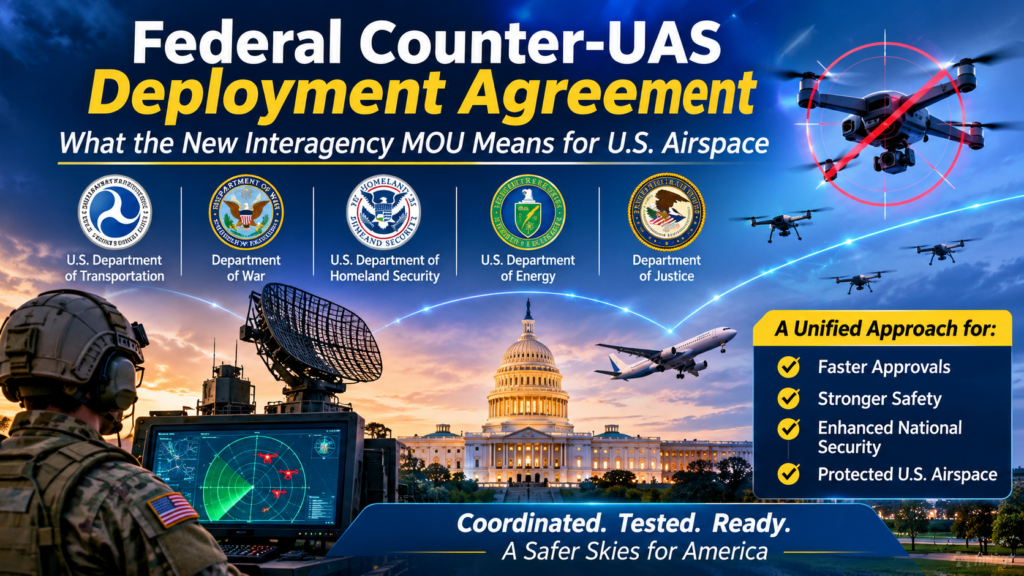
The federal counter-UAS deployment agreement announced on November 9, 2026 is an interagency memorandum of understanding that gives five federal departments one shared, FAA-reviewed process for testing and fielding drone-defense systems safely. In plain terms, it promises faster approvals, clearer safety checks, and fewer surprise airspace disruptions as counter-UAS deployment spreads beyond the southern border.
If you fly drones, run an airport, lead a public safety agency, or sell detection and mitigation technology, this guide explains what changed, why it matters, and what to do next.
Key Takeaways
- The Departments of Transportation, War, Homeland Security, Energy, and Justice announced an expanded interagency effort to coordinate counter-drone operations. transportation
- The White House Task Force to Restore American Airspace Sovereignty led the memorandum. transportation
- The FAA stays the safety gatekeeper. It can impose its own protective measures, including airspace restrictions, if it thinks risk is too high. transportation
- The agreement builds on the April 2026 laser safety agreement and the southern border flight restriction.
- Funding and legal authority are separate questions. Money for equipment does not by itself let an agency disable a drone, and counter-UAS deployment by state and local agencies still depends on the federal framework.
What Is the Federal Counter-UAS Deployment Agreement?
Definition: The federal counter-UAS deployment agreement is a memorandum of understanding (MOU) among federal agencies. It sets one process for evaluating, testing, and fielding systems that detect, track, stop, or take control of unauthorized drones, so those systems don’t interfere with civil aviation.
Expansion: Before this MOU, much of the safety coordination happened agency by agency. Each new tool, whether a radio-frequency mitigation device, a kinetic interceptor, or a laser, could trigger its own negotiation with the FAA. The new agreement creates a consistent interagency process to evaluate these technologies and deploy them to protect aviation safety and advance national security. The aim is to replace one-off negotiations with a repeatable pipeline. transportation
Which Agencies Signed the Agreement?
Five departments announced it: Transportation (which includes the FAA), War, Homeland Security, Energy, and Justice. Each brings a different mission: transportation
- Transportation and the FAA protect the National Airspace System.
- War fields systems to defend the border and military installations.
- Homeland Security focuses on border security and cartel drone threats.
- Energy protects critical energy infrastructure.
- Justice and the FBI handle prosecution and domestic incident response.
Who Led the Effort?
The White House Task Force to Restore American Airspace Sovereignty led the memorandum. A White House-level lead matters because counter-drone work crosses agency lines, and a single coordinating body helps resolve disputes about authority and safety. transportation
Why Counter-UAS Deployment Became an Airspace Problem
Drone defense sounds simple: find the bad drone and stop it. In the national airspace, stopping a drone can also mean jamming radio frequencies that aircraft rely on, or firing an energy beam into the same sky airliners use. That is why counter-UAS deployment has become as much an aviation-safety issue as a security one.
From Texas Incidents to the April Laser Agreement
DroneLife reported that the April 2026 FAA and Department of Defense agreement followed disruptions in Texas. The coverage described it as a response to incidents that exposed gaps in coordination and safety validation. That agreement allowed deployment of high-energy laser counter-drone systems along the southern border, with pre-approved operational use under defined conditions rather than immediate airspace shutdowns. dronelifedronelife
In short, the April deal fixed one system in one region. The November MOU generalizes the approach across technologies and agencies.
The World Cup, the Safer Skies Act, and State and Local Authority
Large events accelerated the timeline. The Safer Skies Act gave state, local, tribal, and territorial agencies new counter-UAS authority, limited them to a federally approved list of systems, and required federally approved training. Meanwhile, DHS placed its first order for a kinetic counter-UAS system to protect World Cup venues. dronelifedronelife
The results were visible. FBI Director Kash Patel said federal agents worked alongside trained state and local officers and seized over 700 drones during the World Cup. Attorney General Todd Blanche also cited the arrest of five men this summer accused of planning explosive-armed drone attacks around a White House event. Those episodes show why the government wants tools that are tested, deconflicted, and ready before an emergency. transportationtransportation
How the Agreement Shapes Counter-UAS Deployment: Three Commitments
The official description lists three practical commitments. Each stands on its own. transportation
Commitment 1: Joint Development With the FAA and FCC
The parties will work with the FAA and the Federal Communications Commission when developing new detection, tracking, and mitigation systems, and will weigh DOT, FAA, and FCC requirements and testing data. The FCC’s presence matters because many mitigation tools use or disrupt radio spectrum. Engaging both regulators early avoids building a system that later fails an aviation or spectrum review. transportation
Commitment 2: Shared Technical Requirements, Field Testing, and Data
The agencies will collaborate on technical requirements, field testing, and data sharing. The FAA may provide standards and guidance, and DOT may advise on how the capabilities fit the broader transportation system. Shared data is the quiet hero here. If one agency’s test shows a navigation-interference problem, every other agency learns about it before fielding a similar system. transportation
Commitment 3: Rapid FAA Safety Risk Assessments
The FAA will quickly review proposed systems and conduct safety risk assessments to confirm that safety protocols and airspace deconfliction measures are adequate. If it sees unsafe conditions, it will share the technical data and recommend ways to reduce risk, and it can add its own protective measures, including restricting airspace. transportationtransportation
This is the step that most directly affects counter-UAS deployment speed. Senior FAA official Liam McKenna told Reuters the agency has approved over 1,000 coordinations with the Pentagon and Homeland Security on counter-drone deployments. He added that for systems the FAA has seen before, the process can be turned around in 24 hours. whblU.S. News & World Report
Frequently Asked Questions About Federal Counter-Drone Policy
What is the November 2026 counter-drone agreement?
It is a memorandum of understanding among five federal departments that sets a shared process for evaluating and fielding counter-drone technology while protecting aviation safety. It builds on earlier FAA work with the Department of War.
Does the agreement let anyone shoot down drones?
No. The MOU coordinates how federal agencies evaluate and deploy systems. It does not create a general right for private parties to disable drones. Authority to mitigate drones remains limited by law to designated agencies and, under the Safer Skies Act, trained and approved state and local personnel using federally approved equipment.
How fast can counter-UAS deployment move under the agreement?
Faster than before, but not instantly. The FAA says familiar systems can be turned around within 24 hours, while new or complex systems still need safety risk assessments and field testing.
Does the FAA lose authority over the airspace?
No. The MOU keeps the FAA’s authority intact. The agency can still restrict airspace if it believes a system poses unacceptable risk.
Where does the southern border flight restriction fit in?
The agreement cites it as part of the existing collaboration. Reuters reported that the restriction bars unauthorized drone activity up to 400 feet above ground level and extends one nautical mile north of the U.S.-Mexico border. Last month, the FAA said it was barring unauthorized drones along the entire border. U.S. News & World ReportU.S. News & World Report
Does this affect recreational drone pilots?
Indirectly. Pilots near sensitive sites may encounter active counter-drone systems and stricter flight restrictions. Checking temporary flight restrictions before every flight, and keeping Remote ID working, is the safest habit.
Comparing the Key Federal Frameworks
Three policies now shape how drone-defense tools reach the field. They are related but do different jobs.
| Framework | Scope | Main Purpose | Key Players |
|---|---|---|---|
| April 2026 FAA–DoW safety agreement | One system (high-energy laser) on the southern border | Safety validation and pre-approved operating conditions | FAA, Department of War |
| November 2026 interagency MOU | All counter-drone technologies, nationwide | A repeatable process to evaluate, test, and field systems safely | DOT/FAA, DoW, DHS, DOE, DOJ, with FCC input |
| Safer Skies Act framework | State, local, tribal, and territorial agencies | Grants authority, limits equipment to approved lists, requires training | DOJ, DHS, FCC, trained local agencies |
The table shows the layering. The MOU governs how technology gets safely evaluated, the Safer Skies framework governs who may use it, and the April agreement is a proven example of the approach.
What the Agreement Means for Different Audiences
Drone Pilots and Operators
- Expect more areas with active counter-drone systems and tighter temporary flight restrictions.
- Keep Remote ID functional and follow identification rules.
- Check airspace advisories before every flight, especially near borders, stadiums, and federal facilities.
Airports and Aviation Stakeholders
Airports gain a more predictable process. Because the FAA reviews deconfliction measures up front, airport operators can expect clearer coordination before a system goes live nearby rather than learning about it during an incident.
State and Local Public Safety Agencies
For agencies, counter-UAS deployment is a capability, a legal authority, and a training commitment all at once. The MOU does not replace the Safer Skies requirements. It makes the federal side of approval more consistent, which should help local teams buy and field approved equipment with fewer surprises.
Counter-Drone Vendors
Vendors should treat FAA and FCC requirements as design inputs, not afterthoughts. A system with solid test data, a clear deconfliction plan, and documented effects on navigation and communications will move through review faster. Vendors that can show that evidence early will likely have an advantage.
Funding: FEMA Counter-UAS Grants
Policy only matters if agencies can pay for equipment and training. FEMA is accepting applications for $250 million in counter-drone grants under its FY2027 C-UAS Grant Program, with applications due November 16, 2026 at 5 p.m. Eastern. The round adds emphasis on security for the 2028 Los Angeles Olympics and Paralympics, and FEMA expects to announce awards in December 2026. dronelifedronelife
There is a catch. Federal grant funding does not automatically give an agency the authority to disable or intercept drones. Agencies should confirm their legal authority and training status before they spend. With roughly 20,000 public law enforcement agencies nationwide, layered systems require significant investment in equipment, training, and maintenance. Counter-UAS grants will not reach everyone, so prioritization matters. dronelifedronelife
Risks and Open Questions
The agreement is a meaningful step, but several questions remain open.
- Speed versus safety. A 24-hour turnaround is impressive for familiar systems. The tension in counter-UAS deployment is that faster approvals must not skip the testing that catches navigation or communications interference.
- Transparency. The public release describes the process but not the test thresholds. Operators and communities may want to know how safety risk is measured.
- Capacity. Many agencies will compete for limited funding and a limited pool of approved, trained personnel.
- Civil aviation impact. Wider use of mitigation tools raises the odds of unintended effects on legitimate flights. Ongoing data sharing is the main safeguard.
- Scope creep. What begins as border and event protection could expand to more places. Clear legal limits will matter as use grows.
A Practical Checklist for the Next 90 Days
- Public safety leaders: Decide whether to apply for the FEMA grant before the November 16 deadline. Confirm training pathways and legal authority.
- Airports: Ask your FAA contacts how counter-drone coordination will reach your airspace.
- Vendors: Assemble testing data, deconfliction documentation, and FCC compliance evidence.
- Drone operators: Re-check flight restriction maps and Remote ID settings.
- Everyone: Follow updates from the FAA, DOT, and DHS as implementation details emerge.
Conclusion
The federal counter-UAS deployment agreement is less a single dramatic event than a plumbing upgrade. It connects five departments, the FAA, and the FCC around one safety-first process, building on the April laser agreement and the border flight restriction. If it works as described, counter-UAS deployment will become faster, more predictable, and less disruptive to commercial and private aviation.
The real test will come in practice: whether approvals stay fast without cutting safety corners, whether local agencies get the funding and training they need, and whether the public gets enough transparency to trust the system. For now, the clearest move for anyone in the drone ecosystem is to understand the new process and prepare for it.
ଫେଡେରାଲ୍ କାଉଣ୍ଟର-UAS ନିୟୋଜନ ଚୁକ୍ତିନାମା: ଆମେରିକାର ଆକାଶମାର୍ଗ ପାଇଁ ନୂତନ ଆନ୍ତଃଏଜେନ୍ସି MOU କ’ଣ ଅର୍ଥ ରଖେ
ନଭେମ୍ବର 9, 2026 ରେ ଘୋଷଣା କରାଯାଇଥିବା ଫେଡେରାଲ୍ କାଉଣ୍ଟର-UAS ନିୟୋଜନ ଚୁକ୍ତିନାମା ହେଉଛି ଏକ ଆନ୍ତଃଏଜେନ୍ସି ବୁଝାମଣାପତ୍ର ଯାହା ପାଞ୍ଚଟି ଫେଡେରାଲ୍ ବିଭାଗକୁ ଡ୍ରୋନ୍-ପ୍ରତିରକ୍ଷା ପ୍ରଣାଳୀର ନିରାପଦ ପରୀକ୍ଷଣ ଏବଂ କ୍ଷେତ୍ରୀକରଣ ପାଇଁ ଏକ ଅଂଶୀଦାର, FAA-ସମୀକ୍ଷା ପ୍ରକ୍ରିୟା ପ୍ରଦାନ କରେ। ସରଳ ଶବ୍ଦରେ, ଏହା ଦକ୍ଷିଣ ସୀମା ବାହାରକୁ ପ୍ରତି-UAS ନିୟୋଜନ ବ୍ୟାପିବା ସହିତ ଦ୍ରୁତ ଅନୁମୋଦନ, ସ୍ପଷ୍ଟ ସୁରକ୍ଷା ଯାଞ୍ଚ ଏବଂ କମ୍ ଆଶ୍ଚର୍ଯ୍ୟଜନକ ଆକାଶମାର୍ଗ ବାଧା ପ୍ରଦାନ କରିବାର ପ୍ରତିଶ୍ରୁତି ଦିଏ।
ଯଦି ଆପଣ ଡ୍ରୋନ୍ ଉଡ଼ାଉଛନ୍ତି, ଏକ ବିମାନବନ୍ଦର ଚଲାଉଛନ୍ତି, ଏକ ସାର୍ବଜନୀନ ସୁରକ୍ଷା ସଂସ୍ଥାର ନେତୃତ୍ୱ ନେଉଛନ୍ତି, କିମ୍ବା ଚିହ୍ନଟ ଏବଂ ହ୍ରାସ ପ୍ରଯୁକ୍ତିବିଦ୍ୟା ବିକ୍ରୟ କରୁଛନ୍ତି, ତେବେ ଏହି ମାର୍ଗଦର୍ଶିକା କ’ଣ ପରିବର୍ତ୍ତନ ହୋଇଛି, ଏହା କାହିଁକି ଗୁରୁତ୍ୱପୂର୍ଣ୍ଣ ଏବଂ ପରବର୍ତ୍ତୀ କ’ଣ କରିବାକୁ ହେବ ତାହା ବ୍ୟାଖ୍ୟା କରୁଛି।
ପ୍ରମୁଖ ପ୍ରସଙ୍ଗ
ପରିବହନ, ଯୁଦ୍ଧ, ଗୃହ ସୁରକ୍ଷା, ଶକ୍ତି ଏବଂ ନ୍ୟାୟ ବିଭାଗଗୁଡ଼ିକ ଡ୍ରୋନ୍-ପ୍ରତିରକ୍ଷା କାର୍ଯ୍ୟାନୁଷ୍ଠାନ ସମନ୍ୱୟ ପାଇଁ ଏକ ବିସ୍ତାରିତ ଆନ୍ତଃଏଜେନ୍ସି ପ୍ରୟାସ ଘୋଷଣା କରିଛନ୍ତି।
ପରିବହନ
ଆମେରିକୀୟ ଆକାଶମାର୍ଗ ସାର୍ବଭୌମତ୍ୱ ପୁନଃସ୍ଥାପିତ କରିବା ପାଇଁ ହ୍ୱାଇଟ୍ ହାଉସ୍ ଟାସ୍କ ଫୋର୍ସ ସ୍ମାରକପତ୍ରର ନେତୃତ୍ୱ ନେଇଛି।
ପରିବହନ
FAA ସୁରକ୍ଷା ଦ୍ୱାରପାଳ ରହିଥାଏ। ଯଦି ଏହା ଭାବୁଛି ଯେ ବିପଦ ଅତ୍ୟଧିକ, ତେବେ ଏହା ଏୟାରସ୍ପେସ୍ ପ୍ରତିବନ୍ଧକ ସମେତ ନିଜର ସୁରକ୍ଷାମୂଳକ ପଦକ୍ଷେପ ଲାଗୁ କରିପାରିବ।
ପରିବହନ
ଏହି ଚୁକ୍ତିନାମା ଏପ୍ରିଲ 2026 ଲେଜର ସୁରକ୍ଷା ଚୁକ୍ତିନାମା ଏବଂ ଦକ୍ଷିଣ ସୀମା ଉଡ଼ାଣ ପ୍ରତିବନ୍ଧକ ଉପରେ ନିର୍ମିତ।
ପାଣ୍ଠି ଏବଂ ଆଇନଗତ କର୍ତ୍ତୃପକ୍ଷ ପୃଥକ ପ୍ରଶ୍ନ। ଉପକରଣ ପାଇଁ ଟଙ୍କା ନିଜେ ଏକ ଏଜେନ୍ସିକୁ ଡ୍ରୋନ୍ ଅକ୍ଷମ କରିବାକୁ ଦିଏ ନାହିଁ, ଏବଂ ରାଜ୍ୟ ଏବଂ ସ୍ଥାନୀୟ ଏଜେନ୍ସିଗୁଡ଼ିକ ଦ୍ୱାରା କାଉଣ୍ଟର-UAS ନିୟୋଜନ ଏପର୍ଯ୍ୟନ୍ତ ଫେଡେରାଲ୍ ଢାଞ୍ଚା ଉପରେ ନିର୍ଭର କରେ।
ଫେଡେରାଲ୍ କାଉଣ୍ଟର-UAS ନିୟୋଜନ ଚୁକ୍ତିନାମା କ’ଣ?
ପରିଭାଷା: ଫେଡେରାଲ୍ କାଉଣ୍ଟର-UAS ନିୟୋଜନ ଚୁକ୍ତିନାମା ହେଉଛି ଫେଡେରାଲ୍ ଏଜେନ୍ସିଗୁଡ଼ିକ ମଧ୍ୟରେ ଏକ ବୁଝାମଣାପତ୍ର (MOU)। ଏହା ଅନଧିକୃତ ଡ୍ରୋନ୍ ଚିହ୍ନଟ, ଟ୍ରାକ୍, ବନ୍ଦ କିମ୍ବା ନିୟନ୍ତ୍ରଣ କରୁଥିବା ସିଷ୍ଟମଗୁଡ଼ିକର ମୂଲ୍ୟାଙ୍କନ, ପରୀକ୍ଷଣ ଏବଂ କ୍ଷେତ୍ରୀକରଣ ପାଇଁ ଗୋଟିଏ ପ୍ରକ୍ରିୟା ସ୍ଥିର କରେ, ଯାହା ଦ୍ଵାରା ସେହି ସିଷ୍ଟମଗୁଡ଼ିକ ବେସାମରିକ ବିମାନ ଚଳାଚଳରେ ବାଧା ସୃଷ୍ଟି କରେ ନାହିଁ।
ବିସ୍ତାର: ଏହି MOU ପୂର୍ବରୁ, ସୁରକ୍ଷା ସମନ୍ୱୟର ଅଧିକାଂଶ ଏଜେନ୍ସି ଦ୍ୱାରା ଏଜେନ୍ସି ହୋଇଥିଲା। ପ୍ରତ୍ୟେକ ନୂତନ ଉପକରଣ, ଏକ ରେଡିଓ-ଫ୍ରିକ୍ୱେନ୍ସି ହ୍ରାସକରଣ ଡିଭାଇସ୍, ଏକ ଗତିଜ ଇଣ୍ଟରସେପ୍ଟର, କିମ୍ବା ଏକ ଲେଜର, FAA ସହିତ ନିଜର ଆଲୋଚନାକୁ ଟ୍ରିଗର କରିପାରିବ। ନୂତନ ଚୁକ୍ତିନାମା ଏହି ପ୍ରଯୁକ୍ତିବିଦ୍ୟାଗୁଡ଼ିକର ମୂଲ୍ୟାଙ୍କନ ଏବଂ ବିମାନ ସୁରକ୍ଷାକୁ ସୁରକ୍ଷା ଦେବା ଏବଂ ଜାତୀୟ ସୁରକ୍ଷାକୁ ଆଗକୁ ବଢ଼ାଇବା ପାଇଁ ସେଗୁଡ଼ିକୁ ନିୟୋଜିତ କରିବା ପାଇଁ ଏକ ସ୍ଥିର ଆନ୍ତଃ-ଏଜେନ୍ସି ପ୍ରକ୍ରିୟା ସୃଷ୍ଟି କରେ। ଲକ୍ଷ୍ୟ ହେଉଛି ଏକ ଥର ଆଲୋଚନାକୁ ପୁନରାବୃତ୍ତିଯୋଗ୍ୟ ପାଇପଲାଇନ ସହିତ ବଦଳାଇବା।
ପରିବହନ
କେଉଁ ଏଜେନ୍ସି ଚୁକ୍ତିନାମାରେ ସ୍ୱାକ୍ଷର କରିଛନ୍ତି?
ପାଞ୍ଚଟି ବିଭାଗ ଏହାକୁ ଘୋଷଣା କରିଛନ୍ତି: ପରିବହନ (ଯାହା ମଧ୍ୟରେ FAA ଅନ୍ତର୍ଭୁକ୍ତ), ଯୁଦ୍ଧ, ଗୃହ ସୁରକ୍ଷା, ଶକ୍ତି ଏବଂ ନ୍ୟାୟ। ପ୍ରତ୍ୟେକ ଏକ ଭିନ୍ନ ମିଶନ ଆଣିଥାଏ:
ପରିବହନ
ପରିବହନ ଏବଂ FAA ଜାତୀୟ ଆକାଶମାର୍ଗ ପ୍ରଣାଳୀକୁ ସୁରକ୍ଷା ଦିଏ।
ସୀମା ଏବଂ ସାମରିକ ପ୍ରତିଷ୍ଠାନକୁ ରକ୍ଷା କରିବା ପାଇଁ ଯୁଦ୍ଧ କ୍ଷେତ୍ର ପ୍ରଣାଳୀ।
ଗୃହ ସୁରକ୍ଷା ସୀମା ସୁରକ୍ଷା ଏବଂ କାର୍ଟେଲ ଡ୍ରୋନ ବିପଦ ଉପରେ ଧ୍ୟାନ ଦିଏ।
ଶକ୍ତି ଗୁରୁତ୍ୱପୂର୍ଣ୍ଣ ଶକ୍ତି ଭିତ୍ତିଭୂମିକୁ ସୁରକ୍ଷା ଦିଏ।
ନ୍ୟାୟ ଏବଂ FBI ମାମଲା ଏବଂ ଘରୋଇ ଘଟଣା ପ୍ରତିକ୍ରିୟା ପରିଚାଳନା କରେ।
ପ୍ରୟାସ କିଏ ନେତୃତ୍ୱ ନେଇଥିଲା?
ଆମେରିକୀୟ ଆକାଶମାର୍ଗ ସାର୍ବଭୌମତ୍ୱକୁ ପୁନଃସ୍ଥାପିତ କରିବା ପାଇଁ ହ୍ୱାଇଟ୍ ହାଉସ୍ ଟାସ୍କ ଫୋର୍ସ ସ୍ମାରକପତ୍ରର ନେତୃତ୍ୱ ନେଇଥିଲା। ଏକ ହ୍ୱାଇଟ୍ ହାଉସ୍-ସ୍ତରୀୟ ନେତୃତ୍ୱ ଗୁରୁତ୍ୱପୂର୍ଣ୍ଣ କାରଣ ପ୍ରତି-ଡ୍ରୋନ୍ କାର୍ଯ୍ୟ ଏଜେନ୍ସି ରେଖା ଅତିକ୍ରମ କରେ, ଏବଂ ଏକକ ସମନ୍ୱୟକାରୀ ସଂସ୍ଥା କର୍ତ୍ତୃପକ୍ଷ ଏବଂ ସୁରକ୍ଷା ବିଷୟରେ ବିବାଦ ସମାଧାନ କରିବାରେ ସାହାଯ୍ୟ କରେ।
ପରିବହନ
କାଉଣ୍ଟର-UAS ନିୟୋଜନ କାହିଁକି ଏକ ଆକାଶମାର୍ଗ ସମସ୍ୟା ହୋଇଗଲା
ଡ୍ରୋନ୍ ପ୍ରତିରକ୍ଷା ସରଳ ଶୁଣାଯାଉଛି: ଖରାପ ଡ୍ରୋନ୍ ଖୋଜନ୍ତୁ ଏବଂ ଏହାକୁ ବନ୍ଦ କରନ୍ତୁ। ଜାତୀୟ ଆକାଶମାର୍ଗରେ, ଡ୍ରୋନ୍ ବନ୍ଦ କରିବାର ଅର୍ଥ ହେଉଛି ବିମାନ ଉପରେ ନିର୍ଭର କରୁଥିବା ରେଡିଓ ଫ୍ରିକ୍ୱେନ୍ସିଗୁଡ଼ିକୁ ଜାମ୍ କରିବା, କିମ୍ବା ସମାନ ଆକାଶ ବିମାନ ବ୍ୟବହାର କରୁଥିବା ସମାନ ଆକାଶରେ ଏକ ଶକ୍ତି ବିମ୍ ଫାୟାର କରିବା। ସେଥିପାଇଁ କାଉଣ୍ଟର-UAS ନିୟୋଜନ ଏକ ସୁରକ୍ଷା ସମସ୍ୟା ପରି ଏକ ବିମାନ-ସୁରକ୍ଷା ସମସ୍ୟା ପାଲଟିଛି।
ଟେକ୍ସାସ ଘଟଣାରୁ ଏପ୍ରିଲ ଲେଜର ଚୁକ୍ତିନାମା ପର୍ଯ୍ୟନ୍ତ
ଡ୍ରୋନ୍ଲାଇଫ୍ ରିପୋର୍ଟ କରିଛି ଯେ ଏପ୍ରିଲ 2026 FAA ଏବଂ ପ୍ରତିରକ୍ଷା ବିଭାଗ ଚୁକ୍ତିନାମା ଟେକ୍ସାସରେ ବାଧା ପରେ ହୋଇଥିଲା। କଭରେଜ୍ ଏହାକୁ ସମନ୍ୱୟ ଏବଂ ସୁରକ୍ଷା ବୈଧତାରେ ଫାଙ୍କକୁ ପ୍ରକାଶ କରୁଥିବା ଘଟଣାଗୁଡ଼ିକର ପ୍ରତିକ୍ରିୟା ଭାବରେ ବର୍ଣ୍ଣନା କରିଥିଲା। ସେହି ଚୁକ୍ତିନାମା ଦକ୍ଷିଣ ସୀମା ସହିତ ଉଚ୍ଚ-ଶକ୍ତି ଲେଜର କାଉଣ୍ଟର-ଡ୍ରୋନ୍ ସିଷ୍ଟମଗୁଡ଼ିକୁ ନିୟୋଜନ କରିବାକୁ ଅନୁମତି ଦେଇଥିଲା, ତୁରନ୍ତ ଆକାଶମାର୍ଗ ବନ୍ଦ କରିବା ପରିବର୍ତ୍ତେ ପରିଭାଷିତ ପରିସ୍ଥିତିରେ ପୂର୍ବ-ଅନୁମୋଦିତ କାର୍ଯ୍ୟକ୍ଷମ ବ୍ୟବହାର ସହିତ।
ଡ୍ରୋନ୍ଲାଇଫ୍
ଡ୍ରୋନ୍ଲାଇଫ୍
ସଂକ୍ଷେପରେ, ଏପ୍ରିଲ ଚୁକ୍ତିନାମା ଗୋଟିଏ ଅଞ୍ଚଳରେ ଗୋଟିଏ ସିଷ୍ଟମକୁ ସ୍ଥିର କରିଥିଲା। ନଭେମ୍ବର MOU ପ୍ରଯୁକ୍ତିବିଦ୍ୟା ଏବଂ ଏଜେନ୍ସିଗୁଡ଼ିକ ମଧ୍ୟରେ ଆଭିମୁଖ୍ୟକୁ ସାଧାରଣୀକରଣ କରେ।
ବିଶ୍ୱକପ୍, ସୁରକ୍ଷିତ ଆକାଶ ଆଇନ, ଏବଂ ରାଜ୍ୟ ଏବଂ ସ୍ଥାନୀୟ କର୍ତ୍ତୃପକ୍ଷ
ବଡ଼ ଘଟଣାଗୁଡ଼ିକ ସମୟସୀମାକୁ ତ୍ୱରାନ୍ୱିତ କରିଥିଲା। ସୁରକ୍ଷିତ ଆକାଶ ଆଇନ ରାଜ୍ୟ, ସ୍ଥାନୀୟ, ଜନଜାତି ଏବଂ ଆଞ୍ଚଳିକ ଏଜେନ୍ସିଗୁଡ଼ିକୁ ନୂତନ ପ୍ରତି-UAS କର୍ତ୍ତୃପକ୍ଷ ଦେଇଥିଲା, ସେମାନଙ୍କୁ ଏକ ସଂଘୀୟ ଅନୁମୋଦିତ ସିଷ୍ଟମ ତାଲିକାରେ ସୀମିତ କରିଥିଲା ଏବଂ ସଂଘୀୟ ଅନୁମୋଦିତ ତାଲିମ ଆବଶ୍ୟକ କରିଥିଲା। ଏହି ସମୟରେ, DHS ବିଶ୍ୱକପ୍ ସ୍ଥାନଗୁଡ଼ିକୁ ସୁରକ୍ଷା ଦେବା ପାଇଁ ଏକ ଗତିଜ ପ୍ରତି-UAS ସିଷ୍ଟମ ପାଇଁ ଏହାର ପ୍ରଥମ ଅର୍ଡର ଦେଇଥିଲା।
ଡ୍ରୋନଲାଇଫ୍
ଡ୍ରୋନଲାଇଫ୍
ପରିଣାମ ଦୃଶ୍ୟମାନ ହୋଇଥିଲା। FBI ନିର୍ଦ୍ଦେଶକ କାଶ୍ ପଟେଲ କହିଛନ୍ତି ଯେ ସଂଘୀୟ ଏଜେଣ୍ଟମାନେ ପ୍ରଶିକ୍ଷିତ ରାଜ୍ୟ ଏବଂ ସ୍ଥାନୀୟ ଅଧିକାରୀଙ୍କ ସହିତ କାମ କରିଥିଲେ ଏବଂ ବିଶ୍ୱକପ୍ ସମୟରେ 700 ରୁ ଅଧିକ ଡ୍ରୋନ୍ ଜବତ କରିଥିଲେ। ଆଟର୍ଣ୍ଣି ଜେନେରାଲ ଟଡ୍ ବ୍ଲାଞ୍ଚ ମଧ୍ୟ ଏହି ଗ୍ରୀଷ୍ମ ଋତୁରେ ଏକ ହ୍ୱାଇଟ୍ ହାଉସ୍ ଇଭେଣ୍ଟରେ ବିସ୍ଫୋରକ-ସଶସ୍ତ୍ର ଡ୍ରୋନ୍ ଆକ୍ରମଣ ଯୋଜନା କରୁଥିବା ଅଭିଯୋଗରେ ପାଞ୍ଚ ଜଣ ବ୍ୟକ୍ତିଙ୍କ ଗିରଫଦାରୀକୁ ଉଲ୍ଲେଖ କରିଥିଲେ। ସେହି ଏପିସୋଡ୍ଗୁଡ଼ିକ ଦର୍ଶାଏ ଯେ ସରକାର କାହିଁକି ଏପରି ଉପକରଣ ଚାହାଁନ୍ତି ଯାହା ପରୀକ୍ଷିତ, ବିଦ୍ୱେଷମୁକ୍ତ ଏବଂ ଜରୁରୀକାଳୀନ ପରିସ୍ଥିତି ପୂର୍ବରୁ ପ୍ରସ୍ତୁତ।y.
ପରିବହନ
ପରିବହନ
ଚୁକ୍ତି କିପରି ପ୍ରତି-UAS ନିୟୋଜନକୁ ଆକାର ଦିଏ: ତିନୋଟି ପ୍ରତିଶ୍ରୁତି
ଆନୁଷ୍ଠାନିକ ବର୍ଣ୍ଣନା ତିନୋଟି ବ୍ୟବହାରିକ ପ୍ରତିଶ୍ରୁତି ତାଲିକାଭୁକ୍ତ କରେ। ପ୍ରତ୍ୟେକ ନିଜ ନିଜ ଉପରେ ଠିଆ ହୁଏ।
ପରିବହନ
ପ୍ରତିବଦ୍ଧତା 1: FAA ଏବଂ FCC ସହିତ ମିଳିତ ବିକାଶ
ନୂତନ ଚିହ୍ନଟ, ଟ୍ରାକିଂ ଏବଂ ହ୍ରାସକରଣ ପ୍ରଣାଳୀ ବିକାଶ କରିବା ସମୟରେ ପକ୍ଷମାନେ FAA ଏବଂ ଫେଡେରାଲ୍ ଯୋଗାଯୋଗ କମିଶନ ସହିତ କାମ କରିବେ ଏବଂ DOT, FAA, ଏବଂ FCC ଆବଶ୍ୟକତା ଏବଂ ପରୀକ୍ଷଣ ତଥ୍ୟକୁ ତୁଳନା କରିବେ। FCC ର ଉପସ୍ଥିତି ଗୁରୁତ୍ୱପୂର୍ଣ୍ଣ କାରଣ ଅନେକ ହ୍ରାସକରଣ ଉପକରଣ ରେଡିଓ ସ୍ପେକ୍ଟ୍ରମ୍ ବ୍ୟବହାର କରନ୍ତି କିମ୍ବା ବିପର୍ଯ୍ୟସ୍ତ କରନ୍ତି। ଉଭୟ ନିୟାମକଙ୍କୁ ଶୀଘ୍ର ସାମିଲ କରିବା ଦ୍ୱାରା ଏପରି ଏକ ସିଷ୍ଟମ୍ ନିର୍ମାଣ କରିବା ଏଡାଯାଏ ଯାହା ପରେ ଏକ ବିମାନ ଚଳାଚଳ କିମ୍ବା ସ୍ପେକ୍ଟ୍ରମ୍ ସମୀକ୍ଷାରେ ବିଫଳ ହୁଏ।
ପରିବହନ
ପ୍ରତିବଦ୍ଧତା 2: ସେୟାର କରାଯାଇଥିବା ବୈଷୟିକ ଆବଶ୍ୟକତା, କ୍ଷେତ୍ର ପରୀକ୍ଷା ଏବଂ ତଥ୍ୟ
ଏଜେନ୍ସିଗୁଡ଼ିକ ବୈଷୟିକ ଆବଶ୍ୟକତା, କ୍ଷେତ୍ର ପରୀକ୍ଷା ଏବଂ ତଥ୍ୟ ଅଂଶୀଦାର ଉପରେ ସହଯୋଗ କରିବେ। FAA ମାନକ ଏବଂ ମାର୍ଗଦର୍ଶନ ପ୍ରଦାନ କରିପାରେ, ଏବଂ DOT କିପରି ବ୍ୟାପକ ପରିବହନ ପ୍ରଣାଳୀରେ କ୍ଷମତା ଫିଟ୍ ହୁଏ ସେ ବିଷୟରେ ପରାମର୍ଶ ଦେଇପାରେ। ସେୟାର କରାଯାଇଥିବା ତଥ୍ୟ ଏଠାରେ ନୀରବ ନାୟକ। ଯଦି ଗୋଟିଏ ଏଜେନ୍ସିର ପରୀକ୍ଷଣ ନାଭିଗେସନ୍-ହସ୍ତକ୍ଷେପ ସମସ୍ୟା ଦେଖାଏ, ତେବେ ଅନ୍ୟ ପ୍ରତ୍ୟେକ ଏଜେନ୍ସି ସମାନ ସିଷ୍ଟମ ଖେଲିବା ପୂର୍ବରୁ ଏହା ବିଷୟରେ ଶିଖନ୍ତି।
ପରିବହନ
ପ୍ରତିବଦ୍ଧତା 3: ଦ୍ରୁତ FAA ସୁରକ୍ଷା ବିପଦ ମୂଲ୍ୟାଙ୍କନ
FAA ଶୀଘ୍ର ପ୍ରସ୍ତାବିତ ସିଷ୍ଟମଗୁଡ଼ିକର ସମୀକ୍ଷା କରିବ ଏବଂ ସୁରକ୍ଷା ପ୍ରୋଟୋକଲ ଏବଂ ଏୟାରସ୍ପେସ୍ ଡିକନ୍ଫ୍ଲିକ୍ସନ୍ ପଦକ୍ଷେପ ଯଥେଷ୍ଟ ବୋଲି ନିଶ୍ଚିତ କରିବା ପାଇଁ ସୁରକ୍ଷା ବିପଦ ମୂଲ୍ୟାଙ୍କନ କରିବ। ଯଦି ଏହା ଅସୁରକ୍ଷିତ ପରିସ୍ଥିତି ଦେଖେ, ତେବେ ଏହା ବୈଷୟିକ ତଥ୍ୟ ଅଂଶୀଦାର କରିବ ଏବଂ ବିପଦ ହ୍ରାସ କରିବାର ଉପାୟ ସୁପାରିଶ କରିବ, ଏବଂ ଏହା ଏୟାରସ୍ପେସ୍ ପ୍ରତିବନ୍ଧକ ସମେତ ନିଜର ସୁରକ୍ଷାମୂଳକ ପଦକ୍ଷେପ ଯୋଡିପାରିବ।
ପରିବହନ
ପରିବହନ
ଏହା ହେଉଛି ସେହି ପଦକ୍ଷେପ ଯାହା ସିଧାସଳଖ ପ୍ରତି-UAS ନିୟୋଜନ ଗତିକୁ ପ୍ରଭାବିତ କରେ। FAAର ବରିଷ୍ଠ ଅଧିକାରୀ ଲିଆମ୍ ମ୍ୟାକେନା ରଏଟର୍ସଙ୍କୁ କହିଛନ୍ତି ଯେ ଏଜେନ୍ସି ପ୍ରତି-ଡ୍ରୋନ୍ ନିୟୋଜନ ଉପରେ ପେଣ୍ଟାଗନ୍ ଏବଂ ଗୃହ ସୁରକ୍ଷା ସହିତ 1,000 ରୁ ଅଧିକ ସମନ୍ୱୟକୁ ଅନୁମୋଦନ କରିଛି। ସେ ଆହୁରି କହିଛନ୍ତି ଯେ FAA ପୂର୍ବରୁ ଦେଖିଥିବା ସିଷ୍ଟମ ପାଇଁ, ପ୍ରକ୍ରିୟାକୁ 24 ଘଣ୍ଟା ମଧ୍ୟରେ ପରିବର୍ତ୍ତନ କରାଯାଇପାରିବ।
whbl
ଆମେରିକୀୟ ସମାଚାର ଏବଂ ବିଶ୍ୱ ରିପୋର୍ଟ
ଫେଡେରାଲ୍ କାଉଣ୍ଟର-ଡ୍ରୋନ୍ ନୀତି ବିଷୟରେ ପ୍ରାୟତଃ ପଚରାଯାଉଥିବା ପ୍ରଶ୍ନ
ନଭେମ୍ବର 2026 କାଉଣ୍ଟର-ଡ୍ରୋନ୍ ଚୁକ୍ତିନାମା କ’ଣ?
ଏହା ପାଞ୍ଚଟି ଫେଡେରାଲ୍ ବିଭାଗ ମଧ୍ୟରେ ଏକ ବୁଝାମଣାପତ୍ର ଯାହା ବିମାନ ସୁରକ୍ଷାକୁ ସୁରକ୍ଷା ଦେବା ସହିତ କାଉଣ୍ଟର-ଡ୍ରୋନ୍ ପ୍ରଯୁକ୍ତିବିଦ୍ୟା ମୂଲ୍ୟାଙ୍କନ ଏବଂ କ୍ଷେତ୍ରୀକରଣ ପାଇଁ ଏକ ଅଂଶୀଦାର ପ୍ରକ୍ରିୟା ସ୍ଥିର କରେ। ଏହା ଯୁଦ୍ଧ ବିଭାଗ ସହିତ ପୂର୍ବ FAA କାର୍ଯ୍ୟ ଉପରେ ନିର୍ମାଣ କରେ।
ଚୁକ୍ତିନାମା କାହାକୁ ଡ୍ରୋନ୍ ଗୁଳି କରିବାକୁ ଦିଏ କି?
ନା। MOU କିପରି ଫେଡେରାଲ୍ ଏଜେନ୍ସିଗୁଡ଼ିକ ସିଷ୍ଟମଗୁଡ଼ିକର ମୂଲ୍ୟାଙ୍କନ ଏବଂ ନିୟୋଜନ କରେ ତାହାର ସମନ୍ୱୟ କରେ। ଏହା ଘରୋଇ ପକ୍ଷମାନଙ୍କ ପାଇଁ ଡ୍ରୋନ୍ ନିଷ୍କ୍ରିୟ କରିବା ପାଇଁ ଏକ ସାଧାରଣ ଅଧିକାର ସୃଷ୍ଟି କରେ ନାହିଁ। ଡ୍ରୋନ୍ ହ୍ରାସ କରିବାର ଅଧିକାର ଆଇନ ଦ୍ୱାରା ନିର୍ଦ୍ଦିଷ୍ଟ ଏଜେନ୍ସିଗୁଡ଼ିକ ଏବଂ ସୁରକ୍ଷିତ ଆକାଶ ଆଇନ ଅନୁଯାୟୀ, ଫେଡେରାଲ୍ ଅନୁମୋଦିତ ଉପକରଣ ବ୍ୟବହାର କରି ପ୍ରଶିକ୍ଷିତ ଏବଂ ଅନୁମୋଦିତ ରାଜ୍ୟ ଏବଂ ସ୍ଥାନୀୟ କର୍ମଚାରୀମାନଙ୍କ ପାଇଁ ସୀମିତ ରହିଛି।
ଚୁକ୍ତିନାମା ଅନୁଯାୟୀ କାଉଣ୍ଟର-UAS ନିୟୋଜନ କେତେ ଶୀଘ୍ର ଗତି କରିପାରିବ?
ପୂର୍ବ ଅପେକ୍ଷା ଦ୍ରୁତ, କିନ୍ତୁ ତୁରନ୍ତ ନୁହେଁ। FAA କହିଛି ଯେ ପରିଚିତ ସିଷ୍ଟମଗୁଡ଼ିକୁ 24 ଘଣ୍ଟା ମଧ୍ୟରେ ପରିବର୍ତ୍ତନ କରାଯାଇପାରିବ, ଯେତେବେଳେ ନୂତନ କିମ୍ବା ଜଟିଳ ସିଷ୍ଟମଗୁଡ଼ିକୁ ଏବେ ବି ସୁରକ୍ଷା ବିପଦ ମୂଲ୍ୟାଙ୍କନ ଏବଂ କ୍ଷେତ୍ର ପରୀକ୍ଷା ଆବଶ୍ୟକ।
FAA କ’ଣ ଏୟାରସ୍ପେସ୍ ଉପରେ କର୍ତ୍ତୃତ୍ୱ ହରାଇବ?
ନା। MOU FAA ର କର୍ତ୍ତୃତ୍ୱକୁ ଅକ୍ଷୁର୍ଣ୍ଣ ରଖେ। ଯଦି ଏଜେନ୍ସି ବିଶ୍ୱାସ କରେ ଯେ ଏକ ସିଷ୍ଟମ୍ ଅଗ୍ରାହ୍ୟ ବିପଦ ସୃଷ୍ଟି କରେ ତେବେ ଏଜେନ୍ସି ଏବେ ବି ଏୟାରସ୍ପେସ୍ ପ୍ରତିବନ୍ଧିତ କରିପାରିବ।
ଦକ୍ଷିଣ ସୀମା ଉଡ଼ାଣ ପ୍ରତିବନ୍ଧକ କେଉଁଠାରେ ଫିଟ୍ ହୁଏ?
ଚୁକ୍ତିନାମା ଏହାକୁ ବିଦ୍ୟମାନ ସହଯୋଗର ଅଂଶ ଭାବରେ ଉଲ୍ଲେଖ କରିଛି। ରଏଟର୍ସ ରିପୋର୍ଟ କରିଛି ଯେ ଏହି ପ୍ରତିବନ୍ଧକ ଭୂମି ସ୍ତରରୁ 400 ଫୁଟ ଉଚ୍ଚତା ପର୍ଯ୍ୟନ୍ତ ଅନଧିକୃତ ଡ୍ରୋନ୍ କାର୍ଯ୍ୟକଳାପକୁ ବାରଣ କରେ ଏବଂ ଆମେରିକା-ମେକ୍ସିକୋ ସୀମାର ଉତ୍ତରରେ ଗୋଟିଏ ନଟିକାଲ୍ ମାଇଲ୍ ବିସ୍ତାର କରେ। ଗତ ମାସରେ, FAA କହିଛି ଯେ ଏହା ସମଗ୍ର ସୀମା ସହିତ ଅନଧିକୃତ ଡ୍ରୋନ୍କୁ ବାରଣ କରୁଛି।
ୟୁ.ଏସ୍. ନ୍ୟୁଜ୍ ଏବଂ ୱାର୍ଲ୍ଡ ରିପୋର୍ଟ
ଏହା କ’ଣ ମନୋରଞ୍ଜନକାରୀ ଡ୍ରୋନ୍ ପାଇଲଟ୍ମାନଙ୍କୁ ପ୍ରଭାବିତ କରେ?
ପରୋକ୍ଷ ଭାବରେ। ସମ୍ବେଦନଶୀଳ ସ୍ଥାନ ନିକଟରେ ପାଇଲଟ୍ମାନେ ସକ୍ରିୟ କାଉଣ୍ଟର-ଡ୍ରୋନ୍ ସିଷ୍ଟମ୍ ଏବଂ କଠୋର ଉଡ଼ାଣ ପ୍ରତିବନ୍ଧକର ସମ୍ମୁଖୀନ ହୋଇପାରନ୍ତି। ପ୍ରତ୍ୟେକ ଉଡ଼ାଣ ପୂର୍ବରୁ ଅସ୍ଥାୟୀ ଉଡ଼ାଣ ପ୍ରତିବନ୍ଧକ ଯାଞ୍ଚ କରିବା ଏବଂ ରିମୋଟ୍ ID କୁ କାର୍ଯ୍ୟକ୍ଷମ ରଖିବା ହେଉଛି ସବୁଠାରୁ ସୁରକ୍ଷିତ ଅଭ୍ୟାସ।
ପ୍ରମୁଖ ଫେଡେରାଲ୍ ଫ୍ରେମୱାର୍କ ତୁଳନା କରିବା
ତିନୋଟି ନୀତି ଏବେ ଡ୍ରୋନ୍-ପ୍ରତିରକ୍ଷା ଉପକରଣ କ୍ଷେତ୍ରରେ କିପରି ପହଞ୍ଚିବ ତାହା ଆକୃତି ଦିଏ। ସେମାନେ ସମ୍ପର୍କିତ କିନ୍ତୁ ଭିନ୍ନ କାର୍ଯ୍ୟ କରନ୍ତି।
ଫ୍ରେମୱାର୍କ ପରିସର ମୁଖ୍ୟ ଉଦ୍ଦେଶ୍ୟ ମୁଖ୍ୟ ଖେଳାଳି
ଏପ୍ରିଲ 2026 FAA–DoW ସୁରକ୍ଷା ଚୁକ୍ତିନାମା ଦକ୍ଷିଣ ସୀମାରେ ଗୋଟିଏ ସିଷ୍ଟମ (ଉଚ୍ଚ-ଶକ୍ତି ଲେଜର) ସୁରକ୍ଷା ବୈଧତା ଏବଂ ପୂର୍ବ-ଅନୁମୋଦିତ କାର୍ଯ୍ୟ ଅବସ୍ଥା FAA, ଯୁଦ୍ଧ ବିଭାଗ
ନଭେମ୍ବର 2026 ଆନ୍ତଃ-ଏଜେନ୍ସି MOU ସମସ୍ତ ଦେଶବ୍ୟାପୀ ଡ୍ରୋନ ପ୍ରତିରୋଧୀ ପ୍ରଯୁକ୍ତିବିଦ୍ୟା ପ୍ରତିରୋଧୀ ପ୍ରଯୁକ୍ତିବିଦ୍ୟା
ନିରାପଦ ଭାବରେ DOT/FAA, DoW, DHS, DOE, DOJ, FCC ଇନପୁଟ୍ ସହିତ ମୂଲ୍ୟାଙ୍କନ, ପରୀକ୍ଷା ଏବଂ କ୍ଷେତ୍ର ପ୍ରଣାଳୀ ପାଇଁ ଏକ ପୁନରାବୃତ୍ତିଯୋଗ୍ୟ ପ୍ରକ୍ରିୟା
ନିରାପଦ ଆକାଶ ଆଇନ ଢାଞ୍ଚା ରାଜ୍ୟ, ସ୍ଥାନୀୟ, ଆଦିବାସୀ ଏବଂ ଆଞ୍ଚଳିକ ଏଜେନ୍ସି କର୍ତ୍ତୃପକ୍ଷ ପ୍ରଦାନ କରେ, ଅନୁମୋଦିତ ତାଲିକାରେ ଉପକରଣଗୁଡ଼ିକୁ ସୀମିତ କରେ, DOJ, DHS, FCC, ପ୍ରଶିକ୍ଷିତ ସ୍ଥାନୀୟ ଏଜେନ୍ସିଗୁଡ଼ିକୁ ତାଲିମ ଆବଶ୍ୟକ କରେ
ସାରଣୀ ଲେୟରିଂ ଦର୍ଶାଏ। MOU କିପରି ପ୍ରଯୁକ୍ତିବିଦ୍ୟାକୁ ସୁରକ୍ଷିତ ଭାବରେ ମୂଲ୍ୟାଙ୍କନ କରାଯାଏ ତାହା ନିୟନ୍ତ୍ରଣ କରେ, ସୁରକ୍ଷିତ ଆକାଶ ଢାଞ୍ଚା ଏହାକୁ କିଏ ବ୍ୟବହାର କରିପାରିବ ତାହା ନିୟନ୍ତ୍ରଣ କରେ, ଏବଂ ଏପ୍ରିଲ ଚୁକ୍ତିନାମା ଏହି ପଦ୍ଧତିର ଏକ ପ୍ରମାଣିତ ଉଦାହରଣ।
ବିଭିନ୍ନ ଦର୍ଶକଙ୍କ ପାଇଁ ଚୁକ୍ତିନାମା କ’ଣ ଅର୍ଥ କରେ
ଡ୍ରୋନ ପାଇଲଟ ଏବଂ ଅପରେଟରମାନେ
ସକ୍ରିୟ କାଉଣ୍ଟର-ଡ୍ରୋନ ସିଷ୍ଟମ ଏବଂ କଠୋର ଅସ୍ଥାୟୀ ଉଡ଼ାଣ ପ୍ରତିବନ୍ଧକ ସହିତ ଅଧିକ କ୍ଷେତ୍ର ଆଶା କରନ୍ତୁ।
ରିମୋଟ୍ ID କାର୍ଯ୍ୟକ୍ଷମ ରଖନ୍ତୁ ଏବଂ ଚିହ୍ନଟ ନିୟମ ପାଳନ କରନ୍ତୁ।
ପ୍ରତ୍ୟେକ ଉଡ଼ାଣ ପୂର୍ବରୁ ଏୟାରସ୍ପେସ୍ ପରାମର୍ଶ ଯାଞ୍ଚ କରନ୍ତୁବିଶେଷକରି ସୀମାନ୍ତ ଅଞ୍ଚଳ, ଷ୍ଟାଡିୟମ୍ ଏବଂ କେନ୍ଦ୍ରୀୟ ସରକାରୀ ସୁବିଧା କେନ୍ଦ୍ରଗୁଡ଼ିକ ନିକଟରେ ଏହା ଅଧିକ ଗୁରୁତ୍ୱପୂର୍ଣ୍ଣ।
ବିମାନ ବନ୍ଦର ଏବଂ ବିମାନ ଚଳାଚଳ କ୍ଷେତ୍ର ସହ ଜଡ଼ିତ ଅଂଶୀଦାରମାନେ
ବିମାନ ବନ୍ଦରଗୁଡ଼ିକ ପାଇଁ ଏକ ଅଧିକ ସୁନିଶ୍ଚିତ ପ୍ରକ୍ରିୟା ଉପଲବ୍ଧ ହେବ। FAA (ଫେଡେରାଲ୍ ଏଭିଏସନ୍ ଆଡମିନିଷ୍ଟ୍ରେସନ୍) ପୂର୍ବରୁ ହିଁ ବିଭିନ୍ନ ପ୍ରଣାଳୀ ମଧ୍ୟରେ ସଂଘର୍ଷ ଏଡ଼ାଇବା ପାଇଁ ନିଆଯାଇଥିବା ପଦକ୍ଷେପଗୁଡ଼ିକର ସମୀକ୍ଷା କରୁଥିବାରୁ, ବିମାନ ବନ୍ଦର ପରିଚାଳକମାନେ କୌଣସି ଘଟଣା ଘଟିବା ପରେ ଜାଣିବା ପରିବର୍ତ୍ତେ, ନିକଟସ୍ଥ ଅଞ୍ଚଳରେ କୌଣସି ନୂତନ ବ୍ୟବସ୍ଥା କାର୍ଯ୍ୟକାରୀ ହେବା ପୂର୍ବରୁ ହିଁ ସ୍ପଷ୍ଟ ସମନ୍ୱୟ ରକ୍ଷା କରିପାରିବେ।
ରାଜ୍ୟ ଏବଂ ସ୍ଥାନୀୟ ସାର୍ବଜନୀନ ସୁରକ୍ଷା ସଂସ୍ଥାଗୁଡ଼ିକ
ଏହି ସଂସ୍ଥାଗୁଡ଼ିକ ପାଇଁ, ଡ୍ରୋନ୍-ବିରୋଧୀ (Counter-UAS) ବ୍ୟବସ୍ଥା ନିୟୋଜିତ କରିବା ଏକ ଦକ୍ଷତା, ଆଇନଗତ ଅଧିକାର ଏବଂ ତାଲିମ ପ୍ରତିବଦ୍ଧତାର ମିଶ୍ରଣ ଅଟେ। ଏହି ବୁଝାମଣା ପତ୍ର (MOU) ‘ସେଫର୍ ସ୍କାଏସ୍’ (Safer Skies) ଆବଶ୍ୟକତାଗୁଡ଼ିକୁ ବଦଳାଏ ନାହିଁ। ବରଂ, ଏହା କେନ୍ଦ୍ରୀୟ ସ୍ତରରେ ଅନୁମୋଦନ ପ୍ରକ୍ରିୟାକୁ ଅଧିକ ସୁସଙ୍ଗତ କରିଥାଏ, ଯାହା ଫଳରେ ସ୍ଥାନୀୟ ଦଳଗୁଡ଼ିକ ଅନୁମୋଦିତ ଉପକରଣ କିଣିବା ଏବଂ ବ୍ୟବହାର କରିବା ସମୟରେ ଅପ୍ରତ୍ୟାଶିତ ସମସ୍ୟାର ସମ୍ମୁଖୀନ ହେବାର ଆଶଙ୍କା କମିଯାଏ।
ଡ୍ରୋନ୍-ବିରୋଧୀ ଉପକରଣ ଯୋଗାଣକାରୀ
ଯୋଗାଣକାରୀମାନେ FAA ଏବଂ FCC (ଫେଡେରାଲ୍ କମ୍ୟୁନିକେସନ୍ କମିଶନ) ର ଆବଶ୍ୟକତାଗୁଡ଼ିକୁ ଉପକରଣ ଡିଜାଇନ୍ କରିବା ସମୟରୁ ହିଁ ଗୁରୁତ୍ୱ ଦେବା ଉଚିତ୍, ନା କି ପରବର୍ତ୍ତୀ ପର୍ଯ୍ୟାୟରେ। ଯେଉଁ ବ୍ୟବସ୍ଥା ପାଇଁ ଠୋସ୍ ପରୀକ୍ଷଣ ତଥ୍ୟ, ସ୍ପଷ୍ଟ ସଂଘର୍ଷ-ନିବାରଣ ଯୋଜନା ଏବଂ ନେଭିଗେସନ୍ (ଦିଗ ନିର୍ଣ୍ଣୟ) ତଥା ଯୋଗାଯୋଗ ବ୍ୟବସ୍ଥା ଉପରେ ପଡ଼ୁଥିବା ପ୍ରଭାବର ଲିଖିତ ବିବରଣୀ ଉପଲବ୍ଧ ଥାଏ, ସେଗୁଡ଼ିକର ସମୀକ୍ଷା ପ୍ରକ୍ରିୟା ଦ୍ରୁତ ଗତିରେ ସମ୍ପନ୍ନ ହୋଇଥାଏ। ଯେଉଁ ଯୋଗାଣକାରୀମାନେ ଆରମ୍ଭରୁ ହିଁ ଏହି ପ୍ରମାଣ ଦେଖାଇ ପାର ‘କାଉଣ୍ଟର-UAS’ (ଡ୍ରୋନ୍ ପ୍ରତିରୋଧକ ବ୍ୟବସ୍ଥା) ନିୟୋଜନ କ୍ଷେତ୍ରରେ ଏକ ଚ୍ୟାଲେଞ୍ଜ ରହିଛି: ଅନୁମୋଦନ ପ୍ରକ୍ରିୟାକୁ ତ୍ୱରାନ୍ୱିତ କରିବା ସମୟରେ, ନେଭିଗେସନ୍ (ଦିଗ ନିର୍ଣ୍ଣୟ) କିମ୍ବା ଯୋଗାଯୋଗ ବ୍ୟବସ୍ଥାରେ ବାଧା ସୃଷ୍ଟି କରୁଥିବା ତ୍ରୁଟିଗୁଡ଼ିକୁ ଚିହ୍ନଟ କରିବା ପାଇଁ ଆବଶ୍ୟକ ପରୀକ୍ଷଣକୁ କଦାପି ବାଦ୍ ଦିଆଯିବା ଉଚିତ୍ ନୁହେଁ।
ସ୍ୱଚ୍ଛତା: ସର୍ବସାଧାରଣଙ୍କ ପାଇଁ ଜାରି କରାଯାଇଥିବା ବିବରଣୀରେ ପ୍ରକ୍ରିୟା ବିଷୟରେ ଉଲ୍ଲେଖ ଅଛି, କିନ୍ତୁ ପରୀକ୍ଷଣର ମାନଦଣ୍ଡ (thresholds) ବିଷୟରେ କିଛି କୁହାଯାଇନାହିଁ। ସୁରକ୍ଷା ସମ୍ବନ୍ଧୀୟ ବିପଦକୁ କିପରି ମାପ କରାଯାଏ, ତାହା ଜାଣିବାକୁ ଅପରେଟର ଏବଂ ସ୍ଥାନୀୟ ଜନସାଧାରଣ ଚାହିଁପାରନ୍ତି।
କ୍ଷମତା: ସୀମିତ ପାଣ୍ଠି ଏବଂ ତାଲିମପ୍ରାପ୍ତ କର୍ମଚାରୀଙ୍କ ସୀମିତ ଉପଲବ୍ଧତା ହେତୁ ବିଭିନ୍ନ ସଂସ୍ଥା ମଧ୍ୟରେ ପ୍ରତିଯୋଗିତା ଦେଖାଦେଇପାରେ।
ବେସାମରିକ ବିମାନ ଚଳାଚଳ ଉପରେ ପ୍ରଭାବ: ପ୍ରତିରୋଧକ ଉପକରଣଗୁଡ଼ିକର ବ୍ୟାପକ ବ୍ୟବହାର ଯୋଗୁଁ, ବୈଧ ବିମାନ ଚଳାଚଳ ଉପରେ ଅନିଚ୍ଛାକୃତ ପ୍ରଭାବ ପଡ଼ିବାର ଆଶଙ୍କା ରହିଥାଏ। ତଥ୍ୟର ନିରନ୍ତର ଆଦାନପ୍ରଦାନ ହିଁ ଏଥିପାଇଁ ମୁଖ୍ୟ ସୁରକ୍ଷା କବଚ ଅଟେ।
ପରିସର ବୃଦ୍ଧି (Scope creep): ଯେଉଁ ବ୍ୟବସ୍ଥା ସୀମା ସୁରକ୍ଷା କିମ୍ବା କୌଣସି କାର୍ଯ୍ୟକ୍ରମର ସୁରକ୍ଷା ପାଇଁ ଆରମ୍ଭ ହୁଏ, ତାହା ପରବର୍ତ୍ତୀ ସମୟରେ ଅନ୍ୟ ସ୍ଥାନଗୁଡ଼ିକରେ ମଧ୍ୟ ବିସ୍ତାରିତ ହୋଇପାରେ। ତେଣୁ, ବ୍ୟବହାର ବୃଦ୍ଧି ପାଇବା ସହିତ ସ୍ପଷ୍ଟ ଆଇନଗତ ସୀମା ନିର୍ଦ୍ଧାରଣ କରିବା ଅତ୍ୟନ୍ତ ଗୁରୁତ୍ୱପୂର୍ଣ୍ଣ ହେବ।
ଆଗାମୀ ୯୦ ଦିନ ପାଇଁ ଏକ ବ୍ୟାବହାରିକ ଯାଞ୍ଚ ତାଲିକା (Checklist)
ଜନସୁରକ୍ଷା ନେତୃବୃନ୍ଦ: ନଭେମ୍ବର ୧୬ ତାରିଖ ସୁଦ୍ଧା ‘FEMA’ ଅନୁଦାନ ପାଇଁ ଆବେଦନ କରିବେ କି ନାହିଁ, ସେ ନେଇ ନିଷ୍ପତ୍ତି ନିଅନ୍ତୁ। ତାଲିମ ପ୍ରକ୍ରିୟା ଏବଂ ଆଇନଗତ ଅଧିକାର ସମ୍ବନ୍ଧରେ ସୁନିଶ୍ଚିତ ହୁଅନ୍ତୁ।
ବିମାନବନ୍ଦର କର୍ତ୍ତୃପକ୍ଷ: ଆପଣଙ୍କ ବିମାନ ଚଳାଚଳ କ୍ଷେତ୍ରରେ (airspace) ଡ୍ରୋନ୍ ପ୍ରତିରୋଧକ ବ୍ୟବସ୍ଥାର ସମନ୍ୱୟ କିପରି କାର୍ଯ୍ୟକାରୀ ହେବ, ସେ ବିଷୟରେ FAA (ଫେଡେରାଲ୍ ଏଭିଏସ