ଲଜିଷ୍ଟିକ୍ସ କ୍ଷେତ୍ରରେ ଫିଜିକାଲ୍ AI: ୱେୟାରହାଉସ୍ଗୁଡ଼ିକ ପାଇଁ ଟେରାଡାଇନ୍ ରୋବୋଟିକ୍ସ (Teradyne Robotics) ଏବଂ ସେରିଆକ୍ଟ (Sereact) ମଧ୍ୟରେ ଥିବା ଭାଗୀଦାରୀର ଅର୍ଥ କ’ଣ?
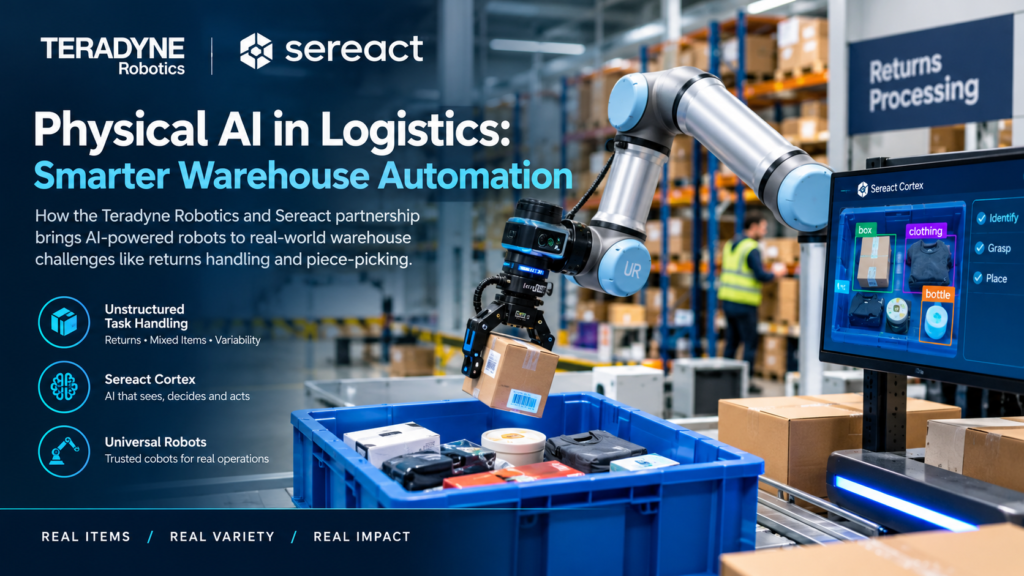
Physical AI in logistics is moving from pilot projects toward scalable products, and the new Teradyne Robotics and Sereact partnership is one of the clearest signs yet. By pairing Sereact’s Cortex software with robot arms from Universal Robots, retailers and logistics providers can automate unpredictable tasks like returns handling and piece-picking that older, rigid robots struggled with. This guide covers what was announced, why it matters, and how to decide whether it fits your operation.
What Did Teradyne Robotics and Sereact Announce?
Short answer: Teradyne Robotics, the company behind Universal Robots and Mobile Industrial Robots, and the physical AI company Sereact announced an official partnership on October 21, 2026, to accelerate industrial AI deployments across retail, logistics and manufacturing. The announcement came out of Berlin. unite
The expansion: Sereact’s physical AI platform, Cortex, runs Universal Robots arms, which gives retailers and logistics providers a way to automate unstructured work such as returns handling and piece-picking. Both companies framed the technologies as a natural fit and said the goal is to scale AI-powered solutions quickly across applications, industries and markets. unite
In plain terms, one company supplies a widely installed family of collaborative robot arms, and the other supplies the AI “brain” that tells those arms how to handle items they have never seen. That pairing is the heart of the Teradyne Robotics Sereact partnership.
What Is Physical AI in Logistics?
Definition: Physical AI in logistics is the use of AI-driven robots that perceive, decide and act in real warehouse environments, rather than following a fixed script. Physical AI more broadly describes AI that interacts directly with the physical world through sensors, movement and real-time decision-making. unite
Expansion: A conventional robot repeats the same motion at the same coordinates. A system built on physical AI in logistics looks at what is in front of it, works out how to grasp it, and adjusts when the first attempt does not work. The robot’s value shifts from the mechanical arm to the software that interprets the scene.
This matters because warehouses are full of variation: crumpled packaging, mixed item sizes, deformable products, and items that arrive in no predictable order. Software that generalizes across that variation is what separates a flexible system from a brittle one.
How does physical AI in logistics differ from traditional warehouse automation?
Short answer: Traditional automation is programmed for known, repeatable tasks. Physical AI is trained to handle variation. The table below summarizes the practical differences.
| Factor | Traditional fixed automation | Physical AI-enabled robots |
|---|---|---|
| Programming approach | Hand-coded paths and rules | Learned behavior from data and models |
| Handling new items | Often requires re-teaching or new tooling | Aims to handle unseen items without per-item setup |
| Best fit | Stable, high-volume, uniform flows | Variable, mixed, unstructured flows |
| Change management | Slow and engineering-heavy | Faster, mostly software-driven |
| Typical bottleneck | Edge cases and exceptions | Model reliability and integration |
Why is unstructured work the hard part of warehouse automation?
Short answer: Because the robot cannot know in advance what it will see. Sorting identical boxes on a conveyor is a solved problem. Picking a random sweater, a pair of shoes, and a boxed appliance from the same bin, then deciding where each goes, is not. That gap is where physical AI in logistics earns its keep.
Who Are the Companies Behind the Partnership?
What does Teradyne Robotics bring?
Teradyne Robotics is the parent of Universal Robots (UR), known for collaborative robots, and Mobile Industrial Robots (MiR), which makes autonomous mobile robots. For physical AI in logistics, the main asset is installed base and ecosystem. Universal Robots cobots are already used by integrators worldwide, which gives a software partner a ready route to customers.
Teradyne has also been building its own physical AI story in 2026. Universal Robots and Scale AI launched an imitation learning system that lets users physically guide a UR robot through a task, such as smartphone packaging, to capture force-aware data for training AI models. The same Teradyne announcement also highlighted its first physical AI product, the MiR1200 Pallet Jack. In April, Flex and Teradyne Robotics expanded their long-term partnership to accelerate deployment of physical AI and intelligent robotics across manufacturing. businesswiretherobotreport
What is Sereact, and what is Cortex?
Sereact was founded in 2021 and develops hardware-agnostic AI models to power robotics systems across logistics, warehousing and manufacturing. Sereact Cortex is the company’s physical AI platform. Sereact describes its software as enabling robots to grasp, identify and handle objects they have never seen before. pulse2generation-nt
The company has momentum and capital behind it. Stuttgart-based Sereact raised a €93 million ($110 million) Series B to scale its Cortex 2 offering and open its first U.S. office in Boston. Its listed customers include Zalando, IKEA, DHL, Rohlik, Arvato, alza.cz, BMW, Mercedes-Benz and Daimler Truck. bebeezgeneration-nt
The “hardware-agnostic” point is important for this partnership. A software company that works across many robot types gains reach by getting formally integrated with one of the largest cobot families on the market.
Why Is Returns Handling the First Target?
Short answer: Returns are among the most chaotic flows in retail logistics, which makes them a good proving ground for physical AI in logistics. That is my analysis rather than a claim from the announcement, but the logic is straightforward.
Outbound orders usually involve known products with known dimensions and barcodes. Returns arrive in unknown condition, in mixed batches, often without tidy packaging. Each item must be identified, assessed, and routed to restock, refurbish, or dispose. That variability is exactly what rule-based robots handle poorly, and what returns handling automation built on AI aims to solve.
What does a live returns deployment look like?
A recent Sereact deployment shows the software working in production. On October 7, 2026, Sereact, Zalando and CEVA Logistics announced AI-powered automated returns processing at sites in Greven, Germany, and Świebodzin, Poland, using dual-arm robotic systems powered by Cortex. The systems autonomously grasp, identify and sort fashion returns without per-item training or fixed SKU profiles. generation-ntgeneration-nt
One clarification: that deployment is separate from the Teradyne announcement and uses Sereact’s own dual-arm systems. It matters here because it shows Cortex operating in live conditions, which is the capability the Teradyne Robotics Sereact partnership aims to extend to Universal Robots arms.Warehouse Automation,Teradyne Robotics and Sereact Partnership,AI-Powered Warehouse Robots,Automated Returns ProcessingWarehouse Automation,Teradyne Robotics and Sereact Partnership,AI-Powered Warehouse Robots,Automated Returns Processing
How Does the Combined Solution Work?
Short answer: Think of it as hardware plus intelligence. The arm provides reach, repeatability and safety features. The software provides perception and decision-making.
In a typical returns or piece-picking cell, the workflow looks like this:
- See: Cameras capture the item and its surroundings.
- Decide: The AI model identifies the item, selects a grasp, and plans the motion.
- Act: The robot arm picks the item and places it in the correct destination.
- Learn: Outcomes feed back into the system so performance can improve over time.
I could not find public details on pricing, availability dates, supported UR models, or throughput figures in the coverage I reviewed. Anyone considering this should ask both vendors for those specifics directly rather than assume them.
Comparing Your Automation Options
Choosing among approaches is easier when the trade-offs are side by side. This table frames the decision for teams evaluating physical AI in logistics against alternatives.
| Criteria | Fixed automation | Programmed cobots | Cobots with physical AI |
|---|---|---|---|
| Upfront engineering effort | High | Medium | Lower for new tasks, but integration still needed |
| Flexibility across item types | Low | Low to medium | High (goal of the approach) |
| Suitable for returns | Poor | Limited | Strong candidate |
| Redeployment to new tasks | Difficult | Moderate | Easier, largely software-driven |
| Main risk | Obsolescence when SKUs change | Constant reprogramming | Model performance on edge cases |
What Are the Benefits of Physical AI in Logistics?
Based on what the partners described and what the technology is designed to do, here are the main benefits of physical AI in logistics for retailers and logistics providers:
- Coverage of unstructured tasks: Work like returns processing and piece-picking becomes automatable instead of staying manual.
- Less per-item setup: Systems that handle unseen items reduce the need to catalog and teach every SKU.
- Faster scaling: A common software layer across robot arms can make it easier to replicate a working cell at additional sites.
- Use of existing hardware ecosystems: Operators and integrators already familiar with Universal Robots cobots can reuse skills and relationships.
- Flexibility as demand shifts: Software-defined behavior can be adapted without rebuilding a line.
These are potential advantages, not guarantees. Actual results depend on item mix, cell design, and integration quality.
What Are the Risks and Open Questions?
Short answer: The biggest risks are reliability on edge cases, integration complexity, and unclear economics.
- Edge-case reliability: A system that handles most items well can still jam on awkward ones. Ask how exceptions are detected and routed to humans.
- Integration with warehouse systems: A robot cell is only useful if it connects cleanly to inventory, returns grading, and routing software.
- Return on investment: Public coverage so far offers few cost or payback numbers. Build your own business case from pilot data.
- Vendor dependence: Two vendors now share responsibility. Clarify who owns support when something fails.
- Early-stage partnership: The announcement describes an intent to scale, not a catalog of finished products.
How Should You Evaluate Physical AI in Logistics for Your Operation?
Treat evaluating physical AI in logistics as a structured pilot, not a leap of faith. A sensible approach:
Which processes should you test first?
Start with a bounded, high-variability flow such as returns or mixed-item piece-picking. Avoid starting with your most time-critical outbound lane.
What metrics should you measure?
Track pick success rate, items per hour, exception rate, human intervention frequency, and uptime. Compare each against your current manual baseline, not against a vendor’s best-case demo.
What questions should you ask vendors?
- How does the system handle items it has never seen?
- What happens when a grasp fails, and how fast does the cell recover?
- Which robot models and end-of-arm tools are supported?
- How is the model updated, and who controls those updates?
- What does support look like across both Teradyne and Sereact?
Asking these questions early keeps any physical AI in logistics project grounded in operational reality.
How Does This Fit the Wider Physical AI Market?
The partnership lands in a busy year. Teradyne’s own 2026 announcements span electronics manufacturing to logistics, and Nvidia has named Universal Robots among the robotics companies building on its technology as the industry heads toward production-scale physical AI. Sereact’s funding also reflects investor appetite: its Series B sits within a sizeable 2026 funding environment for European physical AI, robotics and automation companies. nasdaqbebeez
The broader pattern is that robot hardware and AI software are increasingly sold together through partnerships rather than built by a single vendor. For buyers, that means more options, but also more vendor relationships to manage. The Teradyne Robotics Sereact partnership is one of several moves that suggest physical AI in logistics is becoming a mainstream procurement category.
Frequently Asked Questions
What is the Teradyne Robotics and Sereact partnership?
It is an official collaboration announced October 21, 2026, in which Sereact’s Cortex platform runs Universal Robots arms to automate tasks such as returns handling and piece-picking in retail, logistics and manufacturing.
What does Sereact Cortex do?
Cortex is Sereact’s physical AI platform. It provides the perception and decision-making layer that lets robots grasp, identify and handle objects, including ones they have not encountered before.
Is physical AI in logistics ready for production?
Early production deployments exist, such as the Zalando and CEVA returns operations that went live in October 2026. Readiness still varies by use case, so a scoped pilot is the safest way to confirm performance for your own items.
Which tasks suit physical AI in logistics best?
Variable, unstructured tasks are the strongest fit, particularly returns processing, mixed-item picking, and sorting. Highly uniform, high-volume flows may still be better served by conventional automation.
Do you need Universal Robots hardware to use Cortex?
Not necessarily. Sereact describes its models as hardware-agnostic. This partnership simply formalizes and expands support for Universal Robots arms.
The Bottom Line
The Teradyne Robotics Sereact partnership pairs a major cobot maker with an AI software specialist to tackle the messiest parts of warehouse work. For retailers and logistics providers, it makes physical AI in logistics easier to evaluate and, potentially, easier to buy through familiar channels. The right next step is a focused pilot on a returns or mixed-picking flow, with clear metrics and honest baselines.
If you are planning automation this year, treat this announcement as a signal, not a guarantee. Ask for specifics, test on your own items, and let the data decide how far physical AI in logistics should go in your operation.
ଲଜିଷ୍ଟିକ୍ସ (ପରିବହନ ଓ ଯୋଗାଣ ବ୍ୟବସ୍ଥା) କ୍ଷେତ୍ରରେ ‘ଫିଜିକାଲ୍ AI’ (Physical AI): ୱେୟାରହାଉସ୍ ବା ଗୋଦାମ ପାଇଁ ‘ଟେରାଡାଇନ୍ ରୋବୋଟିକ୍ସ’ (Teradyne Robotics) ଏବଂ ‘ସିରିଆକ୍ଟ’ (Sereact) ର ଭାଗୀଦାରୀର ଅର୍ଥ କ’ଣ?
ଲଜିଷ୍ଟିକ୍ସ କ୍ଷେତ୍ରରେ ‘ଫିଜିକାଲ୍ AI’ ବର୍ତ୍ତମାନ କେବଳ ପରୀକ୍ଷାମୂଳକ ପ୍ରକଳ୍ପରୁ ବାହାରି ବ୍ୟାପକ ବ୍ୟବହାରଯୋଗ୍ୟ ଉତ୍ପାଦ ଆଡ଼କୁ ଅଗ୍ରସର ହେଉଛି। ‘ଟେରାଡାଇନ୍ ରୋବୋଟିକ୍ସ’ ଏବଂ ‘ସିରିଆକ୍ଟ’ ମଧ୍ୟରେ ହୋଇଥିବା ନୂତନ ଭାଗୀଦାରୀ ଏହାର ଏକ ସ୍ପଷ୍ଟ ଉଦାହରଣ। ‘ସିରିଆକ୍ଟ’ର ‘କର୍ଟେକ୍ସ’ (Cortex) ସଫ୍ଟୱେର୍କୁ ‘ୟୁନିଭର୍ସାଲ୍ ରୋବୋଟ୍ସ’ (Universal Robots) ର ରୋବୋଟିକ୍ ବାହୁ (robot arms) ସହିତ ଯୋଡ଼ିବା ଦ୍ୱାରା, ଖୁଚୁରା ବ୍ୟବସାୟୀ ଏବଂ ଲଜିଷ୍ଟିକ୍ସ ସେବା ପ୍ରଦାନକାରୀମାନେ ଏପରି ଜଟିଳ କାର୍ଯ୍ୟଗୁଡ଼ିକୁ ସ୍ୱୟଂଚାଳିତ (automate) କରିପାରିବେ ଯାହା ପୂର୍ବରୁ କଠୋର କାର୍ଯ୍ୟପଦ୍ଧତି ଉପରେ ଆଧାରିତ ପୁରୁଣା ରୋବୋଟ୍ମାନଙ୍କ ପାଇଁ କଷ୍ଟକର ଥିଲା।
ଏହି କାର୍ଯ୍ୟଗୁଡ଼ିକ ମଧ୍ୟରେ ଫେରସ୍ତ ଆସୁଥିବା ସାମଗ୍ରୀ (returns) ପରିଚାଳନା ଏବଂ ବିଭିନ୍ନ ସାମଗ୍ରୀ ମଧ୍ୟରୁ ନିର୍ଦ୍ଦିଷ୍ଟ ସାମଗ୍ରୀ ବାଛିବା (piece-picking) ଭଳି ଅନିଶ୍ଚିତ କାର୍ଯ୍ୟ ଅନ୍ତର୍ଭୁକ୍ତ। ଏହି ଗାଇଡ୍ରେ ଆଲୋଚନା କରାଯାଇଛି ଯେ କ’ଣ ଘୋଷଣା କରାଯାଇଛି, ଏହାର ଗୁରୁତ୍ୱ କ’ଣ ଏବଂ ଆପଣଙ୍କ କାର୍ଯ୍ୟକ୍ଷେତ୍ର ପାଇଁ ଏହା ଉପଯୁକ୍ତ କି ନୁହେଁ, ତାହା କିପରି ନିଷ୍ପତ୍ତି ନେବେ।
‘ଟେରାଡାଇନ୍ ରୋବୋଟିକ୍ସ’ ଏବଂ ‘ସିରିଆକ୍ଟ’ କ’ଣ ଘୋଷଣା କଲେ?
ସଂକ୍ଷେପରେ କହିଲେ: ‘ୟୁନିଭର୍ସାଲ୍ ରୋବୋଟ୍ସ’ ଏବଂ ‘ମୋବାଇଲ୍ ଇଣ୍ଡଷ୍ଟ୍ରିଆଲ୍ ରୋବୋଟ୍ସ’ର ମୂଳ କମ୍ପାନୀ ‘ଟେରାଡାଇନ୍ ରୋବୋଟିକ୍ସ’ ଏବଂ ‘ଫିଜିକାଲ୍ AI’ କ୍ଷେତ୍ରରେ କାର୍ଯ୍ୟରତ କମ୍ପାନୀ ‘ସିରିଆକ୍ଟ’, ୨୧ ଅକ୍ଟୋବର ୨୦୨୬ ରେ ଏକ ସରକାରୀ ଭାଗୀଦାରୀ ଘୋଷଣା କରିଛନ୍ତି। ଏହାର ଉଦ୍ଦେଶ୍ୟ ହେଉଛି ଖୁଚୁରା ବ୍ୟବସାୟ, ଲଜିଷ୍ଟିକ୍ସ ଏବଂ ଉତ୍ପାଦନ କ୍ଷେତ୍ରରେ ‘ଇଣ୍ଡଷ୍ଟ୍ରିଆଲ୍ AI’ (industrial AI) ର ପ୍ରୟୋଗକୁ ତ୍ୱରାନ୍ୱିତ କରିବା। ଏହି ଘୋଷଣା ବର୍ଲିନ୍ରୁ କରାଯାଇଥିଲା।
ବିସ୍ତୃତ ବିବରଣୀ ରୋବଟର ମୂଲ୍ୟ ଏହାର ଯାନ୍ତ୍ରିକ ବାହୁ (mechanical arm) ଠାରୁ ଘୁଞ୍ଚି ସେହି ସଫ୍ଟୱେର୍ ଆଡ଼କୁ ଚାଲିଯାଏ, ଯାହା ସାମ୍ନାରେ ଥିବା ପରିସ୍ଥିତିକୁ ବୁଝିପାରେ ଓ ବିଶ୍ଳେଷଣ କରେ।
ଏହା ଗୁରୁତ୍ୱପୂର୍ଣ୍ଣ କାରଣ ଗୋଦାମ ଘରଗୁଡ଼ିକରେ (warehouses) ବିଭିନ୍ନ ପ୍ରକାରର ଜିନିଷ ଦେଖିବାକୁ ମିଳେ: ଯେପରିକି ଚକଟି ହୋଇଯାଇଥିବା ପ୍ୟାକେଜିଂ, ଭିନ୍ନ ଭିନ୍ନ ଆକାରର ସାମଗ୍ରୀ, ନରମ ବା ଆକାର ବଦଳାଇ ପାରୁଥିବା ଉତ୍ପାଦ, ଏବଂ ଏପରି ସାମଗ୍ରୀ ଯାହା କୌଣସି ନିର୍ଦ୍ଦିଷ୍ଟ କ୍ରମରେ ଆସେ ନାହିଁ। ଯେଉଁ ସଫ୍ଟୱେର୍ ଏହି ବିଭିନ୍ନତାକୁ ସମ୍ଭାଳି ପାରେ, ତାହା ହିଁ ଏକ ନମନୀୟ (flexible) ସିଷ୍ଟମକୁ ଏକ ଅନମନୀୟ (brittle) ସିଷ୍ଟମଠାରୁ ଅଲଗା କରିଥାଏ।
ଲଜିଷ୍ଟିକ୍ସ କ୍ଷେତ୍ରରେ ‘ଫିଜିକାଲ୍ AI’ (Physical AI), ପାରମ୍ପାରିକ ଗୋଦାମ ସ୍ୱୟଂଚାଳିତ ବ୍ୟବସ୍ଥା (traditional warehouse automation) ଠାରୁ କିପରି ଭିନ୍ନ?
ସଂକ୍ଷେପରେ କହିଲେ: ପାରମ୍ପାରିକ ସ୍ୱୟଂଚାଳିତ ବ୍ୟବସ୍ଥା କେବଳ ଜଣାଶୁଣା ଏବଂ ବାରମ୍ବାର ହେଉଥିବା କାର୍ଯ୍ୟ ପାଇଁ ପ୍ରୋଗ୍ରାମ କରାଯାଇଥାଏ। ଅନ୍ୟପକ୍ଷରେ, ‘ଫିଜିକାଲ୍ AI’ କୁ ବିଭିନ୍ନ ପ୍ରକାରର ପରିସ୍ଥିତି ବା ପରିବର୍ତ୍ତନକୁ ସମ୍ଭାଳିବା ପାଇଁ ପ୍ରଶିକ୍ଷିତ କରାଯାଇଥାଏ। ନିମ୍ନ ସାରଣୀରେ ଏହି ଦୁଇଟି ମଧ୍ୟରେ ଥିବା ବ୍ୟାବହାରିକ ପାର୍ଥକ୍ୟଗୁଡ଼ିକୁ ଦର୍ଶାଯାଇଛି।
| ବିଷୟ | ପାରମ୍ପାରିକ ସ୍ଥିର ସ୍ୱୟଂଚାଳିତ ବ୍ୟବସ୍ଥା | ଫିଜିକାଲ୍ AI-ଯୁକ୍ତ ରୋବଟ୍ |
|---|---|---|
| ପ୍ରୋଗ୍ରାମିଂ ପଦ୍ଧତି | ପୂର୍ବରୁ ଲିଖିତ ନିର୍ଦ୍ଦିଷ୍ଟ ନିୟମ ଓ ପଥ (rules & paths) | ତଥ୍ୟ (data) ଏବଂ ମଡେଲ୍ ମାଧ୍ୟମରେ ଶିଖାଯାଇଥିବା ଆଚରଣ |
| ନୂତନ ସାମଗ୍ରୀ ପରିଚାଳନା | ପ୍ରାୟତଃ ପୁନଃ-ପ୍ରଶିକ୍ଷଣ କିମ୍ବା ନୂତନ ଯନ୍ତ୍ରପାତିର ଆବଶ୍ୟକତା ପଡ଼େ | ପୂର୍ବରୁ ନ ଦେଖିଥିବା ସାମଗ୍ରୀକୁ ମଧ୍ୟ ସ୍ୱତନ୍ତ୍ର ସେଟଅପ୍ ବିନା ପରିଚାଳନା କରିପାରେ |
| ଉପଯୁକ୍ତ କ୍ଷେତ୍ର | ସ୍ଥିର, ଅଧିକ ପରିମାଣର ଏବଂ ଏକାଭଳି ସାମଗ୍ରୀ ଥିବା ସ୍ଥାନ | ପରିବର୍ତ୍ତନଶୀଳ, ମିଶ୍ରିତ ଏବଂ ଅସଂଗଠିତ ସାମଗ୍ରୀ ଥିବା ସ୍ଥାନ |
| ପରିବର୍ତ୍ତନ ପରିଚାଳନା | ଧୀର ଏବଂ ଅଧିକ ଇଞ୍ଜିନିୟରିଂ କାର୍ଯ୍ୟ ଆବଶ୍ୟକ କରେ | ଦ୍ରୁତ ଏ ସେହି ଟେରାଡାଇନ୍ ଘୋଷଣାରେ ଏହାର ପ୍ରଥମ ଭୌତିକ AI ଉତ୍ପାଦ, MiR1200 ପାଲେଟ୍ ଜ୍ୟାକ୍ ମଧ୍ୟ ଉଜ୍ଜ୍ୱଳ ହୋଇଥିଲା। ଏପ୍ରିଲରେ, Flex ଏବଂ Teradyne Robotics ସେମାନଙ୍କର ଦୀର୍ଘକାଳୀନ ସହଭାଗୀତାକୁ ବିସ୍ତାର କରିଥିଲେ ଯାହା ଦ୍ଵାରା ଉତ୍ପାଦନ କ୍ଷେତ୍ରରେ ଭୌତିକ AI ଏବଂ ବୁଦ୍ଧିମାନ ରୋବୋଟିକ୍ସର ନିୟୋଜନକୁ ତ୍ୱରାନ୍ୱିତ କରାଯାଇଥିଲା। |
| businesswire | ||
| therobotreport |
Sereact କ’ଣ, ଏବଂ Cortex କ’ଣ?
Sereact 2021 ମସିହାରେ ପ୍ରତିଷ୍ଠିତ ହୋଇଥିଲା ଏବଂ ଲଜିଷ୍ଟିକ୍ସ, ଗୋଦାମ ଏବଂ ଉତ୍ପାଦନ କ୍ଷେତ୍ରରେ ରୋବୋଟିକ୍ସ ସିଷ୍ଟମକୁ ଶକ୍ତି ଦେବା ପାଇଁ ହାର୍ଡୱେର୍-ଅଗ୍ନୋଷ୍ଟିକ୍ AI ମଡେଲ୍ ବିକାଶ କରିଥାଏ। Sereact Cortex ହେଉଛି କମ୍ପାନୀର ଭୌତିକ AI ପ୍ଲାଟଫର୍ମ। Sereact ଏହାର ସଫ୍ଟୱେର୍ କୁ ସକ୍ଷମ ରୋବୋଟ୍ ଭାବରେ ବର୍ଣ୍ଣନା କରେ।
…ପୂର୍ବରୁ କେବେ ଦେଖିନଥିବା ବସ୍ତୁଗୁଡ଼ିକୁ ଧରିବା, ଚିହ୍ନଟ କରିବା ଏବଂ ସେଗୁଡ଼ିକ ଉପରେ କାର୍ଯ୍ୟ କରିବା।
ଏହି କମ୍ପାନୀ ପାଖରେ ବର୍ତ୍ତମାନ ଭଲ ଗତି (momentum) ଏବଂ ପର୍ଯ୍ୟାପ୍ତ ପୁଞ୍ଜି ରହିଛି। ଷ୍ଟୁଟγκαର୍ଟ (Stuttgart) ସ୍ଥିତ ‘ସିରିଆକ୍ଟ’ (Sereact) ନିଜର ‘କର୍ଟେକ୍ସ ୨’ (Cortex 2) ସମାଧାନକୁ ବିସ୍ତାର କରିବା ଏବଂ ଆମେରିକାର ବୋଷ୍ଟନ (Boston) ଠାରେ ନିଜର ପ୍ରଥମ କାର୍ଯ୍ୟାଳୟ ଖୋଲିବା ପାଇଁ ‘ସିରିଜ୍ ବି’ (Series B) ପର୍ଯ୍ୟାୟରେ ୯୩ ନିୟୁତ ୟୁରୋ (୧୧୦ ନିୟୁତ ଆମେରିକୀୟ ଡଲାର) ପାଣ୍ଠି ସଂଗ୍ରହ କରିଛି। ଏହାର ଗ୍ରାହକ ତାଲିକାରେ Zalando, IKEA, DHL, Rohlik, Arvato, alza.cz, BMW, Mercedes-Benz ଏବଂ Daimler Truck ଭଳି କମ୍ପାନୀଗୁଡ଼ିକ ଅନ୍ତର୍ଭୁକ୍ତ।
ଏହି ଭାଗୀଦାରୀ (partnership) କ୍ଷେତ୍ରରେ “ହାର୍ଡୱେର୍-ନିରପେକ୍ଷ” (hardware-agnostic) ହେବା ଏକ ଗୁରୁତ୍ୱପୂର୍ଣ୍ଣ ବିଷୟ। ବିଭିନ୍ନ ପ୍ରକାରର ରୋବୋଟ୍ ସହିତ କାମ କରୁଥିବା ଏକ ସଫ୍ଟୱେର୍ କମ୍ପାନୀ, ବଜାରରେ ଉପଲବ୍ଧ ଅନ୍ୟତମ ବୃହତ୍ ‘କୋବୋଟ୍’ (cobot – ସହଯୋଗୀ ରୋବୋଟ୍) ପରିବାର ସହିତ ଯୋଡ଼ି ହେବା ଦ୍ୱାରା ନିଜର ପହଞ୍ଚ ବୃଦ୍ଧି କରିପାରିବ।
‘ରିଟର୍ଣ୍ଣ’ (ଫେରସ୍ତ ଆସୁଥିବା ସାମଗ୍ରୀ) ପରିଚାଳନା କାହିଁକି ପ୍ରଥମ ଲକ୍ଷ୍ୟ ହୋଇଛି?
ସଂକ୍ଷିପ୍ତ ଉତ୍ତର: ଖୁଚୁରା ବ୍ୟବସାୟର ଲଜିଷ୍ଟିକ୍ସ (logistics) ବ୍ୟବସ୍ଥାରେ ‘ରିଟର୍ଣ୍ଣ’ ବା ଫେରସ୍ତ ଆସୁଥିବା ସାମଗ୍ରୀର ପ୍ରବାହ ସବୁଠାରୁ ଅଧିକ ଜଟିଳ ଓ ଅବ୍ୟବସ୍ଥିତ ହୋଇଥାଏ। ତେଣୁ, ଲଜିଷ୍ଟିକ୍ସ କ୍ଷେତ୍ରରେ ‘ଫିଜିକାଲ୍ AI’ (ଭୌତିକ ଜଗତରେ କାର୍ଯ୍ୟ କରୁଥିବା କୃତ୍ରିମ ବୁଦ୍ଧିମତ୍ତା) ର ଦକ୍ଷତା ପରୀକ୍ଷା କରିବା ପାଇଁ ଏହା ଏକ ଉପଯୁକ୍ତ କ୍ଷେତ୍ର ଅଟେ। ଏହା ମୋର ନିଜସ୍ୱ ବିଶ୍ଳେଷଣ, କମ୍ପାନୀର ଘୋଷଣାନାମାରେ ଥିବା ଦାବି ନୁହେଁ, କିନ୍ତୁ ଏହାର ଯୁକ୍ତି ଅତ୍ୟନ୍ତ ସ୍ପଷ୍ଟ।
ସାଧାରଣତଃ, ଯେତେବେଳେ କୌଣସି ସାମଗ୍ରୀ ଗ୍ରାହକଙ୍କ ନିକଟକୁ ପଠାଯାଏ (outbound), ସେତେବେଳେ ସେଗୁଡ଼ିକର ଆକାର, ପ୍ରକାର ଏବଂ ବାରକୋଡ୍ ବିଷୟରେ ପୂର୍ବରୁ ଜଣାଥାଏ। କିନ୍ତୁ, ଯେତେବେଳେ ସାମଗ୍ରୀ ଫେରସ୍ତ ଆସେ (returns), ସେଗୁଡ଼ିକ କେଉଁ ଅବସ୍ଥାରେ ଅଛି, କିପରି ମିଶ୍ରିତ ଅବସ୍ଥାର ଏଠାରେ ଏହା ଗୁରୁତ୍ୱପୂର୍ଣ୍ଣ, କାରଣ ଏହା ‘କର୍ଟେକ୍ସ’ (Cortex) କୁ ବାସ୍ତବ ପରିସ୍ଥିତିରେ କାର୍ଯ୍ୟ କରୁଥିବାର ଦେଖାଏ। ‘ଟେରାଡାଇନ୍ ରୋବୋଟିକ୍ସ’ (Teradyne Robotics) ଏବଂ ‘ସିରିଆକ୍ଟ’ (Sereact) ମଧ୍ୟରେ ଥିବା ଭାଗୀଦାରୀର ଲକ୍ଷ୍ୟ ହେଉଛି, ଏହି କ୍ଷମତାକୁ ‘ୟୁନିଭର୍ସାଲ୍ ରୋବୋଟ୍ସ’ (Universal Robots) ର ରୋବୋଟିକ୍ ଆର୍ମ (ବାହୁ) ଗୁଡ଼ିକରେ ଉପଲବ୍ଧ କରାଇବା।
ଏହି ମିଳିତ ସମାଧାନ (Combined Solution) କିପରି କାମ କରେ?
ସଂକ୍ଷେପରେ କହିଲେ: ଏହାକୁ ହାର୍ଡୱେର୍ ଏବଂ ବୁଦ୍ଧିମତ୍ତାର (Intelligence) ଏକ ମିଶ୍ରଣ ବୋଲି ଭାବନ୍ତୁ। ରୋବୋଟିକ୍ ଆର୍ମଟି ଜିନିଷ ପର୍ଯ୍ୟନ୍ତ ପହଞ୍ଚିବା, ସଠିକ୍ ଭାବରେ ବାରମ୍ବାର କାମ କରିବା ଏବଂ ସୁରକ୍ଷା ପ୍ରଦାନ କରିବାରେ ସାହାଯ୍ୟ କରେ। ସଫ୍ଟୱେର୍ ଅଂଶଟି ଜିନିଷକୁ ଚିହ୍ନିବା ଏବଂ ନିଷ୍ପତ୍ତି ନେବାର କାର୍ଯ୍ୟ କରିଥାଏ।
ସାଧାରଣତଃ ଫେରସ୍ତ ଆସୁଥିବା ସାମଗ୍ରୀ (returns) କିମ୍ବା ଅଲଗା ଅଲଗା ଜିନିଷ ବାଛିବା (piece-picking) ପ୍ରକ୍ରିୟାରେ, କାର୍ଯ୍ୟ ପ୍ରବାହ (workflow) ନିମ୍ନଲିଖିତ ଭାବରେ ହୋଇଥାଏ:
ଦେଖିବା (See): କ୍ୟାମେରାଗୁଡ଼ିକ ସାମଗ୍ରୀ ଏବଂ ଏହାର ଆଖପାଖ ପରିବେଶକୁ ଦେଖିଥାନ୍ତି (କ୍ୟାପଚର୍ କରନ୍ତି)।
ନିଷ୍ପତ୍ତି ନେବା (Decide): AI ମଡେଲ୍ ସାମଗ୍ରୀକୁ ଚିହ୍ନଟ କରେ, ଏହାକୁ କିପରି ଧରାଯିବ ତାହା ସ୍ଥିର କରେ ଏବଂ ଗତିବିଧିର ଯୋଜନା ପ୍ରସ୍ତୁତ କରେ।
କାର୍ଯ୍ୟ କରିବା (Act): ରୋବୋଟିକ୍ ଆର୍ମଟି ସାମଗ୍ରୀକୁ ଉଠାଏ ଏବଂ ଏହାକୁ ଉପଯୁକ୍ତ ସ୍ଥାନରେ ରଖେ।
ଶିଖିବା (Learn): କାର୍ଯ୍ୟର ଫଳାଫଳ ସିଷ୍ଟମକୁ ଫେରିଯାଏ (feedback), ଯାହା ଫଳରେ ସମୟ ସହିତ କାର୍ଯ୍ୟଦକ୍ଷତାରେ ଉନ୍ନତି ଆସିଥାଏ।
ମୁଁ ଯେଉଁ ତଥ୍ୟଗୁଡ଼ିକ ଯାଞ୍ଚ କଲି, ସେଥିରେ ମୂଲ୍ୟ, ଉପଲବ୍ଧତା ତାରିଖ, ସମର୍ଥିତ UR ମଡେଲ୍ କିମ୍ବା କାର୍ଯ୍ୟକ୍ଷମତା (throughput) ସମ୍ବନ୍ଧୀୟ କୌଣସି ସାର୍ବଜନୀନ ବିବରଣୀ ପାଇଲି ନାହିଁ। ଯେଉଁମାନେ ଏହାକୁ ବ୍ୟବହାର କରିବାକୁ ବିଚାର କରୁଛନ୍ତି, ସେମାନେ ନିଜ ଆଡ଼ୁ କିଛି ଅନୁମାନ ନ କରି, ସିଧାସଳଖ ବିକ୍ରେତାମାନଙ୍କୁ ପଚାରି ଏହି ନିର୍ଦ୍ଦିଷ୍ଟ ତଥ୍ୟଗୁଡ଼ିକ ଜାଣିନେବା ଉଚିତ୍।
ଆପଣଙ୍କ ଅଟୋମେସନ୍ ବିକଳ୍ପଗୁଡ଼ିକର ତୁଳନା
ବିଭିନ୍ନ ପଦ୍ଧତି ମଧ୍ୟରୁ ଗୋଟିଏ ବାଛିବା ସହଜ ହୋଇ ବିଦ୍ୟମାନ ହାର୍ଡୱେୟାର ଇକୋସିଷ୍ଟମର ବ୍ୟବହାର: ୟୁନିଭର୍ସାଲ୍ ରୋବୋଟ୍ସ ସହିତ ପୂର୍ବରୁ ପରିଚିତ ଅପରେଟର ଏବଂ ଇଣ୍ଟିଗ୍ରେଟରମାନେ କୋବୋଟ୍ ଦକ୍ଷତା ଏବଂ ସମ୍ପର୍କକୁ ପୁନଃବ୍ୟବହାର କରିପାରିବେ।
ଚାହିଦା ପରିବର୍ତ୍ତନ ସହିତ ନମନୀୟତା: ଏକ ଲାଇନ ପୁନଃନିର୍ମାଣ ନକରି ସଫ୍ଟୱେର୍-ପରିଭାଷିତ ଆଚରଣକୁ ଗ୍ରହଣ କରାଯାଇପାରିବ।
ଏଗୁଡ଼ିକ ସମ୍ଭାବ୍ୟ ସୁବିଧା, ଗ୍ୟାରେଣ୍ଟି ନୁହେଁ। ପ୍ରକୃତ ଫଳାଫଳ ଆଇଟମ୍ ମିଶ୍ରଣ, ସେଲ୍ ଡିଜାଇନ୍ ଏବଂ ଇଣ୍ଟିଗ୍ରେସନ୍ ଗୁଣବତ୍ତା ଉପରେ ନିର୍ଭର କରେ।
ବିପଦ ଏବଂ ଖୋଲା ପ୍ରଶ୍ନଗୁଡ଼ିକ କ’ଣ?
ସଂକ୍ଷିପ୍ତ ଉତ୍ତର: ସବୁଠାରୁ ବଡ଼ ବିପଦ ହେଉଛି ଏଜ୍ କେସ୍ ଉପରେ ନିର୍ଭରଯୋଗ୍ୟତା, ଇଣ୍ଟିଗ୍ରେସନ୍ ଜଟିଳତା ଏବଂ ଅସ୍ପଷ୍ଟ ଅର୍ଥନୀତି।
ଏଜ୍-କେସ୍ ନିର୍ଭରଯୋଗ୍ୟତା: ଏକ ସିଷ୍ଟମ୍ ଯାହା ଅଧିକାଂଶ ଆଇଟମ୍ ଭଲ ଭାବରେ ପରିଚାଳନା କରେ ତାହା ଏପର୍ଯ୍ୟନ୍ତ ଅଡୁଆ ଉପରେ ଜାମ୍ ହୋଇପାରେ। ପଚାରନ୍ତୁ ଯେ କିପରି ବ୍ୟତିକ୍ରମଗୁଡ଼ିକୁ ଚିହ୍ନଟ କରାଯାଏ ଏବଂ ମଣିଷଙ୍କ ନିକଟକୁ ପଠାଯାଏ।
ଗୋଦାମ ସିଷ୍ଟମ ସହିତ ସମନ୍ୱୟ: ଏକ ରୋବୋଟ୍ ସେଲ୍ କେବଳ ସେତେବେଳେ ଉପଯୋଗୀ ହୁଏ ଯଦି ଏହା ଇନଭେଣ୍ଟରୀ ସହିତ ସଫା ଭାବରେ ସଂଯୋଗ କରେ, ଗ୍ରେଡିଂ ଫେରସ୍ତ କରେ ଏବଂ ସଫ୍ଟୱେର୍ ରାଉଟିଂ କରେ।
ନିବେଶ ଉପରେ ଫେରିବା: ସାର୍ବଜନୀନ କଭରେଜ୍ ଏପର୍ଯ୍ୟନ୍ତ କିଛି ମୂଲ୍ୟ କିମ୍ବା ମୂଲ୍ୟ ପ୍ରଦାନ କରେ ପାଇଲଟ୍ (ପରୀକ୍ଷାମୂଳକ) ତଥ୍ୟ ଆଧାରରେ ନିଜର ବ୍ୟବସାୟିକ ଯୁକ୍ତି (business case) ପ୍ରସ୍ତୁତ କରନ୍ତୁ।
ବିକ୍ରେତାଙ୍କ ଉପରେ ନିର୍ଭରଶୀଳତା: ବର୍ତ୍ତମାନ ଦୁଇଟି ବିକ୍ରେତା ଦାୟିତ୍ୱ ବାଣ୍ଟି ନେଉଛନ୍ତି। କୌଣସି ସମସ୍ୟା ଦେଖାଦେଲେ
ସହାୟତା (support) ପ୍ରଦାନ କରିବାର ଦାୟିତ୍ୱ କାହାର, ତାହା ସ୍ପଷ୍ଟ କରନ୍ତୁ।
ପ୍ରାରମ୍ଭିକ ପର୍ଯ୍ୟାୟ ଅଂଶୀଦାରିତ୍ୱ: ଏହି ଘୋଷଣା କେବଳ ସମ୍ପୂର୍ଣ୍ଣ ପ୍ରସ୍ତୁତ ଉତ୍ପାଦର ତାଲିକା ନୁହେଁ, ବରଂ ଏହା କାର୍ଯ୍ୟକ୍ଷେତ୍ରକୁ ବ୍ୟାପକ କରିବାର (scale) ଏକ ଉଦ୍ଦେଶ୍ୟକୁ ଦର୍ଶାଉଛି।
ଆପଣଙ୍କ କାର୍ଯ୍ୟ ପରିଚାଳନା ପାଇଁ ଲଜିଷ୍ଟିକ୍ସ (logistics) କ୍ଷେତ୍ରରେ ‘ଫିଜିକାଲ୍ AI’ (Physical AI) କୁ କିପରି ମୂଲ୍ୟାଙ୍କନ କରିବେ?
ଲଜିଷ୍ଟିକ୍ସରେ ଫିଜିକାଲ୍ AI ର ମୂଲ୍ୟାଙ୍କନକୁ ଏକ ସୁସଂଗଠିତ ପରୀକ୍ଷାମୂଳକ ପ୍ରକ୍ରିୟା (pilot) ଭାବରେ ବିବେଚନା କରନ୍ତୁ, ନା କି କୌଣସି ଅନ୍ଧ ବିଶ୍ୱାସ ଉପରେ ଆଧାରିତ ପଦକ୍ଷେପ। ଏକ ଯୁକ୍ତିଯୁକ୍ତ ପନ୍ଥା ହେଲା:
ପ୍ରଥମେ କେଉଁ ପ୍ରକ୍ରିୟାଗୁଡ଼ିକୁ ପରୀକ୍ଷା କରିବା ଉଚିତ୍?
ଏପରି କାର୍ଯ୍ୟରୁ ଆରମ୍ଭ କରନ୍ତୁ ଯାହାର ପରିସର ସୀମିତ କିନ୍ତୁ ବିଭିନ୍ନ ପ୍ରକାରର ସାମଗ୍ରୀ ସହ ଜଡ଼ିତ, ଯେପରିକି ଫେରସ୍ତ ଆସୁଥିବା ସାମଗ୍ରୀ (returns) କିମ୍ବା ବିଭିନ୍ନ ପ୍ରକାରର ସାମଗ୍ରୀକୁ ଏକତ୍ରିତ କରିବା (mixed-item piece-picking)। ଯେଉଁ କାର୍ଯ୍ୟଗୁଡ଼ିକ ଅତ୍ୟନ୍ତ ଜରୁରୀ ଏବଂ ସମୟ-ସମ୍ବେଦନଶୀଳ (ଯେପରିକି ସାମଗ୍ରୀ ପଠାଇବା ବା outbound ପ୍ରକ୍ରିୟା), ସେଠାରୁ ଆରମ୍ଭ କରିବା ଉଚିତ୍ ନୁହେଁ।
କେଉଁ ମାନଦଣ୍ଡଗୁଡ଼ିକୁ (metrics) ମାପିବା ଉଚିତ୍?
ସାମଗ୍ରୀ ଉଠାଇବାର ସଫଳତା ହାର (pick success rate), ପ୍ରତି ଘଣ୍ଟାରେ କେତେ ସାମଗ୍ରୀ ପରିଚାଳିତ ହେଉଛି, ତ୍ରୁଟି କିମ୍ବା ଅସ୍ୱାଭାବିକ ଘଟଣାର ହାର, ମାନବୀୟ ହସ୍ତକ୍ଷେପର ଆବଶ୍ୟକତା ଏବଂ ସିଷ୍ଟମ କାର୍ଯ୍ୟକ୍ଷମ ରହିବାର ସମୟ (uptime) ଉପରେ ନଜର ରଖନ୍ତୁ। ଏଗୁଡ଼ିକୁ ବିକ୍ରେତାଙ୍କ ଦ୍ୱାରା ପ୍ରଦର୍ଶିତ ଆଦର୍ଶ ଡେମୋ (demo) ସହ ତୁଳନା ନକରି, ଆପଣଙ୍କ ବର୍ତ୍ତମାନର ମାନୁଆଲ୍ (ମଣିଷ ଦ୍ୱାରା ପରିଚାଳିତ) କାର୍ଯ୍ୟପଦ୍ଧତି ସହ ତୁଳନା କରନ୍ତୁ।
ବିକ୍ରେତାମାନଙ୍କୁ କେଉଁ ପ୍ରଶ୍ନ ପଚାରିବା ଉଚିତ୍?
ଏହି ସିଷ୍ଟମ ଏପରି ସାମଗ୍ରୀକୁ କ Teradyne Robotics ଏବଂ Sereact ମଧ୍ୟରେ ହୋଇଥିବା ଏହି ଭାଗୀଦାରୀ ଏପରି ଅନେକ ପଦକ୍ଷେପ ମଧ୍ୟରୁ ଗୋଟିଏ, ଯାହା ସୂଚିତ କରେ ଯେ ଲଜିଷ୍ଟିକ୍ସ (logistics) କ୍ଷେତ୍ରରେ ‘ଫିଜିକାଲ୍ AI’ (physical AI) ଏକ ମୁଖ୍ୟ କ୍ରୟ ବର୍ଗରେ ପରିଣତ ହେଉଛି।
ସାଧାରଣତଃ ପଚରାଯାଉଥିବା ପ୍ରଶ୍ନଗୁଡ଼ିକ (FAQs)
Teradyne Robotics ଏବଂ Sereact ମଧ୍ୟରେ ଭାଗୀଦାରୀ କ’ଣ?
ଏହା ୨୧ ଅକ୍ଟୋବର, ୨୦୨୬ରେ ଘୋଷିତ ଏକ ଆନୁଷ୍ଠାନିକ ସହଯୋଗ, ଯେଉଁଥିରେ Sereact-ର ‘Cortex’ ପ୍ଲାଟଫର୍ମ, Universal Robots-ର ରୋବୋଟିକ୍ ବାହୁ (arms) ଗୁଡ଼ିକୁ ପରିଚାଳନା କରେ। ଏହା ଖୁଚୁରା ବ୍ୟବସାୟ (retail), ଲଜିଷ୍ଟିକ୍ସ ଏବଂ ଉତ୍ପାଦନ କ୍ଷେତ୍ରରେ ଫେରସ୍ତ ସାମଗ୍ରୀ ପରିଚାଳନା (returns handling) ଓ ବିଭିନ୍ନ ପ୍ରକାରର ସାମଗ୍ରୀ ବାଛିବା (piece-picking) ଭଳି କାର୍ଯ୍ୟଗୁଡ଼ିକୁ ସ୍ୱୟଂଚାଳିତ (automate) କରିଥାଏ।
Sereact Cortex କ’ଣ କରେ?
Cortex ହେଉଛି Sereact-ର ଏକ ‘ଫିଜିକାଲ୍ AI’ ପ୍ଲାଟଫର୍ମ। ଏହା ରୋବଟ୍ଗୁଡ଼ିକୁ ବସ୍ତୁ ଦେଖିବା (perception) ଏବଂ ନିଷ୍ପତ୍ତି ନେବାର କ୍ଷମତା ପ୍ରଦାନ କରେ, ଯାହା ଫଳରେ ସେଗୁଡ଼ିକ ବିଭିନ୍ନ ବସ୍ତୁକୁ ଧରିପାରନ୍ତି, ଚିହ୍ନିପାରନ୍ତି ଏବଂ ପରିଚାଳନା କରିପାରନ୍ତି—ଏପରିକି ସେହି ବସ୍ତୁଗୁଡ଼ିକୁ ମଧ୍ୟ ଯାହା ସେମାନେ ପୂର୍ବରୁ କେବେ ଦେଖି ନଥିଲେ।
ଲଜିଷ୍ଟିକ୍ସ କ୍ଷେତ୍ରରେ ‘ଫିଜିକାଲ୍ AI’ କ’ଣ ବ୍ୟବହାର ପାଇଁ ପ୍ରସ୍ତୁତ ଅଛି?
ଏହାର କିଛି ପ୍ରାରମ୍ଭିକ ବ୍ୟବହାର ଆରମ୍ଭ ହୋଇସାରିଛି; ଉଦାହରଣ ସ୍ୱରୂପ, ଅକ୍ଟୋବର ୨୦୨୬ରେ Zalando ଏବଂ CEVA ରେ ଫେରସ୍ତ ସାମଗ୍ରୀ ପରିଚାଳନା ପାଇଁ ଏହା କାର୍ଯ୍ୟକାରୀ ହୋଇଥିଲା। ତେବେ, ବ୍ୟବହାରର ଉଦ୍ଦେଶ୍ୟ ଅନୁଯାୟୀ ଏହାର ପ୍ରସ୍ତୁତି ସ୍ତର ଭିନ୍ନ ହୋଇପାରେ। ତେଣୁ, ଆପଣଙ୍କ ନିଜ ସାମଗ୍ରୀ କ୍ଷେତ୍ରରେ ଏହାର କାର୍ଯ୍ୟଦକ୍ଷତା ଯାଞ୍ଚ କରିବା ପାଇଁ ଏକ ନିର୍ଦ୍ଦିଷ୍ଟ ପରିସର ମଧ୍ୟରେ ‘ପାଇଲଟ୍ ପ୍ରୋଜେକ୍ଟ’ (pilot project) କରିବା ସବୁଠାରୁ ସୁରକ୍ଷିତ ଉପାୟ ଅଟେ।
ଲଜିଷ୍ଟିକ୍ସରେ ଭ physical ତିକ AI ଉତ୍ପାଦନ ପାଇଁ ପ୍ରସ୍ତୁତ କି?
ପ୍ରାରମ୍ଭିକ ଉତ୍ପାଦନ ନିୟୋଜନ ବିଦ୍ୟମାନ ଅଛି, ଯେପରିକି ଜାଲାଣ୍ଡୋ ଏବଂ CEVA ରିଟର୍ନ ଅପରେସନ୍ ଯାହା ଅକ୍ଟୋବର 2026 ରେ ଲାଇଭ୍ ହୋଇଯାଇଥିଲା | ବ୍ୟବହାର ବର୍ତ୍ତମାନ ସୁଦ୍ଧା ବଦଳିଥାଏ, ତେଣୁ ନିଜ ଆଇଟମ୍ ପାଇଁ କାର୍ଯ୍ୟଦକ୍ଷତା ନିଶ୍ଚିତ କରିବା ପାଇଁ ଏକ ସ୍କୋପିଡ୍ ପାଇଲଟ୍ ହେଉଛି ସୁରକ୍ଷିତ ଉପାୟ |
କେଉଁ କାର୍ଯ୍ୟଗୁଡ଼ିକ ଲଜିଷ୍ଟିକ୍ସରେ ଶାରୀରିକ AI ସହିତ ସର୍ବୋତ୍ତମ?
ପରିବର୍ତ୍ତନଶୀଳ, ଅଣସଂଗଠିତ କାର୍ଯ୍ୟଗୁଡ଼ିକ ହେଉଛି ସବୁଠାରୁ ଶକ୍ତିଶାଳୀ ଫିଟ୍, ବିଶେଷତ processing ପ୍ରକ୍ରିୟାକରଣ, ମିଶ୍ରିତ-ଆଇଟମ୍ ଉଠାଇବା ଏବଂ ସର୍ଟିଂ ରିଟର୍ନ କରେ | ଉଚ୍ଚ ୟୁନିଫର୍ମ, ଉଚ୍ଚ-ଭଲ୍ୟୁମ୍ ପ୍ରବାହଗୁଡିକ ପାରମ୍ପାରିକ ସ୍ୱୟଂଚାଳିତ ଦ୍ୱାରା ଭଲ ଭାବରେ ପରିବେଷଣ କରାଯାଇପାରେ |
କର୍ଟେକ୍ସ ବ୍ୟବହାର କରିବାକୁ ତୁମର ୟୁନିଭର୍ସାଲ୍ ରୋବଟ୍ସ ହାର୍ଡୱେର୍ ଦରକାର କି?
ଅବଶ୍ୟ ନୁହେଁ | Sereact ଏହାର ମଡେଲଗୁଡ଼ିକୁ ହାର୍ଡୱେର୍-ଏଗ୍ନୋଷ୍ଟିକ୍ ଭାବରେ ବର୍ଣ୍ଣନା କରେ | ଏହି ସହଭାଗୀତା କେବଳ ୟୁନିଭର୍ସାଲ୍ ରୋବଟ୍ସ ବାହୁ ପାଇଁ ସମର୍ଥନକୁ ଆନୁଷ୍ଠାନିକ ଏବଂ ବିସ୍ତାର କରେ |
ମୂଳ କଥା
ଟେରାଡିନ୍ ରୋବୋଟିକ୍ସ ସେରିଆକ୍ଟ ସହଭାଗୀତା ଏକ ପ୍ରମୁଖ କୋବୋଟ୍ ନିର୍ମାତାଙ୍କୁ ଏକ AI ସଫ୍ଟୱେର୍ ବିଶେଷଜ୍ଞଙ୍କ ସହିତ ଯୋଡିଥାଏ ଯାହା ଦ୍ୱାରା ଗୋଦାମ କାର୍ଯ୍ୟର ସବୁଠାରୁ ଅବ୍ୟବସ୍ଥିତ ଅଂଶଗୁଡ଼ିକୁ ସମାଧାନ କରାଯାଇପାରିବ। ଖୁଚୁରା ବ୍ୟବସାୟୀ ଏବଂ ଲଜିଷ୍ଟିକ୍ସ ପ୍ରଦାନକାରୀଙ୍କ ପାଇଁ, ଏହା ଲଜିଷ୍ଟିକ୍ସରେ ଭୌତିକ AI ମୂଲ୍ୟାଙ୍କନ କରିବାକୁ ସହଜ କରିଥାଏ ଏବଂ ସମ୍ଭାବ୍ୟ ଭାବରେ, ପରିଚିତ ଚ୍ୟାନେଲଗୁଡ଼ିକ ମାଧ୍ୟମରେ କିଣିବାକୁ ସହଜ କରିଥାଏ। ସଠିକ୍ ପରବର୍ତ୍ତୀ ପଦକ୍ଷେପ ହେଉଛି ସ୍ପଷ୍ଟ ମେଟ୍ରିକ୍ସ ଏବଂ ସଚ୍ଚୋଟ ବେସଲାଇନ୍ ସହିତ ଏକ ରିଟର୍ଣ୍ଣ କିମ୍ବା ମିଶ୍ରିତ-ପିକିଂ ପ୍ରବାହ ଉପରେ ଏକ କେନ୍ଦ୍ରିତ ପାଇଲଟ୍।
ଯଦି ଆପଣ ଏହି ବର୍ଷ ସ୍ୱୟଂଚାଳିତ ଯୋଜନା କରୁଛନ୍ତି, ତେବେ ଏହି ଘୋଷଣାକୁ ଏକ ଗ୍ୟାରେଣ୍ଟି ନୁହେଁ, ଏକ ସଙ୍କେତ ଭାବରେ ବ୍ୟବହାର କରନ୍ତୁ। ନିର୍ଦ୍ଦିଷ୍ଟ ସୂଚନା ମାଗନ୍ତୁ, ଆପଣଙ୍କ ନିଜସ୍ୱ ଜିନିଷଗୁଡ଼ିକର ପରୀକ୍ଷା କରନ୍ତୁ, ଏବଂ ଆପଣଙ୍କ କାର୍ଯ୍ୟରେ ଲଜିଷ୍ଟିକ୍ସରେ ଭୌତିକ AI କେତେ ଦୂର ଯିବା ଉଚିତ ତାହା ଡାଟାକୁ ନିଷ୍ପତ୍ତି ନେବାକୁ ଦିଅନ୍ତୁ।