ଭୌତିକ AI (Physical AI) ବଜାର: କାହିଁକି ବୁଦ୍ଧିମାନ ମେସିନ୍ଗୁଡ଼ିକ AI କ୍ଷେତ୍ରରେ ପରବର୍ତ୍ତୀ ଲାଭଜନକ ସୁଯୋଗ ଅଟନ୍ତି
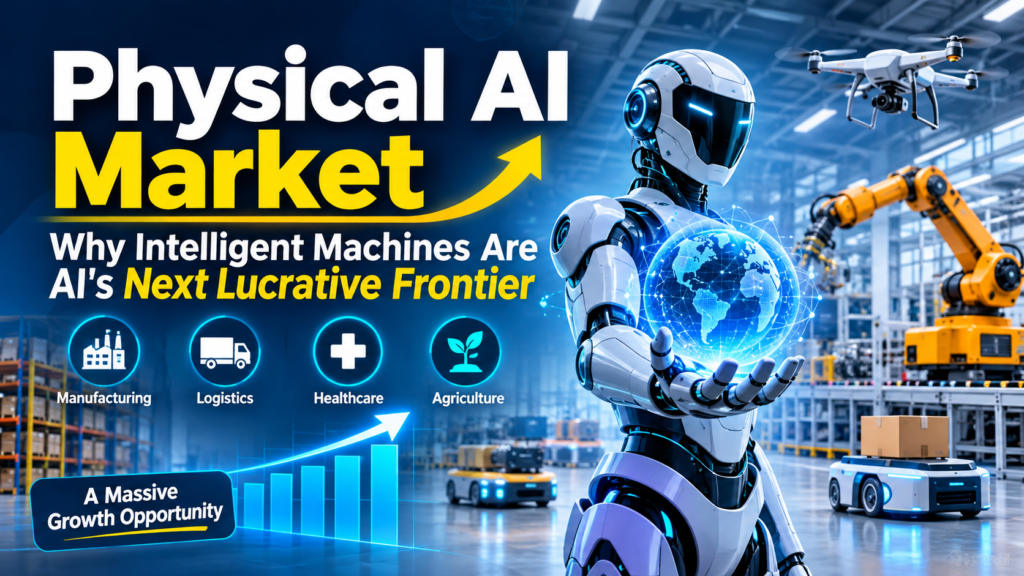
The physical AI market is lucrative because it moves artificial intelligence out of chat windows and into factories, warehouses, hospitals and farms, where software that can act on the world creates measurable economic value. The money is real, but most of it is likely to be captured by specialized machines that do one job well, not by the humanoid robots that dominate headlines.
For the last three years, the AI story has been about text, images and code. That story is far from over, yet the center of gravity is shifting. Investors, chipmakers and industrial giants now describe machines that perceive, decide and act as the next platform shift. This guide explains what physical AI is, how large the physical AI market could become, where the profits are likely to land, and what founders, students and operators should do about it.
Key Takeaways
- Physical AI combines perception, reasoning and robotic action so machines can complete tasks in the real world.
- Market forecasts for physical AI vary by a factor of more than fifty, because analysts define the category very differently.
- Research from Capgemini and Arthur D. Little points to specialized robots, not humanoids, as the nearer-term source of value.
- China leads in manufacturing scale, the US leads in frontier models and capital, and Europe and Japan lead in industrial automation.
- The biggest barriers are training data, safe deployment and scaling beyond pilots, not raw model intelligence.
- India has a manufacturing base, a logistics boom and a large engineering talent pool, which together create a real opening.
What Is Physical AI?
Definition: Physical AI in One Paragraph
Physical AI is artificial intelligence that is embedded in a machine and allows it to sense its surroundings, make decisions and take physical action without step-by-step human programming. In practice that means a warehouse robot that reroutes around a blocked aisle, an inspection drone that spots a crack in a pipeline, or an industrial arm that adapts when a part arrives slightly out of position.
Expansion: Why the Form Factor Does Not Matter
A common misunderstanding is that physical AI means humanoid robots. It does not. Arthur D. Little’s Blue Shift institute makes this point in its report I, Robot: a wheeled warehouse system, an autonomous inspection machine or an intelligent industrial arm can embody physical AI as fully as a two-legged machine built to look like a person. The defining feature is the loop of perceiving, reasoning and acting, not the shape of the hardware.
This matters for anyone sizing the physical AI market. If you only count humanoids, the category looks tiny and speculative. If you count every machine that uses learned intelligence to act in the physical world, it starts to look like a large slice of the global economy.
Physical AI vs Generative AI vs Traditional Robotics
The easiest way to understand the category is to compare it with the technologies it builds on.
| Dimension | Generative AI | Traditional Robotics | Physical AI |
|---|---|---|---|
| Core output | Text, images, code | Repeated mechanical motion | Adaptive real-world action |
| Environment | Digital | Fixed, controlled cells | Variable, unstructured spaces |
| How it is programmed | Trained on large datasets | Scripted by engineers | Trained on data and simulation, then refined in the field |
| Handling surprises | Produces a plausible answer | Stops or fails | Perceives, re-plans and continues |
| Main bottleneck | Compute and data quality | Programming effort | Real-world data, safety and hardware cost |
| Typical example | A chatbot drafting a report | A fixed welding arm on a car line | A mobile robot picking mixed items in a warehouse |
The Body, the Mind and the Data Layers
Arthur D. Little frames the field as layers. The Body covers hardware such as actuators, sensors, batteries and chassis. The Mind covers perception, reasoning, planning and decision-making. A third ingredient, data, ties the two together, because a robot only becomes competent by learning from examples of the real world.
This layered view is useful because different countries and companies lead in different layers, which shapes who captures profit. We return to that below.
Why Is Physical AI the Next Lucrative Frontier?
The Direct Answer
Physical AI is the next lucrative frontier because the physical economy is far larger than the digital one, and AI that can act in it unlocks productivity gains that software alone cannot reach. A chatbot can assist a customer. A robot can manufacture, move or inspect a product, and that action maps directly to revenue and cost savings.
Reason One: Labor Economics
Labor tightness has become a structural issue in manufacturing, logistics, construction and healthcare in many countries. Machines that can handle repetitive, dangerous or physically demanding tasks address a problem businesses already pay to solve. That makes physical AI an easier budget conversation than many experimental software tools.
Reason Two: Capital Is Already Moving
Funding data shows the shift is underway. According to Polaris Market Research, Skild AI raised a USD 1.4 billion Series C in January 2026, reportedly at a valuation above USD 14 billion. One funding tracker reported that four robotics startups, Mind Robotics, Rhoda AI, Sunday and Oxa, together raised more than USD 1.2 billion in a single week in March 2026. Bessemer Venture Partners argued in an April 2026 report that robotics and physical AI remain structurally underinvested relative to their potential.
Reason Three: Industrial Giants Are Placing Bets
Corporate signals point the same way. Nvidia chief Jensen Huang has said publicly that the next wave of AI is physical AI. SoftBank described physical AI as its next frontier when it announced a USD 5.4 billion deal to buy ABB Robotics, according to AFP reporting. Georgetown’s Center for Security and Emerging Technology has compared the potential impact to the iPhone in 2007 and ChatGPT in 2022.
Reason Four: Technology Has Crossed a Threshold
Foundation models, better simulation and cheaper edge computing have made it practical to train robots on broad skills rather than hand-coding each motion. That combination is why researchers talk about physical AI as a distinct wave rather than a rebrand of industrial automation.
How Big Is the Physical AI Market?
The Direct Answer
Published estimates of the physical AI market range from about USD 1.5 billion to more than USD 80 billion for 2026, depending on what each analyst counts. Every major forecast agrees on one thing: very fast growth, with compound annual rates mostly between 27 percent and 50 percent.
Comparison of Published Estimates
| Source | 2026 estimate | Forecast endpoint | Stated growth rate |
|---|---|---|---|
| MarketsandMarkets | About USD 1.50 billion | USD 15.24 billion by 2032 | 47.2% CAGR |
| Polaris Market Research | USD 1.39 billion | USD 44.78 billion by 2034 | 47.06% CAGR |
| Fortune Business Insights | USD 42.06 billion | USD 294.07 billion by 2034 | 27.5% CAGR |
| Persistence Market Research | USD 87.5 billion | USD 741.6 billion by 2033 | 35.7% CAGR |
| DataM Intelligence | USD 5.02 billion (2025 base) | Forecast to 2035 | 32.8% CAGR |
These figures come from commercial research firms with different methodologies. Treat them as directional, not as precise measurements.
Why Do the Numbers Disagree So Much?
The spread comes down to scope. Narrow definitions count only AI-specific software and platforms sold into robotics. Broad definitions include the robots themselves, sensors, edge chips, autonomous vehicles and smart infrastructure. When you read any physical AI market forecast, check three things before you quote it:
- Whether hardware is included or only software and services
- Whether autonomous vehicles and vision systems are counted
- Whether the base year and currency are stated clearly
A responsible way to describe the physical AI market is as a range, with the definition attached to each number.
Where Will Value Actually Be Captured?
Question: Are Humanoid Robots the Main Opportunity?
No. Current research suggests humanoids will capture attention while specialized robots capture most of the near-term value. Arthur D. Little concluded that humanoid platforms remain immature compared with other areas of physical AI, and that the revolution is more likely to arrive task by task than on two legs.
Capgemini’s research supports this. In its May 2026 report on human-robot collaboration, more than half of business leaders named autonomous mobile robots, industrial robotic arms and collaborative robots as the fastest growing form factors in their organizations over the next three to five years, well ahead of humanoids.
The Case for Specialized Machines
Specialized robots win early for practical reasons. They operate in constrained tasks, so safety is easier to validate. Their return on investment is easier to calculate. They can reuse existing workflows instead of demanding a redesign of the building around a human-shaped machine.
The Case for Humanoids
Humanoid advocates have a point too. A general-purpose body that fits spaces designed for people could eventually reduce the need for custom machines. Goldman Sachs has projected a humanoid robot market of about USD 38 billion by 2035, as cited in industry coverage. That is large, but it is a long-dated bet, and it should not distract buyers from proven use cases today.
Where Specialized Physical AI Is Already Working
- Warehouses and logistics: autonomous mobile robots moving goods and picking items
- Manufacturing: adaptive arms and cobots working alongside people on assembly and inspection
- Healthcare: surgical robotics, rehabilitation systems and AI-enabled diagnostic hardware
- Infrastructure and energy: inspection machines for pipelines, plants and utility assets
- Agriculture: autonomous machines for monitoring, spraying and harvesting
Who Is Winning the Global Race?
Definition: The Three Competitive Blocs
The competition in the physical AI market is less a single race than three different strengths. Understanding them helps explain where partnerships form.
| Region | Core strength | Relative weakness |
|---|---|---|
| China | Manufacturing scale, dense supplier networks, rapid robot deployment | Less dominant in frontier AI models and capital |
| United States | Frontier AI models, computing capacity, investment capital | Less dominant in hardware-focused Body layer |
| Europe and Japan | Industrial automation, systems integration, applied robotics | Weaker in frontier AI models |
Expansion: China’s Deployment Lead
Arthur D. Little notes that China installed more robots in 2025 than the rest of the world combined. That installed base produces operating data and supplier know-how that are hard to replicate. The US advantage sits in the Mind layer, where strong frontier models and abundant capital matter most.
Question: Does This Mean One Country Will Dominate?
Probably not. The Body and Mind layers reward different capabilities, so the most successful companies are likely to combine them through partnerships and acquisitions, which is exactly the pattern visible in deals such as SoftBank and ABB Robotics.
What Are the Real Bottlenecks?
The Data Problem
Large language models learned from text on a vast scale. Robots have no equivalent library. One analysis estimates that available robot manipulation data totals roughly 300,000 hours, against hundreds of trillions of text tokens, and that industry data costs could pass USD 3 billion over two years. Whoever builds efficient ways to collect, simulate and share real-world data gains a durable advantage.
The Pilot-to-Scale Gap
Interest is high, but execution lags. Capgemini reports that two-thirds of surveyed organizations rate physical AI as a high priority for the next three to five years, yet only 4 percent say they already operate at scale. Closing that gap is where integrators, systems engineers and workflow designers will earn their fees.
Safety, Cost and Acceptance
Machines that move around people must be safe, predictable and affordable. Regulation is still developing, and workforce acceptance depends on how companies communicate the effect on jobs. Organizations that redesign workflows for human-robot collaboration, instead of treating robots as drop-in replacements, tend to be better positioned.
Talent Shortages
Demand for robotics engineers, perception specialists and simulation experts is rising quickly. Analysts describe physical AI as a production reality with a talent problem attached.
What Does the Physical AI Market Mean for India?
The Direct Answer
India is well placed to benefit from the physical AI market because it combines a large manufacturing base, fast-growing logistics and e-commerce sectors, and one of the largest engineering talent pools in the world. The country has already embraced software AI. The next opportunity is applying that skill to machines.
Practical Openings
- Systems integration: deploying and maintaining robots for Indian factories and warehouses
- Applied perception and planning software: building the Mind layer for local conditions such as cluttered, variable environments
- Simulation and data services: creating training data for robots, an area where services companies can compete globally
- Skills and training: preparing students and young professionals for robotics, embedded AI and automation roles
A Note on Challenges
Cost sensitivity, uneven infrastructure and the need for local-language and local-context interfaces are real hurdles. They also act as barriers to entry, which means less competition for teams that solve them well.
How Should Businesses Approach Physical AI?
Step-by-Step Framework
Capgemini’s recommended priorities, combined with common deployment practice, translate into a simple path:
- Understand current limits. Separate demonstrations from what works reliably in production today.
- Start with confidence-building use cases. Pick narrow tasks with clear metrics, such as pallet movement or visual inspection.
- Explore form factors. Do not default to humanoids; compare mobile robots, arms and cobots for the job.
- Redesign the workflow. Plan how people and machines share the space and who handles exceptions.
- Choose partners carefully. Evaluate vendor stability, integration depth and long-term support.
- Invest in the workforce. Train operators and maintenance staff early.
- Measure and scale. Track uptime, throughput and cost per task before expanding.
Arthur D. Little adds that choices over the next few years about where to pilot, what to measure, which partners to engage and how to develop the workforce will separate leaders from followers.
Frequently Asked Questions
What is the physical AI market?
The physical AI market covers hardware, software and services that let machines perceive, reason and act in the real world, including robots, autonomous vehicles and smart infrastructure. Published sizes vary widely because definitions differ.
How is physical AI different from robotics?
Traditional robots follow fixed scripts in controlled settings. Physical AI adds learned perception and decision-making, so machines can adapt to changing conditions.
Is physical AI the same as embodied AI?
The terms are closely related. Embodied AI is often used in research to describe intelligence that learns through a body, while physical AI is the more common business term.
Will humanoid robots take over the physical AI market?
Not in the near term. Both Capgemini and Arthur D. Little point to specialized robots as the faster path to value, with humanoids still maturing.
Which industries adopt physical AI first?
Logistics, manufacturing, healthcare, energy and agriculture lead, because they have repetitive or hazardous tasks and clear return-on-investment metrics.
Is physical AI a good field for students to enter?
Yes. Demand for robotics, perception and simulation skills is rising faster than supply, which favors people who build practical projects early.
Conclusion: The Frontier Is Task by Task
The physical AI market is not a single product or a single bet on humanoids. It is a broad shift in which AI leaves the screen and takes on work in the physical economy. The strongest evidence suggests that value will arrive one task at a time, through specialized machines, careful pilots and well-designed workflows.
If you are building a career, a company or a content strategy around this shift, start with narrow, measurable problems, learn the data and safety challenges early, and watch how the numbers are defined before you trust any forecast.
ଭୌତିକ AI (Physical AI) ବଜାର: କାହିଁକି ବୁଦ୍ଧିମାନ ମେସିନ୍ଗୁଡ଼ିକ AI କ୍ଷେତ୍ରରେ ପରବର୍ତ୍ତୀ ଲାଭଜନକ ସୁଯୋଗ ଅଟନ୍ତି
ଭୌତିକ AI ବଜାର ଅତ୍ୟନ୍ତ ଲାଭଜନକ ଅଟେ, କାରଣ ଏହା କୃତ୍ରିମ ବୁଦ୍ଧିମତ୍ତା (AI) କୁ କେବଳ କମ୍ପ୍ୟୁଟର ସ୍କ୍ରିନ୍ ବା ଚାଟ୍ ୱିଣ୍ଡୋ ମଧ୍ୟରୁ ବାହାର କରି କାରଖାନା, ଗୋଦାମ, ଡାକ୍ତରଖାନା ଏବଂ କୃଷିକ୍ଷେତ୍ର ଭଳି ବାସ୍ତବ ସ୍ଥାନକୁ ନେଇଆସେ। ଏଠାରେ, ସଫ୍ଟୱେର୍ ବାସ୍ତବ ଦୁନିଆରେ କାର୍ଯ୍ୟ କରିପାରେ ଏବଂ ମାପଯୋଗ୍ୟ ଅର୍ଥନୈତିକ ମୂଲ୍ୟ ସୃଷ୍ଟି କରିପାରେ। ଏଥିରୁ ପ୍ରକୃତ ଆର୍ଥିକ ଲାଭ ମିଳିପାରିବ, କିନ୍ତୁ ଏହି ଲାଭର ଅଧିକାଂଶ ଅଂଶ ସେହି ବିଶେଷଜ୍ଞ ମେସିନ୍ଗୁଡ଼ିକ ପାଖକୁ ଯିବ ଯେଉଁଗୁଡ଼ିକ କୌଣସି ଏକ ନିର୍ଦ୍ଦିଷ୍ଟ କାମକୁ ବହୁତ ଭଲ ଭାବରେ କରିପାରନ୍ତି; ଏହା ସେହି ମାନବ-ସଦୃଶ ରୋବଟ୍ (humanoid robots) ଗୁଡ଼ିକ ପାଖକୁ ଯିବ ନାହିଁ ଯେଉଁଗୁଡ଼ିକ ସାଧାରଣତଃ ଖବରକାଗଜର ଶିରୋନାମାରେ ରୁହନ୍ତି।
ଗତ ତିନି ବର୍ଷ ଧରି, AI ବିଷୟରେ ଆଲୋଚନା ମୁଖ୍ୟତଃ ଲେଖା (text), ଚିତ୍ର ଏବଂ କୋଡ୍ (code) ଉପରେ କେନ୍ଦ୍ରିତ ଥିଲା। ଏହି କାହାଣୀ ଏବେ ମଧ୍ୟ ଶେଷ ହୋଇନାହିଁ, କିନ୍ତୁ ଏହାର ମୁଖ୍ୟ କେନ୍ଦ୍ରବିନ୍ଦୁ ବର୍ତ୍ତମାନ ବଦଳିବାରେ ଲାଗିଛି। ନିବେଶକ, ଚିପ୍ ନିର୍ମାତା ଏବଂ ବଡ଼ ଶିଳ୍ପ ସଂସ୍ଥାଗୁଡ଼ିକ ବର୍ତ୍ତମାନ ସେହି ମେସିନ୍ଗୁଡ଼ିକୁ ଏକ ନୂତନ ‘ପ୍ଲାଟଫର୍ମ ପରିବର୍ତ୍ତନ’ (platform shift) ଭାବରେ ଦେଖୁଛନ୍ତି, ଯେଉଁଗୁଡ଼ିକ ନିଜେ ପରିବେଶକୁ ଅନୁଭବ କରିପାରନ୍ତି, ନିଷ୍ପତ୍ତି ନେଇପାରନ୍ତି ଏବଂ କାର୍ଯ୍ୟ କରିପାରନ୍ତି। ଏହି ଗାଇଡ୍ରେ ବୁଝାଯାଇଛି ଯେ ‘ଭୌତିକ AI’ କ’ଣ, ଏହାର ବଜାର କେତେ ବଡ଼ ହୋଇପାରେ, ଲାଭ କେଉଁଠାରୁ ମିଳିବାର ସମ୍ଭାବନା ଅଛି ଏବଂ ଉଦ୍ୟୋଗୀ, ଛାତ୍ରଛାତ୍ରୀ ତଥା କାର୍ଯ୍ୟ ପରିଚାଳନା କରୁଥିବା ବ୍ୟକ୍ତିମାନେ ଏଥିପାଇଁ କ’ଣ କରିବା ଉଚିତ୍।
ମୁଖ୍ୟ ବିଷୟଗୁଡ଼ିକ
ଭୌତିକ AI ପରିବେଶକୁ ଅନୁଭବ କରିବା, ଚିନ୍ତା କରି ନିଷ୍ପତ୍ତି ନେବା ଏବଂ ରୋବୋଟିକ୍ କାର୍ଯ୍ୟ କରିବାକୁ ଏକତ୍ରିତ କରେ, ଯାହା ଫଳରେ ମେସିନ୍ଗୁଡ଼ିକ ବାସ୍ତବ ଦୁନିଆରେ ବିଭିନ୍ନ କାର୍ଯ୍ୟ ସମ୍ପାଦନ କରିପାରନ୍ତି।
ଭୌତିକ AI ବଜାର ପାଇଁ କରାଯାଇଥିବା ପୂର୍ବାନୁମାନଗୁ ତାହା ନୁହେଁ। ‘ଆର୍ଥର୍ ଡି. ଲିଟଲ୍’ (Arthur D. Little) ର ‘ବ୍ଲୁ ସିଫ୍ଟ ଇନଷ୍ଟିଚ୍ୟୁଟ୍’ (Blue Shift Institute) ନିଜ ରିପୋର୍ଟରେ ଏକ ଗୁରୁତ୍ୱପୂର୍ଣ୍ଣ କଥା ଉଲ୍ଲେଖ କରିଛି: ଚକ ଲାଗିଥିବା ଗୋଦାମ ବ୍ୟବସ୍ଥା, ସ୍ୱୟଂଚାଳିତ ଯାଞ୍ଚ ମେସିନ୍ କିମ୍ବା ବୁଦ୍ଧିମାନ ଶିଳ୍ପ-ଯନ୍ତ୍ର (industrial arm) ମଧ୍ୟ ‘ଫିଜିକାଲ୍ AI’ (Physical AI) ବା ଭୌତିକ କୃତ୍ରିମ ବୁଦ୍ଧିମତ୍ତାର ସେହି ସ୍ତର ପ୍ରଦର୍ଶନ କରିପାରନ୍ତି, ଯାହା ମଣିଷ ଭଳି ଦେଖାଯାଉଥିବା ଦୁଇ ଗୋଡ଼ ବିଶିଷ୍ଟ ରୋବଟ୍ କରିଥାଏ। ଏହାର ମୁଖ୍ୟ ପରିଚୟ ହେଉଛି—ପରିସ୍ଥିତିକୁ ଅନୁଭବ କରିବା, ଚିନ୍ତା କରିବା ଏବଂ କାର୍ଯ୍ୟ କରିବାର ଏକ ନିରନ୍ତର ପ୍ରକ୍ରିୟା; ହାର୍ଡୱେର୍ର ଆକାର କିମ୍ବା ରୂପ ଏଥିପାଇଁ ମୁଖ୍ୟ ନୁହେଁ।
ଯେଉଁମାନେ ‘ଫିଜିକାଲ୍ AI’ ବଜାରର ଆକଳନ କରୁଛନ୍ତି, ସେମାନଙ୍କ ପାଇଁ ଏହି ବିଷୟଟି ଗୁରୁତ୍ୱପୂର୍ଣ୍ଣ। ଯଦି ଆପଣ କେବଳ ମଣିଷ ସଦୃଶ ରୋବଟ୍ (humanoids) କୁ ବିଚାରକୁ ନିଅନ୍ତି, ତେବେ ଏହି କ୍ଷେତ୍ରଟି ଅତ୍ୟନ୍ତ ଛୋଟ ଏବଂ କେବଳ ଏକ କଳ୍ପନା ବା ଅନୁମାନ ଭଳି ମନେହେବ। କିନ୍ତୁ, ଯଦି ଆପଣ ସେହି ସମସ୍ତ ମେସିନ୍କୁ ଗଣନା କରନ୍ତି ଯାହା ବାସ୍ତବ ଜଗତରେ କାର୍ଯ୍ୟ କରିବା ପାଇଁ ଶିଖିଥିବା ବୁଦ୍ଧିମତ୍ତାର (learned intelligence) ବ୍ୟବହାର କରନ୍ତି, ତେବେ ଏହା ବିଶ୍ୱ ଅର୍ଥନୀତିର ଏକ ବିଶାଳ ଅଂଶ ଭାବରେ ଉଭା ହେବ।
ଫିଜିକାଲ୍ AI ବନାମ ଜେନେରେଟିଭ୍ AI (Generative AI) ବନାମ ପାରମ୍ପାରିକ ରୋବୋଟିକ୍ସ
ଏହି ବିଭାଗକୁ ବୁଝିବାର ସବୁଠାରୁ ସହଜ ଉପାୟ ହେଉଛି, ଏହା ଯେଉଁ ପ୍ରଯୁକ୍ତିବିଦ୍ୟା ଉପରେ ଆଧାରିତ, ତା’ ସହିତ ଏହାର ତୁଳନା କରିବା।
ବିଭାଗ | ଜେନେରେଟିଭ୍ AI | ପାରମ୍ପାରିକ ରୋବୋଟିକ୍ସ | ଫିଜିକାଲ୍ AI
ମୁଖ୍ୟ ଆଉଟପୁଟ୍ | ଲେଖା, ଚିତ୍ର, କୋଡ୍ | ପୁନରାବୃତ୍ତିଯୁକ୍ତ ଯାନ୍ତ୍ରିକ ଗତି | ପରିସ୍ଥିତି ଅନୁଯାୟୀ ବାସ୍ତବ ଜଗତରେ କାର୍ଯ୍ୟ
ପରିବେଶ | ଡିଜିଟାଲ୍ | ନିର୍ଦ୍ଦିଷ୍ଟ ଏବଂ ନିୟନ୍ତ୍ରିତ ସ୍ଥାନ | ପରିବର୍ତ୍ତନଶୀଳ ଏବଂ ଅନିର୍ଦ୍ଦିଷ୍ଟ ସ୍ଥାନ
କିପରି ପ୍ରୋଗ୍ରାମ କରାଯାଏ | ବିଶାଳ ଡାଟାସେଟ୍ ମାଧ୍ୟମରେ ତାଲିମ | ଇଞ୍ଜିନିୟରଙ୍କ ଦ୍ୱାରା ଲିଖିତ ନିର୍ଦ୍ଦେଶାବଳୀ | ଡାଟା ଓ ସିମୁଲେସନ୍ ମାଧ୍ୟମରେ ତାଲିମ, ପରେ ଏକ ଚାଟବଟ୍ ଜଣେ ଗ୍ରାହକଙ୍କୁ ସହାୟତା କରିପାରିବ। ଏକ ରୋବୋଟ୍ ଏକ ଉତ୍ପାଦ ନିର୍ମାଣ, ସ୍ଥାନାନ୍ତର କିମ୍ବା ଯାଞ୍ଚ କରିପାରିବ, ଏବଂ ସେହି କାର୍ଯ୍ୟ ସିଧାସଳଖ ରାଜସ୍ୱ ଏବଂ ଖର୍ଚ୍ଚ ସଞ୍ଚୟକୁ ମ୍ୟାପ୍ କରେ।
କାରଣ ପ୍ରଥମ: ଶ୍ରମ ଅର୍ଥନୀତି
ଅନେକ ଦେଶରେ ଉତ୍ପାଦନ, ଲଜିଷ୍ଟିକ୍ସ, ନିର୍ମାଣ ଏବଂ ସ୍ୱାସ୍ଥ୍ୟସେବାରେ ଶ୍ରମ ନିବିଡ଼ତା ଏକ ଗଠନମୂଳକ ସମସ୍ୟା ପାଲଟିଛି। ପୁନରାବୃତ୍ତି, ବିପଦପୂର୍ଣ୍ଣ କିମ୍ବା ଶାରୀରିକ ଭାବରେ ଦାବି କରୁଥିବା କାର୍ଯ୍ୟଗୁଡ଼ିକୁ ପରିଚାଳନା କରିପାରୁଥିବା ମେସିନଗୁଡ଼ିକ ବ୍ୟବସାୟଗୁଡ଼ିକ ପୂର୍ବରୁ ସମାଧାନ କରିବା ପାଇଁ ଦେୟ ଦେଉଥିବା ସମସ୍ୟାର ସମାଧାନ କରନ୍ତି। ଏହା ଅନେକ ପରୀକ୍ଷାମୂଳକ ଅପେକ୍ଷା ଭୌତିକ AIକୁ ଏକ ସହଜ ବଜେଟ୍ ଆଲୋଚନା କରିଥାଏ।ସଫ୍ଟୱେର୍ ଉପକରଣ।
ଦ୍ୱିତୀୟ କାରଣ: ପୁଞ୍ଜି ନିବେଶର ପ୍ରବାହ ଆରମ୍ଭ ହୋଇସାରିଛି
ପୁଞ୍ଜି ନିବେଶ ସମ୍ବନ୍ଧୀୟ ତଥ୍ୟରୁ ଜଣାପଡ଼େ ଯେ ଏହି ପରିବର୍ତ୍ତନ ପ୍ରକ୍ରିୟା ଆରମ୍ଭ ହୋଇସାରିଛି। ‘ପୋଲାରିସ୍ ମାର୍କେଟ୍ ରିସର୍ଚ୍ଚ’ (Polaris Market Research) ଅନୁଯାୟୀ, ଜାନୁଆରୀ ୨୦୨୬ରେ ‘ସ୍କିଲ୍ଡ ଏଆଇ’ (Skild AI) ‘ସିରିଜ୍ ସି’ (Series C) ପର୍ଯ୍ୟାୟରେ ୧.୪ ବିଲିୟନ ଆମେରିକୀୟ ଡଲାର ପାଣ୍ଠି ସଂଗ୍ରହ କରିଥିଲା। ଖବର ଅନୁଯାୟୀ, ସେତେବେଳେ ଏହାର ମୂଲ୍ୟାଙ୍କନ (valuation) ୧୪ ବିଲିୟନ ଆମେରିକୀୟ ଡଲାରରୁ ଅଧିକ ଥିଲା।
ପୁଞ୍ଜି ନିବେଶ ଉପରେ ନଜର ରଖୁଥିବା ଏକ ସଂସ୍ଥା ଅନୁସାରେ, ମାର୍ଚ୍ଚ ୨୦୨୬ର ଗୋଟିଏ ସପ୍ତାହ ମଧ୍ୟରେ ‘ମାଇଣ୍ଡ ରୋବୋଟିକ୍ସ’ (Mind Robotics), ‘ରୋଡା ଏଆଇ’ (Rhoda AI), ‘ସଣ୍ଡେ’ (Sunday) ଏବଂ ‘ଅକ୍ସା’ (Oxa) ନାମକ ଚାରୋଟି ରୋବୋଟିକ୍ସ ଷ୍ଟାର୍ଟଅପ୍ ମିଳିତ ଭାବେ ୧.୨ ବିଲିୟନ ଆମେରିକୀୟ ଡଲାରରୁ ଅଧିକ ପାଣ୍ଠି ସଂଗ୍ରହ କରିଥିଲେ। ଏପ୍ରିଲ ୨୦୨୬ର ଏକ ରିପୋର୍ଟରେ ‘ବେସେମର୍ ଭେଞ୍ଚର ପାର୍ଟନର୍ସ’ (Bessemer Venture Partners) ଦର୍ଶାଇଛି ଯେ, ରୋବୋଟିକ୍ସ ଏବଂ ‘ଫିଜିକାଲ୍ ଏଆଇ’ (Physical AI) କ୍ଷେତ୍ରରେ ସେଗୁଡ଼ିକର ପ୍ରକୃତ କ୍ଷମତା ତୁଳନାରେ ବହୁତ କମ୍ ପୁଞ୍ଜି ନିବେଶ କରାଯାଇଛି।
ତୃତୀୟ କାରଣ: ଶିଳ୍ପ ଜଗତର ବଡ଼ କମ୍ପାନୀଗୁଡ଼ିକ ଏଥିରେ ନିବେଶ କରୁଛନ୍ତି
ବଡ଼ କର୍ପୋରେଟ୍ ସଂସ୍ଥାଗୁଡ଼ିକର ପଦକ୍ଷେପ ମଧ୍ୟ ଏହି ଦିଗକୁ ଇଙ୍ଗିତ କରୁଛି। ‘ଏନଭିଡିଆ’ (Nvidia) ର ମୁଖ୍ୟ ଜେନସେନ୍ ହୁଆଙ୍ଗ ସର୍ବସାଧାରଣରେ କହିଛନ୍ତି ଯେ, ଏଆଇ (AI) ର ପରବର୍ତ୍ତୀ ପର୍ଯ୍ୟାୟ ହେଉଛି ‘ଫିଜିକାଲ୍ ଏଆଇ’। ଏଏଫପି (AFP) ରିପୋର୍ଟ ଅନୁଯାୟୀ, ‘ସଫ୍ଟବ୍ୟାଙ୍କ’ (SoftBank) ଯେତେବେଳେ ‘ଏବିବି ରୋବୋଟିକ୍ସ’ (ABB Robotics) କୁ କିଣିବା ପାଇଁ ୫.୪ ବିଲିୟନ ଆମେରିକୀୟ ଡଲାରର ଚୁକ୍ତି ଘୋଷଣା କଲା, ସେତେବେଳେ ଏହା ‘ଫିଜିକାଲ୍ ଏଆଇ’କୁ ନିଜର ପରବର୍ତ୍ତୀ ଗୁରୁତ୍ୱପୂର୍ଣ୍ଣ ଲକ୍ଷ୍ୟ ବୋଲି ବର୍ଣ୍ଣନା କରିଥିଲା।
ଜର୍ଜଟାଉନ୍ ବିଶ୍ୱବିଦ୍ୟାଳୟର ‘ସେଣ୍ଟର ଫର୍ ସିକ୍ୟୁରିଟି ଆଣ୍ଡ ଇମର୍ଜିଂ ଟେକ୍ନୋଲୋଜି’ (Center for Security and Emerging Technology) ଏହ ପ୍ରକାଶିତ ଆକଳନଗୁଡ଼ିକର ତୁଳନା
ଉତ୍ସ | ୨୦୨୬ ପାଇଁ ଆକଳନ | ପୂର୍ବାନୁମାନର ଶେଷ ସମୟସୀମା | ଉଲ୍ଲେଖ କରାଯାଇଥିବା ଅଭିବୃଦ୍ଧି ହାର
MarketsandMarkets | ପ୍ରାୟ ୧.୫୦ ବିଲିୟନ ଆମେରିକୀୟ ଡଲାର | ୨୦୩୨ ସୁଦ୍ଧା ୧୫.୨୪ ବିଲିୟନ ଆମେରିକୀୟ ଡଲାର | ୪୭.୨% CAGR
Polaris Market Research | ୧.୩୯ ବିଲିୟନ ଆମେରିକୀୟ ଡଲାର | ୨୦୩୪ ସୁଦ୍ଧା ୪୪.୭୮ ବିଲିୟନ ଆମେରିକୀୟ ଡଲାର | ୪୭.୦୬% CAGR
Fortune Business Insights | ୪୨.୦୬ ବିଲିୟନ ଆମେରିକୀୟ ଡଲାର | ୨୦୩୪ ସୁଦ୍ଧା ୨୯୪.୦୭ ବିଲିୟନ ଆମେରିକୀୟ ଡଲାର | ୨୭.୫% CAGR
Persistence Market Research | ୮୭.୫ ବିଲିୟନ ଆମେରିକୀୟ ଡଲାର | ୨୦୩୩ ସୁଦ୍ଧା ୭୪୧.୬ ବିଲିୟନ ଆମେରିକୀୟ ଡଲାର | ୩୫.୭% CAGR
DataM Intelligence | ୫.୦୨ ବିଲିୟନ ଆମେରିକୀୟ ଡଲାର (୨୦୨୫ ଆଧାର ବର୍ଷ) | ୨୦୩୫ ପର୍ଯ୍ୟନ୍ତ ପୂର୍ବାନୁମାନ | ୩୨.୮% CAGR
ଏହି ସଂଖ୍ୟାଗୁଡ଼ିକ ବିଭିନ୍ନ କାର୍ଯ୍ୟପଦ୍ଧତି ଅବଲମ୍ବନ କରୁଥିବା ବ୍ୟବସାୟିକ ଗବେଷଣା ସଂସ୍ଥାଗୁଡ଼ିକରୁ ଆସିଛି। ଏଗୁଡ଼ିକୁ ସଠିକ୍ ମାପ ଭାବରେ ନ ଗ୍ରହଣ କରି, କେବଳ ଏକ ସାଧାରଣ ଧାରଣା ବା ଦିଗ ନିର୍ଦ୍ଦେଶକ ଭାବରେ ବିଚାର କରନ୍ତୁ।
ସଂଖ୍ୟାଗୁଡ଼ିକ ମଧ୍ୟରେ ଏତେ ପାର୍ଥକ୍ୟ କାହିଁକି ରହିଛି?
ଏହି ପାର୍ଥକ୍ୟର ମୁଖ୍ୟ କାରଣ ହେଉଛି ‘ପରିସର’ (scope)। ସଂକୀର୍ଣ୍ଣ ସଂଜ୍ଞା ଅନୁଯାୟୀ, କେବଳ ରୋବୋଟିକ୍ସ କ୍ଷେତ୍ରରେ ବିକ୍ରି ହେଉଥିବା AI-ନିର୍ଦ୍ଦିଷ୍ଟ ସଫ୍ଟୱେର୍ ଏବଂ ପ୍ଲାଟଫର୍ମଗୁଡ଼ିକୁ ଅନ୍ତର୍ଭୁକ୍ତ କରାଯାଏ। ଅନ୍ୟପକ୍ଷରେ, ବ୍ୟାପକ ସଂଜ୍ଞାରେ ରୋବୋଟ୍ଗୁଡ଼ିକ ନିଜେ, ସେନ୍ସର, ଏଜ୍ ଚିପ୍ସ୍ (edge chips), ସ୍ୱୟଂଚାଳିତ ଯାନ ଏବଂ ସ୍ମାର୍ଟ ଭିତ୍ତିଭୂମି ମଧ୍ୟ ଅନ୍ତର୍ଭୁକ୍ତ ହୋଇଥାଏ। ଯେତେବେଳେ ଆପଣ ‘ଫିଜିକାଲ୍ AI’ (physical AI) ବଜାର ସମ୍ବନ୍ଧୀୟ କୌଣସି ପୂର୍ବାନୁମାନ ପଢ଼ନ୍ତି, ସେତେବେଳେ ଏହାକୁ ଉଦ୍ଧୃତ କରିବା ପୂର୍ବରୁ ନିମ୍ନଲିଖିତ ତିନୋଟି ବିଷୟ ଯାଞ୍ଚ କରନ୍ତୁ:
ଏଥିରେ ହାର୍ଡୱେର୍ ଅନ୍ତର୍ଭୁକ୍ତ କି, ନା କେବଳ ସଫ୍ଟୱେର୍ ଏବଂ ସେବାଗୁଡ଼ିକ ଅନ୍ତର୍ଭୁକ୍ତ?
ଏଥିରେ ସ୍ୱୟଂଚାଳିତ ଯାନ ଏବଂ ଭିଜନ୍ ସିଷ୍ଟମ୍ (ଦୃଷ୍ଟି ଶକ୍ତି ସମ୍ପନ୍ନ ମାନବ-ରୋବଟ୍ ସହଯୋଗ ଉପରେ ମେ’ ୨୦୨୬ର ଏକ ରିପୋର୍ଟ ଅନୁଯାୟୀ, ଅଧିକାଂଶ ବ୍ୟବସାୟିକ ନେତା ମତ ଦେଇଛନ୍ତି ଯେ ଆଗାମୀ ତିନିରୁ ପାଞ୍ଚ ବର୍ଷ ମଧ୍ୟରେ ସେମାନଙ୍କ ସଂସ୍ଥାରେ ‘ସ୍ୱୟଂଚାଳିତ ମୋବାଇଲ୍ ରୋବଟ୍’, ‘ଶିଳ୍ପକ୍ଷେତ୍ରରେ ବ୍ୟବହୃତ ରୋବୋଟିକ୍ ଆର୍ମ’ (ବାହୁ) ଏବଂ ‘ସହଯୋଗୀ ରୋବଟ୍’ (cobots) ସବୁଠାରୁ ଦ୍ରୁତ ଗତିରେ ବିକାଶ ଲାଭ କରିବେ। ଏହି ତାଲିକାରେ ‘ହ୍ୟୁମାନଏଡ୍’ (ମଣିଷ ଆକୃତିର ରୋବଟ୍) ଗୁଡ଼ିକ ବହୁ ପଛରେ ରହିଛନ୍ତି।
ସ୍ୱତନ୍ତ୍ର ଉଦ୍ଦେଶ୍ୟମୂଳକ (Specialized) ମେସିନ୍ଗୁଡ଼ିକର ଗୁରୁତ୍ୱ
ବ୍ୟାବହାରିକ କାରଣରୁ ସ୍ୱତନ୍ତ୍ର ଉଦ୍ଦେଶ୍ୟମୂଳକ ରୋବଟ୍ଗୁଡ଼ିକ ପ୍ରାରମ୍ଭିକ ପର୍ଯ୍ୟାୟରେ ଅଧିକ ଉପଯୋଗୀ ସାବ୍ୟସ୍ତ ହୁଅନ୍ତି। ଏଗୁଡ଼ିକ ନିର୍ଦ୍ଦିଷ୍ଟ କାର୍ଯ୍ୟ ପାଇଁ ଉଦ୍ଦିଷ୍ଟ ଥିବାରୁ, ଏଗୁଡ଼ିକର ସୁରକ୍ଷା ମାନକ ଯାଞ୍ଚ କରିବା ସହଜ ହୋଇଥାଏ। ଏଥିରେ ନିବେଶ କରାଯାଇଥିବା ଅର୍ଥରୁ କେତେ ଲାଭ ମିଳିବ (ROI), ତାହା ମଧ୍ୟ ସହଜରେ ଗଣନା କରାଯାଇପାରେ। ମଣିଷ ଆକୃତିର ରୋବଟ୍ ପାଇଁ କାର୍ଯ୍ୟକ୍ଷେତ୍ରର ଗଠନ ବା ଡିଜାଇନ୍ରେ ବଡ଼ ଧରଣର ପରିବର୍ତ୍ତନ କରିବା ଆବଶ୍ୟକ ହୁଏ, କିନ୍ତୁ ଏହି ସ୍ୱତନ୍ତ୍ର ରୋବଟ୍ଗୁଡ଼ିକ ପାଇଁ ସେପରି କୌଣସି ପରିବର୍ତ୍ତନର ଆବଶ୍ୟକତା ନଥାଏ; ବରଂ ଏଗୁଡ଼ିକ ବର୍ତ୍ତମାନର କାର୍ଯ୍ୟ ପ୍ରଣାଳୀ ସହିତ ଖାପ ଖାଇ ଚଳିପାରନ୍ତି।
‘ହ୍ୟୁମାନଏଡ୍’ (ମଣିଷ ଆକୃତିର ରୋବଟ୍) ସପକ୍ଷରେ ଯୁକ୍ତି
ହ୍ୟୁମାନଏଡ୍କୁ ସମର୍ଥନ କରୁଥିବା ବ୍ୟକ୍ତିମାନଙ୍କର ମଧ୍ୟ କିଛି ଯୁକ୍ତିଯୁକ୍ତ ମତ ରହିଛି। ମଣିଷ ପାଇଁ ତିଆରି ହୋଇଥିବା ସ୍ଥାନରେ ଖାପ ଖାଇପାରୁଥିବା ଏକ ସର୍ବୋଦ୍ଦେଶ୍ୟମୂଳକ (general-purpose) ରୋବଟ୍ ଭବିଷ୍ୟତରେ ନିର୍ଦ୍ଦିଷ୍ଟ କାର୍ଯ୍ୟ ପାଇଁ ତିଆରି ହେଉଥିବା ସ୍ୱତନ୍ତ୍ର ମେସିନ୍ଗୁଡ଼ିକର ଆବଶ୍ୟକତାକୁ ହ୍ରାସ କରିପାରେ।
ଶିଳ୍ପ ସମ୍ବନ୍ଧୀୟ ରିପୋର୍ଟ ଅନୁଯାୟୀ, ‘ଗୋଲ୍ଡମ୍ୟାନ୍ ସାକ୍ସ’ (Goldman Sachs) ଆକଳନ କରିଛି ଯେ ୨୦୩୫ ସୁଦ୍ଧା ହ୍ୟୁମାନଏଡ୍ ରୋବଟ୍ ବଜାର ପ୍ରାୟ ୩୮ ବିଲିୟନ ଆମେରିକୀୟ ଡଲାରରେ ପହଞ୍ଚିପାରେ। ଏହା ଏକ ବିଶାଳ ବଜାର ହେଲେ ମଧ୍ୟ, ଏହା ଏକ ଦୀର୍ଘକାଳୀନ ଲକ୍ଷ୍ୟ ଉପରେ ଆଧାରି ଏହା କେବଳ ଗୋଟିଏ ପ୍ରତିଯୋଗିତା ନୁହେଁ, ବରଂ ତିନୋଟି ଭିନ୍ନ ଶକ୍ତିର ସମାହାର। ଏଗୁଡ଼ିକୁ ବୁଝିଲେ ଜଣାପଡ଼େ ଯେ କାହିଁକି ବିଭିନ୍ନ ସଂସ୍ଥା ମଧ୍ୟରେ ଭାଗୀଦାରି (partnerships) ଗଢ଼ି ଉଠିଥାଏ।
ଅଞ୍ଚଳ | ମୁଖ୍ୟ ଶକ୍ତି | ଆପେକ୍ଷିକ ଦୁର୍ବଳତା ଚୀନ୍ | ଉତ୍ପାଦନ କ୍ଷମତା (ବ୍ୟାପକ ସ୍ତରରେ), ଘନିଷ୍ଠ ଯୋଗାଣକାରୀ ନେଟୱାର୍କ, ରୋବଟର ଦ୍ରୁତ ନିୟୋଜନ | ଅତ୍ୟାଧୁନିକ AI ମଡେଲ୍ ଏବଂ ପୁଞ୍ଜି କ୍ଷେତ୍ରରେ କମ୍ ପ୍ରଭାବଶାଳୀ ଯୁକ୍ତରାଷ୍ଟ୍ର ଆମେରିକା | ଅତ୍ୟାଧୁନିକ AI ମଡେଲ୍, କମ୍ପ୍ୟୁଟିଂ କ୍ଷମତା, ନିବେଶ ପୁଞ୍ଜି | ହାର୍ଡୱେର୍-ଭିତ୍ତିକ ‘ଶରୀର’ (Body) ସ୍ତରରେ କମ୍ ପ୍ରଭାବଶାଳୀ ୟୁରୋପ ଏବଂ ଜାପାନ | ଶିଳ୍ପ ସ୍ୱୟଂଚାଳିତ ପ୍ରକ୍ରିୟା (Industrial automation), ସିଷ୍ଟମ୍ ଇଣ୍ଟିଗ୍ରେସନ୍, ବ୍ୟାବହାରିକ ରୋବୋଟିକ୍ସ | ଅତ୍ୟାଧୁନିକ AI ମଡେଲ୍ କ୍ଷେତ୍ରରେ ଦୁର୍ବଳ
ବିସ୍ତାର: ରୋବଟ୍ ନିୟୋଜନରେ ଚୀନର ଅଗ୍ରଣୀ ଭୂମିକା
‘ଆର୍ଥର୍ ଡି. ଲିଟଲ୍’ (Arthur D. Little) ଅନୁଯାୟୀ, ୨୦୨୫ ମସିହାରେ ଚୀନ୍ରେ ସ୍ଥାପିତ ହୋଇଥିବା ରୋବଟ୍ ସଂଖ୍ୟା ସମଗ୍ର ବିଶ୍ୱର ଅନ୍ୟ ସମସ୍ତ ଦେଶରେ ସ୍ଥାପିତ ରୋବଟ୍ ସଂଖ୍ୟା ଠାରୁ ଅଧିକ ଥିଲା। ଏହି ବ୍ୟାପକ ରୋବଟ୍ ଭିତ୍ତିଭୂମିରୁ ଯେଉଁ କାର୍ଯ୍ୟକ୍ଷମ ତଥ୍ୟ (operating data) ଏବଂ ଯୋଗାଣକାରୀଙ୍କ ଜ୍ଞାନକୌଶଳ ମିଳିଥାଏ, ତାହାର ଅନୁକରଣ କରିବା ଅନ୍ୟମାନଙ୍କ ପାଇଁ କଷ୍ଟକର। ଆମେରିକାର ସୁବିଧା ରହିଛି ‘ମସ୍ତିଷ୍କ’ (Mind) ସ୍ତରରେ, ଯେଉଁଠାରେ ଶକ୍ତିଶାଳୀ ଅତ୍ୟାଧୁନିକ AI ମଡେଲ୍ ଏବଂ ପ୍ରଚୁର ପୁଞ୍ଜି ସବୁଠାରୁ ଗୁରୁତ୍ୱପୂର୍ଣ୍ଣ।
ପ୍ରଶ୍ନ: ଏହାର ଅର୍ଥ କ’ଣ କୌଣସି ଗୋଟିଏ ଦେଶ ଏହି କ୍ଷେତ୍ରରେ ପ୍ରାଧାନ୍ୟ ବିସ୍ତାର କରିବ?
ସମ୍ଭବତଃ ନୁହେଁ। ‘ଶରୀର’ (Body) ଏବଂ ‘ମସ୍ତିଷ୍କ’ (Mind) ସ୍ତରଗୁଡ଼ିକ ଭିନ୍ନ ଭିନ୍ନ ଦକ୍ଷତା ଉପରେ ନିର୍ଭର କରନ୍ତି। ତେଣୁ, ସବୁଠାରୁ ସଫଳ କମ୍ପାନୀଗୁଡ଼ିକ ଭାଗୀଦାରି କିମ୍ବା ଅଧିଗ୍ରହଣ (acquisitions) ମାଧ୍ୟମରେ ଏହି ଦୁଇଟିକୁ ଏକତ୍ରିତ କରିବାର ସମ୍ଭାବନା ଅଧିକ। ‘ସଫ୍ଟବ୍ୟାଙ୍କ’ (SoftBank) ଏବଂ ‘ABB ରୋବୋଟିକ୍ସ’ (ABB Robotics) ଭଳି କମ୍ପାନୀଗୁଡ଼ିକର ବ୍ୟବସାୟିକ ଚୁକ୍ତିରେ ଠ ଦକ୍ଷ କର୍ମୀଙ୍କ ଅଭାବ
ରୋବୋଟିକ୍ସ ଇଞ୍ଜିନିୟର, ପର୍ସେପସନ୍ (ପରିବେଶକୁ ବୁଝିବା/ଅନୁଭବ କରିବା) ବିଶେଷଜ୍ଞ ଏବଂ ସିମୁଲେସନ୍ (କୃତ୍ରିମ ପରିବେଶ ସୃଷ୍ଟି କରି ପରୀକ୍ଷଣ) ବିଶେଷଜ୍ଞଙ୍କ ଚାହିଦା ଦ୍ରୁତ ଗତିରେ ବୃଦ୍ଧି ପାଉଛି। ବିଶ୍ଳେଷକମାନେ ‘ଫିଜିକାଲ୍ AI’ (ଭୌତିକ କୃତ୍ରିମ ବୁଦ୍ଧିମତ୍ତା) କୁ ଉତ୍ପାଦନ କ୍ଷେତ୍ରର ଏକ ବାସ୍ତବତା ଭାବରେ ବର୍ଣ୍ଣନା କରନ୍ତି, ଯେଉଁଠାରେ ଦକ୍ଷ କର୍ମୀଙ୍କ ଅଭାବ ଏକ ପ୍ରମୁଖ ସମସ୍ୟା ହୋଇ ରହିଛି।
ଭାରତ ପାଇଁ ‘ଫିଜିକାଲ୍ AI’ ବଜାରର ଅର୍ଥ କ’ଣ?
ସିଧାସଳଖ ଉତ୍ତର
ଭାରତ ‘ଫିଜିକାଲ୍ AI’ ବଜାରରୁ ଲାଭ ଉଠାଇବା ପାଇଁ ଏକ ଉପଯୁକ୍ତ ସ୍ଥିତିରେ ରହିଛି। ଏହାର କାରଣ ହେଲା, ଭାରତରେ ଏକ ବିଶାଳ ଉତ୍ପାଦନ ଭିତ୍ତିଭୂମି, ଦ୍ରୁତ ଗତିରେ ବୃଦ୍ଧି ପାଉଥିବା ଲଜିଷ୍ଟିକ୍ସ (ପରିବହନ ଓ ଯୋଗାଣ ବ୍ୟବସ୍ଥା) ଏବଂ ଇ-କମର୍ସ କ୍ଷେତ୍ର ରହିଛି, ଏବଂ ଏଠାରେ ବିଶ୍ୱର ଅନ୍ୟତମ ବୃହତ୍ ଇଞ୍ଜିନିୟରିଂ ପ୍ରତିଭା ଭଣ୍ଡାର ମଧ୍ୟ ଉପଲବ୍ଧ ଅଛି। ଦେଶଟି ପୂର୍ବରୁ ହିଁ ‘ସଫ୍ଟୱେର୍ AI’ କୁ ଆପଣାଇ ସାରିଛି। ବର୍ତ୍ତମାନର ପରବର୍ତ୍ତୀ ସୁଯୋଗ ହେଉଛି ସେହି ଦକ୍ଷତାକୁ ଯନ୍ତ୍ରପାତି ବା ମେସିନ୍ଗୁଡ଼ିକରେ ପ୍ରୟୋଗ କରିବା।
ବ୍ୟାବହାରିକ ସୁଯୋଗଗୁଡ଼ିକ
ସିଷ୍ଟମ୍ ଇଣ୍ଟିଗ୍ରେସନ୍ (ପ୍ରଣାଳୀ ସମନ୍ୱୟ): ଭାରତୀୟ କାରଖାନା ଏବଂ ଗୋଦାମ ଘରଗୁଡ଼ିକରେ ରୋବଟ୍ ନିୟୋଜିତ କରିବା ଏବଂ ସେଗୁଡ଼ିକର ରକ୍ଷଣାବେକ୍ଷଣ କରିବା।
ପ୍ରୟୋଗଭିତ୍ତିକ ପର୍ସେପସନ୍ ଏବଂ ପ୍ଲାନିଂ ସଫ୍ଟୱେର୍: ଜଟିଳ ଓ ପରିବର୍ତ୍ତନଶୀଳ ପରିବେଶ ଭଳି ସ୍ଥାନୀୟ ପରିସ୍ଥିତି ପାଇଁ ରୋବଟ୍ର ‘ମସ୍ତିଷ୍କ’ (Mind layer) ବିକଶିତ କରିବା।
ସିମୁଲେସନ୍ ଏବଂ ଡାଟା ସେବା: ରୋବଟ୍ଗୁଡ଼ିକ ପାଇଁ ତାଲିମ ତଥ୍ୟ (training data) ପ୍ରସ୍ତୁତ କରିବା; ଏହି କ୍ଷେତ୍ରରେ ସେବା ପ୍ରଦାନକାରୀ କମ୍ପାନୀଗୁଡ଼ିକ ବିଶ୍ୱସ୍ତରରେ ପ୍ରତିଯୋଗିତା କରିପାରିବେ।
ଦକ୍ଷତା ଏବଂ ତାଲିମ: ଛାତ୍ରଛାତ୍ରୀ ଏବଂ ଯୁବ ବୃତ୍ତିଗତମାନଙ୍କୁ ରୋବୋଟିକ୍ସ, ଏମ୍ବେଡେଡ୍ AI (ଯନ୍ତ୍ର ମଧ୍ୟରେ ନିହିତ AI) ଏବଂ ସ୍ୱୟଂଚାଳିତ ବ୍ୟବସ୍ଥା (automation) କ୍ଷେତ୍ରରେ କାମ କରିବା ପାଇଁ ପ୍ରସ୍ତୁତ କରିବା।
ଆହ୍ୱାନଗୁଡ଼ିକ ଉପ ପ୍ରାୟତଃ ପଚରାଯାଉଥିବା ପ୍ରଶ୍ନ
ଭୌତିକ AI ବଜାର କ’ଣ?
ଭୌତିକ AI ବଜାର ହାର୍ଡୱେର୍, ସଫ୍ଟୱେର୍ ଏବଂ ସେବାଗୁଡ଼ିକୁ କଭର କରେ ଯାହା ମେସିନଗୁଡ଼ିକୁ ବାସ୍ତବ ଦୁନିଆରେ ଅନୁଭବ କରିବାକୁ, ଯୁକ୍ତି କରିବାକୁ ଏବଂ କାର୍ଯ୍ୟ କରିବାକୁ ଦିଏ, ଯେଉଁଥିରେ ରୋବୋଟ୍, ସ୍ୱୟଂଚାଳିତ ଯାନ ଏବଂ ସ୍ମାର୍ଟ ଭିତ୍ତିଭୂମି ଅନ୍ତର୍ଭୁକ୍ତ। ପ୍ରକାଶିତ ଆକାର ବ୍ୟାପକ ଭାବରେ ଭିନ୍ନ ହୋଇଥାଏ କାରଣ ପରିଭାଷା ଭିନ୍ନ ହୋଇଥାଏ।
ଭୌତିକ AI ରୋବୋଟିକ୍ସଠାରୁ କିପରି ଭିନ୍ନ?
ପାରମ୍ପାରିକ ରୋବୋଟଗୁଡ଼ିକ ନିୟନ୍ତ୍ରିତ ପରିବେଶରେ ନିର୍ଦ୍ଦିଷ୍ଟ ନିର୍ଦ୍ଦେଶାବଳୀ (scripts) ଅନୁସରଣ କରନ୍ତି। ‘ଫିଜିକାଲ୍ AI’ (Physical AI) ଏଥିରେ ଶିକ୍ଷାଲବ୍ଧ ଅନୁଭବ (perception) ଏବଂ ନିଷ୍ପତ୍ତି ନେବାର କ୍ଷମତା ଯୋଡ଼ିଥାଏ, ଯାହା ଫଳରେ ମେସିନ୍ଗୁଡ଼ିକ ପରିବର୍ତ୍ତନଶୀଳ ପରିସ୍ଥିତି ସହିତ ଖାପ ଖୁଆଇ ଚଳିପାରନ୍ତି।
‘ଫିଜିକାଲ୍ AI’ ଏବଂ ‘ଏମ୍ବଡିଡ୍ AI’ (Embodied AI) କ’ଣ ସମାନ?
ଏହି ଶବ୍ଦଗୁଡ଼ିକ ପରସ୍ପର ସହ ଘନିଷ୍ଠ ଭାବେ ଜଡ଼ିତ। ଗବେଷଣା କ୍ଷେତ୍ରରେ ‘ଏମ୍ବଡିଡ୍ AI’ ଶବ୍ଦଟି ସେହି ବୁଦ୍ଧିମତ୍ତାକୁ ବୁଝାଇବା ପାଇଁ ବ୍ୟବହୃତ ହୁଏ, ଯାହା ଏକ ଶାରୀରିକ ଗଠନ (body) ମାଧ୍ୟମରେ ଶିଖିଥାଏ; ଅନ୍ୟପକ୍ଷରେ ‘ଫିଜିକାଲ୍ AI’ ଶବ୍ଦଟି ବ୍ୟବସାୟିକ କ୍ଷେତ୍ରରେ ଅଧିକ ବ୍ୟବହୃତ ହୁଏ।
‘ଫିଜିକାଲ୍ AI’ ବଜାରରେ କ’ଣ ମାନବୀୟ ଆକୃତିର ରୋବୋଟ୍ (humanoid robots) ଗୁଡ଼ିକ ପ୍ରାଧାନ୍ୟ ବିସ୍ତାର କରିବେ?
ନିକଟ ଭବିଷ୍ୟତରେ ଏପରି ହେବାର ସମ୍ଭାବନା କମ୍। ‘କ୍ୟାପ୍ଜେମିନି’ (Capgemini) ଏବଂ ‘ଆର୍ଥର୍ ଡି. ଲିଟଲ୍’ (Arthur D. Little) ଉଭୟଙ୍କ ମତରେ, ମାନବୀୟ ଆକୃତିର ରୋବୋଟ୍ଗୁଡ଼ିକ ବର୍ତ୍ତମାନ ମଧ୍ୟ ବିକାଶ ପର୍ଯ୍ୟାୟରେ ଥିବାରୁ, ନିର୍ଦ୍ଦିଷ୍ଟ କାର୍ଯ୍ୟ ପାଇଁ ଉଦ୍ଦିଷ୍ଟ ରୋବୋଟ୍ଗୁଡ଼ିକ (specialized robots) ଶୀଘ୍ର ଲାଭଦାୟକ ସାବ୍ୟସ୍ତ ହେବେ।
କେଉଁ ଶିଳ୍ପ କ୍ଷେତ୍ରଗୁଡ଼ିକ ପ୍ରଥମେ ‘ଫିଜିକାଲ୍ AI’କୁ ଆପଣାଉଛନ୍ତି?
ଲଜିଷ୍ଟିକ୍ସ (ପରିବହନ ଓ ଯୋଗାଣ), ଉତ୍ପାଦନ, ସ୍ୱାସ୍ଥ୍ୟସେବା, ଶକ୍ତି ଏବଂ କୃଷି କ୍ଷେତ୍ର ଏଥିରେ ଆଗରେ ଅଛନ୍ତି। ଏହାର କାରଣ ହେଲା, ଏହି କ୍ଷେତ୍ରଗୁଡ଼ିକରେ ବାରମ୍ବାର କରାଯାଉଥିବା କିମ୍ବା ବିପଜ୍ଜନକ କାର୍ଯ୍ୟ ରହିଛି ଏବଂ ଏଥିରେ ନିବେଶ ଉପରେ ମିଳୁଥିବା ଲାଭ (ROI)କୁ ସ୍ପଷ୍ଟ ଭାବେ ମାପି ହେବାର ସୁଯୋଗ ରହିଛି।
ଛାତ୍ରଛାତ୍ରୀମାନଙ୍କ ପାଇଁ ‘ଫିଜିକାଲ୍ AI’ କ୍ଷେତ୍ରରେ କ୍ୟାରିୟର ଗଢ଼ିବା କ’ଣ ଏକ ଭଲ ନିଷ୍ପତ୍ତି ହେବ?
ହଁ। ରୋବୋଟିକ୍ସ, ଧାରଣା ଏବଂ ସିମୁଲେସନ୍ ଦକ୍ଷତାର ଚାହିଦା ଯୋଗାଣ ଅପେକ୍ଷା ଦ୍ରୁତ ଗତିରେ ବଢ଼ୁଛି, ଯାହା ପ୍ରାରମ୍ଭିକ ସମୟରେ ବ୍ୟବହାରିକ ପ୍ରକଳ୍ପ ନିର୍ମାଣ କରୁଥିବା ଲୋକଙ୍କୁ ପସନ୍ଦ କରେ।
ନିଷ୍କର୍ଷ: ଫ୍ରଣ୍ଟିୟର୍ ହେଉଛି କାର୍ଯ୍ୟ ଦ୍ୱାରା କାର୍ଯ୍ୟ
ଭୌତିକ AI ବଜାର ଗୋଟିଏ ଉତ୍ପାଦ କିମ୍ବା ହ୍ୟୁମାନୋଇଡ୍ ଉପରେ ଏକକ ବାଜି ନୁହେଁ। ଏହା ଏକ ବ୍ୟାପକ ପରିବର୍ତ୍ତନ ଯେଉଁଥିରେ AI ସ୍କ୍ରିନ୍ ଛାଡି ଭୌତିକ ଅର୍ଥନୀତିରେ କାମ ଗ୍ରହଣ କରେ। ସବୁଠାରୁ ଶକ୍ତିଶାଳୀ ପ୍ରମାଣ ସୂଚାଇ ଦିଏ ଯେ ମୂଲ୍ୟ ଏକ ସମୟରେ ଗୋଟିଏ କାର୍ଯ୍ୟରେ ପହଞ୍ଚିବ, ବିଶେଷ ମେସିନ୍, ସତର୍କ ପାଇଲଟ୍ ଏବଂ ଭଲ ଭାବରେ ଡିଜାଇନ୍ ହୋଇଥିବା କାର୍ଯ୍ୟପ୍ରବାହ ମାଧ୍ୟମରେ।
ଯଦି ଆପଣ ଏହି ପରିବର୍ତ୍ତନକୁ ନେଇ ଏକ କ୍ୟାରିଅର୍, ଏକ କମ୍ପାନୀ କିମ୍ବା ଏକ ବିଷୟବସ୍ତୁ ରଣନୀତି ନିର୍ମାଣ କରୁଛନ୍ତି, ତେବେ ସଂକୀର୍ଣ୍ଣ, ମାପଯୋଗ୍ୟ ସମସ୍ୟା ସହିତ ଆରମ୍ଭ କରନ୍ତୁ, ତଥ୍ୟ ଏବଂ ସୁରକ୍ଷା ଚ୍ୟାଲେଞ୍ଜଗୁଡ଼ିକୁ ଶୀଘ୍ର ଶିଖନ୍ତୁ, ଏବଂ ଯେକୌଣସି ପୂର୍ବାନୁମାନକୁ ବିଶ୍ୱାସ କରିବା ପୂର୍ବରୁ ସଂଖ୍ୟାଗୁଡ଼ିକ କିପରି ପରିଭାଷିତ ହୁଏ ତାହା ଦେଖନ୍ତୁ।