‘ଫିଜିକାଲ୍ ଏଆଇ ସର୍ଭିସେସ୍’ (Physical AI Services): ‘ସର୍ଭ ରୋବୋଟିକ୍ସ’ (Serve Robotics) କିପରି ରୋବଟ୍ଗୁଡ଼ିକ ପାଇଁ ‘AWS’ (ଆମାଜନ ୱେବ୍ ସର୍ଭିସେସ୍) ଭଳି ଏକ ବ୍ୟବସ୍ଥା ଗଢ଼ୁଛି
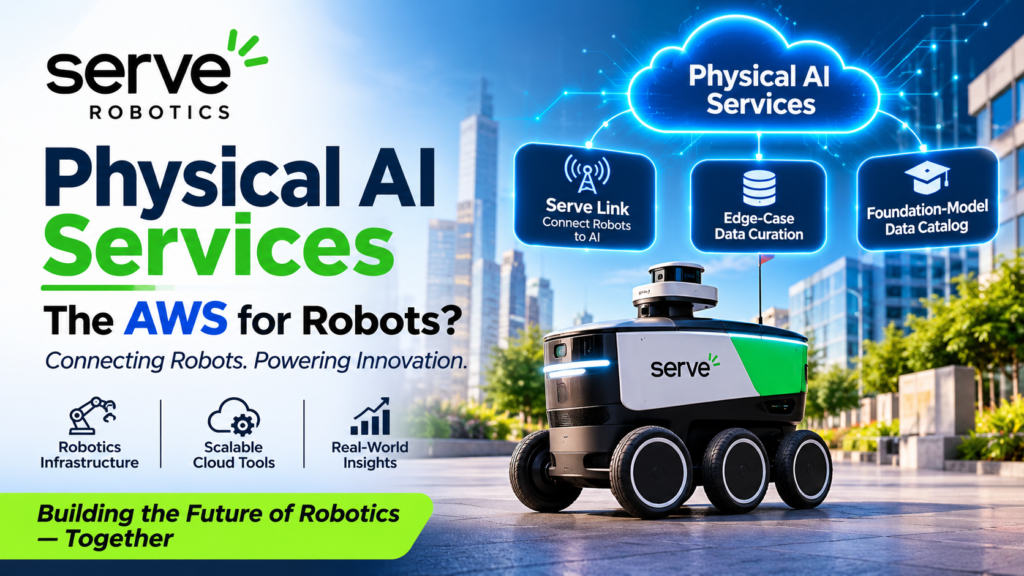
Physical AI Services is the new business line from Serve Robotics that sells the connectivity and data tools behind its sidewalk delivery robots to other robot makers. Announced on November 5, 2026, alongside the company’s third-quarter earnings, it aims to do for robotics what Amazon Web Services did for software: turn infrastructure built for internal use into a platform that outsiders can build on.
Most robotics companies spend years rebuilding the same plumbing: networks that drop, mountains of sensor data nobody has time to review, and rare edge cases that break otherwise capable AI. Serve Robotics wants to sell the fix. This guide explains what the offering is, how its three products work, who is already using it, how it compares with earlier robotics cloud platforms, and what to watch next.
What Are Physical AI Services?
Definition: Physical AI Services is a set of cloud-connected tools and data products, sold by Serve Robotics, that help other companies get robots working reliably in unpredictable human environments.
Expansion: “Physical AI” means artificial intelligence that acts in the real world through machines, as opposed to AI that lives only in chat windows or on screens. The new business line packages technology Serve built to run its own fleet: a connection layer between robots and remote AI systems, a tool for mining real-world data, and a catalog of training data. The idea is that companies building robots for farms, warehouses, and other uncontrolled environments don’t have to start from zero.
The company behind it is no newcomer. According to TechCrunch’s reporting, Serve spun out of Uber’s acquisition of Postmates in 2021 and went public in 2024. It makes self-driving sidewalk delivery robots and, through its acquisition of Diligent Robotics, a robot designed for hospitals. CEO and co-founder Ali Kashani stressed that those businesses are not going away. The new line is an addition, not a pivot.
Quick facts at a glance
- Announced: November 5, 2026, alongside Q3 earnings
- Company: Serve Robotics, maker of sidewalk delivery robots and hospital robots
- Products at launch: Three (Serve Link, a data curator tool, and a foundation-model data catalog)
- Named customer: Bedrock Robotics, which develops self-driving systems for construction equipment
- Named partner: T-Mobile, working with Serve to bring AI computing power closer to robots
- Target market: Companies building robots for farms, warehouses, and other uncontrolled environments
Why Serve Robotics Calls It the AWS for Robots
The analogy, explained
Kashani describes the move as an AWS moment for Serve. The company takes technology it built for itself and opens it so more people can build on top of it. His reasoning, as relayed to TechCrunch, runs like this: when a technology is nascent, you have to build the complete application yourself, because that’s the only way to learn what needs building. Over time, as the technology matures and more companies want to build similar things, the smart move is to open your stack so others can build with you. He says he has been thinking about this playbook, which he credits to Amazon, for years.
That is the thinking behind Physical AI Services: sell the picks and shovels after you’ve done the mining yourself.
Why running your own fleet matters
Kashani added that this expansion wouldn’t have been possible without first developing Serve’s own robot fleet. That detail is the core of the pitch. A vendor that has solved dropped connections on real sidewalks and mined its own robots’ edge cases brings tools tested in the field, not just in a lab.
The operating footprint supports that claim. One recent Nasdaq analysis describes the combined business, sidewalk delivery plus hospital logistics, as operating across 44 cities in 14 states. Every one of those deployments generates the kind of messy real-world data a platform business can learn from.
Where the analogy holds, and where it stretches
The analogy holds on the origin story: both Amazon and Serve built infrastructure to solve their own problems first. It stretches on scale and breadth. AWS sold generic building blocks to nearly every kind of software company. Serve’s tools are narrower and robot-specific, and the public reporting names only one customer and one partner so far. Think of it as an early, specialized version of the idea rather than a direct equivalent of a hyperscale cloud.
The Three Products Inside Physical AI Services
The launch includes three distinct products, each aimed at a different bottleneck in robot development.
Serve Link: connectivity between robots and data-center AI
Definition: Serve Link is a connectivity product that links robots operating in the field to AI systems running in data centers.
Expansion: This lets a robot maker tap more powerful AI models without cramming all that computing power onto the machine itself. Kashani explained that nearly every robotic application needs some connection to offline intelligence, whether for collecting data or handling exceptions. The hard part is making that connection high-performance while coping with unreliable networks. That is the problem Serve Link is built to solve.
The T-Mobile collaboration fits here. Serve says it is working with the carrier to bring AI computing power closer to robots. In general, placing compute nearer to a device tends to help responsiveness, though the reporting doesn’t publish performance figures.
Data curator: finding the edge cases that matter
Definition: The data curator is a tool that helps companies locate edge cases within the enormous volume of real-world data their robots collect.
Expansion: An edge case is a rare situation a robot handles badly: an unusual obstacle, odd lighting, or unexpected human behavior. Once found, those moments can be fed back into a training model to improve performance. Without good curation, teams drown in hours of uneventful footage and miss the few seconds that actually matter.
Here is the loop in practice:
- Robots in the field collect sensor and video data during normal operation.
- The data curator surfaces unusual or failure-prone moments from that data.
- Engineers feed those edge cases back into model training.
- The updated model is deployed, and the cycle repeats with a better baseline.
Real-world foundation-model data catalog
Definition: This is a catalog of real-world data built from Serve’s own sidewalk robots, designed to teach AI models how to understand complex human environments.
Expansion: Foundation models are large, general-purpose AI models trained on broad data. Real-world robot data is far scarcer than text scraped from the web, which makes a catalog gathered by operating robots among pedestrians potentially valuable. The reporting doesn’t detail licensing terms or data volumes, so treat the scope as an open question.
The three products compared
| Product | What it does | Bottleneck it targets | Best fit (our interpretation) |
|---|---|---|---|
| Serve Link | Connects field robots to data-center AI | Unreliable networks and limited onboard compute | Teams that need remote intelligence or exception handling |
| Data curator | Surfaces edge cases in collected data | Too much raw data, too little insight | Teams with fleets already generating data |
| Foundation-model data catalog | Supplies real-world training data from Serve’s robots | Scarcity of human-environment data | Teams training AI models for human spaces |
Who Is Using Physical AI Services So Far?
Serve named one customer: Bedrock Robotics, a startup developing self-driving systems for construction equipment. It also announced the T-Mobile collaboration alongside its earnings.
The Bedrock example is instructive. A construction machine looks nothing like a sidewalk delivery robot, yet it faces the same class of problems: connecting to remote AI, handling exceptions, and learning from real-world edge cases. That breadth is exactly what a platform play needs to demonstrate.
Still, early adoption of Physical AI Services appears limited to what Serve has publicly named. Contract sizes, usage volumes, and revenue contributions weren’t disclosed in the reporting reviewed for this article.
How Physical AI Services Compares With Earlier Robotics Cloud Platforms
Serve isn’t the first company to sell robotics infrastructure. Amazon itself has offered robotics services for years, which makes the AWS comparison especially worth examining.
| Offering | Launched | What it does | Best described as |
|---|---|---|---|
| AWS RoboMaker | 2018 | Helps developers build, test, and deploy robotics applications; works alongside the open-source Robot Operating System | Development and simulation toolchain |
| AWS IoT RoboRunner | 2021 | Integrates robots from different manufacturers so fleets can work together in one application | Fleet orchestration layer |
| Serve Robotics Physical AI Services | 2026 | Provides field connectivity, edge-case data curation, and real-world training data | Connectivity and data layer from a robot operator |
The takeaway: these offerings appear complementary rather than head-to-head. RoboMaker and RoboRunner focus on building and orchestrating. Serve’s products focus on the live link between deployed robots and AI, plus the data that flows back. A robotics company could plausibly use pieces of both, though that is our reading of the positioning, not a claim from either company.
Frequently Asked Questions About Physical AI Services
What is Physical AI Services?
It is Serve Robotics’ new business line, announced November 5, 2026, that offers other companies the connectivity and data tools Serve developed for its own robots. It launches with three products: Serve Link, a data curator, and a real-world foundation-model data catalog.
Is Physical AI Services the same as AWS?
No. Amazon Web Services is a separate company with a broad cloud portfolio, including its own robotics services. Physical AI Services borrows the AWS playbook: build infrastructure for yourself, then open it to others. The comparison comes from Serve’s CEO and from TechCrunch’s headline, not from any partnership with Amazon.
What does Serve Link do?
Serve Link connects robots in the field to AI systems running in data centers. That allows robot makers to use more powerful models without putting all the computing hardware onboard, and it is designed to hold up on unreliable networks.
Does Serve Robotics still make delivery robots?
Yes. The company says its existing businesses continue. Sidewalk delivery is expanding, though TechCrunch reports it is shifting away from Uber toward other partners, including DoorDash and Wonder. Serve also makes a hospital robot through its Diligent Robotics acquisition.
How much does Physical AI Services cost?
Pricing hasn’t been disclosed in the reporting reviewed for this article. Companies interested in the offering would need to contact Serve directly.
Who should pay attention to Physical AI Services?
Robot makers working in uncontrolled environments, operators of robot fleets, and investors tracking the physical AI space. Anyone building a robotics data platform of their own will also want to watch how this develops.
The Bigger Picture: From Delivery Operator to Platform Company
Physical AI Services arrives as Serve is diversifying on several fronts. In June 2026, the company launched an autonomous laundry vertical with NoScrubs, using the same robots that deliver food. The Nasdaq analysis cited earlier similarly points to software-driven automation, partnerships, and supply chain services as ways Serve is building multiple revenue streams.
Investors often prize recurring, software-style revenue over hardware-and-logistics revenue. Whether Physical AI Services becomes that kind of business is unproven, but the strategic logic is clear: the same robots and autonomy stack can now earn money in more than one way.
Risks and Open Questions
No new business line is without uncertainty, and Physical AI Services has several open questions worth tracking:
- Revenue and pricing: The reporting doesn’t disclose pricing or expected revenue.
- Customer depth: One named customer and one named partner is a thin base for a “platform” claim.
- Competition: Hyperscalers and specialized robotics software companies already sell adjacent tools.
- Data rights: How training data from public sidewalks is collected, licensed, and governed isn’t detailed.
- Focus risk: Serving outside customers while scaling delivery and hospital operations stretches a young company.
What This Means for Robot Builders, Operators, and Investors
For robot builders
If your robots work in messy environments, evaluate whether connectivity and edge-case discovery are your real bottlenecks. If they are, Physical AI Services could save you from building those layers yourself. Ask hard questions about network reliability, data ownership, and integration effort.
For fleet operators
Operators already collecting large volumes of field data should look at curation tooling. Finding the rare failure in thousands of hours of footage is exactly the problem the data curator addresses.
For investors
Watch for three signals in upcoming earnings: the number of named customers, any disclosed revenue from the new line, and whether delivery growth continues alongside it.
Key Takeaways
- What it is: Physical AI Services sells Serve Robotics’ internal robotics infrastructure to other companies.
- Three products: Serve Link (connectivity), a data curator (edge cases), and a real-world data catalog (training data).
- The AWS for robots idea: Build for yourself first, then open the platform, a playbook CEO Ali Kashani says he learned from Amazon.
- Early traction: Bedrock Robotics is a named customer, and T-Mobile is a named partner.
- Open questions: Pricing, revenue, data rights, and customer depth remain undisclosed.
‘ଫିଜିକାଲ୍ ଏଆଇ ସର୍ଭିସେସ୍’ (Physical AI Services): ‘ସର୍ଭ ରୋବୋଟିକ୍ସ’ (Serve Robotics) କିପରି ରୋବଟ୍ଗୁଡ଼ିକ ପାଇଁ ‘AWS’ (ଆମାଜନ ୱେବ୍ ସର୍ଭିସେସ୍) ଭଳି ଏକ ବ୍ୟବସ୍ଥା ଗଢ଼ୁଛି
‘ଫିଜିକାଲ୍ ଏଆଇ ସର୍ଭିସେସ୍’ ହେଉଛି ‘ସର୍ଭ ରୋବୋଟିକ୍ସ’ର ଏକ ନୂତନ ବ୍ୟବସାୟିକ ବିଭାଗ। ଏହା ମାଧ୍ୟମରେ କମ୍ପାନୀ ନିଜର ‘ସାଇଡୱାକ୍ ଡେଲିଭରୀ ରୋବଟ୍’ (ରାସ୍ତା କଡ଼ରେ ଚାଲି ସାମଗ୍ରୀ ପହଞ୍ଚାଉଥିବା ରୋବଟ୍) ପଛରେ ଥିବା କନେକ୍ଟିଭିଟି (ସଂଯୋଗ) ଏବଂ ଡାଟା ଟୁଲ୍ଗୁଡ଼ିକୁ ଅନ୍ୟ ରୋବଟ୍ ନିର୍ମାତାମାନଙ୍କୁ ବିକ୍ରି କରିଥାଏ। ୫ ନଭେମ୍ବର, ୨୦୨୬ରେ କମ୍ପାନୀର ତୃତୀୟ ତ୍ରୈମାସିକ ଆୟ ରିପୋର୍ଟ ସହିତ ଏହି ସେବା ବିଷୟରେ ଘୋଷଣା କରାଯାଇଥିଲା। ଏହାର ଲକ୍ଷ୍ୟ ହେଉଛି ରୋବୋଟିକ୍ସ କ୍ଷେତ୍ରରେ ସେହି କାର୍ଯ୍ୟ କରିବା, ଯାହା ‘ଆମାଜନ ୱେବ୍ ସର୍ଭିସେସ୍’ (AWS) ସଫ୍ଟୱେର୍ କ୍ଷେତ୍ରରେ କରିଥିଲା; ଅର୍ଥାତ୍, ନିଜର ଆଭ୍ୟନ୍ତରୀଣ ବ୍ୟବହାର ପାଇଁ ପ୍ରସ୍ତୁତ ଭିତ୍ତିଭୂମିକୁ ଏପରି ଏକ ପ୍ଲାଟଫର୍ମରେ ପରିଣତ କରିବା, ଯାହା ଉପରେ ଅନ୍ୟମାନେ ମଧ୍ୟ ନିଜର ସମାଧାନ ବିକଶିତ କରିପାରିବେ।
ଅଧିକାଂଶ ରୋବୋଟିକ୍ସ କମ୍ପାନୀ ବର୍ଷ ବର୍ଷ ଧରି ସମାନ ମୌଳିକ ଭିତ୍ତିଭୂମି (ଯାହାକୁ ଏଠାରେ ‘ପ୍ଲମ୍ବିଂ’ ବା ପାଇପ୍ଲାଇନ୍ ବ୍ୟବସ୍ଥା ସହ ତୁଳନା କରାଯାଇଛି) ପ୍ରସ୍ତୁତ କରିବାରେ ବିତାଇ ଦିଅନ୍ତି। ଏଥିରେ ଅନ୍ତର୍ଭୁକ୍ତ ଥାଏ – ବାରମ୍ବାର ବିଚ୍ଛିନ୍ନ ହେଉଥିବା ନେଟୱାର୍କ, ସେନ୍ସରରୁ ମିଳୁଥିବା ବିପୁଳ ପରିମାଣର ଡାଟା (ଯାହାକୁ ଯାଞ୍ଚ କରିବା ପାଇଁ କାହାରି ପାଖରେ ସମୟ ନଥାଏ), ଏବଂ କ୍ୱଚିତ୍ ଘଟୁଥିବା ଜଟିଳ ପରିସ୍ଥିତି (edge cases) ଯାହା ସକ୍ଷମ AI ବ୍ୟବସ୍ଥାକୁ ମଧ୍ୟ ଅଚଳ କରିଦିଏ। ‘ସର୍ଭ ରୋବୋଟିକ୍ସ’ ଏହି ସମସ୍ୟାଗୁଡ଼ିକର ସମାଧାନ ବିକ୍ରି କରିବାକୁ ଚାହୁଁଛି। ଏହି ଲେଖାରେ ଆଲୋଚନା କରାଯାଇଛି ଯେ ଏହି ସେବା କ’ଣ, ଏଥିରେ ଥିବା ତିନୋଟି ଉତ୍ପାଦ କିପରି କାମ କରେ, କେଉଁମାନେ ବର୍ତ୍ତମାନ ଏହାକୁ ବ୍ୟବହାର କରୁଛନ୍ତି, ପୂର୍ବର ରୋବୋଟିକ୍ସ କ୍ଲାଉଡ୍ ପ୍ଲାଟଫର୍ମଗୁଡ଼ିକ ତୁଳନାରେ ଏହା କିପରି ଭିନ୍ନ ଏବଂ ଆଗକୁ କ’ଣ ଦେଖିବାକୁ ମିଳିପାରେ।
‘ଫିଜିକାଲ୍ ଏଆଇ ସର୍ଭିସେସ୍’ କ’ଣ?
ସଂଜ୍ଞା: ‘ଫିଜ ଏକ ନଜରରେ କିଛି ମୁଖ୍ୟ ତଥ୍ୟ
ଘୋଷଣା: ନଭେମ୍ବର ୫, 2026, ତୃତୀୟ ତ୍ରୈମାସିକ (Q3) ଆୟ ବିବରଣୀ ସହିତ
କମ୍ପାନୀ: ‘ସର୍ଭ ରୋବୋଟିକ୍ସ’ (Serve Robotics) – ଯାହା ଫୁଟପାଥ୍ରେ ସାମଗ୍ରୀ ପହଞ୍ଚାଉଥିବା ରୋବୋଟ୍ ଏବଂ ଡାକ୍ତରଖାନା ପାଇଁ ଉଦ୍ଦିଷ୍ଟ ରୋବୋଟ୍ ନିର୍ମାଣ କରେ
ଆରମ୍ଭ ସମୟରେ ଉପଲବ୍ଧ ଉତ୍ପାଦ: ତିନୋଟି (ଯେପରିକି ‘ସର୍ଭ ଲିଙ୍କ୍’ (Serve Link), ତଥ୍ୟ ସଂଗ୍ରହ ଓ ପରିଚାଳନା ଉପକରଣ, ଏବଂ ଏକ ‘ଫାଉଣ୍ଡେସନ୍-ମଡେଲ୍’ ଡାଟା କାଟାଲଗ୍)
ଗ୍ରାହକ: ‘ବେଡରକ୍ ରୋବୋଟିକ୍ସ’ (Bedrock Robotics) – ଯାହା ନିର୍ମାଣ କାର୍ଯ୍ୟରେ ବ୍ୟବହୃତ ଯନ୍ତ୍ରପାତି ପାଇଁ ସ୍ୱୟଂଚାଳିତ (self-driving) ପ୍ରଣାଳୀ ବିକାଶ କରେ
ଅଂଶୀଦାର: ‘ଟି-ମୋବାଇଲ୍’ (T-Mobile) – ଯାହା ‘ସର୍ଭ’ ସହିତ ମିଶି ରୋବୋଟ୍ଗୁଡ଼ିକ ପାଇଁ AI କମ୍ପ୍ୟୁଟିଂ କ୍ଷମତାକୁ ଅଧିକ ନିକଟତର କରିବାକୁ କାର୍ଯ୍ୟ କରୁଛି
ଲକ୍ଷ୍ୟ ବଜାର: କୃଷି କ୍ଷେତ୍ର, ଗୋଦାମ ଘର ଏବଂ ଅନ୍ୟାନ୍ୟ ଅନିୟନ୍ତ୍ରିତ ପରିବେଶ ପାଇଁ ରୋବୋଟ୍ ନିର୍ମାଣ କରୁଥିବା କମ୍ପାନୀଗୁଡ଼ିକ
‘ସର୍ଭ ରୋବୋଟିକ୍ସ’ କାହିଁକି ଏହାକୁ ରୋବୋଟ୍ଗୁଡ଼ିକ ପାଇଁ ‘AWS’ ବୋଲି କହୁଛି
ଏହି ତୁଳନାତ୍ମକ ଧାରଣାର ବ୍ୟାଖ୍ୟା
କାଶାନି ଏହି ପଦକ୍ଷେପକୁ ‘ସର୍ଭ’ ପାଇଁ ଏକ ‘AWS ମୁହୂର୍ତ୍ତ’ (AWS moment) ବୋଲି ବର୍ଣ୍ଣନା କରିଛନ୍ତି। କମ୍ପାନୀ ନିଜ ପାଇଁ ବିକାଶ କରିଥିବା ପ୍ରଯୁକ୍ତିବିଦ୍ୟାକୁ ଅନ୍ୟମାନଙ୍କ ପାଇଁ ମଧ୍ୟ ଉପଲବ୍ଧ କରାଉଛି, ଯାହାଫଳରେ ଅନ୍ୟମାନେ ମଧ୍ୟ ଏହା ଉପରେ ଆଧାର କରି ନୂତନ ସମାଧାନ ବିକାଶ କରିପାରିବେ। ‘ଟେକ୍କ୍ରଞ୍ଚ’ (TechCrunch) କୁ ସେ ଦେଇଥିବା ବ୍ୟାଖ୍ୟା ଅନୁଯାୟୀ, ଯେତେବେଳେ କୌଣସି ପ୍ରଯୁକ୍ତିବିଦ୍ୟା ପ୍ରାରମ୍ଭିକ ପର୍ଯ୍ୟାୟରେ ଥାଏ, ସେତେବେଳେ ଆପଣଙ୍କୁ ସମ୍ପୂର୍ଣ୍ଣ ଆପ୍ଲିକେସନ୍ ନିଜେ ତିଆରି କରିବାକୁ ପଡ଼ିଥାଏ; କାରଣ କ’ଣ ଆବଶ୍ୟକ ତାହା ଜାଣିବାର ଏହା ହିଁ ଏକମାତ୍ର ଉପାୟ।
ସମୟ ବିତିବା ସହ ଯେତେବେଳେ ସେହି ପ୍ରଯୁକ୍ତିବିଦ୍ୟା ପରିପକ୍ୱ ହୁଏ ଏବଂ ଅନ୍ୟ କମ୍ପାନୀଗୁଡ଼ିକ ମଧ୍ୟ ସମାନ ଧରଣର ଜିନିଷ ତିଆରି କରିବାକୁ ଚାହାଁନ୍ତି, ସେତେବେଳେ ନିଜର ବୈଷୟିକ ଭିତ୍ତିଭୂମି (stack) କୁ ଅନ୍ୟମାନଙ୍କ ପାଇଁ ଖ ଏହା ସ୍କେଲ୍ ଏବଂ ପ୍ରସ୍ଥରେ ବିସ୍ତାରିତ। AWS ପ୍ରାୟ ପ୍ରତ୍ୟେକ ପ୍ରକାରର ସଫ୍ଟୱେର୍ କମ୍ପାନୀକୁ ଜେନେରିକ୍ ବିଲ୍ଡିଂ ବ୍ଲକ୍ ବିକ୍ରି କରିଥିଲା। ସର୍ଭର ଉପକରଣଗୁଡ଼ିକ ସଂକୀର୍ଣ୍ଣ ଏବଂ ରୋବୋଟ୍-ନିର୍ଦ୍ଦିଷ୍ଟ, ଏବଂ ସାର୍ବଜନୀନ ରିପୋର୍ଟିଂ ଏପର୍ଯ୍ୟନ୍ତ କେବଳ ଜଣେ ଗ୍ରାହକ ଏବଂ ଜଣେ ଅଂଶୀଦାରଙ୍କ ନାମ ଦେଇଛି। ଏହାକୁ ଏକ ହାଇପରସ୍କେଲ୍ କ୍ଲାଉଡ୍ର ସିଧାସଳଖ ସମକକ୍ଷ ନୁହେଁ ବରଂ ଧାରଣାର ଏକ ପ୍ରାରମ୍ଭିକ, ବିଶେଷ ସଂସ୍କରଣ ଭାବରେ ଭାବନ୍ତୁ।
ଭୌତିକ AI ସେବା ଭିତରେ ତିନୋଟି ଉତ୍ପାଦ
ଲଞ୍ଚରେ ତିନୋଟି ଭିନ୍ନ ଉତ୍ପାଦ ଅନ୍ତର୍ଭୁକ୍ତ, ପ୍ରତ୍ୟେକଟି ରୋବୋଟ୍ ବିକାଶରେ ଏକ ଭିନ୍ନ ବାଧା ସୃଷ୍ଟି କରିବାକୁ ଲକ୍ଷ୍ୟ ରଖିଛି।
ସର୍ଭ ଲିଙ୍କ୍: ରୋବୋଟ୍ ଏବଂ ଡାଟା-ସେଣ୍ଟର AI ମଧ୍ୟରେ ସଂଯୋଗ
ପରିଭାଷା: ସର୍ଭ ଲିଙ୍କ୍ ଏକ ସଂଯୋଗ ଉତ୍ପାଦ ଯାହା କ୍ଷେତ୍ରରେ କାର୍ଯ୍ୟ କରୁଥିବା ରୋବୋଟ୍ଗୁଡ଼ିକୁ ଡାଟା ସେଣ୍ଟରରେ ଚାଲୁଥିବା AI ସିଷ୍ଟମ ସହିତ ଲିଙ୍କ୍ କରେ।
ବିସ୍ତାର: ଏହା ଏକ ରୋବୋଟ୍ ନିର୍ମାତାକୁ ସମସ୍ତ କମ୍ପ୍ୟୁଟିଂ ଶକ୍ତିକୁ ମେସିନ୍ ଉପରେ କ୍ରାମ୍ ନକରି ଅଧିକ ଶକ୍ତିଶାଳୀ AI ମଡେଲ୍ ଟ୍ୟାପ୍ କରିବାକୁ ଦିଏ। କାଶାନି ବ୍ୟାଖ୍ୟା କରିଥିଲେ ଯେପ୍ରାୟ ପ୍ରତ୍ୟେକ ରୋବୋଟିକ୍ ପ୍ରୟୋଗ ପାଇଁ ଅଫ୍ଲାଇନ୍ ବୁଦ୍ଧିମତ୍ତା (offline intelligence) ସହିତ କିଛି ସଂଯୋଗ ଆବଶ୍ୟକ ହୋଇଥାଏ; ଏହା ତଥ୍ୟ ସଂଗ୍ରହ କରିବା ପାଇଁ ହେଉ କିମ୍ବା ଅସ୍ୱାଭାବିକ ପରିସ୍ଥିତି (exceptions) ପରିଚାଳନା କରିବା ପାଇଁ ହେଉ। କିନ୍ତୁ ଅସୁରକ୍ଷିତ କିମ୍ବା ଅସ୍ଥିର ନେଟୱାର୍କ ମଧ୍ୟରେ ଏହି ସଂଯୋଗକୁ ଅତ୍ୟନ୍ତ ଦକ୍ଷ (high-performance) କରି ରଖିବା ଏକ କଷ୍ଟକର କାର୍ଯ୍ୟ। ‘ସର୍ଭ ଲିଙ୍କ୍’ (Serve Link) ଠିକ୍ ଏହି ସମସ୍ୟାର ସମାଧାନ ପାଇଁ ତିଆରି କରାଯାଇଛି।
ଏହି କ୍ଷେତ୍ରରେ ‘ଟି-ମୋବାଇଲ୍’ (T-Mobile) ସହଯୋଗର ଭୂମିକା ରହିଛି। ‘ସର୍ଭ’ (Serve) କମ୍ପାନୀ କହିଛି ଯେ, ସେମାନେ ଏହି ଟେଲିକମ୍ ଅପରେଟରଙ୍କ ସହ ମିଶି AI କମ୍ପ୍ୟୁଟିଂ କ୍ଷମତାକୁ ରୋବୋଟ୍ଗୁଡ଼ିକର ଅଧିକ ନିକଟତର କରିବାକୁ କାମ କରୁଛନ୍ତି। ସାଧାରଣତଃ, କୌଣସି ଉପକରଣର ନିକଟରେ କମ୍ପ୍ୟୁଟିଂ ସୁବିଧା ଉପଲବ୍ଧ ହେଲେ ତାହା ତୁରନ୍ତ ପ୍ରତିକ୍ରିୟା ଦେବାରେ (responsiveness) ସାହାଯ୍ୟ କରିଥାଏ; ଯଦିଓ ଏହି ରିପୋର୍ଟରେ କାର୍ଯ୍ୟଦକ୍ଷତା ସମ୍ବନ୍ଧୀୟ ନିର୍ଦ୍ଦିଷ୍ଟ ସଂଖ୍ୟାତ୍ମକ ତଥ୍ୟ ପ୍ରଦାନ କରାଯାଇନାହିଁ।
ଡାଟା କ୍ୟୁରେଟର (Data Curator): ଗୁରୁତ୍ୱପୂର୍ଣ୍ଣ ‘ଏଜ୍ କେସ୍’ (edge cases) ବା ବିଶେଷ ପରିସ୍ଥିତିଗୁଡ଼ିକୁ ଖୋଜି ବାହାର କରିବା
ସଂଜ୍ଞା: ‘ଡାଟା କ୍ୟୁରେଟର’ ହେଉଛି ଏକ ଏପରି ଉପକରଣ ଯାହା କମ୍ପାନୀଗୁଡ଼ିକୁ ସେମାନଙ୍କ ରୋବୋଟ୍ ଦ୍ୱାରା ସଂଗୃହିତ ବିପୁଳ ପରିମାଣର ବାସ୍ତବ-ଜଗତ ତଥ୍ୟ ମଧ୍ୟରୁ ଗୁରୁତ୍ୱପୂର୍ଣ୍ଣ ‘ଏଜ୍ କେସ୍’ (ଅର୍ଥାତ୍ ଜଟିଳ କିମ୍ବା ବିରଳ ପରିସ୍ଥିତି) ଖୋଜି ବାହାର କରିବାରେ ସାହାଯ୍ୟ କରେ।
ବିସ୍ତୃତ ବ୍ୟାଖ୍ୟା: ‘ଏଜ୍ କେସ୍’ ହେଉଛି ଏକ ବିରଳ ପରିସ୍ଥିତି ଯାହାକୁ ରୋବୋଟ୍ ଠିକ୍ ଭାବରେ ପରିଚାଳନା କରିପାରେ ନାହିଁ; ଯେପରିକି କୌଣସି ଅସ୍ୱାଭାବିକ ବାଧା, ଅଦ୍ଭୁତ ଆଲୋକ ବ୍ୟବସ୍ଥା, କିମ୍ବା ମନୁଷ୍ୟର ଅପ୍ରତ୍ୟାଶିତ ଆଚରଣ। ଥରେ ଏଗୁଡ଼ିକୁ ଚିହ୍ନଟ କରାଗଲା ପରେ, ସେହି ଘଟଣାଗୁଡ଼ିକୁ ପୁନର୍ବାର AI ମଡେଲ୍ର ପ୍ରଶିକ୍ଷଣ (training) ପାଇଁ ବ୍ୟବହାର କରାଯାଇପାରିବ, ଯାହା ଫଳରେ ମଡେଲ୍ର କାର୍ଯ୍ୟଦକ୍ଷତା ଉନ୍ନତ ହେବ।
ଯଦି ତଥ୍ୟକୁ ସଠିକ୍ ଭାବରେ ବାଛି (curate) ଅଲଗା କରା ନ ଯାଏ, ତେବେ ଟିମ୍ଗୁଡ଼ିକ ଘଣ୍ ତୁଳନା କରାଯାଇଥିବା ତିନୋଟି ଉତ୍ପାଦ
ଉତ୍ପାଦ | ଏହା କ’ଣ କରେ | ଏହା କେଉଁ ସମସ୍ୟା (bottleneck) ର ସମାଧାନ କରେ | କାହା ପାଇଁ ଉପଯୁକ୍ତ (ଆମ ବିଶ୍ଳେଷଣ ଅନୁଯାୟୀ)
Serve Link | ଫିଲ୍ଡ ରୋବଟ୍ଗୁଡ଼ିକୁ ଡାଟା-ସେଣ୍ଟର AI ସହିତ ସଂଯୋଗ କରେ | ଅସ୍ଥିର ନେଟୱାର୍କ ଏବଂ ରୋବଟ୍ରେ ଥିବା ସୀମିତ କମ୍ପ୍ୟୁଟେସନ୍ କ୍ଷମତା | ଯେଉଁ ଦଳଗୁଡ଼ିକୁ ରିମୋଟ୍ (ଦୂରସ୍ଥ) ବୁଦ୍ଧିମତ୍ତା କିମ୍ବା ଅପ୍ରତ୍ୟାଶିତ ପରିସ୍ଥିତି (exceptions) ପରିଚାଳନା କରିବାର ଆବଶ୍ୟକତା ରହିଛି |
Data curator | ସଂଗୃହିତ ଡାଟାରୁ ବିଶେଷ କିମ୍ବା ଜଟିଳ ପରିସ୍ଥିତିଗୁଡ଼ିକୁ (edge cases) ଚିହ୍ନଟ କରି ସାମ୍ନାକୁ ଆଣେ | ଅତ୍ୟଧିକ କଞ୍ଚା ଡାଟା (raw data) କିନ୍ତୁ ସେଥିରୁ ମିଳୁଥିବା ଉପଯୋଗୀ ସୂଚନା ବା ଅନ୍ତର୍ଦୃଷ୍ଟିର ଅଭାବ | ଯେଉଁ ଦଳଗୁଡ଼ିକ ପାଖରେ ପୂର୍ବରୁ ରୋବଟ୍ଗୁଡ଼ିକର ଏକ ସମୂହ (fleet) ଅଛି ଯାହା ଡାଟା ସୃଷ୍ଟି କରୁଛି |
Foundation-model data catalog | Serve ର ରୋବଟ୍ଗୁଡ଼ିକରୁ ବାସ୍ତବ ଦୁନିଆର ଟ୍ରେନିଂ ଡାଟା ଯୋଗାଇଥାଏ | ମାନବ ପରିବେଶ ସମ୍ବନ୍ଧୀୟ ଡାଟାର ଅଭାବ | ଯେଉଁ ଦଳଗୁଡ଼ିକ ମାନବ ବସବାସ କରୁଥିବା ସ୍ଥାନ ପାଇଁ AI ମଡେଲ୍ଗୁଡ଼ିକୁ ପ୍ରଶିକ୍ଷିତ (train) କରୁଛନ୍ତି |
ବର୍ତ୍ତମାନ ପର୍ଯ୍ୟନ୍ତ ‘ଫିଜିକାଲ୍ AI ସର୍ଭିସେସ୍’ (Physical AI Services) କିଏ ବ୍ୟବହାର କରୁଛି?
Serve ଏକ ଗ୍ରାହକଙ୍କ ନାମ ଉଲ୍ଲେଖ କରିଛି: Bedrock Robotics, ଯାହା ଏକ ଷ୍ଟାର୍ଟଅପ୍ କମ୍ପାନୀ ଏବଂ ନିର୍ମାଣ କାର୍ଯ୍ୟରେ ବ୍ୟବହୃତ ଯନ୍ତ୍ରପାତି ପାଇଁ ସ୍ୱୟଂଚାଳିତ (self-driving) ସିଷ୍ଟମ୍ ବିକାଶ କରୁଛି। ଏହା ବ୍ୟତୀତ, କମ୍ପାନୀ ନିଜର ଆର୍ଥିକ ରିପୋର୍ଟ ସହିତ T-Mobile ସହ ସହଯୋଗିତା ବିଷୟରେ ମଧ୍ୟ ଘୋଷଣା କରିଛି।
Bedrock ର ଉଦାହରଣଟି ବୁଝିବା ପାଇଁ ବେଶ୍ ଉପଯୋଗୀ। ଏକ ନିର୍ମାଣ ଯନ୍ତ୍ର ଦେଖିବାକୁ ରାସ୍ତାରେ ସାମଗ୍ରୀ ପହଞ୍ଚାଉଥିବା ରୋବଟ୍ଠାରୁ ସମ୍ପୂର୍ଣ୍ଣ ଭିନ୍ନ ହୋଇପାରେ, କିନ୍ତୁ ଉଭୟଙ୍କୁ ସମାନ ଧରଣର ଆହ୍ୱାନର ସାମ୍ନା କରିବାକୁ ପଡ଼ିଥାଏ: ରିମୋଟ୍ AI ସହିତ ସଂଯୋଗ ସ୍ଥାପନ କରିବା, ଅପ୍ରତ୍ୟାଶିତ ପରିସ୍ଥିତିଗୁଡ଼ିକୁ ସମ୍ଭାଳିବା ଏବଂ ବାସ୍ତବ ଦୁନିଆର ଜଟିଳ ପରିସ୍ଥିତିଗୁଡ଼ିକରୁ ଶିଖିବା। ଏହି ବ୍ୟାପକତା ହିଁ ଏକ ପ୍ଲାଟଫର୍ମ ଆଧାରି ସର୍ଭର ଉତ୍ପାଦଗୁଡ଼ିକ ନିୟୋଜିତ ରୋବୋଟ୍ ଏବଂ AI ମଧ୍ୟରେ ଲାଇଭ୍ ଲିଙ୍କ୍ ଉପରେ ଧ୍ୟାନ ଦିଏ, ଏବଂ ପଛକୁ ପ୍ରବାହିତ ହେଉଥିବା ଡାଟା ଉପରେ ମଧ୍ୟ ଧ୍ୟାନ ଦିଏ। ଏକ ରୋବୋଟିକ୍ସ କମ୍ପାନୀ ଉଭୟର ଖଣ୍ଡଗୁଡ଼ିକୁ ବ୍ୟବହାର କରିପାରେ, ଯଦିଓ ଏହା ଆମର ସ୍ଥିତି ପଠନ, ଉଭୟ କମ୍ପାନୀର ଦାବି ନୁହେଁ।
ଭୌତିକ AI ସେବା ବିଷୟରେ ପ୍ରାୟତଃ ପଚରାଯାଉଥିବା ପ୍ରଶ୍ନ
ଭୌତିକ AI ସେବା କ’ଣ?
ଏହା ନଭେମ୍ବର 5, 2026 ରେ ଘୋଷଣା କରାଯାଇଥିବା ସର୍ଭର ରୋବୋଟିକ୍ସର ନୂତନ ବ୍ୟବସାୟ ଲାଇନ୍, ଯାହା ଅନ୍ୟ କମ୍ପାନୀଗୁଡ଼ିକୁ ନିଜସ୍ୱ ରୋବୋଟ୍ ପାଇଁ ବିକଶିତ ସର୍ଭର ସଂଯୋଗ ଏବଂ ଡାଟା ଟୁଲ୍ସ ପ୍ରଦାନ କରେ। ଏହା ତିନୋଟି ଉତ୍ପାଦ ସହିତ ଲଞ୍ଚ କରେ: ସର୍ଭର ଲିଙ୍କ୍, ଏକ ଡାଟା କ୍ୟୁରେଟର୍, ଏବଂ ଏକ ବାସ୍ତବ-ବିଶ୍ୱ ଫାଉଣ୍ଡେସନ୍-ମଡେଲ୍ ଡାଟା କ୍ୟାଟାଲଗ୍।
କ’ଣ ଭୌତିକ AI ସେବାଗୁଡ଼ିକ AWS ସହିତ ସମାନ?
ନା। Amazon Web Services ହେଉଛି ଏକ ପୃଥକ କମ୍ପାନୀ ଯାହାର ଏକ ବ୍ୟାପକ କ୍ଲାଉଡ୍ ପୋର୍ଟଫୋଲିଓ ଅଛି, ଯେଉଁଥିରେ ଏହାର ନିଜସ୍ୱ ରୋବୋଟିକ୍ସ ସେବା ଅନ୍ତର୍ଭୁକ୍ତ। ଭୌତିକ AI ସେବାଗୁଡ଼ିକ AWS ପ୍ଲେବୁକ୍ ଉଧାର କରେ: ପାଇଁ ଭିତ୍ତିଭୂମି ନିର୍ମାଣ କରନ୍ତୁନିଜ ପାଇଁ ବ୍ୟବହାର କରନ୍ତୁ, ତା’ପରେ ଅନ୍ୟମାନଙ୍କ ପାଇଁ ଏହାକୁ ଉନ୍ମୁକ୍ତ କରନ୍ତୁ। ଏହି ତୁଳନା ‘ସର୍ଭ’ (Serve) ର ସିଇଓ (CEO) ଏବଂ ‘ଟେକ୍କ୍ରଞ୍ଚ’ (TechCrunch) ର ଶୀର୍ଷକରୁ ଆସିଛି, ଆମାଜନ (Amazon) ସହିତ କୌଣସି ଭାଗୀଦାରୀରୁ ନୁହେଁ।
‘ସର୍ଭ ଲିଙ୍କ୍’ (Serve Link) କ’ଣ କରେ?
‘ସର୍ଭ ଲିଙ୍କ୍’ କ୍ଷେତ୍ରରେ (field) କାର୍ଯ୍ୟରତ ରୋବଟ୍ଗୁଡ଼ିକୁ ଡାଟା ସେଣ୍ଟରରେ ଚାଲୁଥିବା AI (କୃତ୍ରିମ ବୁଦ୍ଧିମତ୍ତା) ସିଷ୍ଟମ୍ ସହିତ ସଂଯୋଗ କରେ। ଏହା ରୋବଟ୍ ନିର୍ମାତାମାନଙ୍କୁ ସମସ୍ତ କମ୍ପ୍ୟୁଟିଂ ହାର୍ଡୱେର୍କୁ ରୋବଟ୍ ଭିତରେ ନ ରଖି ମଧ୍ୟ ଅଧିକ ଶକ୍ତିଶାଳୀ ମଡେଲ୍ ବ୍ୟବହାର କରିବାର ସୁଯୋଗ ଦିଏ। ଏହା ଏପରି ଭାବରେ ଡିଜାଇନ୍ କରାଯାଇଛି ଯେପରି ଏହା ଅସ୍ଥିର ନେଟୱାର୍କରେ ମଧ୍ୟ କାର୍ଯ୍ୟକ୍ଷମ ରହିପାରିବ।
‘ସର୍ଭ ରୋବୋଟିକ୍ସ’ (Serve Robotics) କ’ଣ ଏବେ ମଧ୍ୟ ଡେଲିଭରି ରୋବଟ୍ ତିଆରି କରେ?
ହଁ। କମ୍ପାନୀ କହିଛି ଯେ ଏହାର ବର୍ତ୍ତମାନର ବ୍ୟବସାୟ ଜାରି ରହିଛି। ଫୁଟପାଥ୍ (sidewalk) ମାଧ୍ୟମରେ ଡେଲିଭରି ସେବା ସମ୍ପ୍ରସାରିତ ହେଉଛି, ଯଦିଓ ‘ଟେକ୍କ୍ରଞ୍ଚ’ର ରିପୋର୍ଟ ଅନୁଯାୟୀ, କମ୍ପାନୀ ‘ଉବର’ (Uber) ଠାରୁ ଦୂରେଇ ଯାଇ ‘ଡୋରଡ୍ୟାଶ୍’ (DoorDash) ଏବଂ ‘ୱଣ୍ଡର’ (Wonder) ଭଳି ଅନ୍ୟ ଭାଗୀଦାରମାନଙ୍କ ସହ କାମ କରୁଛି। ଏହା ବ୍ୟତୀତ, ‘ଡିଲିଜେଣ୍ଟ ରୋବୋଟିକ୍ସ’ (Diligent Robotics) କୁ ଅଧିଗ୍ରହଣ କରିବା ପରେ, ‘ସର୍ଭ’ ହସ୍ପିଟାଲ୍ ପାଇଁ ମଧ୍ୟ ରୋବଟ୍ ତିଆରି କରୁଛି।
‘ଫିଜିକାଲ୍ AI ସର୍ଭିସେସ୍’ (Physical AI Services) ର ମୂଲ୍ୟ କେତେ?
ଏହି ଲେଖା ପାଇଁ ଯେଉଁ ରିପୋର୍ଟଗୁଡ଼ିକୁ ସମୀକ୍ଷା କରାଯାଇଛି, ସେଥିରେ ଏହାର ମୂଲ୍ୟ ବିଷୟରେ କୌଣସି ଉଲ୍ଲେଖ ନାହିଁ। ଯେଉଁ କମ୍ପାନୀଗୁଡ଼ିକ ଏହି ସେବାରେ ଆଗ୍ରହୀ, ସେମାନଙ୍କୁ ସିଧାସଳଖ ‘ସର୍ଭ’ (Serve) ସହିତ ଯୋଗାଯୋଗ କରିବାକୁ ପଡ଼ିବ।
କାହା ପାଇଁ ‘ଫିଜିକାଲ୍ AI ସର୍ଭିସେସ୍’ ଉପରେ ଧ୍ୟାନ ଦେବା ଉଚିତ୍?
ଅନିୟନ୍ତ୍ରିତ ପରିବେଶରେ କାମ କରୁଥିବା ରୋବଟ୍ ନିର୍ମାତା, ରୋବଟ୍ ଫ୍ଲିଟ୍ (ରୋବଟ୍ ସମୂହ) ପରିଚାଳନା କରୁଥିବା ଅପରେଟର ଏବଂ ‘ଫିଜିକାଲ୍ AI’ କ୍ଷେତ୍ର ଉପରେ ନଜର ରଖିଥିବା ନିବେଶକମାନଙ୍କ ପାଇଁ ଏହା ଗୁରୁତ୍ୱପୂର୍ ପ୍ରତିଯୋଗିତା: ହାଇପରସ୍କେଲର୍ସ ଏବଂ ସ୍ୱତନ୍ତ୍ର ରୋବୋଟିକ୍ସ ସଫ୍ଟୱେର୍ କମ୍ପାନୀଗୁଡ଼ିକ ପୂର୍ବରୁ ପାଖାପାଖି ଉପକରଣ ବିକ୍ରି କରୁଛନ୍ତି।
ଡାଟା ଅଧିକାର: ସାର୍ବଜନୀନ ଫୁଟପାଥ୍ ରୁ ତାଲିମ ତଥ୍ୟ କିପରି ସଂଗ୍ରହ, ଲାଇସେନ୍ସପ୍ରାପ୍ତ ଏବଂ ପରିଚାଳିତ ହୁଏ ତାହା ବିସ୍ତୃତ ଭାବରେ ବର୍ଣ୍ଣନା କରାଯାଇ ନାହିଁ।
ଫୋକସ୍ ବିପଦ: ଡେଲିଭରି ଏବଂ ହସ୍ପିଟାଲ କାର୍ଯ୍ୟକୁ ସ୍କେଲିଂ କରିବା ସମୟରେ ବାହାର ଗ୍ରାହକମାନଙ୍କୁ ସେବା କରିବା ଏକ ଯୁବ କମ୍ପାନୀକୁ ବିସ୍ତାର କରେ।
ରୋବୋଟ୍ ନିର୍ମାତା, ଅପରେଟର ଏବଂ ନିବେଶକଙ୍କ ପାଇଁ ଏହାର ଅର୍ଥ କ’ଣ?
ରୋବୋଟ୍ ନିର୍ମାତାଙ୍କ ପାଇଁ
ଯଦି ଆପଣଙ୍କର ରୋବୋଟ୍ ଅବ୍ୟବସ୍ଥିତ ପରିବେଶରେ କାମ କରନ୍ତି, ତେବେ ସଂଯୋଗ ଏବଂ ଧାର-କେସ୍ ଆବିଷ୍କାର ଆପଣଙ୍କର ପ୍ରକୃତ ପ୍ରତିବନ୍ଧକ କି ନାହିଁ ତାହା ମୂଲ୍ୟାଙ୍କନ କରନ୍ତୁ। ଯଦି ସେଗୁଡ଼ିକ ଅଛି, ତେବେ ଭୌତିକ AI ସେବାଗୁଡ଼ିକ ଆପଣଙ୍କୁ ସେହି ସ୍ତରଗୁଡ଼ିକୁ ନିଜେ ନିର୍ମାଣ କରିବାରୁ ରକ୍ଷା କରିପାରିବ। ନେଟୱାର୍କ ନିର୍ଭରଯୋଗ୍ୟତା, ଡାଟା ମାଲିକାନା ଏବଂ ସମନ୍ୱୟ ପ୍ରୟାସ ବିଷୟରେ କଠିନ ପ୍ରଶ୍ନ ପଚାରନ୍ତୁ।
ଫ୍ଲିଟ୍ ଅପରେଟରମାନଙ୍କ ପାଇଁ
ପୂର୍ବରୁ ବହୁ ପରିମାଣର କ୍ଷେତ୍ର ତଥ୍ୟ ସଂଗ୍ରହ କରୁଥିବା ଅପରେଟରମାନେ କ୍ୟୁରେସନ୍ ଟୁଲିଂକୁ ଦେଖିବା ଉଚିତ। ହଜାର ହଜାର ଘଣ୍ଟା ଫୁଟେଜରେ ବିରଳ ବିଫଳତା ଖୋଜିବା ହେଉଛି ସେହି ସମସ୍ୟା ଯାହାକୁ ଡାଟା କ୍ୟୁରେଟର୍ ସମାଧାନ କରନ୍ତି।
ନିବେଶକମାନଙ୍କ ପାଇଁ
ଆଗାମୀ ରୋଜଗାରରେ ତିନୋଟି ସଙ୍କେତ ପାଇଁ ଦେଖନ୍ତୁ: ନାମିତ ଗ୍ରାହକଙ୍କ ସଂଖ୍ୟା, ନୂତନ ଲାଇନରୁ କୌଣସି ପ୍ରକାଶିତ ରାଜସ୍ୱ, ଏବଂ ଏହା ସହିତ ବିତରଣ ବୃଦ୍ଧି ଜାରି ରହିଛି କି ନାହିଁ।