Rhoda AI କିପରି ଭିଡିଓ ଡାଟା ବ୍ୟବହାର କରି ରୋବଟ୍ ଫାଉଣ୍ଡେସନ୍ ମଡେଲ୍ (Robot Foundation Models) ପ୍ରସ୍ତୁତ କରେ
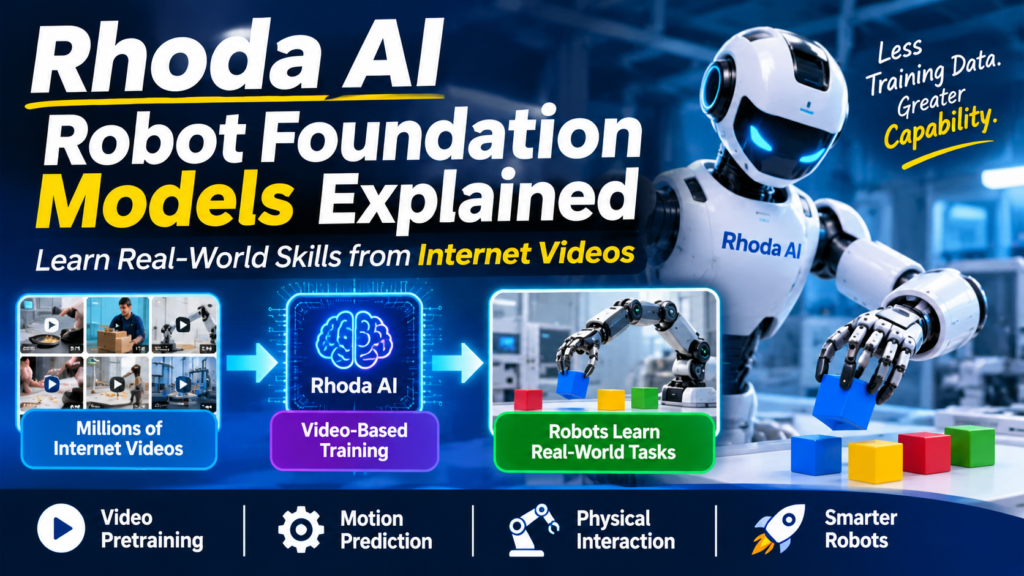
Rhoda AI builds robot foundation models by pre-training on hundreds of millions of internet videos, then post-training on smaller amounts of robot data. The company says this lets a robot learn a new task from as little as ten hours of teleoperation data, far less than approaches that lean mainly on robot demonstrations. businesswirebusinesswire
Robots have long been brilliant in the lab and brittle everywhere else. A machine that folds a container flawlessly in a controlled cell can stumble when a latch is broken, a surface is rusted, or materials arrive in a different arrangement. Rhoda’s wager is that the fix is not simply more robot demonstrations. It is a much larger, messier source of physical knowledge that already exists: video.
This guide explains how the approach works, what a direct video action model is, how it differs from vision-language-action models, and which claims still need independent proof. It draws on Rhoda’s launch announcement, interviews with its CEO and chief scientist, and trade coverage published through 2026.
Key Takeaways
- Robot foundation models are general-purpose AI systems that control robots, much as large language models power chatbots.
- Rhoda pre-trains on internet-scale video, then adapts the result with a small amount of real robot data.
- Its direct video action (DVA) model frames robot control as video prediction, in contrast to vision-language-action (VLA) models.
- The company reports learning new tasks from roughly 10 to 20 hours of robot data.
- Rhoda’s CEO says less curated video produced better models than carefully filtered footage.
- Most evidence so far is company-reported, so independent benchmarks will matter.
What Are Robot Foundation Models?
Definition
Robot foundation models are large AI models trained on broad data that can be adapted to many robot tasks and, ideally, many robot bodies. Instead of hand-programming a machine for one job, developers start from a pretrained model that already carries general knowledge about how the physical world behaves, then adapt it with a modest amount of task-specific data.
Expansion
The idea borrows from language AI. A large language model absorbs grammar, facts, and reasoning patterns from an enormous text corpus, then gets specialized for particular uses. Robot foundation models aim for the same pattern with motion and physics: learn the general rules once, then specialize cheaply.
The catch is that robotics has no internet-sized archive of robot actions waiting to be collected. That gap is the central obstacle in physical AI, the field concerned with AI systems that act in the real world. It is also the problem Rhoda is trying to solve.
Why They Matter for Industry
If the approach works, one family of robot foundation models could be licensed across many robots instead of building a bespoke controller for every cell, task, and factory. Rhoda describes itself as a software company that licenses or sells its models to robot manufacturers and system integrators, not a hardware builder. That makes it a “brains” supplier rather than a robot maker. sig
Why Robotics Has a Data Problem
Why Can’t Robots Just Copy the Language-Model Playbook?
Because there is no web-scale archive of robot actions. Chatbots learned from text that already existed online. Robots need examples of machines acting on the world, and those have traditionally come from humans remotely operating robots, one painstaking demonstration at a time. pages
Rhoda CEO Jagdeep Singh came to the field from outside robotics. He says that as he studied why robotics hadn’t advanced like other AI areas, the central issue turned out to be a lack of data. automate
The Teleoperation Bottleneck
Teleoperated data is slow and expensive to collect, and it tends to be narrow: a few tasks, a few environments, a few robot designs. Vision-language-action models, which learn largely from robot demonstrations, have shown impressive results in laboratory settings, according to Rhoda’s launch announcement. But labs are where conditions are most controlled. businesswire
Singh also points out that end-to-end approaches need more compute and more data before they produce useful results. That is why the debate over how to train robot foundation models has become so heated: whoever solves the data problem cheaply gains a large advantage. automate
How Rhoda AI Uses Video Data for Robot Training
Rhoda’s pipeline has three stages. Each one uses video data for robot training in a different way.
Stage 1: Pretrain on Internet-Scale Video
Rhoda pre-trains its models on hundreds of millions of online videos to build a strong prior on motion, physics, and physical interaction. The pretraining is natively autoregressive, which in plain terms means the model learns by predicting what happens next in a video. businesswirebusinesswire
Why video? Singh has said he heard estimates that 80% of all data on the internet is video, and much of it is openly accessible. A job posting from the company adds that Rhoda pre-trains causal video generation models on web-scale video data before adapting them to predict robot actions. At this stage, the robot foundation models are not learning any specific task. They are learning how objects tend to move, fall, bend, and collide. automatepreludeventures
Stage 2: Post-Train on Robot Data
Next, Rhoda post-trains the models on smaller amounts of robot data to learn embodiment-specific behaviors and the mapping from video predictions to robot actions. This is where a general sense of physics becomes a working skill for a particular robot and task. businesswire
Singh says this foundation lets Rhoda learn specific tasks with 10 to 20 hours of robot data, rather than the much larger datasets associated with other approaches. automate
Stage 3: Keep Learning in Deployment
The learning doesn’t stop at the factory door. According to a podcast summary of Singh’s interview, task-specific learning is followed by additional learning from unusual situations robots encounter with customers. The same conversation touches on how learning can compound across customers, why access to deployment data is central to Rhoda’s business, and the difference between customers owning their data and letting the company train on it. automate
That last point matters for buyers. If you are evaluating any vendor of robot foundation models, ask who owns the data your robots generate and whether it feeds the vendor’s next model.
What Is a Direct Video Action (DVA) Model?
Definition
A direct video action model is a robot-control model that predicts what should happen next in video and converts those predictions directly into robot actions. Rhoda’s public launch described a new approach to robotic intelligence based on video-predictive control, and its recruiting materials say the company formulates robot control as video prediction. businesswirepreludeventures
Expansion
Think of it as the robot imagining the next few moments, then acting to make that future real. “Closed-loop” control, a term Rhoda uses, means the system keeps checking what actually happens and adjusts, rather than executing a fixed plan blindly. Rhoda’s CEO describes the philosophy as models that understand how the world moves, not just what it looks like or how language describes it. businesswire
Rhoda contrasts its approach with the more established VLA (vision-language-action) model. VLA models typically start from systems trained on images and text, then learn actions from robot demonstrations. A DVA model starts from motion itself. automate
DVA vs. VLA vs. Simulation-First: A Simplified Comparison
| Approach | Main training signal | Robot data needed | Core strength | Open question |
|---|---|---|---|---|
| Vision-language-action (VLA) models | Images and text, then robot demonstrations | Typically larger robot datasets | Strong lab results | Generalizing beyond controlled settings |
| Simulation-first training | Synthetic environments | Varies | Cheap, scalable, safe to fail | The gap between simulation and reality |
| Direct video action (DVA) model | Internet video, then robot data | Company reports roughly 10 to 20 hours per task | Broad motion and physics prior | Independent validation at scale |
This table is a simplified characterization for orientation, not a benchmark. Real systems often blend these ingredients, and the “robot data” column for DVA reflects Rhoda’s own reporting.
Why Messy Video Can Beat Curated Video
One of the more surprising findings Singh describes runs against common machine-learning instinct. You might expect carefully curated, task-relevant footage to work best. Rhoda reports the opposite: the best models used less curated data, including plenty of footage that doesn’t involve people at all. automate
The company’s reasoning is that focusing on a specific task narrows the data input, while less curated video can teach broader, more universal lessons. automate
Does Curation Still Matter?
Possibly, but Rhoda’s finding suggests curation can cost you diversity. A plausible interpretation, and this is analysis rather than something the company has said, is that physical regularities show up everywhere: in cooking videos, traffic, animals, and weather. A model that sees all of it may form a sturdier picture of physics than one trained only on footage that looks like the target job. This is a promising hypothesis, and independent replication would strengthen it.
Proof Point: From Container Folding to the Factory Floor
Rhoda’s clearest public example is a container-folding job. Singh cites a recent deployment in which the system guided a pair of arms folding containers with collapsible sidewalls. automate
The more instructive part came when the task moved from the lab into a factory. In a podcast interview, Singh described how broken latches and rusted equipment changed the conditions the model had learned, and the team adapted using roughly three hours of additional factory data. The lesson he draws is that deployment requires more than repeating a successful demonstration. automate
The Robot Report also published a video of a dual-armed robot using a policy driven by a DVA model in a decanting task, which gives readers a look at the system in action. therobotreport
Where Rhoda Fits in the Physical AI Landscape
Simulation, Real-World Data, and Video
Physical AI is in the middle of a lively debate about how simulation, real-world data collection, and video should split the work of pre- and post-training. Most experts agree some combination of the three will produce robust models, since each has strengths and weaknesses, while Rhoda gives video an outsized role at each step. In other words, Rhoda is not claiming that simulation or teleoperation are useless. It is claiming that video deserves a much larger share than the industry has given it. automate
Rhoda, Nvidia, and Tesla
Trade coverage frames Rhoda’s strategy as a departure from traditional robotics that mirrors the foundation model approach championed by Nvidia and Tesla. Tesla trains Optimus and its driving AI on real-world fleet video, while Nvidia is building an ecosystem around its Isaac platform and GR00T model. Rhoda is positioning itself as the “brains” provider for the broader industrial market, a hardware-agnostic play that could upgrade existing robot fleets. pagespages
Funding and Leadership
Rhoda emerged from stealth in March 2026 with a $450 million Series A, reported at a $1.7 billion valuation. Coverage lists backers including Premji Invest, Khosla, Temasek, and John Doerr. Singh is co-founder and CEO, and a third-party profile notes he previously led QuantumScape. Co-founder Eric Chan serves as chief scientist, and The Robot Report notes he has held research roles at NVIDIA, Google, NASA, and WorldLabs. www.businesswire.com +4
The Business Model: Hardware-Agnostic Brains
Because Rhoda sells intelligence rather than machines, its robot foundation models are designed to be hardware-agnostic, applicable to humanoids, manipulator arms, mobile robots, and other embodied systems. Industry databases list customers across automotive, manufacturing, logistics, and e-commerce, though readers should treat those directory listings as secondary sources. sigaifunding
For a factory operator, the appeal is straightforward. If a model can learn a new task from a day or two of demonstrations, the cost and delay of automating each additional workflow could drop. For Rhoda, the strategic value is in the loop: more deployments generate more data, which can improve the next model.
Limitations and Open Questions
A fair reading of the evidence requires some caution. Key questions remain:
- Independent validation. Most performance figures come from Rhoda or from interviews with its leaders. Third-party benchmarks would help.
- Missing physical signals. Video shows motion but not force, grip pressure, or material stiffness. How much robot post-training must fill that gap is a fair question to ask.
- Compute and cost. End-to-end models can be demanding, and Singh himself acknowledges they require more compute and more data to get useful results. automate
- Data ownership. Learning that compounds across customers raises contractual questions about who controls deployment data.
- Generalization limits. A model adapted to a container-folding task in one factory may still need fresh data when conditions change, as the broken-latch episode shows.
None of these undermine the approach. They define what to watch as more deployments report results.
Frequently Asked Questions
What are robot foundation models?
Robot foundation models are large, pretrained AI models that can be adapted to many robot tasks and bodies. They give robots a general understanding of the physical world, so each new task needs far less custom data.
What is Rhoda AI?
Rhoda AI is a Palo Alto robotics-intelligence company that announced its public launch in March 2026 after 18 months in stealth. It builds models that control robots using video-based pretraining. businesswire
How much robot data does Rhoda need to learn a new task?
The company reports roughly 10 to 20 hours of robot data for task-specific learning, and sometimes as little as ten hours of teleoperation data. businesswire
Is video better than simulation for training robots?
That is not established. Experts mostly expect a mix of simulation, real-world data, and video to work best, with the open question being how much weight each deserves.
How is a DVA model different from a VLA model?
A DVA model predicts future video and turns that into actions, starting from motion learned on internet video. A VLA model typically starts from vision-language pretraining and learns actions from robot demonstrations.
Who runs Rhoda AI?
Jagdeep Singh is co-founder and CEO, and Eric Chan is co-founder and chief scientist.
Conclusion
Rhoda AI’s bet is simple to state and hard to prove: the internet’s video archive can teach robots enough about physics that real robot data becomes a finishing step instead of the main course. If that holds, robot foundation models could follow the path language models took, where broad pretraining makes specialization cheap.
The early evidence is encouraging but largely company-reported: ten to twenty hours of robot data for new tasks, a factory deployment adapted with about three hours of extra data, and a surprising result favoring messy video. The next test is independent benchmarks and wider deployments. For anyone tracking physical AI, video data for robot training is now one of the most important ideas to follow, and Rhoda’s robot foundation models are its most prominent test case so far.
Rhoda AI କିପରି ଭିଡିଓ ଡାଟା ବ୍ୟବହାର କରି ରୋବଟ୍ ଫାଉଣ୍ଡେସନ୍ ମଡେଲ୍ (Robot Foundation Models) ପ୍ରସ୍ତୁତ କରେ
Rhoda AI ଇଣ୍ଟରନେଟରେ ଉପଲବ୍ଧ କୋଟି କୋଟି ଭିଡିଓ ଉପରେ ‘ପ୍ରି-ଟ୍ରେନିଂ’ (ପୂର୍ବ-ପ୍ରଶିକ୍ଷଣ) ଦେଇ ଏବଂ ପରେ ରୋବଟ୍ ସମ୍ବନ୍ଧୀୟ ସୀମିତ ଡାଟା ବ୍ୟବହାର କରି ‘ପୋଷ୍ଟ-ଟ୍ରେନିଂ’ (ପରବର୍ତ୍ତୀ ପ୍ରଶିକ୍ଷଣ) ମାଧ୍ୟମରେ ରୋବଟ୍ ଫାଉଣ୍ଡେସନ୍ ମଡେଲ୍ ଗଠନ କରେ। କମ୍ପାନୀର କହିବା ଅନୁଯାୟୀ, ଏହି ପଦ୍ଧତି ଦ୍ୱାରା ଏକ ରୋବଟ୍ ମାତ୍ର ଦଶ ଘଣ୍ଟାର ‘ଟେଲି-ଅପରେସନ୍’ (ଦୂରରୁ ପରିଚାଳନା) ଡାଟାରୁ ନୂତନ କାର୍ଯ୍ୟ ଶିଖିପାରେ। ଏହା ସେହି ପଦ୍ଧତିଗୁଡ଼ିକ ତୁଳନାରେ ବହୁତ କମ୍, ଯେଉଁଗୁଡ଼ିକ ମୁଖ୍ୟତଃ ରୋବଟ୍ ପ୍ରଦର୍ଶନ (robot demonstrations) ଉପରେ ନିର୍ଭର କରନ୍ତି।
ରୋବଟଗୁଡ଼ିକ ଦୀର୍ଘ ଦିନ ଧରି କେବଳ ପରୀକ୍ଷାଗାର (ଲାବୋରେଟୋରୀ) ପରି ନିୟନ୍ତ୍ରିତ ପରିବେଶରେ ଉତ୍କୃଷ୍ଟ ପ୍ରଦର୍ଶନ କରିଆସୁଛନ୍ତି, କିନ୍ତୁ ଅନ୍ୟ ସ୍ଥାନରେ ସେଗୁଡ଼ିକ ସେତେଟା ସଫଳ ହୁଅନ୍ତି ନାହିଁ। ଏକ ନିୟନ୍ତ୍ରିତ ପରିବେଶରେ ଯେଉଁ ମେସିନ୍ ନିଖୁଣ ଭାବରେ ଏକ ପାତ୍ରକୁ ଭାଙ୍ଗି (fold କରି) ରଖିପାରେ, ତାହା ମଧ୍ୟ କୌଣସି ଲ୍ୟାଚ୍ (latches) ଭାଙ୍ଗିଗଲେ, ପୃଷ୍ଠଭାଗରେ କଳଙ୍କି ଲାଗିଗଲେ କିମ୍ବା ସାମଗ୍ରୀଗୁଡ଼ିକ ଅନ୍ୟ କୌଣସି ଭିନ୍ନ ସଜ୍ଜାରେ ଆସିଲେ ଅସୁବିଧାର ସମ୍ମୁଖୀନ ହୋଇପାରେ। Rhoda AI ର ମତ ହେଉଛି ଯେ, ଏହାର ସମାଧାନ କେବଳ ଅଧିକ ରୋବଟ୍ ପ୍ରଦର୍ଶନ ସଂଗ୍ରହ କରିବାରେ ନାହିଁ। ବରଂ, ଏହାର ସମାଧାନ ଏକ ବିଶାଳ ଏବଂ ବିବିଧ ଉତ୍ସରେ ରହିଛି ଯାହା ପୂର୍ବରୁ ହିଁ ବିଦ୍ୟମାନ ଅଛି, ତାହା ହେଉଛି – ଭିଡିଓ।
ଏହି ଗାଇଡ୍ ବ୍ୟାଖ୍ୟା କରେ ଯେ ଏହି ପଦ୍ଧତି କିପରି କାମ କରେ, ‘ଡାଇରେକ୍ଟ ଭିଡିଓ ଆକ୍ସନ୍ ମଡେଲ୍’ (Direct Video Action Model) କ’ଣ, ଏହା ‘ଭିଜନ୍-ଲାଙ୍ଗୁଏଜ୍-ଆକ୍ସନ୍ ମଡେଲ୍’ (Vision-Language-Action Model) ଠାରୁ କିପରି ଭିନ୍ନ, ଏବଂ କେଉଁ ଦାବିଗୁଡ଼ିକ ପାଇଁ ସ୍ୱାଧୀନ ଯାଞ୍ଚ ବା ପ୍ରମାଣ ଆବଶ୍ୟକ। ଏହି ତଥ୍ୟ Rhoda AI ର ଉନ୍ମୋଚନ ଘୋଷଣା, ଏହାର CEO ଏବଂ ମୁଖ୍ୟ ବୈଜ୍ଞାନିକଙ୍କ ସହ ସାକ୍ଷାତକାର ଏବଂ ବିଭିନ୍ନ ବ୍ୟବସାୟିକ ରିପୋର୍ଟ ଉପରେ ଆଧାରିତ।
ମୁଖ୍ୟ ବିଷୟବସ୍ତୁ
ରୋ ଗୋଟିଏ ନିର୍ଦ୍ଦିଷ୍ଟ କାର୍ଯ୍ୟ ପାଇଁ ମେସିନ୍କୁ ହାତରେ ପ୍ରୋଗ୍ରାମିଂ କରିବା ପରିବର୍ତ୍ତେ, ଡେଭଲପରମାନେ ଏକ ‘ପ୍ରି-ଟ୍ରେନ୍ଡ’ (ପୂର୍ବରୁ ପ୍ରଶିକ୍ଷିତ) ମଡେଲ୍ରୁ କାମ ଆରମ୍ଭ କରନ୍ତି। ଏହି ମଡେଲ୍ରେ ଭୌତିକ ଜଗତ କିପରି କାର୍ଯ୍ୟ କରେ, ସେ ବିଷୟରେ ସାଧାରଣ ଜ୍ଞାନ ପୂର୍ବରୁ ହିଁ ରହିଥାଏ। ଏହା ପରେ, ନିର୍ଦ୍ଦିଷ୍ଟ କାର୍ଯ୍ୟ ସହ ଜଡ଼ିତ ଅଳ୍ପ କିଛି ତଥ୍ୟ (data) ବ୍ୟବହାର କରି ସେହି ମଡେଲ୍କୁ ସେହି କାର୍ଯ୍ୟ ପାଇଁ ଉପଯୋଗୀ କରି ତୋଳାଯାଏ।
ବିସ୍ତୃତ ବିବରଣୀ
ଏହି ଧାରଣାଟି ‘ଲାଙ୍ଗୁଏଜ୍ AI’ (ଭାଷା-ଭିତ୍ତିକ କୃତ୍ରିମ ବୁଦ୍ଧିମତ୍ତା) ରୁ ନିଆଯାଇଛି। ଏକ ବୃହତ ଭାଷା ମଡେଲ୍ (Large Language Model) ବିପୁଳ ପରିମାଣର ଲିଖିତ ତଥ୍ୟରୁ ବ୍ୟାକରଣ, ତଥ୍ୟ ଏବଂ ଯୁକ୍ତିଯୁକ୍ତ ଚିନ୍ତାଧାରାର ଢାଞ୍ଚା ଶିଖିଥାଏ ଏବଂ ପରେ ନିର୍ଦ୍ଦିଷ୍ଟ ବ୍ୟବହାର ପାଇଁ ବିଶେଷଜ୍ଞ ହୋଇଥାଏ। ‘ରୋବୋଟ୍ ଫାଉଣ୍ଡେସନ୍ ମଡେଲ୍’ଗୁଡ଼ିକ ମଧ୍ୟ ଗତିବିଧି ଏବଂ ପଦାର୍ଥ ବିଜ୍ଞାନ (physics) କ୍ଷେତ୍ରରେ ସମାନ ପଦ୍ଧତି ଆପଣାଇଥାନ୍ତି: ପ୍ରଥମେ ସାଧାରଣ ନିୟମଗୁଡ଼ିକୁ ଶିଖିନିଅନ୍ତି ଏବଂ ତା’ପରେ କମ୍ ଖର୍ଚ୍ଚରେ ନିର୍ଦ୍ଦିଷ୍ଟ କାର୍ଯ୍ୟ ପାଇଁ ପ୍ରସ୍ତୁତ ହୋଇଯାଆନ୍ତି।
ଏଠାରେ ମୁଖ୍ୟ ସମସ୍ୟା ହେଉଛି ଯେ, ରୋବୋଟିକ୍ସ କ୍ଷେତ୍ରରେ ଇଣ୍ଟରନେଟ୍ ଭଳି ବିଶାଳ ପରିମାଣର ରୋବୋଟିକ୍ କାର୍ଯ୍ୟକଳାପର ସଂଗ୍ରହ (archive) ଉପଲବ୍ଧ ନାହିଁ। ଏହି ଅଭାବ ହିଁ ‘ଫିଜିକାଲ୍ AI’ (ଭୌତିକ ଜଗତରେ କାର୍ଯ୍ୟ କରୁଥିବା AI) କ୍ଷେତ୍ରରେ ମୁଖ୍ୟ ବାଧା ସୃଷ୍ଟି କରୁଛି। ‘Rhoda’ (ରୋଡା) ନାମକ କମ୍ପାନୀ ଏହି ସମସ୍ୟାର ସମାଧାନ କରିବାକୁ ଚେଷ୍ଟା କରୁଛି।
ଶିଳ୍ପ କ୍ଷେତ୍ରରେ ଏହାର ଗୁରୁତ୍ୱ
ଯଦି ଏହି ପଦ୍ଧତି ସଫଳ ହୁଏ, ତେବେ ପ୍ରତ୍ୟେକ କାର୍ଯ୍ୟକ୍ଷେତ୍ର, କାର୍ଯ୍ୟ କିମ୍ବା କାରଖାନା ପାଇଁ ଅଲଗା ଅଲଗା କଣ୍ଟ୍ରୋଲର୍ ତିଆରି କରିବା ପରିବର୍ତ୍ତେ, ଗୋଟିଏ ‘ରୋବୋଟ୍ ଫାଉଣ୍ଡେସନ୍ ମଡେଲ୍’କୁ ଅନେକ ରୋବୋଟ୍ରେ ବ୍ୟବହାର କରାଯାଇପାରିବ। ‘Rhoda’ ନିଜକୁ ଏକ ସଫ୍ଟୱେର୍ କମ୍ପାନୀ ଭାବରେ ପରିଚିତ କରାଏ, ଯାହା ରୋବୋଟ୍ ନିର୍ମାତା ଏବଂ ସିଷ୍ଟମ୍ ଇଣ୍ଟିଗ୍ରେଟରମାନଙ୍କୁ ନିଜର ବ୍ୟବସାୟ ୱାୟାର
ସିଂହ ଏହା ମଧ୍ୟ ଦର୍ଶାଇଛନ୍ତି ଯେ ଏଣ୍ଡ-ଟୁ-ଏଣ୍ଡ ପଦ୍ଧତିଗୁଡ଼ିକ ଉପଯୋଗୀ ଫଳାଫଳ ଉତ୍ପନ୍ନ କରିବା ପୂର୍ବରୁ ଅଧିକ ଗଣନା ଏବଂ ଅଧିକ ତଥ୍ୟ ଆବଶ୍ୟକ କରେ। ସେଥିପାଇଁ ରୋବୋଟ୍ ଫାଉଣ୍ଡେସନ୍ ମଡେଲଗୁଡ଼ିକୁ କିପରି ତାଲିମ ଦିଆଯିବ ସେ ବିଷୟରେ ବିତର୍କ ଏତେ ଉଷ୍ମ ହୋଇଛି: ଯେକେହି ଡାଟା ସମସ୍ୟାକୁ ଶସ୍ତାରେ ସମାଧାନ କରେ ସେ ଏକ ବଡ଼ ଲାଭ ପାଇଥାଏ।
ସ୍ୱୟଂଚାଳିତ
ରୋଡା AI ରୋବୋଟ୍ ତାଲିମ ପାଇଁ ଭିଡିଓ ଡାଟା କିପରି ବ୍ୟବହାର କରେ
ରୋଡାର ପାଇପଲାଇନରେ ତିନୋଟି ପର୍ଯ୍ୟାୟ ଅଛି। ପ୍ରତ୍ୟେକଟି ରୋବୋଟ୍ ତାଲିମ ପାଇଁ ଭିଡିଓ ଡାଟାକୁ ଭିନ୍ନ ଉପାୟରେ ବ୍ୟବହାର କରେ।
ପର୍ଯ୍ୟାୟ 1: ଇଣ୍ଟରନେଟ୍-ସ୍କେଲ ଭିଡିଓରେ ପ୍ରିଟ୍ରେନ୍
ରୋଡା ଗତି, ପଦାର୍ଥ ବିଜ୍ଞାନ ଏବଂ ଶାରୀରିକ ପାରସ୍ପରିକ କ୍ରିୟା ଉପରେ ଏକ ଦୃଢ଼ ପୂର୍ବ ନିର୍ମାଣ କରିବା ପାଇଁ ଲକ୍ଷ ଲକ୍ଷ ଅନଲାଇନ୍ ଭିଡିଓରେ ଏହାର ମଡେଲଗୁଡ଼ିକୁ ପ୍ରାକ୍-ପ୍ରଶିକ୍ଷଣ କରେ। ପ୍ରାକ୍-ପ୍ରଶିକ୍ଷଣ ସ୍ୱତଃ ସ୍ୱୟଂ-ପ୍ରତିରୋଧୀ, ଯାହାର ସରଳ ଅର୍ଥ ହେଉଛି ମଡେଲ୍ ଏକ ଭିଡିଓରେ ପରବର୍ତ୍ତୀ ଘଟଣା କଣ ହେବ ତାହା ପୂର୍ବାନୁମାନ କରି ଶିଖେ।
ବ୍ୟବସାୟ ୱାୟାର
ବିଡିଓ କାହିଁକି? ସିଂହ କହିଛନ୍ତି ଯେ ସେ ଆକଳନ ଶୁଣିଛନ୍ତି ଯେ ଇଣ୍ଟରନେଟରେ ସମସ୍ତ ଡାଟାର 80% ଭିଡିଓ ଅଟେ, ଏବଂ ଏହାର ଅଧିକାଂଶ ଅଂଶ ଖୋଲାଖୋଲି ଭାବରେ ଉପଲବ୍ଧ। କମ୍ପାନୀର ଏକ ଚାକିରି ପୋଷ୍ଟିଂରେ ଆହୁରି କୁହାଯାଇଛି ଯେ ରୋଡା ରୋବୋଟ୍ କାର୍ଯ୍ୟର ପୂର୍ବାନୁମାନ କରିବା ପାଇଁ ସେମାନଙ୍କୁ ଅନୁକୂଳ କରିବା ପୂର୍ବରୁ ୱେବ୍-ସ୍କେଲ ଭିଡିଓ ଡାଟାରେ କାରଣାତ୍ମକ ଭିଡିଓ ଜେନେରେସନ୍ ମଡେଲଗୁଡ଼ିକୁ ପ୍ରାକ୍-ପ୍ରଶିକ୍ଷଣ ଦିଏ। ଏହି ପର୍ଯ୍ୟାୟରେ, ରୋବୋଟ୍ ଫାଉଣ୍ଡେସନ୍ ମଡେଲଗୁଡ଼ିକ କୌଣସି ନିର୍ଦ୍ଦିଷ୍ଟ କାର୍ଯ୍ୟ ଶିଖୁନାହାଁନ୍ତି। ସେମାନେ ଶିଖୁଛନ୍ତି ଯେ ବସ୍ତୁଗୁଡ଼ିକ କିପରି ଗତି କରେ, ପଡ଼ିଯାଏ,
ବଙ୍କା ହୁଏ ଏବଂ ଧକ୍କା ହୁଏ।
ସ୍ୱୟଂଚାଳିତ
ପ୍ରିଲୁଡଭେଞ୍ଚର
ଷ୍ଟେଜ୍ 2: ରୋବୋଟ୍ ଡାଟା ଉପରେ ଟ୍ରେନ ପରେ
ପରବର୍ତ୍ତୀ, ରୋବୋଟ୍ ଡାଟାର ଅବତାରଣା-ନିର୍ଦ୍ଦିଷ୍ଟ ଆଚରଣ ଏବଂ ଭିଡିଓ ପୂର୍ବାନୁମାନରୁ ରୋବୋଟ୍ କାର୍ଯ୍ୟ ପର୍ଯ୍ୟନ୍ତ ମ୍ୟାପିଂ ଶିଖିବା ପାଇଁ ରୋବୋଟ୍ ଡାଟାର କମ୍ ପରିମାଣରେ ମଡେଲଗୁଡ଼ିକୁ ପୋଷ୍ଟ-ପ୍ରଶିକ୍ଷଣ ଦିଏ। ଏହିଠାରେ ପଦାର୍ଥ ବିଜ୍ଞାନର ଏକ ସାଧାରଣ ଜ୍ଞାନ ଏକ ନିର୍ଦ୍ଦିଷ୍ଟ ରୋବୋଟ୍ ଏବଂ କାର୍ଯ୍ୟ ପାଇଁ ଏକ କାର୍ଯ୍ୟ ଦକ୍ଷତା ହୋଇଯାଏ।
ବ୍ୟବସାୟିକ
ସିଂହ କୁହନ୍ତି ଯେ ଏହି ଫାଉଣ୍ଡେସନ୍ ରୋଡାକୁ ଅନ୍ୟ ପଦ୍ଧତି ସହିତ ଜଡିତ ବହୁତ ବଡ଼ ଡାଟାସେଟ୍ ପରିବର୍ତ୍ତେ 10 ରୁ 20 ଘଣ୍ଟା ରୋବୋଟ୍ ଡାଟା ସହିତ ନିର୍ଦ୍ଦିଷ୍ଟ କାର୍ଯ୍ୟ ଶିଖିବାକୁ ଦିଏ।
ସ୍ୱୟଂଚାଳିତ
ଷ୍ଟେଜ୍ 3: ନିୟୋଜନରେ ଶିଖନ୍ତୁ
ଶିକ୍ଷା କାରଖାନା ଦ୍ୱାରରେ ବନ୍ଦ ହୁଏ ନାହିଁ। ସିଂହଙ୍କ ସାକ୍ଷାତକାରର ଏକ ପଡକାଷ୍ଟ ସାରାଂଶ ଅନୁଯାୟୀ, କାର୍ଯ୍ୟ-ନିର୍ଦ୍ଦିଷ୍ଟ ଶିକ୍ଷା ପରେ ରୋବୋଟ୍ ଗ୍ରାହକମାନଙ୍କ ସହିତ ସମ୍ମୁଖୀନ ହେଉଥିବା ଅସାଧାରଣ ପରିସ୍ଥିତିରୁ ଅତିରିକ୍ତ ଶିକ୍ଷା ଗ୍ରହଣ କରିଥାଏ। ସମାନ ଆଲୋଚନା ଗ୍ରାହକମାନଙ୍କ ମଧ୍ୟରେ ଶିକ୍ଷା କିପରି ମିଶ୍ରିତ ହୋଇପାରେ, କାହିଁକି ରୋଡାଙ୍କ ବ୍ୟବସାୟ ପାଇଁ ନିୟୋଜନ ତଥ୍ୟର ପ୍ରବେଶ କେନ୍ଦ୍ର, ଏବଂ ଗ୍ରାହକମାନେ ସେମାନଙ୍କର ତଥ୍ୟର ମାଲିକ ହେବା ଏବଂ କମ୍ପାନୀକୁ ଏଥିରେ ତାଲିମ ଦେବାକୁ ଦେବା ମଧ୍ୟରେ ପାର୍ଥକ୍ୟ ଉପରେ ଆଲୋକପାତ କରେ।
ସ୍ୱୟଂଚାଳିତ
କ୍ରେତାମାନଙ୍କ ପାଇଁ ସେହି ଶେଷ ବିନ୍ଦୁଟି ଗୁରୁତ୍ୱପୂର୍ଣ୍ଣ। ଯଦି ଆପଣ ରୋବୋଟ୍ ଫାଉଣ୍ଡେସନ୍ ମଡେଲର କୌଣସି ବିକ୍ରେତାଙ୍କୁ ମୂଲ୍ୟାଙ୍କନ କରୁଛନ୍ତି, ତେବେ ପଚାରନ୍ତୁ ଯେ ଆପଣଙ୍କ ରୋବୋଟ୍ ସୃଷ୍ଟି କରୁଥିବା ଡାଟା କାହାର ଏବଂ ଏହା ବିକ୍ରେତାଙ୍କ ପରବର୍ତ୍ତୀ ମଡେଲକୁ ଫିଡ୍ କରେ କି ନାହିଁ।
ଏକ ପ୍ରତ୍ୟକ୍ଷ ଭିଡିଓ କାର୍ଯ୍ୟ (DVA) ମଡେଲ୍ କ’ଣ?
ପରିଭାଷା
ଏକ ପ୍ରତ୍ୟକ୍ଷ ଭିଡିଓ କାର୍ଯ୍ୟ ମଡେଲ୍ ହେଉଛି ଏକ ରୋବୋଟ୍-ନିୟନ୍ତ୍ରଣ ମଡେଲ୍ ଯାହା ଭିଡିଓରେ ପରବର୍ତ୍ତୀ କ’ଣ ହେବା ଉଚିତ ତାହା ପୂର୍ବାନୁମାନ କରେ ଏବଂ ସେହି ପୂର୍ବାନୁମାନଗୁଡ଼ିକୁ ସିଧାସଳଖ ରୋବୋଟ୍ କାର୍ଯ୍ୟରେ ରୂପାନ୍ତରିତ କରେ। ରୋଡାଙ୍କ ସାର୍ବଜନୀନ ଲଞ୍ଚ ଭିଡିଓ-ଭବିଷ୍ୟବାଣୀ ନିୟନ୍ତ୍ରଣ ଉପରେ ଆଧାରିତ ରୋବୋଟିକ୍ ବୁଦ୍ଧିମତ୍ତାର ଏକ ନୂତନ ପଦ୍ଧତି ବର୍ଣ୍ଣନା କରିଛି, ଏବଂ ଏହାର ନିଯୁକ୍ତି ସାମଗ୍ରୀ କହୁଛି ଯେ କମ୍ପାନୀ ଭିଡିଓ ପୂର୍ବାନୁମାନ ଭାବରେ ରୋବୋଟ୍ ନିୟନ୍ତ୍ରଣକୁ ପ୍ରସ୍ତୁତ କରେ।
ବ୍ୟବସାୟ ୱାୟାର
ପ୍ରିଲୁଡେଭେଞ୍ଚର୍ସ
ବିସ୍ତାର
ଏହାକୁ ରୋବୋଟ୍ ଭାବରେ ଚିନ୍ତା କରନ୍ତୁ ଯେ ପରବର୍ତ୍ତୀ କିଛି ମୁହୂର୍ତ୍ତକୁ କଳ୍ପନା କରୁଛି, ତା’ପରେ ସେହି ଭବିଷ୍ୟତକୁ ବାସ୍ତବ କରିବା ପାଇଁ କାର୍ଯ୍ୟ କରୁଛି। “କ୍ଲୋଜ୍ଡ-ଲୁପ୍” ନିୟନ୍ତ୍ରଣ, ରୋଡା ବ୍ୟବହାର କରୁଥିବା ଏକ ଶବ୍ଦ, ଅର୍ଥ ହେଉଛି ସିଷ୍ଟମ ଅନ୍ଧ ଭାବରେ ଏକ ସ୍ଥିର ଯୋଜନା କାର୍ଯ୍ୟକାରୀ କରିବା ପରିବର୍ତ୍ତେ ପ୍ରକୃତରେ କ’ଣ ଘଟୁଛି ତାହା ଯାଞ୍ଚ କରି ରଖେ ଏବଂ ସଜାଡ଼େ। ରୋଡାର ସିଇଓ ଦର୍ଶନକୁ ମଡେଲ ଭାବରେ ବର୍ଣ୍ଣନା କରନ୍ତି ଯାହା ବୁଝିଥାଏ ଯେ ବିଶ୍ୱ କିପରି ଗତି କରେ, କେବଳ ଏହା କିପରି ଦେଖାଯାଏ କିମ୍ବା ଭାଷା ଏହାକୁ କିପରି ବର୍ଣ୍ଣନା କରେ ତାହା ନୁହେଁ।
ବ୍ୟବସାୟିକ
ରୋଡା ଏହାର ପଦ୍ଧତିକୁ ଅଧିକ ପ୍ରତିଷ୍ଠିତ VLA (ଦୃଷ୍ଟି-ଭାଷା-କ୍ରିୟା) ମଡେଲ ସହିତ ବିପରୀତ କରେ। VLA ମଡେଲଗୁଡ଼ିକ ସାଧାରଣତଃ ପ୍ରତିଛବି ଏବଂ ପାଠ୍ୟ ଉପରେ ତାଲିମପ୍ରାପ୍ତ ସିଷ୍ଟମରୁ ଆରମ୍ଭ ହୁଏ, ତା’ପରେ ରୋବୋଟ୍ ପ୍ରଦର୍ଶନରୁ କାର୍ଯ୍ୟ ଶିଖେ। ଏକ DVA ମଡେଲ ଗତିରୁ ହିଁ ଆରମ୍ଭ ହୁଏ।
ସ୍ୱୟଂଚାଳିତ
DVA ବନାମ VLA ବନାମ ସିମୁଲେସନ-ପ୍ରଥମ: ଏକ ସରଳୀକୃତ ତୁଳନା
ଆଭିମୁଖ୍ୟ ମୁଖ୍ୟ ତାଲିମ ସଙ୍କେତ ଆବଶ୍ୟକ ରୋବୋଟ୍ ତଥ୍ୟ ମୂଳ ଶକ୍ତି ଖୋଲା ପ୍ରଶ୍ନ
ଦୃଷ୍ଟି-ଭାଷା-କ୍ରିୟା (VLA) ମଡେଲ୍ ଚିତ୍ର ଏବଂ ପାଠ୍ୟ, ତାପରେ ରୋବୋଟ୍ ପ୍ରଦର୍ଶନ ସାଧାରଣତଃ ବଡ଼ ରୋବୋଟ୍ ଡାଟାସେଟ୍ ଶକ୍ତିଶାଳୀ ଲ୍ୟାବ୍ ଫଳାଫଳ ନିୟନ୍ତ୍ରିତ ସେଟିଂସ୍ ବାହାରେ ସାଧାରଣୀକରଣ
ସିମୁଲେସନ୍-ପ୍ରଥମ ତାଲିମ ସିନ୍ଥେଟିକ୍ ପରିବେଶ ଭିନ୍ନ ହୁଏ ଶସ୍ତା, ସ୍କେଲେବଲ୍, ବିଫଳ ହେବା ପାଇଁ ସୁରକ୍ଷିତ ସିମୁଲେସନ୍ ଏବଂ ବାସ୍ତବତା ମଧ୍ୟରେ ବ୍ୟବଧାନ
ପ୍ରତ୍ୟକ୍ଷ ଭିଡିଓ କାର୍ଯ୍ୟ (DVA) ମଡେଲ୍ ଇଣ୍ଟରନେଟ୍ ଭିଡିଓ, ତାପରେ ରୋବୋଟ୍ ଡାଟା କମ୍ପାନୀ ପ୍ରତି କାର୍ଯ୍ୟ ପାଇଁ ପ୍ରାୟ 10 ରୁ 20 ଘଣ୍ଟା ରିପୋର୍ଟ କରେ ବ୍ୟାପକ ଗତି ଏବଂ ଭୌତିକ ବିଜ୍ଞାନ ପୂର୍ବରୁ ସ୍କେଲରେ ସ୍ୱାଧୀନ ବୈଧତା
ଏହି ସାରଣୀ ଓରିଏଣ୍ଟେସନ୍ ପାଇଁ ଏକ ସରଳୀକୃତ ଚରିତ୍ରକରଣ, ଏକ ମାନଦଣ୍ଡ ନୁହେଁ। ବାସ୍ତବ ସିଷ୍ଟମଗୁଡ଼ିକ ପ୍ରାୟତଃ ଏହି ଉପାଦାନଗୁଡ଼ିକୁ ମିଶ୍ରଣ କରେ, ଏବଂ DVA ପାଇଁ “ରୋବୋଟ୍ ଡାଟା” ସ୍ତମ୍ଭ ରୋଡାଙ୍କ ନିଜସ୍ୱ ରିପୋର୍ଟିଂକୁ ପ୍ରତିଫଳିତ କରେ।
କାହିଁକି ଅପରିଷ୍କାର ଭିଡିଓ କ୍ୟୁରେଟେଡ୍ ଭିଡିଓକୁ ପରାସ୍ତ କରିପାରିବ
ସିଂହ ବର୍ଣ୍ଣନା କରିଥିବା ଅଧିକ ଆଶ୍ଚର୍ଯ୍ୟଜନକ ଫଳାଫଳ ମଧ୍ୟରୁ ଗୋଟିଏ ସାଧାରଣ ମେସିନ୍-ଶିକ୍ଷା ପ୍ରବୃତ୍ତି ବିରୁଦ୍ଧରେ ଚାଲିଥାଏ। ଆପଣ ଆଶା କରିପାରନ୍ତି ଯେ ସାବଧାନତାର ସହିତ କ୍ୟୁରେଟେଡ୍, କାର୍ଯ୍ୟ-ପ୍ରାସଙ୍ଗିକ ଫୁଟେଜ୍ ସର୍ବୋତ୍ତମ ଭାବରେ କାମ କରିବ। ରୋଡା ବିପରୀତ ରିପୋର୍ଟ କରେ: ସର୍ବୋତ୍ତମ ମଡେଲ୍ କମ୍ କ୍ୟୁରେଟେଡ୍ ଡାଟା ବ୍ୟବହାର କରିଥିଲେ, ଯେଉଁଥିରେ ପ୍ରଚୁର ଫୁଟେଜ୍ ଅନ୍ତର୍ଭୁକ୍ତ ଥିଲା ଯାହା ଲୋକଙ୍କୁ ଆଦୌ ଜଡିତ କରେ ନାହିଁ।
ସ୍ୱୟଂଚାଳିତ
କମ୍ପାନୀର ଯୁକ୍ତି ହେଉଛି ଯେ ଏକ ନିର୍ଦ୍ଦିଷ୍ଟ କାର୍ଯ୍ୟ ଉପରେ ଧ୍ୟାନ ଦେବା ଦ୍ୱାରା ଡାଟା ଇନପୁଟ୍ ସଙ୍କୁଚିତ ହୋଇଥାଏ, ଯେତେବେଳେ କମ୍ ସଂଶୋଧିତ ଭିଡିଓ ବ୍ୟାପକ, ଅଧିକ ସାର୍ବଜନୀନ ପାଠ ଶିଖାଇପାରେ।
ସ୍ୱୟଂଚାଳିତ
କି କ୍ୟୁରେସନ୍ ଏବେ ବି ଗୁରୁତ୍ୱପୂର୍ଣ୍ଣ?
ସମ୍ଭବତଃ, କିନ୍ତୁ ରୋଡାଙ୍କ ସନ୍ଧାନ ସୂଚାଇ ଦିଏ ଯେ କ୍ୟୁରେସନ୍ ଆପଣଙ୍କୁ ବିବିଧତା ଖର୍ଚ୍ଚ କରିବାକୁ ପଡ଼ିପାରେ। ଏକ ପ୍ରଶଂସନୀୟ ବ୍ୟାଖ୍ୟା, ଏବଂ ଏହା କମ୍ପାନୀ କହିଥିବା କିଛି ଅପେକ୍ଷା ବିଶ୍ଳେଷଣ, ଏହା ହେଉଛି ଯେ ଭୌତିକ ନିୟମିତତା ସବୁଠି ଦେଖାଯାଏ: ରୋଷେଇ ଭିଡିଓ, ଟ୍ରାଫିକ୍, ପଶୁପକ୍ଷୀ ଏବଂ ପାଣିପାଗରେ। ଏକ ମଡେଲ୍ ଯାହା ଏସବୁ ଦେଖେ ତାହା କେବଳ ଫୁଟେଜରେ ତାଲିମପ୍ରାପ୍ତ ବ୍ୟକ୍ତି ଅପେକ୍ଷା ଭୌତିକ ବିଜ୍ଞାନର ଏକ ଦୃଢ଼ ଚିତ୍ର ଗଠନ କରିପାରେ ଯାହା ଲକ୍ଷ୍ୟ କାର୍ଯ୍ୟ ପରି ଦେଖାଯାଏ। ଏହା ଏକ ପ୍ରତିଶ୍ରୁତିପୂର୍ଣ୍ଣ ପରିକଳ୍ପନା, ଏବଂ ସ୍ୱାଧୀନ ପ୍ରତିକୃତି ଏହାକୁ ଦୃଢ଼ କରିବ।
ପ୍ରମାଣ ବିନ୍ଦୁ: କଣ୍ଟେନର ଫୋଲ୍ଡିଂରୁ କାରଖାନା ମହଲା ପର୍ଯ୍ୟନ୍ତ
ରୋଡାଙ୍କ ସ୍ପଷ୍ଟ ସାର୍ବଜନୀନ ଉଦାହରଣ ହେଉଛି ଏକ କଣ୍ଟେନର-ଫୋଲ୍ଡିଂ କାମ। ସିଂହ ଏକ ସାମ୍ପ୍ରତିକ ନିୟୋଜନକୁ ଉଦ୍ଧୃତ କରିଛନ୍ତି ଯେଉଁଥିରେ ସିଷ୍ଟମ ଏକ ଯୋଡ଼ା ବାହୁ ଫୋଲ୍ଡିଂ କଣ୍ଟେନରକୁ କୋଲାପସିବଲ୍ ସାଇଡ୍ୱାଲ୍ ସହିତ ମାର୍ଗଦର୍ଶନ କରିଥିଲା।
ସ୍ୱୟଂଚାଳିତ
ଅଧିକ ଶିକ୍ଷଣୀୟ ଅଂଶ ଆସିଥିଲା ଯେତେବେଳେ କାର୍ଯ୍ୟଟି ଲ୍ୟାବରୁ ଏକ କାରଖାନାକୁ ସ୍ଥାନାନ୍ତରିତ ହୋଇଥିଲା। ଏକ ପଡକାଷ୍ଟ ସାକ୍ଷାତକାରରେ, ସିଂହ ବର୍ଣ୍ଣନା କରିଥିଲେ ଯେ କିପରି ଭଙ୍ଗା ଲ୍ୟାଚ୍ ଏବଂ କଳଙ୍କିତ ଉପକରଣଗୁଡ଼ିକ ମଡେଲ ଶିଖିଥିବା ପରିସ୍ଥିତିକୁ ପରିବର୍ତ୍ତନ କରିଥିଲା, ଏବଂ ଦଳ ପ୍ରାୟ ତିନି ଘଣ୍ଟା ଅତିରିକ୍ତ ବ୍ୟବହାର କରି ଅନୁକୂଳିତ ହୋଇଥିଲା କାରଖାନାର ପ୍ରକୃତ ତଥ୍ୟ। ଏଥିରୁ ସେ ଏହି ଶିକ୍ଷା ପାଆନ୍ତି ଯେ, କୌଣସି ପ୍ରଯୁକ୍ତିକୁ ବ୍ୟାପକ ଭାବେ କାର୍ଯ୍ୟକ୍ଷେତ୍ରରେ ପ୍ରୟୋଗ କରିବା ପାଇଁ କେବଳ ଏକ ସଫଳ ପ୍ରଦର୍ଶନକୁ ଦୋହରାଇବା ଯଥେଷ୍ଟ ନୁହେଁ।
‘ଦ ରୋବଟ୍ ରିପୋର୍ଟ’ (The Robot Report) ଏକ ଦୁଇ-ବାହୁ ବିଶିଷ୍ଟ ରୋବଟର ଭିଡିଓ ପ୍ରକାଶ କରିଛି, ଯେଉଁଥିରେ ଏହା ଏକ ‘DVA ମଡେଲ୍’ ଦ୍ୱାରା ପରିଚାଳିତ ନୀତି ବ୍ୟବହାର କରି କୌଣସି ପାତ୍ରରୁ ଅନ୍ୟ ପାତ୍ରକୁ ପଦାର୍ଥ ସ୍ଥାନାନ୍ତର (decanting) କରୁଛି। ଏହା ପାଠକମାନଙ୍କୁ ଏହି ସିଷ୍ଟମର କାର୍ଯ୍ୟଶୈଳୀ ଦେଖିବାର ସୁଯୋଗ ଦେଇଥାଏ।
‘ଫିଜିକାଲ୍ AI’ (Physical AI) କ୍ଷେତ୍ରରେ ‘Rhoda’ର ସ୍ଥାନ
ସିମୁଲେସନ୍ (ଅନୁକରଣ), ବାସ୍ତବ ଦୁନିଆର ତଥ୍ୟ ଏବଂ ଭିଡିଓ
‘ଫିଜିକାଲ୍ AI’ କ୍ଷେତ୍ରରେ ବର୍ତ୍ତମାନ ଏକ ଜୀବନ୍ତ ଆଲୋଚନା ଚାଲିଛି ଯେ, ତାଲିମ ପୂର୍ବରୁ ଏବଂ ପରେ ହେଉଥିବା କାର୍ଯ୍ୟଗୁଡ଼ିକ ମଧ୍ୟରେ ସିମୁଲେସନ୍, ବାସ୍ତବ ଦୁନିଆର ତଥ୍ୟ ସଂଗ୍ରହ ଏବଂ ଭିଡିଓର ଭୂମିକା କିପରି ବଣ୍ଟନ କରାଯିବା ଉଚିତ୍। ଅଧିକାଂଶ ବିଶେଷଜ୍ଞ ଏକମତ ଯେ, ଏହି ତିନୋଟିର ମିଶ୍ରଣ ଏକ ଶକ୍ତିଶାଳୀ ମଡେଲ୍ ପ୍ରସ୍ତୁତ କରିବାରେ ସହାୟକ ହେବ, କାରଣ ପ୍ରତ୍ୟେକର ନିଜସ୍ୱ ସୁବିଧା ଓ ଅସୁବିଧା ରହିଛି।
ଅନ୍ୟପକ୍ଷରେ, ‘Rhoda’ ଏହି ପ୍ରକ୍ରିୟାର ପ୍ରତ୍ୟେକ ପର୍ଯ୍ୟାୟରେ ଭିଡିଓକୁ ଏକ ପ୍ରମୁଖ ଭୂମିକା ପ୍ରଦାନ କରେ। ଅନ୍ୟ ଅର୍ଥରେ କହିଲେ, ‘Rhoda’ ଏହା ଦାବି କରୁନାହିଁ ଯେ ସିମୁଲେସନ୍ କିମ୍ବା ଟେଲି-ଅପରେସନ୍ (ଦୂରରୁ ନିୟନ୍ତ୍ରଣ) ନିରର୍ଥକ ଅଟେ। ବରଂ, ଏହାର ଯୁକ୍ତି ହେଲା ଯେ, ବର୍ତ୍ତମାନ ଶିଳ୍ପକ୍ଷେତ୍ରରେ ଭିଡିଓକୁ ଯେତିକି ଗୁରୁତ୍ୱ ଦିଆଯାଉଛି, ତା’ଠାରୁ ଏହା ଅଧିକ ଗୁରୁତ୍ୱ ପାଇବା ଉଚିତ୍।
‘Rhoda’, Nvidia ଏବଂ Tesla
ବିଭିନ୍ନ ବ୍ୟବସାୟିକ ରିପୋର୍ଟ ଅନୁଯାୟୀ, ‘Rhoda’ର ରଣନୀତି ପାରମ୍ପାରିକ ରୋବୋଟିକ୍ସ ଠାରୁ ଭିନ୍ନ ଏବଂ ଏହା Nvidia ଓ Tesla ଦ୍ୱାରା ପ୍ରଚଳିତ ‘ଫାଉଣ୍ଡେସନ୍ ମଡେଲ୍’ (foundation model) ପଦ୍ଧତି ସହ ସମାନ। Tesla ନିଜର ‘Optimus’ ରୋବଟ୍ ଏବଂ ଡ୍ରାଇଭିଂ AI କୁ ବାସ୍ତବ ଦୁନିଆର ଭିଡିଓ ତଥ୍ୟ ବ୍ୟବହାର କରି ତାଲିମ ଦେଉଥିବା ବେଳେ, Nvidia ନିଜର ‘Isaac’ ପ୍ଲାଟଫର୍ମ ଏବଂ ‘GR00T’ ମଡେଲ୍ ଚାରିପାଖରେ ଏକ www.businesswire.com
+4
ବ୍ୟବସାୟ ମଡେଲ୍: ହାର୍ଡୱେର୍-ନିରପେକ୍ଷ (Hardware-Agnostic) ବୁଦ୍ଧିମତ୍ତା
ଯେହେତୁ ‘Rhoda’ ମେସିନ୍ ବଦଳରେ ବୁଦ୍ଧିମତ୍ତା (intelligence) ବିକ୍ରି କରେ, ତେଣୁ ଏହାର ‘ରୋବଟ୍ ଫାଉଣ୍ଡେସନ୍ ମଡେଲ୍’ଗୁଡ଼ିକୁ ଏପରି ଭାବରେ ଡିଜାଇନ୍ କରାଯାଇଛି ଯେପରି ସେଗୁଡ଼ିକ କୌଣସି ନିର୍ଦ୍ଦିଷ୍ଟ ହାର୍ଡୱେର୍ ଉପରେ ନିର୍ଭର କରନ୍ତି ନାହିଁ। ଏଗୁଡ଼ିକୁ ହ୍ୟୁମାନଏଡ୍ (ମଣିଷ ଆକୃତିର ରୋବଟ୍), ମାନିପୁଲେଟର୍ ଆର୍ମ (ଯାନ୍ତ୍ରିକ ବାହୁ), ମୋବାଇଲ୍ ରୋବଟ୍ ଏବଂ ଅନ୍ୟାନ୍ୟ ଭୌତିକ ରୂପ ଥିବା ସିଷ୍ଟମ୍ରେ ବ୍ୟବହାର କରାଯାଇପାରିବ। ଶିଳ୍ପ ଡାଟାବେସ୍ଗୁଡ଼ିକରେ ଅଟୋମୋବାଇଲ୍, ଉତ୍ପାଦନ, ଲଜିଷ୍ଟିକ୍ସ ଏବଂ ଇ-କମର୍ସ କ୍ଷେତ୍ରର ଗ୍ରାହକମାନଙ୍କ ତାଲିକା ରହିଛି; ତେବେ ପାଠକମାନେ ଏହି ତାଲିକାଗୁଡ଼ିକୁ କେବଳ ଏକ ଗୌଣ ସୂଚନା ଭାବରେ ଗ୍ରହଣ କରିବା ଉଚିତ୍।
ଏକ କାରଖାନା ପରିଚାଳକଙ୍କ ପାଇଁ ଏହାର ଆକର୍ଷଣ ବେଶ୍ ସ୍ପଷ୍ଟ। ଯଦି ଏକ ମଡେଲ୍ ମାତ୍ର ଗୋଟିଏ କିମ୍ବା ଦୁଇ ଦିନର ପ୍ରଦର୍ଶନ (demonstration) ଦେଖି ଏକ ନୂତନ କାର୍ଯ୍ୟ ଶିଖିପାରେ, ତେବେ ପ୍ରତ୍ୟେକ ଅତିରିକ୍ତ କାର୍ଯ୍ୟ ପ୍ରକ୍ରିୟାକୁ ସ୍ୱୟଂଚାଳିତ (automate) କରିବା ପାଇଁ ଖର୍ଚ୍ଚ ଏବଂ ସମୟ ହ୍ରାସ ପାଇପାରେ। ‘Rhoda’ ପାଇଁ ଏହାର ରଣନୀତିକ ମୂଲ୍ୟ ଏକ ନିରନ୍ତର ଚକ୍ର (loop) ମଧ୍ୟରେ ରହିଛି: ଯେତେ ଅଧିକ ରୋବଟ୍ ନିୟୋଜିତ ହେବେ, ସେତେ ଅଧିକ ତଥ୍ୟ (data) ସଂଗୃହିତ ହେବ, ଯାହା ପରବର୍ତ୍ତୀ ମଡେଲ୍କୁ ଆହୁରି ଉନ୍ନତ କରିବାରେ ସାହାଯ୍ୟ କରିବ।
ସୀମାବଦ୍ଧତା ଏବଂ ଅନୁତ୍ତରିତ ପ୍ରଶ୍ନ
ଉପଲବ୍ଧ ତଥ୍ୟକୁ ବିଚାର କରିବା ସମୟରେ କିଛି ସତର୍କତା ଅବଲମ୍ବନ କରିବା ଆବଶ୍ୟକ। ଏଠାରେ କିଛି ମୁଖ୍ୟ ପ୍ରଶ୍ନ ରହିଯାଉଛି:
ସ୍ୱାଧୀନ ଯାଞ୍ଚ (Independent validation): ଅଧିକାଂଶ କାର୍ଯ୍ୟଦକ୍ଷତା ସମ୍ବନ୍ଧୀୟ ତଥ୍ୟ ‘Rhoda’ କମ୍ପାନୀ କିମ୍ବା ଏହାର ନେତୃବୃନ୍ଦଙ୍କ ସାକ୍ଷାତକାରରୁ ମିଳିଥାଏ। ତୃତୀୟ ପକ୍ଷ ଦ୍ୱାରା କରାଯାଇଥିବା ମୂଲ୍ୟାଙ୍କନ (benchmarks) ଏଥିପାଇଁ ଅଧିକ ସହାୟକ ହେବ।
ଭୌତିକ ସଙ୍କେତର ଅଭାବ: ଭିଡିଓରେ ଗତିବିଧି ଦେଖାଯାଉଥିଲେ ମଧ୍ୟ, ପ୍ରୟୋଗ କରାଯାଉଥିବା ବଳ (force), ପକଡ଼ର ଚାପ (grip pressure) କିମ୍ବା ପଦାର୍ଥର କଠି ଏହା ଭିଡିଓ-ଆଧାରିତ ପୂର୍ବ-ପ୍ରଶିକ୍ଷଣ ବ୍ୟବହାର କରି ରୋବୋଟ୍ ନିୟନ୍ତ୍ରଣ କରୁଥିବା ମଡେଲ୍ ତିଆରି କରେ।
ବ୍ୟବସାୟ ୱାୟାର
ରୋଡାକୁ ଏକ ନୂତନ କାର୍ଯ୍ୟ ଶିଖିବା ପାଇଁ କେତେ ରୋବୋଟ୍ ଡାଟା ଆବଶ୍ୟକ?
କମ୍ପାନୀ କାର୍ଯ୍ୟ-ନିର୍ଦ୍ଦିଷ୍ଟ ଶିକ୍ଷା ପାଇଁ ପ୍ରାୟ 10 ରୁ 20 ଘଣ୍ଟା ରୋବୋଟ୍ ଡାଟା ରିପୋର୍ଟ କରେ, ଏବଂ କେତେକ ସମୟରେ ଦଶ ଘଣ୍ଟା ଟେଲିଅପରେସନ୍ ଡାଟା ରିପୋର୍ଟ କରେ।
ବ୍ୟବସାୟ ୱାୟାର
ରୋବୋଟ୍ ତାଲିମ ପାଇଁ ସିମୁଲେସନ୍ ଅପେକ୍ଷା ଭିଡିଓ ଭଲ କି?
ତାହା ପ୍ରତିଷ୍ଠିତ ନୁହେଁ। ବିଶେଷଜ୍ଞମାନେ ପ୍ରାୟତଃ ସିମୁଲେସନ୍, ବାସ୍ତବ-ବିଶ୍ୱ ଡାଟା ଏବଂ ଭିଡିଓର ମିଶ୍ରଣ ସର୍ବୋତ୍ତମ ଭାବରେ କାମ କରିବ ବୋଲି ଆଶା କରନ୍ତି, ଖୋଲା ପ୍ରଶ୍ନ ହେଉଛି ପ୍ରତ୍ୟେକ କେତେ ଓଜନ ପାଇବାକୁ ଯୋଗ୍ୟ।
ଏକ DVA ମଡେଲ୍ ଏକ VLA ମଡେଲ୍ ଠାରୁ କିପରି ଭିନ୍ନ?
ଏକ DVA ମଡେଲ୍ ଭବିଷ୍ୟତର ଭିଡିଓ ଭବିଷ୍ୟବାଣୀ କରେ ଏବଂ ଇଣ୍ଟରନେଟ୍ ଭିଡିଓରେ ଶିଖା ଗତିରୁ ଆରମ୍ଭ କରି ଏହାକୁ କାର୍ଯ୍ୟରେ ପରିଣତ କରେ। ଏକ VLA ମଡେଲ୍ ସାଧାରଣତଃ ଦୃଷ୍ଟି-ଭାଷା ପୂର୍ବ-ପ୍ରଶିକ୍ଷଣରୁ ଆରମ୍ଭ କରେ ଏବଂ ରୋବୋଟ୍ ପ୍ରଦର୍ଶନରୁ କାର୍ଯ୍ୟ ଶିଖେ।
ରୋଡା AI କିଏ ଚଲାଏ?
ଜଗଦୀପ ସିଂହ ସହ-ପ୍ରତିଷ୍ଠାତା ଏବଂ CEO, ଏବଂ ଏରିକ୍ ଚାନ୍ ସହ-ପ୍ରତିଷ୍ଠାତା ଏବଂ ମୁଖ୍ୟ ବୈଜ୍ଞାନିକ।
ନିଷ୍କର୍ଷ
ରୋଡା ଏଆଇର ବାଜି କହିବା ସହଜ ଏବଂ ପ୍ରମାଣ କରିବା କଷ୍ଟକର:
ଇଣ୍ଟରନେଟର ଭିଡିଓ ଅଭିଲେଖାଗାର ରୋବୋଟଗୁଡ଼ିକୁ ପଦାର୍ଥ ବିଜ୍ଞାନ ବିଷୟରେ ଯଥେଷ୍ଟ ଶିକ୍ଷା ଦେଇପାରେ ଯେ ପ୍ରକୃତ ରୋବୋଟ୍ ତଥ୍ୟ ମୁଖ୍ୟ ପାଠ୍ୟକ୍ରମ ପରିବର୍ତ୍ତେ ଏକ ଶେଷ ପଦକ୍ଷେପ ହୋଇଯାଏ। ଯଦି ତାହା ଜାରି ରହେ, ତେବେ ରୋବୋଟ୍ ଫାଉଣ୍ଡେସନ୍ ମଡେଲ୍ ଭାଷା ମଡେଲ୍ ଗୁଡ଼ିକ ଗ୍ରହଣ କରିଥିବା ପଥକୁ ଅନୁସରଣ କରିପାରିବେ, ଯେଉଁଠାରେ ବ୍ୟାପକ ପ୍ରାକ୍-ପ୍ରଶିକ୍ଷଣ ବିଶେଷଜ୍ଞତାକୁ ଶସ୍ତା କରିଥାଏ।
ପ୍ରାରମ୍ଭିକ ପ୍ରମାଣ ଉତ୍ସାହଜନକ କିନ୍ତୁ ମୁଖ୍ୟତଃ କମ୍ପାନୀ-ରିପୋର୍ଟ କରାଯାଇଛି: ନୂତନ କାର୍ଯ୍ୟ ପାଇଁ ଦଶରୁ କୋଡ଼ିଏ ଘଣ୍ଟା ରୋବୋଟ୍ ଡାଟା, ପ୍ରାୟ ତିନି ଘଣ୍ଟା ଅତିରିକ୍ତ ଡାଟା ସହିତ ଅନୁକୂଳିତ ଏକ କାରଖାନା ନିୟୋଜନ, ଏବଂ ଅବ୍ୟବସ୍ଥିତ ଭିଡିଓକୁ ସମର୍ଥନ କରୁଥିବା ଏକ ଆଶ୍ଚର୍ଯ୍ୟଜନକ ଫଳାଫଳ। ପରବର୍ତ୍ତୀ ପରୀକ୍ଷା ହେଉଛି ସ୍ୱାଧୀନ ମାନଦଣ୍ଡ ଏବଂ ବ୍ୟାପକ ନିୟୋଜନ। ଭୌତିକ AI ଟ୍ରାକ୍ କରୁଥିବା ଯେକୌଣସି ବ୍ୟକ୍ତିଙ୍କ ପାଇଁ, ରୋବୋଟ୍ ତାଲିମ ପାଇଁ ଭିଡିଓ ତଥ୍ୟ ବର୍ତ୍ତମାନ ଅନୁସରଣ କରିବା ପାଇଁ ସବୁଠାରୁ ଗୁରୁତ୍ୱପୂର୍ଣ୍ଣ ଧାରଣା ମଧ୍ୟରୁ ଗୋଟିଏ, ଏବଂ ରୋଡାର ରୋବୋଟ୍ ଫାଉଣ୍ଡେସନ୍ ମଡେଲ୍ ଏପର୍ଯ୍ୟନ୍ତ ଏହାର ସବୁଠାରୁ ପ୍ରମୁଖ ପରୀକ୍ଷା କେସ୍।