ଘରୋଇ କେବୁଲ୍ ରୋବଟ୍ (Home Cable Robot): ‘ଷ୍ଟ୍ରିଙ୍ଗମ୍ୟାନ୍’ (Stringman) କିପରି ଛାତରୁ ପୁରା ଘର ସଫା କରେ
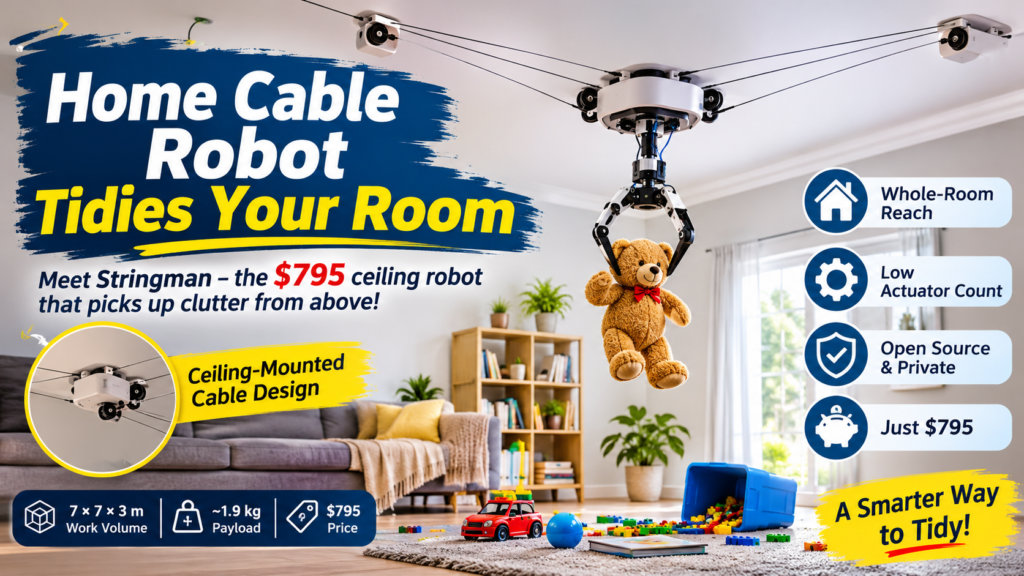
A home cable robot is a ceiling-anchored machine that moves a gripper through a room on motorized lines, so it can pick up clutter without ever driving across the floor. The best-known example is the Stringman robot from Neufangled Robotics, which IEEE Spectrum featured in its November 6, 2026 Video Friday, where the robot’s price was given as $795. ieee
Most household robots stumble in the same place: the floor. Toys, cables, shoes, and laundry make a hostile obstacle course for wheels and legs. A cable-driven design sidesteps that problem by working from above, much like a claw machine, except this one is meant to actually pick things up.
This guide covers what the technology is, how it works, what the published specs say, how it compares with other robot types, and where the honest limits are. Every section stands on its own, so you can jump straight to the answer you need.
Key Takeaways
- A home cable robot positions a gripper by changing the length of lines anchored near a room’s ceiling corners.
- Stringman is the most visible consumer-facing example. Its product page lists a 7 by 7 by 3 meter work volume and a price of $795. startuphub
- The main strength is reach over cluttered floors. The main limits are payload, installation effort, and maturity.
- The design is open source and can run on a local network without sending video to the cloud.
- Independent performance testing is scarce, so treat headline claims as the maker’s claims.
What Is a Home Cable Robot?
Definition
A home cable robot is a cable-driven parallel robot adapted for domestic tasks such as tidying a room. A cable-driven parallel robot (CDPR) replaces rigid arm links with tensioned lines. The lines attach to a moving platform, which in this case is a gripper, and motors reel them in and out to move it.
Expansion: The Geometry
The underlying idea is simple. Neufangled’s documentation explains that an object hanging from three lines of known length has exactly one possible position in 3D space, which is the principle behind every CDPR. A fourth line is typically added so the lines stay taut and the load is shared. The robot never needs to “see” where its gripper is in the way a wheeled robot needs a map. The line lengths tell it. github
How It Differs From a Robot Vacuum
A robot vacuum carries its whole body across the floor. A home cable robot moves only a small gripper, through the air, while the motors and anchors stay fixed to the room. That trade changes almost everything: what the robot can reach, what blocks it, what it costs to build, and how it fails.
Why the Ceiling Matters
Working from above means the floor is the workspace, not the obstacle. Coverage of Stringman describes it reaching floors too cluttered for wheeled or legged robots to cross. A pile of toys that would stop a vacuum is just a pile of targets for a gripper that descends from overhead. zeli
How Does a Home Cable Robot Work?
Question: How do four lines position a gripper?
Direct answer: The robot changes the length of each line, and the gripper moves to the one point where all four lines meet at their new lengths.
Expansion: Pulling two lines in while letting two out shifts the gripper sideways. Reeling all four in lifts it. Because the motors sit at the room’s edges rather than on the moving part, the gripper itself can stay small and light. That keeps the moving mass low, which matters for both safety and energy use.
Question: What actually gets installed in the room?
Direct answer: Stringman uses anchors in the ceiling corners, with the motors housed in two of them.
Expansion: Two motorized anchors, styled like crown molding, go up in opposite corners, each driving two lines, while eyelets in the other two corners guide the lines. The reported actuation hardware is four DM-H6215 direct-drive motors, one per line. That is why the maker’s own pitch focuses on actuator count: reaching a whole room with four motors is the core cost argument. interestingengineeringstartuphub
Question: What runs the brain?
Direct answer: A small computer plus a motion controller, with the option to keep everything on your local network.
Expansion: Coverage lists a Raspberry Pi Zero 2 W among the parts and says the robot can run air-gapped on a local Wi-Fi network. The motion controller runs headless on a host machine, and the robot can be driven through a protobuf-based telemetry server. One report says a local AI model can act as the “brain,” but the robot can also be driven manually with a gamepad. That manual mode is useful for testing and for anyone who wants to build their own control software. a 795 ceiling robot wants your whole room +2
Stringman: The Home Cable Robot at a Glance
The figures below come from Neufangled’s product page and press coverage. Reporting on the launch notes that the available material does not include an independent evaluation of the privacy claims or the reported performance. cornfordandcross
| Specification | Reported detail |
|---|---|
| Maker | Neufangled Robotics, founded by Nathaniel Nifong in North Carolina |
| Headline price | $795 |
| Work volume | 7 × 7 × 3 meters (147 cubic meters) |
| Maximum room diagonal | Up to about 10 meters |
| Actuation | Four direct-drive motors, four lines |
| Average payload | About 1.9 kg |
| Compute | Raspberry Pi Zero 2 W among the parts |
| Control | Local network, air-gapped option, gamepad |
| Licensing | Open-source hardware, reported as OSHWA-certified |
Sources for these rows: founder and location, the 10-meter diagonal, the 1.9 kg average payload, and the OSHWA certification and 7 × 7 × 3 meter room size. Nathaniel Nifong sells a $795 ceiling robot that tidies a whole room on four cables +3
How a Home Cable Robot Compares With Other Household Robots
Question: Is a cable robot better than a wheeled robot, a humanoid, or a desktop arm?
Direct answer: It is better at one job, reaching floor clutter across a whole room cheaply, and worse at nearly everything else. The table shows the trade-offs in general terms.
| Factor | Cable robot (Stringman) | Wheeled home robot | Humanoid | Desktop arm |
|---|---|---|---|---|
| Where the hardware sits | Fixed at ceiling corners | Moves along the floor | Walks on the floor | Clamped to a desk |
| Floor clutter | Works above it | Can be blocked by it | Can step over some, needs balance | Not applicable |
| Reach | Whole room volume | Wherever it can drive | Wherever it can walk | Fixed radius |
| Setup effort | Anchors and calibration | Minimal | Minimal | Desk mounting |
| Price class | Stringman lists at $795 | Wide range | Typically far higher | Wide range |
| Payload | Light, about 1.9 kg average | Varies | Varies | Varies by model |
| Maturity | Early, prototype-stage | Mature for vacuums | Early | Mature in labs |
Neufangled itself contrasts the design with desktop arms, which are limited to a fixed radius. That contrast is the heart of the pitch. An arm is cheap to place but cannot leave its desk, while a humanoid can go anywhere but costs far more. neufangled
Advantages of a Home Cable Robot
- Whole-room reach. The gripper can address any point inside the work volume, not just a radius around a base.
- Floor-independent. Clutter below does not block movement the way it blocks wheels.
- Low actuator count. Four motors cover a room, which is the main reason for the low price.
- No battery. Reporting says the robot is powered from a wall outlet, so there is no battery to charge. gadgetreview
- Small moving mass. The heavy parts stay fixed, so the moving gripper is light.
- Hackable. The CAD, circuit boards, and control software are published, which suits tinkerers and researchers.
Limitations: What a Home Cable Robot Cannot Do (Yet)
Is it ready to be a normal appliance?
Direct answer: Not yet. The Register called the robot a public prototype that is not yet reliable enough to be considered a home appliance, while noting the open-source design. Treat it as an advanced hobbyist and research platform. theregister
What are the installation constraints?
Anchors must go in the ceiling corners, and the lines cross the room’s airspace. That makes it worth checking for ceiling fans, hanging lights, tall shelving, or unusually shaped rooms before you commit. This is a general consideration rather than a published finding, so confirm room-fit details with the maker.
How much can it carry?
One summary reports an average payload of about 1.9 kg. That suits toys, clothes, and small items, and rules out heavy objects. Because lift is shared across the lines, payload is highest near the center where the lines share load most evenly. Expect weaker performance near walls and corners. zelistartuphub
Is it safe?
The creator has said a tension limit releases the line if someone pulls too hard. That is a sensible safeguard, but it is a design statement, not a test result. Independent safety evaluation is not yet available. zeli
Why do prices differ between articles?
The headline price is $795, but other outlets report different figures. One report cites $965 and notes a cheaper do-it-yourself kit. Another says hardware runs roughly $1,000 as a DIY build or pilot kit. Check the current product page and shipping before budgeting. rozetkedgadgetreview
Privacy and Open Source: The Underrated Angle
A household robot with a camera raises an obvious question: where does the video go? Neufangled says Stringman supports a fully on-premise mode where video processing and telemetry stay inside your local network. The maker’s tagline is “Tension is all you need.” jakechampioncornfordandcross
The open-source approach adds a second kind of trust. When the hardware designs and control software are public, outside engineers can inspect and modify what the robot does. For anyone shopping for an open-source home robot, that auditability can matter as much as the spec sheet. It also lowers the risk that a product disappears and leaves owners stranded, because the community can keep maintaining it.
A caution applies here as well: published privacy claims are not the same as audited ones.
Who Should Consider a Home Cable Robot?
A home cable robot fits best if you are:
- A hobbyist or maker who enjoys assembling and tuning hardware.
- A researcher exploring room-scale manipulation on a small budget.
- A tinkerer with a playroom, workshop, or lab where floor clutter is constant.
- Someone who values local-only control over cloud convenience.
It fits poorly if you want a plug-and-play appliance, need to lift heavy items, or have a room with obstructions that cross the line paths.
How to Evaluate a Home Cable Robot Before Buying
- Measure your room. Compare it against the 7 × 7 × 3 meter volume and the roughly 10-meter diagonal limit.
- Check the ceiling. Confirm you can mount anchors in the corners and that nothing hangs in the way.
- List what you want it to lift. Compare each item with the roughly 1.9 kg average payload.
- Decide your control mode. Choose between local AI, gamepad control, or your own software.
- Verify the real price. Confirm assembled versus kit pricing and shipping on the maker’s page.
- Look for independent testing. Prefer reviews that report failure rates, not just demos.
Frequently Asked Questions
What is a home cable robot?
A home cable robot is a ceiling-mounted, cable-driven machine that moves a gripper around a room by changing the length of several motorized lines. It is designed for tasks like picking up clutter.
How much does a home cable robot cost?
The headline price for Stringman is $795, though some outlets report higher figures for kits or assembled units. Always confirm on the maker’s page.
Can it pick up anything?
No. It has a two-fingered gripper and an average payload of about 1.9 kg, so it is built for light items such as toys and clothes.
Does Stringman need an internet connection?
No. Neufangled says it can run air-gapped on your local Wi-Fi network. startuphub
Is Stringman open source?
Yes. It is described as an open-source, OSHWA-certified gripper robot. zeli
Can a cable robot replace a robot vacuum?
No. They solve different problems. A vacuum cleans floors, while a cable robot moves objects. Some owners might use both.
Conclusion
A home cable robot trades wheels, legs, and a humanoid body for a ceiling grid and four motors. The result is a room-scale gripper at an unusually low price, with strengths in reach, privacy options, and openness.
The limits are just as clear. Payload is modest, installation takes effort, and the product is still a prototype-stage platform rather than a finished appliance. Until independent testing arrives, the smartest way to treat a home cable robot is as an exciting, affordable experiment in household automation, and a strong signal that the next wave of home robots may not walk or roll at all.
ଘରୋଇ କେବୁଲ୍ ରୋବଟ୍ (Home Cable Robot): ‘ଷ୍ଟ୍ରିଙ୍ଗମ୍ୟାନ୍’ (Stringman) କିପରି ଛାତରୁ ପୁରା ଘର ସଫା କରେ
ଘରୋଇ କେବୁଲ୍ ରୋବଟ୍ ହେଉଛି ଛାତ ସହିତ ସଂଯୁକ୍ତ ଏକ ଯନ୍ତ୍ର, ଯାହା ମୋଟର ଚାଳିତ ତାର (କେବୁଲ୍) ସାହାଯ୍ୟରେ ଏକ ‘ଗ୍ରିପର୍’ (ଜିନିଷ ଧରିବା ଯନ୍ତ୍ର) କୁ ଘର ଭିତରେ ଚଳାଚଳ କରାଏ। ଏହା ଫଳରେ, ଚଟାଣ ଉପରେ ନ ଚାଲି ମଧ୍ୟ ଏହା ବିଭିନ୍ନ ଜିନିଷକୁ ଉଠାଇ ସଫା କରିପାରେ। ଏହାର ସବୁଠାରୁ ଜଣାଶୁଣା ଉଦାହରଣ ହେଉଛି ‘ନ୍ୟୁଫ୍ୟାଙ୍ଗଲ୍ଡ ରୋବୋଟିକ୍ସ’ (Neufangled Robotics) ର ‘ଷ୍ଟ୍ରିଙ୍ଗମ୍ୟାନ୍’ ରୋବଟ୍। ‘IEEE Spectrum’ ନାମକ ପତ୍ରିକା ଏହାର ୨୦୨୬ ମସିହା ନଭେମ୍ବର ୬ ତାରିଖର ‘ଭିଡିଓ ଫ୍ରାଇଡେ’ (Video Friday) ସଂସ୍କରଣରେ ଏହାକୁ ପ୍ରଦର୍ଶିତ କରିଥିଲା, ଯେଉଁଥିରେ ଏହାର ମୂଲ୍ୟ ୭୯୫ ଡଲାର ବୋଲି ଉଲ୍ଲେଖ କରାଯାଇଥିଲା।
ଘରୋଇ ବ୍ୟବହାର ପାଇଁ ତିଆରି ଅଧିକାଂଶ ରୋବଟ୍ ଗୋଟିଏ ଜାଗାରେ ଅସୁବିଧାର ସମ୍ମୁଖୀନ ହୁଅନ୍ତି, ତାହା ହେଲା—ଚଟାଣ। ଚଟାଣ ଉପରେ ପଡ଼ିରହିଥିବା ଖେଳନା, କେବୁଲ୍, ଜୋତା ଏବଂ ପୋଷାକପତ୍ର ରୋବଟର ଚକ କିମ୍ବା ଗୋଡ଼ ପାଇଁ ବାଧା ସୃଷ୍ଟି କରନ୍ତି। କିନ୍ତୁ କେବୁଲ୍ ଦ୍ୱାରା ପରିଚାଳିତ ଡିଜାଇନ୍ ଉପର ଭାଗରୁ କାମ କରୁଥିବାରୁ ଏହି ସମସ୍ୟାକୁ ଏଡ଼ାଇ ଦିଏ। ଏହା ଏକ ‘କ୍ଲaw ମେସିନ୍’ (ଯେଉଁଥିରେ ପଞ୍ଜା ସାହାଯ୍ୟରେ ଜିନିଷ ଉଠାଯାଏ) ଭଳି କାମ କରେ, କିନ୍ତୁ ଏହାର ଉଦ୍ଦେଶ୍ୟ ହେଉଛି ପ୍ରକୃତରେ ଜିନିଷଗୁଡ଼ିକୁ ଉଠାଇ ସଜାଡ଼ି ରଖିବା।
ଏହି ଲେଖାରେ ଆମେ ଜାଣିବା ଯେ ଏହି ପ୍ରଯୁକ୍ତିବିଦ୍ୟା କ’ଣ, ଏହା କିପରି କାମ କରେ, ଏହାର ନିର୍ଦ୍ଦିଷ୍ଟ ବୈଷୟିକ ବିବରଣୀ କ’ଣ, ଅନ୍ୟ ରୋବଟ୍ ତୁଳନାରେ ଏହା କିପରି ଭିନ୍ନ ଏବଂ ଏହାର ସୀମାବଦ୍ଧତାଗୁଡ଼ିକ କ’ଣ। ପ୍ରତ୍ୟେକ ବିଭାଗ ସ୍ୱତନ୍ତ୍ର ଭାବରେ ଉପସ୍ଥାପିତ ହୋଇଛି, ତେଣୁ ଆପଣ ସିଧାସଳଖ ଆପଣଙ୍କ ଆବଶ୍ୟକୀୟ ଉତ୍ତର ପାଖକୁ ଯାଇପାରିବେ।
ମୁଖ୍ୟ ବିଷୟବସ୍ତୁ
ଘରୋଇ କେବୁଲ୍ ରୋବଟ୍, ଘରର ଛାତ କୋଣରେ ଲାଗିଥିବା ତାରଗୁଡ଼ିକର ଲମ୍ବ ପରିବର୍ତ୍ତନ କରି ଏକ ‘ଗ୍ରିପର୍’ (ଜିନିଷ ଧରିବା ଯନ୍ତ୍ର) କୁ ନିର୍ଦ୍ଦିଷ୍ଟ ସ୍ଥାନରେ ସ୍ଥାପିତ କରେ Neufangled-ର ଡକ୍ୟୁମେଣ୍ଟେସନ୍ ଅନୁଯାୟୀ, ନିର୍ଦ୍ଦିଷ୍ଟ ଦୈର୍ଘ୍ୟ ବିଶିଷ୍ଟ ତିନୋଟି ତାର (lines) ସାହାଯ୍ୟରେ ଝୁଲୁଥିବା ଏକ ବସ୍ତୁ 3D ସ୍ଥାନରେ (3D space) କେବଳ ଗୋଟିଏ ନିର୍ଦ୍ଦିଷ୍ଟ ସ୍ଥାନରେ ହିଁ ରହିପାରେ; ଏହି ନୀତି ଉପରେ ହିଁ ପ୍ରତ୍ୟେକ CDPR (Cable-Driven Parallel Robot) ଆଧାରିତ।
ସାଧାରଣତଃ ଏଥିରେ ଚତୁର୍ଥ ତାରଟିଏ ଯୋଡ଼ାଯାଏ, ଯାହା ଫଳରେ ତାରଗୁଡ଼ିକ ଟାଣ ହୋଇ ରହେ ଏବଂ ଭାରଟି ସମସ୍ତ ତାର ମଧ୍ୟରେ ବଣ୍ଟିତ ହୋଇଯାଏ। ଏହି ରୋବଟକୁ ନିଜର ‘ଗ୍ରିପର୍’ (gripper) କେଉଁଠାରେ ଅଛି ତାହା ଦେଖିବା କିମ୍ବା ଜାଣିବା ପାଇଁ କୌଣସି ମାନଚିତ୍ର (map) ଦରକାର ହୁଏ ନାହିଁ, ଯେପରିକି ଚକ ଥିବା ରୋବଟ୍ ପାଇଁ ଆବଶ୍ୟକ ହୋଇଥାଏ। ତାରଗୁଡ଼ିକର ଦୈର୍ଘ୍ୟ ହିଁ ଏହାକୁ ସ୍ଥାନ ବିଷୟରେ ସୂଚନା ଦେଇଥାଏ।
ଏହା ଏକ ‘ରୋବଟ୍ ଭାକ୍ୟୁମ୍’ (robot vacuum) ଠାରୁ କିପରି ଭିନ୍ନ?
ଏକ ରୋବଟ୍ ଭାକ୍ୟୁମ୍ ଚଟାଣ ଉପରେ ନିଜର ସମ୍ପୂର୍ଣ୍ଣ ଶରୀରକୁ ନେଇ ଚଳପ୍ରଚଳ କରେ। କିନ୍ତୁ ଏକ ‘ହୋମ୍ କେବୁଲ୍ ରୋବଟ୍’ (home cable robot) କେବଳ ଏକ ଛୋଟ ଗ୍ରିପର୍କୁ ବାୟୁ ମାଧ୍ୟମରେ ଗତି କରାଏ, ଯେତେବେଳେ କି ଏହାର ମୋଟର ଏବଂ ଆଙ୍କର୍ଗୁଡ଼ିକ (anchors) ଘରର ନିର୍ଦ୍ଦିଷ୍ଟ ସ୍ଥାନରେ ସ୍ଥିର ହୋଇ ରହିଥାଏ। ଏହି ପାର୍ଥକ୍ୟ ଯୋଗୁଁ ଅନେକ କିଛି ବଦଳିଯାଏ: ଯେପରିକି ରୋବଟ୍ କେଉଁ ସ୍ଥାନ ପର୍ଯ୍ୟନ୍ତ ପହଞ୍ଚିପାରିବ, କେଉଁ ଜିନିଷ ଏହାର ଗତିକୁ ବାଧା ଦେଇପାରେ, ଏହାକୁ ତିଆରି କରିବାର ଖର୍ଚ୍ଚ କେତେ ହେବ ଏବଂ ଏହା କିପରି ଖରାପ ହୋଇପାରେ (ବିଫଳ ହୋଇପାରେ)।
ଛାତ (Ceiling) କାହିଁକି ଗୁରୁତ୍ୱପୂର୍ଣ୍ଣ?
ଉପରୁ କାର୍ଯ୍ୟ କରୁଥିବାରୁ, ଏଠାରେ ଚଟାଣ ଏକ କାର୍ଯ୍ୟକ୍ଷେତ୍ର (workspace) ଭାବରେ କାମ କରେ, ନା କି ଏକ ବାଧା ଭାବରେ। ‘ଷ୍ଟ୍ରିଙ୍ଗମ୍ୟାନ୍’ (Stringman) ନାମକ ଏହି ପ୍ରଣାଳୀ ଏପରି ଚଟାଣ ଉପରେ ମଧ୍ୟ କାମ କରିପାରେ ଯେଉଁଠାରେ ଅନେକ ଜିନିଷ ପଡ଼ିରହିଥିବାରୁ ଚକ କିମ୍ବା ଗୋଡ଼ ଥିବା ରୋବଟ୍ଗୁଡ଼ିକ ଯିବା ସମ୍ଭବ ହୁଏ ନାହିଁ। ଉଦାହରଣ ସ୍ୱରୂପ, ଖେଳନାଗୁଡ଼ିକର ଏକ ଗଦା ଯାହା ଏକ ରୋବଟ୍ ଭାକ୍ୟୁମ୍ର ଗତିକୁ ଅଟକାଇ ଦେବ, ତାହା ଏହି ରୋବଟ୍ ପାଇଁ କେବଳ କିଛି ଲକ୍ଷ୍ୟବସ୍ତୁ ସେଥିପାଇଁ ନିର୍ମାତାଙ୍କ ନିଜସ୍ୱ ପିଚ୍ ଆକ୍ଚୁଏଟର ଗଣନା ଉପରେ ଧ୍ୟାନ ଦିଏ: ଚାରୋଟି ମୋଟର ସହିତ ଏକ ସମ୍ପୂର୍ଣ୍ଣ କୋଠରୀରେ ପହଞ୍ଚିବା ହେଉଛି ମୂଳ ମୂଲ୍ୟ ଯୁକ୍ତି।
interestingengineering
startuphub
ପ୍ରଶ୍ନ: କ’ଣ ମସ୍ତିଷ୍କକୁ ଚଲାଏ?
ସିଧାସଳଖ ଉତ୍ତର: ଏକ ଛୋଟ କମ୍ପ୍ୟୁଟର ଏବଂ ଏକ ଗତି ନିୟନ୍ତ୍ରକ, ଆପଣଙ୍କ ସ୍ଥାନୀୟ ନେଟୱାର୍କରେ ସବୁକିଛି ରଖିବାର ବିକଳ୍ପ ସହିତ।
ବିସ୍ତାର: କଭରେଜ୍ ଅଂଶଗୁଡ଼ିକ ମଧ୍ୟରେ ଏକ Raspberry Pi Zero 2 W ତାଲିକାଭୁକ୍ତ କରେ ଏବଂ କୁହେ ଯେ ରୋବୋଟ୍ ଏକ ସ୍ଥାନୀୟ Wi-Fi ନେଟୱାର୍କରେ ଏୟାର-ଗ୍ୟାପ୍ ହୋଇ ଚାଲିପାରିବ। ଗତି ନିୟନ୍ତ୍ରକ ଏକ ହୋଷ୍ଟ ମେସିନରେ ହେଡଲେସ୍ ଚାଲିଥାଏ, ଏବଂ ରୋବୋଟ୍ ଏକ ପ୍ରୋଟୋବଫ୍-ଆଧାରିତ ଟେଲିମେଟ୍ରି ସର୍ଭର ମାଧ୍ୟମରେ ଚଲାଯାଇପାରିବ।
ଏକ ରିପୋର୍ଟରେ କୁହାଯାଇଛି ଯେ ଏକ ସ୍ଥାନୀୟ AI ମଡେଲ୍ “ମସ୍ତିଷ୍କ” ଭାବରେ କାର୍ଯ୍ୟ କରିପାରିବ, କିନ୍ତୁ ରୋବୋଟ୍ ଏକ ଗେମପ୍ୟାଡ୍ ସହିତ ମାନୁଆଲୀ ମଧ୍ୟ ଚଲାଯାଇପାରିବ। ସେହି ମାନୁଆଲ୍ ମୋଡ୍ ପରୀକ୍ଷା ପାଇଁ ଏବଂ ଯେଉଁମାନେ ନିଜର ନିୟନ୍ତ୍ରଣ ସଫ୍ଟୱେର୍ ନିର୍ମାଣ କରିବାକୁ ଚାହାଁନ୍ତି ସେମାନଙ୍କ ପାଇଁ ଉପଯୋଗୀ।
ଏକ 795 ସିଲିଂ ରୋବୋଟ୍ ଆପଣଙ୍କର ସମ୍ପୂର୍ଣ୍ଣ କୋଠରୀ ଚାହେଁ
+2
Stringman: ଏକ ନଜରରେ ହୋମ୍ କେବୁଲ୍ ରୋବୋଟ୍
ନିମ୍ନରେ ଥିବା ଚିତ୍ରଗୁଡ଼ିକ Neufangled ର ଉତ୍ପାଦ ପୃଷ୍ଠା ଏବଂ ପ୍ରେସ୍ କଭରେଜ୍ ରୁ ଆସିଛି। ଲଞ୍ଚ ବିଷୟରେ ରିପୋର୍ଟ କରିବା ସମୟରେ ଉଲ୍ଲେଖ କରାଯାଇଛି ଯେ ଉପଲବ୍ଧ ସାମଗ୍ରୀରେ ଗୋପନୀୟତା ଦାବିର ଏକ ସ୍ୱାଧୀନ ମୂଲ୍ୟାଙ୍କନ ଅନ୍ତର୍ଭୁକ୍ତ ନାହିଁ କିମ୍ବା ଉଲ୍ଲେଖ କରାଯାଇଥିବା କାର୍ଯ୍ୟଦକ୍ଷତା।
କର୍ନଫୋର୍ଡ ଆଣ୍ଡ କ୍ରସ୍ (Cornfordandcross)
ବିବରଣୀ ଉଲ୍ଲେଖ କରାଯାଇଥିବା ବିସ୍ତୃତ ତଥ୍ୟ
ନିର୍ମାତା ନିଉଫାଙ୍ଗଲ୍ଡ ରୋବୋଟିକ୍ସ (Neufangled Robotics) – ନାଥାନିଏଲ୍ ନିଫୋଙ୍ଗଙ୍କ ଦ୍ୱାରା ଉତ୍ତର କାରୋଲିନାରେ ପ୍ରତିଷ୍ଠିତ
ମୂଳ ମୂଲ୍ୟ $୭୯୫ (୭୯୫ ଆମେରିକୀୟ ଡଲାର)
କାର୍ଯ୍ୟକ୍ଷେତ୍ରର ଆୟତନ ୭ × ୭ × ୩ ମିଟର (୧୪୭ ଘନ ମିଟର)
କକ୍ଷର ସର୍ବାଧିକ କର୍ଣ୍ଣ ଦୈର୍ଘ୍ୟ (Diagonal) ପ୍ରାୟ ୧୦ ମିଟର ପର୍ଯ୍ୟନ୍ତ
ପରିଚାଳନା ବ୍ୟବସ୍ଥା ଚାରୋଟି ‘ଡାଇରେକ୍ଟ-ଡ୍ରାଇଭ୍’ (direct-drive) ମୋଟର ଏବଂ ଚାରୋଟି କେବୁଲ୍ (ତାର)
ହାରାହାରି ବହନ କ୍ଷମତା (Payload) ପ୍ରାୟ ୧.୯ କିଲୋଗ୍ରାମ
କମ୍ପ୍ୟୁଟର/ପ୍ରୋସେସିଂ ‘ରାସ୍ବେରୀ ପାଇ ଜିରୋ ୨ ଡବ୍ଲ୍ୟୁ’ (Raspberry Pi Zero 2 W) ଭଳି ଉପାଦାନ ବ୍ୟବହୃତ
ନିୟନ୍ତ୍ରଣ ସ୍ଥାନୀୟ ନେଟୱାର୍କ, ‘ଏୟାର-ଗ୍ୟାପ୍ଡ’ (ଇଣ୍ଟରନେଟ୍ ବିଚ୍ଛିନ୍ନ) ବିକଳ୍ପ, ଏବଂ ଗେମ୍ପ୍ୟାଡ୍
ଲାଇସେନ୍ସ ଓପନ୍-ସୋର୍ସ ହାର୍ଡୱେର୍ (Open-source hardware); OSHWA (Open Source Hardware Association) ଦ୍ୱାରା ପ୍ରମାଣିତ ବୋଲି କୁହାଯାଇଛି
ଏହି ତଥ୍ୟଗୁଡ଼ିକର ଉତ୍ସ: ପ୍ରତିଷ୍ଠାତା ଓ ଅବସ୍ଥିତି, ୧୦ ମିଟର କର୍ଣ୍ଣ ଦୈର୍ଘ୍ୟ, ୧.୯ କିଲୋଗ୍ରାମ ହାରାହାରି ବହନ କ୍ଷମତା, OSHWA ପ୍ରମାଣପତ୍ର ଏବଂ ୭ × ୭ × ୩ ମିଟର କକ୍ଷ ଆକାର।
ନାଥାନିଏଲ୍ ନିଫୋଙ୍ଗ ଏକ $୭୯୫ ମୂଲ୍ୟର ‘ସିଲିଂ ରୋବୋଟ୍’ (ଛାତରେ ଲଗାଯାଉଥିବା ରୋବୋଟ୍) ବିକ୍ରି କରୁଛନ୍ତି, ଯାହା ଚାରୋଟି କେବୁଲ୍ ସାହାଯ୍ୟରେ ପୁରା କକ୍ଷକୁ ସଫା କିମ୍ବା ସୁବ୍ୟବସ୍ଥିତ କରିପାରେ।
+୩
ଘରୋଇ ବ୍ୟବହାର ପାଇଁ ଉଦ୍ଦିଷ୍ଟ ‘କେବୁଲ୍ ରୋବୋଟ୍’ ଅନ୍ୟ ଘରୋଇ ରୋବୋଟ୍ଗୁଡ଼ିକ ତୁଳନାରେ କିପରି?
ପ୍ରଶ୍ନ: ଏକ ‘କେବୁଲ୍ ରୋବୋଟ୍’, ଚକ ଥିବା ରୋବୋଟ୍, ମାନବାକୃତି ରୋବୋଟ୍ (humanoid) କିମ୍ବା ଡେସ୍କଟପ୍ ଆର୍ମ (ଟେବୁଲ୍ରେ ଲାଗିଥିବା ରୋବୋଟିକ୍ ବାହୁ) ଠାରୁ ଅଧିକ ଭଲ କି?
ସିଧାସଳଖ ଉତ୍ତର: ଏହା ଗୋଟିଏ କ୍ଷେତ୍ରରେ ଅଧିକ ଉପଯୋଗୀ – ତାହା ହେଲା, କମ୍ ଖର୍ଚ୍ଚରେ ପୁରା କକ୍ଷର ଚଟାଣରେ ପଡ଼ିଥିବା ଜିନିଷପତ୍ର ପାଖରେ ପହଞ୍ଚିବା। କି ଏକ ରୋବୋଟିକ୍ ‘ଆର୍ମ’ (arm) ବା ବାହୁକୁ ସ୍ଥାପନ କରିବା ଶସ୍ତା ପଡ଼େ, କିନ୍ତୁ ଏହା ନିଜ ସ୍ଥାନ (ଡେସ୍କ) ଛାଡ଼ି ଯାଇପାରେ ନାହିଁ; ଅନ୍ୟପକ୍ଷରେ, ଏକ ‘ହ୍ୟୁମାନଏଡ୍’ (ମଣିଷ ଆକୃତିର ରୋବୋଟ୍) ଯେକୌଣସି ସ୍ଥାନକୁ ଯାଇପାରେ, କିନ୍ତୁ ଏହାର ମୂଲ୍ୟ ବହୁତ ଅଧିକ ହୋଇଥାଏ।
ଘରୋଇ ବ୍ୟବହାର ଉପଯୋଗୀ ‘କେବୁଲ୍ ରୋବୋଟ୍’ (Home Cable Robot) ର ଲାଭ:
ସମ୍ପୂର୍ଣ୍ଣ କକ୍ଷରେ ପହଞ୍ଚିବାର କ୍ଷମତା: ଏହାର ‘ଗ୍ରିପର୍’ (ଧରିବା ଯନ୍ତ୍ର) କେବଳ ଏକ ନିର୍ଦ୍ଦିଷ୍ଟ ବ୍ୟାସାର୍ଦ୍ଧ ମଧ୍ୟରେ ନୁହେଁ, ବରଂ କକ୍ଷ ଭିତରର ଯେକୌଣସି ସ୍ଥାନରେ ପହଞ୍ଚି ପାରିବ।
ତଳ ଭାଗ ଉପରେ ନିର୍ଭରଶୀଳ ନୁହେଁ: ଚଟାଣରେ ଜିନିଷପତ୍ର ବିଛେଇ ହୋଇ ପଡ଼ିଥିଲେ ମଧ୍ୟ ଏହାର ଗତିବିଧିରେ ବାଧା ସୃଷ୍ଟି ହୁଏ ନାହିଁ (ଯେପରି ଚକ ଥିବା ରୋବୋଟ୍ କ୍ଷେତ୍ରରେ ହୋଇଥାଏ)।
କମ୍ ସଂଖ୍ୟକ ‘ଆକ୍ଚୁଏଟର୍’ (ଚାଳକ ଯନ୍ତ୍ରାଂଶ): ମାତ୍ର ଚାରୋଟି ମୋଟର ସାହାଯ୍ୟରେ ଏହା ସମ୍ପୂର୍ଣ୍ଣ କକ୍ଷକୁ ଆୟତ୍ତ କରିପାରେ, ଯାହା ଏହାର କମ୍ ମୂଲ୍ୟର ମୁଖ୍ୟ କାରଣ।
ବ୍ୟାଟେରୀର ଆବଶ୍ୟକତା ନାହିଁ: ଏହି ରୋବୋଟ୍ ସିଧାସଳଖ ବିଦ୍ୟୁତ୍ ସଂଯୋଗ (wall outlet) ମାଧ୍ୟମରେ ଚାଲେ, ତେଣୁ ଏଥିରେ ଚାର୍ଜ କରିବା ପାଇଁ କୌଣସି ବ୍ୟାଟେରୀ ନାହିଁ।
କମ୍ ଗତିଶୀଳ ଓଜନ: ଏହାର ଭାରୀ ଅଂଶଗୁଡ଼ିକ ସ୍ଥିର ରହେ, ଫଳରେ ଗତି କରୁଥିବା ‘ଗ୍ରିପର୍’ ଅଂଶଟି ହାଲୁକା ହୋଇଥାଏ।
ପରିବର୍ତ୍ତନଯୋଗ୍ୟ (Hackable): ଏହାର CAD ଡିଜାଇନ୍, ସର୍କିଟ୍ ବୋର୍ଡ ଏବଂ କଣ୍ଟ୍ରୋଲ୍ ସଫ୍ଟୱେର୍ ସର୍ବସାଧାରଣଙ୍କ ପାଇଁ ଉପଲବ୍ଧ, ଯାହା ନୂତନ ଜିନିଷ ତିଆରି କରିବାକୁ ପସନ୍ଦ କରୁଥିବା ବ୍ୟକ୍ତି ଏବଂ ଗବେଷକମାନଙ୍କ ପାଇଁ ଉପଯୁକ୍ତ।
ସୀମାବଦ୍ଧତା: ଏକ ଘରୋଇ କେବୁଲ୍ ରୋବୋଟ୍ କ’ଣ କରିପାରିବ ନାହିଁ (ବର୍ତ୍ତମାନ ପାଇଁ)?
ଏହା କ’ଣ ଏକ ସାଧାରଣ ଘରୋଇ ଉପକରଣ ହେବା ପାଇଁ ପ୍ରସ୍ତୁତ?
ସିଧାସଳଖ ଉତ୍ତର: ନା, ବର୍ତ୍ତମାନ ପାଇଁ ନୁହେଁ। ‘ଦ ରେଜିଷ୍ଟର୍’ (The Register) ଅନୁଯାୟୀ, ଏହା ଏକ ‘ପବ୍ଲିକ୍ ପ୍ରୋଟୋଟାଇପ୍’ (ପରୀକ୍ଷାମୂଳକ ମଡେଲ୍) ମାତ୍ର; ଏହା ଏତେ ନିର୍ଭରଯୋଗ୍ୟ ନୁହେଁ ଯେ ଏହାକୁ ଏକ ସାଧାରଣ ଘରୋଇ ଉପକରଣ ଭାବ zeli
ନିବନ୍ଧଗୁଡ଼ିକ ମଧ୍ୟରେ ମୂଲ୍ୟ କାହିଁକି ଭିନ୍ନ ହୁଏ?
ମୁଖ୍ୟ ଖବର ମୂଲ୍ୟ $795, କିନ୍ତୁ ଅନ୍ୟ ସଂସ୍ଥାଗୁଡ଼ିକ ଭିନ୍ନ ଭିନ୍ନ ସଂଖ୍ୟା ରିପୋର୍ଟ କରନ୍ତି। ଗୋଟିଏ ରିପୋର୍ଟ $965 ଉଦ୍ଧୃତ କରେ ଏବଂ ଏକ ଶସ୍ତା ଡୁ-ଇଟ୍-ୟୋର୍ସେଲ୍ଫ କିଟ୍ ଉଲ୍ଲେଖ କରେ। ଅନ୍ୟ ଏକ ରିପୋର୍ଟରେ କୁହାଯାଇଛି ଯେ ହାର୍ଡୱେର୍ ଏକ DIY ବିଲ୍ଡ କିମ୍ବା ପାଇଲଟ୍ କିଟ୍ ଭାବରେ ପ୍ରାୟ $1,000 ଚାଲିଥାଏ। ବଜେଟ୍ କରିବା ପୂର୍ବରୁ ବର୍ତ୍ତମାନର ଉତ୍ପାଦ ପୃଷ୍ଠା ଏବଂ ପଠାଣ ଯାଞ୍ଚ କରନ୍ତୁ।
rozetked
gadgetreview
ଗୋପନୀୟତା ଏବଂ ମୁକ୍ତ ଉତ୍ସ: ଅଣ୍ଡରରେଟେଡ୍ କୋଣ
କ୍ୟାମେରା ସହିତ ଏକ ଘରୋଇ ରୋବୋଟ୍ ଏକ ସ୍ପଷ୍ଟ ପ୍ରଶ୍ନ ଉଠାଇଥାଏ: ଭିଡିଓ କେଉଁଠାକୁ ଯାଏ? Neufangled କୁହନ୍ତି ଯେ Stringman ଏକ ସମ୍ପୂର୍ଣ୍ଣ ଅନ୍-ପ୍ରାଇମାଇସ୍ ମୋଡ୍ ସମର୍ଥନ କରେ ଯେଉଁଠାରେ ଭିଡିଓ ପ୍ରକ୍ରିୟାକରଣ ଏବଂ ଟେଲିମେଟ୍ରି ଆପଣଙ୍କ ସ୍ଥାନୀୟ ନେଟୱାର୍କ ଭିତରେ ରହିଥାଏ। ନିର୍ମାତାଙ୍କ ଟ୍ୟାଗଲାଇନ୍ ହେଉଛି “ଟେନସନ୍ କେବଳ ଆପଣଙ୍କୁ ଆବଶ୍ୟକ।”
jakechampion
cornfordandcross
ଖୋଲା-ଉତ୍ସ ପଦ୍ଧତି ଦ୍ୱିତୀୟ ପ୍ରକାରର ବିଶ୍ୱାସ ଯୋଡେ। ଯେତେବେଳେ ହାର୍ଡୱେର୍ ଡିଜାଇନ୍ ଏବଂ ନିୟନ୍ତ୍ରଣ ସଫ୍ଟୱେର୍ ସାର୍ବଜନୀନ ହୁଏ, ବାହାର ଇଞ୍ଜିନିୟରମାନେ ରୋବୋଟ୍ କ’ଣ କରେ ତାହା ଯାଞ୍ଚ ଏବଂ ପରିବର୍ତ୍ତନ କରିପାରିବେ। ଖୋଲା-ଉତ୍ସ ଘରୋଇ ରୋବୋଟ୍ ପାଇଁ କିଣୁଥିବା ଯେକୌଣସି ବ୍ୟକ୍ତିଙ୍କ ପାଇଁ, ସେହି ଅଡିଟେବିଲିଟି ସ୍ପେକ୍ ସିଟ୍ ପରି ଗୁରୁତ୍ୱପୂର୍ଣ୍ଣ ହୋଇପାରେ। ଏହା ଏକ ଉତ୍ପାଦ ଅଦୃଶ୍ୟ ହେବା ଏବଂ ମାଲିକମାନଙ୍କୁ ଫସି ରହିବାର ବିପଦକୁ ମଧ୍ୟ ହ୍ରାସ କରେ, କାରଣ ସମ୍ପ୍ରଦାୟ ଏହାକୁ ରକ୍ଷଣାବେକ୍ଷଣ ଜାରି ରଖିପାରିବ।
ଏଠାରେ ମଧ୍ୟ ଏକ ସତର୍କତା ପ୍ରଯୁଜ୍ୟ: ପ୍ରକାଶିତ ଗୋପନୀୟତା ଦାବି ସମାନ ନୁହେଁ।
ଯେପରିକି ଅଡିଟ୍ (ଯାଞ୍ଚ) କରାଯାଇଥିବା ଉପକରଣଗୁଡ଼ିକ।
ଘରୋଇ କେବୁଲ୍ ରୋବଟ୍ (Home Cable Robot) କାହା ପାଇଁ ଉପଯୁକ୍ତ?
ଯଦି ଆପଣ ନିମ୍ନଲିଖିତ ବର୍ଗରେ ଆସନ୍ତି, ତେବେ ଏକ ଘରୋଇ କେବୁଲ୍ ରୋବଟ୍ ଆପଣଙ୍କ ପାଇଁ ଉପଯୁକ୍ତ ହୋଇପାରେ:
ଯଦି ଆପଣ ଜଣେ ସୌଖୀନ ବ୍ୟକ୍ତି କିମ୍ବା ନିର୍ମାତା (maker) ଯିଏ ହାର୍ଡୱେର୍ ଯୋଡ଼ିବା ଏବଂ ସେଟ୍ କରିବାକୁ ପସନ୍ଦ କରନ୍ତି।
ଯଦି ଆପଣ ଜଣେ ଗବେଷକ, ଯିଏ କମ୍ ବଜେଟରେ ଏକ କକ୍ଷ ମଧ୍ୟରେ (room-scale) ବିଭିନ୍ନ ବସ୍ତୁକୁ ହାତରେ ଧରିବା କିମ୍ବା ସ୍ଥାନାନ୍ତର କରିବା (manipulation) ନେଇ ଗବେଷଣା କରୁଛନ୍ତି।
ଯଦି ଆପଣଙ୍କ ପାଖରେ ଏକ ଖେଳ ଘର, କାର୍ଯ୍ୟଶାଳା (workshop) କିମ୍ବା ଲ୍ୟାବ୍ ଅଛି, ଯେଉଁଠାରେ ଚଟାଣରେ ସବୁବେଳେ ଜିନିଷପତ୍ର ବିଛେଇ ହୋଇ ପଡ଼ିଥାଏ।
ଯଦି ଆପଣ କ୍ଲାଉଡ୍ (cloud) ସୁବିଧା ଅପେକ୍ଷା ନିଜ ନିୟନ୍ତ୍ରଣରେ (local-only control) ରଖିବାକୁ ଅଧିକ ଗୁରୁତ୍ୱ ଦିଅନ୍ତି।
ଯଦି ଆପଣ ଏପରି କିଛି ଚାହାଁନ୍ତି ଯାହାକୁ କେବଳ ପ୍ଲଗ୍ କରିବା ମାତ୍ରେ ବ୍ୟବହାର କରାଯାଇପାରିବ (plug-and-play), ଯଦି ଆପଣଙ୍କୁ ଭାରୀ ଜିନିଷ ଉଠାଇବାକୁ ପଡ଼େ, କିମ୍ବା ଯଦି ଆପଣଙ୍କ ଘରେ ଏପରି କିଛି ବାଧାବିଘ୍ନ ଅଛି ଯାହା କେବୁଲ୍ ଗତିପଥରେ ଆସୁଛି, ତେବେ ଏହା ଆପଣଙ୍କ ପାଇଁ ଉପଯୁକ୍ତ ନୁହେଁ।
କିଣିବା ପୂର୍ବରୁ ଘରୋଇ କେବୁଲ୍ ରୋବଟକୁ କିପରି ଯାଞ୍ଚ କରିବେ?
ଆପଣଙ୍କ ଘରର କକ୍ଷ (room) ମାପନ୍ତୁ। ଏହାକୁ ୭ × ୭ × ୩ ମିଟର ଆୟତନ ଏବଂ ପ୍ରାୟ ୧୦ ମିଟର କର୍ଣ୍ଣ (diagonal) ସୀମା ସହିତ ତୁଳନା କରନ୍ତୁ।
ଛାତକୁ ଯାଞ୍ଚ କରନ୍ତୁ। ନିଶ୍ଚିତ କରନ୍ତୁ ଯେ ଆପଣ କୋଣଗୁଡ଼ିକରେ ଆଙ୍କର୍ (anchors) ଲଗାଇ ପାରିବେ ଏବଂ ଛାତରୁ କୌଣସି ଜିନିଷ ଝୁଲି ରହିନାହିଁ ଯାହା ବାଧା ସୃଷ୍ଟି କରିପାରେ।
ଆପଣ କେଉଁ ଜିନିଷଗୁଡ଼ିକୁ ଉଠାଇବାକୁ ଚାହୁଁଛନ୍ତି ତାହାର ଏକ ତାଲିକା ପ୍ରସ୍ତୁତ କରନ୍ତୁ। ପ୍ରତ୍ୟେକ ଜିନିଷର ଓଜନକୁ ଏହାର ପ୍ରାୟ ୧.୯ କିଲୋଗ୍ରାମ ବହନ କ୍ଷମତା (payload) ସହିତ ତୁଳନା କରନ୍ତୁ।
ନିୟନ୍ତ୍ରଣ ପଦ୍ଧତି (control mode) ସ୍ଥିର କରନ୍ତୁ। ଆପଣ ଲୋକାଲ୍ AI, ଗେମ୍ପ୍ୟାଡ୍ ନିୟନ୍ତ୍ରଣ, କିମ୍ବା ନିଜର ସଫ୍ଟୱେର୍ ମଧ୍ୟରୁ କୌଣସି ଗୋଟିଏ ବାଛିପାର ହଁ। ଏହାକୁ ଏକ ଖୋଲା-ଉତ୍ସ, OSHWA-ପ୍ରମାଣିତ ଗ୍ରୀପର୍ ରୋବୋଟ୍ ଭାବରେ ବର୍ଣ୍ଣନା କରାଯାଇଛି।
zeli
କିଛି କେବୁଲ୍ ରୋବୋଟ୍ ଏକ ରୋବୋଟ୍ ଭାକ୍ୟୁମ୍ ବଦଳାଇପାରିବ କି?
ନା। ସେମାନେ ବିଭିନ୍ନ ସମସ୍ୟାର ସମାଧାନ କରନ୍ତି। ଏକ ଭାକ୍ୟୁମ୍ ମହଲା ସଫା କରେ, ଯେତେବେଳେ ଏକ କେବୁଲ୍ ରୋବୋଟ୍ ଜିନିଷଗୁଡ଼ିକୁ ଘୁଞ୍ଚାଏ। କିଛି ମାଲିକ ଉଭୟ ବ୍ୟବହାର କରିପାରନ୍ତି।
ନିଷ୍କର୍ଷ
ଏକ ଘରୋଇ କେବୁଲ୍ ରୋବୋଟ୍ ଏକ ସିଲିଂ ଗ୍ରୀଡ୍ ଏବଂ ଚାରୋଟି ମୋଟର ପାଇଁ ଚକ, ଗୋଡ଼ ଏବଂ ଏକ ମାନବୀୟ ଶରୀରର ବ୍ୟବସାୟ କରେ। ଫଳାଫଳ ହେଉଛି ଏକ ଅସାଧାରଣ ଭାବରେ କମ୍ ମୂଲ୍ୟରେ ଏକ କୋଠରୀ-ସ୍କେଲ ଗ୍ରୀପର୍, ପହଞ୍ଚିବାରେ ଶକ୍ତି, ଗୋପନୀୟତା ବିକଳ୍ପ ଏବଂ ଖୋଲାତା ସହିତ।
ସୀମାଗୁଡ଼ିକ ସେହିପରି ସ୍ପଷ୍ଟ। ପେଲୋଡ୍ ସାଧାରଣ, ସଂସ୍ଥାପନ ପ୍ରୟାସ ଆବଶ୍ୟକ କରେ, ଏବଂ ଉତ୍ପାଦଟି ଏପର୍ଯ୍ୟନ୍ତ ଏକ ସମାପ୍ତ ଉପକରଣ ପରିବର୍ତ୍ତେ ଏକ ପ୍ରୋଟୋଟାଇପ୍-ଷ୍ଟେଜ୍ ପ୍ଲାଟଫର୍ମ। ସ୍ୱାଧୀନ ପରୀକ୍ଷଣ ନ ଆସିବା ପର୍ଯ୍ୟନ୍ତ, ଏକ ଘରୋଇ କେବୁଲ୍ ରୋବୋଟ୍ ବ୍ୟବହାର କରିବାର ସବୁଠାରୁ ସ୍ମାର୍ଟ ଉପାୟ ହେଉଛି ଘରୋଇ ସ୍ୱୟଂଚାଳିତତାରେ ଏକ ରୋମାଞ୍ଚକର, ସୁଲଭ ପରୀକ୍ଷଣ ଏବଂ ଏକ ଦୃଢ଼ ସଙ୍କେତ ଯେ ଘରୋଇ ରୋବୋଟ୍ର ପରବର୍ତ୍ତୀ ଲହରୀ ଚାଲିପାରିବ ନାହିଁ କିମ୍ବା ଗଡ଼ିପାରିବ ନାହିଁ।