ISO 21423 ର ବ୍ୟାଖ୍ୟା: ବିଭିନ୍ନ ନିର୍ମାତାଙ୍କ ମୋବାଇଲ୍ ରୋବଟ୍ ଗୋଷ୍ଠୀ (Fleets) ପାଇଁ ନୂତନ ପାରସ୍ପରିକ କାର୍ଯ୍ୟକ୍ଷମତା ମାନକ (Interoperability Standard)
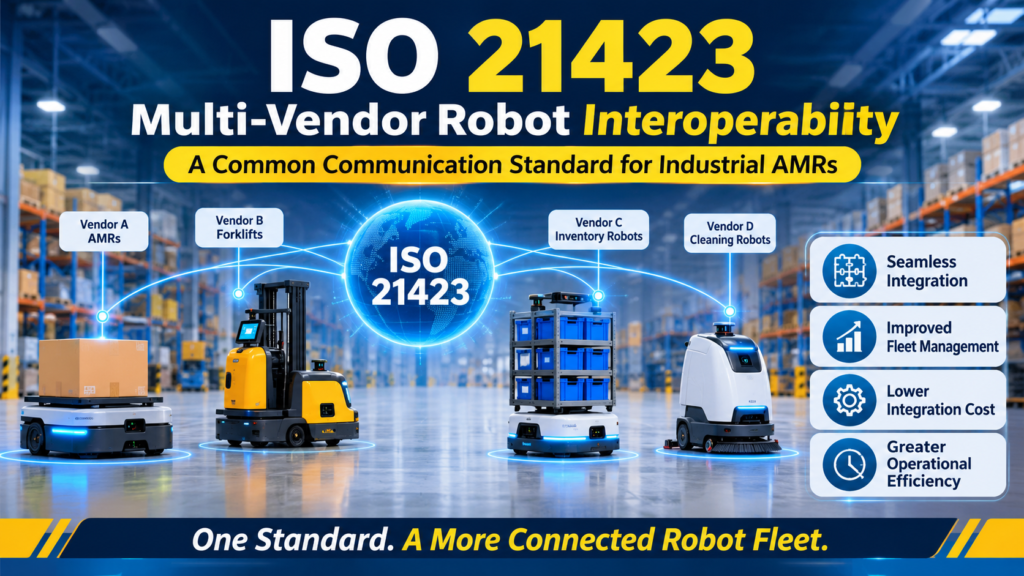
ISO 21423 is the emerging international standard that defines how industrial autonomous mobile robots (AMRs) from different vendors communicate with each other, with fleet managers and with enterprise systems. If your facility runs, or will soon run, robots from more than one manufacturer, this standard is meant to replace one-off custom integrations with a shared communication language.
Here is the hook. For years, automation teams asked whether a robot could do its job. The harder question now is whether five different robots can do their jobs in the same aisle, at the same time, without a human acting as translator. ISO 21423 exists to answer that second question.
This guide explains what the standard covers, why it matters, where it stands today, how it compares with earlier efforts, and how to prepare. Each section stands on its own, so you can jump to the part you need.
Quick Answers
- What is it? A standard that specifies communication protocols enabling interoperability among industrial AMR systems produced by different vendors. iso
- What does it touch? The robots, the fleet manager equipment and the enterprise resources that talk to them.
- What is excluded? Safety-related requirements for AMR systems and mobile machines operating on public roads. iso
- Is it final? As of September 2026, ISO lists it at Stage 60.00, meaning it is in the final publication process. Confirm the current status on ISO’s website before you rely on it. automate
What Is ISO 21423?
Definition: A Common Language for Industrial Robots
ISO 21423 is an international standard developed under ISO/TC 299, the technical committee for robotics. Its formal title in the later drafts is “Robotics — Industrial mobile robots — Communications and interoperability.”
Expansion: Think of it as a shared grammar. Today, a robot from Vendor A and a fleet manager from Vendor B usually need custom software to understand each other. A published communication standard gives both sides an agreed vocabulary for exchanging information. Vendors implement the vocabulary once, and customers stop paying for translation work on every new deployment.
What ISO 21423 Covers
The standard’s scope is broader than the robots themselves. According to the drafts, it addresses:
- AMRs: the mobile robots operating in industrial environments.
- Fleet manager equipment: the software and hardware that coordinate groups of robots.
- Enterprise resources: the business systems, such as warehouse or manufacturing software, that communicate with the robots.
Its scope includes the robots, fleet-management systems and enterprise resources communicating with them. That matters because real interoperability problems rarely live in a single layer. They appear wherever one system hands information to another. automate
What ISO 21423 Does Not Cover
The exclusions are as important as the scope. The standard does not set safety requirements for AMR systems. It also does not apply to mobile machines on public roads. If you need guidance on safe operation, you will still rely on separate robot safety standards and your own risk assessments. ISO 21423 helps robots exchange information. It does not certify that they are safe to share a floor.
Why Multi-Vendor Robot Fleets Need a Shared Standard
The Heterogeneous Fleet Problem
Picture a modern warehouse. One vendor might provide pallet-moving AMRs, another might supply autonomous forklifts, and others could provide inventory robots, cleaning machines or specialized mobile manipulators. Each system may perform well alone, yet the combined environment becomes harder to manage with every added brand. automate
That changes the integration question from whether one robot can perform its assigned task to whether multiple autonomous systems can operate as part of the same production environment. Without a standard, the answer often depends on bespoke connectors, vendor-specific gateways and a lot of engineering time. automate
Multi-vendor robot fleets create three recurring headaches:
- Visibility gaps. Operators want one dashboard showing every robot, not one screen per vendor.
- Coordination conflicts. Robots that cannot share intent can block each other in tight spaces.
- Integration cost. Every new robot type can mean another custom integration project.
Market Growth Raises the Stakes
The problem is getting bigger, not smaller. The Robot Report, citing the MassRobotics working group, noted that AMR adoption has been growing at a compound annual rate of roughly 45 percent between 2020 and 2026. Faster adoption means more facilities will end up with robots from several suppliers, whether they plan to or not. therobotreport
If you are a robotics end user, you likely already have multiple vendors onsite or on your deployment roadmap. For those buyers, mobile robot interoperability is a purchasing requirement, not a nice-to-have. therobotreport
Common Questions About ISO 21423, Answered Directly
Does ISO 21423 force every robot to use the same fleet management system?
No. Interoperability does not mean every robot must use the same fleet-management software. The goal is to establish communication protocols that allow different systems to exchange information. You can keep specialized platforms and still let them share data through an agreed interface. automate
Is ISO 21423 a safety standard?
No. Safety-related requirements for AMR systems are explicitly excluded from its scope. Treat it as a communications and data-exchange standard, and keep your safety program separate.
Is ISO 21423 officially published yet?
Check the latest status. The A3 analysis described it as not officially published as of September 2026, with ISO listing it at Stage 60.00. Earlier ISO pages showed it at draft and final-draft stages, so publication has been moving steadily toward completion. automate
Will publishing the standard make my robots interoperable automatically?
No. Publishing a standard does not automatically make systems interoperable, because robot manufacturers, software developers and integrators still have to implement it. The value arrives when vendors adopt it and ship compatible products. automate
Who benefits most from ISO 21423?
Operators with mixed fleets benefit first, because they gain easier integration and unified monitoring. Vendors benefit by reducing custom connector work. Integrators benefit by working from one documented baseline instead of many proprietary interfaces.
ISO 21423 vs Earlier Interoperability Efforts
ISO 21423 did not appear from nowhere. Several earlier initiatives tackled parts of the same problem. The table below summarizes how they differ in broad terms. Details of each effort vary, so confirm specifics with the originating organizations.
| Effort | Origin | Main focus | Status type |
|---|---|---|---|
| ISO 21423 | ISO/TC 299 (international standards body) | Communication protocols among AMRs, fleet managers and enterprise resources | Formal international standard, nearing publication |
| MassRobotics Interoperability Standard | MassRobotics working group of AMR vendors and end users | Letting fleet managers share information in a non-proprietary way | Consortium standard, version 1.0 issued in 2021 |
| VDA 5050 | German automotive and machinery industry associations | Interface between driverless transport vehicles and a master control system | Industry specification |
| Open-RMF | Open-source robotics community | Coordinating multiple robot fleets in shared spaces | Open-source framework |
The MassRobotics effort is a useful precedent. The standard was issued in 2021 after months of discussion, research, debate and collaboration, with the first public demonstration at the FedEx DART Lab in October 2021. Its primary goal was to let AMRs from different vendors operate in the same workspace and share information between fleet management solutions in a non-proprietary fashion. That aim lines up closely with the goals of ISO 21423, which brings the idea under the formal ISO process. therobotreporttherobotreport
The practical takeaway is that these efforts are not necessarily rivals. Open-source frameworks, industry specifications and ISO standards can coexist, and implementers often support more than one. When you evaluate a vendor, ask which interfaces it supports today and which it plans to add as ISO 21423 matures.
Where ISO 21423 Stands Today
A Short Timeline
The standard has moved through ISO’s staged process:
- Committee draft: A committee draft carried a close of voting and comment period on July 22, 2024. genorma
- Draft International Standard (DIS): The draft entered an enquiry phase with ISO members. iso
- Final Draft (FDIS): The final draft was described as being in the approval phase. iso
- Publication stage: ISO listed it at Stage 60.00 as of September 2026, meaning the final publication process. automate
Standards can change status quickly, so treat this list as a snapshot and check ISO’s catalogue page for ISO 21423 for the current stage.
OpenRobOps: An Early Reference Implementation
Waiting for a final document is not the only option. On September 15, InOrbit released OpenRobOps (ORO), an open-source robot operations and fleet-management platform. It includes capabilities such as robot telemetry, diagnostics, spatial tracking, remote operation and incident management. automateautomate
InOrbit positions it as a practical on-ramp. In its own words, the company is delivering the world’s first reference implementation of the upcoming ISO 21423 standard. The same source notes that InOrbit’s founder and CEO, Florian Pestoni, has been part of the global working group shaping the standard over the past three years and coined the term “federated orchestration” for letting multiple sub-fleets work together in the same space. linkedinlinkedin
A reference implementation matters because it lets developers test ideas against working code. It is one early implementation, not the only possible one, and independent vendors will need to build and validate their own.
What ISO 21423 Means for Different Stakeholders
Different roles care about different outcomes. Use this section to find your angle.
For Operations and Facility Managers
You get a path toward unified tracking and reporting. Instead of juggling separate dashboards, you can push for fleet management tools that exchange data through agreed protocols. Over time, that should simplify onboarding a new robot type, because the communication layer is no longer a blank page.
For Robot Vendors
You face a strategic choice. Supporting ISO 21423 can make your product easier to drop into mixed environments, which can widen your addressable market. Ignoring it risks being the robot that is hard to integrate. Either way, expect customers to start asking about support in requests for proposals.
For System Integrators
You gain a common reference. Integration work will still exist, but a documented standard reduces the guesswork and the risk of building something only one site can use.
For Enterprise IT and Software Teams
The standard explicitly includes enterprise resources among the systems that communicate with robots. That means your warehouse or manufacturing software can, in principle, interact with fleets through a consistent interface instead of vendor-by-vendor adapters.
How to Prepare for ISO 21423
You do not need to wait for the final publication date to start. These steps help you get ready:
- Inventory your fleet. List every robot type, vendor, fleet manager and enterprise system that exchanges data today.
- Map your integrations. Document which connections are custom and which use documented interfaces. Custom links are your highest-risk areas.
- Ask vendors direct questions. Request their roadmap for ISO 21423 support, and ask what interfaces they offer now.
- Add interoperability to procurement criteria. Include language about open, documented communication protocols in new purchases.
- Experiment with a reference implementation. Open-source tools such as OpenRobOps let your engineers learn the concepts in a sandbox.
- Track the standard’s status. Monitor ISO’s page so you know when the final text becomes available and can plan updates.
- Keep safety separate. Maintain your existing safety assessments, since the standard does not replace them.
Limits and Caveats
A balanced view helps you set realistic expectations.
Adoption takes time. A standard only creates value when vendors implement it consistently. Early products may support only part of what the final text describes.
Interoperability is not the same as optimization. Two robots that can exchange messages are not automatically good teammates. Task allocation, traffic rules and business logic still need design work.
Safety remains your responsibility. Because safety is out of scope, you still need risk assessments, safeguarding and operator training.
Details may evolve. Standards move through stages, and wording can change before publication. Use the official ISO listing as the source of truth.
Vendor claims need verification. When a company says it supports ISO 21423, ask which version of the text it implemented, which features are covered and whether independent testing has taken place.
Why This Matters Beyond the Warehouse
The A3 analysis frames the shift well: the next phase is making individual machines part of the same system. That is a familiar pattern in technology. Shared plumbing is unglamorous, yet it is what allows an industry to scale from isolated deployments to real infrastructure. automate
For buyers, the lesson is simple. Choose robots for what they do, but evaluate them just as carefully for how well they cooperate. For vendors, the lesson is just as clear. The robots that win mixed-fleet environments will be the ones that connect easily.
Frequently Asked Questions
What does ISO 21423 stand for?
It is the reference number of an ISO standard on communications and interoperability for industrial mobile robots. The number identifies the document and is not an acronym.
Which technical committee is responsible?
ISO/TC 299, the robotics committee, is listed as responsible for the standard.
Does the standard apply to self-driving cars?
No. Mobile machines operating on public roads are excluded. It focuses on industrial environments such as factories, warehouses and distribution centers.
Can I adopt it before final publication?
You can study the concepts and test with reference implementations, but production decisions should wait for the final text and vendor-verified support.
How does it relate to my existing fleet management system?
It is intended to let different systems exchange information rather than replace them. Ask your vendor how they plan to support it.
The Road Ahead: Turning Robot Interoperability Into a Competitive Advantage
The long-term value of ISO 21423 will depend on how quickly the robotics industry moves from agreeing on a common communication framework to implementing it in commercial products. Standardization is an important first step, but practical adoption requires cooperation among robot manufacturers, fleet-management providers, system integrators and industrial customers. Each participant has a role in making interoperability work beyond technical demonstrations.
For warehouse and manufacturing operators, this transition creates an opportunity to rethink how automation investments are evaluated. Instead of choosing equipment based only on speed, payload capacity or battery performance, procurement teams should also examine how easily each robot integrates with existing infrastructure. A robot that performs exceptionally well independently may become an expensive addition if it requires proprietary software, custom connectors or continuous support from its manufacturer.
ISO 21423 could gradually change that equation. As vendors introduce compatible communication interfaces, businesses may find it easier to expand their fleets, replace individual machines and introduce specialized robots without rebuilding their entire automation architecture. This flexibility is particularly valuable for organizations planning multi-year automation strategies, where technology requirements and operational demands can change significantly.
However, buyers should avoid treating standard compliance as an automatic guarantee of compatibility. They should request technical documentation, implementation details and demonstrations involving different manufacturers’ equipment. Testing real-world workflows, including task coordination, status reporting and communication with enterprise systems, will help reveal integration limitations before a major deployment.
The robotics industry is moving toward environments where machines from different manufacturers must cooperate rather than operate as isolated systems. ISO 21423 provides a foundation for that transition. Its ultimate success will not be measured simply by publication, but by how widely vendors adopt it and how effectively businesses use it to build connected, scalable and flexible robotic operations.
Conclusion: A Practical Step Toward Cooperative Robots
ISO 21423 will not make every robot interchangeable, and it will not solve safety or optimization on its own. What it offers is a shared communication layer for multi-vendor robot fleets, backed by the credibility of the ISO process. With the standard in its final stages and early reference software available, now is a sensible time to audit your integrations, update your procurement language and ask vendors tough questions.
If you take one action this quarter, make it this: add ISO 21423 support to your vendor evaluation checklist. It is a small change that can save significant integration effort as your fleet grows.
ISO 21423 ହେଉଛି ଏକ ଉଦୀୟମାନ ଆନ୍ତର୍ଜାତୀୟ ମାନକ (standard), ଯାହା ବିଭିନ୍ନ ନିର୍ମାତାଙ୍କ ଦ୍ୱାରା ପ୍ରସ୍ତୁତ ଶିଳ୍ପକ୍ଷେତ୍ରର ସ୍ୱୟଂଚାଳିତ ମୋବାଇଲ୍ ରୋବଟ୍ଗୁଡ଼ିକ (AMRs) ପରସ୍ପର ସହିତ, ଫ୍ଲିଟ୍ ମ୍ୟାନେଜର (fleet managers) ସହିତ ଏବଂ ଉଦ୍ୟୋଗଗତ ସିଷ୍ଟମ୍ଗୁଡ଼ିକ (enterprise systems) ସହିତ କିପରି ଯୋଗାଯୋଗ କରିବେ, ତାହା ନିର୍ଦ୍ଧାରଣ କରେ। ଯଦି ଆପଣଙ୍କ କାର୍ଯ୍ୟକ୍ଷେତ୍ରରେ ଏକାଧିକ ନିର୍ମାତାଙ୍କ ରୋବଟ୍ ବ୍ୟବହାର ହେଉଛି କିମ୍ବା ଭବିଷ୍ୟତରେ ହେବାକୁ ଯାଉଛି, ତେବେ ଏହି ମାନକଟି ସ୍ୱତନ୍ତ୍ର ଭାବେ ପ୍ରସ୍ତୁତ କରାଯାଇଥିବା ଜଟିଳ ସଂଯୋଗ ବ୍ୟବସ୍ଥା (custom integrations) ବଦଳରେ ଏକ ସାଧାରଣ ଯୋଗାଯୋଗ ଭାଷା ପ୍ରଦାନ କରିବ।
ଏଠାରେ ମୁଖ୍ୟ ବିଷୟଟି ହେଉଛି: ବର୍ଷ ବର୍ଷ ଧରି, ଅଟୋମେସନ୍ ଟିମ୍ଗୁଡ଼ିକ କେବଳ ଏହା ପଚାରୁଥିଲେ ଯେ ଏକ ରୋବଟ୍ ନିଜ କାମ କରିପାରିବ କି ନାହିଁ। କିନ୍ତୁ ବର୍ତ୍ତମାନର କଠିନ ପ୍ରଶ୍ନଟି ହେଲା—ପାଞ୍ଚଟି ଭିନ୍ନ ଭିନ୍ନ ରୋବଟ୍ କ’ଣ କୌଣସି ମଣିଷର ସହାୟତା (ଅନୁବାଦକ ଭାବେ) ବିନା, ଏକା ସମୟରେ ଏବଂ ଏକା ସ୍ଥାନରେ (ଯେପରିକି ଗୋଟିଏ କରିଡରରେ) ନିଜ ନିଜ କାମ ସୁରୁଖୁରୁରେ କରିପାରିବେ? ISO 21423 ଏହି ଦ୍ୱିତୀୟ ପ୍ରଶ୍ନର ଉତ୍ତର ଦେବା ପାଇଁ ଉଦ୍ଦିଷ୍ଟ।
ଏହି ଗାଇଡ୍ରେ ବର୍ଣ୍ଣନା କରାଯାଇଛି ଯେ ଏହି ମାନକ ଅଧୀନରେ କ’ଣ ଅନ୍ତର୍ଭୁକ୍ତ, ଏହାର ଗୁରୁତ୍ୱ କ’ଣ, ବର୍ତ୍ତମାନ ଏହାର ସ୍ଥିତି କ’ଣ, ପୂର୍ବ ପ୍ରୟାସଗୁଡ଼ିକ ତୁଳନାରେ ଏହା କିପରି ଭିନ୍ନ ଏବଂ ଏଥିପାଇଁ କିପରି ପ୍ରସ୍ତୁତ ହେବାକୁ ହେବ। ପ୍ରତ୍ୟେକ ବିଭାଗ ସ୍ୱତନ୍ତ୍ର ଭାବେ ଉପସ୍ଥାପିତ ହୋଇଛି, ତେଣୁ ଆପଣ ନିଜ ଆବଶ୍ୟକତା ଅନୁଯାୟୀ ସିଧାସଳଖ ସେହି ଅଂଶକୁ ଯାଇପାରିବେ।
ସଂକ୍ଷିପ୍ତ ଉତ୍ତର
ଏହା କ’ଣ? ଏହା ଏକ ମାନକ ଯାହା ବିଭିନ୍ନ ନିର୍ମାତାଙ୍କ ଦ୍ୱାରା ପ୍ରସ୍ତୁତ ଶିଳ୍ପକ୍ଷେତ୍ରର AMR ସିଷ୍ଟମ୍ଗୁଡ଼ିକ ମଧ୍ୟରେ ପାରସ୍ପରିକ କାର୍ଯ୍ୟକ୍ଷମତା (interoperability) ସୁନିଶ୍ଚିତ କରିବା ପାଇଁ ଯୋଗାଯୋଗ ପ୍ରୋଟୋକଲ୍ ନିର୍ଦ୍ଧାରଣ କରେ।
ଏହା କେଉଁଗୁଡ଼ିକୁ ଅନ୍ତର୍ଭୁକ୍ତ କରେ? ରୋବଟ୍ଗୁଡ଼ିକ, ଫ୍ଲିଟ୍ ମ୍ୟାନେଜମେଣ୍ଟ ଉପକରଣ ଏବଂ ସେମାନଙ୍କ ସହ ଯୋଗାଯୋଗ କରୁଥିବା ଉଦ୍ୟୋଗଗତ ସମ୍ବଳ ବିକ୍ରେତାମାନେ ଶବ୍ଦାବଳୀ (vocabulary) କୁ ଥରେ ମାତ୍ର କାର୍ଯ୍ୟକାରୀ କରନ୍ତି, ଯାହା ଫଳରେ ଗ୍ରାହକମାନଙ୍କୁ ପ୍ରତ୍ୟେକ ନୂତନ ନିୟୋଜନ (deployment) ସମୟରେ ଅନୁବାଦ କାର୍ଯ୍ୟ ପାଇଁ ଆଉ ଅର୍ଥ ଖର୍ଚ୍ଚ କରିବାକୁ ପଡ଼େ ନାହିଁ।
ISO 21423 କ’ଣ ଅନ୍ତର୍ଭୁକ୍ତ କରେ
ଏହି ମାନକ (standard) ର ପରିସର କେବଳ ରୋବଟ୍ଗୁଡ଼ିକ ମଧ୍ୟରେ ସୀମିତ ନୁହେଁ, ବରଂ ଏହା ଠାରୁ ବ୍ୟାପକ ଅଟେ। ଡ୍ରାଫ୍ଟଗୁଡ଼ିକ ଅନୁଯାୟୀ, ଏହା ନିମ୍ନଲିଖିତ ବିଷୟଗୁଡ଼ିକୁ ଅନ୍ତର୍ଭୁକ୍ତ କରେ:
AMR (Autonomous Mobile Robots): ଶିଳ୍ପ ପରିବେଶରେ କାର୍ଯ୍ୟ କରୁଥିବା ସ୍ୱୟଂଚାଳିତ ମୋବାଇଲ୍ ରୋବଟ୍।
ଫ୍ଲିଟ୍ ମ୍ୟାନେଜର ଉପକରଣ (Fleet manager equipment): ସଫ୍ଟୱେର୍ ଏବଂ ହାର୍ଡୱେର୍, ଯାହା ରୋବଟ୍ଗୁଡ଼ିକର ଗୋଷ୍ଠୀକୁ ପରିଚାଳନା ଓ ସମନ୍ୱିତ କରିଥାଏ।
ଏଣ୍ଟରପ୍ରାଇଜ୍ ରିସୋର୍ସ (Enterprise resources): ବ୍ୟବସାୟିକ ପ୍ରଣାଳୀ, ଯେପରିକି ଗୋଦାମ (warehouse) କିମ୍ବା ଉତ୍ପାଦନ ସମ୍ବନ୍ଧୀୟ ସଫ୍ଟୱେର୍, ଯାହା ରୋବଟ୍ଗୁଡ଼ିକ ସହିତ ଯୋଗାଯୋଗ ସ୍ଥାପନ କରିଥାଏ।
ଏହାର ପରିସର ମଧ୍ୟରେ ରୋବଟ୍, ଫ୍ଲିଟ୍ ପରିଚାଳନା ପ୍ରଣାଳୀ ଏବଂ ସେମାନଙ୍କ ସହ ଯୋଗାଯୋଗ କରୁଥିବା ଏଣ୍ଟରପ୍ରାଇଜ୍ ରିସୋର୍ସଗୁଡ଼ିକ ଅନ୍ତର୍ଭୁକ୍ତ। ଏହା ଗୁରୁତ୍ୱପୂର୍ଣ୍ଣ କାରଣ ପ୍ରକୃତ ‘ଇଣ୍ଟରଅପରେବିଲିଟି’ (interoperability – ବିଭିନ୍ନ ପ୍ରଣାଳୀ ମଧ୍ୟରେ ପାରସ୍ପରିକ କାର୍ଯ୍ୟକ୍ଷମତା) ସମସ୍ୟାଗୁଡ଼ିକ କେବଳ ଗୋଟିଏ ସ୍ତରରେ ସୀମିତ ନଥାଏ। ଯେତେବେଳେ ଗୋଟିଏ ପ୍ରଣାଳୀ ଅନ୍ୟ ଏକ ପ୍ରଣାଳୀକୁ ସୂଚନା ପ୍ରଦାନ କରେ, ସେତେବେଳେ ଏହି ସମସ୍ୟାଗୁଡ଼ିକ ଦେଖାଦେଇଥାଏ।
ISO 21423 କ’ଣ ଅନ୍ତର୍ଭୁକ୍ତ କରେ ନାହିଁ
ଏଥିରେ କ’ଣ ଅନ୍ତର୍ଭୁକ୍ତ ନୁହେଁ, ତାହା ମଧ୍ୟ ସେତିକି ଗୁରୁତ୍ୱପୂର୍ଣ୍ଣ। ଏହି ମାନକ AMR ପ୍ରଣାଳୀଗୁଡ଼ିକ ପାଇଁ କୌଣସି ସୁରକ୍ଷା ଆବଶ୍ୟକତା (safety requirements) ନିର୍ଦ୍ଧାରଣ କରେ ନାହିଁ। ଏହା ସର୍ବସାଧାରଣ ରାସ୍ତାରେ ଚାଲୁଥିବା ମୋବାଇଲ୍ ମେସିନ୍ଗୁଡ଼ିକ ପାଇଁ ମଧ୍ୟ ପ୍ରଯୁଜ୍ୟ ନୁହେଁ। ଯଦି ଆପଣଙ୍କୁ ନିରାପଦ ପରିଚାଳନା ସମ୍ବନ୍ଧୀୟ ମାର୍ଗଦର୍ଶନ ଆବଶ୍ୟକ ହୁଏ, ତେବେ ଆପଣଙ୍କୁ ରୋବଟ୍ ସୁରକ୍ଷା ସମ୍ବନ୍ଧୀୟ ସ୍ୱତନ୍ତ୍ର ମାନକ ଏବଂ ନିଜସ୍ୱ ‘ଝୁଙ୍କି ମୂଲ୍ୟାଙ୍କନ’ (risk ବଜାର ଅଭିବୃଦ୍ଧି ସହିତ ବଢୁଛି ଆହ୍ୱାନ
ସମସ୍ୟାଟି ଛୋଟ ହେବା ପରିବର୍ତ୍ତେ ଆହୁରି ବଡ଼ ହେବାରେ ଲାଗିଛି। ‘ଦ ରୋବଟ୍ ରିପୋର୍ଟ’ (The Robot Report), ‘ମାସ୍ରୋବୋଟିକ୍ସ’ (MassRobotics) କାର୍ଯ୍ୟକାରୀ ଗୋଷ୍ଠୀର ତଥ୍ୟକୁ ଉଦ୍ଧୃତ କରି ଦର୍ଶାଇଛି ଯେ, ୨୦୨୦ ରୁ ୨୦୨୬ ମଧ୍ୟରେ AMR (ସ୍ୱୟଂଚାଳିତ ମୋବାଇଲ୍ ରୋବଟ୍) ଗ୍ରହଣ କରିବାର ହାର ବାର୍ଷିକ ପ୍ରାୟ ୪୫ ପ୍ରତିଶତ ହାରରେ ବୃଦ୍ଧି ପାଉଛି। ଏହାର ଅର୍ଥ ହେଉଛି, ଅନେକ ସଂସ୍ଥା କିମ୍ବା କାରଖାନାରେ ବିଭିନ୍ନ ଯୋଗାଣକାରୀଙ୍କ ଠାରୁ ଆସିଥିବା ରୋବଟ୍ଗୁଡ଼ିକ ରହିବେ—ଭାବିଚିନ୍ତି ହେଉ କିମ୍ବା ଅଜାଣତରେ।
ଯଦି ଆପଣ ରୋବୋଟିକ୍ସ ପ୍ରଯୁକ୍ତିବିଦ୍ୟାର ଜଣେ ବ୍ୟବହାରକାରୀ (end user) ଅଟନ୍ତି, ତେବେ ସମ୍ଭବତଃ ଆପଣଙ୍କ ପରିସରରେ ପୂର୍ବରୁ ହିଁ ବିଭିନ୍ନ ଯୋଗାଣକାରୀଙ୍କ ରୋବଟ୍ ରହିଛି କିମ୍ବା ଆପଣଙ୍କ ଭବିଷ୍ୟତ ଯୋଜନାରେ ସେମାନଙ୍କୁ ଅନ୍ତର୍ଭୁକ୍ତ କରିବାର ଲକ୍ଷ୍ୟ ରହିଛି। ଏଭଳି କ୍ରେତାମାନଙ୍କ ପାଇଁ, ବିଭିନ୍ନ ମୋବାଇଲ୍ ରୋବଟ୍ଗୁଡ଼ିକ ମଧ୍ୟରେ ପାରସ୍ପରିକ କାର୍ଯ୍ୟକ୍ଷମତା (interoperability) ଏକ ଅତ୍ୟାବଶ୍ୟକ ଆବଶ୍ୟକତା ପାଲଟିଛି, କେବଳ ଏକ ଅତିରିକ୍ତ ସୁବିଧା ନୁହେଁ।
ISO 21423 ସମ୍ବନ୍ଧୀୟ ସାଧାରଣ ପ୍ରଶ୍ନଗୁଡ଼ିକର ସିଧାସଳଖ ଉତ୍ତର
ISO 21423 କ’ଣ ପ୍ରତ୍ୟେକ ରୋବଟ୍କୁ… ବ୍ୟବହାର କରିବାକୁ ବାଧ୍ୟ କରେ?
ସମାନ ‘ଫ୍ଲିଟ୍ ମ୍ୟାନେଜମେଣ୍ଟ ସିଷ୍ଟମ୍’ (fleet management system)?
ନା। ‘ଇଣ୍ଟରଅପରେବିଲିଟି’ (interoperability) ବା ପାରସ୍ପରିକ କାର୍ଯ୍ୟକ୍ଷମତାର ଅର୍ଥ ଏହା ନୁହେଁ ଯେ ପ୍ରତ୍ୟେକ ରୋବଟ୍କୁ ସମାନ ଫ୍ଲିଟ୍-ମ୍ୟାନେଜମେଣ୍ଟ ସଫ୍ଟୱେର୍ ବ୍ୟବହାର କରିବାକୁ ପଡ଼ିବ। ଏହାର ମୁଖ୍ୟ ଲକ୍ଷ୍ୟ ହେଉଛି ଏପରି ଯୋଗାଯୋଗ ପ୍ରୋଟୋକଲ୍ (communication protocols) ସ୍ଥାପନ କରିବା, ଯାହା ବିଭିନ୍ନ ସିଷ୍ଟମ୍ ମଧ୍ୟରେ ତଥ୍ୟ ଆଦାନପ୍ରଦାନକୁ ସମ୍ଭବ କରିପାରିବ। ଆପଣ ନିର୍ଦ୍ଦିଷ୍ଟ କାର୍ଯ୍ୟ ପାଇଁ ଉଦ୍ଦିଷ୍ଟ ପ୍ଲାଟଫର୍ମଗୁଡ଼ିକୁ ବଜାୟ ରଖିପାରିବେ ଏବଂ ଏକ ସହମତି ଭିତ୍ତିକ ଇଣ୍ଟରଫେସ୍ (interface) ମାଧ୍ୟମରେ ସେଗୁଡ଼ିକ ମଧ୍ୟରେ ତଥ୍ୟର ଆଦାନପ୍ରଦାନ ମଧ୍ୟ କରାଇପାରିବେ।
ISO 21423 କ’ଣ ଏକ ସୁରକ୍ଷା ମାନକ (safety standard)?
ନା। AMR (Autonomous Mobile Robot) ସିଷ୍ଟମ୍ଗୁଡ଼ିକ ପାଇଁ ସୁରକ୍ଷା ସମ୍ବନ୍ଧୀୟ ଆବଶ୍ୟକତାଗୁଡ଼ିକୁ ଏହାର ପରିସରରୁ ସ୍ପଷ୍ଟ ଭାବରେ ବାଦ୍ ଦିଆଯାଇଛି। ଏହାକୁ କେବଳ ଯୋଗାଯୋଗ ଏବଂ ତଥ୍ୟ ଆଦାନପ୍ରଦାନ ସମ୍ବନ୍ଧୀୟ ଏକ ମାନକ ଭାବରେ ବିବେଚନା କରନ୍ତୁ ଏବଂ ଆପଣଙ୍କର ସୁରକ୍ଷା କାର୍ଯ୍ୟକ୍ରମକୁ ଏଥିରୁ ଅଲଗା ରଖନ୍ତୁ।
ISO 21423 କ’ଣ ବର୍ତ୍ତମାନ ସୁଦ୍ଧା ଆନୁଷ୍ଠାନିକ ଭାବରେ ପ୍ରକାଶିତ ହୋଇସାରିଛି?
ଏହାର ସର୍ବଶେଷ ସ୍ଥିତି ଯାଞ୍ଚ କରନ୍ତୁ। A3 ବିଶ୍ଳେଷଣ ଅନୁଯାୟୀ, ସେପ୍ଟେମ୍ବର ୨୦୨୬ ସୁଦ୍ଧା ଏହା ଆନୁଷ୍ଠାନିକ ଭାବରେ ପ୍ରକାଶିତ ହୋଇନଥିଲା ଏବଂ ISO ଏହାକୁ ‘ଷ୍ଟେଜ୍ ୬୦.୦୦’ (Stage 60.00) ରେ ତାଲିକାଭୁକ୍ତ କରିଥିଲା। ପୂର୍ବରୁ ISO ପୃଷ୍ଠାଗୁଡ଼ିକରେ ଏହା ‘ଡ୍ରାଫ୍ଟ’ (draft) ଏବଂ ‘ଫାଇନାଲ୍-ଡ୍ରାଫ୍ଟ’ (final-draft) ପର୍ଯ୍ୟାୟରେ ଥିବା ଦର୍ଶାଯାଇଥିଲା, ଯାହାର ଅର୍ଥ ହେଉଛି ଏହାର ପ୍ରକାଶନ ପ୍ରକ୍ରିୟା କ୍ରମାଗତ ଭାବରେ ସମ୍ପୂର୍ଣ୍ଣ ହେବା ଦିଗରେ ଅଗ୍ରସର ହେଉଥିଲା।
ଏହି ମାନକ ପ୍ରକାଶିତ ହେବା ଦ୍ୱାରା କ’ଣ ମୋର ରୋବଟ୍ଗୁଡ଼ିକ ସ୍ୱୟଂଚାଳିତ ଭାବରେ ପାରସ୍ପରିକ କାର୍ଯ୍ୟକ୍ଷମ (interoperable) ହୋଇଯିବେ?
ନା। ଏକ ମାନକ ପ୍ରକାଶିତ ହେବା ମାତ୍ରେ ସିଷ୍ଟମ୍ଗୁଡ଼ିକ ସ୍ୱୟଂଚାଳିତ ଭାବରେ ପାରସ୍ପରିକ କାର୍ଯ୍ୟକ୍ଷମ ହୋଇଯାଆନ୍ତି ନାହିଁ; କାରଣ ରୋବଟ୍ ନିର୍ମାତା, ସଫ୍ଟୱେର୍ ଡେଭଲପର୍ ଏବଂ ପ୍ରୟାସ | ଉତ୍ସ | ମୁଖ୍ୟ ଲକ୍ଷ୍ୟ | ସ୍ଥିତି |
ISO 21423 | ISO/TC 299 (ଆନ୍ତର୍ଜାତୀୟ ମାନକ ସଂସ୍ଥା) | AMR (ସ୍ୱୟଂଚାଳିତ ମୋବାଇଲ୍ ରୋବଟ୍), ଫ୍ଲିଟ୍ ମ୍ୟାନେଜର (ପରିଚାଳକ) ଏବଂ ଉଦ୍ୟୋଗ ସମ୍ବଳ ମଧ୍ୟରେ ଯୋଗାଯୋଗ ପ୍ରୋଟୋକଲ୍ | ଆନୁଷ୍ଠାନିକ ଆନ୍ତର୍ଜାତୀୟ ମାନକ, ପ୍ରକାଶନ ପର୍ଯ୍ୟାୟରେ |
MassRobotics Interoperability Standard | AMR ବିକ୍ରେତା ଏବଂ ବ୍ୟବହାରକାରୀଙ୍କୁ ନେଇ ଗଠିତ MassRobotics କାର୍ଯ୍ୟକାରୀ ଗୋଷ୍ଠୀ | ଫ୍ଲିଟ୍ ପରିଚାଳକମାନଙ୍କୁ କୌଣସି ନିର୍ଦ୍ଦିଷ୍ଟ କମ୍ପାନୀର ବନ୍ଧନ (proprietary restrictions) ବିନା ସୂଚନା ଆଦାନପ୍ରଦାନ କରିବାକୁ ସକ୍ଷମ କରିବା | କନସୋର୍ଟିୟମ୍ (ସଂଘ) ମାନକ, ୨୦୨୧ରେ ସଂସ୍କରଣ ୧.୦ ଜାରି କରାଯାଇଥିଲା |
VDA 5050 | ଜର୍ମାନ ଅଟୋମୋବାଇଲ୍ ଏବଂ ଯନ୍ତ୍ରପାତି ଶିଳ୍ପ ସଂଘ | ଚାଳକବିହୀନ ପରିବହନ ଯାନ ଏବଂ ମୁଖ୍ୟ ନିୟନ୍ତ୍ରଣ ପ୍ରଣାଳୀ (master control system) ମଧ୍ୟରେ ସଂଯୋଗ (interface) | ଶିଳ୍ପ ନିର୍ଦ୍ଦିଷ୍ଟତା (Industry specification) |
Open-RMF | ଓପନ୍-ସୋର୍ସ ରୋବୋଟିକ୍ସ ସମ୍ପ୍ରଦାୟ | ସାଧାରଣ ସ୍ଥାନରେ ଏକାଧିକ ରୋବଟ୍ ଗୋଷ୍ଠୀ (fleets) ମଧ୍ୟରେ ସମନ୍ୱୟ ରକ୍ଷା କରିବା | ଓପନ୍-ସୋର୍ସ ଢାଞ୍ଚା (framework) |
MassRobotics ର ଏହି ପ୍ରୟାସ ଏକ ଉପଯୋଗୀ ଉଦାହରଣ ଅଟେ। ଅନେକ ମାସ ଧରି ଆଲୋଚନା, ଗବେଷଣା, ବିତର୍କ ଏବଂ ସହଯୋଗ ପରେ ୨୦୨୧ ମସିହାରେ ଏହି ମାନକ ଜାରି କରାଯାଇଥିଲା ଏବଂ ୨୦୨୧ ଅକ୍ଟୋବରରେ FedEx DART Lab ରେ ଏହାର ପ୍ରଥମ ସର୍ବସାଧାରଣ ପ୍ରଦର୍ଶନ କରାଯାଇଥିଲା। ଏହାର ମୁଖ୍ୟ ଲକ୍ଷ୍ୟ ଥିଲା ବିଭିନ୍ନ ବିକ୍ରେତାଙ୍କ AMR ଗୁଡ଼ିକୁ ଗୋଟିଏ କାର୍ଯ୍ୟକ୍ଷେତ୍ରରେ କାର୍ଯ୍ୟ କରିବାକୁ ଦେବା ଏବଂ କୌଣସି ନିର୍ଦ୍ଦିଷ୍ଟ କମ୍ପାନୀର ବନ୍ଧନ ବିନା ଫ୍ଲିଟ୍ ପରିଚାଳନା ପ୍ରଣାଳୀଗୁଡ଼ିକ ମଧ୍ୟରେ ସୂଚନା ଆଦାନପ୍ରଦାନ କରିବା। ଏହି ଲକ୍ଷ୍ୟ ISO 21423 ର ଲକ୍ଷ୍ୟ ସହିତ ଘନିଷ୍ଠ ଭାବରେ ଜଡ଼ିତ, ଯାହା ଏହି ଧାରଣାକୁ ଆନୁଷ୍ଠାନିକ ISO ପ୍ରକ୍ରିୟା ଅଧୀନକୁ ଆଣିଥାଏ।
ଏହାର ବ୍ୟାବହାରିକ ଅର୍ଥ ହେଉଛି ଯେ, ଏହି ପ୍ରୟାସଗୁଡ଼ିକ ପରସ୍ପରର ପ୍ରତିଦ୍ୱନ୍ଦ୍ୱୀ ହେବା ଜରୁରୀ ନୁହେଁ। ଓପନ୍-ସୋର୍ସ ଢାଞ୍ଚା, ଶିଳ୍ପ ନିର୍ଦ୍ଦିଷ୍ଟତା ଏବଂ ISO ମାନକଗୁଡ଼ିକ ଏକାସାଙ୍ଗରେ ଚାଲିପାରେ ଏବଂ ଯେଉଁମାନେ ଏହାକୁ କାର୍ଯ୍ୟକାରୀ ISO
ପ୍ରକାଶନ ପର୍ଯ୍ୟାୟ: ସେପ୍ଟେମ୍ବର ୨୦୨୬ ସୁଦ୍ଧା, ISO ଏହାକୁ ୬୦.୦୦ ପର୍ଯ୍ୟାୟରେ ରଖିଛି, ଯାହାର ଅର୍ଥ ହେଉଛି ଏହା ଚୂଡ଼ାନ୍ତ ପ୍ରକାଶନ ପ୍ରକ୍ରିୟାରେ ରହିଛି।
ମାନକଗୁଡ଼ିକର ସ୍ଥିତି ଦ୍ରୁତ ଗତିରେ ପରିବର୍ତ୍ତନ ହୋଇପାରେ, ତେଣୁ ଏହି ତାଲିକାକୁ କେବଳ ଏକ ନିର୍ଦ୍ଦିଷ୍ଟ ସମୟର ଚିତ୍ର (snapshot) ଭାବରେ ବିବେଚନା କରନ୍ତୁ। ବର୍ତ୍ତମାନର ସ୍ଥିତି ଜାଣିବା ପାଇଁ ISO 21423 ସମ୍ବନ୍ଧୀୟ ISO କ୍ୟାଟାଲଗ୍ ପୃଷ୍ଠା ଯାଞ୍ଚ କରନ୍ତୁ।
OpenRobOps: ଏକ ପ୍ରାରମ୍ଭିକ ରେଫରେନ୍ସ ଇମ୍ପ୍ଲିମେଣ୍ଟେସନ୍ (Reference Implementation)
ଚୂଡ଼ାନ୍ତ ଦସ୍ତାବିଜକୁ ଅପେକ୍ଷା କରିବା ଏକମାତ୍ର ବିକଳ୍ପ ନୁହେଁ। ସେପ୍ଟେମ୍ବର ୧୫ ତାରିଖରେ, InOrbit କମ୍ପାନୀ ‘OpenRobOps’ (ORO) ନାମକ ଏକ ଓପନ୍-ସୋର୍ସ (open-source) ପ୍ଲାଟଫର୍ମ ଉନ୍ମୋଚନ କରିଛି, ଯାହା ରୋବଟ୍ ପରିଚାଳନା ଏବଂ ଫ୍ଲିଟ୍-ପରିଚାଳନା (fleet-management) ପାଇଁ ଉଦ୍ଦିଷ୍ଟ। ଏଥିରେ ରୋବଟ୍ ଟେଲିମେଟ୍ରି, ଡାଇଗ୍ନୋଷ୍ଟିକ୍ସ (ତ୍ରୁଟି ନିର୍ଣ୍ଣୟ), ସ୍ଥାନଗତ ଟ୍ରାକିଂ, ରିମୋଟ୍ ଅପରେସନ୍ (ଦୂରରୁ ପରିଚାଳନା) ଏବଂ ଘଟଣା ପରିଚାଳନା (incident management) ଭଳି ସୁବିଧା ରହିଛି।
InOrbit ଏହାକୁ ଏକ ବ୍ୟାବହାରିକ ପ୍ରାରମ୍ଭିକ ପଦକ୍ଷେପ (practical on-ramp) ଭାବରେ ଉପସ୍ଥାପନ କରୁଛି। କମ୍ପାନୀର କହିବା ଅନୁଯାୟୀ, ସେମାନେ ଆଗାମୀ ISO 21423 ମାନକ ପାଇଁ ବିଶ୍ୱର ପ୍ରଥମ ‘ରେଫରେନ୍ସ ଇମ୍ପ୍ଲିମେଣ୍ଟେସନ୍’ (କାର୍ଯ୍ୟକାରୀ ନମୁନା) ପ୍ରଦାନ କରୁଛନ୍ତି। ସୂଚନା ଅନୁଯାୟୀ, InOrbit ର ପ୍ରତିଷ୍ଠାତା ତଥା CEO, Florian Pestoni, ଗତ ତିନି ବର୍ଷ ଧରି ଏହି ମାନକ ପ୍ରସ୍ତୁତ କରୁଥିବା ବିଶ୍ୱସ୍ତରୀୟ କାର୍ଯ୍ୟକାରୀ ଗୋଷ୍ଠୀର (working group) ଅଂଶ ରହିଆସିଛନ୍ତି। ସେ ‘federated orchestration’ (ଫେଡେରେଟେଡ୍ ଅର୍କେଷ୍ଟ୍ରେସନ୍) ଶବ୍ଦଟି ମଧ୍ୟ ସୃଷ୍ଟି କରିଛନ୍ତି, ଯାହା ଏକା ସ୍ଥାନରେ ଏକାଧିକ ଉପ-ଗୋଷ୍ଠୀ (sub-fleets) କୁ ଏକାଠି କାମ କରିବାକୁ ସକ୍ଷମ କରିଥାଏ।
ଏକ ‘ରେଫରେନ୍ସ ଇମ୍ପ୍ଲିମେଣ୍ଟେସନ୍’ ଗୁରୁତ୍ୱପୂର୍ଣ୍ଣ ଅଟେ କାରଣ ଏହା ଡେଭଲପରମାନଙ୍କୁ କାର୍ଯ୍ୟକ୍ଷମ କୋଡ୍ (working code) ମାଧ୍ୟମରେ ନିଜର ଧାରଣାଗୁଡ଼ିକୁ ପରୀକ୍ଷା କରିବାକୁ ସୁଯୋଗ ଦେଇଥାଏ। ଏହା କେବଳ ଗୋଟିଏ ପ୍ରାରମ୍ଭିକ କାର୍ଯ୍ୟକାରୀ ରୂପ, ଏକମାତ୍ର ସମ୍ଭବିଭିନ୍ନ ଅଂଶୀଦାରଙ୍କ ପାଇଁ
ବିଭିନ୍ନ ଭୂମିକା ଭିନ୍ନ ଫଳାଫଳ ବିଷୟରେ ଯତ୍ନବାନ। ଆପଣଙ୍କର ଦୃଷ୍ଟିକୋଣ ଖୋଜିବା ପାଇଁ ଏହି ବିଭାଗ ବ୍ୟବହାର କରନ୍ତୁ।
କାର୍ଯ୍ୟ ଏବଂ ସୁବିଧା ପରିଚାଳକଙ୍କ ପାଇଁ
ଆପଣ ଏକୀକୃତ ଟ୍ରାକିଂ ଏବଂ ରିପୋର୍ଟିଂ ପାଇଁ ଏକ ପଥ ପାଆନ୍ତି। ପୃଥକ ଡ୍ୟାସବୋର୍ଡଗୁଡ଼ିକୁ ଜାଗଲ କରିବା ପରିବର୍ତ୍ତେ, ଆପଣ ସହମତ ପ୍ରୋଟୋକଲ ମାଧ୍ୟମରେ ତଥ୍ୟ ଆଦାନପ୍ରଦାନ କରୁଥିବା ଫ୍ଲିଟ୍ ପରିଚାଳନା ଉପକରଣଗୁଡ଼ିକ ପାଇଁ ଜୋର ଦେଇପାରିବେ। ସମୟ ସହିତ, ଏହା ଏକ ନୂତନ ରୋବୋର୍ଟ ପ୍ରକାରର ଅନବୋର୍ଡିଂକୁ ସରଳ କରିବା ଉଚିତ, କାରଣ ଯୋଗାଯୋଗ ସ୍ତର ଆଉ ଏକ ଖାଲି ପୃଷ୍ଠା ନୁହେଁ।
ରୋବୋଟ୍ ବିକ୍ରେତାଙ୍କ ପାଇଁ
ଆପଣ ଏକ ରଣନୈତିକ ପସନ୍ଦର ସମ୍ମୁଖୀନ ହୁଅନ୍ତି। ISO 21423 କୁ ସମର୍ଥନ କରିବା ଦ୍ଵାରା ଆପଣଙ୍କ ଉତ୍ପାଦକୁ ମିଶ୍ରିତ ପରିବେଶରେ ଛାଡିବା ସହଜ ହୋଇପାରେ, ଯାହା ଆପଣଙ୍କ ଠିକଣାଯୋଗ୍ୟ ବଜାରକୁ ବିସ୍ତାର କରିପାରିବ। ଏହାକୁ ଅଣଦେଖା କରିବା ଦ୍ଵାରା ରୋବୋଟ୍ ହେବା ବିପଦ ରହିଛି ଯାହାକୁ ସମନ୍ୱିତ କରିବା କଷ୍ଟକର। ଯେକୌଣସି ପ୍ରକାରେ, ଗ୍ରାହକମାନେ ପ୍ରସ୍ତାବ ପାଇଁ ଅନୁରୋଧରେ ସମର୍ଥନ ବିଷୟରେ ପଚାରିବା ଆରମ୍ଭ କରିବେ ବୋଲି ଆଶା କରନ୍ତୁ।
ସିଷ୍ଟମ୍ ଇଣ୍ଟିଗ୍ରେଟରଙ୍କ ପାଇଁ
ଆପଣ ଏକ ସାଧାରଣ ସନ୍ଦର୍ଭ ଲାଭ କରନ୍ତି। ସମନ୍ୱୟ କାର୍ଯ୍ୟ ଏପର୍ଯ୍ୟନ୍ତ ବିଦ୍ୟମାନ ରହିବ, କିନ୍ତୁ ଏକ ଡକ୍ୟୁମେଣ୍ଟେଡ୍ ମାନକ ଅନୁମାନ ଏବଂ କେବଳ ଗୋଟିଏ ସାଇଟ୍ ବ୍ୟବହାର କରିପାରିବ ଏପରି କିଛି ନିର୍ମାଣ କରିବାର ବିପଦକୁ ହ୍ରାସ କରେ।
ଏଣ୍ଟରପ୍ରାଇଜ୍ IT ଏବଂ ସଫ୍ଟୱେର୍ ଦଳ ପାଇଁ
ମାନକ ସ୍ପଷ୍ଟ ଭାବରେ ରୋବୋଟ୍ ସହିତ ଯୋଗାଯୋଗ କରୁଥିବା ସିଷ୍ଟମଗୁଡ଼ିକ ମଧ୍ୟରେ ଏଣ୍ଟରପ୍ରାଇଜ୍ ସମ୍ବଳଗୁଡ଼ିକୁ ଅନ୍ତର୍ଭୁକ୍ତ କରେ। ଏହାର ଅର୍ଥ ହେଉଛି ଆପଣଙ୍କର ଗୋଦାମ କିମ୍ବା ଉତ୍ପାଦନ ସଫ୍ଟୱେର୍, ନୀତିଗତ ଭାବରେ, ବିକ୍ରେତା-ଦ୍ଵାରା-ବିକ୍ରେତା ଆଡାପ୍ଟର ପରିବର୍ତ୍ତେ ଏକ ସ୍ଥିର ଇଣ୍ଟରଫେସ୍ ମାଧ୍ୟମରେ ଫ୍ଲିଟ୍ ସହିତ ଯୋଗାଯୋଗ କରିପାରିବ।
ISO 21423 ପାଇଁ କିପରି ପ୍ରସ୍ତୁତ ହେବେ
ଆପଣଙ୍କୁ ଶେଷ ପ୍ରକାଶନ ତାରିଖ ଆରମ୍ଭ ହେବା ପାଇଁ ଅପେକ୍ଷା କରିବାକୁ ପଡିବ ନାହିଁ। ଏହି ପଦକ୍ଷେପଗୁଡ଼ିକ ଆପଣଙ୍କୁ ପ୍ରସ୍ତୁତ ହେବାରେ ସାହାଯ୍ୟ କରେ:
ଆପଣଙ୍କର ଫ୍ଲିଟ୍ ଇନଭେଣ୍ଟରୀ କରନ୍ତୁ। ଆଜି ଡାଟା ଆଦାନପ୍ରଦାନ କରୁଥିବା ପ୍ରତ୍ୟେକ ରୋବୋଟ୍ ପ୍ରକାର, ବିକ୍ରେତା, ଫ୍ଲିଟ୍ ପରିଚାଳକ ଏବଂ ଏଣ୍ଟରପ୍ରାଇଜ୍ ସିଷ୍ଟମର ତାଲିକାଭୁକ୍ତ କରନ୍ତୁ।
ଆପଣଙ୍କର ସମନ୍ୱୟକୁ ମ୍ୟାପ୍ କରନ୍ତୁ। କେଉଁ ସଂଯୋଗଗୁଡ଼ିକ କଷ୍ଟମ୍ ଏବଂ କେଉଁଗୁଡ଼ିକ ଡକ୍ୟୁମେଣ୍ଟେଡ୍ ଇଣ୍ଟରଫେସ୍ ବ୍ୟବହାର କରନ୍ତି ତାହା ଡକ୍ୟୁମେଣ୍ଟ କରନ୍ତୁ। କଷ୍ଟମ୍ ଲିଙ୍କଗୁଡ଼ିକ ଆପଣଙ୍କର ସର୍ବାଧିକ ବିପଦପୂର୍ଣ୍ଣ କ୍ଷେତ୍ର।
ବିକ୍ରେତାମାନଙ୍କୁ ସିଧାସଳଖ ପ୍ରଶ୍ନ ପଚାରନ୍ତୁ। ISO 21423 ସମର୍ଥନ ପାଇଁ ସେମାନଙ୍କର ରୋଡମ୍ୟାପ୍ ଅନୁରୋଧ କରନ୍ତୁ, ଏବଂ ସେମାନେ ବର୍ତ୍ତମାନ କେଉଁ ଇଣ୍ଟରଫେସ୍ ପ୍ରଦାନ କରନ୍ତି ତାହା ପଚାରନ୍ତୁ।
କ୍ରୟ ମାନଦଣ୍ଡରେ ଆନ୍ତରକ୍ରିୟାଶୀଳତା ଯୋଡନ୍ତୁ। ନୂତନ କ୍ରୟରେ ଖୋଲା, ଡକ୍ୟୁମେଣ୍ଟେଡ୍ ଯୋଗାଯୋଗ ପ୍ରୋଟୋକଲ୍ ବିଷୟରେ ଭାଷା ଅନ୍ତର୍ଭୁକ୍ତ କରନ୍ତୁ।
ଏକ ସନ୍ଦର୍ଭ କାର୍ଯ୍ୟାନ୍ୱୟନ ସହିତ ପରୀକ୍ଷଣ କରନ୍ତୁ। OpenRobOps ଭଳି ମୁକ୍ତ-ଉତ୍ସ ଉପକରଣଗୁଡ଼ିକ ଆପଣଙ୍କ ଇଞ୍ଜିନିୟରମାନଙ୍କୁ ଏକ ସ୍ୟାଣ୍ଡବକ୍ସରେ ଧାରଣାଗୁଡ଼ିକୁ ଶିଖିବାକୁ ଦିଅନ୍ତୁ।
ମାନକର ସ୍ଥିତି ଟ୍ରାକ୍ କରନ୍ତୁ। ISO ର ପୃଷ୍ଠାକୁ ନିରୀକ୍ଷଣ କରନ୍ତୁ ଯାହା ଦ୍ଵାରା ଆପଣ ଜାଣିପାରିବେ ଯେ ଶେଷ ପାଠ୍ୟ କେବେ ଉପଲବ୍ଧ ହେବ ଏବଂ ଅପଡେଟ୍ ଯୋଜନା କରିପାରିବେ।
ସୁରକ୍ଷାକୁ ପୃଥକ ରଖନ୍ତୁ। ଆପଣଙ୍କର ବିଦ୍ୟମାନ ସୁରକ୍ଷା ମୂଲ୍ୟାଙ୍କନଗୁଡ଼ିକୁ ବଜାୟ ରଖନ୍ତୁ, କାରଣ ମାନକ ସେଗୁଡ଼ିକୁ ବଦଳାଏ ନାହିଁ।
ସୀମା ଏବଂ ସତର୍କତା
ଏକ ସନ୍ତୁଳିତ ଦୃଷ୍ଟିକୋଣ ଆପଣଙ୍କୁ ବାସ୍ତବବାଦୀ ଆଶା ସ୍ଥିର କରିବାରେ ସାହାଯ୍ୟ କରେ।
ଗ୍ରହଣ କରିବା ସମୟ ନେଇଥାଏ। ଏକ ମାନକ କେବଳ ସେତେବେଳେ ମୂଲ୍ୟ ସୃଷ୍ଟି କରେ ଯେତେବେଳେ ବିକ୍ରେତାମାନେ ଏହାକୁ ସ୍ଥିର ଭାବରେ କାର୍ଯ୍ୟକାରୀ କରନ୍ତି। ପ୍ରାରମ୍ଭିକ ଉତ୍ପାଦଗୁଡ଼ିକ ଶେଷ ପାଠ୍ୟ ବର୍ଣ୍ଣନା କରୁଥିବା ଅଂଶର କେବଳ ଏକ ଅଂଶକୁ ସମର୍ଥନ କରିପାରେ।
ଆନ୍ତଃକାର୍ଯ୍ୟକ୍ଷମତା ଅପ୍ଟିମାଇଜେସନ୍ ସହିତ ସମାନ ନୁହେଁ। ବାର୍ତ୍ତା ଆଦାନପ୍ରଦାନ କରିପାରୁଥିବା ଦୁଇଟି ରୋବୋଟ୍ ସ୍ୱୟଂଚାଳିତ ଭାବରେ ଭଲ ସାଥୀ ନୁହଁନ୍ତି। କାର୍ଯ୍ୟ ଆବଣ୍ଟନ, ଟ୍ରାଫିକ୍ ନିୟମ ଏବଂ ବ୍ୟବସାୟିକ ଯୁକ୍ତିକୁ ଏପର୍ଯ୍ୟନ୍ତ ଡିଜାଇନ୍ କାର୍ଯ୍ୟ ଆବଶ୍ୟକ।
ସୁରକ୍ଷା ଆପଣଙ୍କର ଦାୟିତ୍ୱ ରହିଛି। କାରଣ ସୁରକ୍ଷା ପରିସର ବାହାରେ, ଆପଣଙ୍କୁ ଏବେ ବି ବିପଦ ମୂଲ୍ୟାଙ୍କନ, ସୁରକ୍ଷା ଏବଂ ଅପରେଟର ତାଲିମ ଆବଶ୍ୟକ।
ବିବରଣୀ ବିକଶିତ ହୋଇପାରେ। ମାନକ ପର୍ଯ୍ୟାୟ ଦେଇ ଗତି କରେ, ଏବଂ ପ୍ରକାଶନ ପୂର୍ବରୁ ଶବ୍ଦ ପରିବର୍ତ୍ତନ ହୋଇପାରେ। ସତ୍ୟର ଉତ୍ସ ଭାବରେ ସରକାରୀ ISO ତାଲିକା ବ୍ୟବହାର କରନ୍ତୁ।
ବିକ୍ରେତା ଦାବି ଯାଞ୍ଚ ଆବଶ୍ୟକ। ଯେତେବେଳେ ଏକ କମ୍ପାନୀ କୁହେ ଯେ ଏହା ISO 21423 କୁ ସମର୍ଥନ କରେ, ପଚାରନ୍ତୁ ଯେ ଏହା କେଉଁ ସଂସ୍କରଣରେ କାର୍ଯ୍ୟକାରୀ କରିଛି, କେଉଁ ବୈଶିଷ୍ଟ୍ୟଗୁଡ଼ିକ କଭର ହୋଇଛି ଏବଂ ସ୍ୱାଧୀନ ପରୀକ୍ଷଣ ହୋଇଛି କି ନାହିଁ।
ଏହା ଗୋଦାମ ବାହାରେ କାହିଁକି ଗୁରୁତ୍ୱପୂର୍ଣ୍ଣ
A3 ବିଶ୍ଳେଷଣ ପରିବର୍ତ୍ତନକୁ ଭଲ ଭାବରେ ଫ୍ରେମ୍ କରେ: ପରବର୍ତ୍ତୀ ପର୍ଯ୍ୟାୟ ବ୍ୟକ୍ତିଗତ ମେସିନଗୁଡ଼ିକୁ ସମାନ ସିଷ୍ଟମର ଅଂଶ କରୁଛି। ଏହା ପ୍ରଯୁକ୍ତିବିଦ୍ୟାରେ ଏକ ପରିଚିତ ପ୍ୟାଟର୍ନ। ସେୟାର ପ୍ଲମ୍ବିଂ ଅନଗ୍ଲାମରସ୍, ତଥାପି ଏହା ଏକ ଶିଳ୍ପକୁ ପୃଥକ ନିୟୋଜନରୁ ପ୍ରକୃତ ଭିତ୍ତିଭୂମିକୁ ସ୍କେଲ୍ କରିବାକୁ ଅନୁମତି ଦିଏ। ସ୍ୱୟଂଚାଳିତ
କ୍ରେତାମାନଙ୍କ ପାଇଁ, ପାଠ ସରଳ। ସେମାନେ ଯାହା କରନ୍ତି ସେଥିପାଇଁ ରୋବୋଟ୍ ବାଛନ୍ତୁ, କିନ୍ତୁ ସେମାନେ କେତେ ଭଲ ଭାବରେ ସହଯୋଗ କରନ୍ତି ତାହା ପାଇଁ ସେମାନଙ୍କୁ ସମାନ ଭାବରେ ସାବଧାନତାର ସହିତ ମୂଲ୍ୟାଙ୍କନ କରନ୍ତୁ। ବିକ୍ରେତାମାନଙ୍କ ପାଇଁ, ପାଠ ସମାନ ସ୍ପଷ୍ଟ। ମିଶ୍ରିତ-ଫ୍ଲିଟ୍ ପରିବେଶ ଜିତିଥିବା ରୋବୋଟ୍ଗୁଡ଼ିକ ସହଜରେ ସଂଯୋଗ କରିବେ।
ପ୍ରାୟତଃ ପଚରାଯାଉଥିବା ପ୍ରଶ୍ନ
ISO 21423 କ’ଣ ପାଇଁ ବୁଝାଏ?
ଏହା ଶିଳ୍ପ ମୋବାଇଲ୍ ରୋବୋଟ୍ ପାଇଁ ଯୋଗାଯୋଗ ଏବଂ ଆନ୍ତଃକାର୍ଯ୍ୟକ୍ଷମତା ଉପରେ ଏକ ISO ମାନକର ସନ୍ଦର୍ଭ ସଂଖ୍ୟା। ସଂଖ୍ୟାଟି ଡକ୍ୟୁମେଣ୍ଟକୁ ଚିହ୍ନଟ କରେ ଏବଂ ଏକ ସଂକ୍ଷିପ୍ତ ଶବ୍ଦ ନୁହେଁ।
କେଉଁ ବୈଷୟିକ କମିଟି ଦାୟୀ?
ISO/TC 299, ରୋବୋଟିକ୍ସ କମିଟି, ମାନକ ପାଇଁ ଦାୟୀ ଭାବରେ ତାଲିକାଭୁକ୍ତ ହୋଇଛି।
ମାନକ ସ୍ୱୟଂ-ଚାଳନା କାର ପାଇଁ ପ୍ରଯୁଜ୍ୟ କି?
ନା। ସାର୍ବଜନୀନ ରାସ୍ତାରେ ଚାଲୁଥିବା ମୋବାଇଲ୍ ମେସିନଗୁଡ଼ିକୁ ବାଦ ଦିଆଯାଇଛି। ଏହା କାରଖାନା, ଗୋଦାମ ଏବଂ ବଣ୍ଟନ କେନ୍ଦ୍ର ଭଳି ଶିଳ୍ପ ପରିବେଶ ଉପରେ ଧ୍ୟାନ ଦେଇଥାଏ।
ମୁଁ କ’ଣ ଚୂଡ଼ାନ୍ତ ପ୍ରକାଶନ ପୂର୍ବରୁ ଏହାକୁ ଗ୍ରହଣ କରିପାରିବି?
ଆପଣ ଧାରଣାଗୁଡ଼ିକୁ ଅଧ୍ୟୟନ କରିପାରିବେ ଏବଂ ସନ୍ଦର୍ଭ କାର୍ଯ୍ୟାନ୍ୱୟନ ସହିତ ପରୀକ୍ଷା କରିପାରିବେ, କିନ୍ତୁ ଉତ୍ପାଦନ ନିଷ୍ପତ୍ତିଗୁଡ଼ିକ ଚୂଡ଼ାନ୍ତ ପାଠ୍ୟ ଏବଂ ବିକ୍ରେତା-ଯାଞ୍ଚିତ ସମର୍ଥନ ପାଇଁ ଅପେକ୍ଷା କରିବା ଉଚିତ।
ଏହା ମୋର ବିଦ୍ୟମାନ ଫ୍ଲିଟ୍ ପରିଚାଳନା ସିଷ୍ଟମ ସହିତ କିପରି ଜଡିତ?
ଏହା ବିଭିନ୍ନ ସିଷ୍ଟମଗୁଡ଼ିକୁ ବଦଳାଯିବା ପରିବର୍ତ୍ତେ ସୂଚନା ଆଦାନପ୍ରଦାନ କରିବାକୁ ଦେବା ପାଇଁ ଉଦ୍ଦିଷ୍ଟ। ଆପଣଙ୍କ ବିକ୍ରେତାଙ୍କୁ ପଚାରନ୍ତୁ ଯେ ସେମାନେ ଏହାକୁ କିପରି ସମର୍ଥନ କରିବାକୁ ଯୋଜନା କରୁଛନ୍ତି।
ଆଗକୁ ରାସ୍ତା: ରୋବୋଟ୍ ଆନ୍ତଃକାର୍ଯ୍ୟକାରିତାକୁ ଏକ ପ୍ରତିଯୋଗିତାମୂଳକ ଲାଭରେ ପରିଣତ କରିବା
ISO 21423 ର ଦୀର୍ଘକାଳୀନ ମୂଲ୍ୟ ରୋବୋଟିକ୍ସ ଶିଳ୍ପ ଏକ ସାଧାରଣ ଯୋଗାଯୋଗ ଢାଞ୍ଚାରେ ରାଜି ହେବା ଠାରୁ ବାଣିଜ୍ୟିକ ଉତ୍ପାଦଗୁଡ଼ିକରେ ଏହାକୁ କାର୍ଯ୍ୟକାରୀ କରିବା ପର୍ଯ୍ୟନ୍ତ କେତେ ଶୀଘ୍ର ଗତି କରେ ତାହା ଉପରେ ନିର୍ଭର କରିବ। ମାନକୀକରଣ ହେଉଛି ଏକ ଆଇ.ଏହା ଏକ ଗୁରୁତ୍ୱପୂର୍ଣ୍ଣ ପ୍ରାରମ୍ଭିକ ପଦକ୍ଷେପ, କିନ୍ତୁ ଏହାର ବ୍ୟାବହାରିକ ପ୍ରୟୋଗ ପାଇଁ ରୋବଟ୍ ନିର୍ମାତା, ଫ୍ଲିଟ୍-ପରିଚାଳନା ସେବା ପ୍ରଦାନକାରୀ, ସିଷ୍ଟମ ଇଣ୍ଟିଗ୍ରେଟର ଏବଂ ଶିଳ୍ପ ଗ୍ରାହକମାନଙ୍କ ମଧ୍ୟରେ ସହଯୋଗ ଆବଶ୍ୟକ। କେବଳ ବୈଷୟିକ ପ୍ରଦର୍ଶନ (technical demonstrations) ମଧ୍ୟରେ ସୀମିତ ନ ରହି, ବିଭିନ୍ନ ଉପକରଣ ମଧ୍ୟରେ ପାରସ୍ପରିକ କାର୍ଯ୍ୟକ୍ଷମତା (interoperability) ସୁନିଶ୍ଚିତ କରିବାରେ ପ୍ରତ୍ୟେକ ଅଂଶୀଦାରଙ୍କର ଏକ ଭୂମିକା ରହିଛି।
ଗୋଦାମ (warehouse) ଏବଂ ଉତ୍ପାଦନ କ୍ଷେତ୍ରରେ କାର୍ଯ୍ୟ କରୁଥିବା ସଂସ୍ଥାଗୁଡ଼ିକ ପାଇଁ, ଏହି ପରିବର୍ତ୍ତନ ସ୍ୱୟଂଚାଳିତ ବ୍ୟବସ୍ଥା (automation) ରେ କରାଯାଉଥିବା ନିବେଶକୁ ମୂଲ୍ୟାଙ୍କନ କରିବାର ନୂତନ ଦୃଷ୍ଟିକୋଣ ପ୍ରଦାନ କରେ। କେବଳ ଗତି, ବହନ କ୍ଷମତା (payload capacity) କିମ୍ବା ବ୍ୟାଟେରୀ କାର୍ଯ୍ୟଦକ୍ଷତା ଆଧାରରେ ଉପକରଣ ଚୟନ କରିବା ପରିବର୍ତ୍ତେ, କ୍ରୟକାରୀ ଦଳଗୁଡ଼ିକ ଏହା ମଧ୍ୟ ଯାଞ୍ଚ କରିବା ଉଚିତ୍ ଯେ, ପ୍ରତ୍ୟେକ ରୋବଟ୍ ବର୍ତ୍ତମାନର ଭିତ୍ତିଭୂମି ସହିତ କେତେ ସହଜରେ ଯୋଡ଼ି ହୋଇପାରୁଛି। ଯଦି କୌଣସି ରୋବଟ୍ ସ୍ୱତନ୍ତ୍ର ଭାବରେ ବହୁତ ଭଲ ପ୍ରଦର୍ଶନ କରୁଥାଏ, କିନ୍ତୁ ଏଥିପାଇଁ ସ୍ୱତନ୍ତ୍ର ସଫ୍ଟୱେର୍ (proprietary software), ନିର୍ଦ୍ଦିଷ୍ଟ ସଂଯୋଜକ (custom connectors) କିମ୍ବା ନିର୍ମାତାଙ୍କ ଠାରୁ ନିରନ୍ତର ସହାୟତାର ଆବଶ୍ୟକତା ପଡ଼େ, ତେବେ ତାହା ଏକ ବ୍ୟୟବହୁଳ ସଂଯୋଗରେ ପରିଣତ ହୋଇପାରେ।
ISO 21423 ଏହି ସମୀକରଣକୁ କ୍ରମଶଃ ବଦଳାଇପାରେ। ଯେହେତୁ ବିକ୍ରେତାମାନେ ପାରସ୍ପରିକ ସୁସଙ୍ଗତ ଯୋଗାଯୋଗ ମାଧ୍ୟମ (communication interfaces) ପ୍ରବର୍ତ୍ତନ କରୁଛନ୍ତି, ତେଣୁ ବ୍ୟବସାୟିକ ସଂସ୍ଥାଗୁଡ଼ିକ ପାଇଁ ସେମାନଙ୍କର ରୋବଟ୍ ସଂଖ୍ୟା ବୃଦ୍ଧି କରିବା, ପୁରୁଣା ମେସିନ୍ ବଦଳାଇବା ଏବଂ ସମ୍ପୂର୍ଣ୍ଣ ସ୍ୱୟଂଚାଳିତ ବ୍ୟବସ୍ଥାକୁ ପୁନଃନିର୍ମାଣ ନ କରି ନୂତନ ବିଶେଷଜ୍ଞ ରୋବଟ୍ ଅନ୍ତର୍ଭୁକ୍ତ କରିବା ସହଜ ହୋଇପାରିବ। ଏହି ନମନୀୟତା (flexibility) ବିଶେଷକରି ସେହି ସଂସ୍ଥାଗୁଡ଼ିକ ପାଇଁ ମୂଲ୍ୟବାନ, ଯେଉଁମାନେ ବହୁ-ବର୍ଷୀୟ ସ୍ୱୟଂଚାଳିତ ରଣନୀତି ପ୍ରସ୍ତୁତ କରୁଛନ୍ତି; ଯେଉଁଠାରେ ବୈଷୟିକ ଆବଶ୍ୟକତା ଏବଂ କାର୍ଯ୍ୟକ୍ଷମ ଚାହିଦା ସମୟକ୍ରମେ ଯଥେଷ୍ଟ ପରିବର୍ତ୍ତନ ହୋଇପାରେ।
ତ ଏହା ଏକ ଛୋଟ ପରିବର୍ତ୍ତନ, ଯାହା ଆପଣଙ୍କ ଗାଡ଼ି ସଂଖ୍ୟା ବୃଦ୍ଧି ପାଇବା ସହିତ ଏକୀକରଣ (integration) ପାଇଁ ଲାଗୁଥିବା ବହୁ ପରିଶ୍ରମକୁ ବଞ୍ଚାଇପାରିବ।
ନିଷ୍କର୍ଷ: ସମବାୟ ରୋବୋଟ୍ ଆଡକୁ ଏକ ବ୍ୟବହାରିକ ପଦକ୍ଷେପ
ISO 21423 ପ୍ରତ୍ୟେକ ରୋବୋଟ୍କୁ ବିନିମୟଯୋଗ୍ୟ କରିବ ନାହିଁ, ଏବଂ ଏହା ନିଜେ ସୁରକ୍ଷା କିମ୍ବା ଅପ୍ଟିମାଇଜେସନ୍ର ସମାଧାନ କରିବ ନାହିଁ। ଏହା ଯାହା ପ୍ରଦାନ କରେ ତାହା ହେଉଛି ବହୁ-ବିକ୍ରେତା ରୋବୋଟ୍ ଫ୍ଲିଟ୍ ପାଇଁ ଏକ ଅଂଶୀଦାର ଯୋଗାଯୋଗ ସ୍ତର, ଯାହା ISO ପ୍ରକ୍ରିୟାର ବିଶ୍ୱସନୀୟତା ଦ୍ୱାରା ସମର୍ଥିତ। ମାନକ ଏହାର ଶେଷ ପର୍ଯ୍ୟାୟରେ ଏବଂ ପ୍ରାରମ୍ଭିକ ସନ୍ଦର୍ଭ ସଫ୍ଟୱେର୍ ଉପଲବ୍ଧ ସହିତ, ବର୍ତ୍ତମାନ ଆପଣଙ୍କର ସମନ୍ୱୟକୁ ଅଡିଟ୍ କରିବା, ଆପଣଙ୍କର କ୍ରୟ ଭାଷାକୁ ଅପଡେଟ୍ କରିବା ଏବଂ କ୍ରେତାମାନଙ୍କୁ କଠିନ ପ୍ରଶ୍ନ ପଚାରିବା ପାଇଁ ଏକ ବୁଦ୍ଧିମାନ ସମୟ।
ଯଦି ଆପଣ ଏହି ତ୍ରୈମାସିକରେ ଗୋଟିଏ ପଦକ୍ଷେପ ନିଅନ୍ତି, ତେବେ ଏହାକୁ ଏହିପରି କରନ୍ତୁ: ଆପଣଙ୍କର ବିକ୍ରେତା ମୂଲ୍ୟାଙ୍କନ ଯାଞ୍ଚ ତାଲିକାରେ ISO 21423 ସମର୍ଥନ ଯୋଡନ୍ତୁ। ଏହା ଏକ ଛୋଟ ପରିବର୍ତ୍ତନ ଯାହା ଆପଣଙ୍କର ଫ୍ଲିଟ୍ ବୃଦ୍ଧି ପାଇବା ସହିତ ଗୁରୁତ୍ୱପୂର୍ଣ୍ଣ ସମନ୍ୱୟ ପ୍ରୟାସକୁ ସଞ୍ଚୟ କରିପାରିବ।